




About this worksheet
Young writers practice spotting nouns and verbs in clear, familiar sentences, then use the two word types together.
Aligned to L.1.1b
How can a child tell a noun from a verb?
A noun names a person, place, animal, or thing. A verb tells what someone or something does. In “The dog barks,” dog names an animal and barks tells its action.
Ask two questions: “Who or what is this about?” can point to a noun. “What does it do?” can point to a verb. A sentence often has both.
What does this worksheet practice?
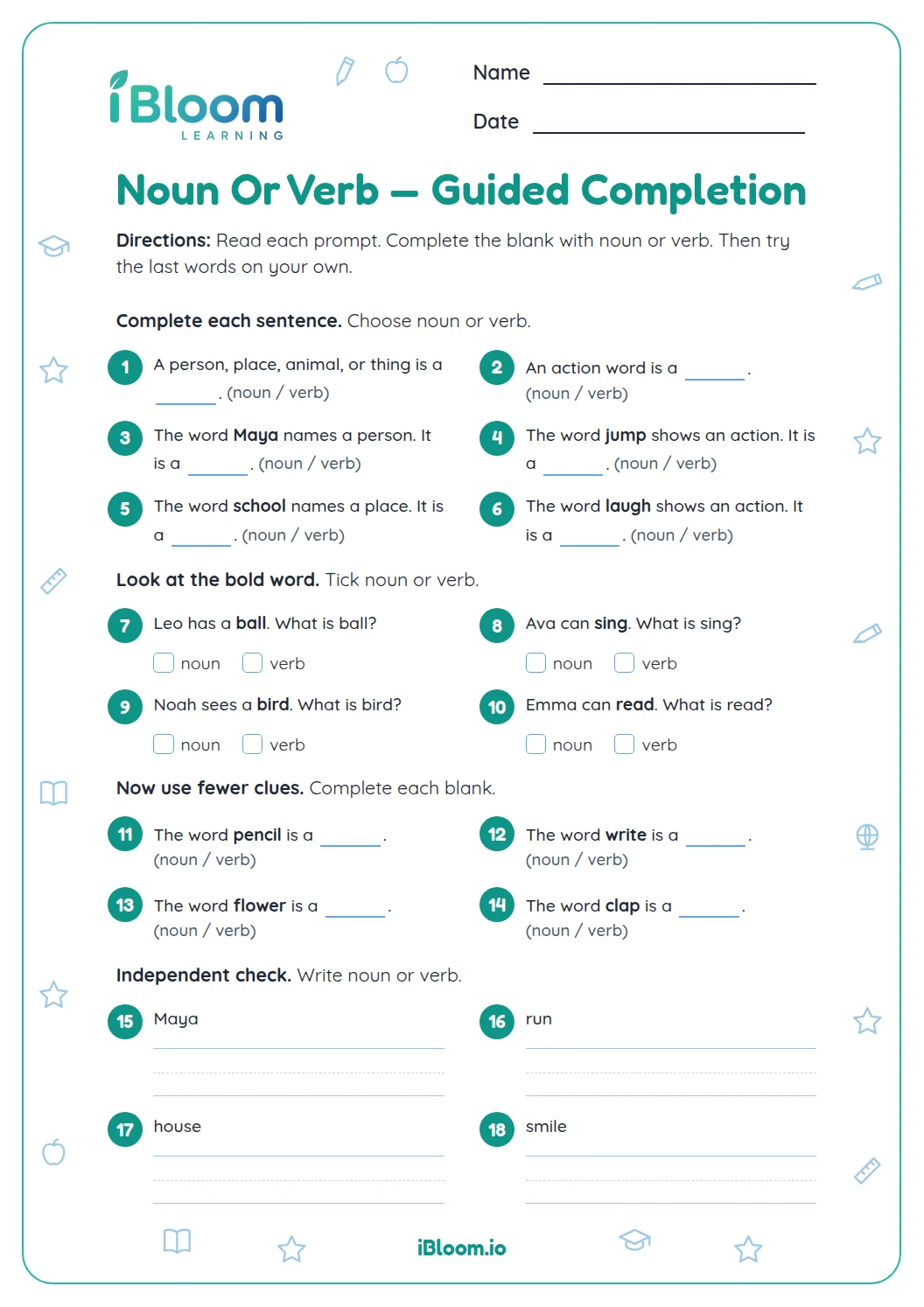
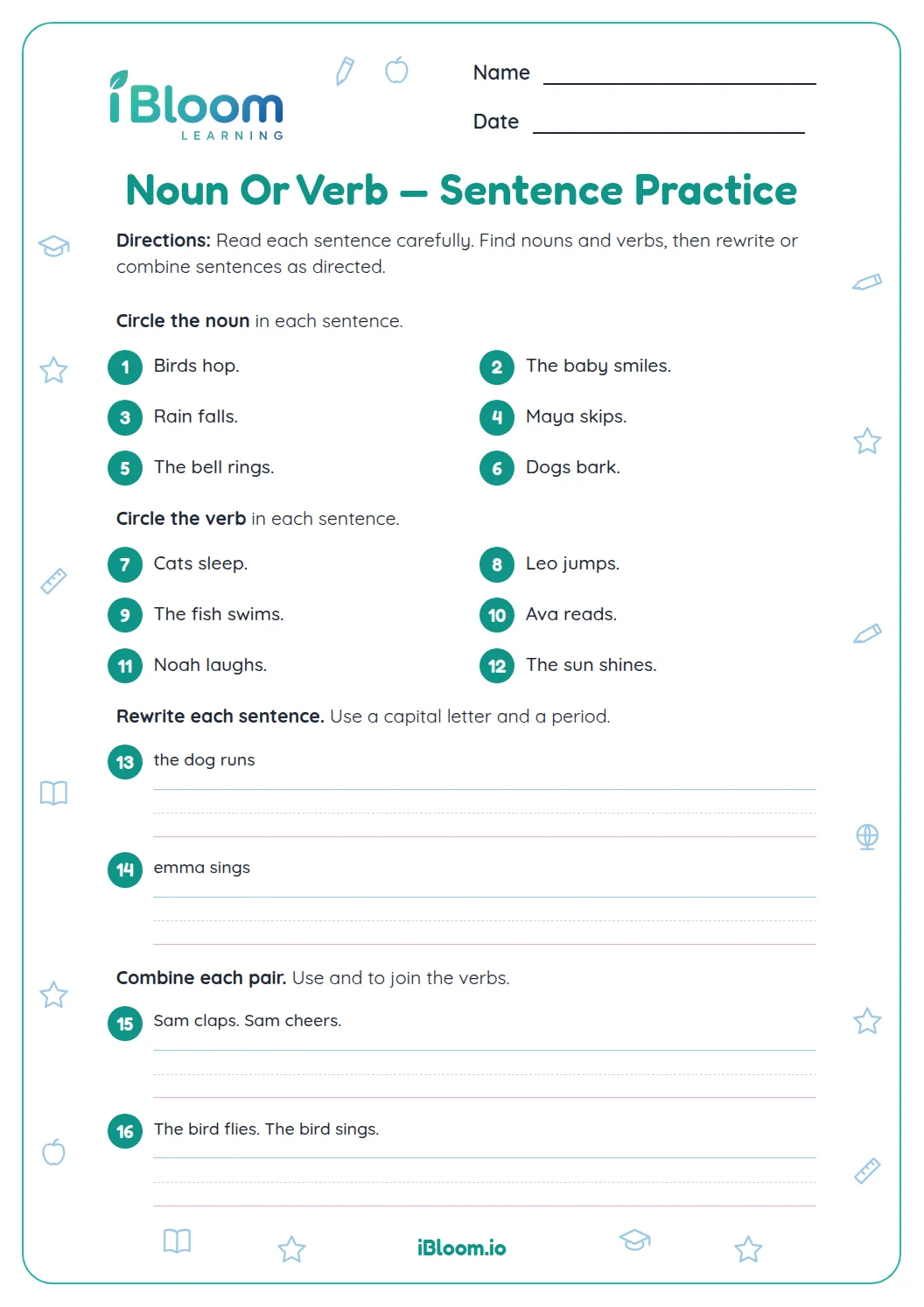
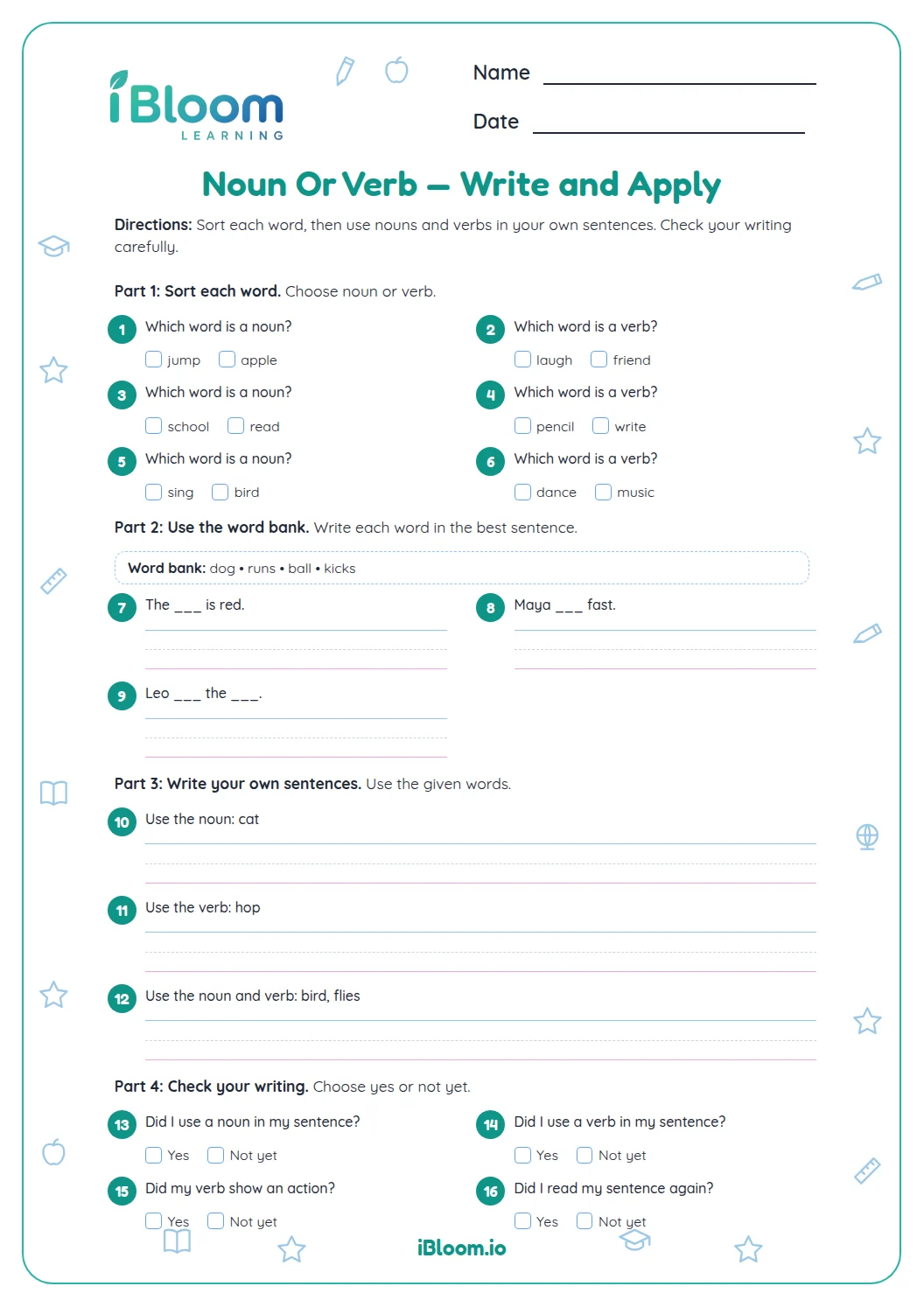
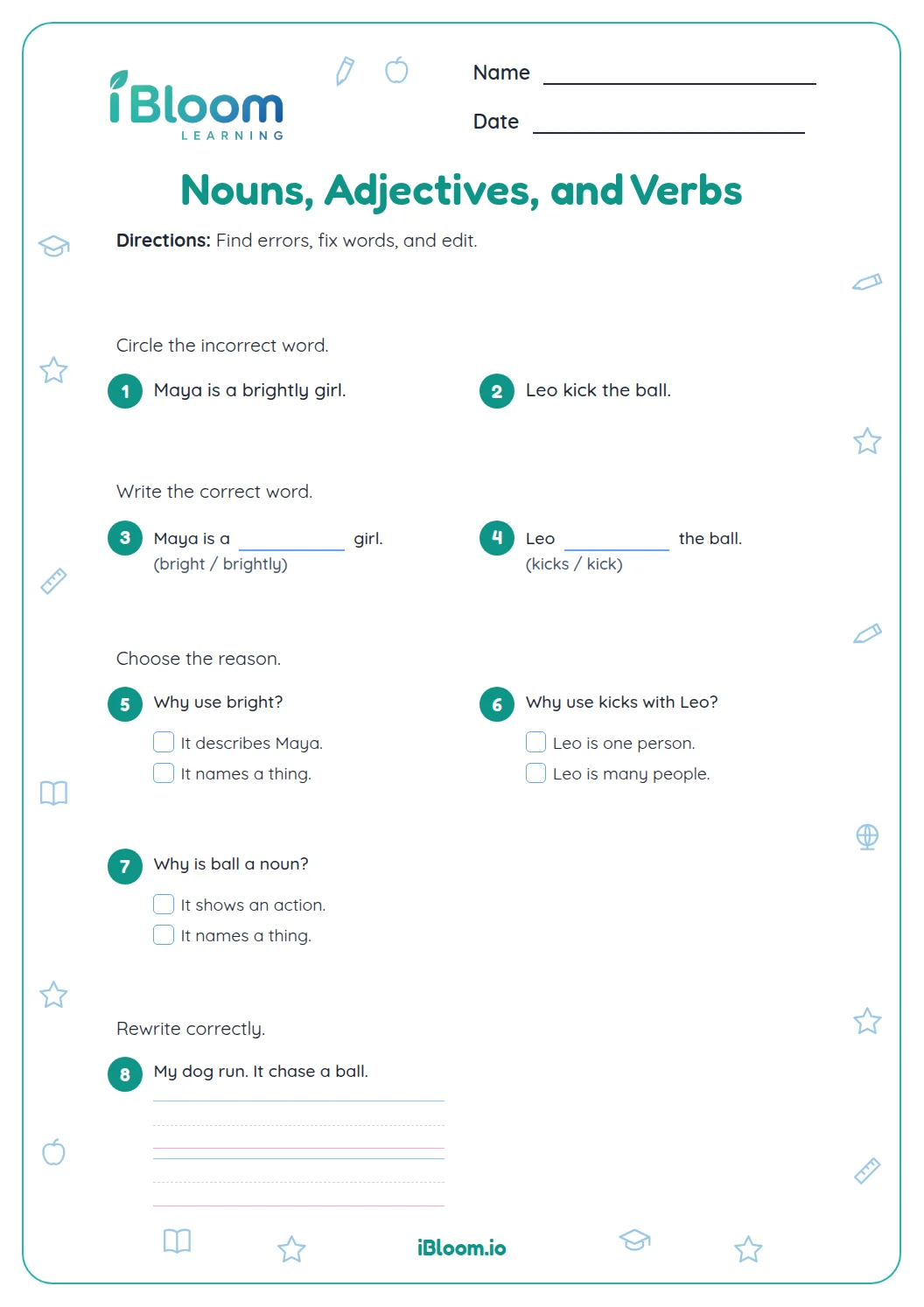
The first part asks children to recognize nouns and verbs in short choices. Next, they complete sentences and find target words in sentences. The final questions combine both skills and invite one original sentence.
- Part A: identify naming and action words
- Part B: complete sentences and circle target words
- Part C: identify both word types and write one sentence
How to use this worksheet
- 1Read the directions for each part before starting.
- 2Work from the first part to the last, then check the answer key.
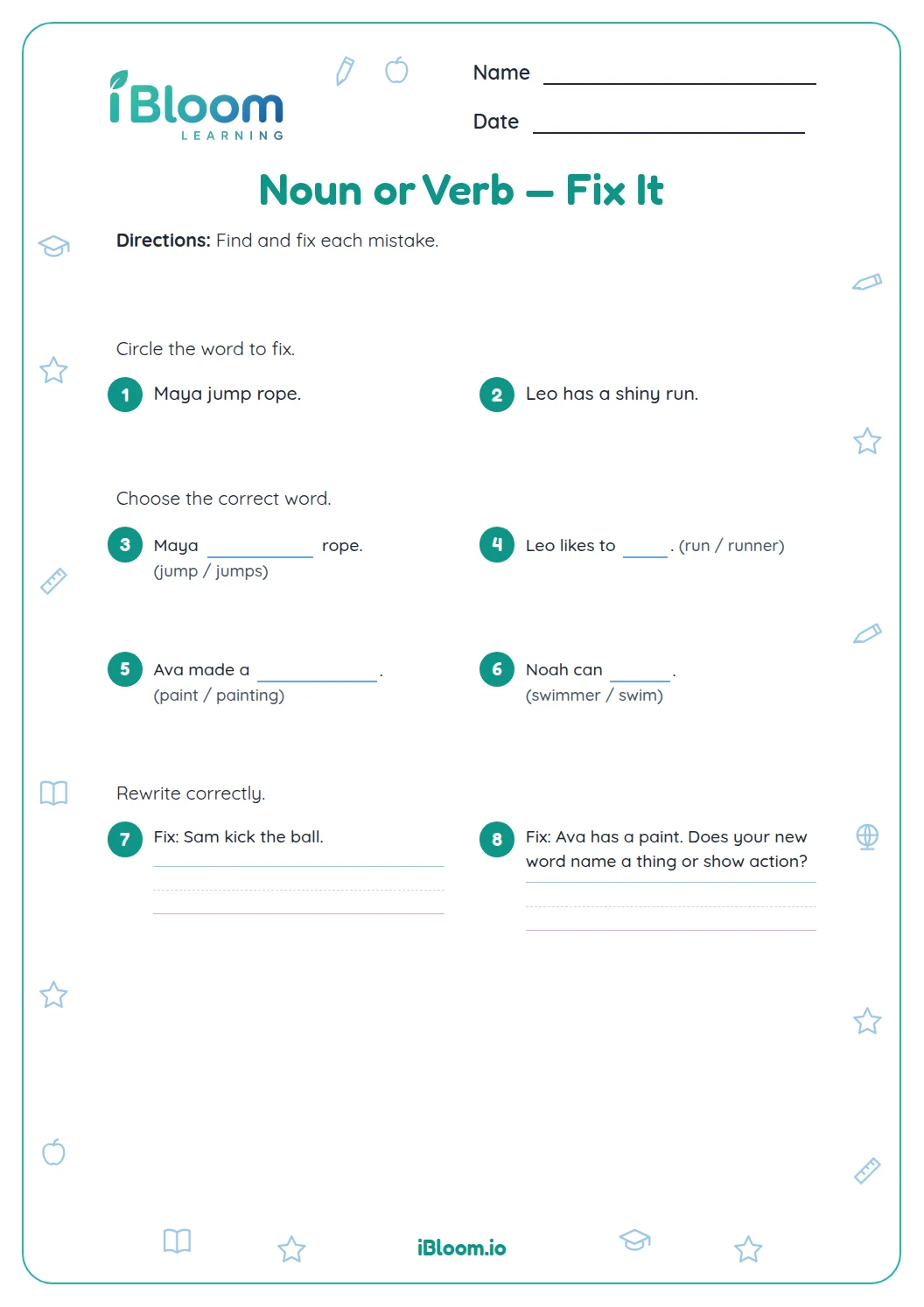
Common mistakes and quick fixes
The mistake
Calling a noun an action because it appears in an action sentence.
The fix
Ask “Who or what?” for a noun; ask “What does it do?” for a verb.
The mistake
Choosing a word that does not make sense in a sentence blank.
The fix
Read the completed sentence aloud and check that it names something or tells an action as requested.
Common Core alignment
This page gives focused practice with the skill named in its title.
Use common, proper, and possessive nouns.
On this sheet: Children identify common nouns in sentences.
Show the official wordingHide the official wording
Use common, proper, and possessive nouns.
What to practice next
Make more practice
Further reading
Questions parents and teachers ask
What is a noun?
A noun names a person, place, animal, or thing. In “The bird sings,” bird is the noun. Have the child say why the word names something or tells what someone or something does in that sentence. This gives students a clear way to check their reasoning and make the next practice attempt more accurate.
What is a verb?
A verb tells what someone or something does. In “The bird sings,” sings is the verb. Have the child say why the word names something or tells what someone or something does in that sentence. This gives students a clear way to check their reasoning and make the next practice attempt more accurate.
Can a word be a noun and a verb?
Yes. Some words can do both jobs in different sentences. In “We play outside,” play is an action verb. In “The play was funny,” play names a show, so it is a noun. Read how the word works in its sentence.
What should a child do when both choices seem possible?
Read the complete sentence and ask what job the target word does there. A noun names a person, place, animal, or thing. A verb tells what someone or something does. The surrounding words help reveal which meaning makes sense. Have the child say why the word names something or tells what someone or something does in that sentence.
How can I help after the worksheet?
Look around the room and name a few nouns, such as desk, teacher, or window. Then make a sentence using one noun and an action verb. Ask your child to point to each word and explain its job. Have the child say why the word names something or tells what someone or something does in that sentence.