




About this worksheet
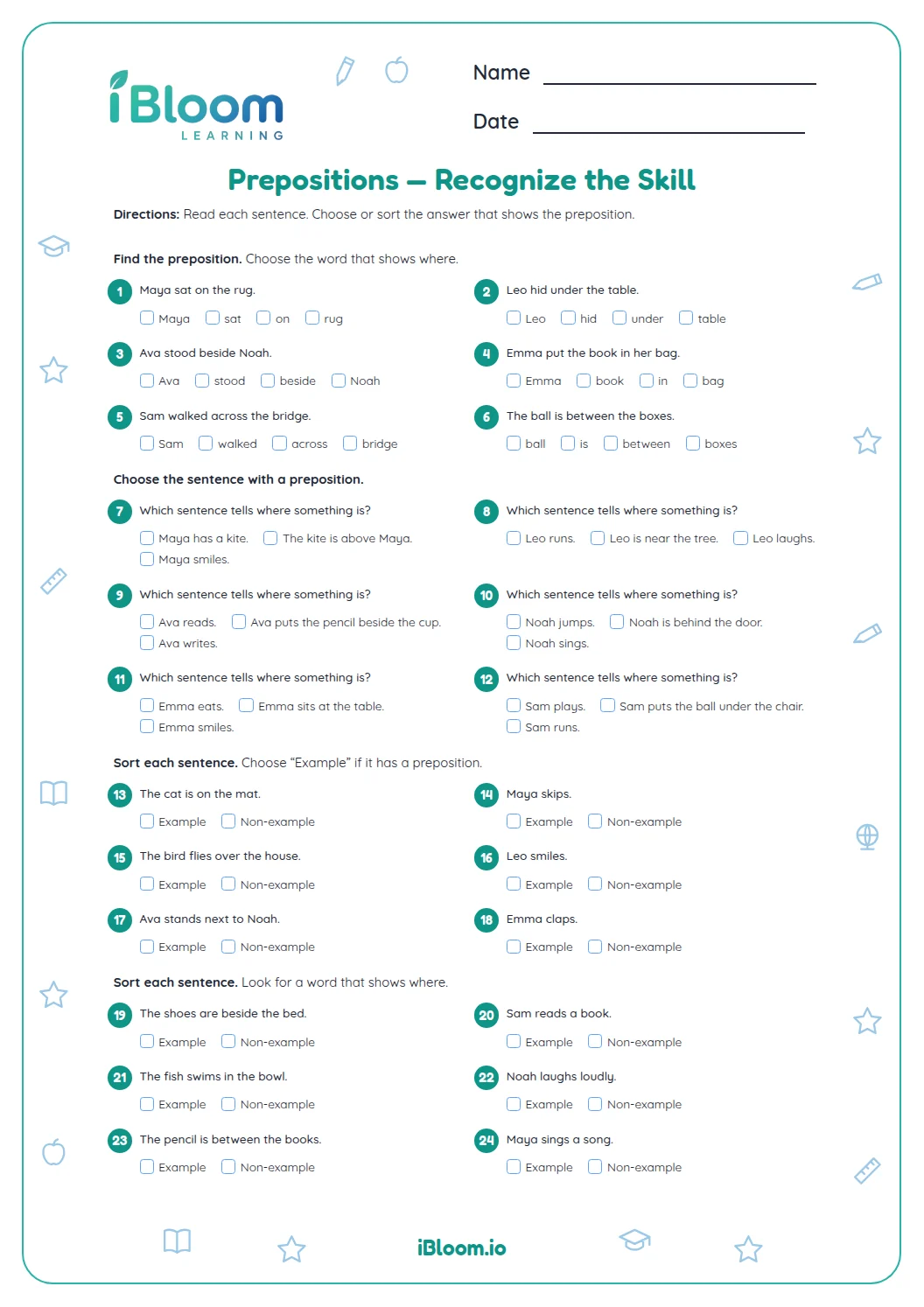
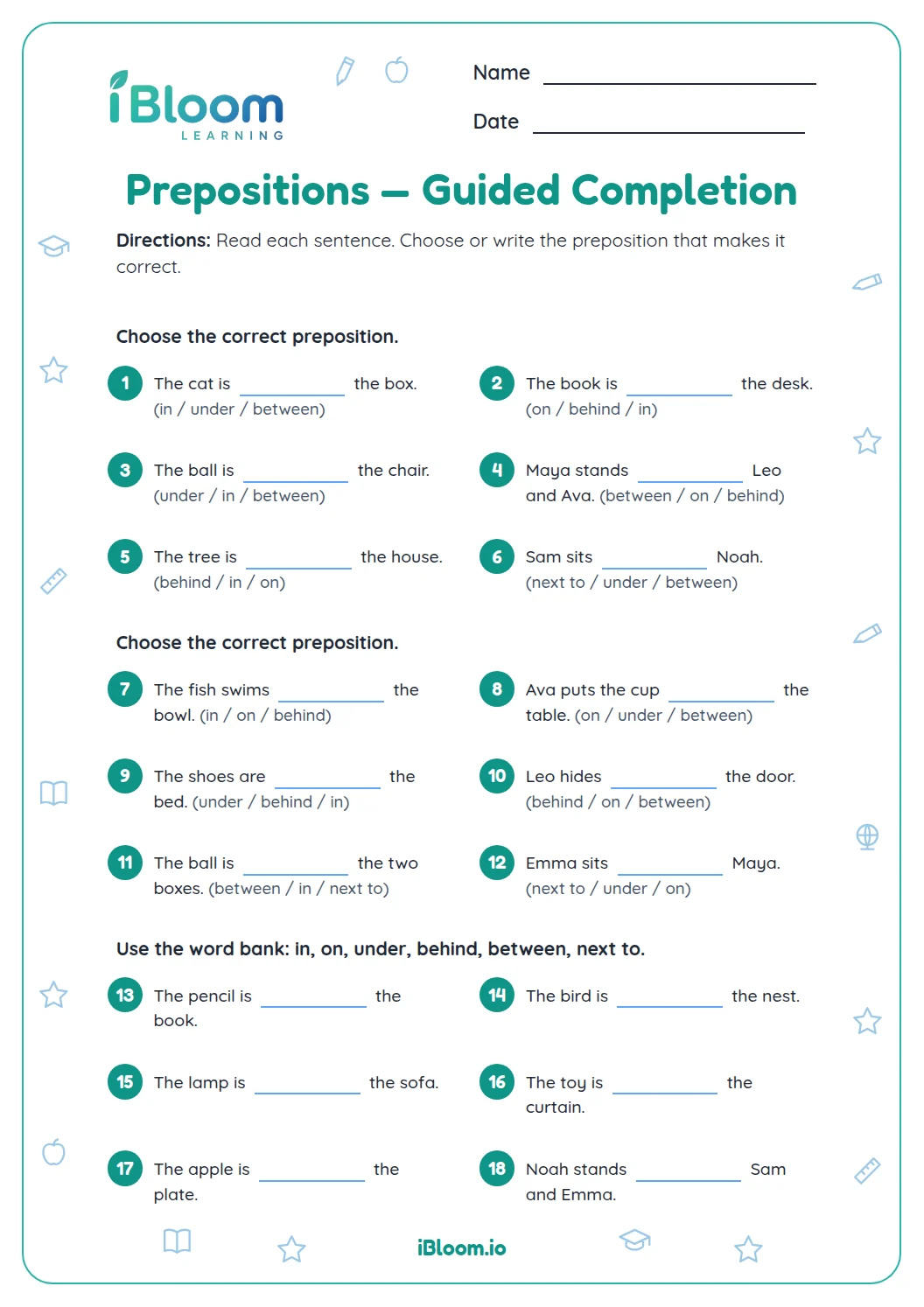
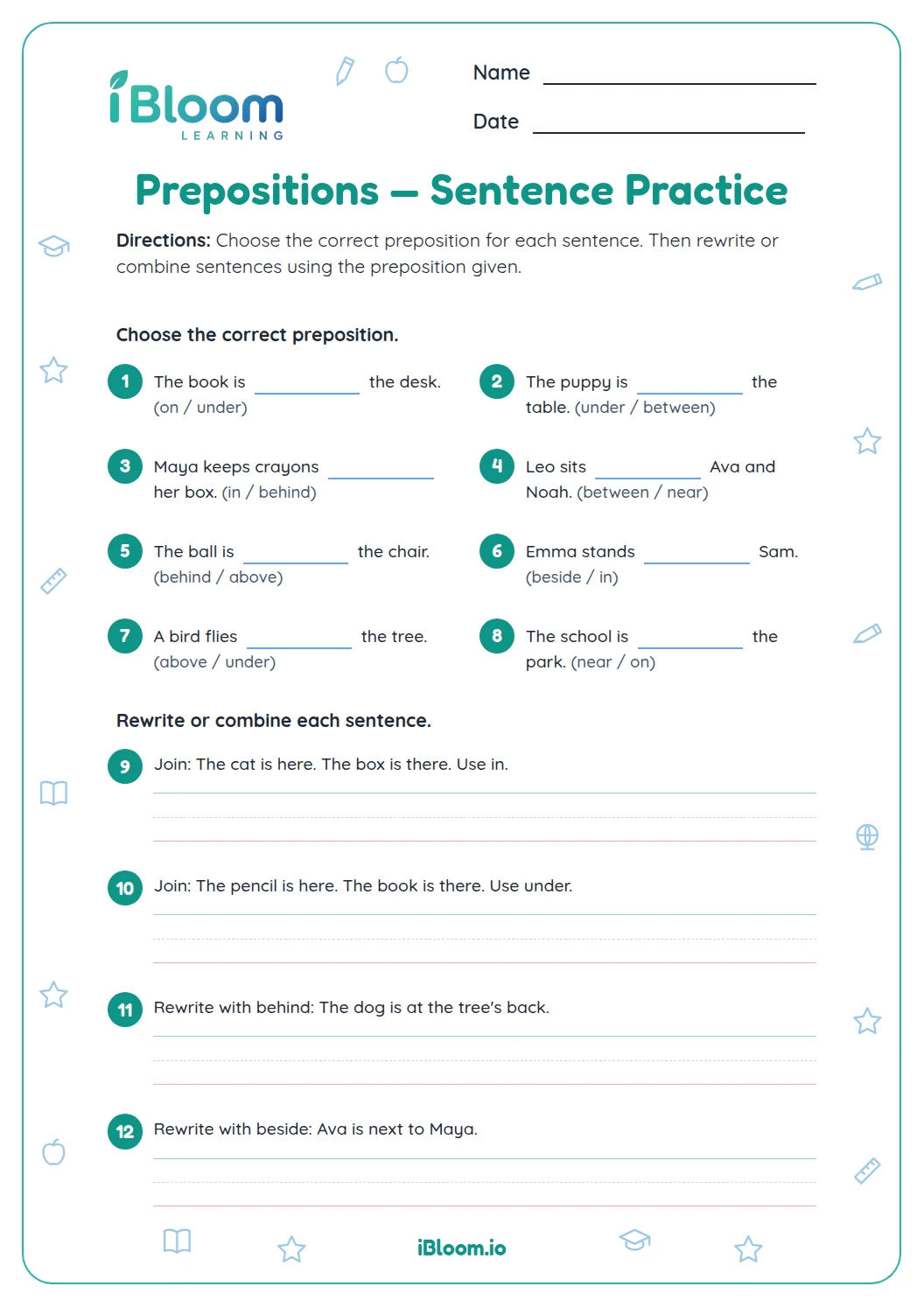
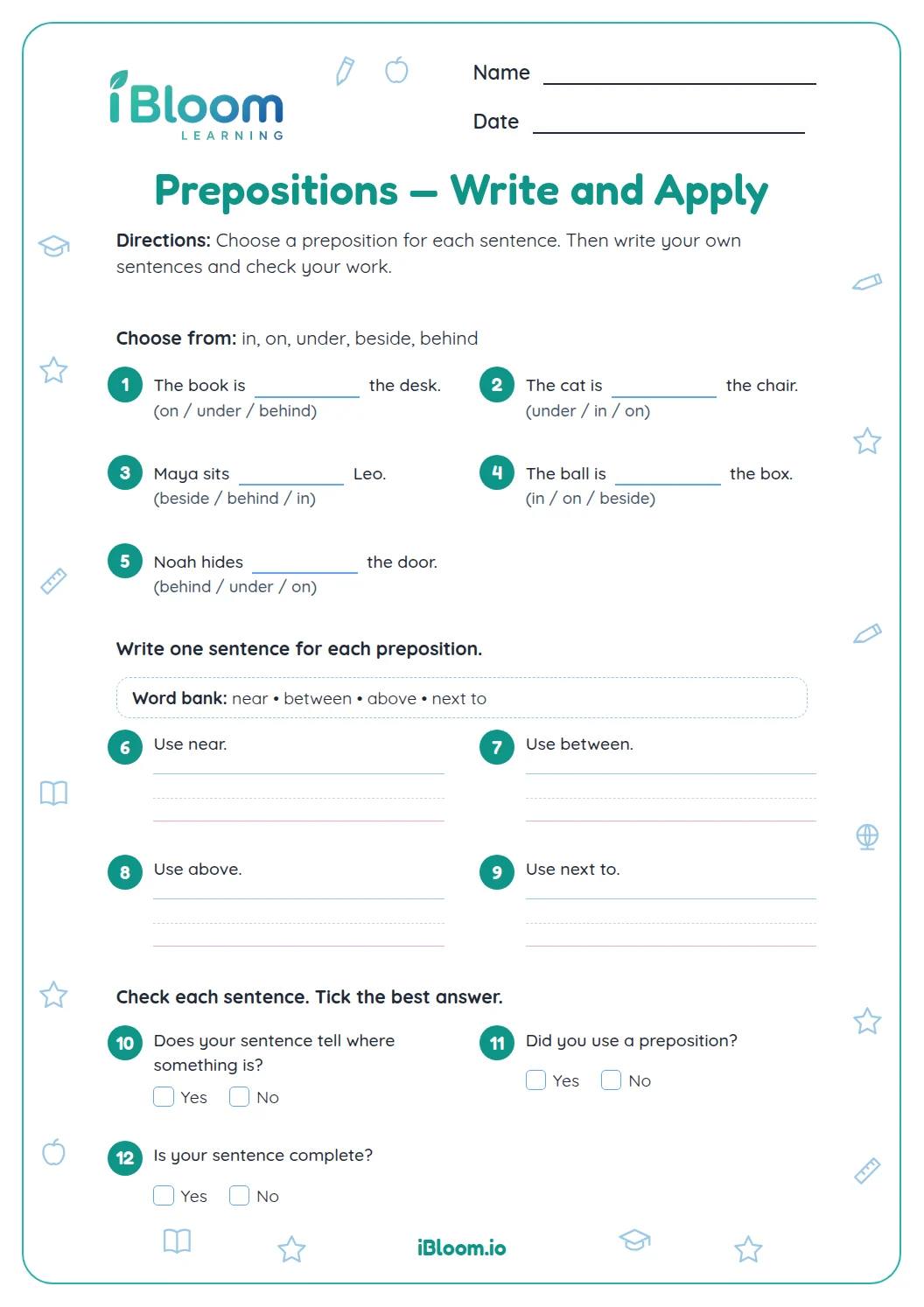
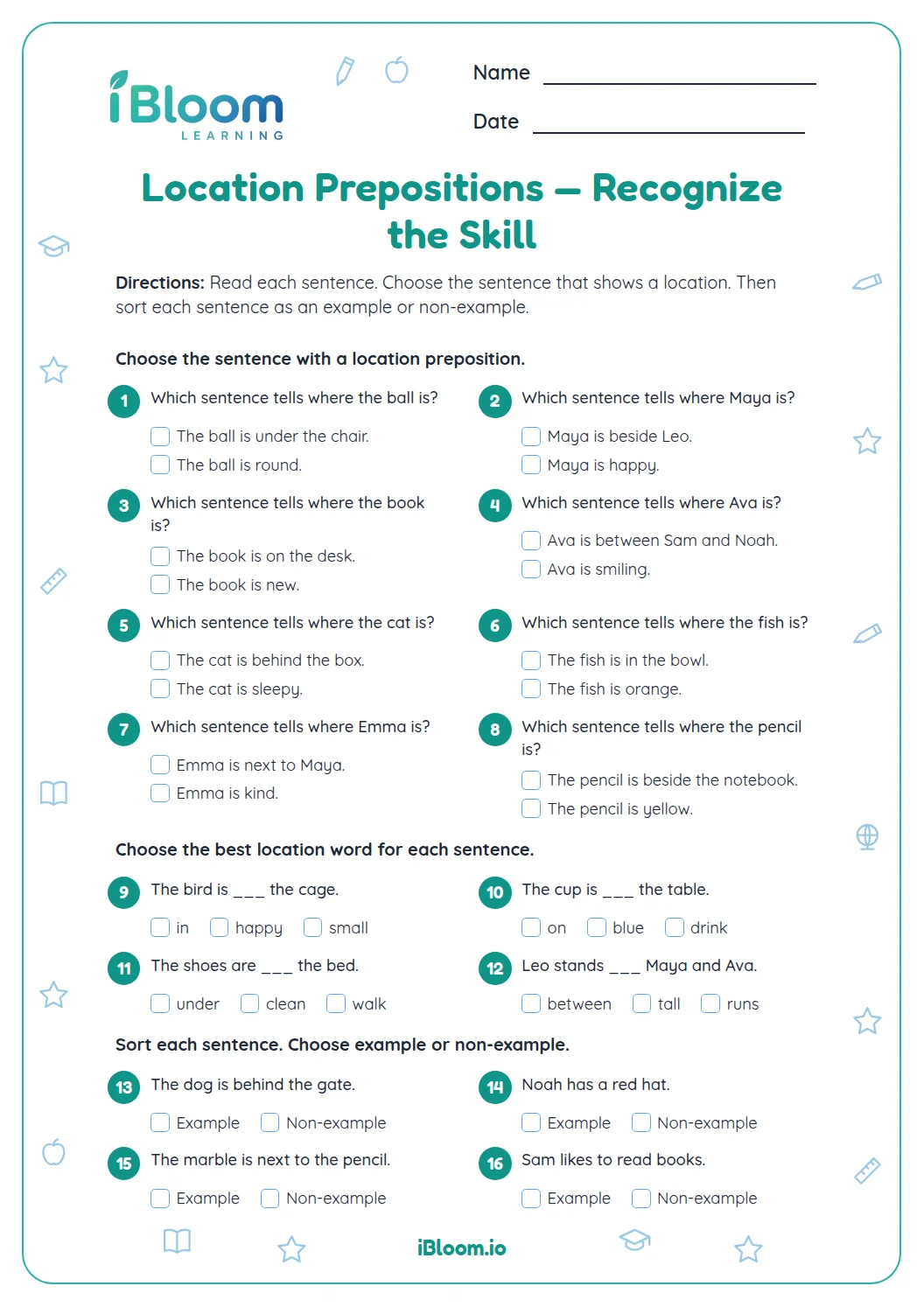
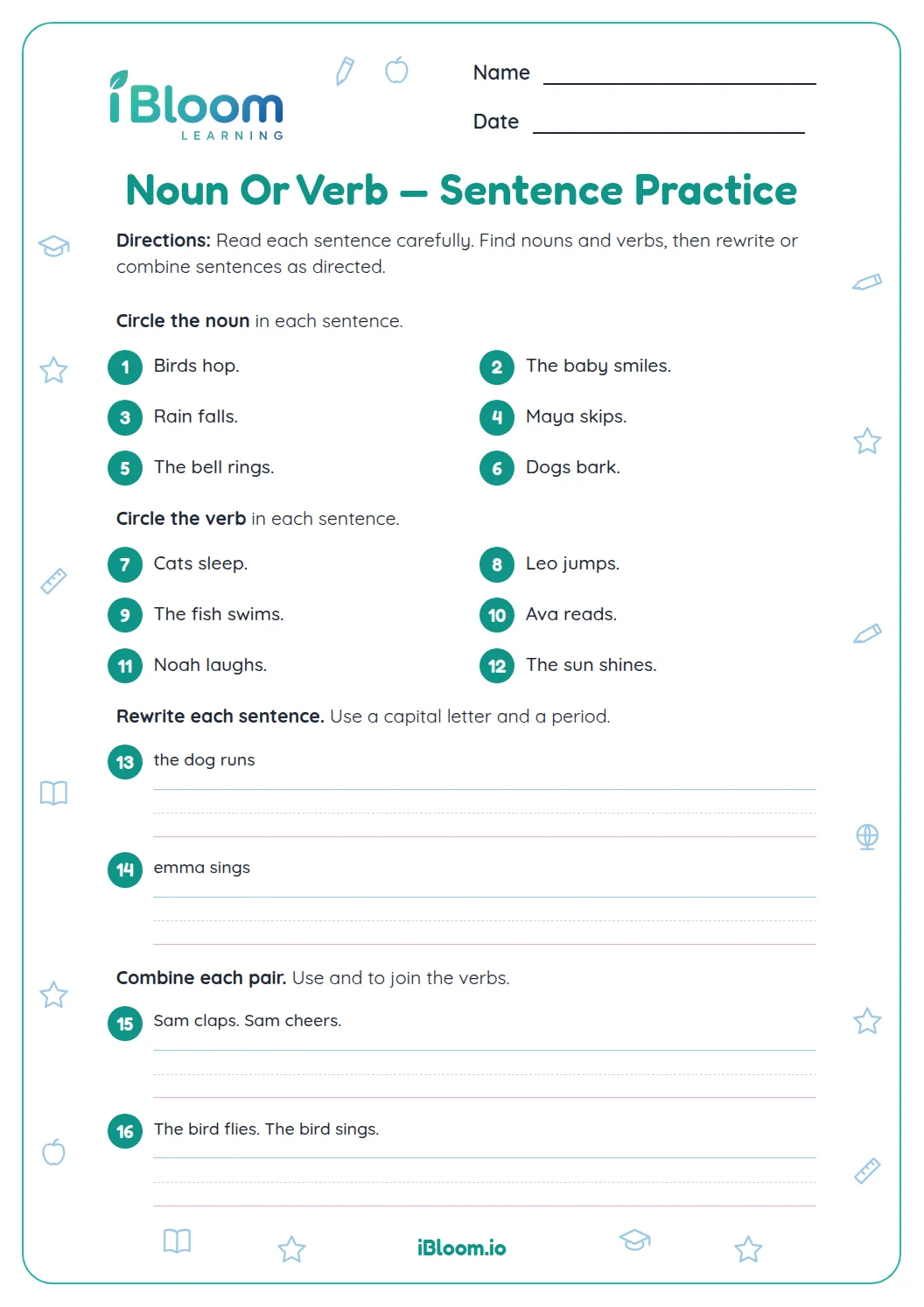
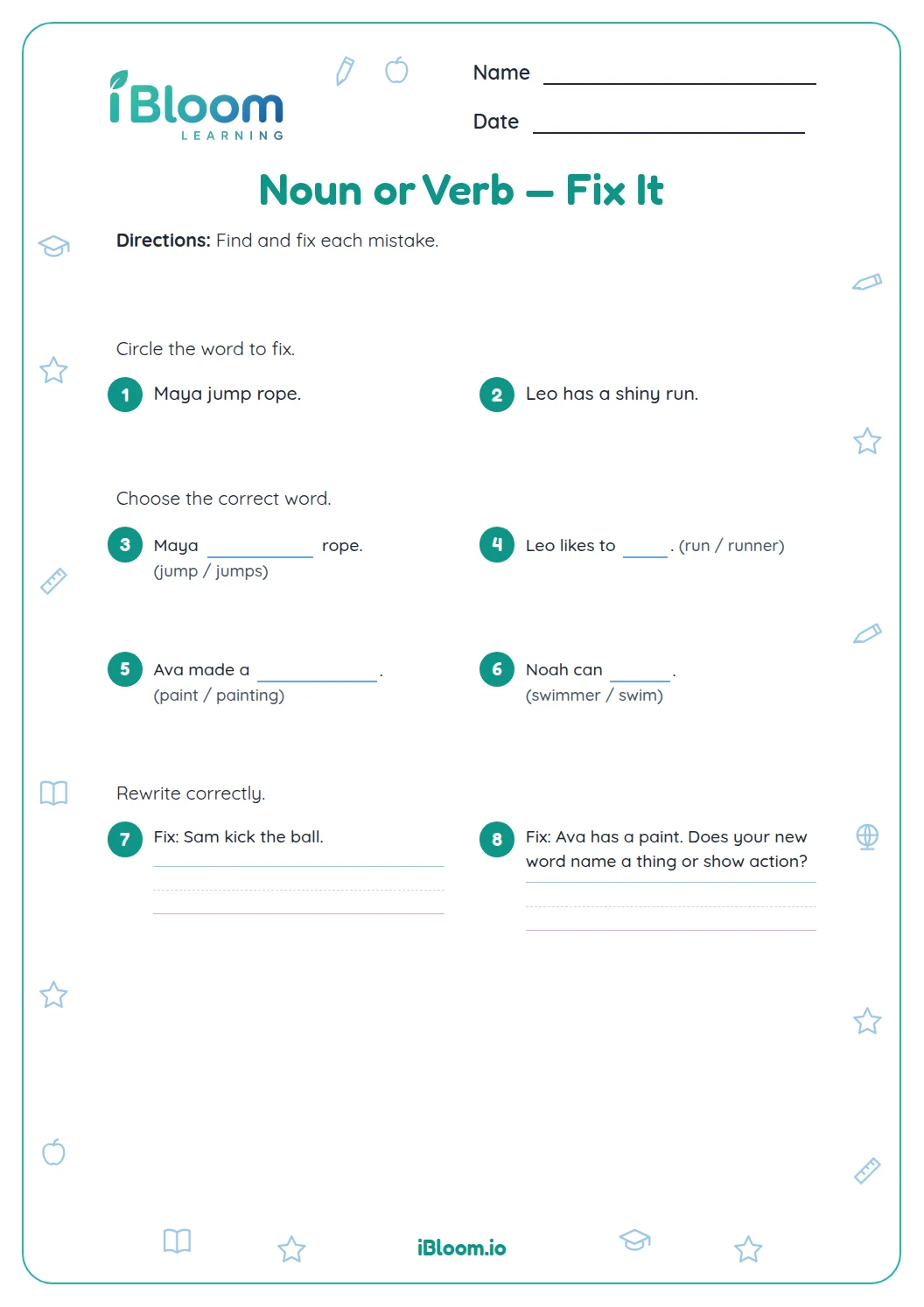
This Grade 1 grammar worksheet focuses on prepositions that tell where. Children choose a fitting word in short contexts, spot the preposition in a sentence, and correct a place word that conflicts with the sentence meaning. The 16 questions connect word choice with sentence editing, and a separate answer key is included. The practice supports Common Core language standard L.1.1.i, which calls for using frequently occurring prepositions.
Aligned to L.1.1.i
How do prepositions show where something is?
Prepositions connect an object or person to a place or another object. Words such as in, on, under, beside, and over describe different positions.
- 1A ball is ___ the box. You cannot see it because the box is closed.
- 2The clue places the ball inside the box.
- 3Answer: in
How does the worksheet build editing practice?
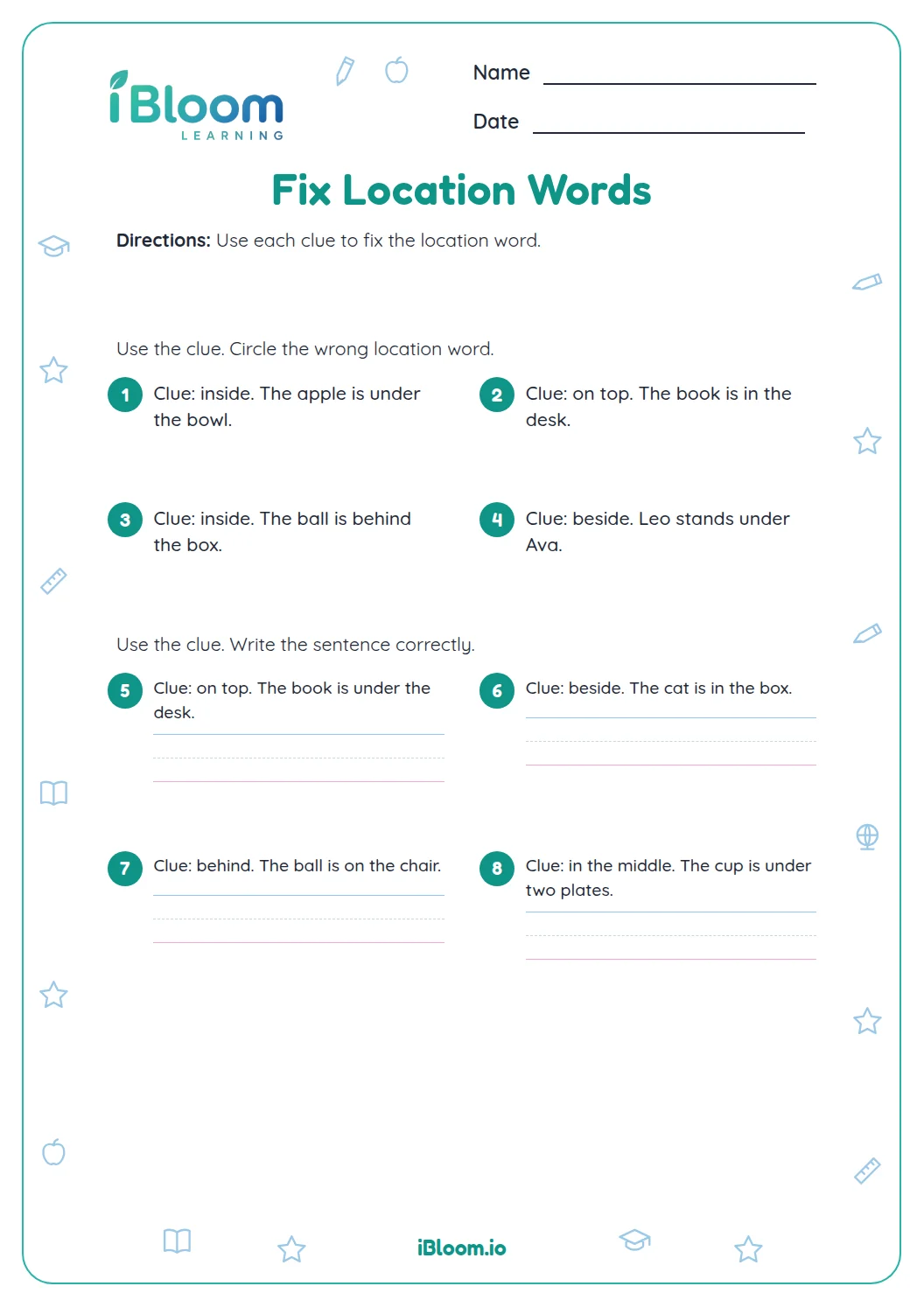
Part A asks children to choose a preposition from a short context. Part B has them identify a place word in a sentence. Part C gives a position clue and asks them to correct the preposition that does not fit.
- Choose a word from context
- Find the preposition in a sentence
- Correct a mismatched place word
How can children check a corrected sentence?
Have the child read the whole sentence aloud with the new word. Then compare the position it describes with the clue in the sentence.
How to use this worksheet
- 1Read the whole sentence before choosing a word.
- 2Find the person or object whose position is described.
- 3Compare the choices with the location clue.
- 4In Part B, identify the word that answers where.
- 5For an edit, reread the sentence with the replacement word.
Common mistakes and quick fixes
The mistake
Choosing a word because it sounds familiar.
The fix
Check whether it describes the exact position in the clue.
The mistake
Mixing up beside and between.
The fix
Beside means next to one thing; between places something in the middle of two things.
The mistake
Keeping a preposition that conflicts with the sentence.
The fix
Read the corrected sentence and check that its location makes sense.
Common Core alignment
This worksheet practices the following Common Core skill.
Use familiar prepositions to describe locations and positions in sentences.
On this sheet: Children choose, identify, and correct common prepositions for position.
Show the official wordingHide the official wording
Use frequently occurring prepositions (e.g., during, beyond, toward).
What to practice next
Further reading
Questions parents and teachers ask
What does this worksheet practice?
This Grade 1 grammar sheet practices prepositions that describe location and position. Children choose a word from context, find a place word in a sentence, and correct mismatched prepositions. The questions use familiar objects and places, with a separate answer key for checking.
How many questions are included?
There are 16 questions in three parts: six context choices, six sentence-identification items, and four corrections. The first section practices choosing a location word, and later items ask children to recognize or repair one. The worksheet spans three pages, followed by a separate three-page answer key.
What is a preposition?
A preposition is a word that shows a relationship between a person, object, or place. Words such as in, under, beside, and into can tell where something is. This worksheet lets children use those words in complete sentences and location clues.
What does the editing part ask?
Each correction item gives a sentence with a place word that conflicts with the position clue. The child chooses a replacement that makes the sentence fit. This connects preposition knowledge to editing a sentence for meaning. Have the child point to the clue that explains the position, then check the replacement word against that clue.
How can a child check an answer?
Ask the child to name the object and describe where it is before rereading the sentence with the chosen word. For a correction, check that the replacement matches the clue and that the sentence still reads smoothly. This short rereading step helps children connect the word choice to the meaning of the whole sentence.