




About this worksheet
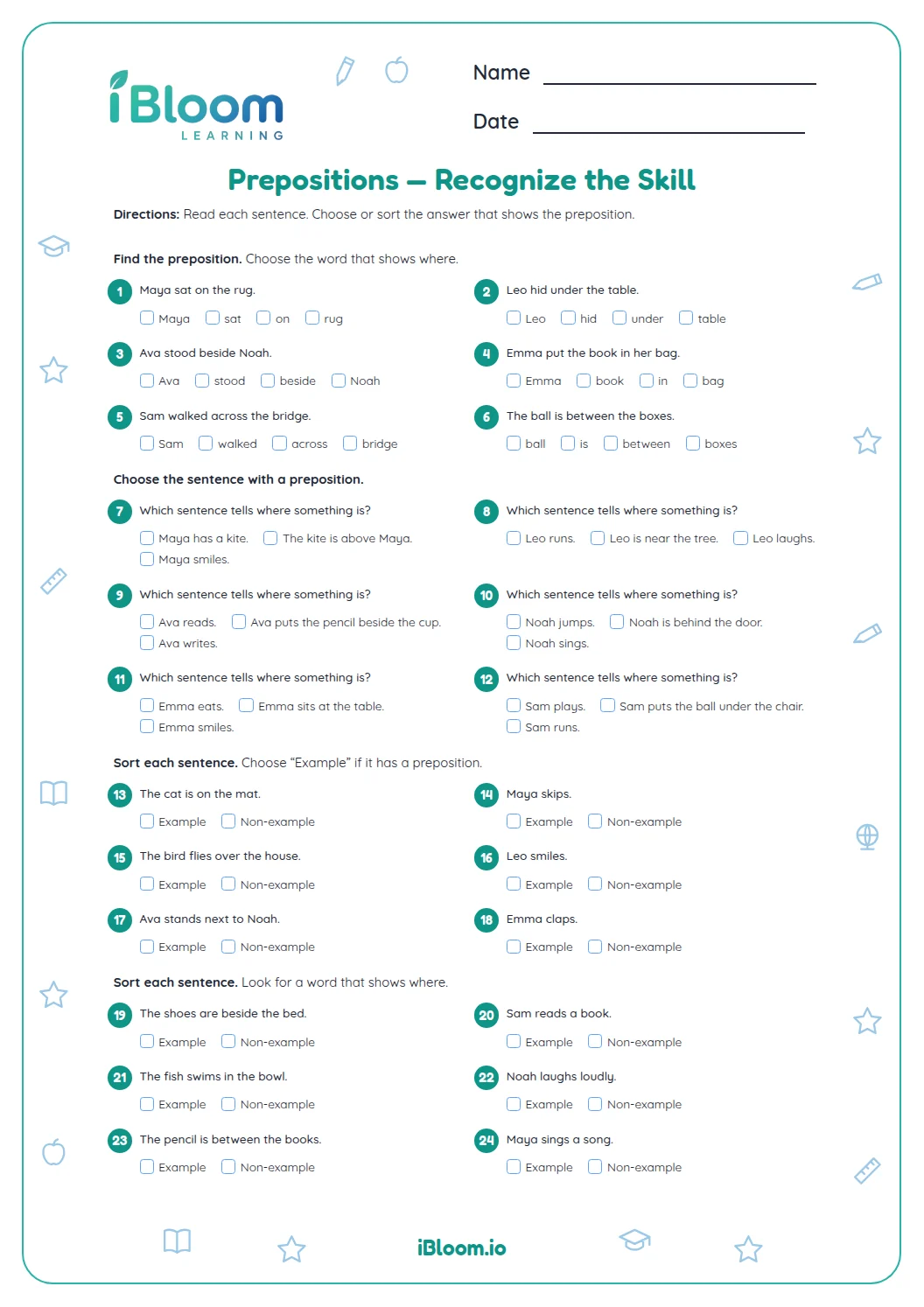
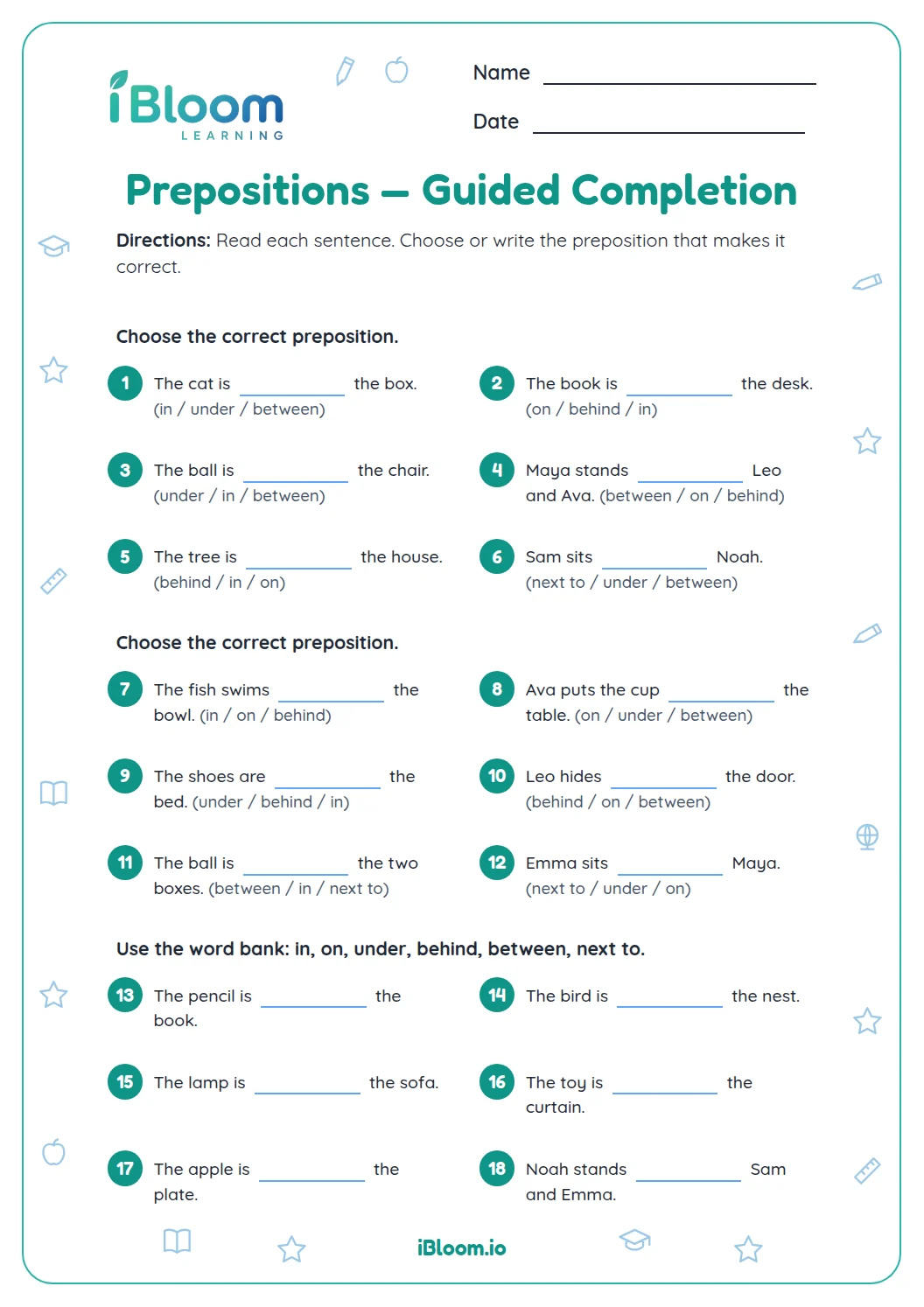
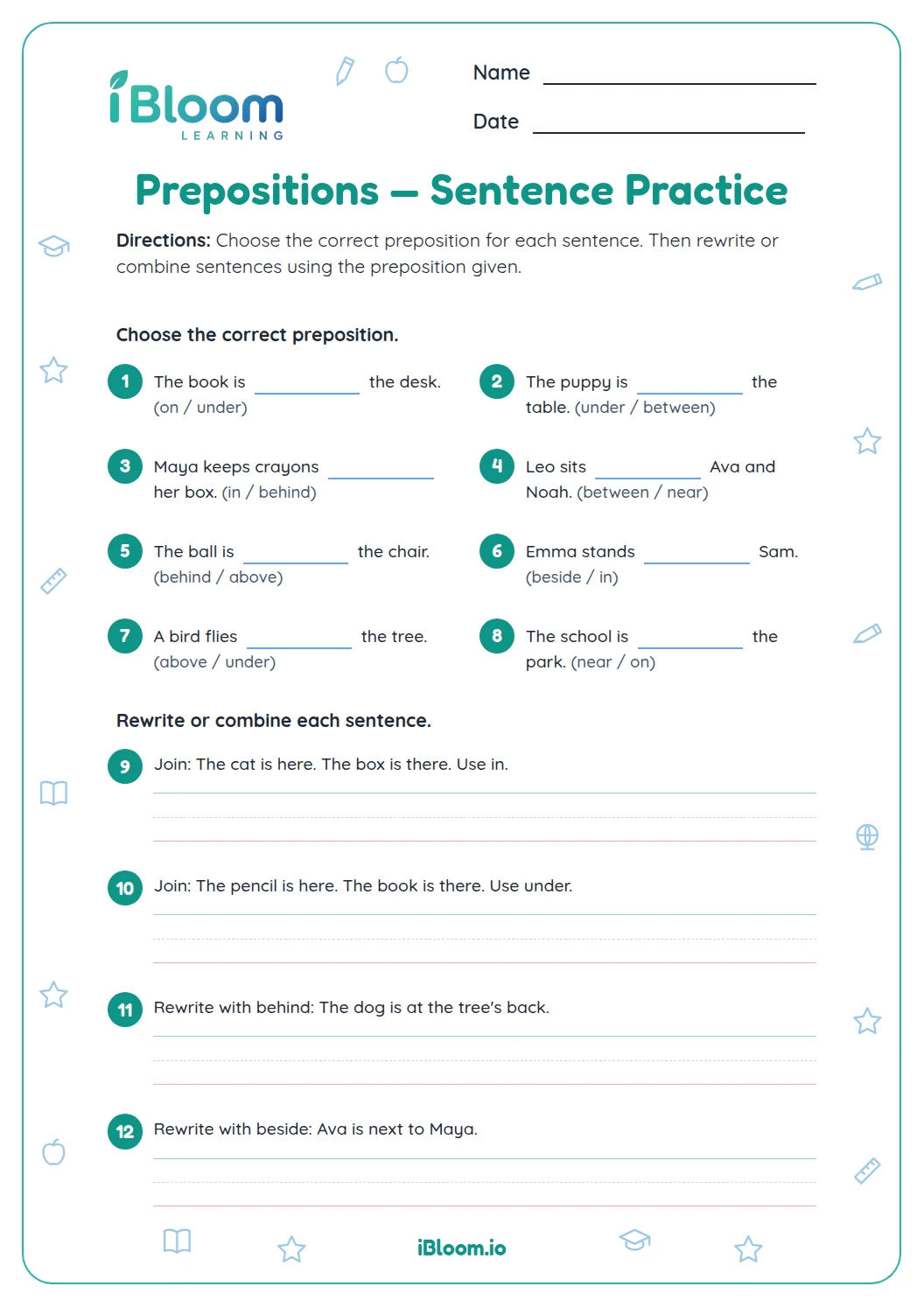
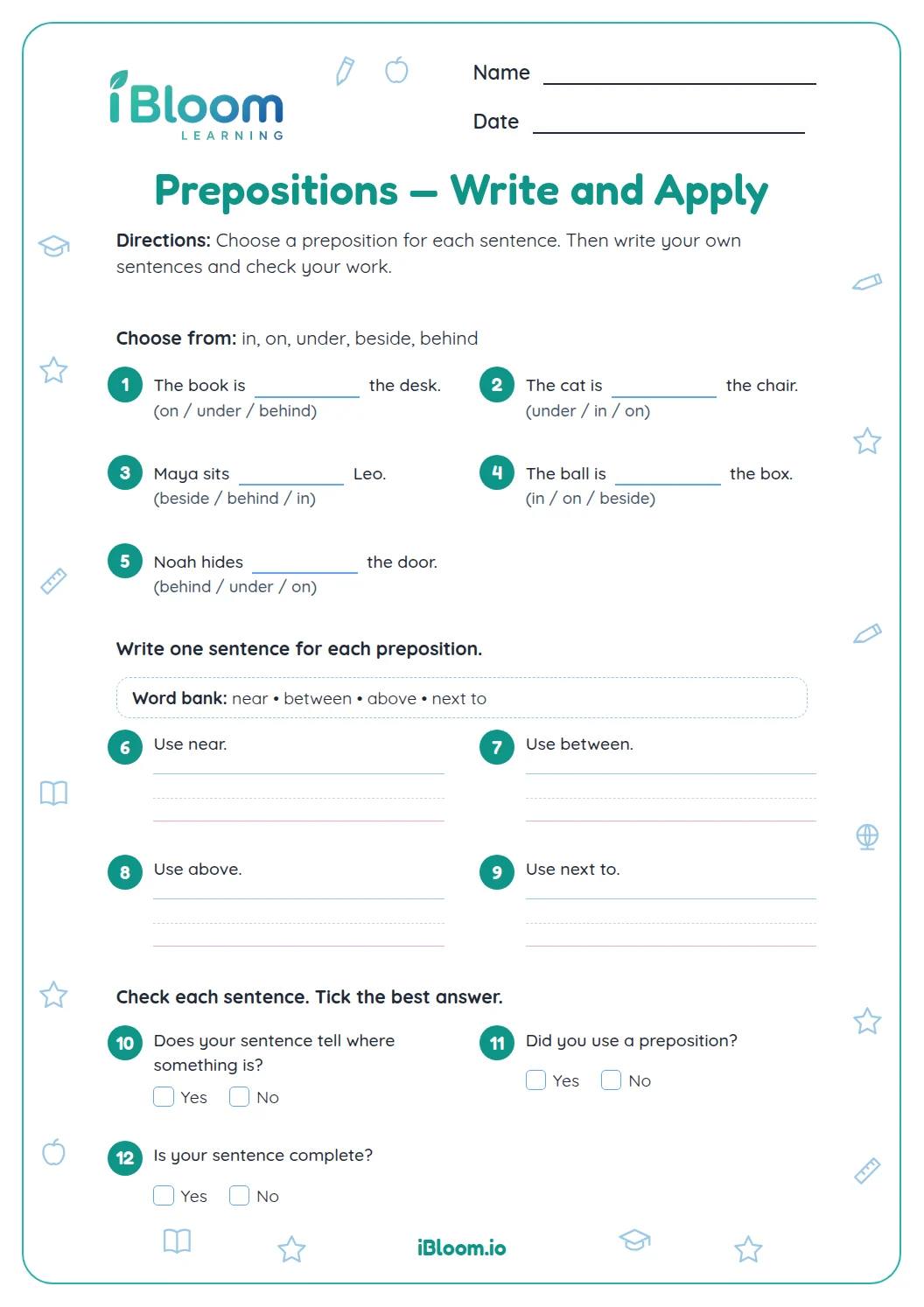
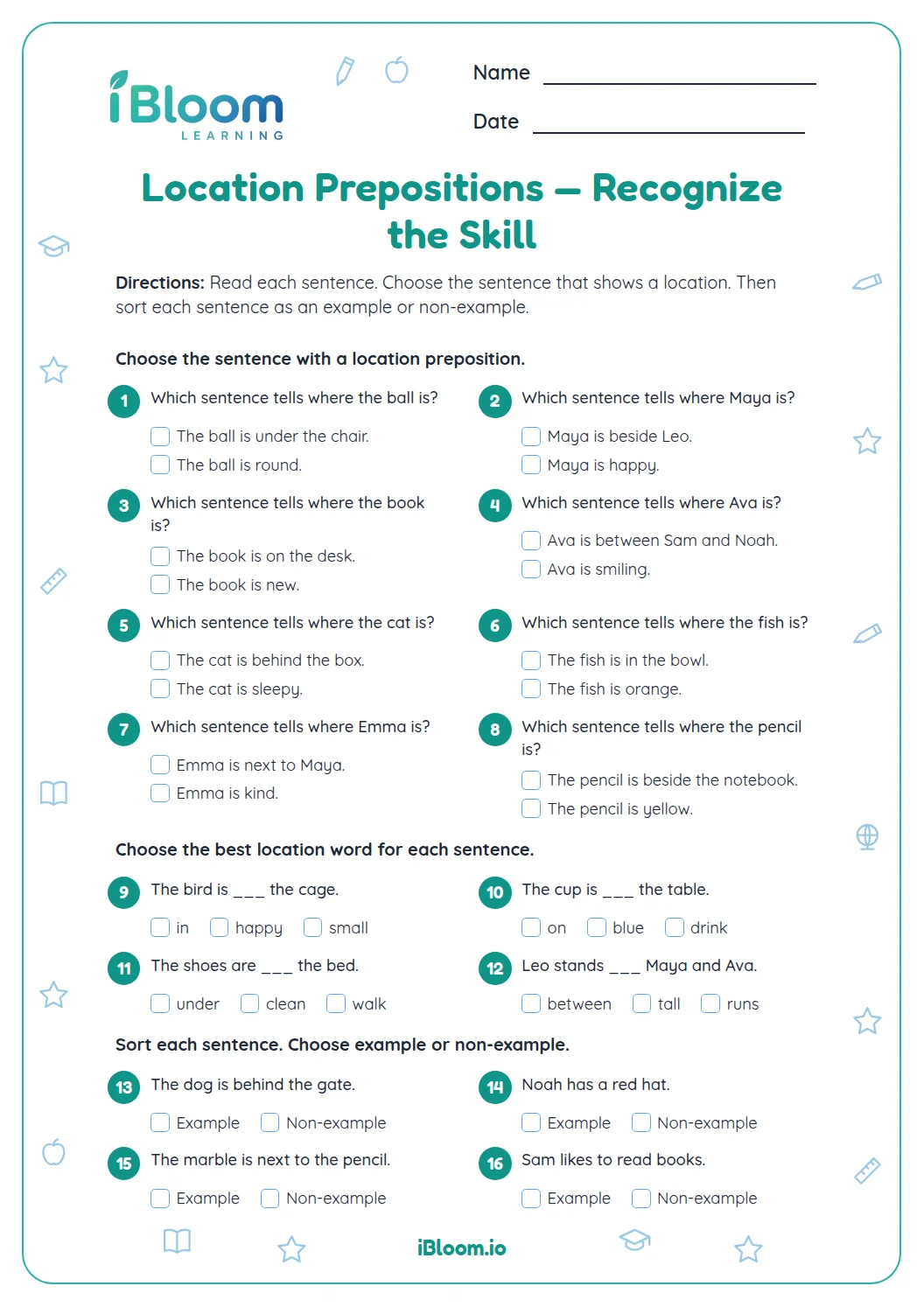
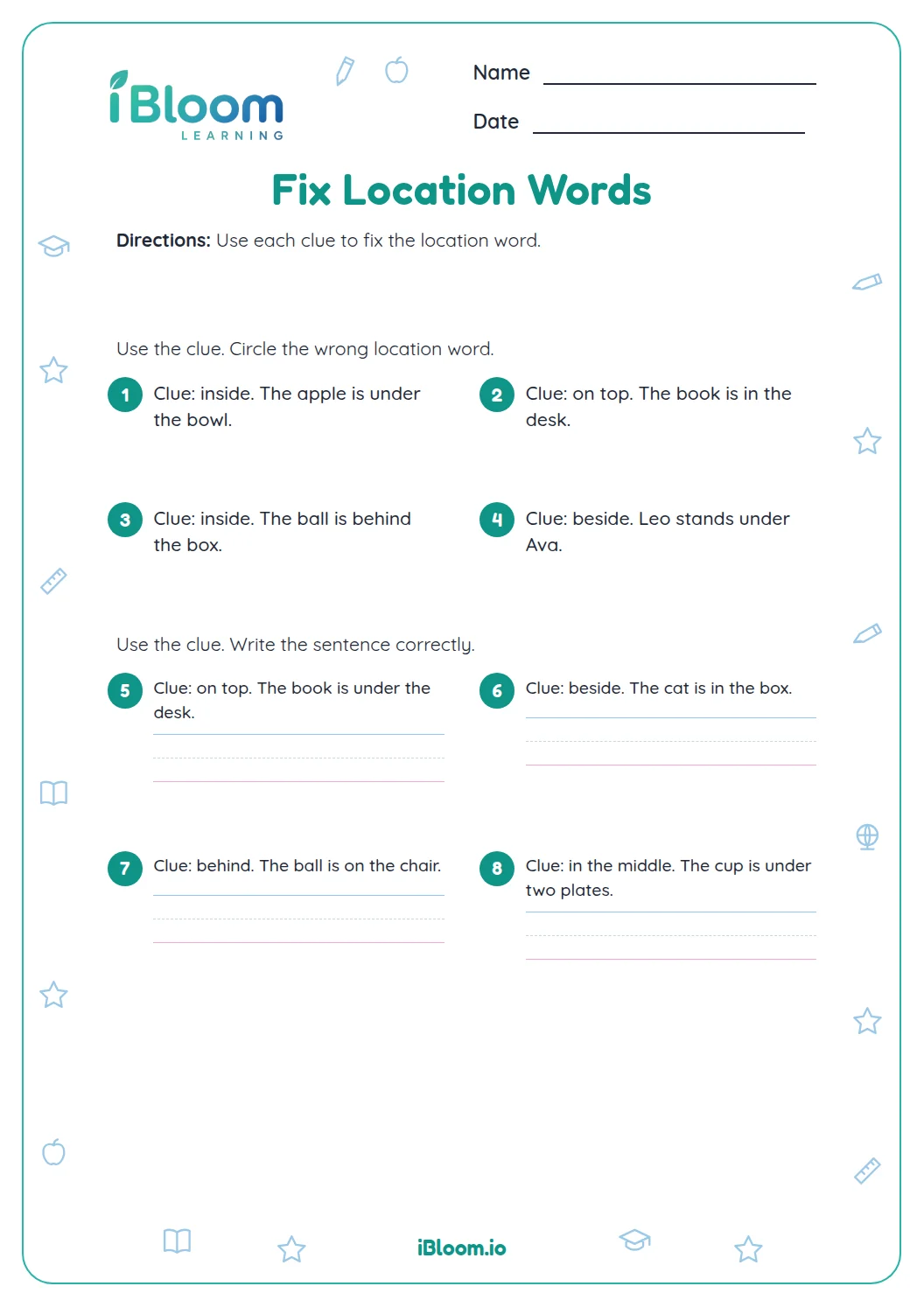
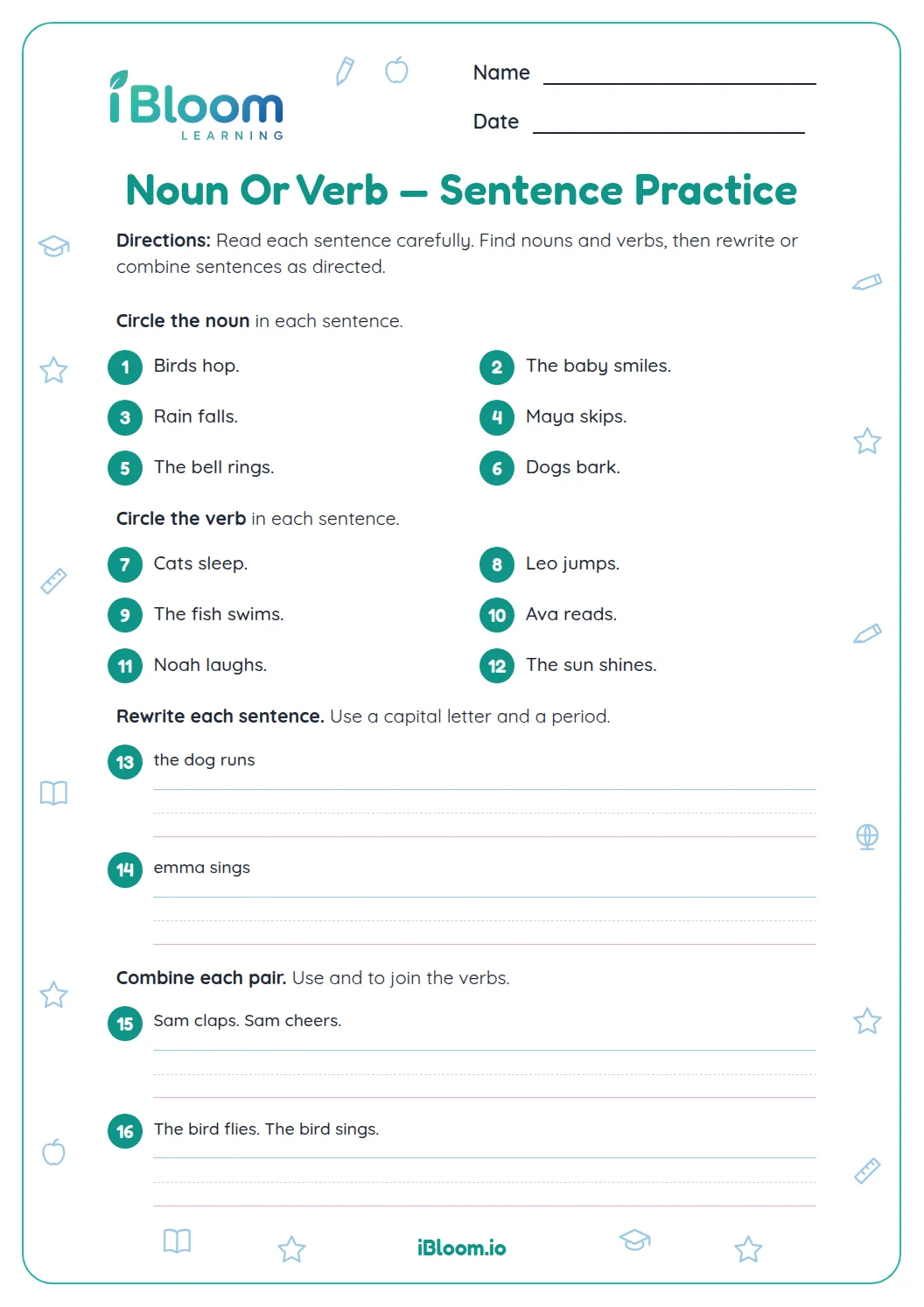
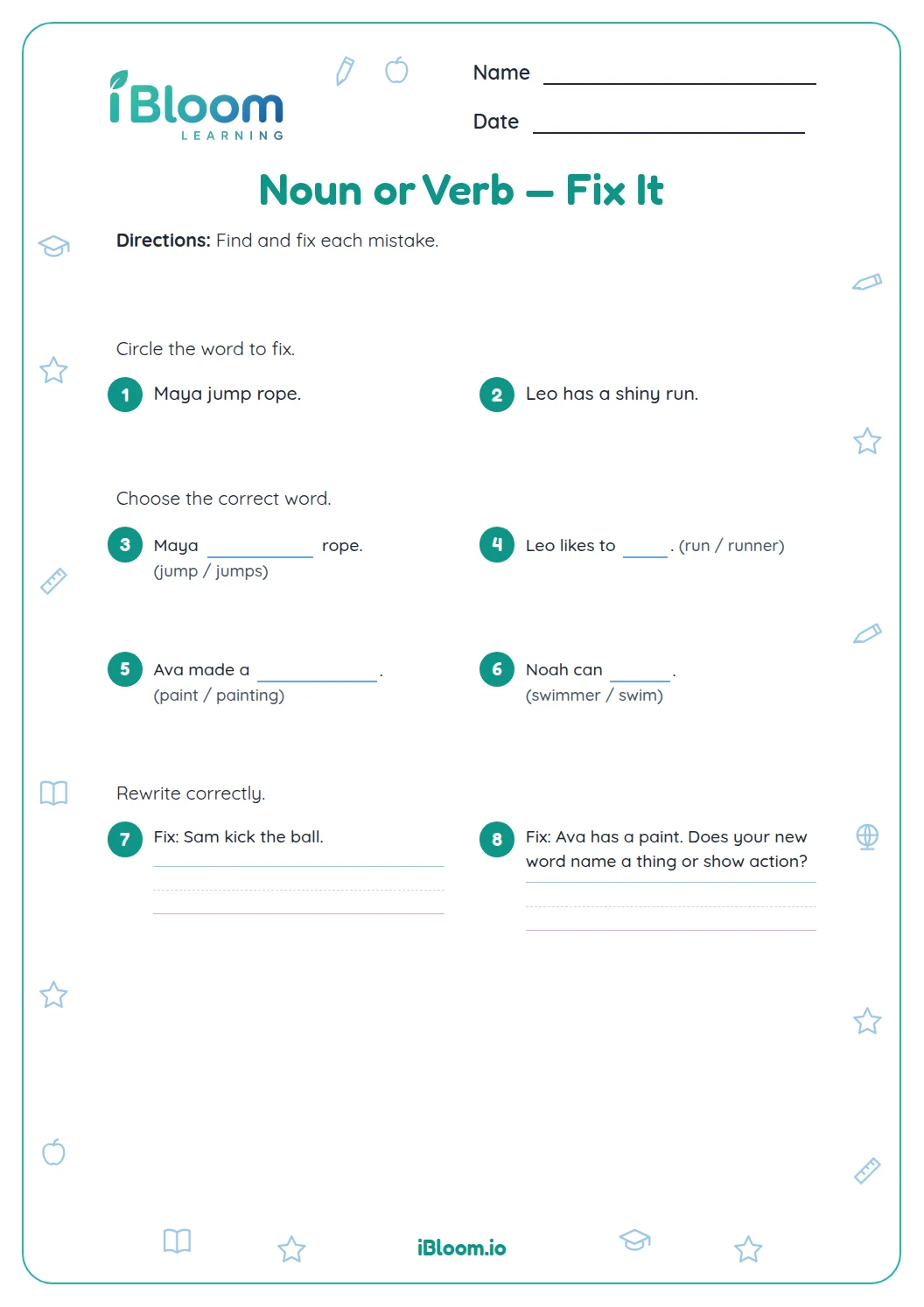
This Grade 1 printable gives children three ways to practice prepositions: choose a word that completes a sentence, find prepositions in short sentences, and use a preposition in writing. The 15 questions focus on familiar words such as under, beside, after, above, and through. The activity aligns with CCSS L.1.1.i and includes a separate answer key with sample sentences for the open responses.
Aligned to L.1.1.i
How can a child spot a preposition?
Look for a short word that tells where something is or when an event happens. In “The cat slept under the table,” under tells where the cat slept. That is the word children write for question 6.
Some words can serve different jobs in different sentences. Read the whole sentence and ask what relationship the word shows.
- 1The cat slept under the table.
- 2Ask: where did the cat sleep?
- 3Under the table.
- 4Preposition: under
How do the fill-in sentences work?
Read the whole sentence with each possible location or time word in mind. “The ball rolled under the chair” makes sense because under tells where the ball went. The first five items use one clear answer that fits the sentence meaning.
After filling a blank, read the sentence aloud to check that it sounds complete.
What does the writing part practice?
The final four questions ask children to use prepositions themselves. Answers can differ, so the key offers a sample rather than requiring the same sentence. A complete sentence should use the requested word and make its relationship clear.
How to use this worksheet
- 1Read the full sentence before choosing a word.
- 2Ask “where?” or “when?” to help spot what the preposition explains.
- 3For a word-finding item, copy the preposition as one word.
- 4In the writing part, use the exact requested preposition.
- 5Reread each sentence to check that the meaning is clear.
Common mistakes and quick fixes
The mistake
Choosing a noun instead of a preposition.
The fix
Ask what word tells where or when; “table” names a thing, while “under” gives its location.
The mistake
Using a word that does not fit the sentence.
The fix
Try the sentence aloud and check that the location or time makes sense.
The mistake
Leaving out the requested word in a sentence.
The fix
Underline the target preposition first, then build the sentence around it.
Common Core alignment
This sheet practices using common prepositions in speech and writing.
Use familiar prepositions to show relationships in sentences.
On this sheet: Children identify, select, and use familiar prepositions in short sentences.
Show the official wordingHide the official wording
Use frequently occurring prepositions (e.g., during, beyond, toward).
What to practice next
Make more practice
Further reading
Questions parents and teachers ask
What is a preposition?
A preposition is a word that shows a relationship, often telling where or when. In “The bird flew over the tree,” over tells where the bird flew. This worksheet asks children to choose prepositions, spot them in sentences, and use them in their own writing.
How many questions are included?
The worksheet has 15 questions in three parts. Children fill five sentence blanks, identify the preposition in six short sentences, and write four original sentences using a target word. The answer key includes the set answers and sample responses for writing questions.
Can more than one answer work in the first part?
The first five blanks are written to cue one best answer, such as “The ball rolled under the chair.” Children should use the word that matches the sentence meaning. In the last four writing prompts, many different sentences can be correct if they use the requested preposition clearly.
What should I look for in a child’s own sentence?
Check that the sentence uses the exact target word and tells a clear relationship. For example, “The ball is between the boxes” uses between to explain where the ball is. The sample key is a model, not the only acceptable sentence.
Is this worksheet aligned to a language standard?
Yes. The questions practice CCSS L.1.1.i, which asks first graders to use frequently occurring prepositions. Children meet each word in context, identify it in a sentence, and apply it in a sentence of their own. The worksheet includes familiar location and time words.