


About this worksheet
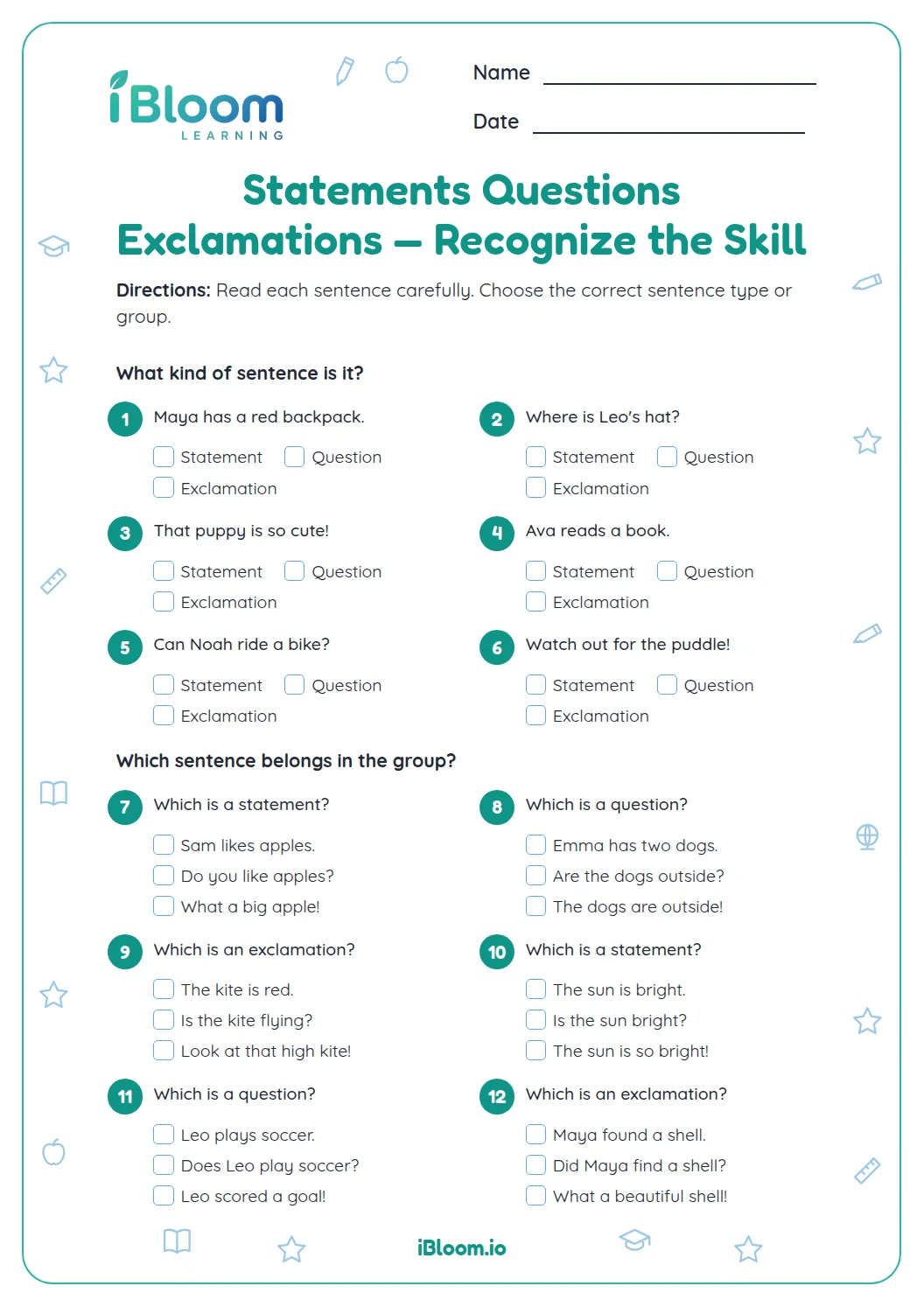
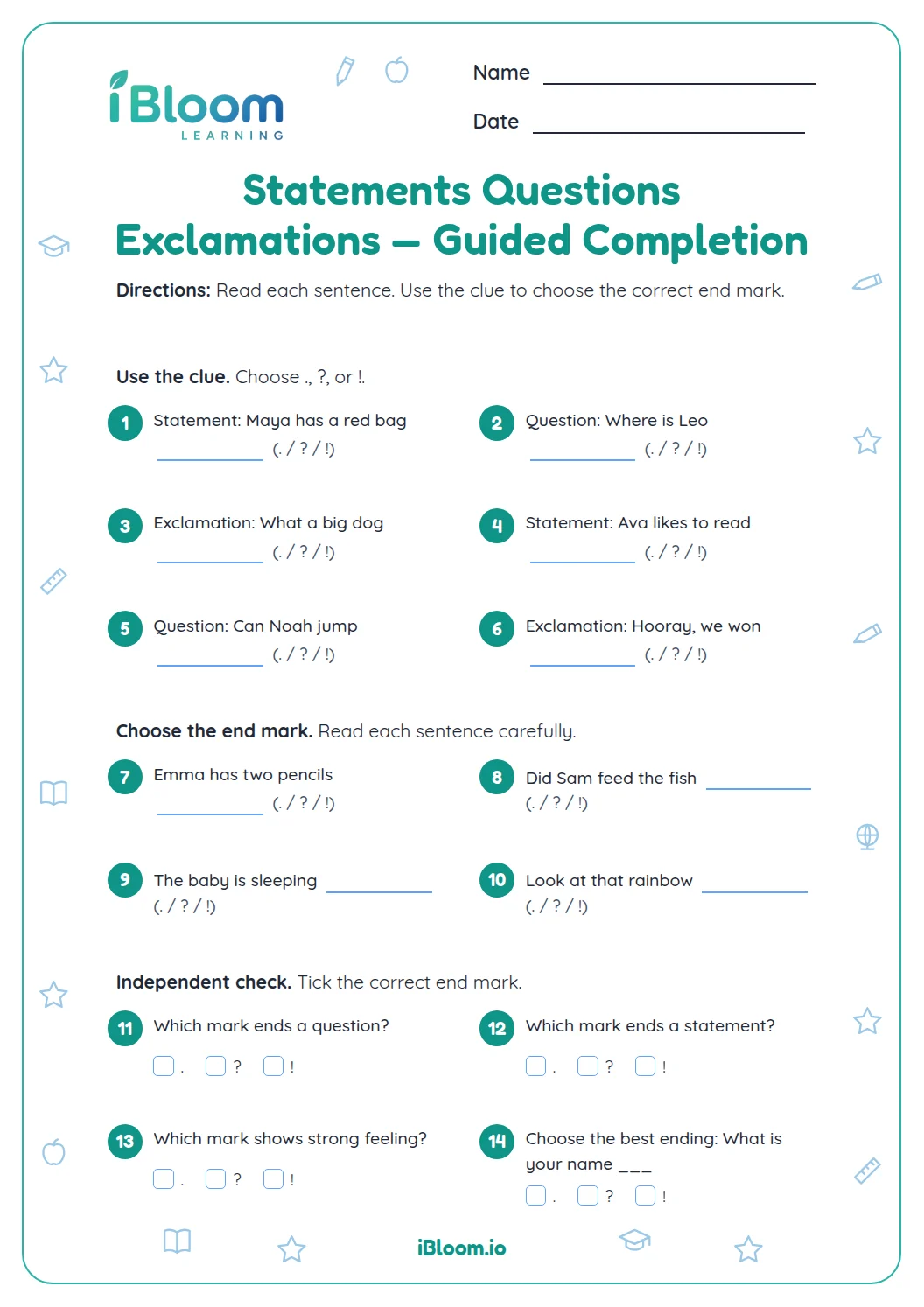
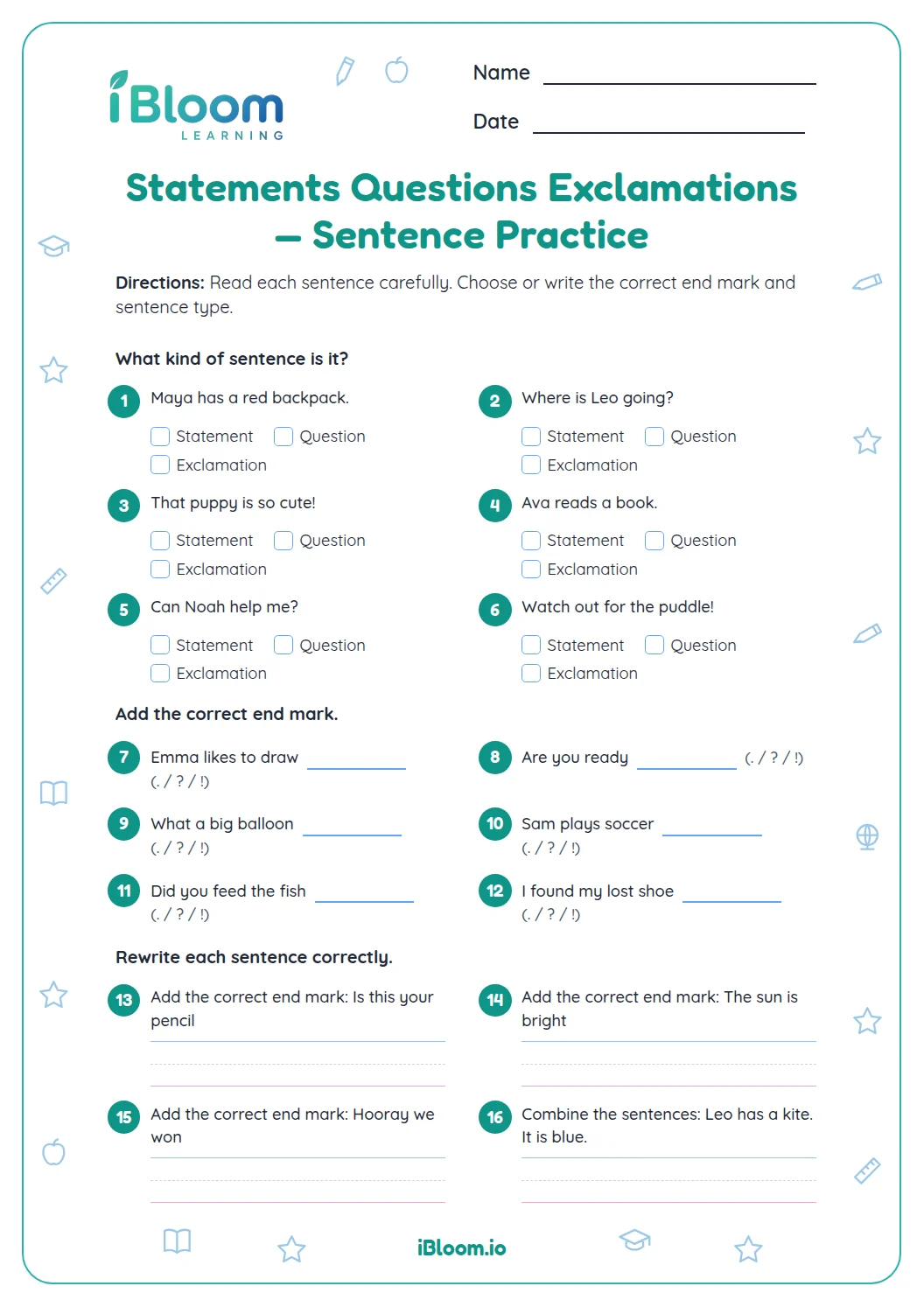
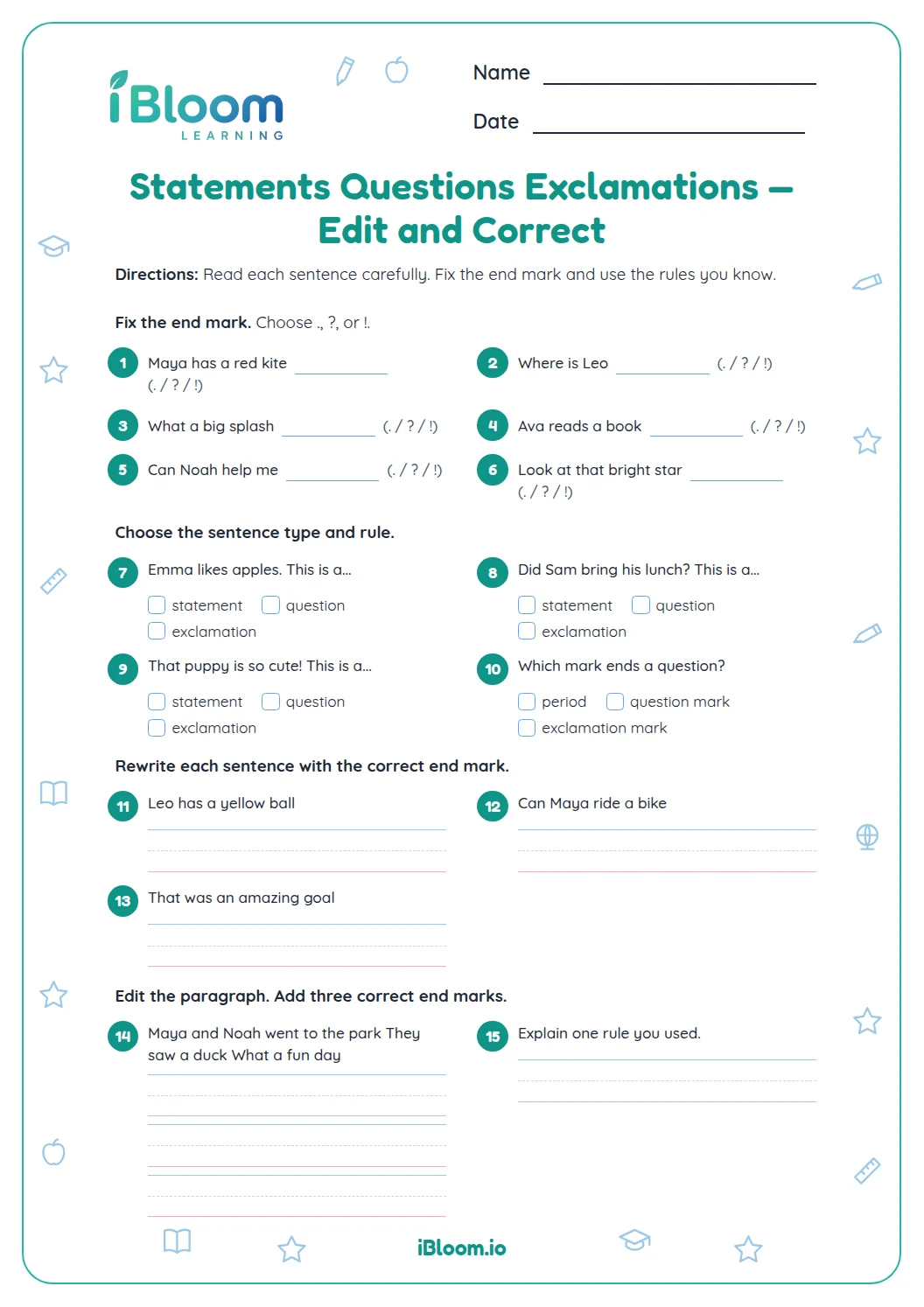
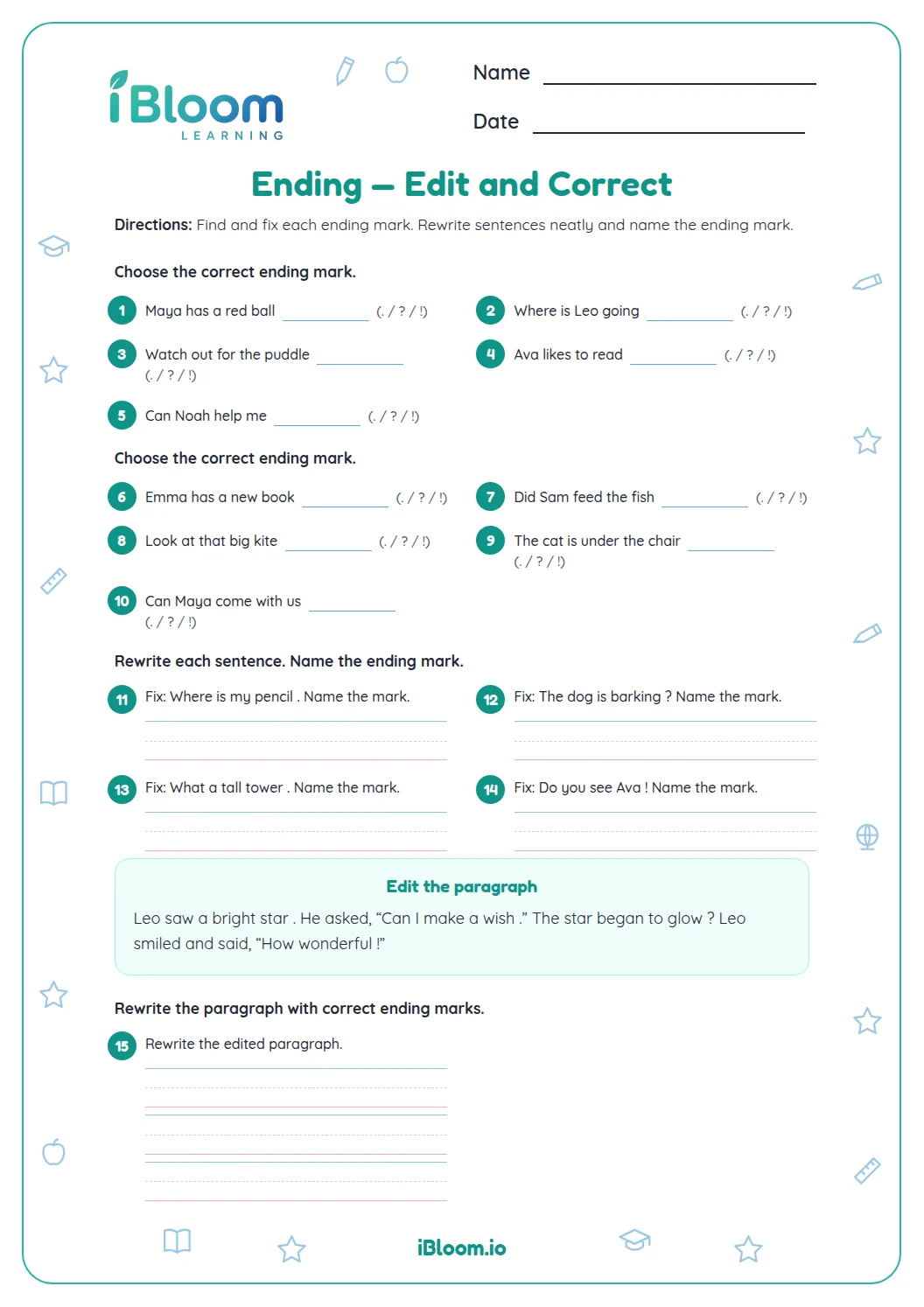
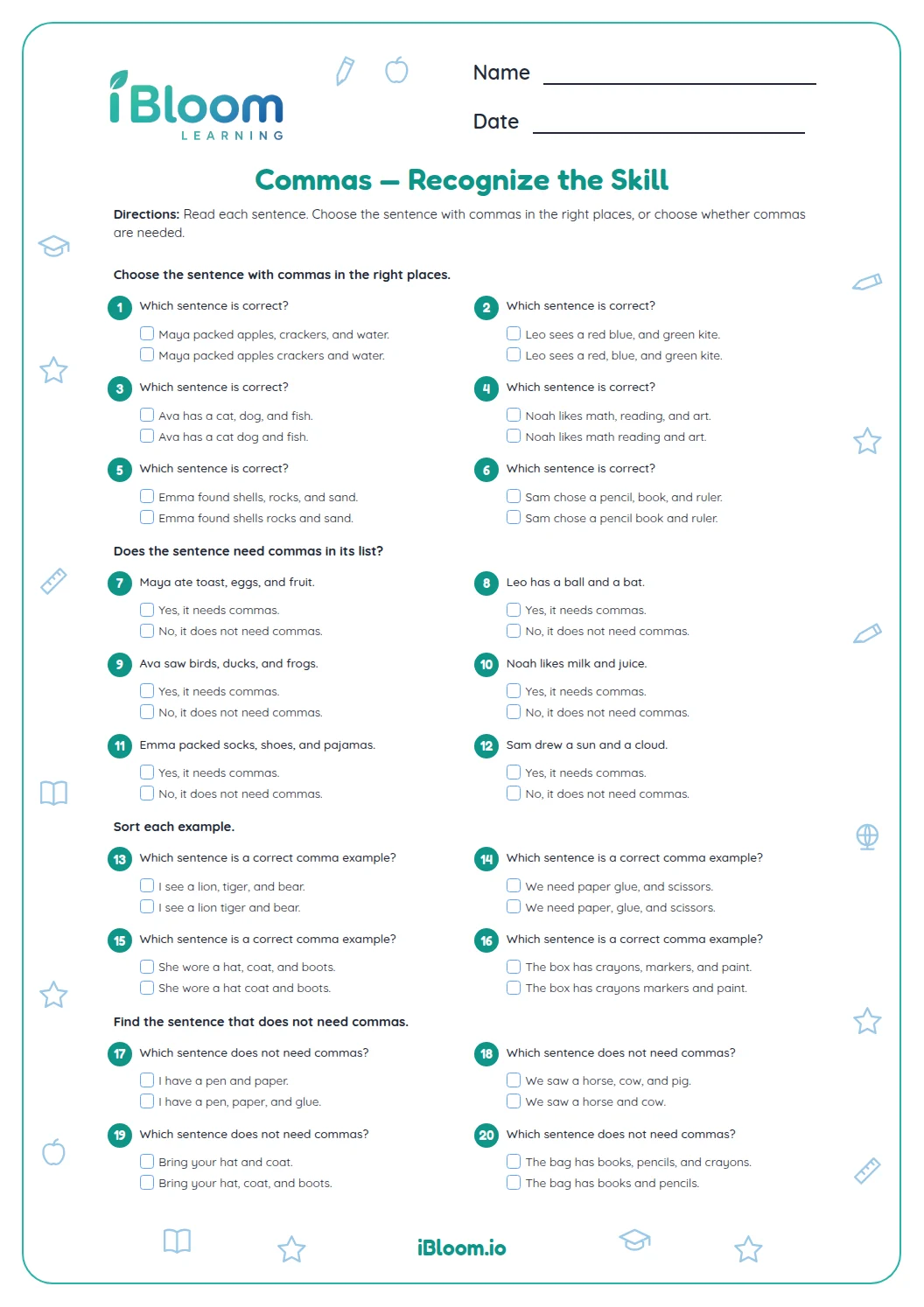
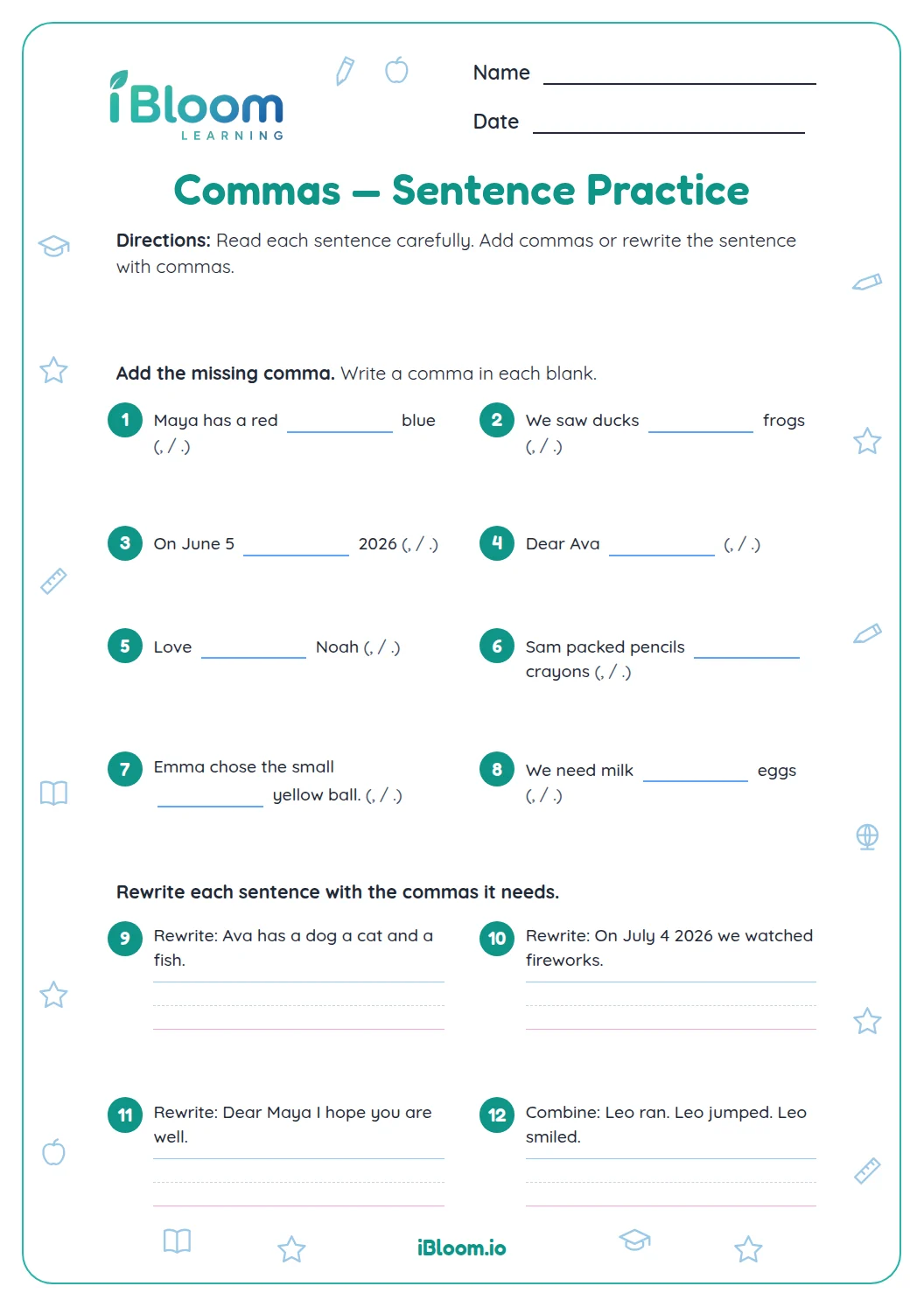
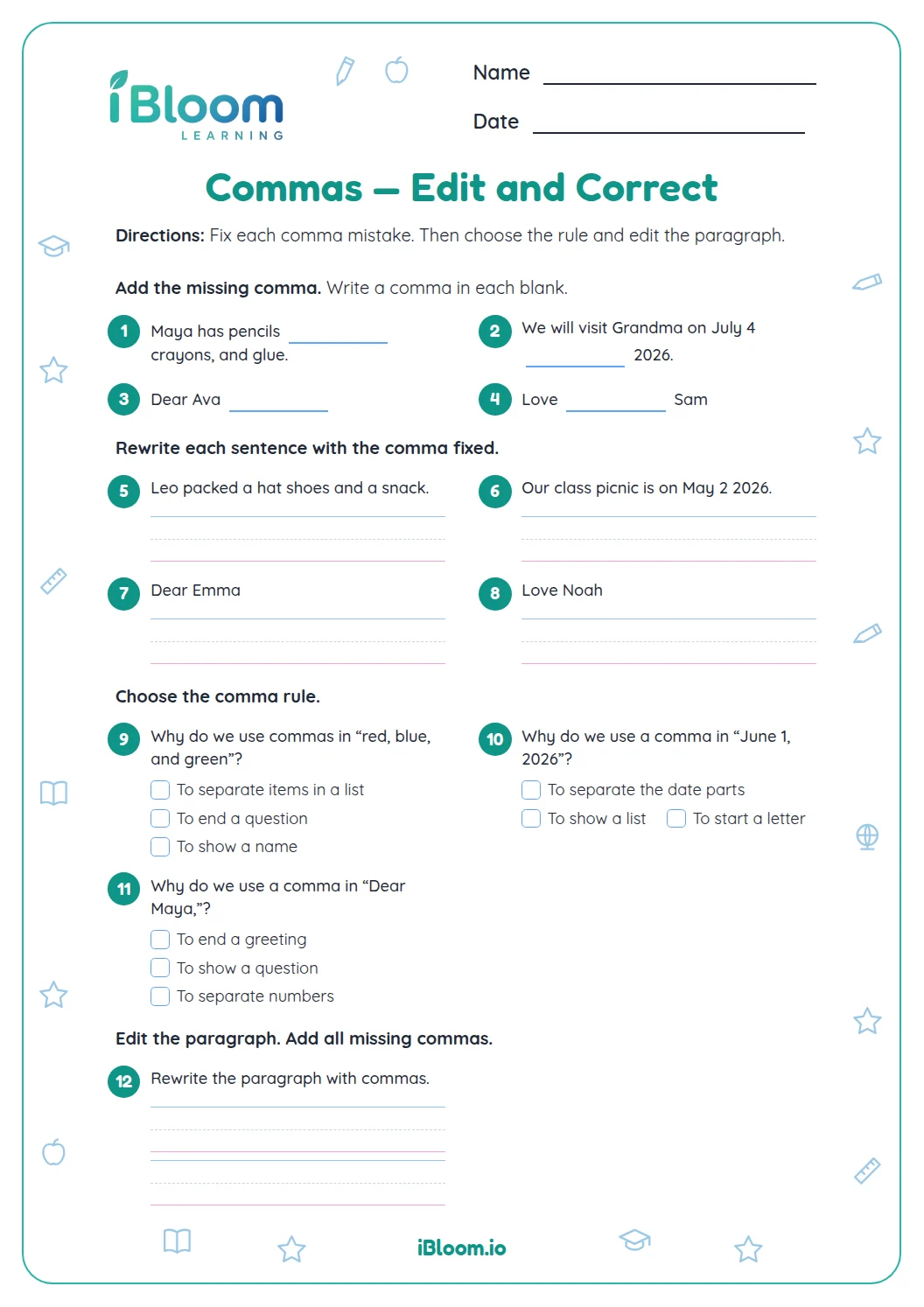
This Grade 1 punctuation worksheet helps children distinguish statements, questions, and exclamations and choose an ending mark that matches each sentence. The 16 questions include sentence-type choices, punctuation selection, revision choices, and short writing. It supports CCSS L.1.2.b through the use of end punctuation for sentences.
Aligned to L.1.2.b
What skill does this page practice?
This Grade 1 punctuation worksheet helps children distinguish statements, questions, and exclamations and choose an ending mark that matches each sentence. The 16 questions include sentence-type choices, punctuation selection, revision choices, and short writing. It supports CCSS L.1.2.b through the use of end punctuation for sentences.
How do children choose an ending mark?
First decide whether the sentence tells, asks, or expresses a strong feeling; then choose a period, question mark, or exclamation point. This sheet gives 16 practice items and a separate key.
How can learners check their work?
Read each sentence aloud and notice whether it tells something, asks, or shows a strong feeling. Choose a period, question mark, or exclamation mark that matches the sentence meaning.
What is one useful example?
Use an exclamation mark when the sentence strongly expresses excitement or another feeling; ordinary statements end with periods.
How to use this worksheet at home or in class
- 1Read each sentence aloud and notice whether it tells something, asks, or shows a strong feeling.
- 2Choose a period, question mark, or exclamation mark that matches the sentence meaning.
- 3In the writing section, reread the sentence with your ending mark to check that it sounds right.
- 4Use the answer key to check each response after completing the page.
Common mistakes and quick fixes
The mistake
Adding an exclamation mark to every sentence that sounds interesting.
The fix
Use an exclamation mark when the sentence strongly expresses excitement or another feeling; ordinary statements end with periods.
The mistake
Choosing a question mark because a sentence begins with “What.”
The fix
Check the whole sentence. “What a huge pumpkin!” expresses a feeling, so it is an exclamation.
The mistake
Rushing past the clue in the prompt.
The fix
Read the full item again and point to the detail that supports the answer.
Common Core alignment
Use end punctuation for statements, questions, and exclamations.
On this sheet:
Show the official wordingHide the official wording
Use end punctuation for sentences.
What to practice next
Further reading
Questions parents and teachers ask
What is a statement?
A statement tells something and usually ends with a period. “Maya packed her lunch.” gives information, so the worksheet identifies it as a statement. Children compare it with questions and exclamations in the first section. The first section includes telling sentences such as “Maya packed her lunch.” Children decide what the sentence does before moving on to punctuation choices and
How is a question different from an exclamation?
A question asks for information and ends with a question mark. An exclamation expresses a strong feeling and ends with an exclamation mark. Read the entire sentence to decide which purpose fits its words. For example, “Where is Leo’s blue book?” asks for information and ends with a question mark
Does a sentence beginning with “what” always ask a question?
No. “What a huge pumpkin!” expresses a strong reaction instead of asking for information. It is an exclamation, so it needs an exclamation mark. Reading the whole sentence helps children tell the difference. The word what can begin a question or an exclamation
What does the editing section ask children to do?
Children choose ending punctuation, compare sentence revisions, and write a few sentences for specific purposes. The key provides sample wording for open responses, while the child’s wording may differ and still be correct. One prompt asks children to rewrite a question as a statement Questions 13 through 15 provide writing lines.
How can I help a child choose a mark?
Read the sentence aloud and ask whether it tells, asks, or shows a strong feeling. Then choose the matching mark: a period, question mark, or exclamation mark. The sentence’s purpose guides the punctuation choice. For instance, “Did Sam bring his pencil” asks for information, so it needs a question mark
Is an answer key included?
Yes. The answer key lists correct sentence types and punctuation choices, with sample responses for writing items. Accept another sentence when it meets the prompt and ends with punctuation that matches its purpose. Use the key to check the fixed-choice items after practice The answer lines and selected options are visible on the matching page.