





About this worksheet
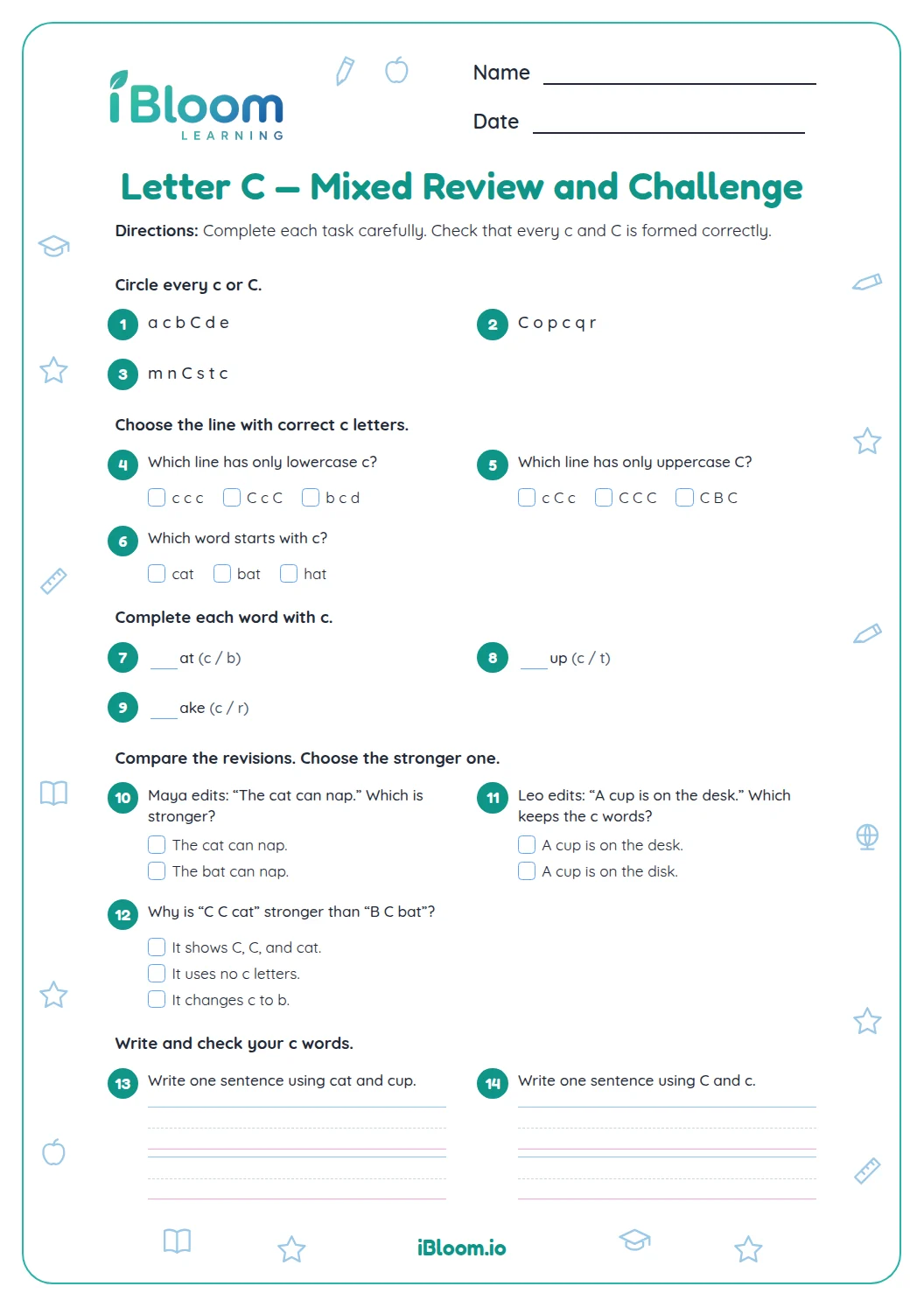
This free Grade 1 printable helps children form and recognize uppercase C and lowercase c. Students trace and copy the two forms, add c to finish familiar words, choose words that begin with C, and count lowercase c in short letter rows. The mix moves from handwriting to noticing how the letter appears in simple print. A separate answer key gives the expected letter, word or count for each item.
Aligned to L.1.1.a
How do children practice writing C and c?
Part A prints C and c on handwriting practice lines for tracing and copying. Encourage a smooth curve and a clear starting point, then have the child compare the copied letter with the model. The final rows combine the forms so children switch between uppercase and lowercase.
- 1Question 1: Trace C, then copy C.
- 2Question 2: Trace c, then copy c.
How does the letter C begin a word?
The word choices use familiar, concrete words: cat, cup, cake and car. In Part B, the blank is at the start of each word, so adding c completes the word. Part C asks children to notice that first sound when they choose a word.
- ___at → cat
- ___up → cup
- ___ake → cake
- ___ar → car
What should children look for in the final rows?
The last four items mix uppercase C and lowercase c. Children count lowercase c only, which helps them attend to letter shape instead of counting every form of the letter. Ask them to point to each lowercase c once as they count.
How to use the worksheet
- 1Name the uppercase and lowercase forms before beginning.
- 2Trace each model slowly, following the printed line.
- 3Copy the letter beside the model without lifting the pencil too often.
- 4Say each picture-free C word aloud after completing its first letter.
- 5In the last rows, count lowercase c only and check the key.
Common mistakes and quick fixes
The mistake
Using uppercase C when the blank completes a lowercase word.
The fix
Look at the other letters in cat, cup, cake and car; each needs a lowercase c.
The mistake
Reversing the curve or closing the opening in C.
The fix
Compare the traced letter to the model and keep the opening on the right.
The mistake
Counting uppercase C in the final lowercase-c rows.
The fix
Match the smaller rounded shape of c and count only exact lowercase forms.
Common Core alignment
This Grade 1 language standard names the letter-printing practice at the center of this page.
Print uppercase and lowercase letters.
On this sheet: Part A traces and copies C and c, then later questions apply the letter in words and a sentence.
Show the official wordingHide the official wording
Print all upper- and lowercase letters.
What to practice next
Make more practice
Further reading
Questions parents and teachers ask
Does this page practice uppercase C or lowercase c?
It practices both forms. The first two questions include uppercase C and lowercase c for tracing and copying, while the word activities use lowercase c at the beginning of familiar words. The final rows ask children to count lowercase c among mixed uppercase and lowercase letters.
What words do children complete?
The four word blanks make cat, cup, cake and car. Each blank appears at the start of the word and takes a lowercase c. Saying each completed word aloud connects the written letter with a familiar word, while keeping the focus on forming and recognizing C.
How should my child trace the letters?
Have your child begin at the model and follow its curved shape slowly, then copy the same form on the line. For uppercase C, leave the opening on the right. For lowercase c, make a small open curve rather than closing it like an o.
What does the last part ask children to do?
The last four rows mix uppercase C with lowercase c. Children count only lowercase c, not every form of the letter C. This encourages close visual attention after the tracing and word-completion practice, and the answer key lists each row’s lowercase-c count.
Is this a reading worksheet?
The page focuses on printing and recognizing one letter, rather than passage reading. It uses familiar words and short sentences to give the letter a context. An adult can say the words aloud as needed while the child concentrates on forming C and noticing c.