




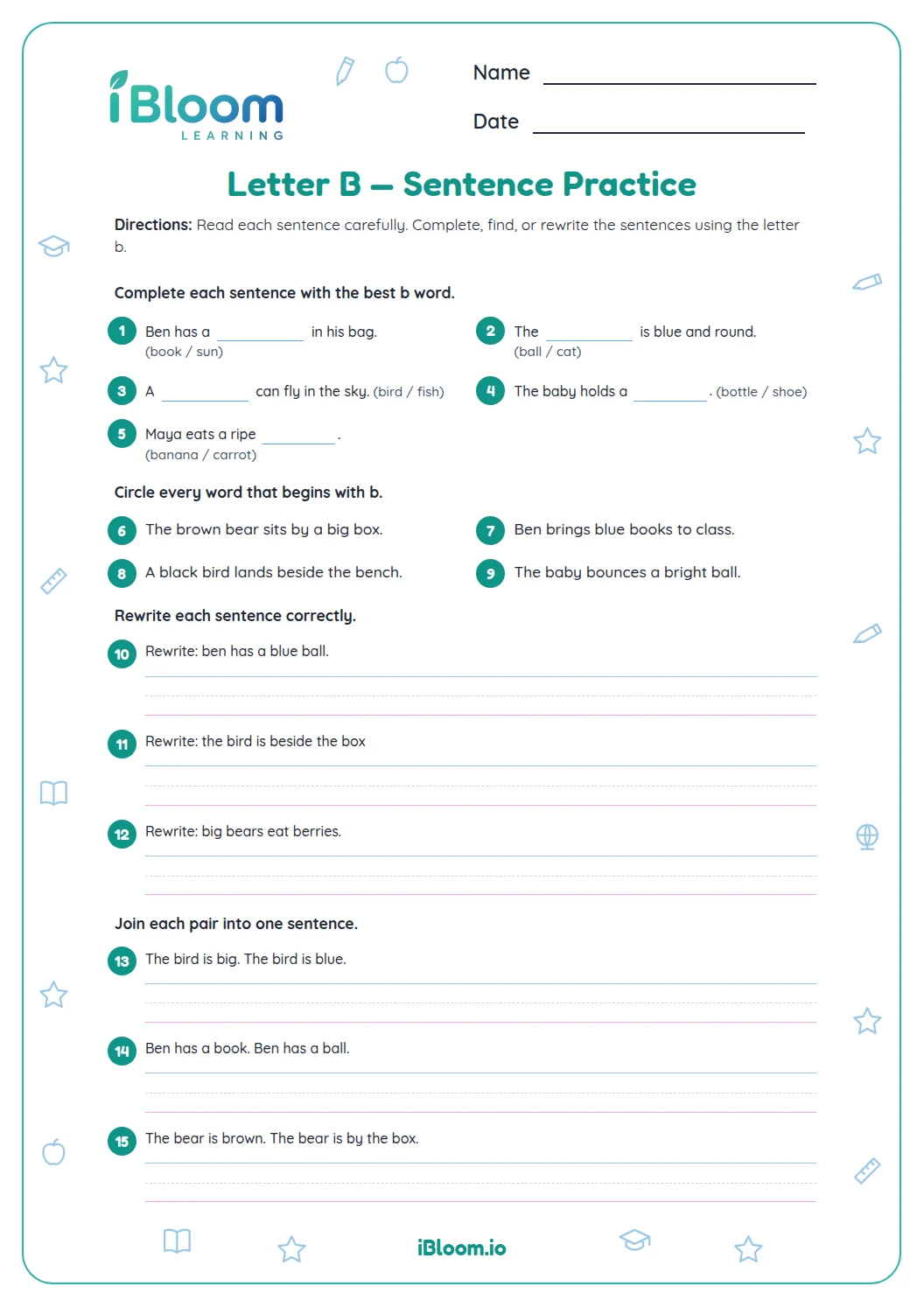
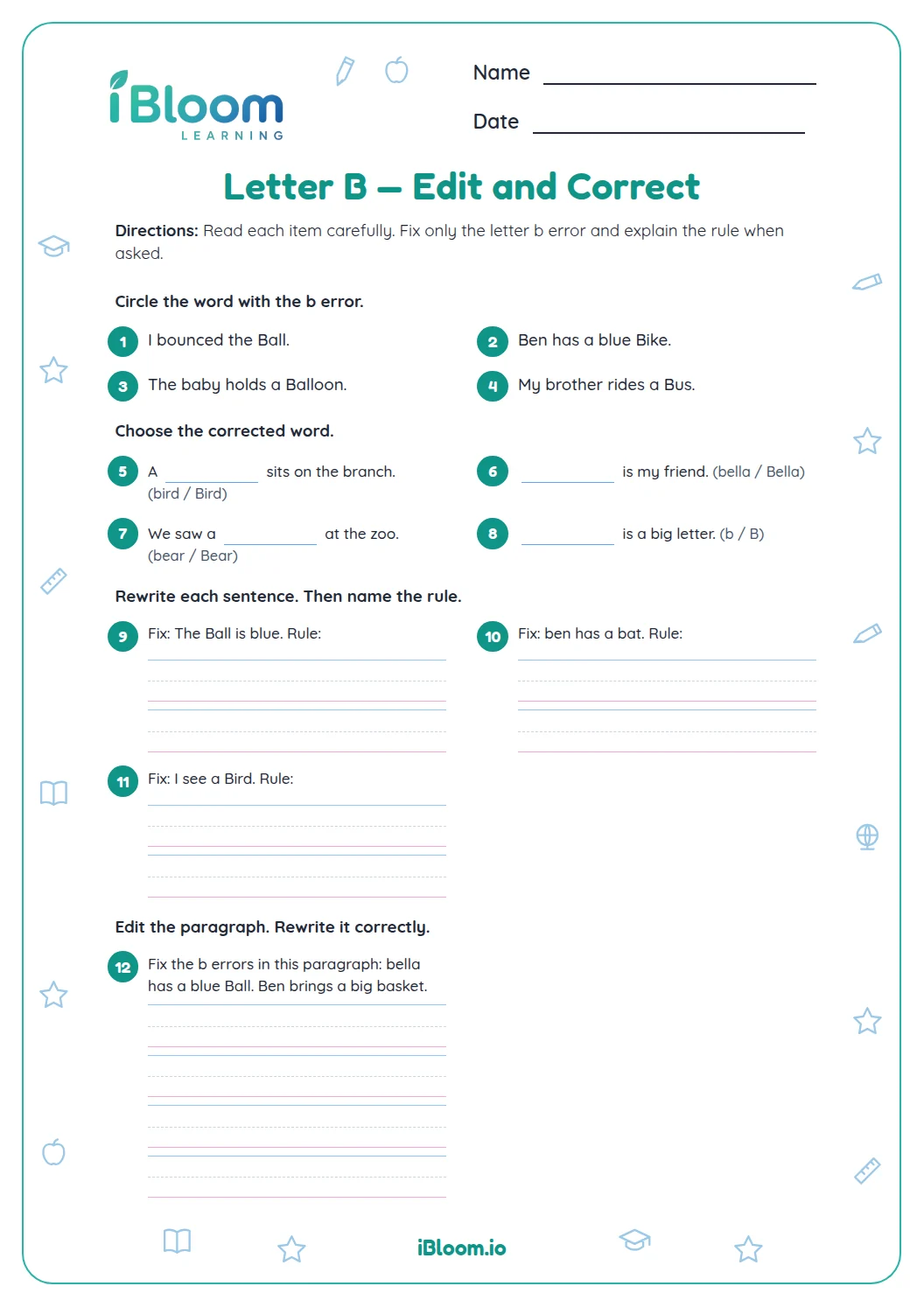


About this worksheet
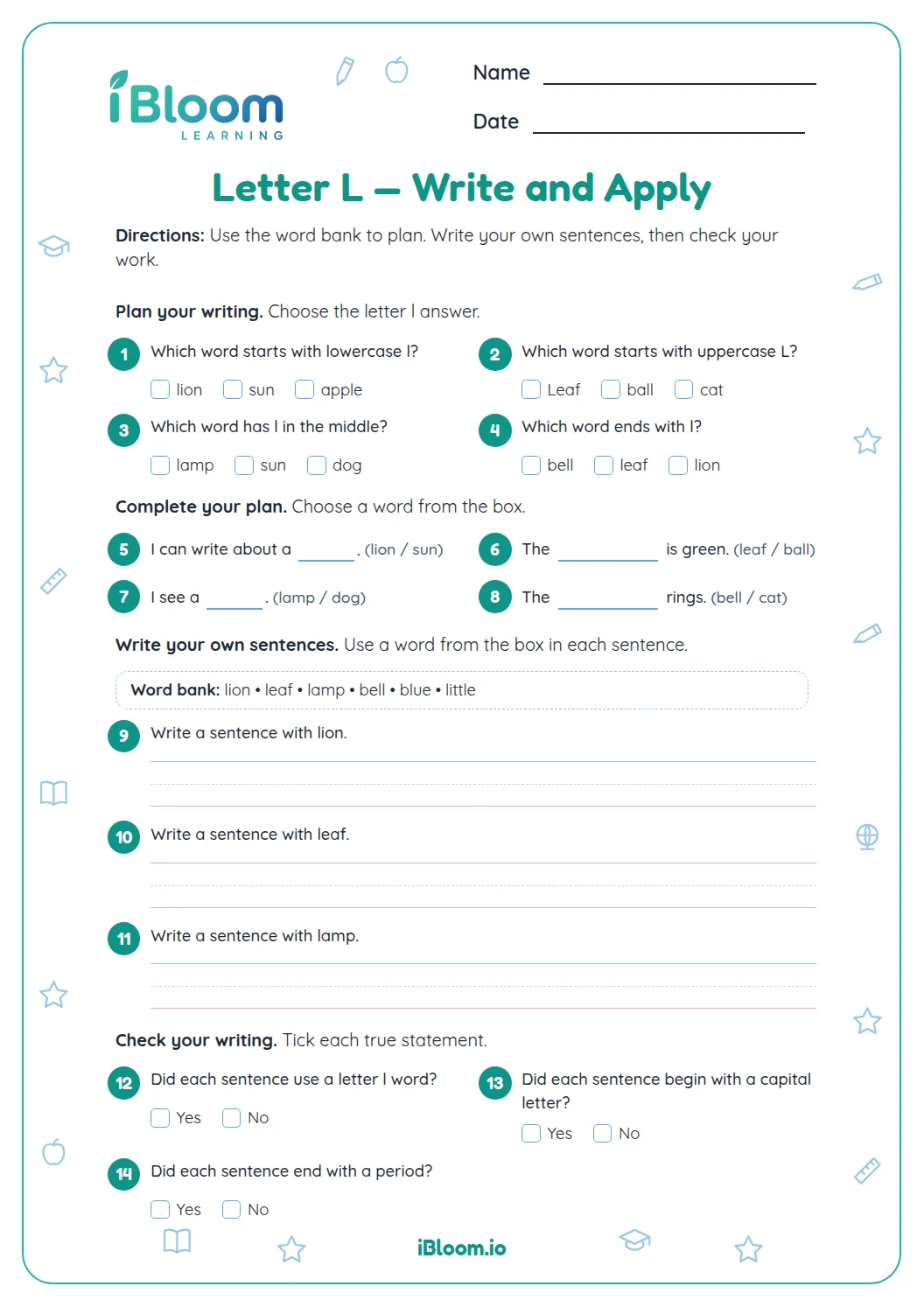
This printable Grade 1 Letter L worksheet asks children to recognize uppercase L and lowercase l, then edit short sentences with L words and names. The questions move from choosing a correctly written example to correcting a sentence, with a separate answer key. Several items focus on capitalizing names such as Lisa and Lily, a skill named in CCSS L.1.2.a.
Aligned to L.1.2.a
What kinds of Letter L practice are included?
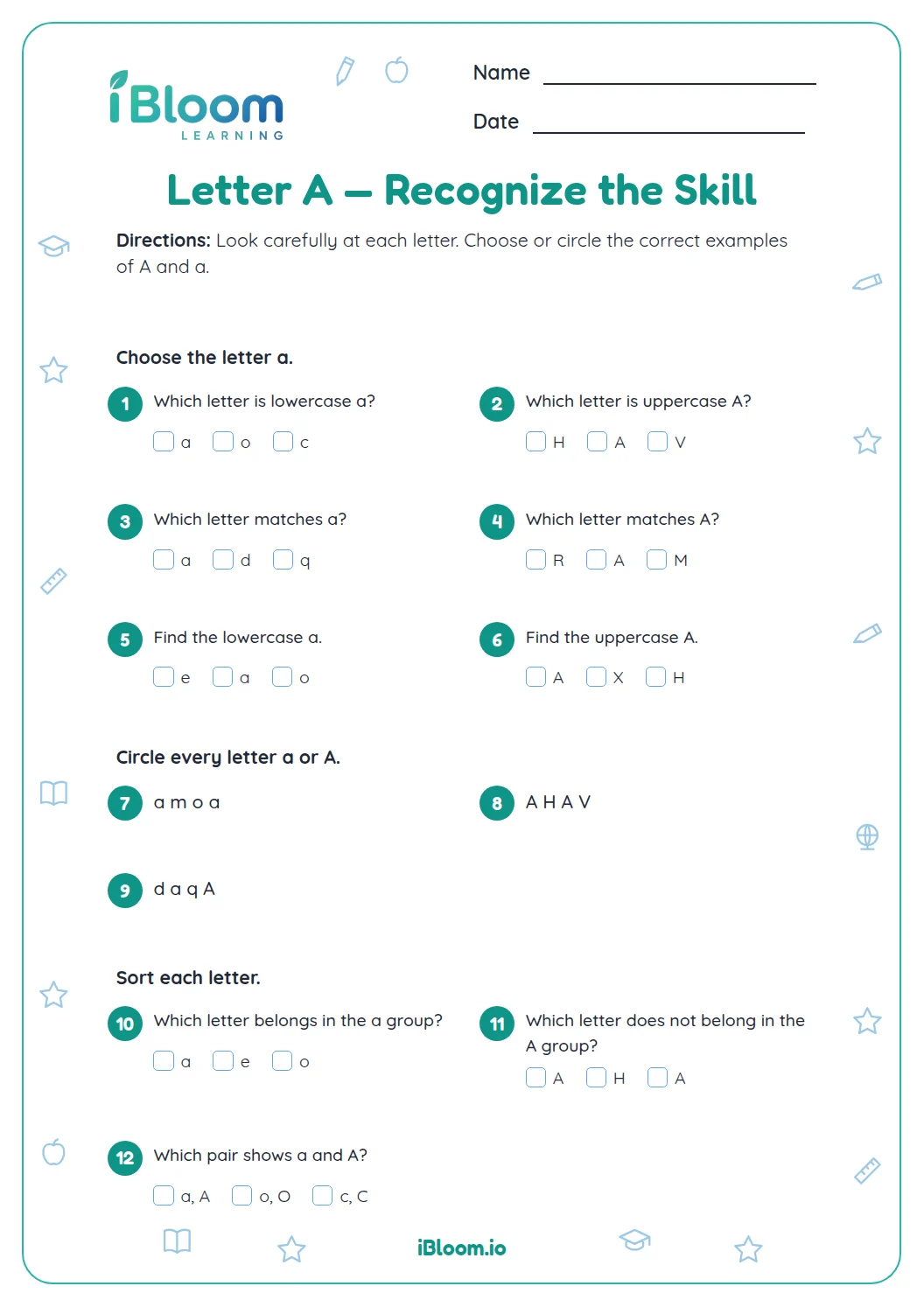
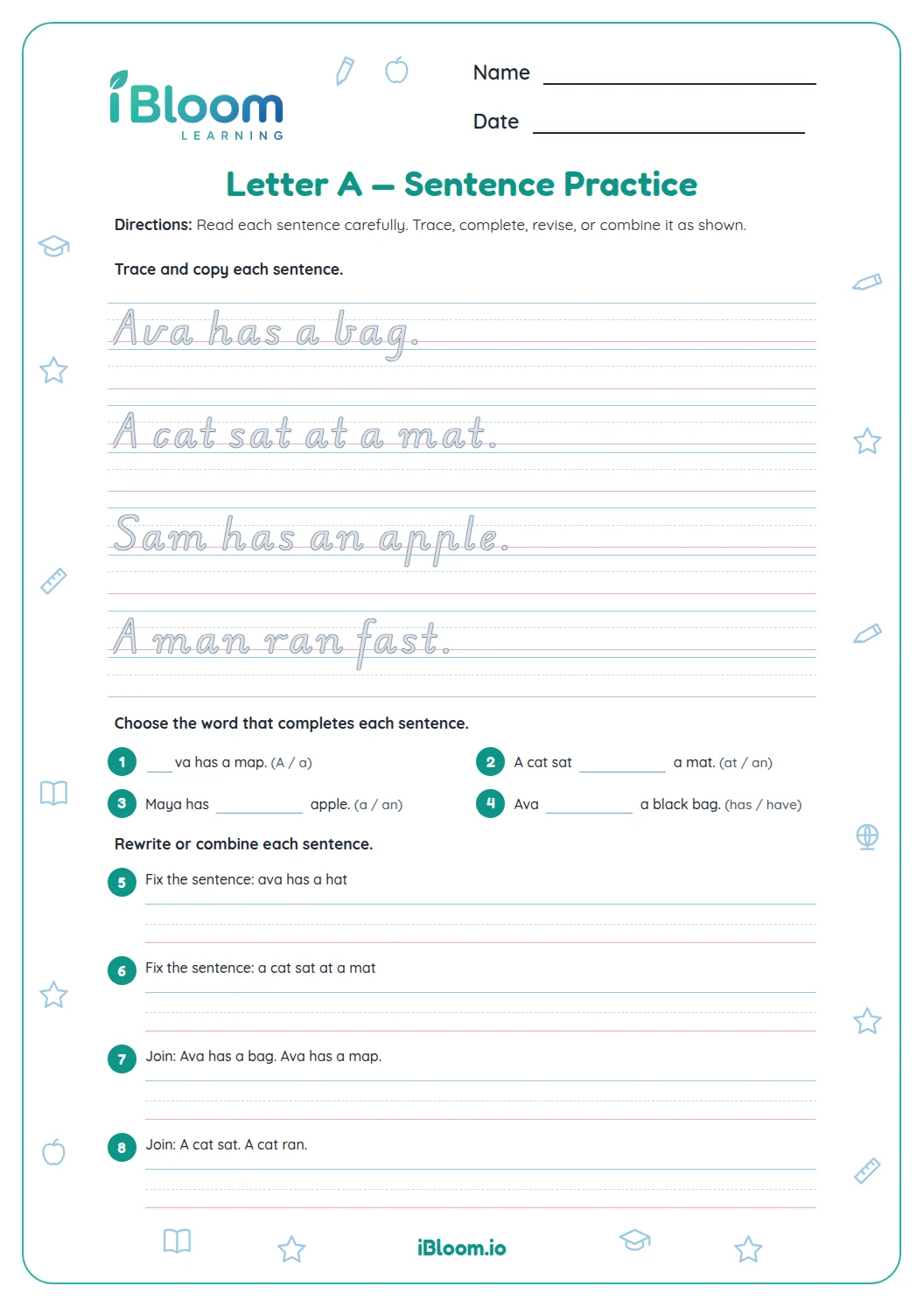
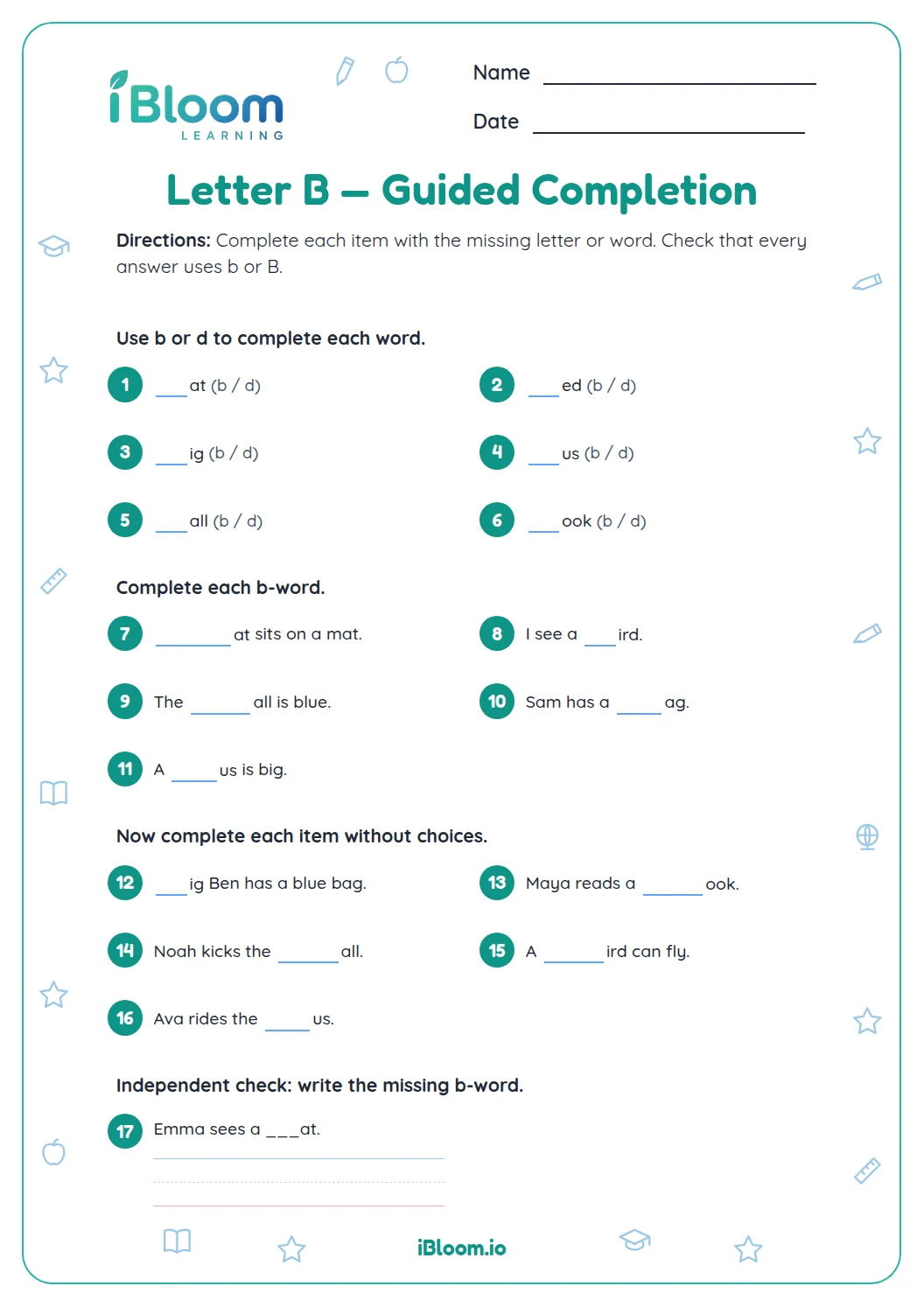
The first part asks children to recognize correct capitalization and punctuation. The second part asks them to repair a word or sentence. The last part provides guided copy practice with L and familiar L words.
- 1lisa likes lemons. → Lisa likes lemons. (Capitalize the name and start the sentence with a capital.)
When should a child use uppercase L?
Use uppercase L at the beginning of a sentence and at the beginning of a person’s name such as Lily. Inside a common word such as “leaf,” use lowercase l.
How can children check a sentence?
Read it once for capital letters and once for its ending mark. A statement needs a period. A name begins with a capital letter wherever it appears.
How to use this worksheet
- 1Complete the recognition choices before editing.
- 2Read each sentence aloud to hear where it ends.
- 3Check the first word and any name for capitals.
- 4Rewrite the whole sentence so the correction is easy to see.
- 5Copy each letter or phrase slowly, keeping L tall and l short.
Common mistakes and quick fixes
The mistake
Capitalizing every L inside a word.
The fix
Capitalize the first letter of a sentence and names; use lowercase l in ordinary words.
The mistake
Forgetting the end mark when correcting a sentence.
The fix
After rewriting, check the final word and add the needed punctuation.
The mistake
Making lowercase l the same height as uppercase L.
The fix
Compare the two forms: uppercase L reaches the top writing line; lowercase l is shorter.
Common Core alignment
This page connects letter formation to the editing work children do with familiar words and sentences.
Capitalize people’s names in the sentence corrections.
On this sheet: Children correct the capitalization of the names Lisa and Lily in sentence items.
Show the official wordingHide the official wording
Capitalize dates and names of people.
What to practice next
Make more practice
Further reading
Questions parents and teachers ask
What is this Letter L worksheet for?
This printable helps Grade 1 children notice uppercase L and lowercase l, edit simple sentences and recognize correctly written words. Familiar examples include leaf, lamp, lemon and lamb. Children also capitalize names such as Lisa and Lily while correcting the sentences.
Which letter forms do children practice?
Children identify uppercase L and lowercase l in familiar words, names and sentences. The page asks them to choose correctly written examples and edit short sentences with letter-case errors. An adult can point out the tall capital L and the smaller lowercase l as the child reads each corrected line.
How many items are included?
There are 14 items: ten recognition choices and four sentence corrections. The separate answer key lists the right choice for each multiple-choice question and the corrected version of each sentence. Children see uppercase and lowercase L in familiar words before applying capitalization while editing.
What should children check when editing?
Check that a sentence begins with a capital, names begin with capitals, and each sentence ends with punctuation. Also check that lowercase l stays lowercase inside common words such as leaf and lamp while editing. Reading the corrected sentence aloud is a quick way to check that it sounds complete and ends correctly.
Can a child write directly on the worksheet?
Yes. The last four items ask children to rewrite a sentence with its corrections. An adult can ask the child to point to each change and explain why it needs a capital or end mark before rewriting it neatly. It builds confidence.