


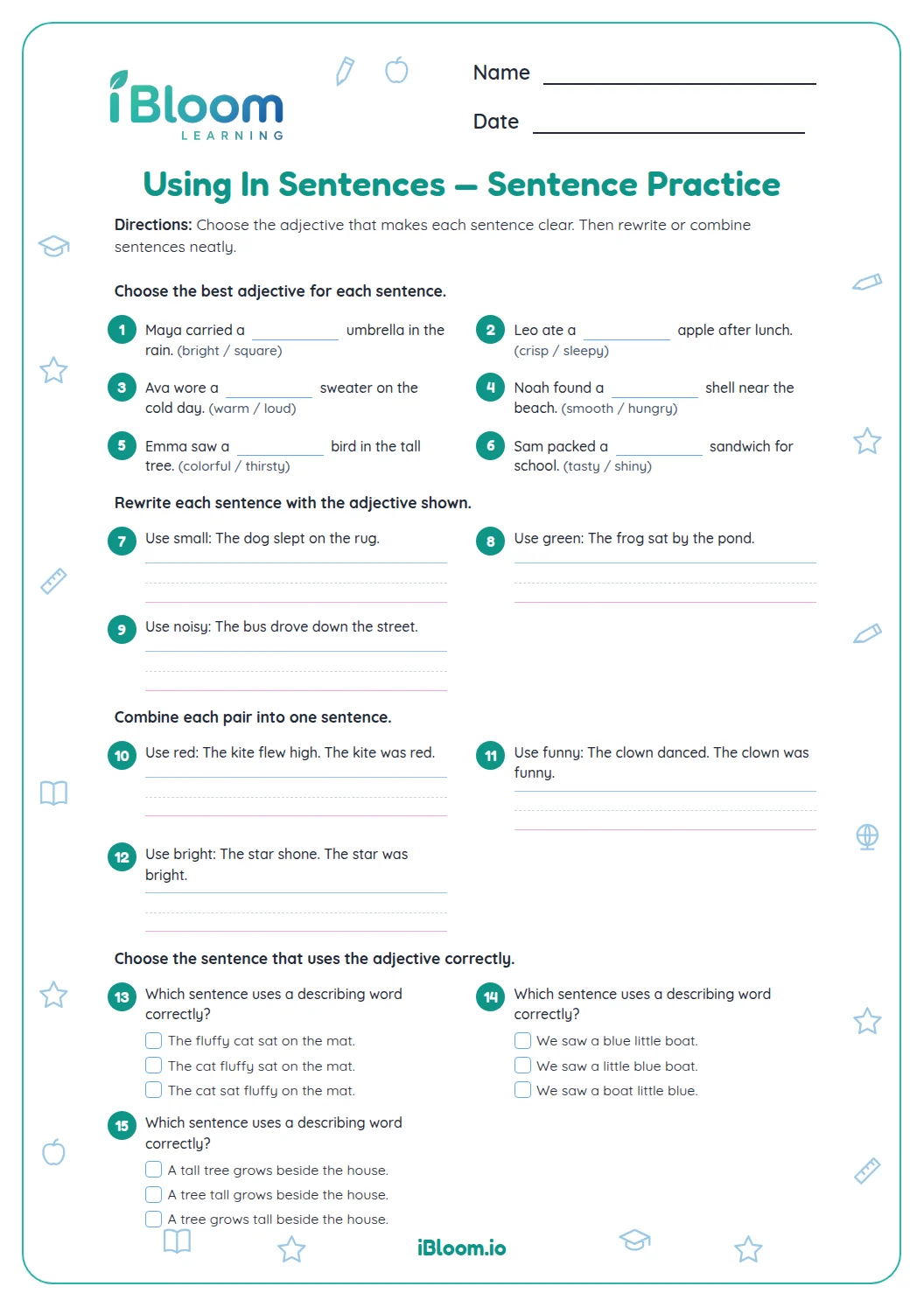

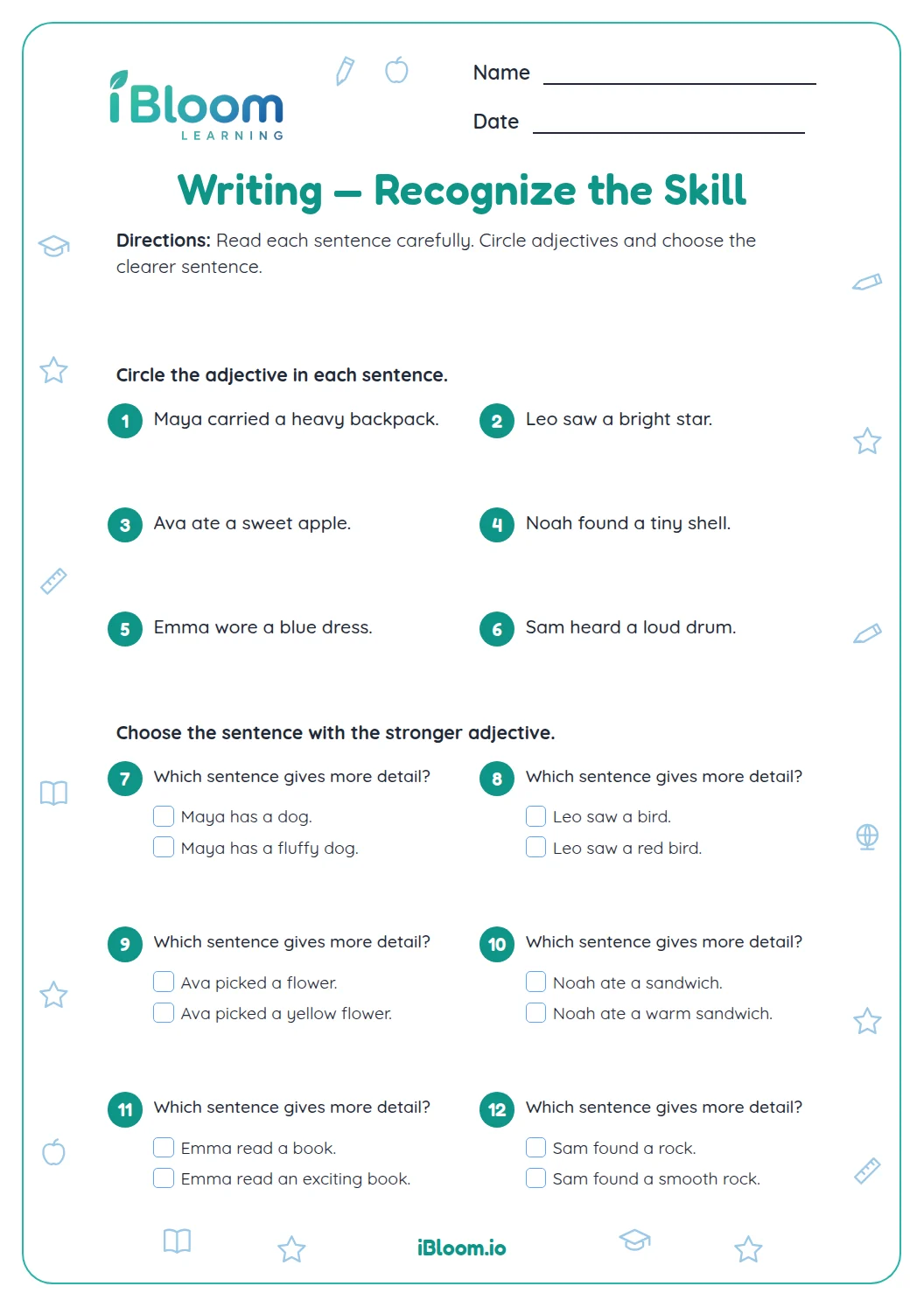


About this worksheet
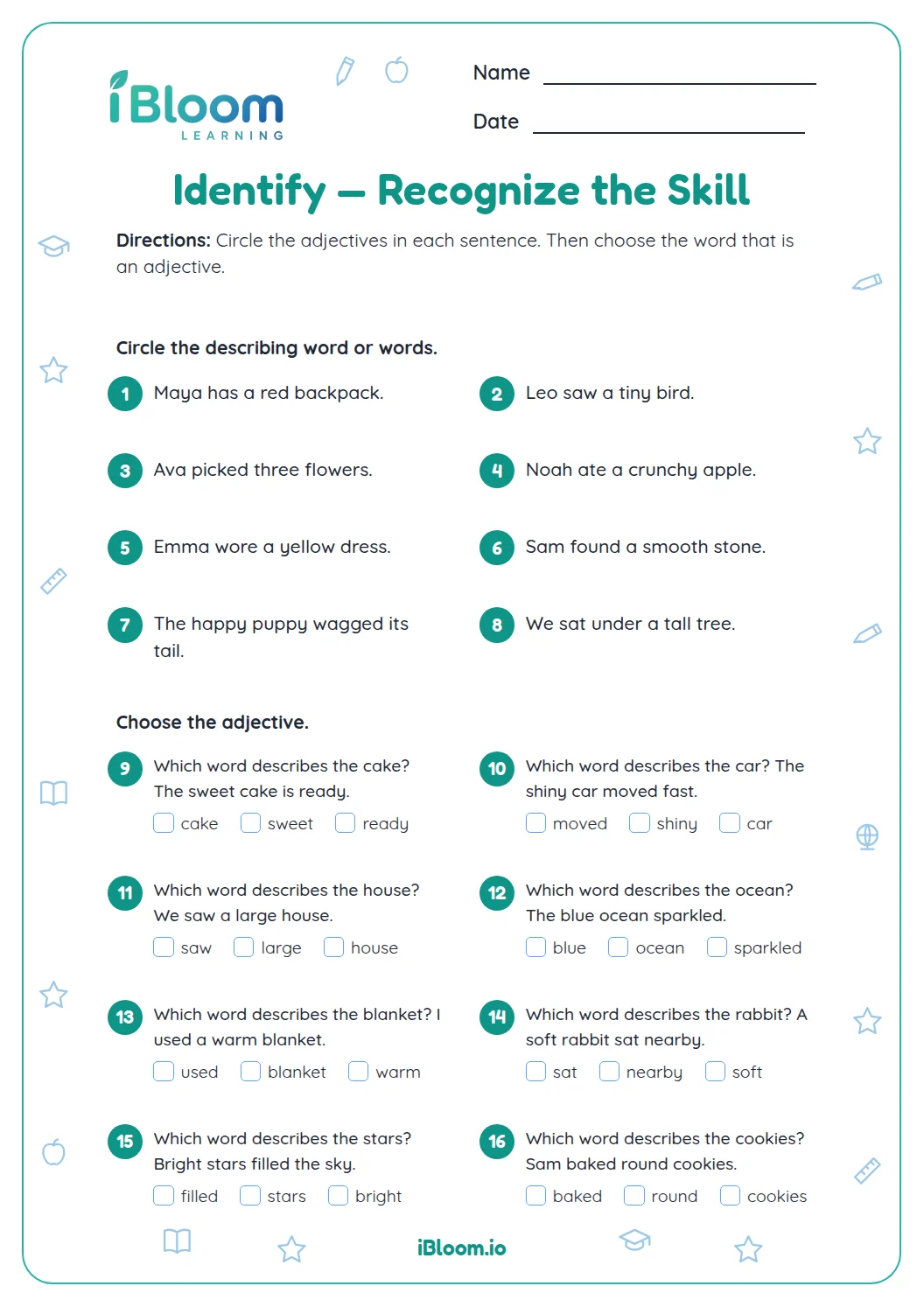
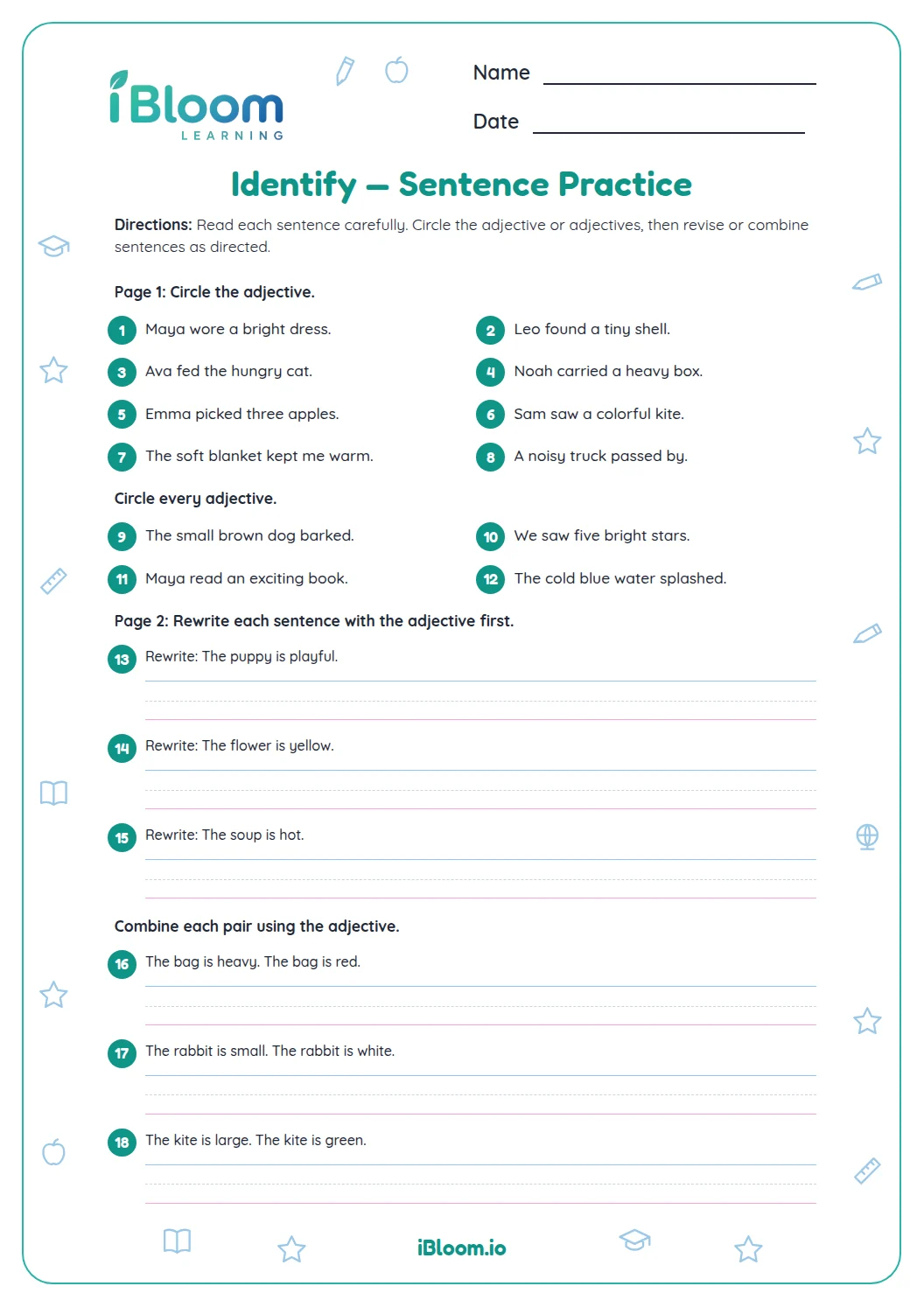
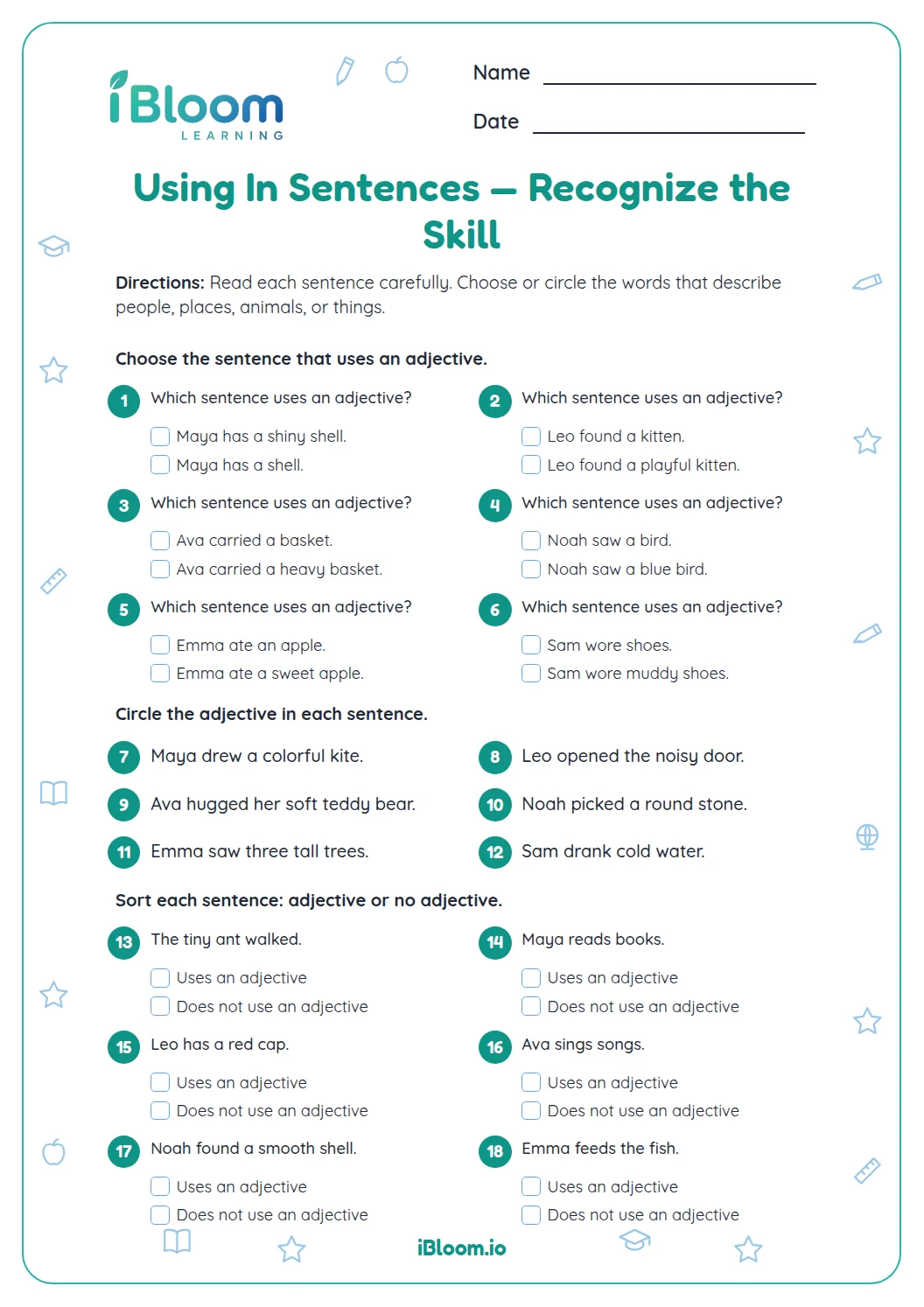
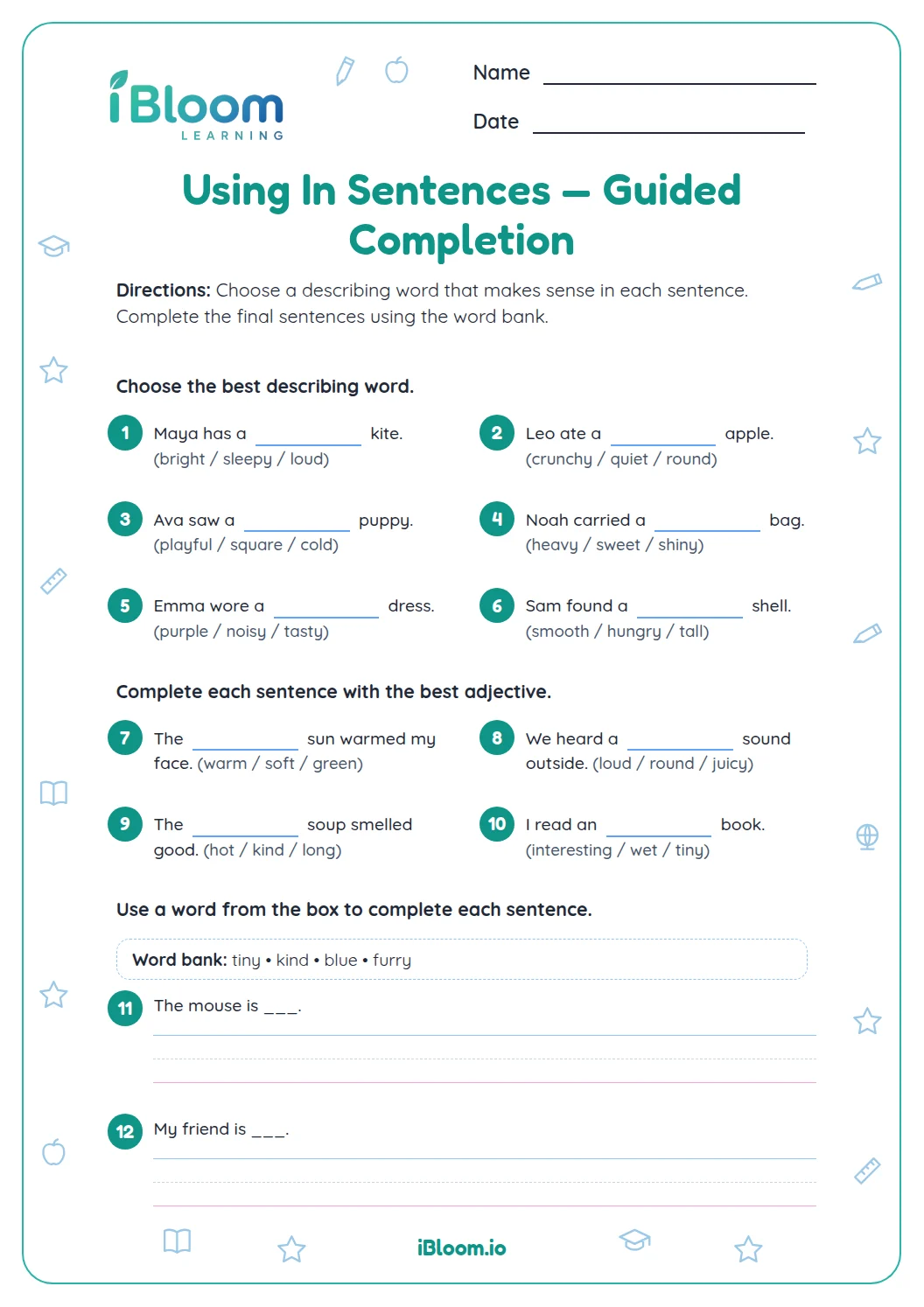
This Grade 2 worksheet guides students through 14 adjective questions. They choose a describing word, identify an adjective in a sentence, and add a fitting adjective to complete a sentence. Each identification sentence has one adjective to circle, and the key gives sample answers for the open blanks. It aligns with L.2.1.e.
Aligned to L.2.1.e
How can I spot an adjective?
Find the noun first. Then ask whether a nearby word tells what that person, place, animal or thing is like.
- 1The sleepy cat curled up. → sleepy describes the cat.
Can more than one adjective fit?
The last two prompts invite different reasonable answers. The answer key gives one sample for each; accept another adjective if it describes the noun and makes a sensible sentence.
How can I check an adjective?
Ask whether the word gives a detail about a naming word. If it tells what the noun is like, it is acting as an adjective in that sentence.
- 1The sleepy cat curled up. “Sleepy” describes the cat.
How to use this worksheet
- 1Read the sentence and find the noun.
- 2For a choice, select the word that describes the noun.
- 3In the identification part, circle the single adjective in each sentence.
- 4For the final two blanks, add an adjective and read the sentence aloud.
Common mistakes and quick fixes
The mistake
Choosing an action word such as “jump” to fill a describing-word blank.
The fix
Ask which word tells what the noun is like. “Green frog” describes; “jump” names an action.
The mistake
Choosing a noun instead of an adjective when identifying a describing word.
The fix
Find the naming word first, then look for a word that tells more about it.
The mistake
Circling the noun instead of the describing word.
The fix
Name the person, place, animal or thing first, then circle the word that tells more about it.
Common Core alignment
This Grade 2 worksheet practices the grade-level skill described by the Common Core standards below.
Use adjectives and adverbs in sentences.
On this sheet: Students identify adjectives and use them to describe nouns in complete sentences.
Show the official wordingHide the official wording
Use adjectives and adverbs, and choose between them depending on what is to be modified.
What to practice next
Make more practice
Further reading
Questions parents and teachers ask
What does an adjective do?
An adjective describes a noun. It can tell what a person, animal, place or thing is like, as in “tiny bird” or “warm soup.” On this page, children choose an adjective, find one in a sentence and add their own describing word.
How can a student spot an adjective?
Find the noun in the sentence, then look for a word that tells what it is like. In “The sleepy cat curled up,” sleepy describes cat. Some sentences contain other kinds of words too, so ask which word gives more information about the naming word.
Can different adjectives fit the last sentences?
Yes. The final prompts invite different sensible describing words. The answer key gives one sample answer, but another adjective is correct if it fits the noun and makes a complete sentence. Encourage a child to explain why the chosen word describes that noun.
How is an adjective different from a verb?
An adjective describes a noun, while a verb tells an action or state. “Tiny bird” describes; “the bird flew” tells what happened. A word’s job depends on how it is used in its sentence, so check what it tells the reader.
How many open-ended adjective blanks are there?
There are two sentence-completion prompts at the end of the worksheet. The answer key supplies one sample adjective for each, but other words can also be correct when they describe the noun and make sense in the sentence.