





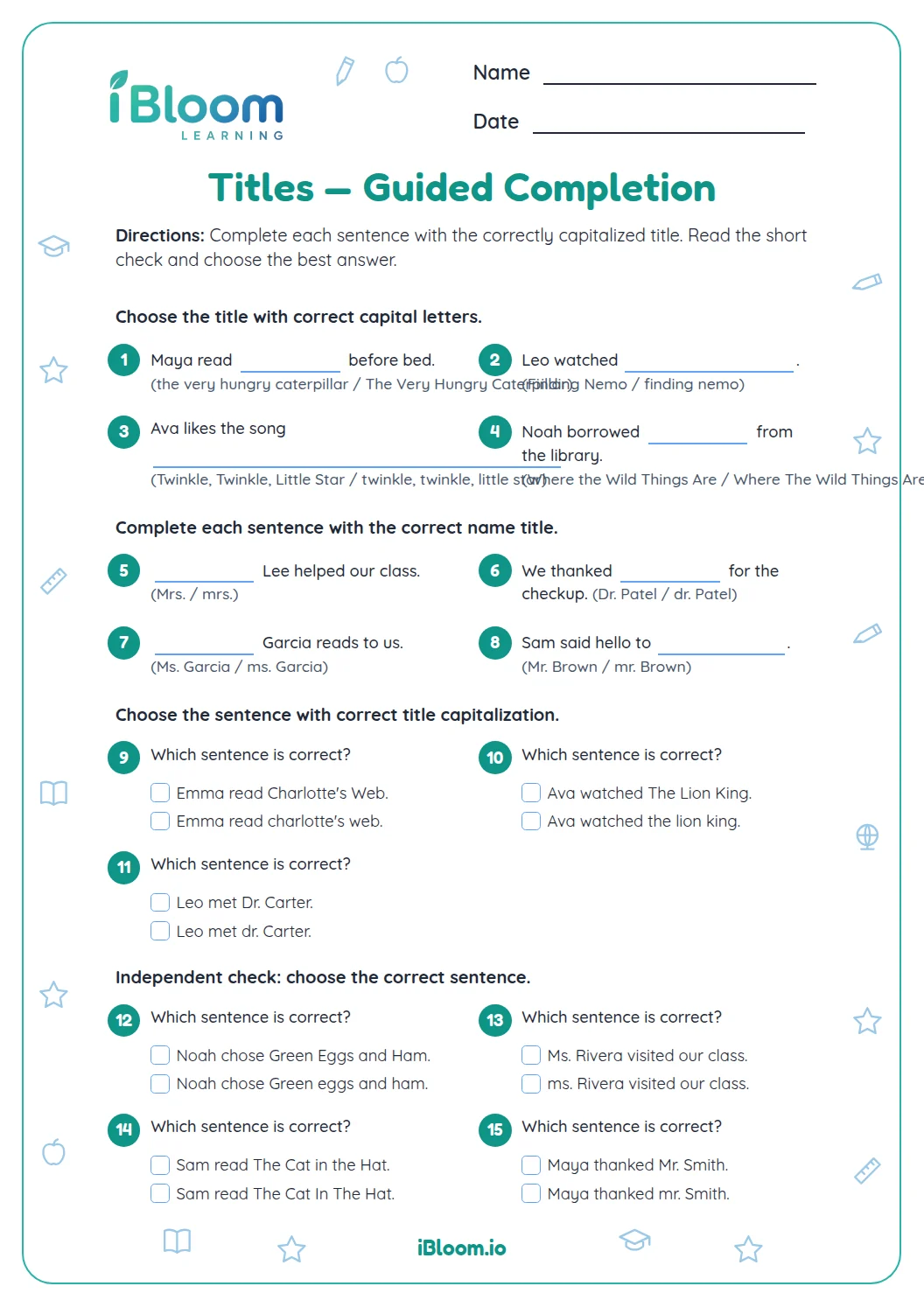


About this worksheet
This free printable Grade 2 worksheet gives children 15 chances to capitalize names of people and pets, titles, and specific places. It includes sentence edits, multiple-choice checks, and one original sentence. A separate answer key gives corrected forms and a sample response. The questions practice capitalization while children edit and write complete sentences.
Aligned to L.2.2
What is on this worksheet?
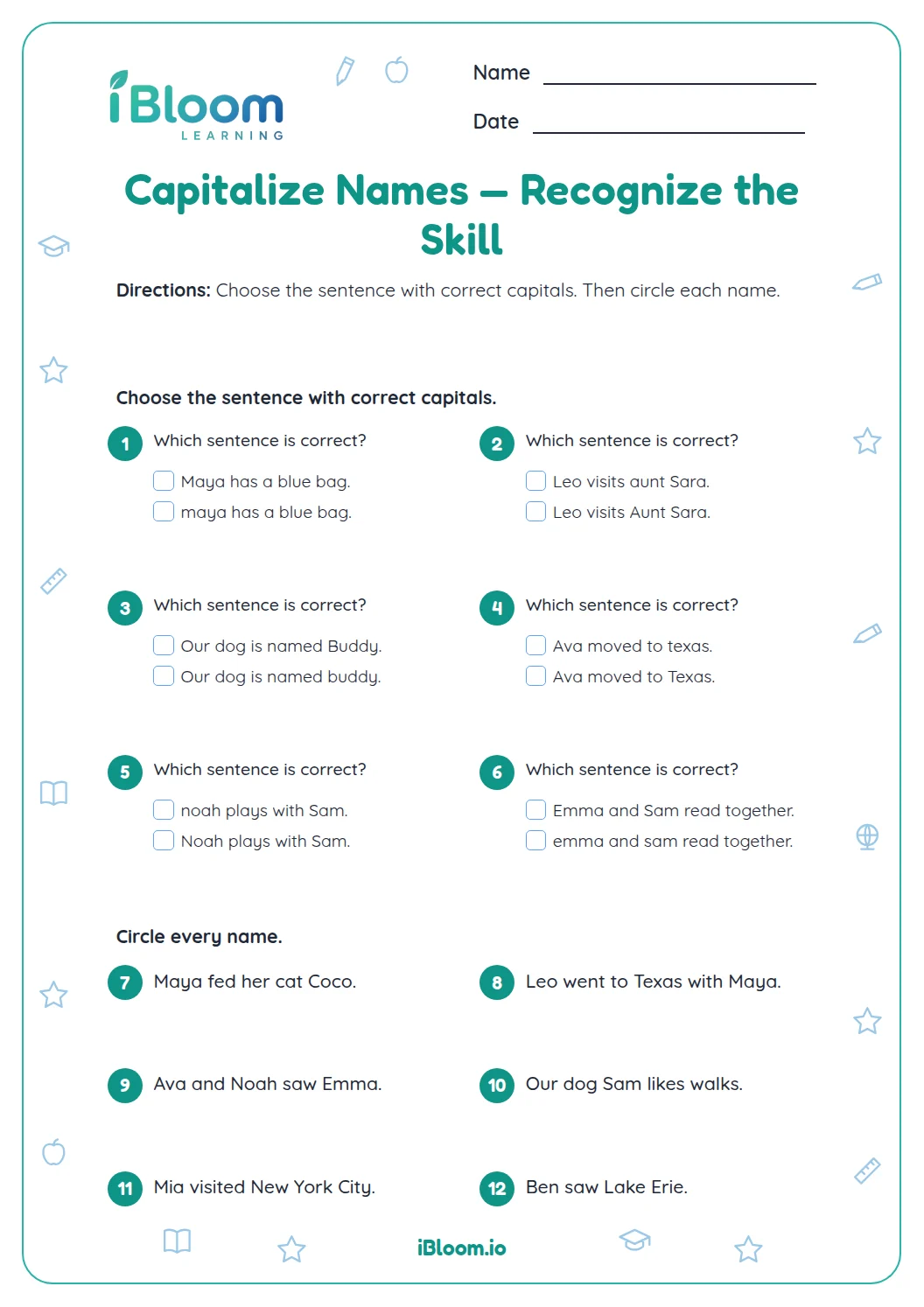
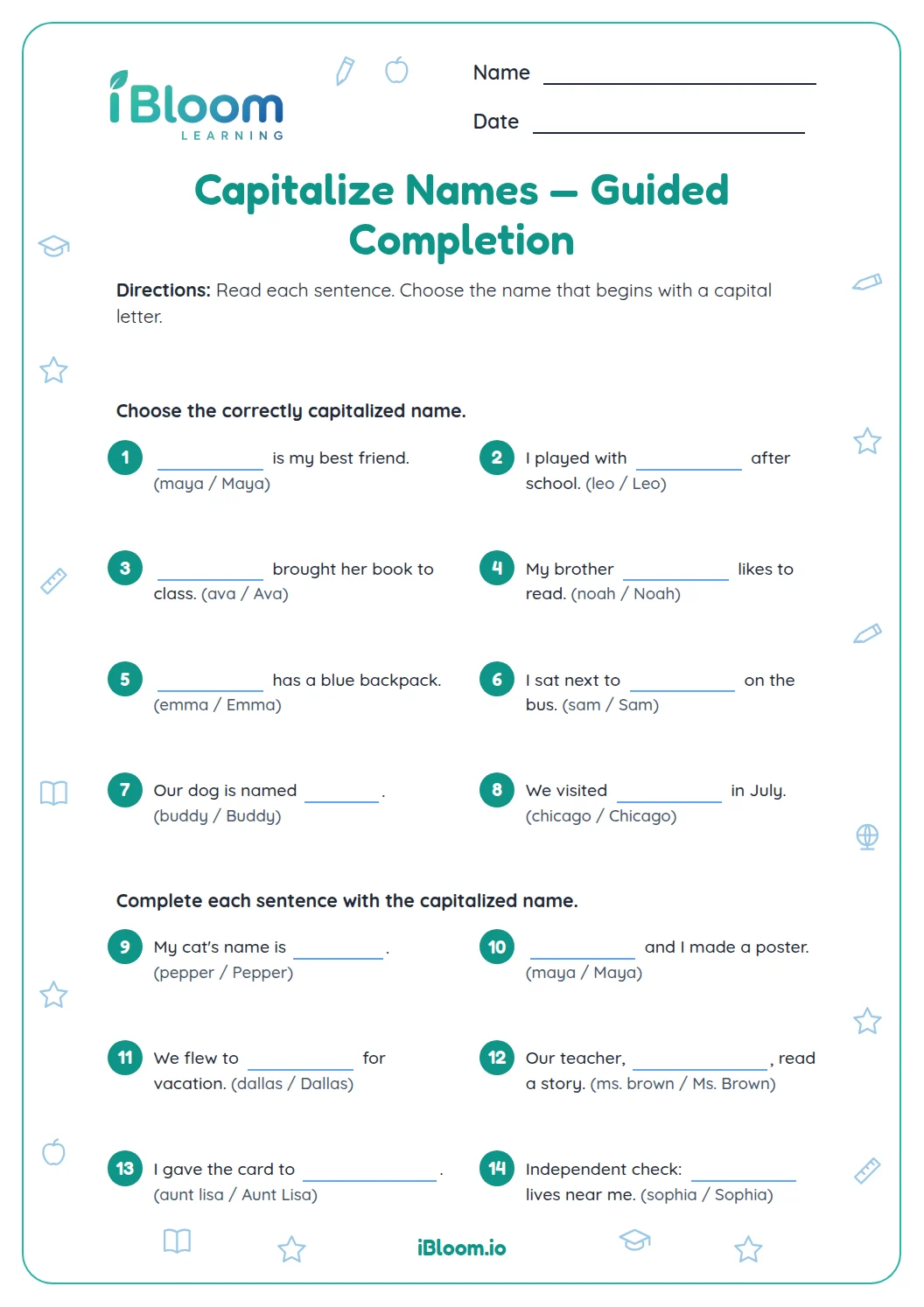
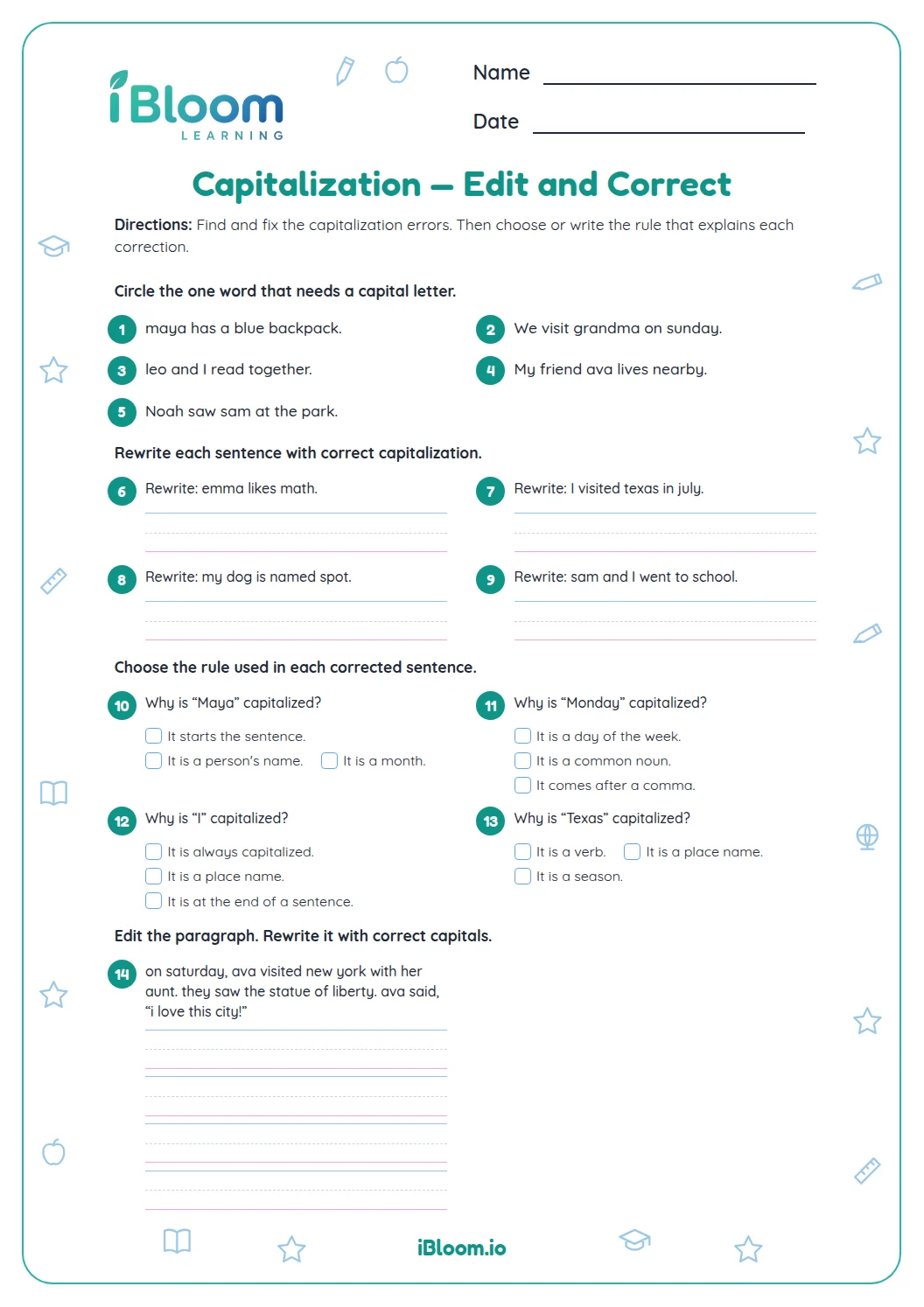
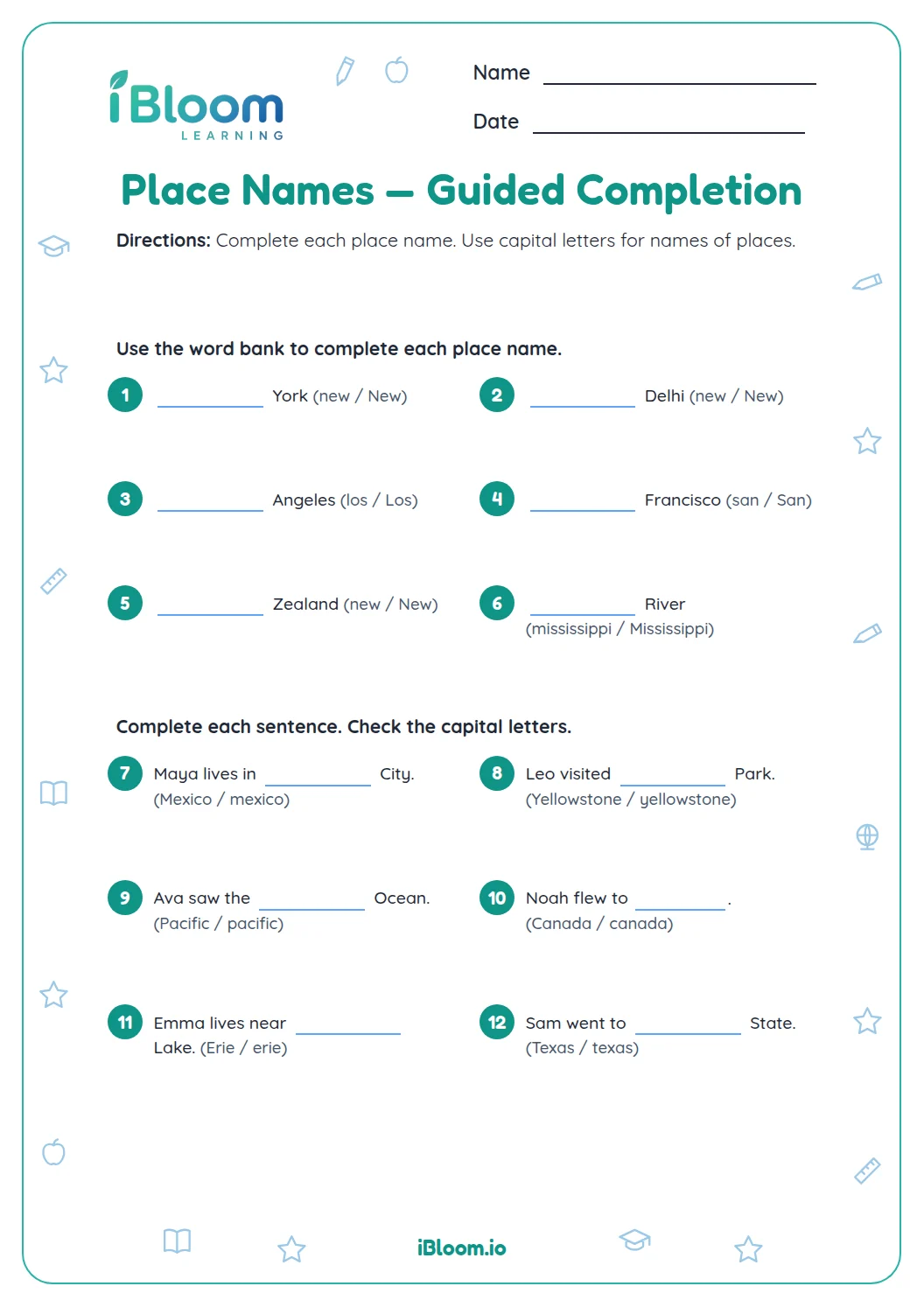
The 15 questions move from editing and writing sentences to choosing correct capitalization. Names include people, a pet, titles used with names, and specific places.
- Part A: edit sentences with names and places, then write one original sentence
- Part B: choose correctly capitalized names and sentences
Which names need capital letters?
Capitalize the names of specific people, pets, and places. A title used as part of a person’s name is capitalized too: Dr. Lee, Aunt Lena, or Coach Rivera. A general word such as “dog” stays lowercase unless it begins a sentence.
How can a child check a sentence?
Read the whole sentence and identify each specific name before changing its letters. Keep ordinary words lowercase unless they begin the sentence.
- 1my dog pepper naps in austin.
- 2Names: Pepper is the dog’s name; Austin is a city.
- 3Corrected: My dog Pepper naps in Austin.
How to use this worksheet
- 1Read the whole sentence before editing.
- 2Find every person’s name, title, and specific place.
- 3Capitalize first and last names.
- 4Capitalize a title directly before a person’s name.
- 5Reread and compare your work with the key.
Common mistakes and quick fixes
The mistake
Leaving names lowercase
The fix
Check for a person’s first and last name, then capitalize both.
The mistake
Capitalizing every title word
The fix
Capitalize a title before a name; keep it lowercase when used by itself.
The mistake
Forgetting place names
The fix
Look for a specific city, state, or street name and capitalize it.
Common Core alignment
This sheet practices the listed standard through its questions.
Capitalize names while writing and editing sentences.
On this sheet: Children edit sentences and apply capitalization conventions to names.
Show the official wordingHide the official wording
Demonstrate command of the conventions of standard English capitalization, punctuation, and spelling when writing.
What to practice next
Make more practice
Further reading
Questions parents and teachers ask
What names should my second grader capitalize?
Capitalize a person’s name, a pet’s name, and a specific place such as Texas or Pine Street. A title used as part of a person’s name is capitalized too, as in Dr. Lee or Aunt Lena. The questions include these forms, and the key shows the edited sentences.
How many questions are included?
There are 15 questions in two parts: ten sentence edits or writing items, followed by five multiple-choice checks. Children practice people’s names, a pet name, titles, and places. The separate answer key includes corrected forms and a sample sentence for the open response.
Should “aunt” or “coach” be capitalized?
Capitalize a family title or role when it is used as part of a name, as in Aunt Lena or Coach Rivera. In “my aunt,” the word aunt is lowercase because it describes the relationship rather than naming the person. The worksheet uses titles with names in complete sentences.
Why are place names included?
A specific place name begins with a capital letter: Texas, Denver, and Pine Street are examples. The worksheet pairs places with people’s names so children can edit both kinds of proper names in a sentence. The answer key shows the corrected capitalization for each example.
Can my child write a different final answer?
Yes. The final item asks for a sentence naming a person and a place, so many answers can be correct. Check that the sentence starts with a capital and that the person’s and place’s names use capitals. The key gives one sample rather than a required sentence.
Is an answer key included?
Yes. The answer key shows corrected sentences and the right choice for each multiple-choice question. For the final writing item, it gives one sample naming a person and a place. Children can compare their work with the key and check each name for capital letters.