








About this worksheet
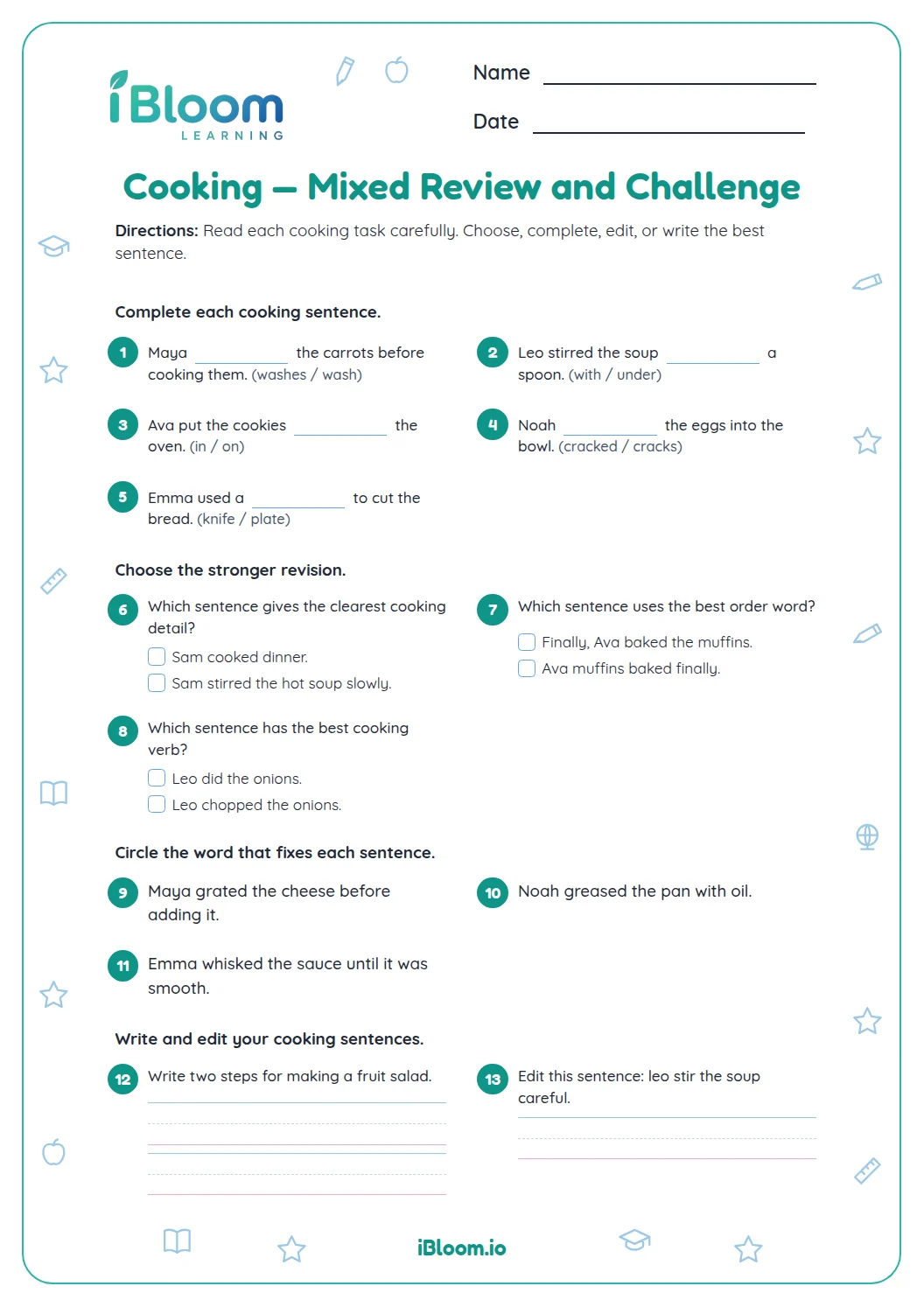
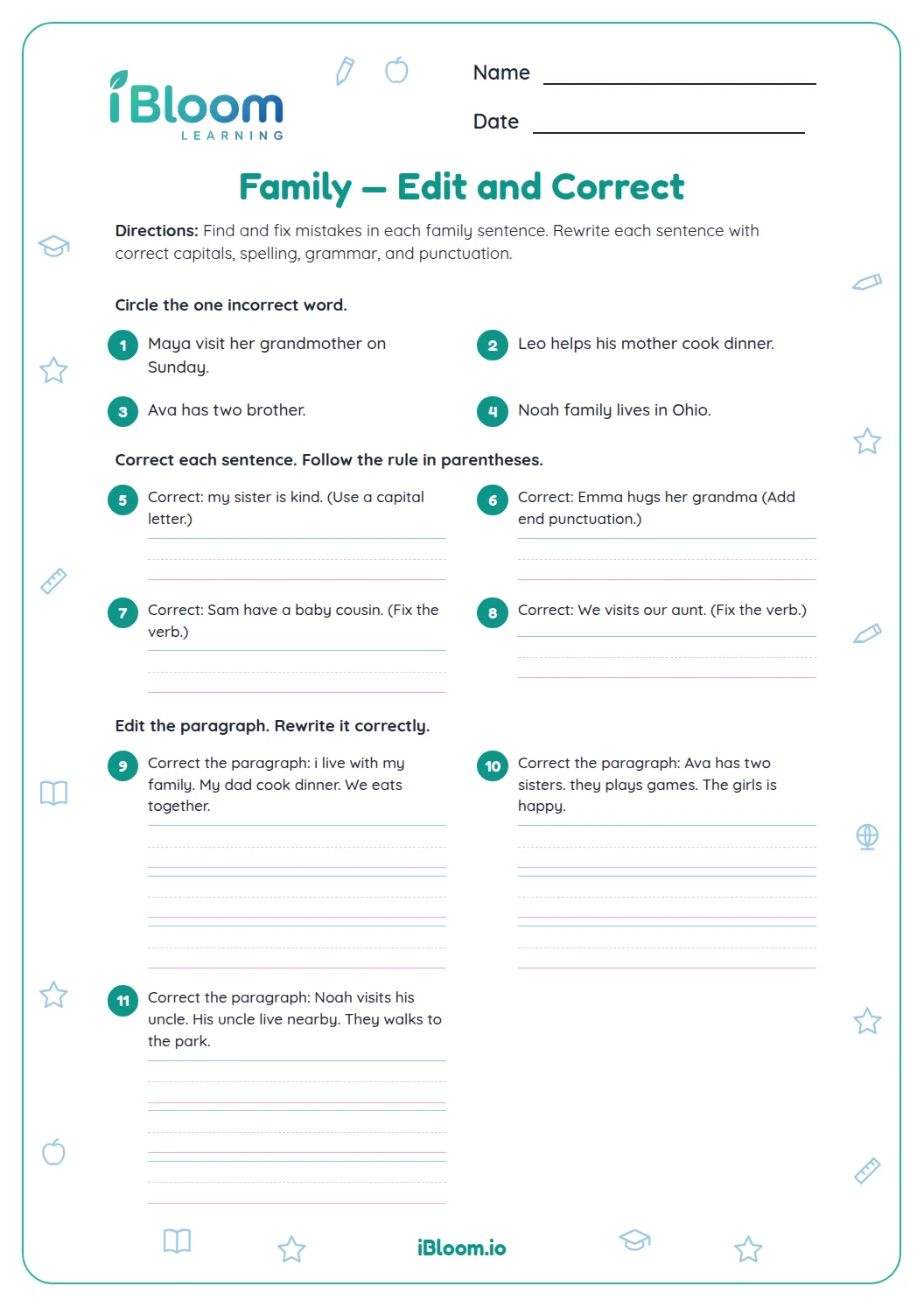
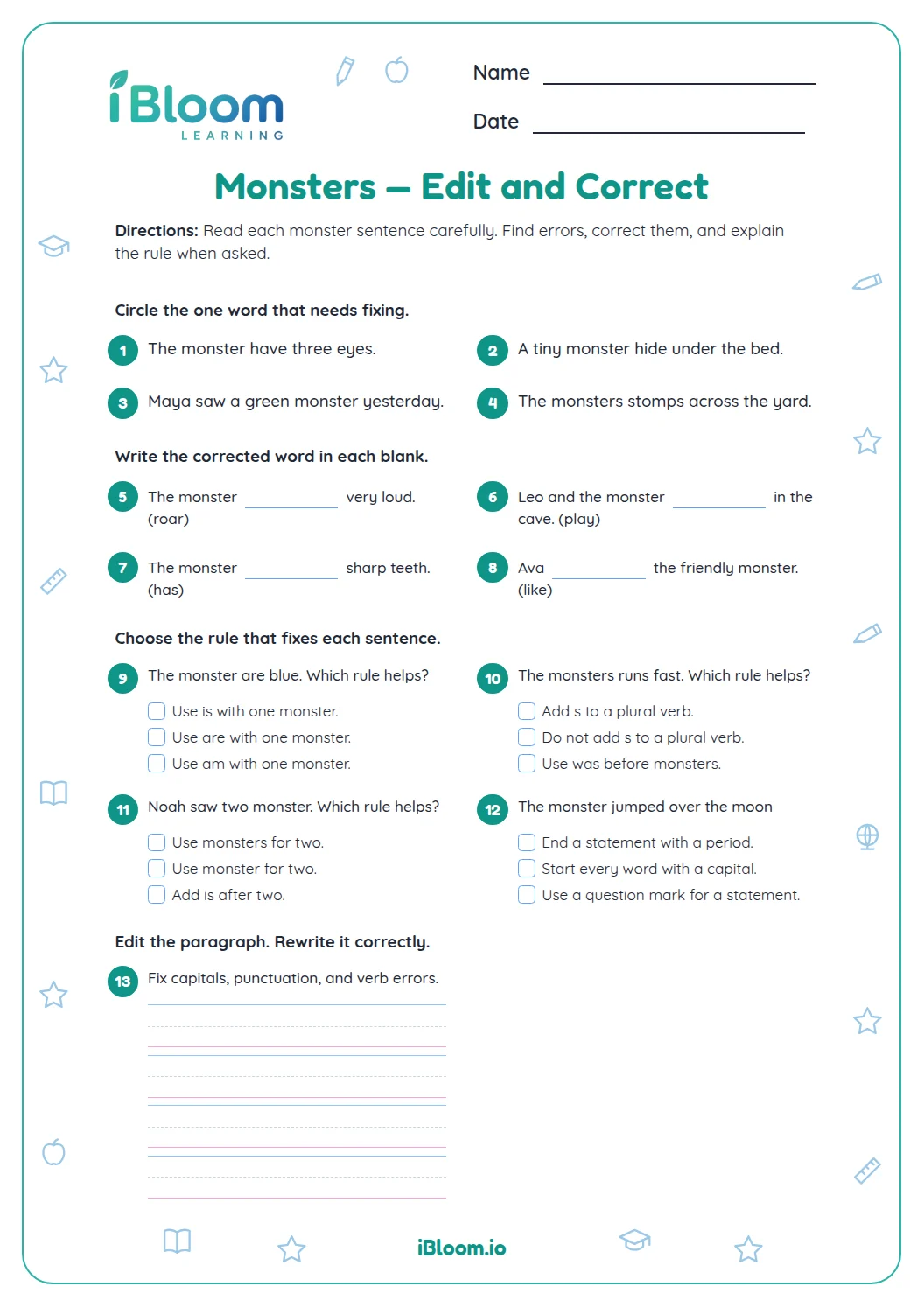
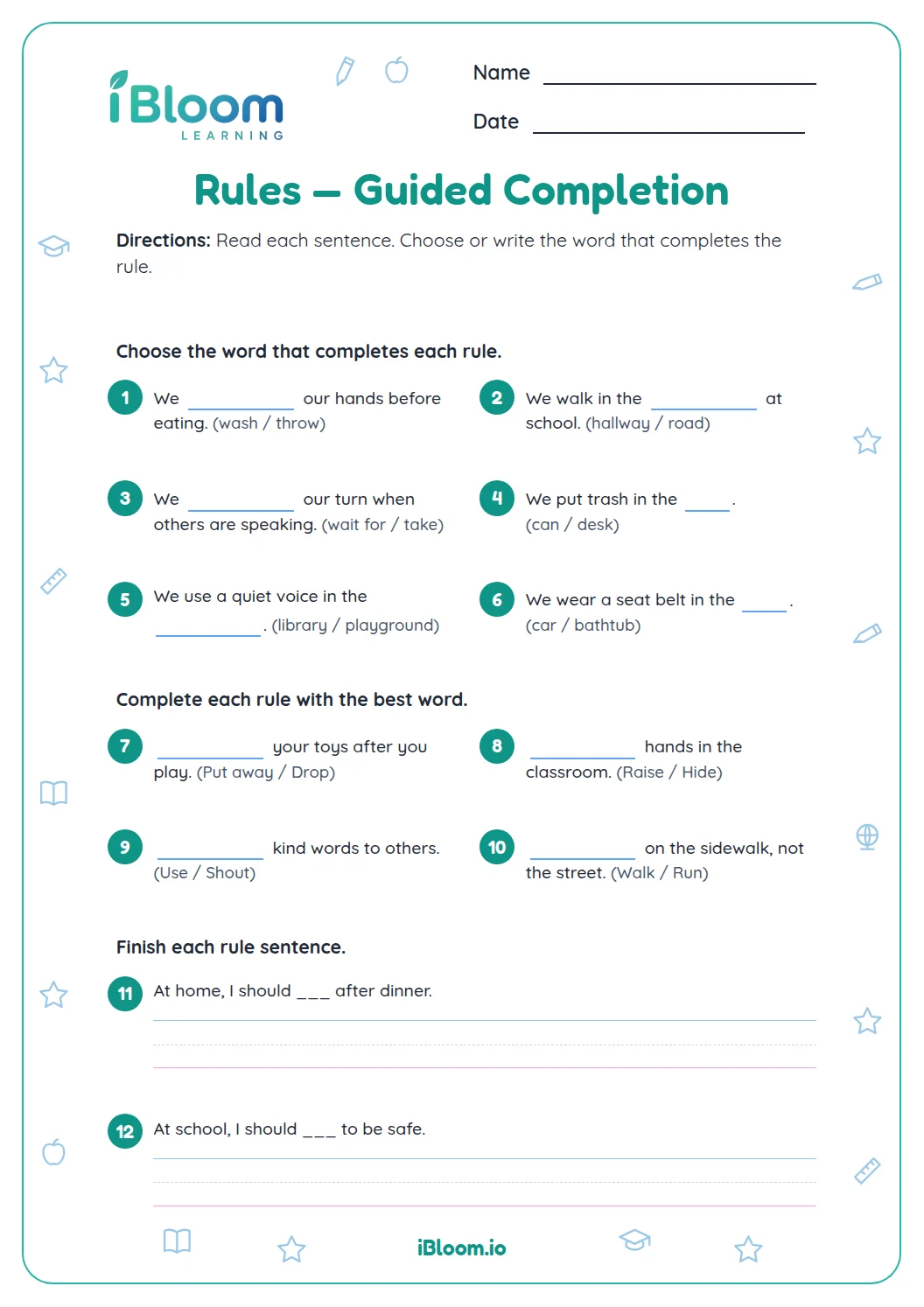
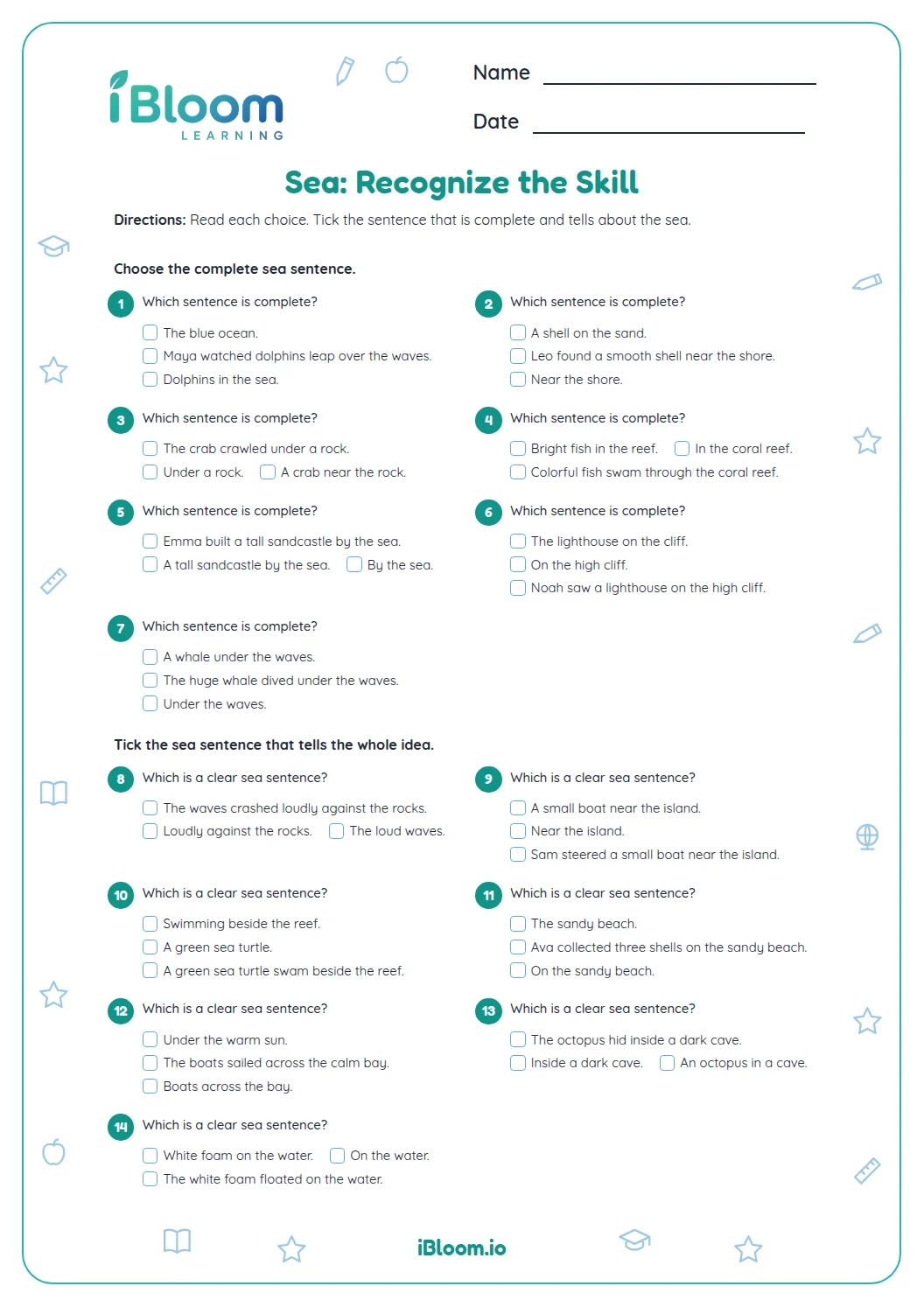
This free printable Grade 2 worksheet uses cooking sentences to practice editing and correcting. Learners choose examples with correct capitals, add end marks, and rewrite lines with verb, capitalization, or punctuation fixes. The answer key gives the expected edits and sample corrected sentences for discussion with an adult.
Aligned to W.2.5
Which words need capital letters?
Part A compares sentences with capitalization errors. Names and sentence beginnings take capital letters; day names such as Saturday do too. For example, “Mia stirs the batter” begins with a capital M.
How do you choose an end mark?
Part B asks learners to finish telling sentences with periods and direct questions with question marks. Read the sentence as a question or statement before choosing the mark.
How do you correct a sentence?
Parts C and D give space to rewrite sentences with verb, capital-letter, and end-mark fixes. For question 9, “The cookies is cooling on the rack” becomes “The cookies are cooling on the rack.”
How to use this worksheet at home or in class
- 1Read the complete sentence before editing it.
- 2Check sentence beginnings, names, and day names for capital letters.
- 3Decide whether the sentence tells or asks before adding an end mark.
- 4Check that the verb agrees with the subject.
- 5Rewrite the corrected sentence, then compare it with the key.
Common mistakes and quick fixes
The mistake
Leaving a day name lowercase.
The fix
Capitalize day names, including Saturday and Friday.
The mistake
Using a period after a direct question.
The fix
Read the sentence as a question and finish it with a question mark.
The mistake
Using a singular verb with a plural subject, as in “cookies is.”
The fix
Match the verb to the subject: “The cookies are.”
Common Core alignment
With an adult or peer, learners use the prompts and answer key to strengthen sentences through editing.
Edit sentences with support to make the writing clearer and more correct.
On this sheet: Learners revise and edit cooking sentences for capitals, punctuation, and verb agreement, then compare their edits with the key.
Show the official wordingHide the official wording
With guidance and support from adults and peers, focus on a topic and strengthen writing as needed by revising and editing.
What to practice next
Make more practice
Further reading
Questions parents and teachers ask
How many questions are on the worksheet?
There are 14 questions in four parts. Learners choose correctly capitalized sentences, add end marks, and rewrite lines with verb, capitalization, or punctuation corrections. The answer key includes the expected punctuation and sample revised sentences. Each part has a different editing focus, so learners can practice one kind of correction at a time.
Does the worksheet ask children to write?
Yes. The last six questions provide writing lines for corrected sentences. The first eight questions use choices or a single punctuation blank, so learners get a quick review before writing full corrections. They rewrite sentences in the last four questions, then choose the corrected version in the final two.
What makes a sentence complete and correct?
A complete sentence shares a whole thought, and careful editing checks its words and punctuation. In “The cookies are cooling on the rack,” the subject and verb agree, the sentence begins with a capital, and the telling sentence ends with a period.
Which punctuation marks are practiced?
The worksheet uses periods after telling sentences and question marks after direct questions. Learners decide which mark fits the sentence, then apply capitalization and punctuation when rewriting longer lines. The rewrite questions also combine end marks with capital letters, including in day names and sentence beginnings.
How can a parent use the answer key?
Compare the rewritten sentence with the model, then ask the learner to name the correction: a capital letter, a verb that agrees with its subject, or an end mark. The sample answers show one correct version for each writing item.