








About this worksheet
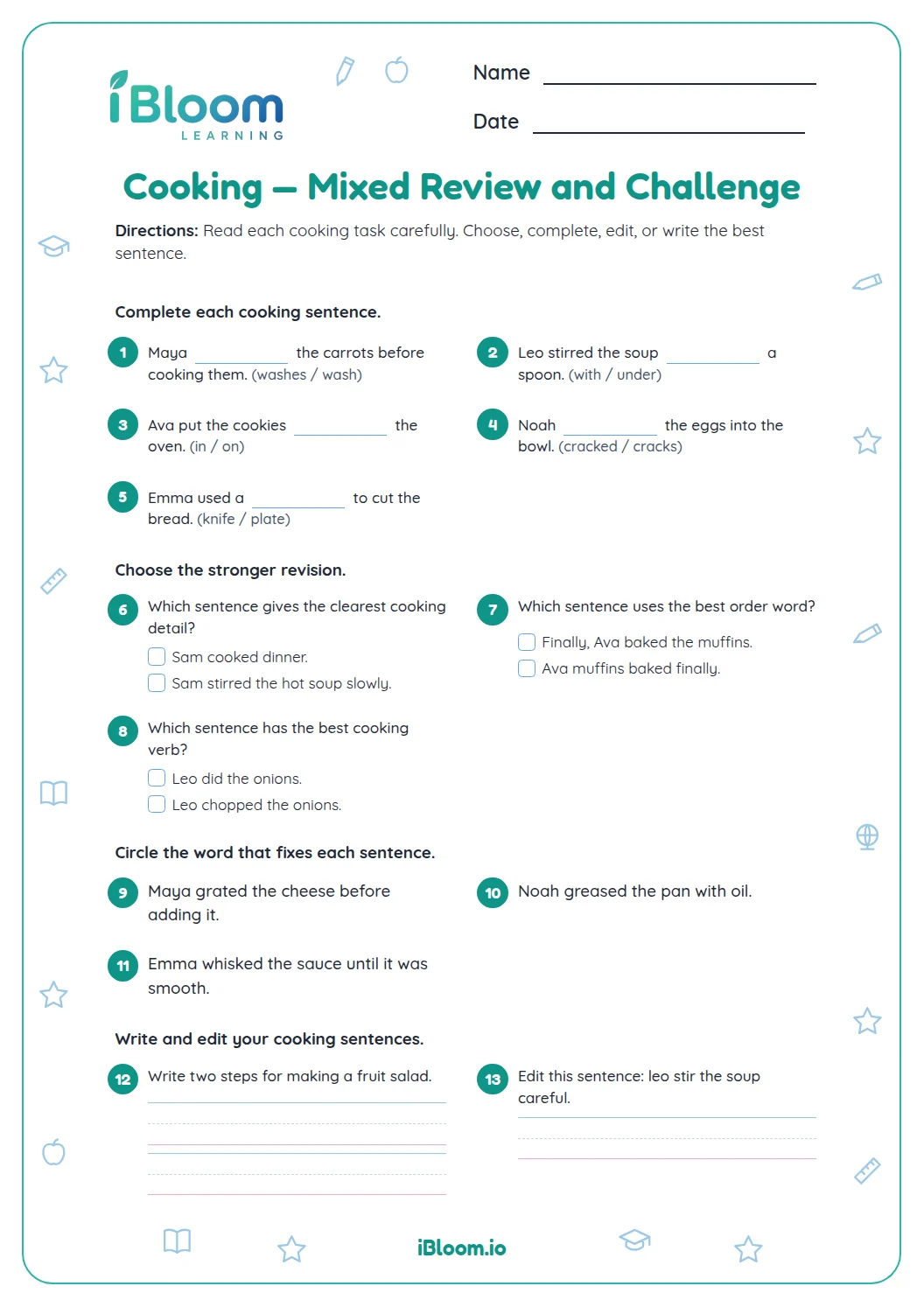
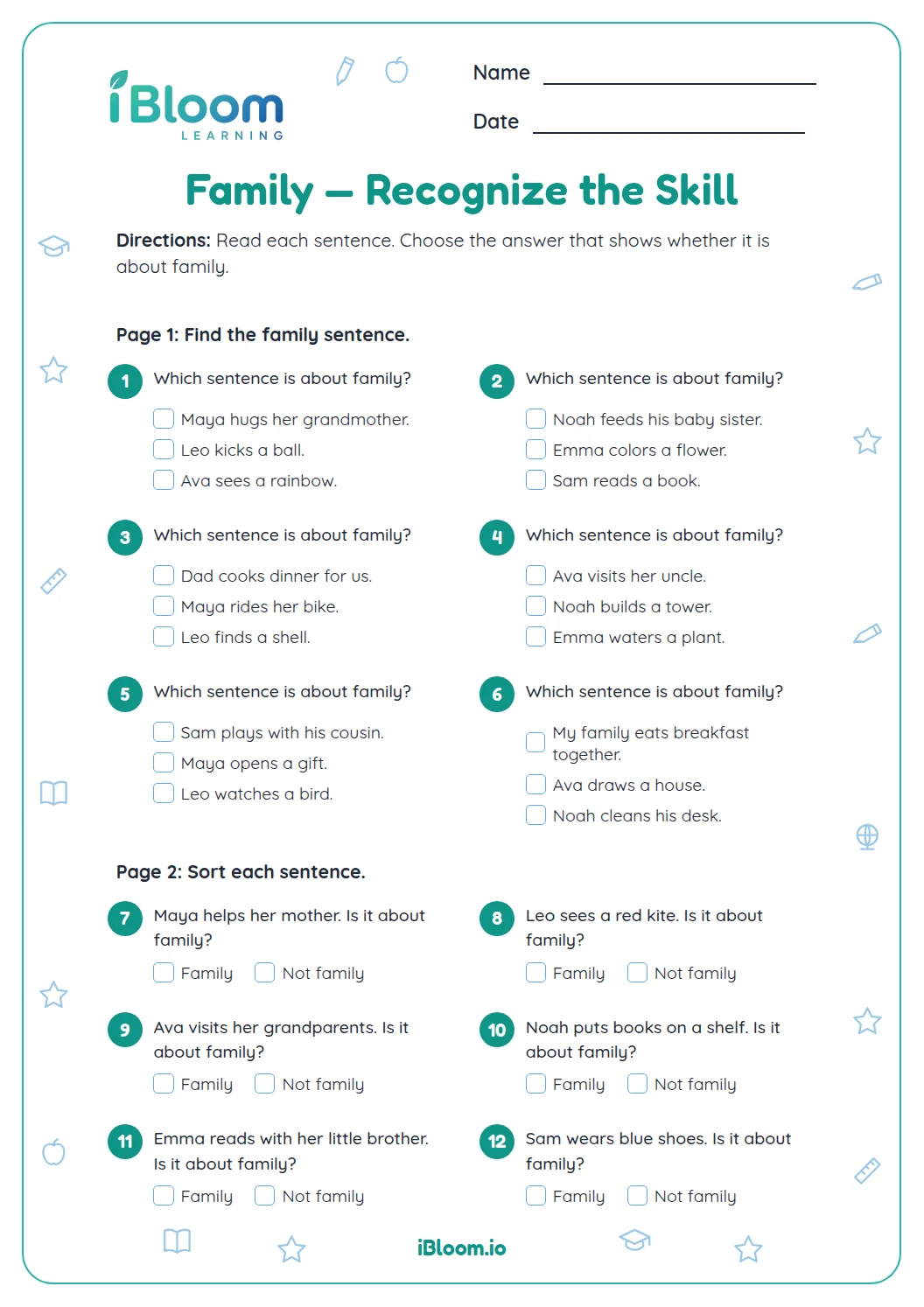
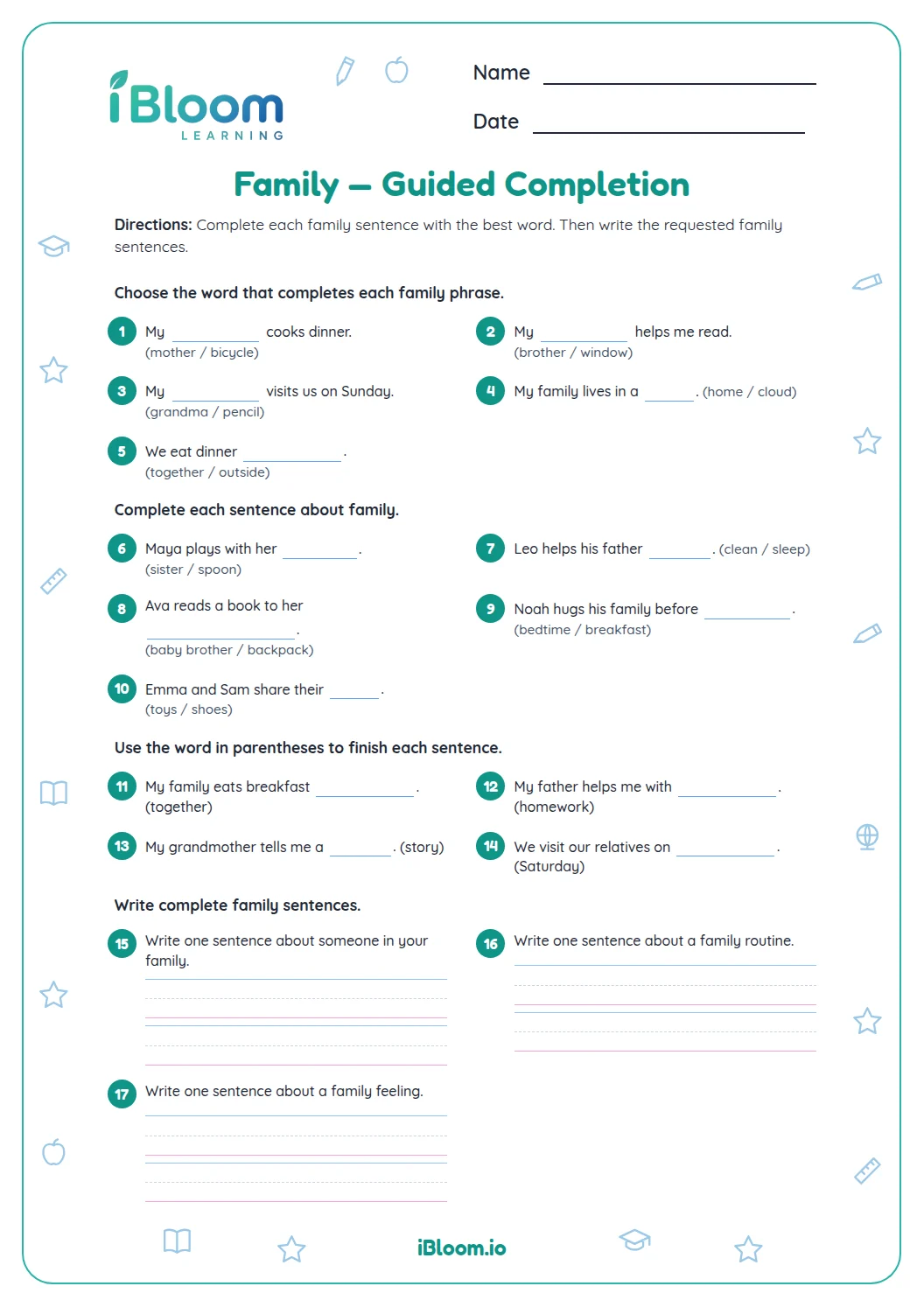
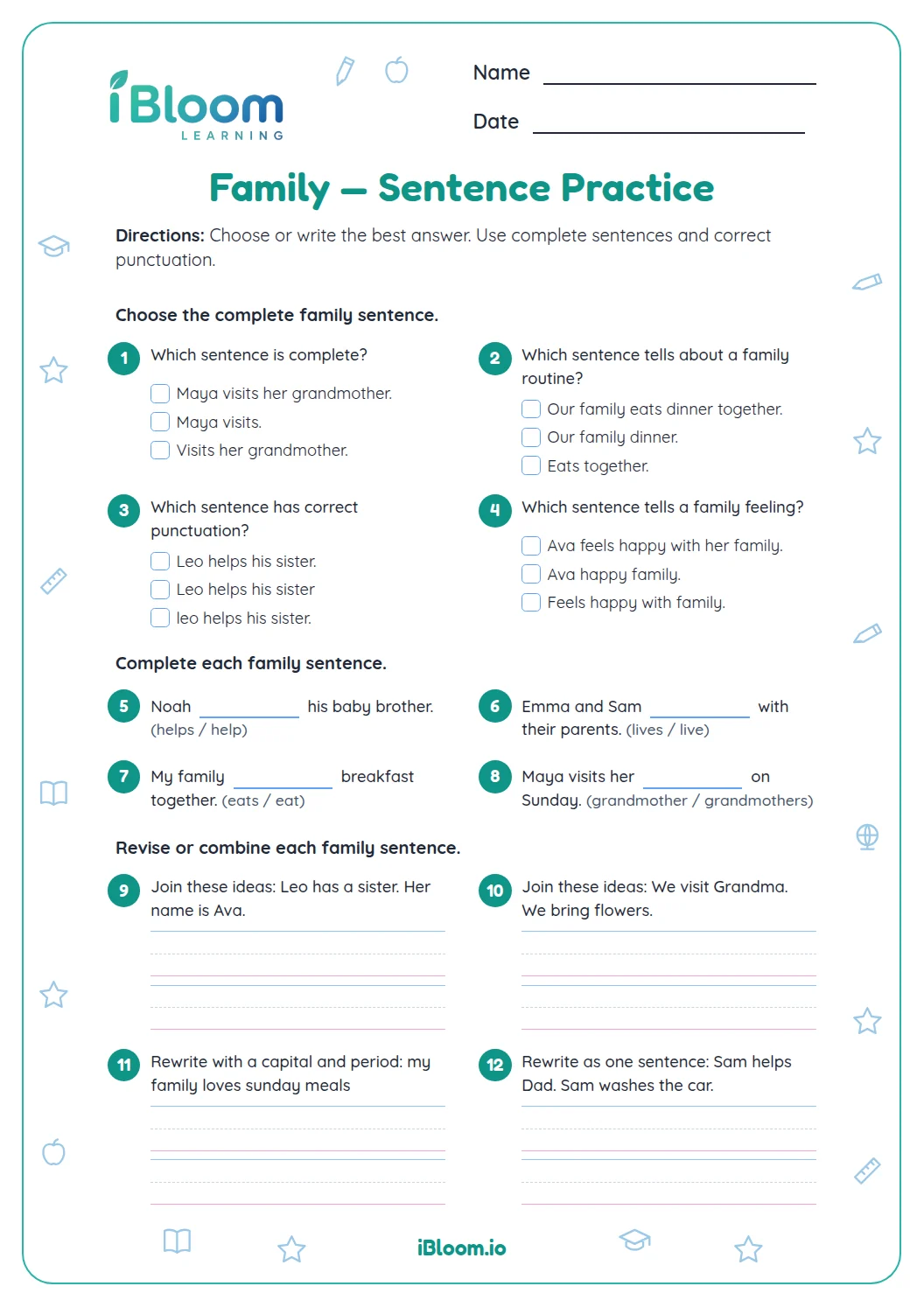
This Grade 2 sentence worksheet uses cooking prompts to practice producing, expanding, and rearranging complete simple sentences. Children choose complete sentences, fill sentence blanks, expand ideas, and write original cooking sentences. The practice includes 15 prompts and a separate answer key with sample responses. It aligns with Common Core L.2.1.f.
Aligned to L.2.1.f
What makes a cooking sentence complete?
A complete sentence tells who or what and what happens. “The baker rolls the dough” has a subject and action. “Rolls the dough” does not say who is acting.
- 1Prompt: Write a complete sentence about sharing a meal.
- 2Sample: “Our family shares warm soup at dinner.”
- 3The response names who acts and what happens.
How can I add a helpful detail?
Add a detail that answers where, when, or how. “We eat ___ at the table” becomes “We eat lunch at the table.” The added words make the idea clearer.
How can I join related ideas?
Use and to connect related ideas. “I peel the apple and slice it” avoids repeating the same noun. Reread the sentence to check that both actions make sense.
How to use this worksheet
- 1Read the prompt and decide whether to complete, expand, join, or rearrange.
- 2Find the subject and action before adding details.
- 3Use cooking words that fit.
- 4Reread aloud for word order and meaning.
- 5Check capitals and ending punctuation.
Common mistakes and quick fixes
The mistake
Writing a phrase instead of a complete sentence.
The fix
Check that it tells who or what and what happens.
The mistake
Adding a detail that does not fit the idea.
The fix
Reread and check that it answers where, when, or how.
The mistake
Rearranging words and changing the meaning.
The fix
Put the subject and action together, then add details.
Common Core alignment
Children produce, expand, and rearrange complete sentences about cooking.
Build, expand, and rearrange complete sentences about cooking.
On this sheet: Children complete, expand, and rearrange sentences.
Show the official wordingHide the official wording
Produce, expand, and rearrange complete simple and compound sentences (e.g., The boy watched the movie; The little boy watched the movie; The action movie was watched by the little boy).
What to practice next
Make more practice
Further reading
Questions parents and teachers ask
What is a complete sentence?
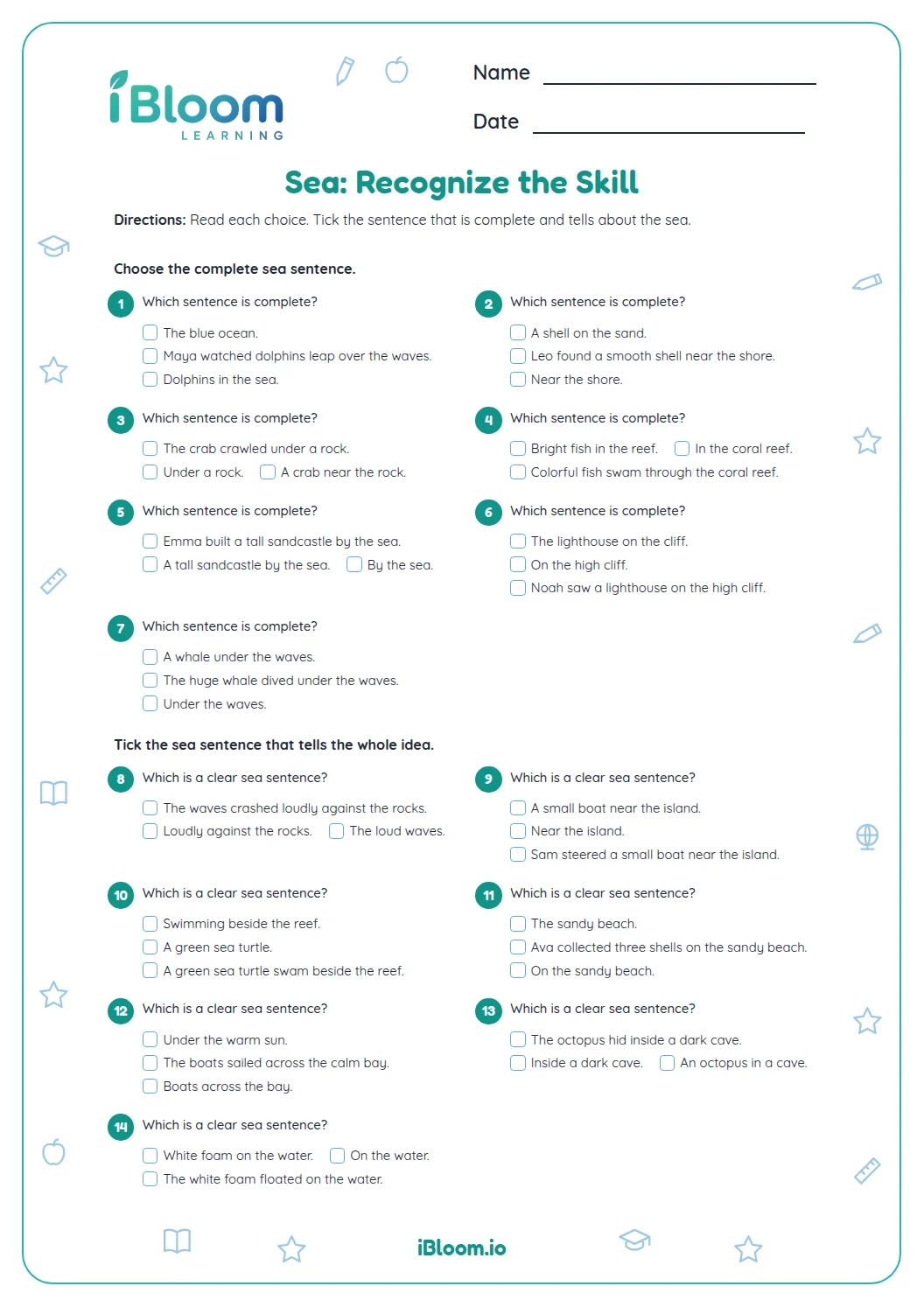
A complete sentence names a subject and tells what it does or is. “The baker rolls the dough” is complete. “The baker” names someone but does not finish the thought, and “Rolls the dough” does not tell who is acting. Questions 1, 2, and 5 ask children to recognize complete sentences.
Can more than one answer be correct?
Yes. Prompts such as “We eat ___ at the table” allow several sensible foods. The key gives a sample answer, but another response can work if it completes the sentence and fits the cooking context. For the multiple-choice questions, select the option that is complete or follows the requested word order.
How much should my child add?
One clear detail is enough. For “We eat ___ at the table,” a child might write “lunch.” For “Dad bakes muffins ___,” “on Saturday” completes the thought. The answer key supplies a fitting word or phrase for each blank.
What should we check in a rearranged sentence?
Check that the words form a natural, complete thought and keep the intended meaning. Begin with who is acting, then add the action and useful details. For example, “Ben carefully mixes the batter” names Ben and tells what he does.
Why do some key answers begin with Sample?
Open-ended prompts allow different foods, details, and sentence ideas. The key shows one acceptable model rather than the only possible wording. Another response can be correct if it follows the prompt, makes sense, and forms a complete sentence with appropriate capitalization and punctuation.