



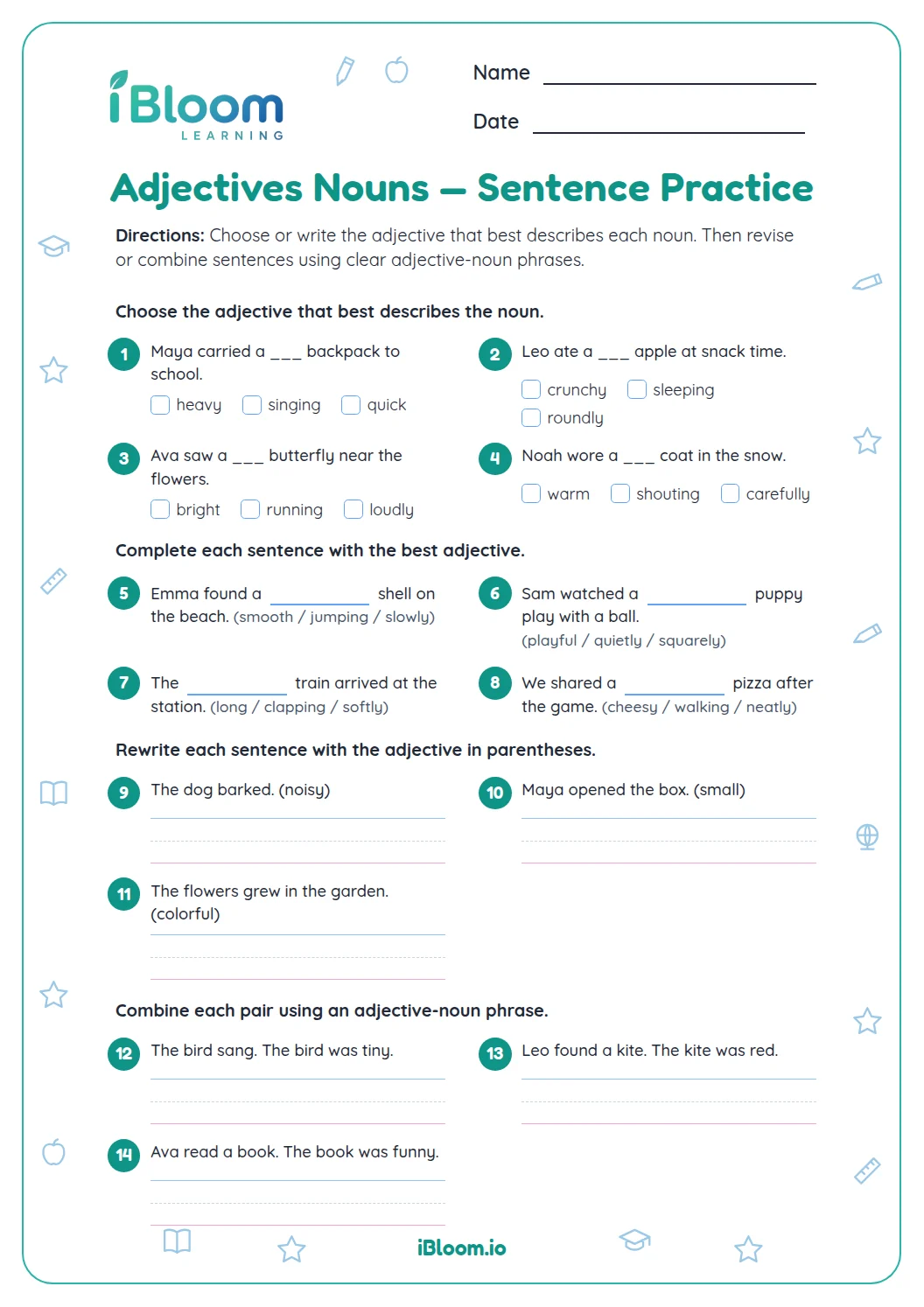
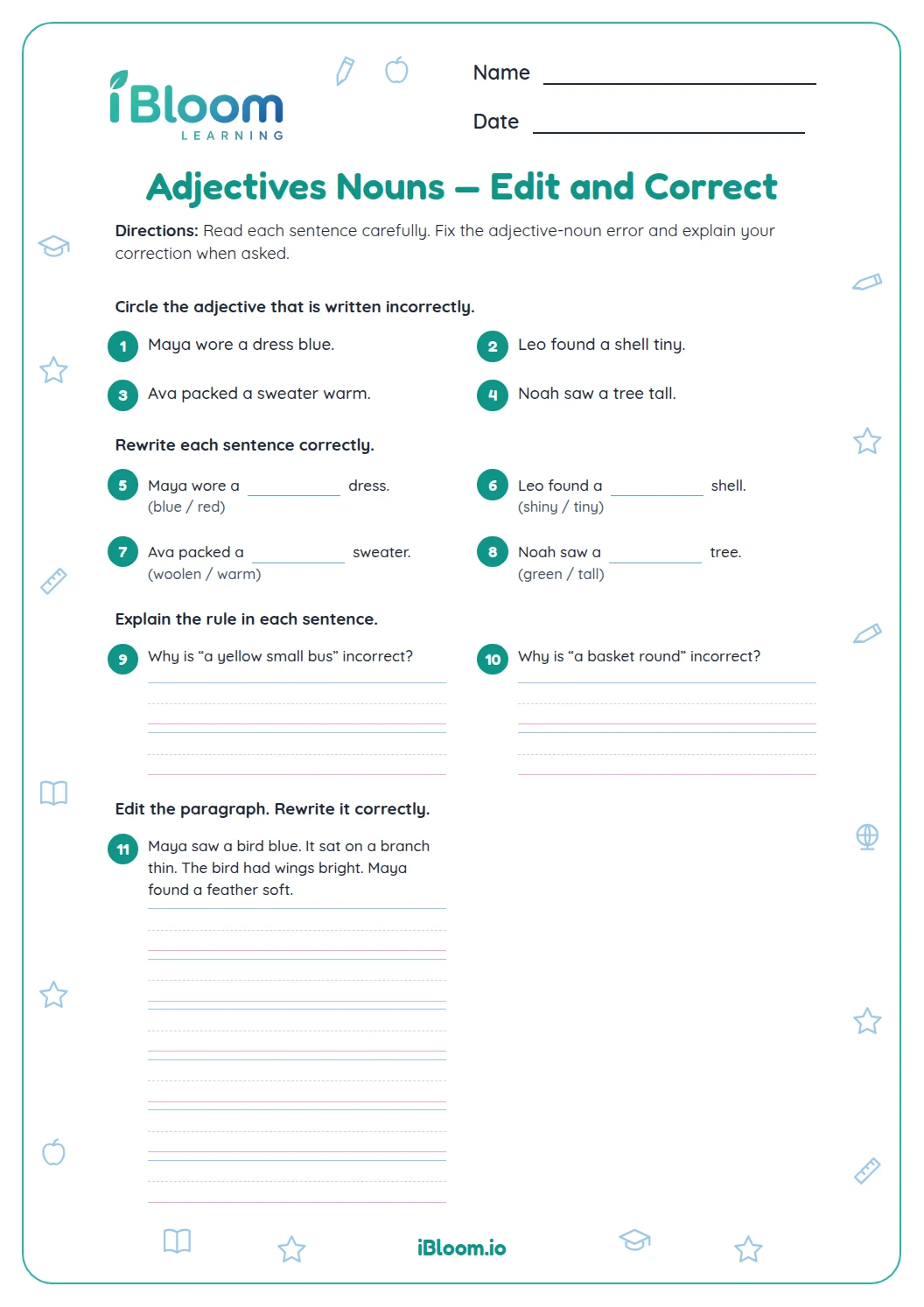
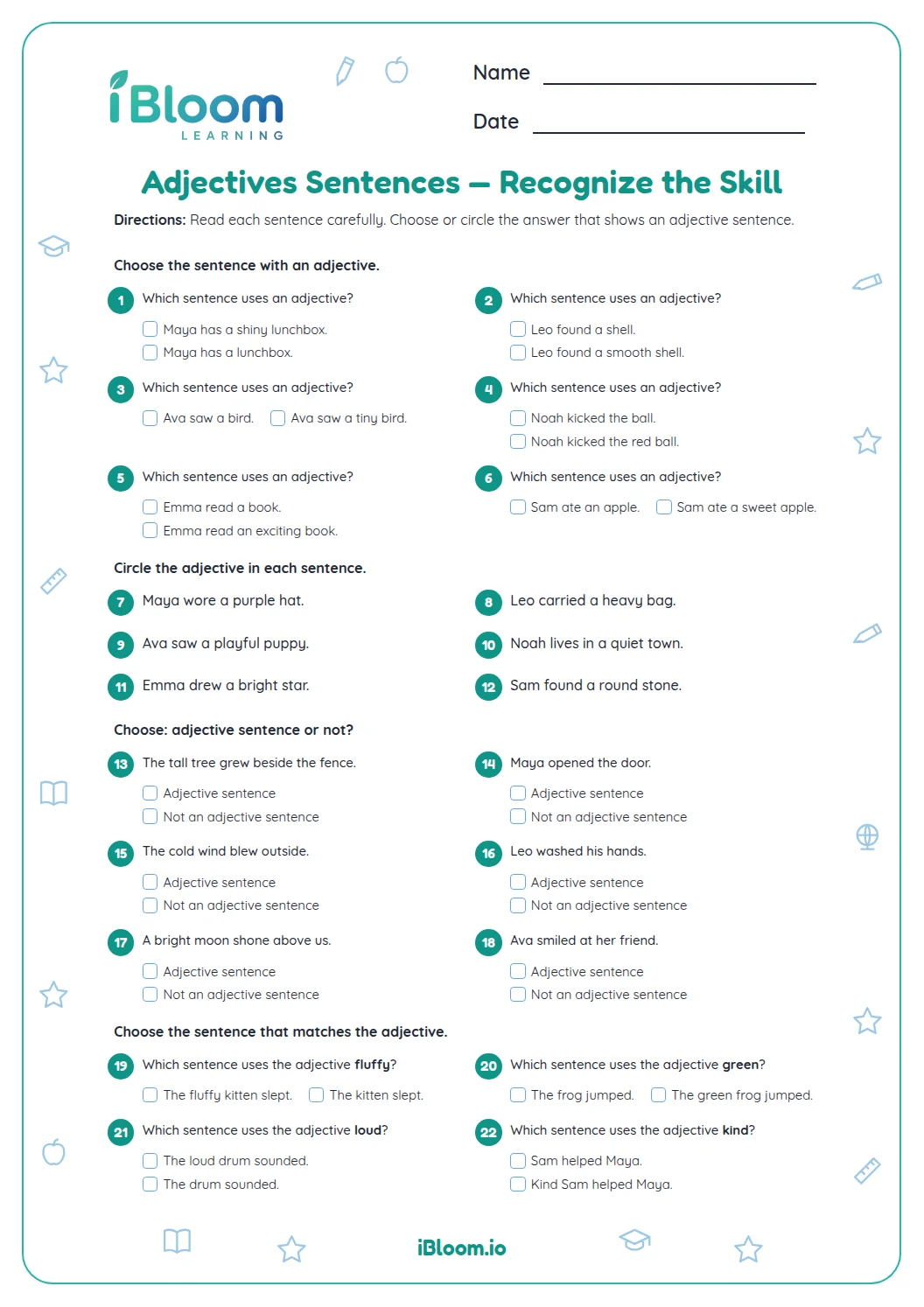
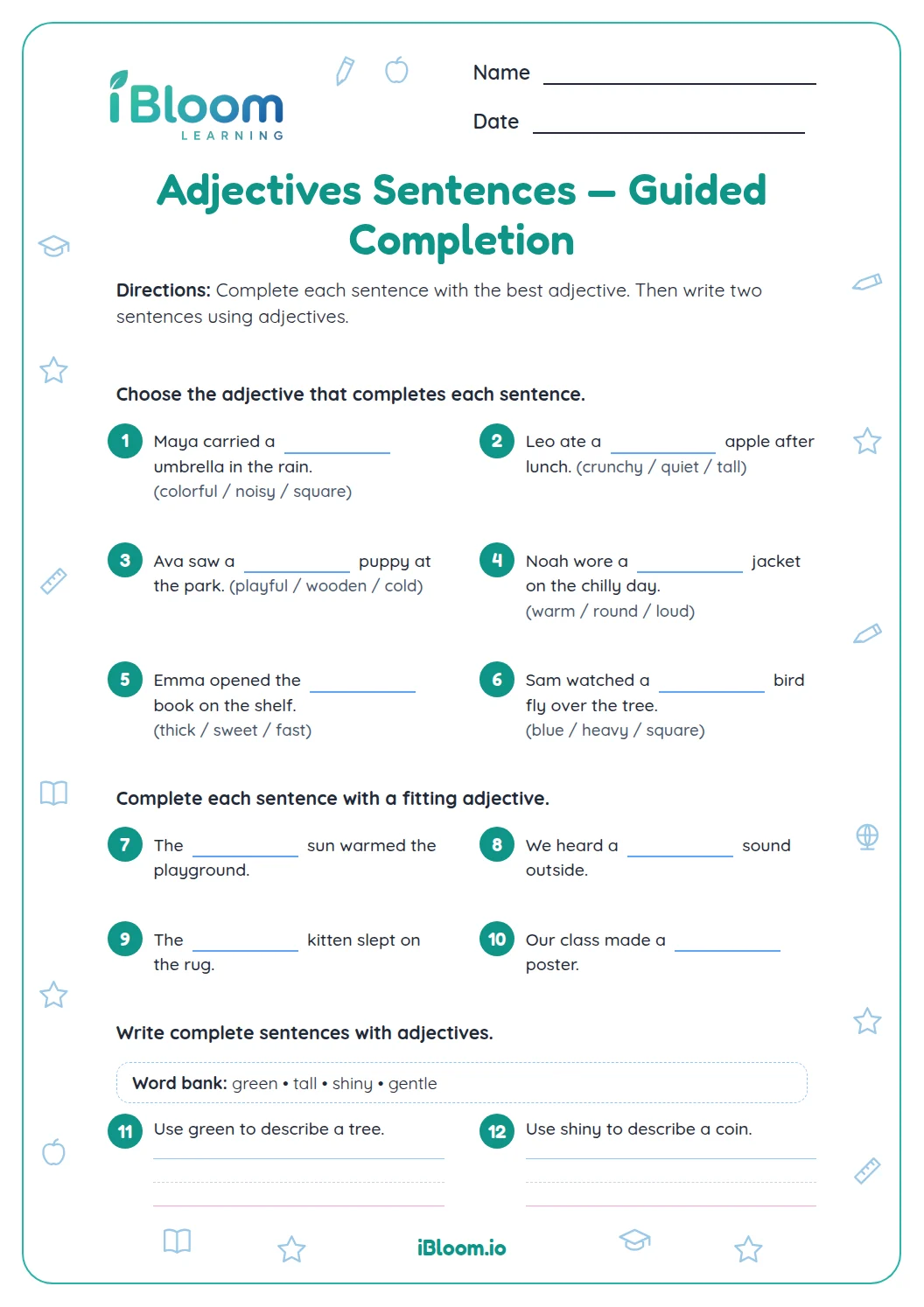

About this worksheet
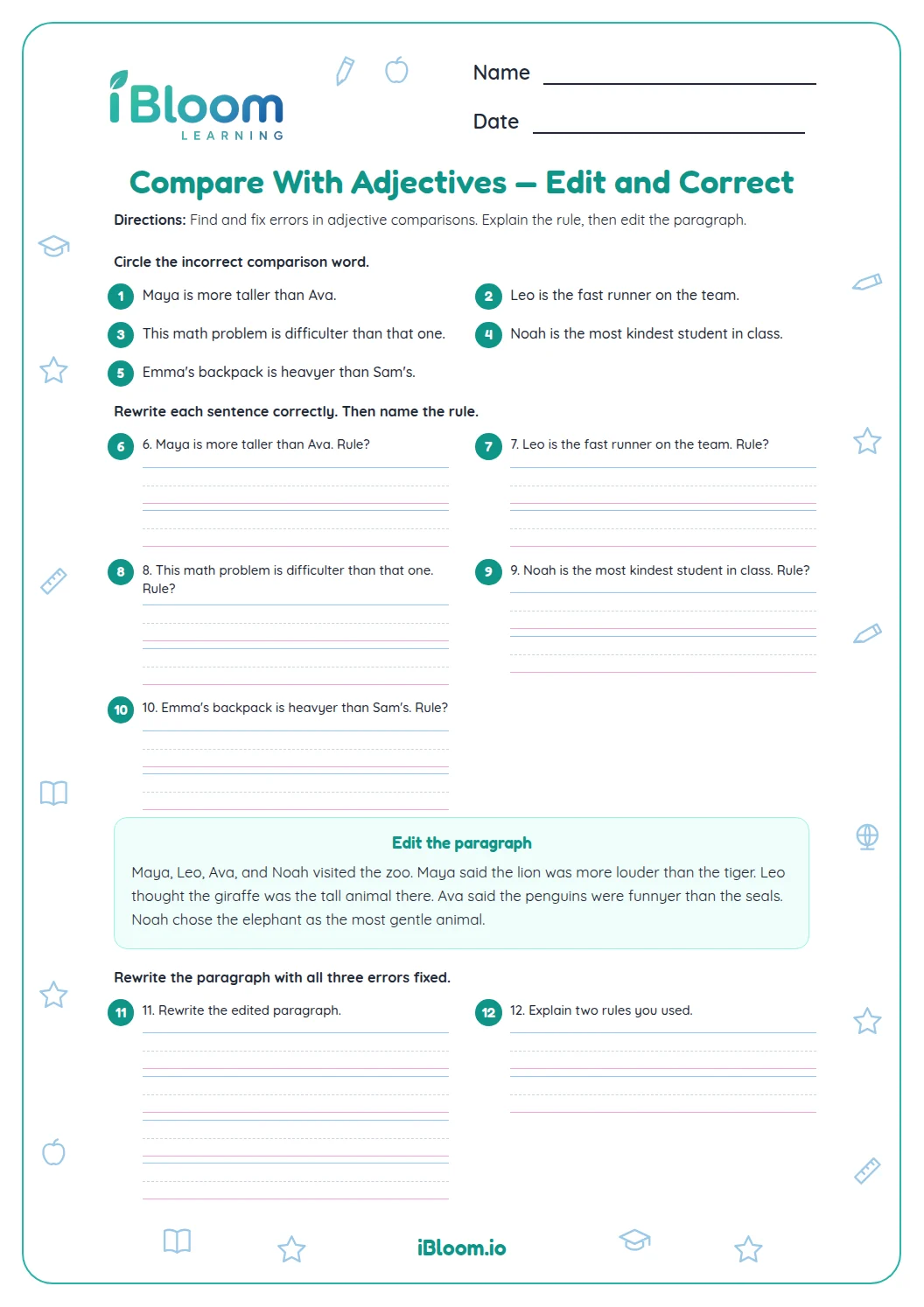
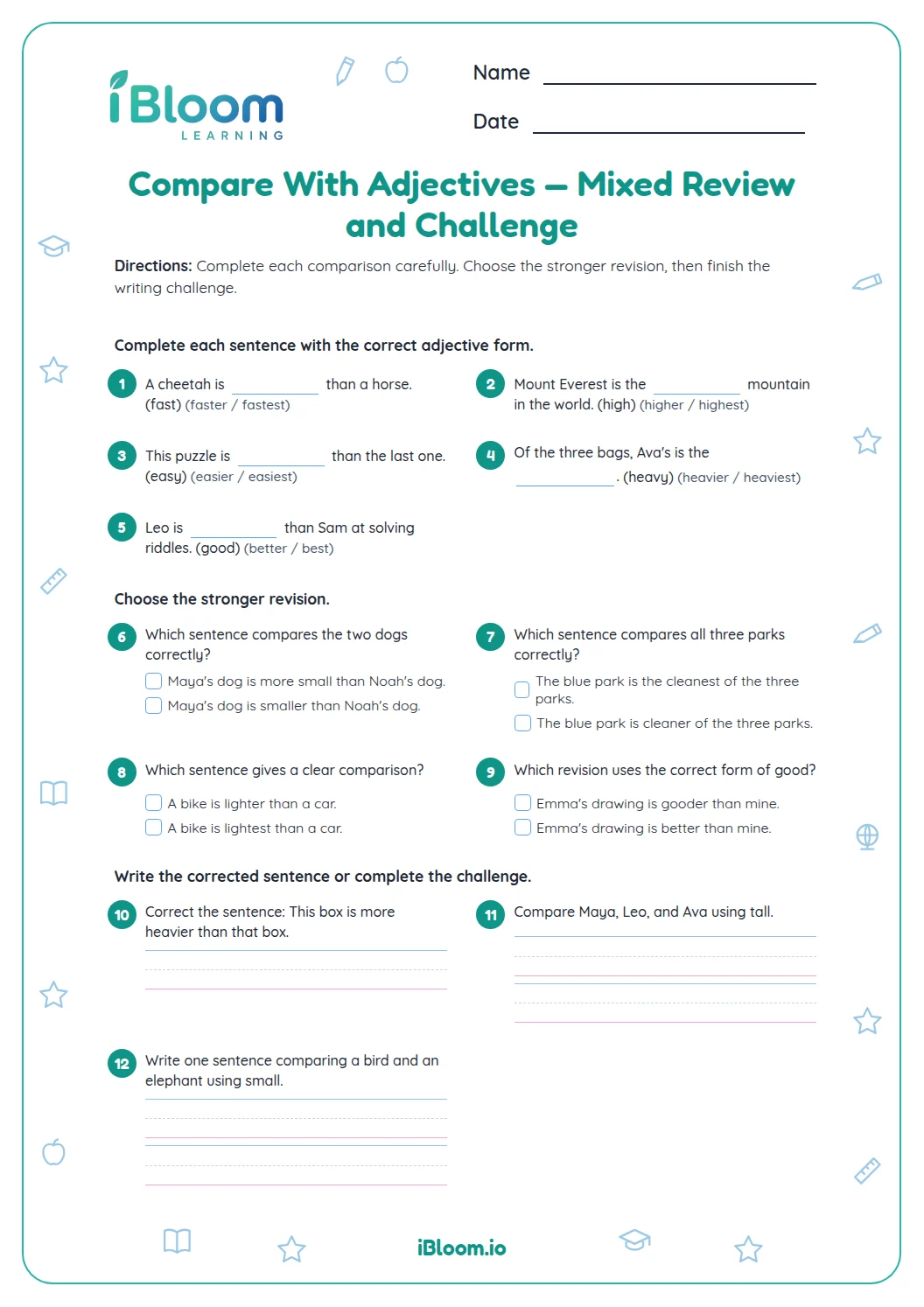
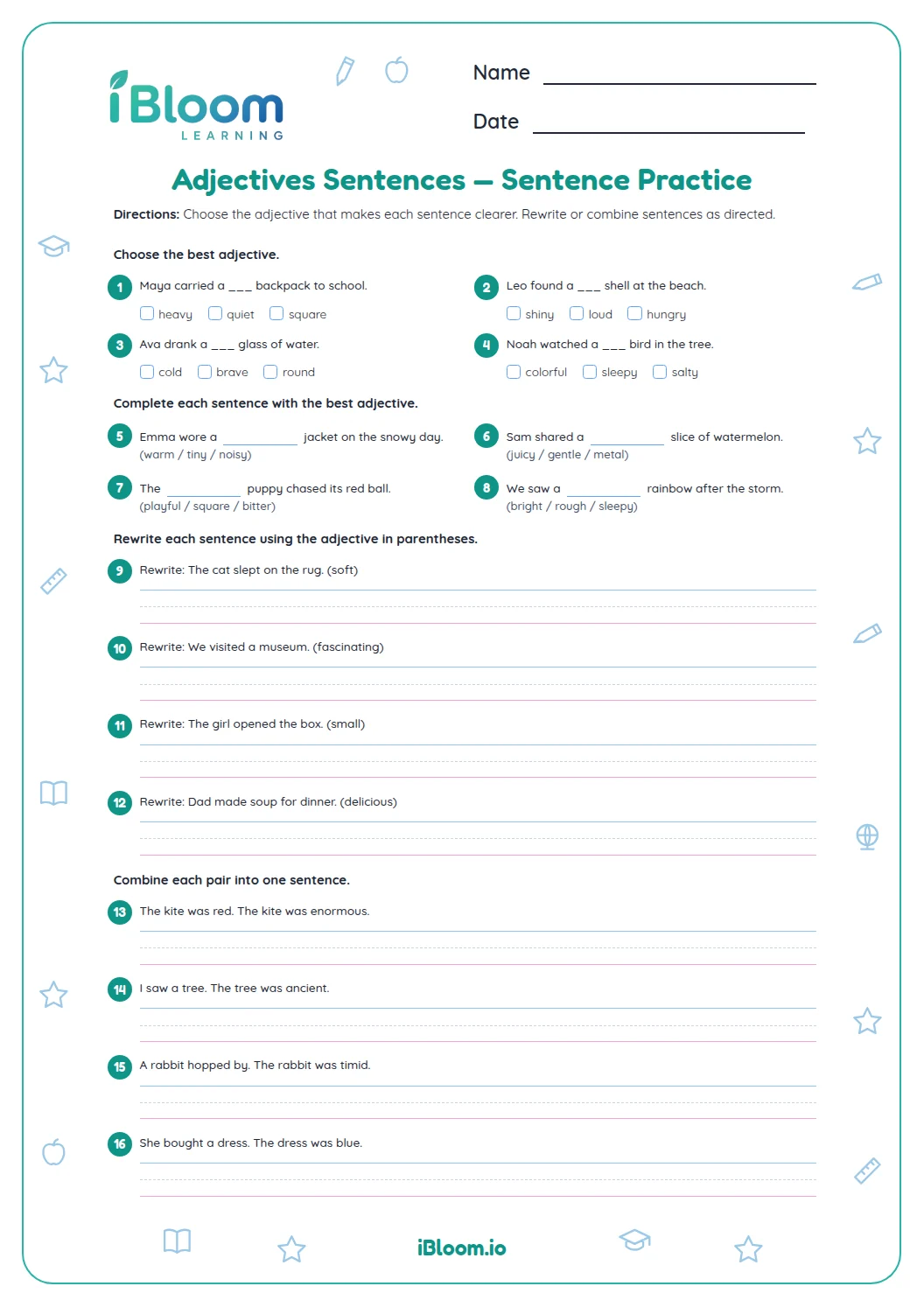
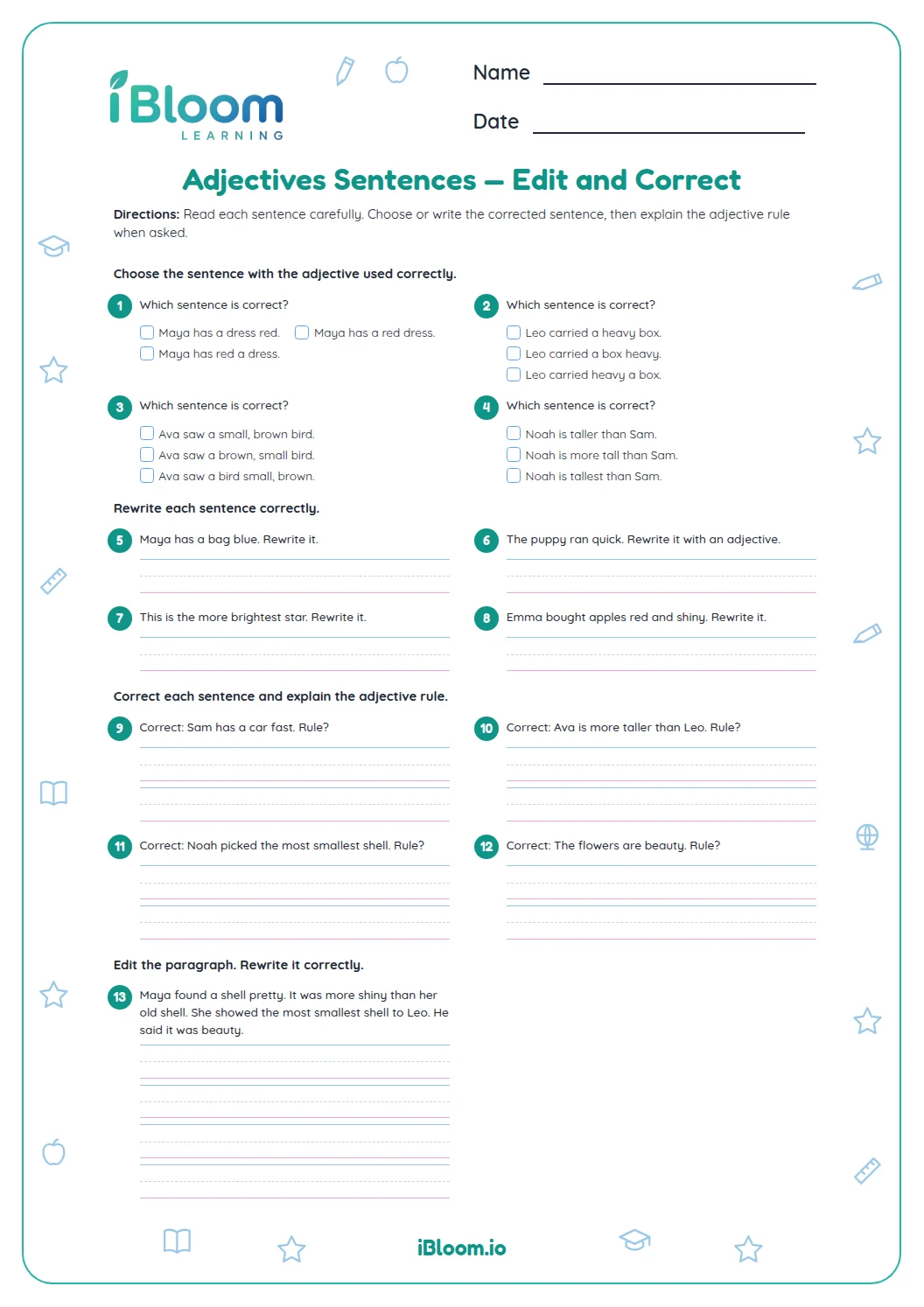
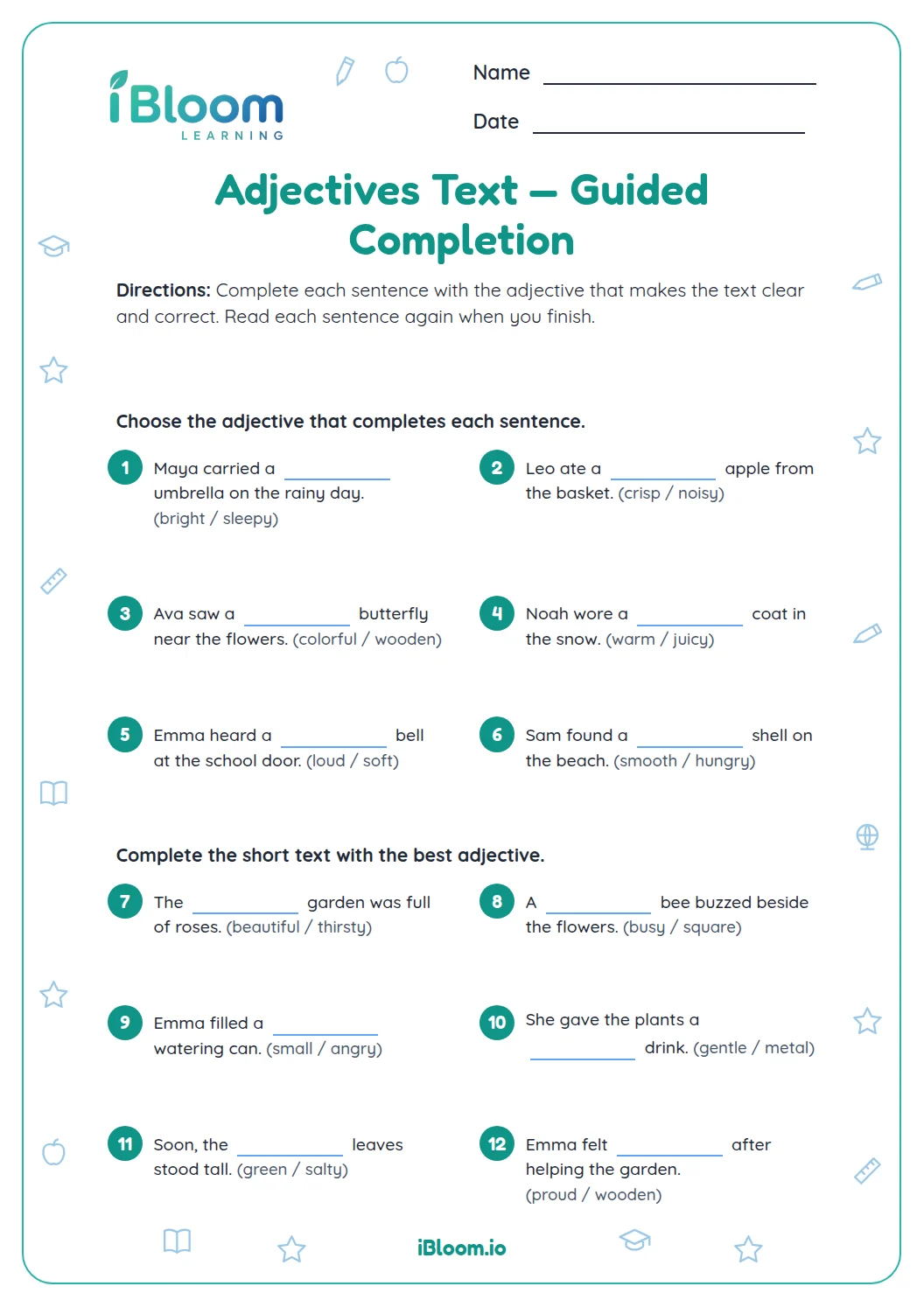
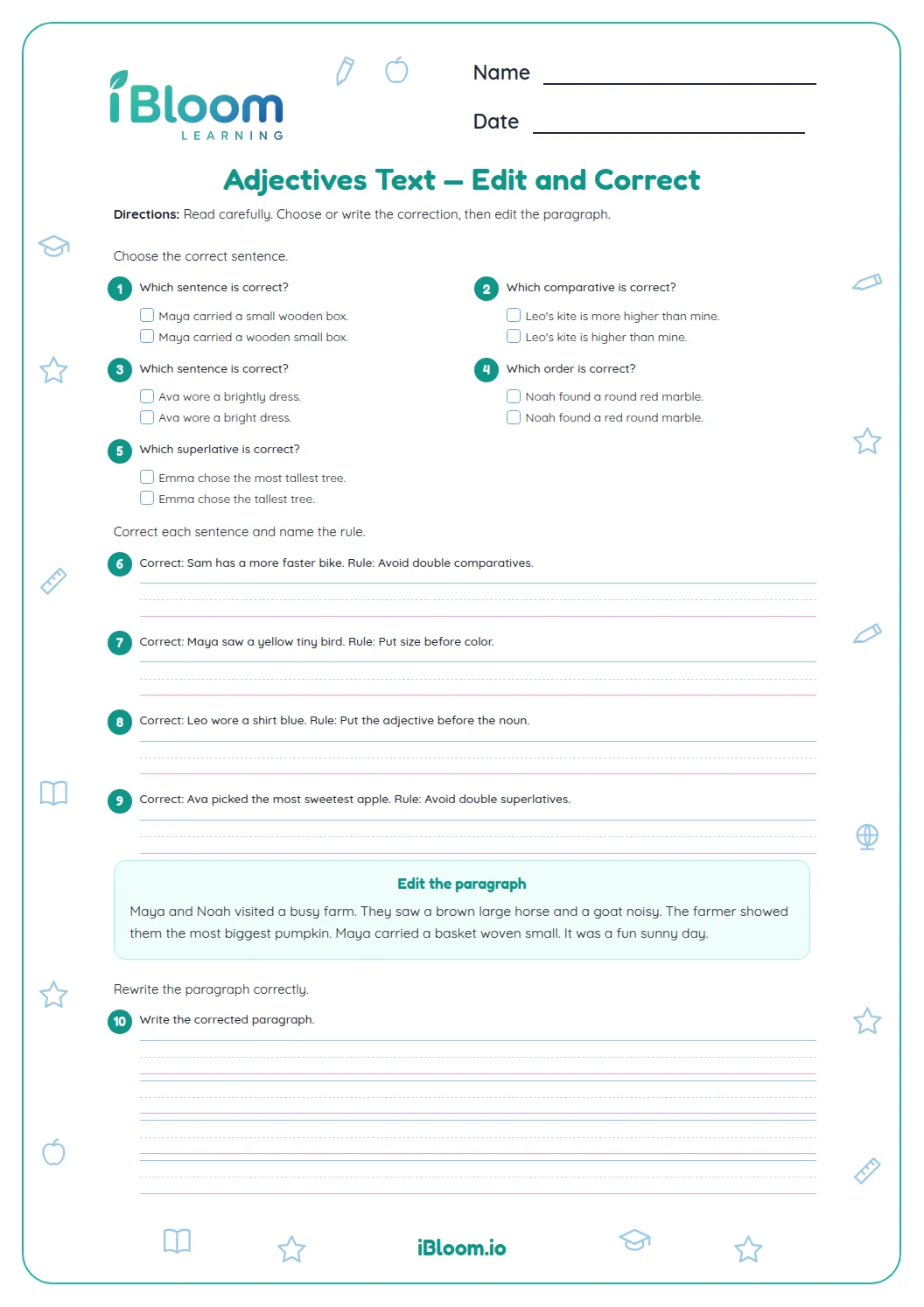
This Grade 3 adjective worksheet practices comparative and superlative forms in sentences. Learners choose correct forms such as faster, heavier, and the tallest, then decide whether a sentence compares two things, a group, or no items at all. The 16-question printable includes a separate answer key.
Aligned to L.3.1g
When should I use a comparative adjective?
Use a comparative to compare two things: “Milo is faster than Rex.” Many short adjectives add -er; adjectives such as careful use more.
When should I use a superlative adjective?
Use a superlative to show the greatest degree in a group of three or more: “the tallest tree.” Short adjectives often add -est, while longer ones use most.
How do I check an adjective form?
First count how many things are being compared. Use a comparative for two, often with than, and a superlative for the top degree in a group, often with the.
How to use this worksheet
- 1Read the whole sentence and identify what is being compared.
- 2If there are two items, look for a comparative form.
- 3If the sentence names the top item in a group, look for a superlative.
- 4Check spelling changes such as big to bigger and easy to easier.
- 5Use the answer key to review any form that sounds unusual.
Common mistakes and quick fixes
The mistake
Using fastest than for two runners.
The fix
Use faster than when comparing two; save fastest for a group.
The mistake
Writing more bigger or more easier.
The fix
Use one comparative marker: bigger or easier.
The mistake
Using a superlative for just two things.
The fix
Check the number of items; the sheet uses comparative forms for pairs and superlatives for groups.
Common Core alignment
This page gives learners focused practice with the language and writing skill named on the sheet.
Form comparative and superlative adjectives to compare things.
On this sheet: Questions ask learners to select and complete comparative and superlative adjective forms, then identify whether a sentence makes a comparison.
Show the official wordingHide the official wording
Form and use comparative and superlative adjectives and adverbs, and choose between them depending on what is to be modified.
What to practice next
Make more practice
Further reading
Questions parents and teachers ask
What is the difference between comparative and superlative adjectives?
A comparative adjective compares two things, as in “Milo is faster than Rex.” A superlative adjective names the greatest degree in a group, as in “the tallest tree.” The worksheet gives practice recognizing and choosing both forms. The worksheet uses sentence clues such as than and the to make the comparison type clear.
Why is “more bigger” incorrect?
Bigger already uses the comparative ending -er. Adding more makes two comparative markers. Choose one form, such as bigger, or use more with an adjective such as careful: more careful. The examples show that comparative forms use -er or more, while superlatives use -est or most.
When does an adjective use most?
Longer adjectives often use more for two-item comparisons and most for superlatives. For example, “more interesting” compares two books, while “the most interesting book” identifies one in a group. The two forms have different jobs, so the number of items being compared matters.
How many questions compare sentences?
There are 14 questions. The first 12 ask learners to choose a comparative or superlative adjective form. The final two ask them to recognize a correctly written comparison, once for two cities and once for the top swimmer in a group.
Does the worksheet include an answer key?
Yes. A separate answer key lists all 14 answers. Reviewing why a sentence uses faster, fastest, or most interesting can help learners connect the adjective form to the number of items being compared. It also gives a quick way to revisit the difference between a pair and a group.