



About this worksheet
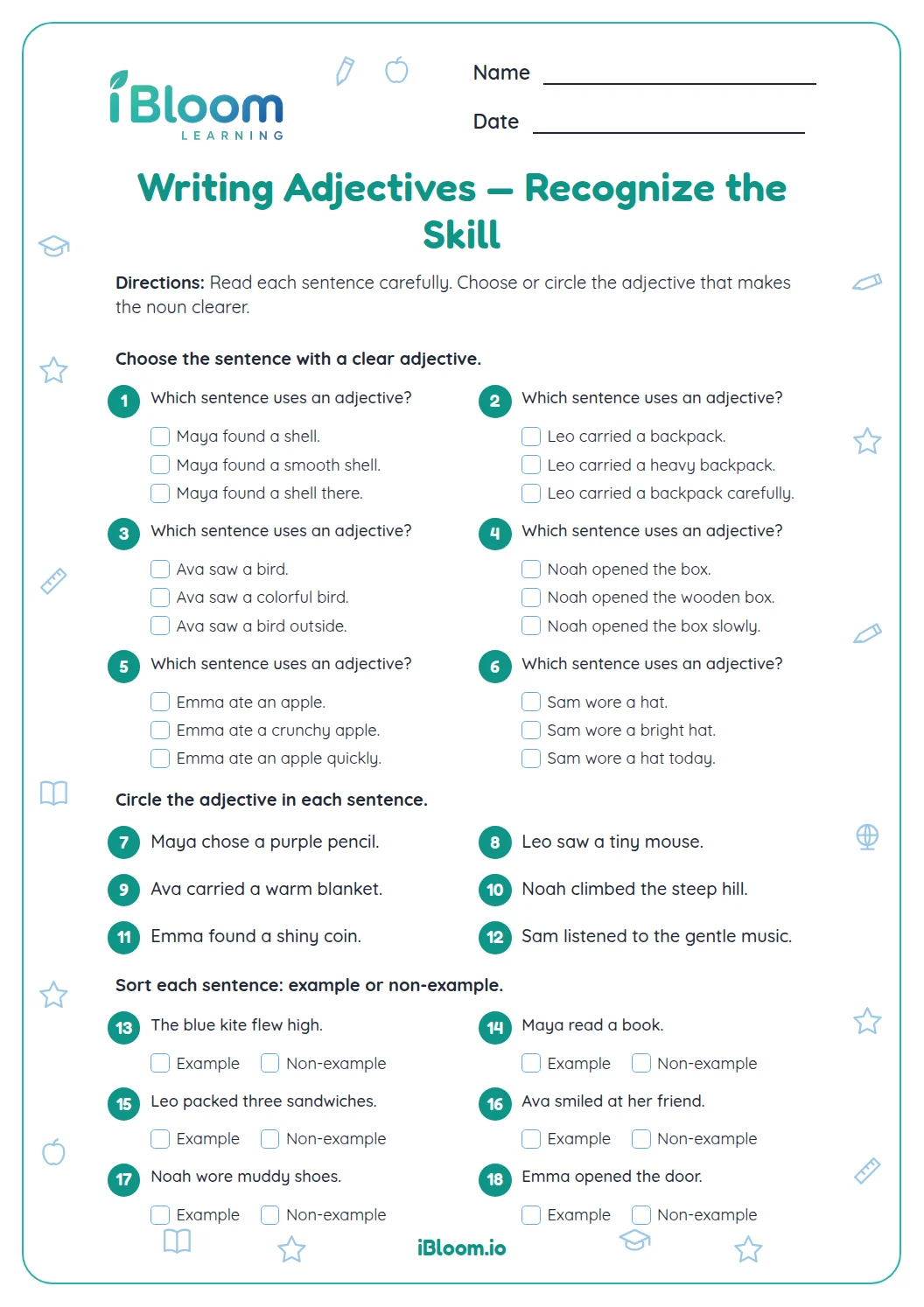
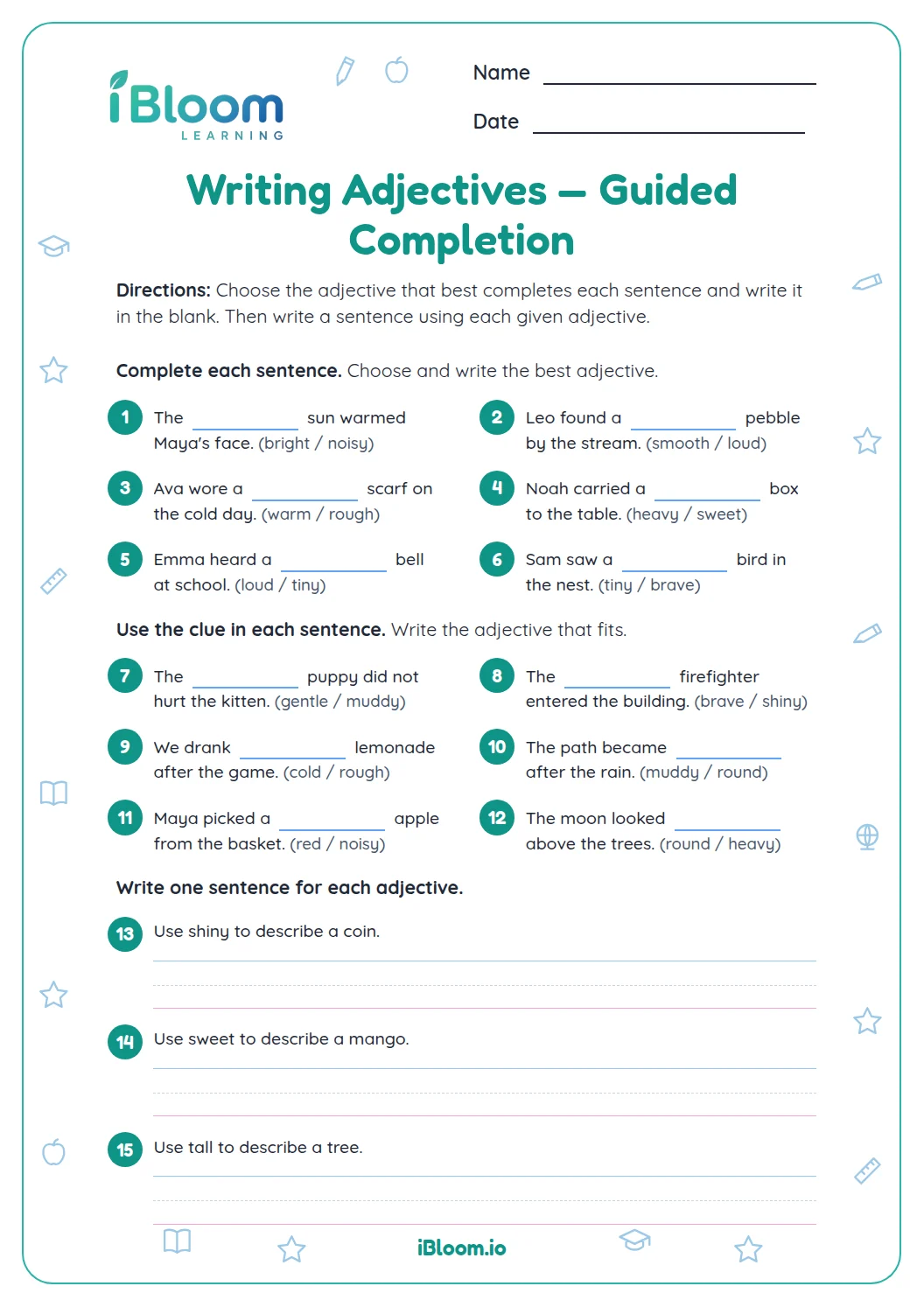
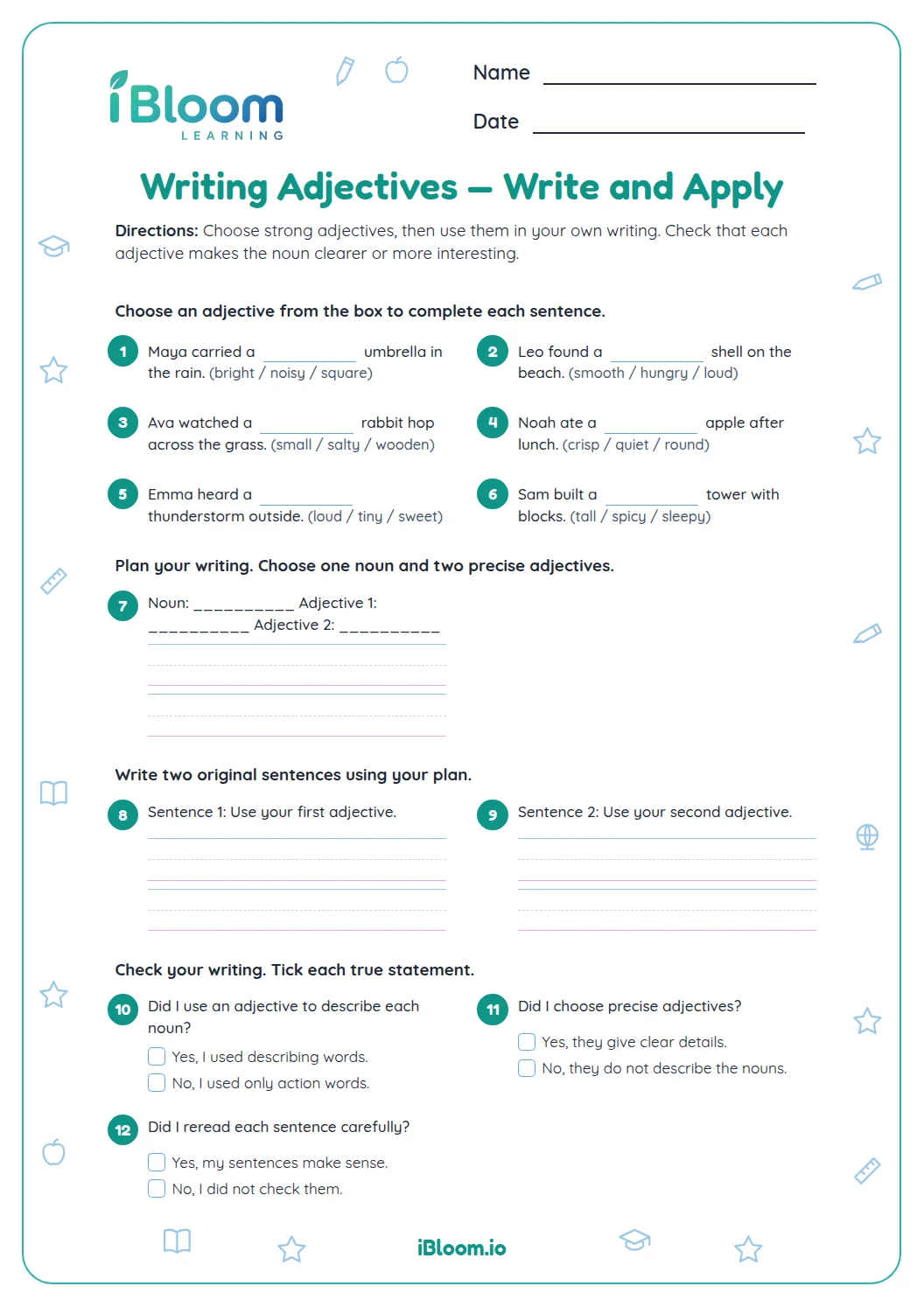
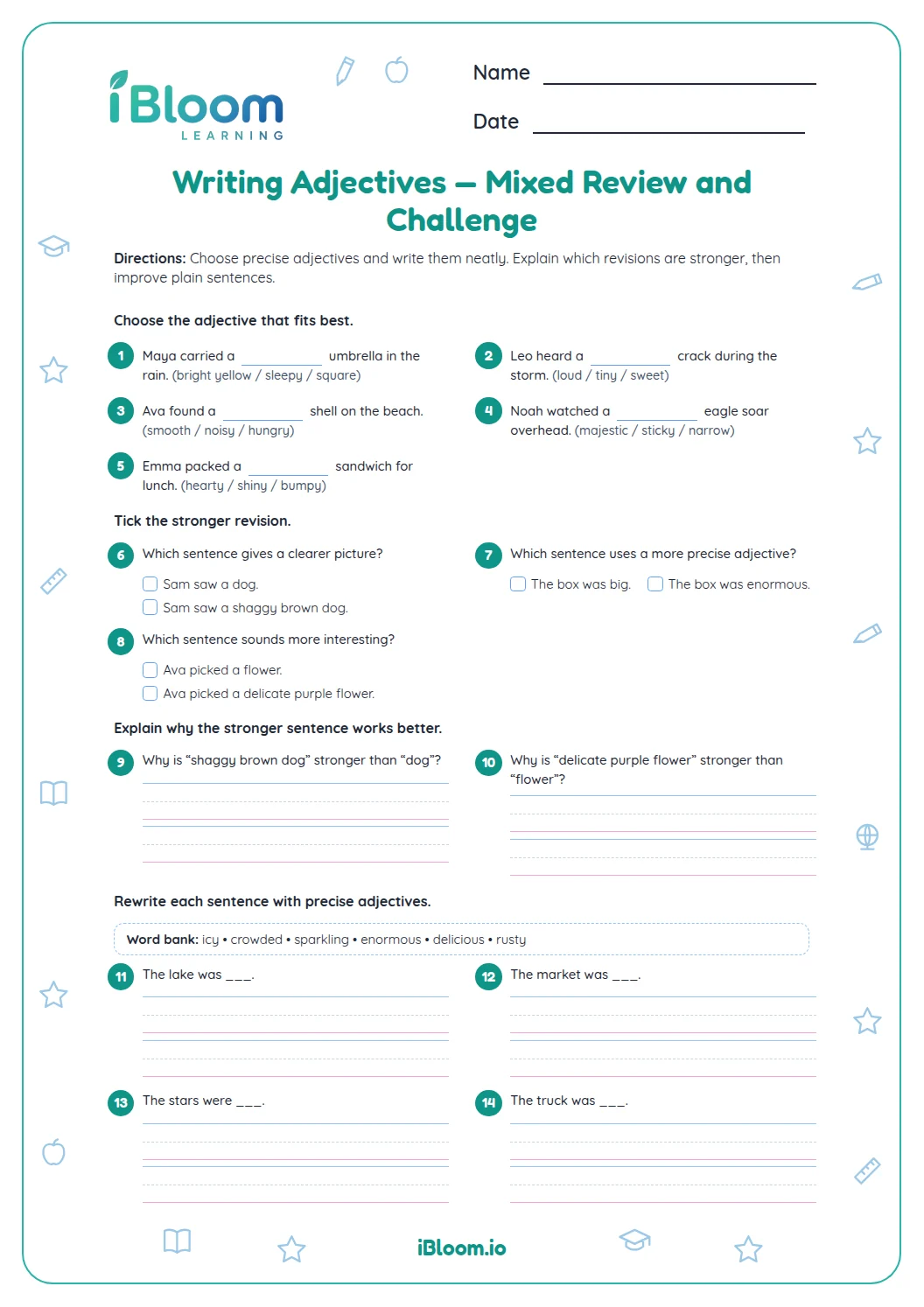
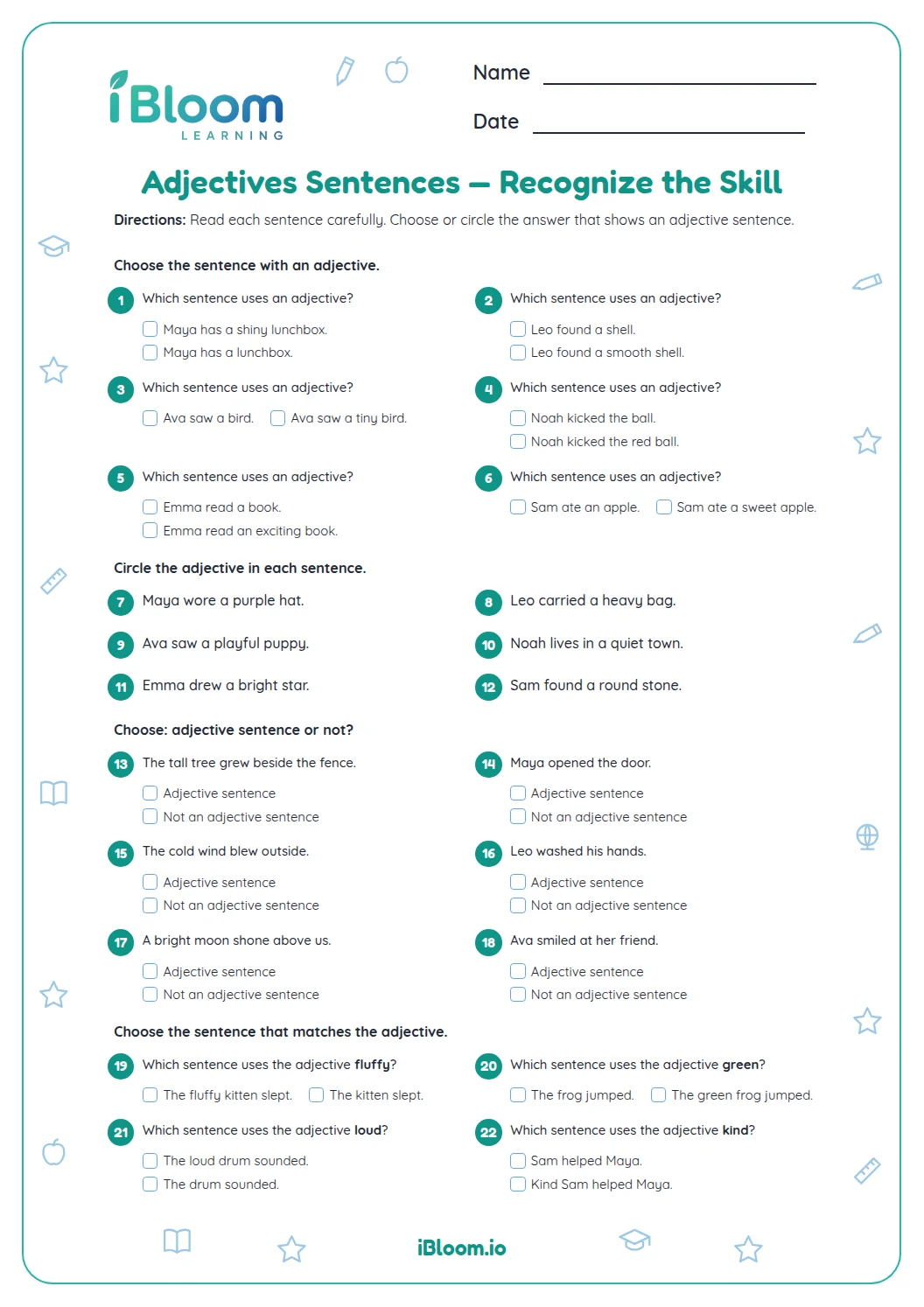
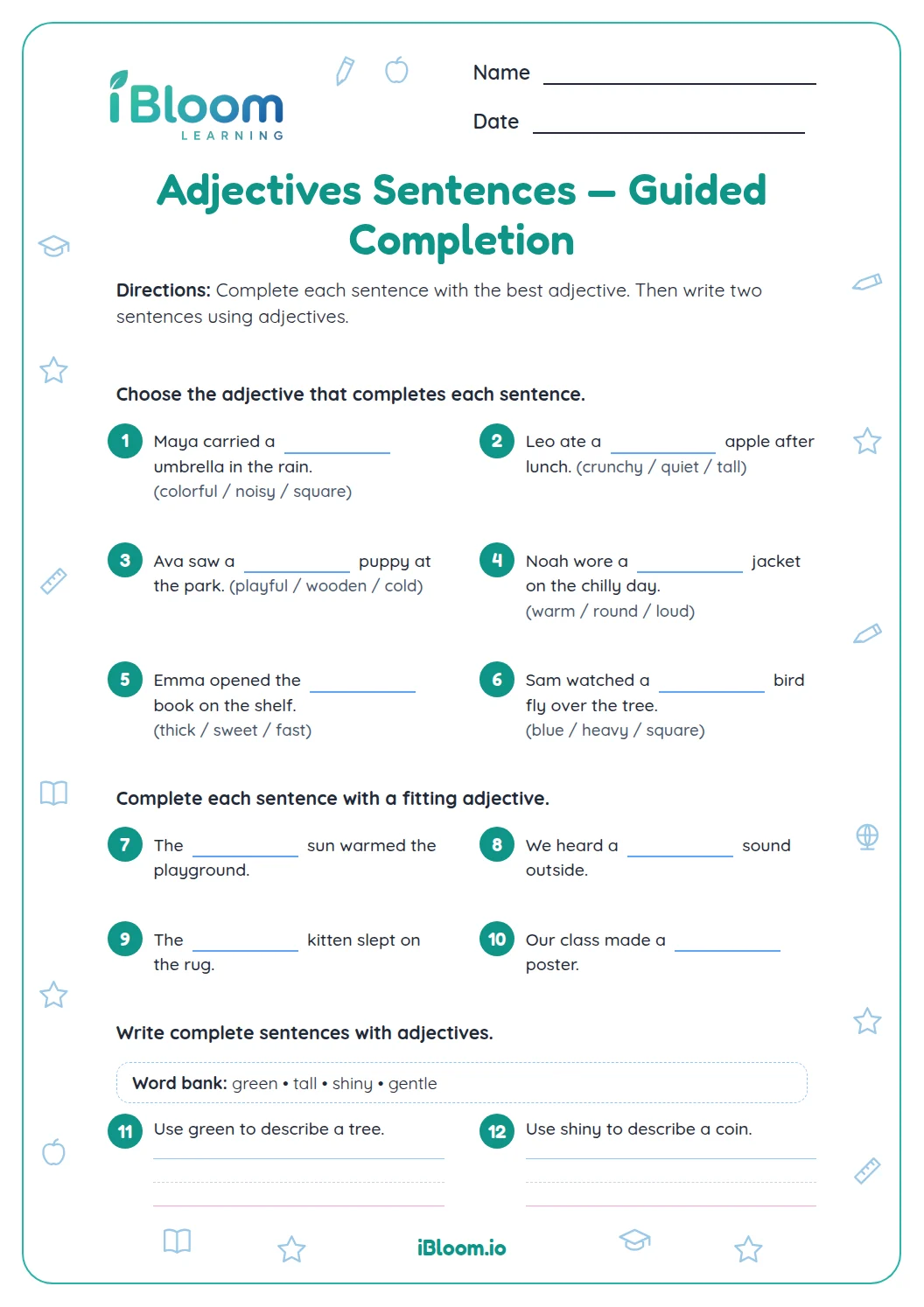
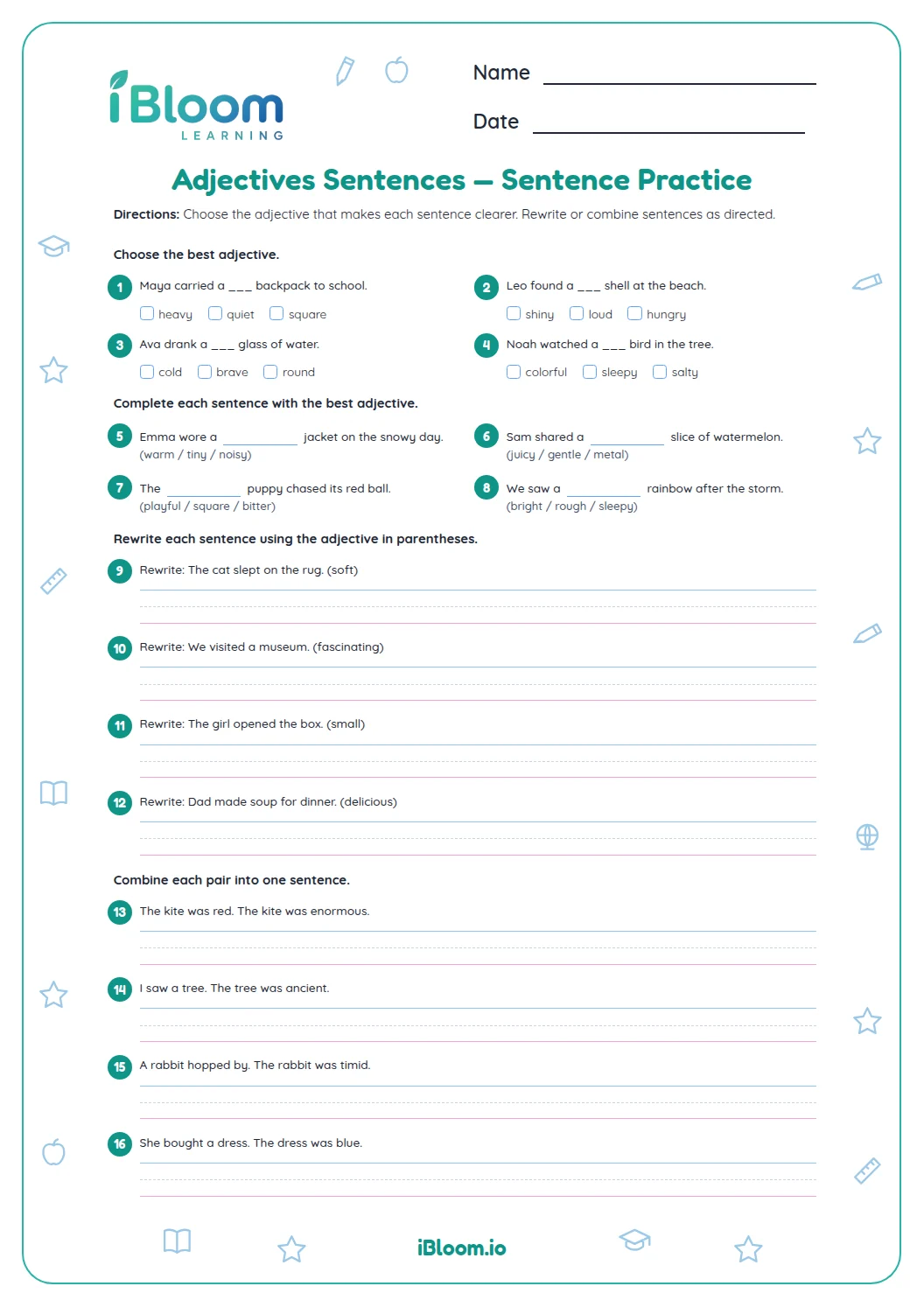
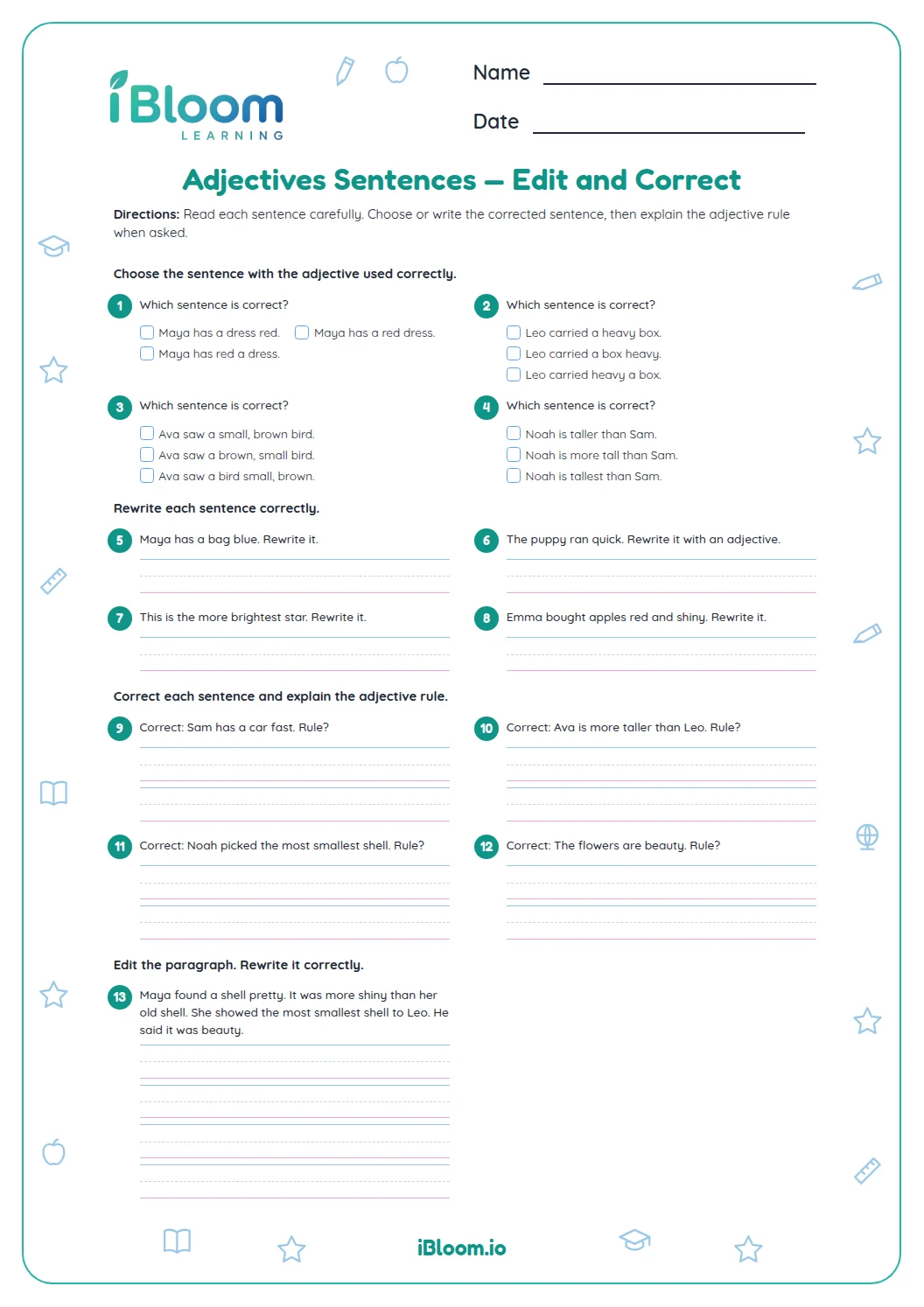
This Grade 3 printable helps learners edit sentences by choosing an adjective or correcting a describing word. Part A asks learners to select an adjective that fits a noun. Part B asks them to repair spelling or usage in context, including adjective and adverb mix-ups. It practices CCSS L.3.1a, explaining how adjectives function in sentences. A separate answer key supports quick checking.
Aligned to L.3.1a
How can you tell an adjective from an adverb?
An adjective describes a noun: a soft blanket, a loud crash, a happy child. An adverb often tells how an action happens: the driver stopped carefully. Read the word next to the noun or action to decide which job the sentence needs. Question 7 changes softly to soft because felt describes the blanket.
- 1The blanket felt softly.
- 2Blanket is a noun; it needs a describing word.
- 3Change softly to soft: The blanket felt soft.
How do you choose an adjective that fits?
Name the noun first, then try each choice before it. In Part A, “a bright bird” makes sense because bright describes the bird; “brightly bird” does not.
Why should you reread the whole sentence?
A word can look familiar but have the wrong form for its place in a sentence. Rereading helps catch both spelling and usage, such as adding the adverb ending when the sentence needs an adjective.
How to use this worksheet
- 1Read the whole sentence aloud.
- 2Find the noun that needs a description or the action being described.
- 3Try each choice in the sentence and listen for the form that fits.
- 4For a correction, write the whole corrected word clearly.
- 5Reread your edit and check it with the answer key.
Common mistakes and quick fixes
The mistake
Using an adverb before a noun, as in “a loudly crash.”
The fix
Ask which word names the thing; use an adjective to describe that noun.
The mistake
Adding -ly to an adjective after a linking verb, as in “felt softly.”
The fix
After felt, use the describing word soft.
The mistake
Keeping a misspelling because the word sounds right.
The fix
Check common endings such as -ful and -ly letter by letter.
Common Core alignment
The editing choices ask learners to notice how adjectives work in sentences.
Explain how adjectives and other parts of speech work in sentences.
On this sheet: Learners distinguish adjectives from adverbs and select words that describe nouns in complete sentences.
Show the official wordingHide the official wording
Explain the function of nouns, pronouns, verbs, adjectives, and adverbs in general and their functions in particular sentences.
What to practice next
Make more practice
Further reading
Questions parents and teachers ask
What does an adjective do in a sentence?
An adjective describes a noun, as smooth describes shell in “a smooth shell.” This worksheet asks learners to choose adjectives that fit nouns and correct words that do not fit their sentence. Ask which noun the describing word helps the reader picture.
How is an adjective different from an adverb?
An adjective describes a noun, while an adverb often describes an action. In “the blanket felt soft,” soft describes blanket; in “the wind blew strongly,” strongly tells how the wind blew. Noticing the word each term describes is a useful way to tell them apart.
How many editing questions are included?
There are 14 questions: six multiple-choice items and eight written corrections. The answer key gives the target word for each item, including a sample response where a suitable edit can vary. This gives learners repeated practice noticing the role a word plays.
Can I read the sentences aloud with my child?
Yes. Reading aloud can help a learner hear whether the word form fits the sentence. Ask the child to identify the noun or action before choosing a correction. Have the learner explain which noun or action helped guide the choice.
Which adjective and adverb corrections appear?
The correction items include adjective and adverb forms, such as changing softly to soft before blanket and loudly to loud before crash. Other items correct a spelling pattern or an adjective form. Ask the learner to reread the full sentence after each edit to check how the word is being used.