







About this worksheet
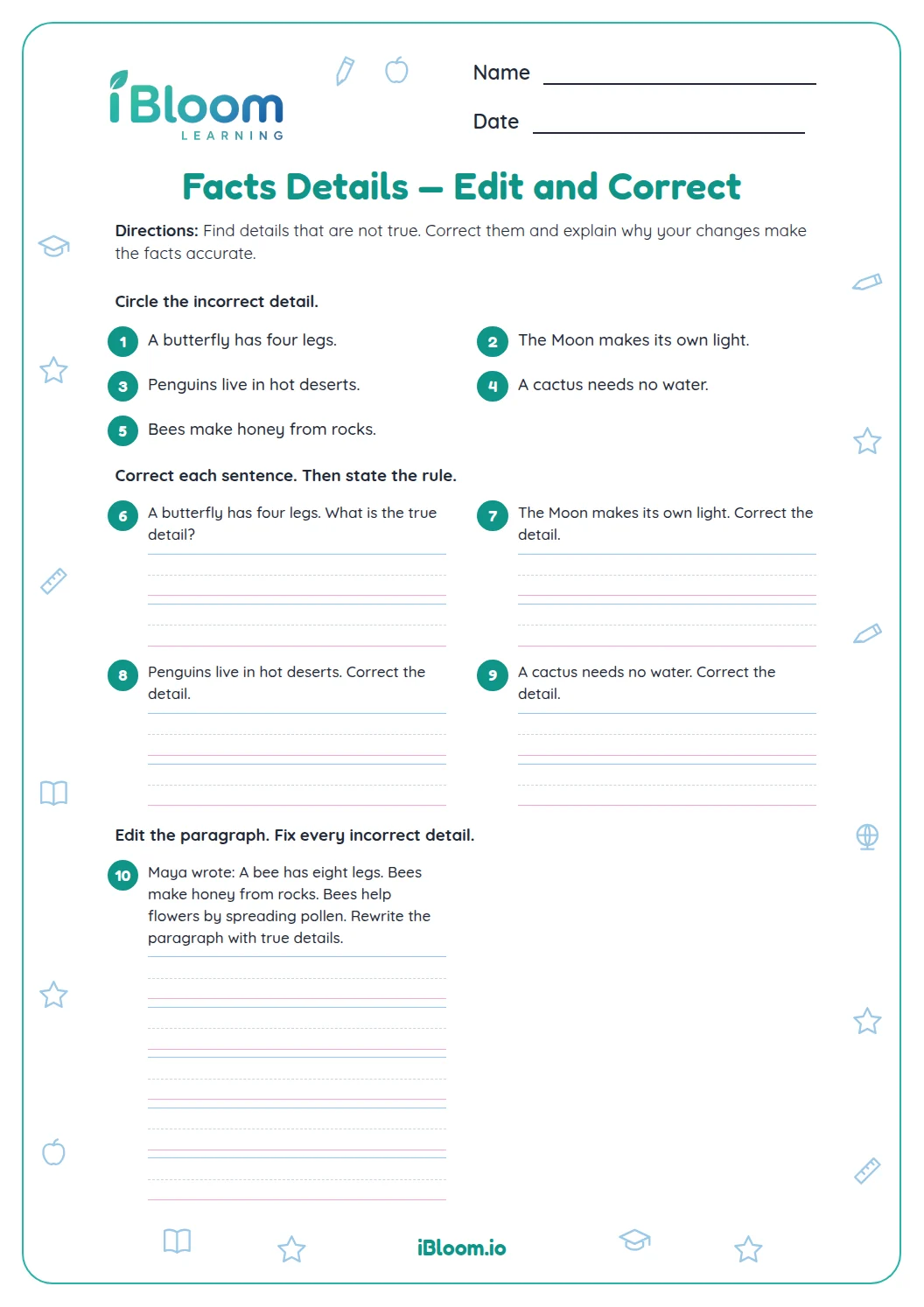
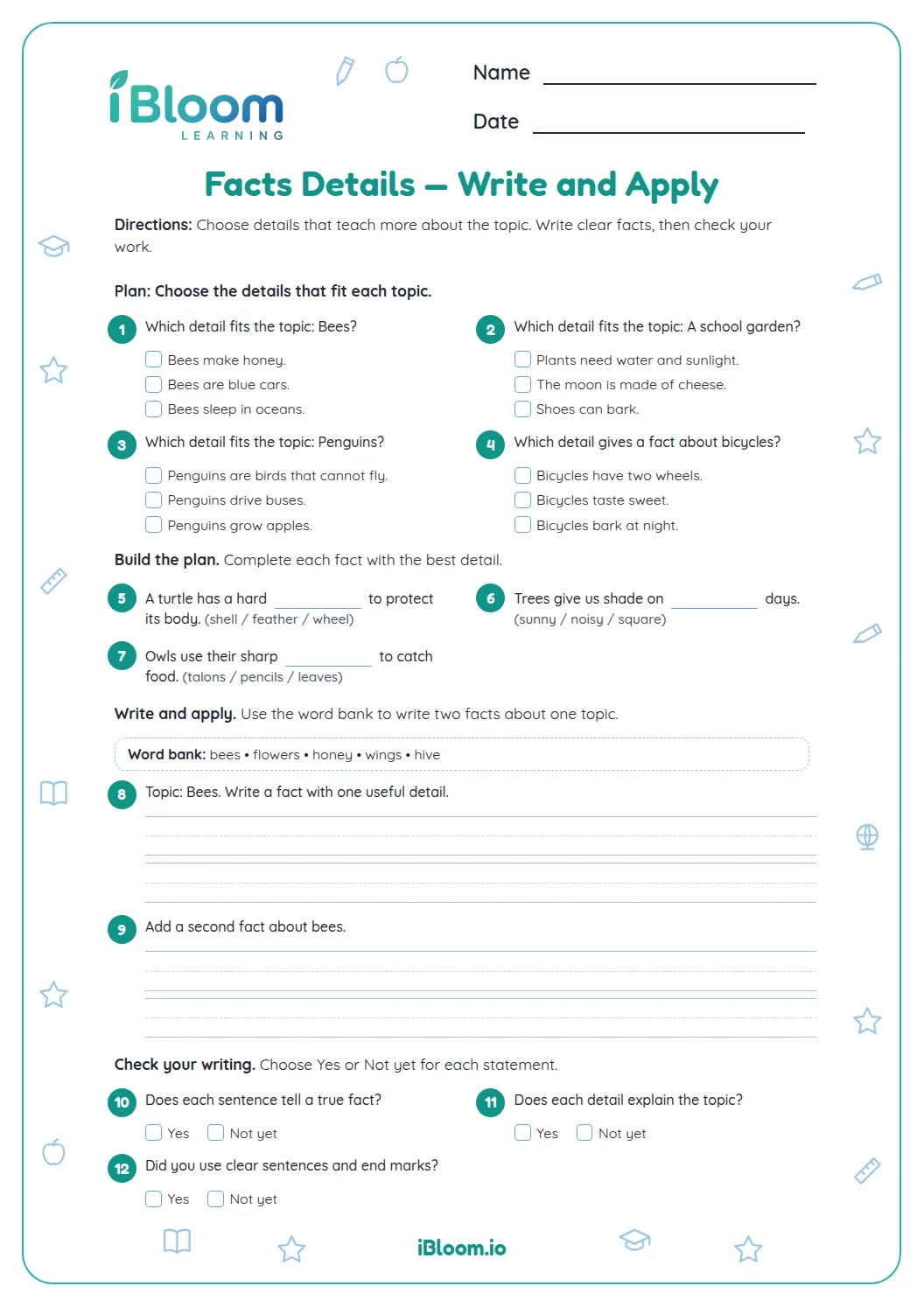
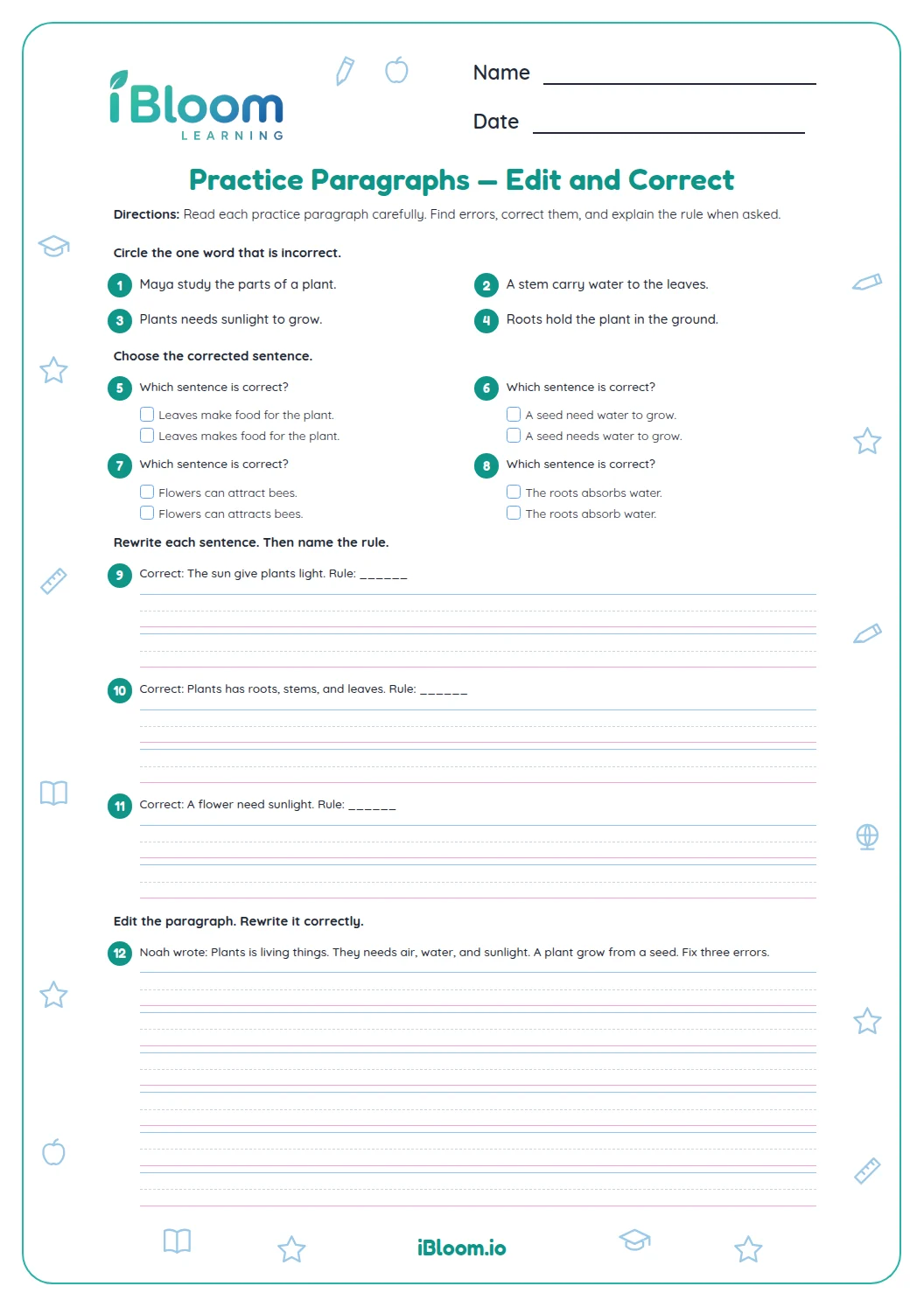
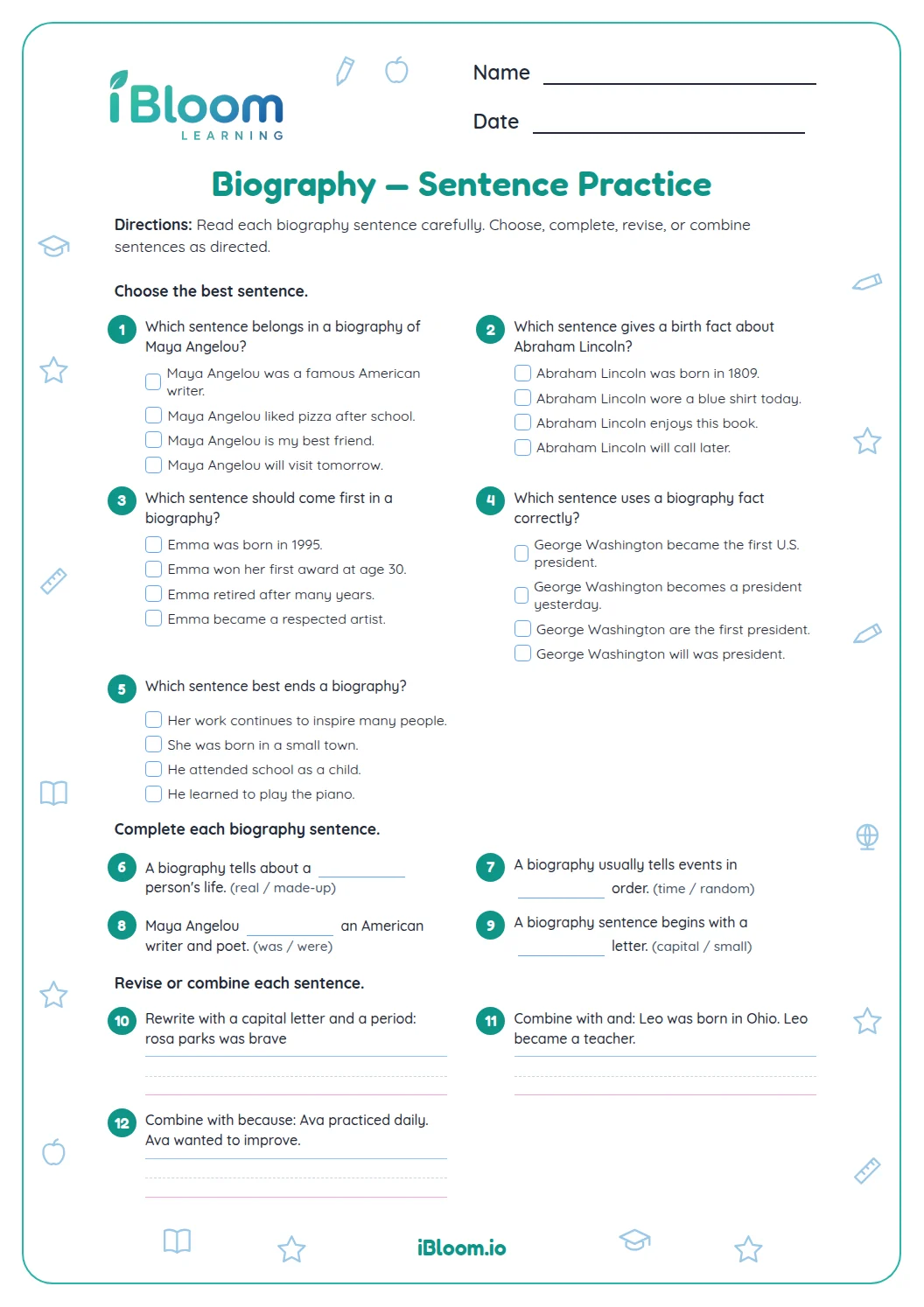
This Grade 3 printable gives students practice distinguishing facts from opinions, selecting details that fit a topic, and writing short informative responses. A short passage about a school garden anchors the review. The 14 questions move from identifying useful facts to supplying supporting details and a concluding sentence. A separate answer key includes sample responses for open-ended writing.
Aligned to W.3.2
What makes a sentence a fact?
A fact can be checked with observation or reliable information. In question 4, “A frog begins life as a tadpole” can be checked, so it is a fact. An opinion expresses a preference, such as calling turtles the cutest pets.
- 1A frog begins life as a tadpole.
- 2This can be checked, so it is a fact.
How do supporting details help a topic?
A supporting detail explains or gives an example of the topic sentence. In question 2, watering plants supports “A garden needs care” because it names a care task. A statement about a favorite color would not explain garden care.
- 1Topic: A garden needs care.
- 2Detail: Water the plants often.
- 3The detail gives one way to care for a garden.
How can you write an informative response?
State a clear idea, add facts that explain it, and finish by reminding the reader of the topic. Use complete sentences and keep each detail connected.
How to use this worksheet
- 1Read the topic sentence first.
- 2Check whether a statement is verifiable or a personal preference.
- 3Choose details that explain the topic.
- 4Write a complete sentence for each open response.
Common mistakes and quick fixes
The mistake
Treating an opinion as a fact.
The fix
Ask whether someone could check the statement using evidence.
The mistake
Adding an interesting but unrelated detail.
The fix
Reread the topic and explain how the detail supports it.
The mistake
Listing words instead of writing a sentence.
The fix
Include a subject and a complete thought.
Common Core alignment
Organize facts and relevant details to explain a topic clearly.
On this sheet: Students select relevant details and write short informative statements.
Show the official wordingHide the official wording
Write informative/explanatory texts to examine a topic and convey ideas and information clearly.
What to practice next
Make more practice
Further reading
Questions parents and teachers ask
What is a fact?
A fact is a statement that can be checked. “Bees have six legs” can be confirmed, while “Bees are the best insects” states a preference. The worksheet asks students to notice this difference before selecting details for informative paragraphs. Ask the student to point to a supporting detail.
What makes a supporting detail relevant?
A relevant detail explains or gives an example of the topic sentence. For “A garden needs care,” watering plants fits because it describes a care task. A detail about a favorite color does not help explain the topic. Ask the student to point to the place value, word, or punctuation mark that supports the answer, then compare it with the answer key.
Do the writing questions have only one correct answer?
Several prompts invite students to supply a fact, opinion, or supporting detail. The key gives sample responses, and another accurate answer that fits the prompt is acceptable. For passage questions, students should use information stated in the school-garden passage rather than add outside details.
How many questions are on the printable?
The printable has 14 questions across three worksheet pages, followed by a three-page answer key. It includes a school-garden passage, fact and detail questions, and short writing prompts. Open responses have sample answers so students can compare their ideas with one possible response.
How can I help without giving the answer?
Ask the student to name the topic and explain how a proposed detail connects to it. For a fact, ask what observation or source could check the statement. For a passage question, return to the sentence that gives the information and put the answer in the student’s own words.