





About this worksheet
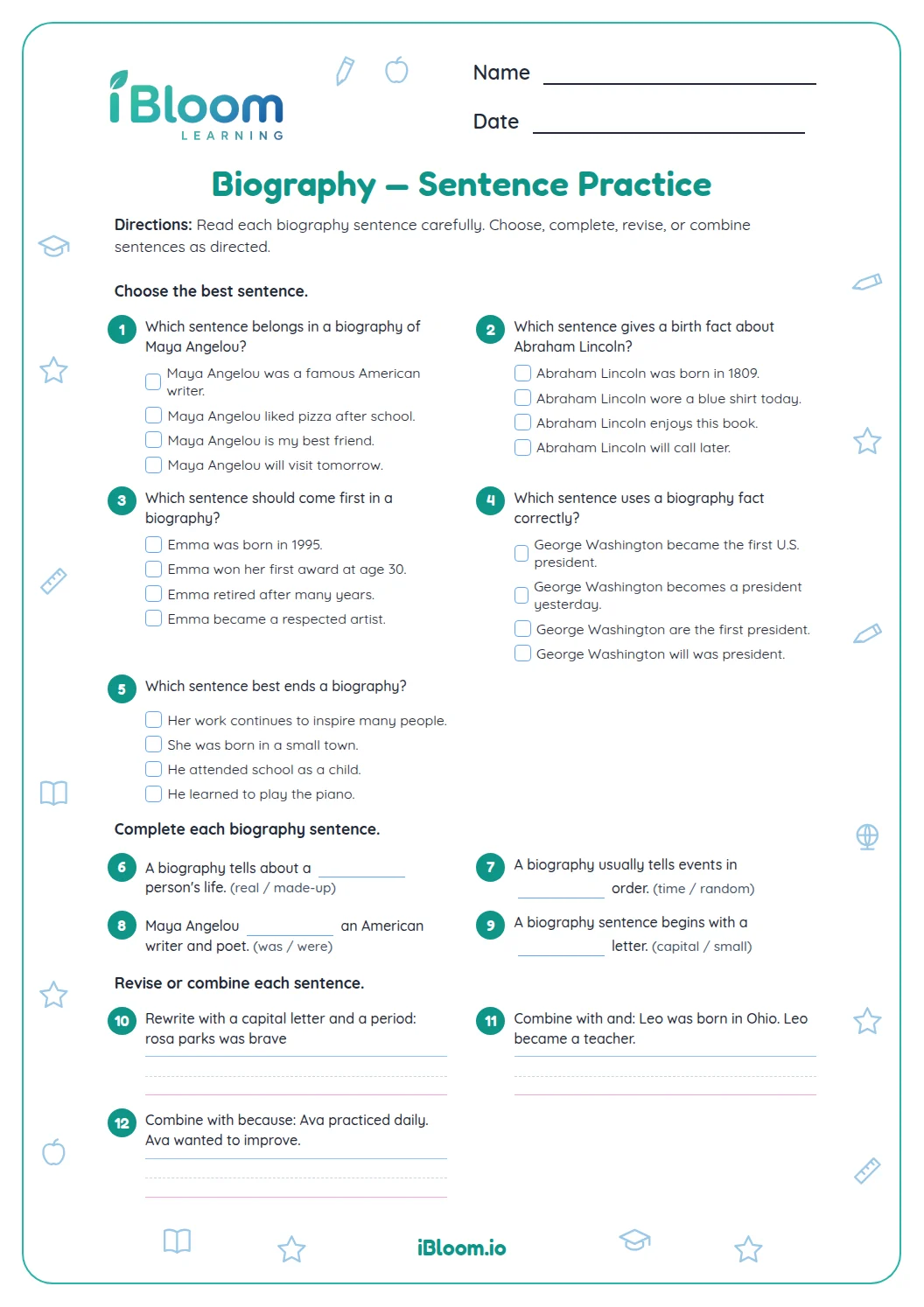
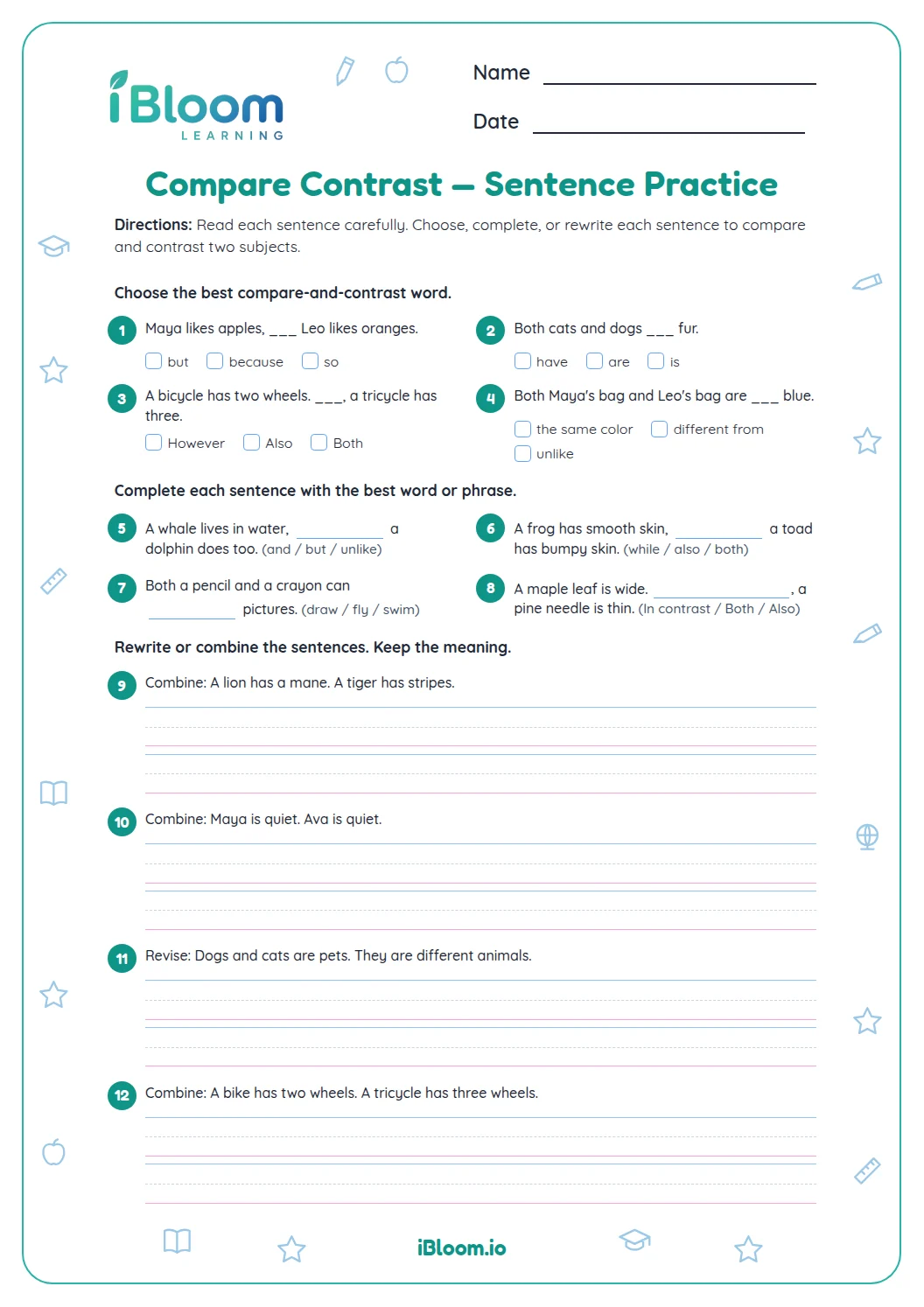
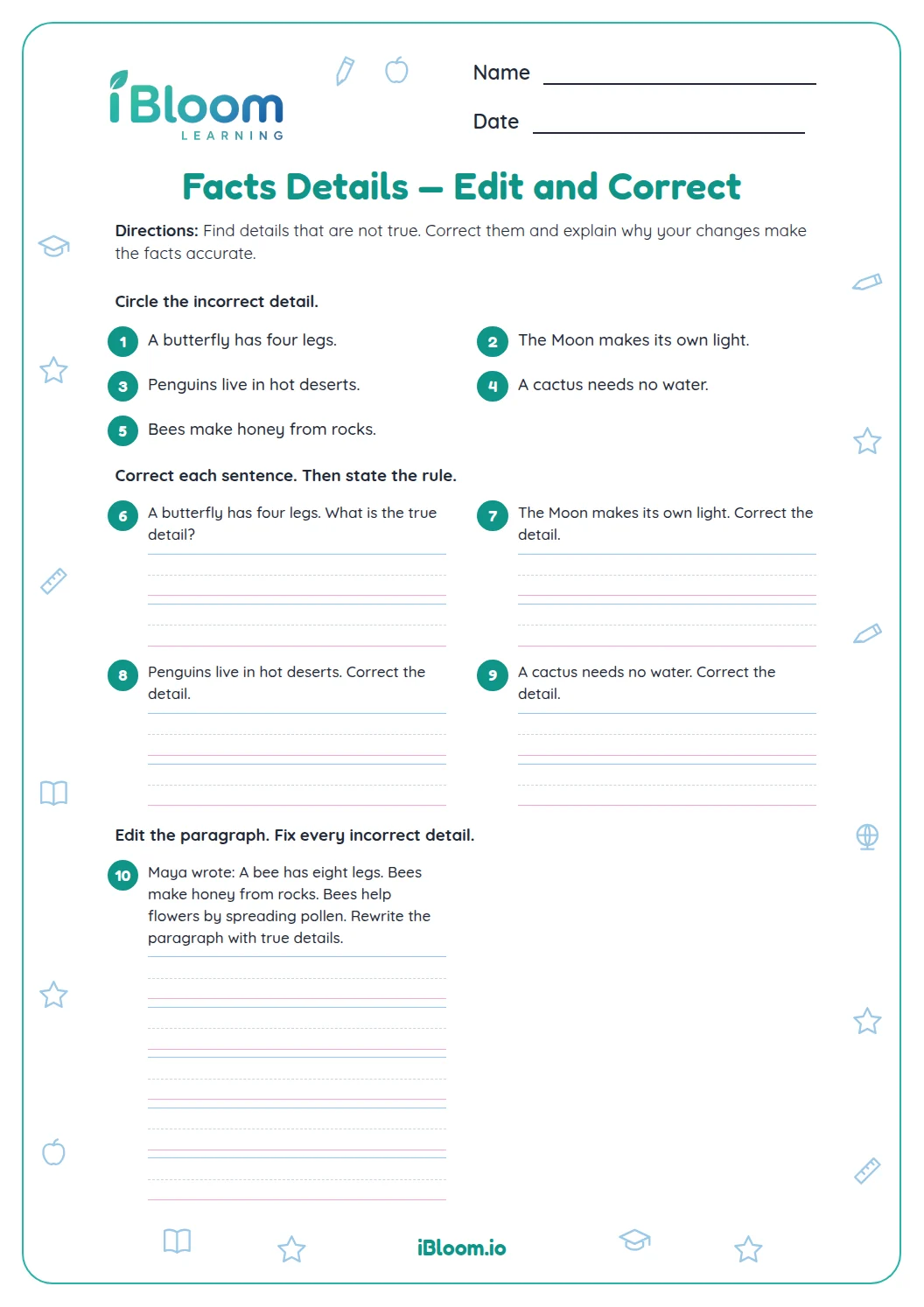
This Grade 3 worksheet practices sentence choices for a short informative report. Learners recognize complete thoughts, choose relevant facts and supporting details, repair fragments, and select clear, conventional sentences. All 15 items are multiple choice, and the key identifies the best answer for each.
Aligned to W.3.2 and L.3.1
What is on this worksheet?
The 15 multiple-choice questions move from recognizing complete sentences to choosing relevant facts, repairing fragments, and selecting details and a closing sentence for a short report.
How to use this worksheet
- 1Read the direction at the start of each part before beginning.
- 2Work from Part A toward the final part; the questions move from recognition to applying the skill.
- 3Use the answer key to check each response and discuss any answer that was difficult.
Common mix-ups
The mistake
A sentence fragment may start with “because” but leave the thought unfinished.
The fix
Add the result or connect it to a complete clause.
Curriculum alignment
This page supports Grade 3 informative writing by helping learners express facts and details clearly in complete sentences.
Write informative texts that examine a topic and convey information.
On this sheet: Students compose and revise focused sentences that state facts and relevant details for a short report.
Show the official wordingHide the official wording
Write informative/explanatory texts to examine a topic and convey ideas and information clearly.
Demonstrate command of standard English grammar and usage.
On this sheet: Sentence revision and complete-thought practice support clear, conventional writing.
Show the official wordingHide the official wording
Demonstrate command of the conventions of standard English grammar and usage when writing or speaking.
What to practice next
Make more practice
Questions parents and teachers ask
What makes a sentence complete?
A complete sentence expresses a whole thought. It usually names a person, place, animal, or thing and tells something about it. “The dog runs” is complete, while “The dog” leaves the reader waiting to learn what the dog does.
What is a useful research detail?
A useful detail gives specific information that supports the report’s topic or fact. If a report explains that bees help plants, the detail that bees carry pollen between flowers is relevant. A detail about an unrelated favorite food would not help explain the topic.
How can I help my child revise a fragment?
Read the words aloud and ask whether they express a whole thought. A phrase beginning with “Because” often needs a result: “Because a turtle has a shell” can become “A turtle is protected because it has a shell.” Then reread the revision for clarity.
What can students write after this page?
Invite the learner to choose an animal or plant, state one fact, and add a detail that explains it. They can finish with a sentence that reminds the reader of the topic. This turns the sentence practice into a short, focused research paragraph.
Do students write original sentences on this page?
No. This page asks students to choose among sentence options. For an additional writing activity, invite the learner to use one selected fact and add a related detail in their own sentence. Then ask them to reread the sentence for a complete thought and ending punctuation.