







About this worksheet
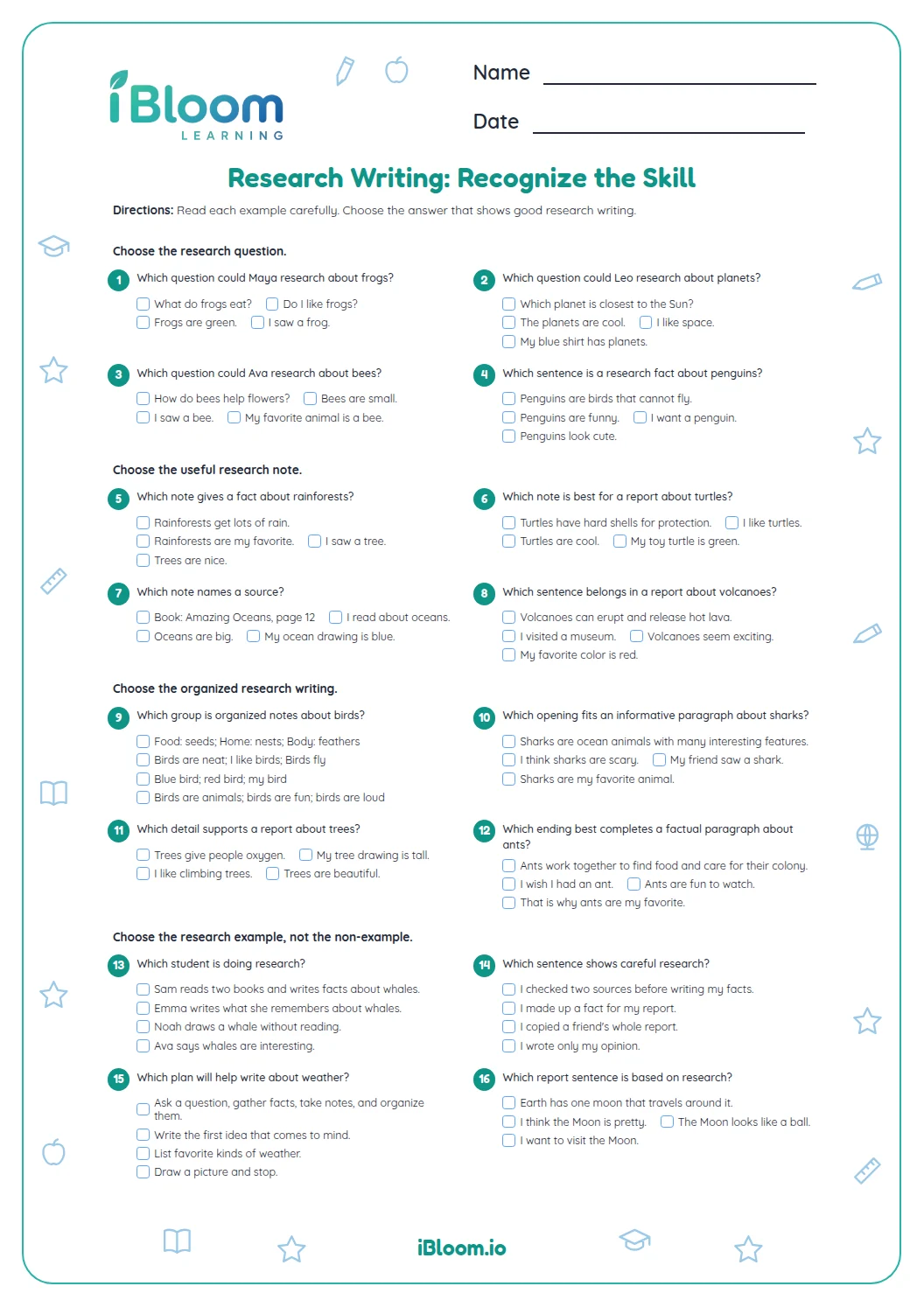
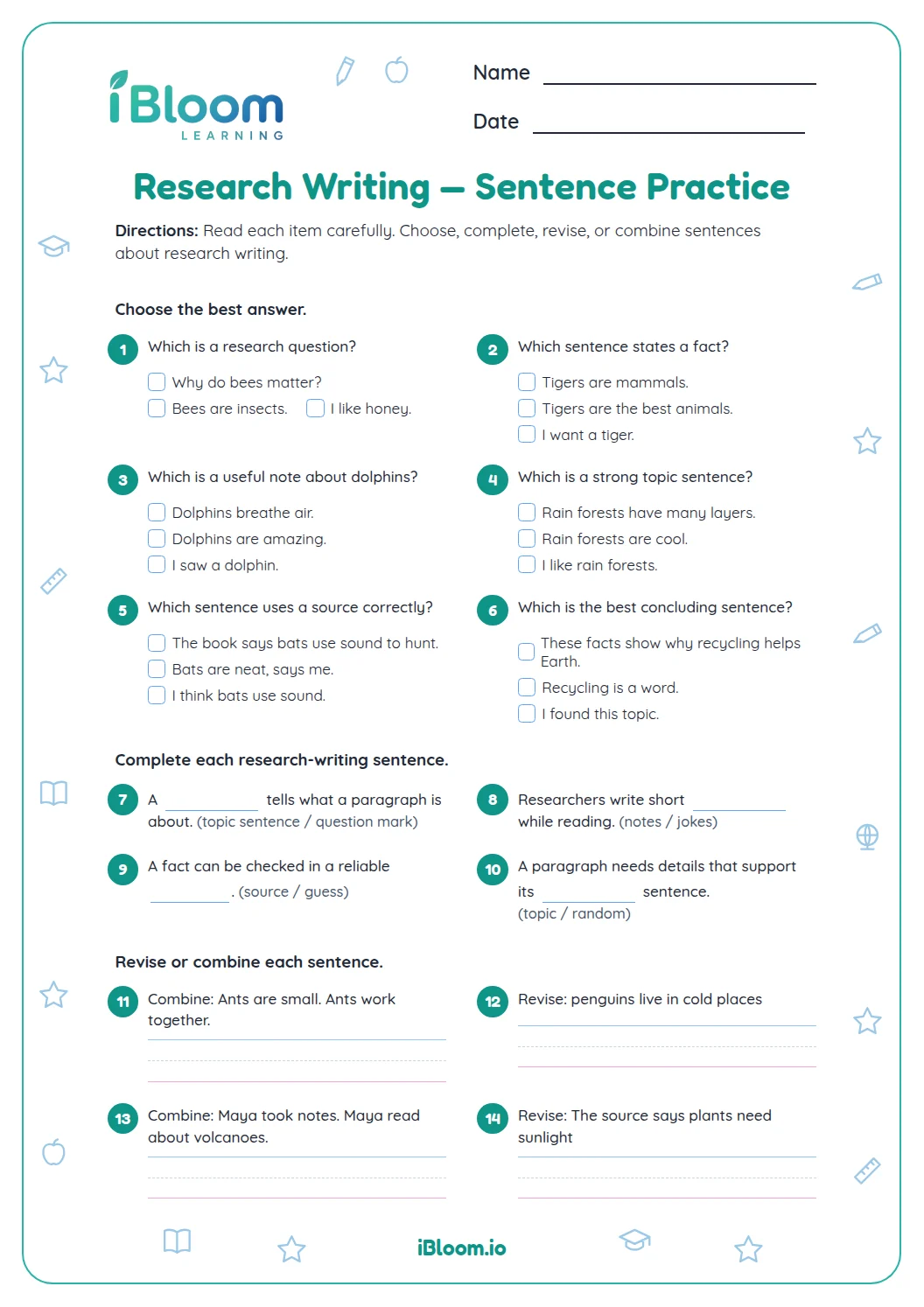
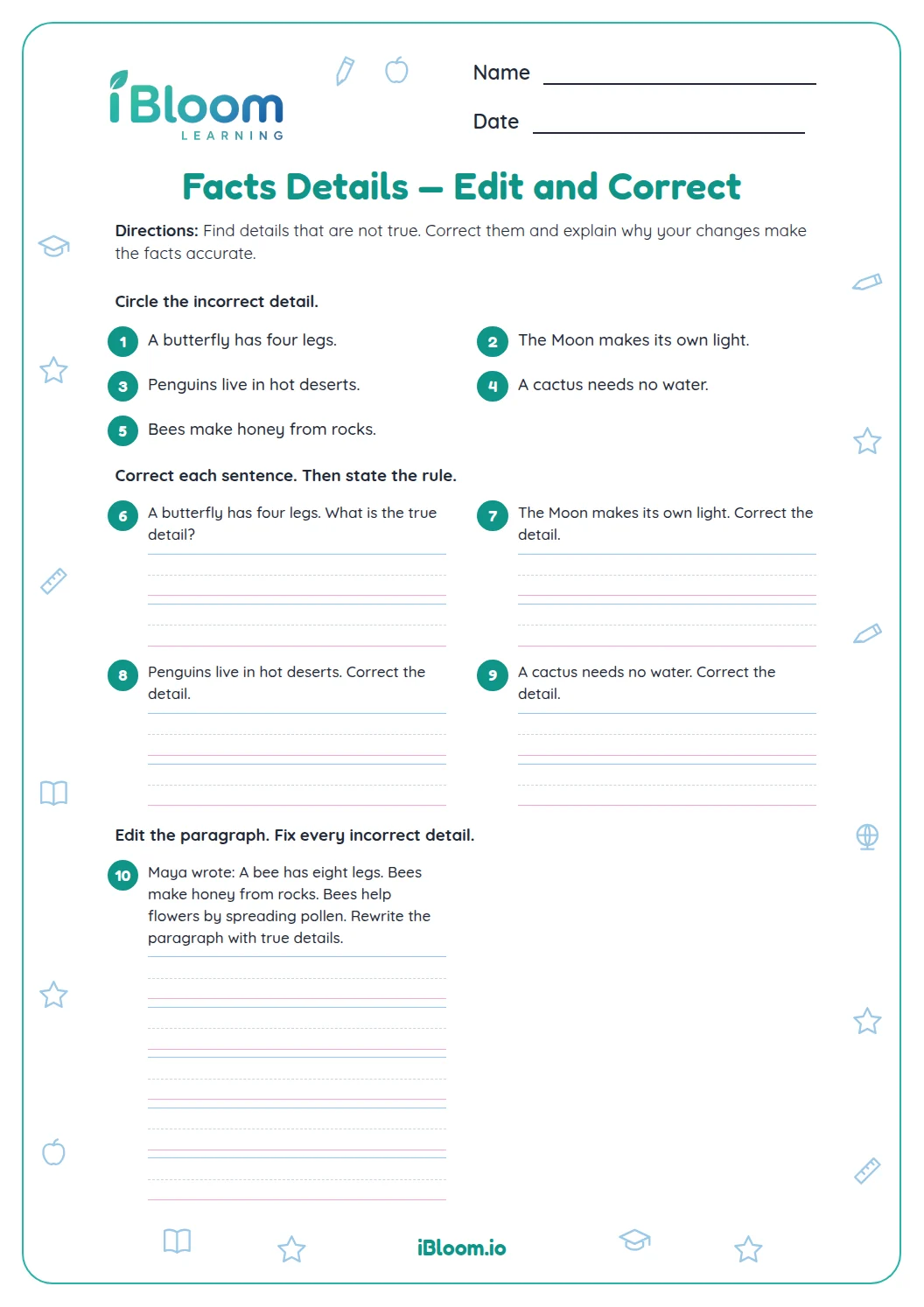
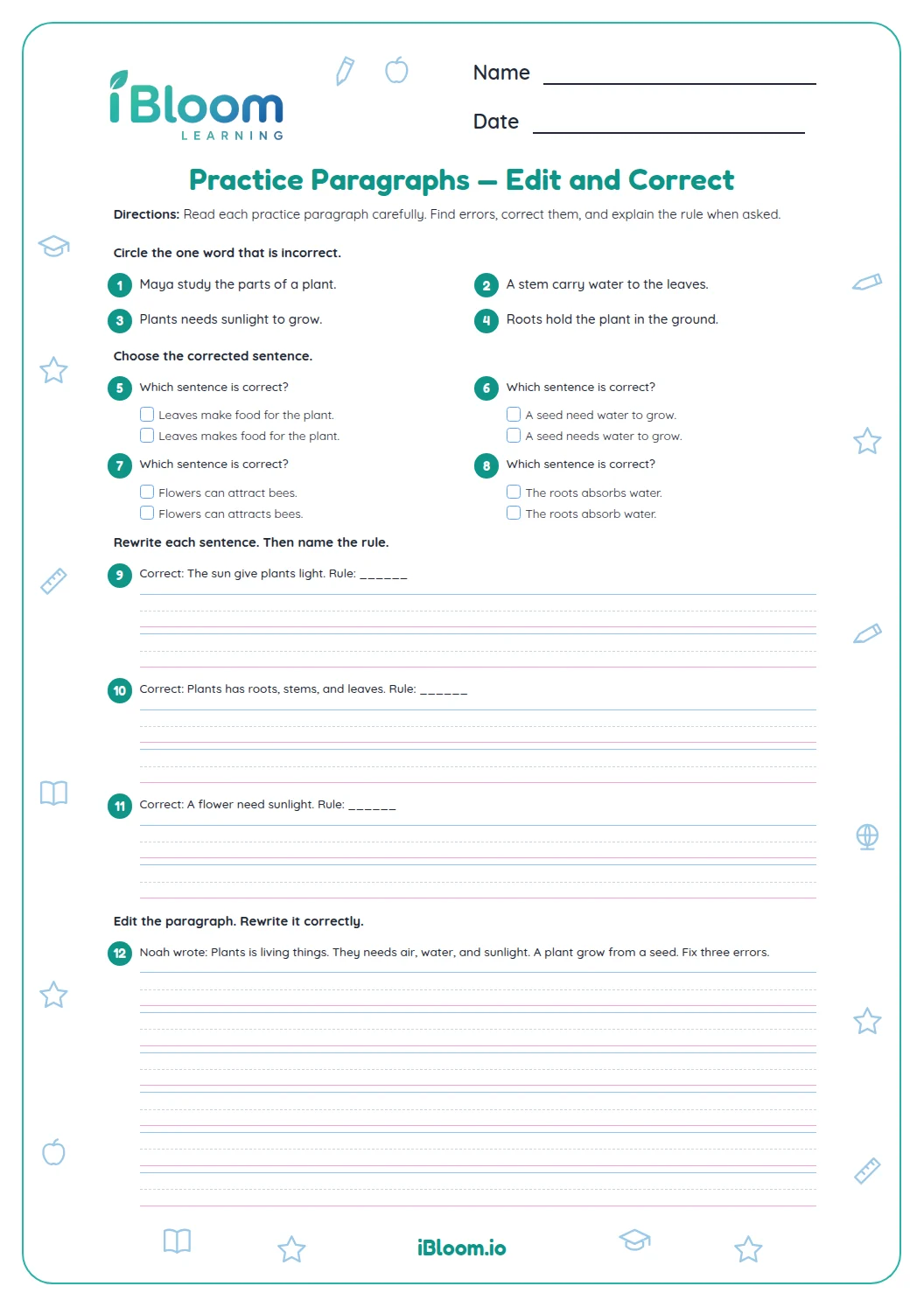
This two-page Grade 3 worksheet guides students through a small research task, from asking a focused question to organizing notes under headings. Fourteen items use examples about bees, ponds, seeds, robins, butterflies, and sunflowers. Students choose a useful source, distinguish facts from opinions, complete brief notes, and match details to headings. A two-page answer key includes the expected choices and concise sample answers. The sequence mirrors the work a young researcher does before drafting a report.
Aligned to W.3.8
How can a student choose a useful research question?
A useful research question is narrow enough for a short report and can be answered with information from a source. “How do bees help flowers?” asks for information; “Are bees the best insects?” asks for an opinion. Question 1 uses this contrast.
The source question follows the same idea: choose material that directly matches the topic. A field guide to pond life is a better fit for facts about a local pond than an unrelated book.
- 1“How do bees help flowers?” asks for facts about a specific topic.
How can notes stay brief and organized?
Keep the fact’s important subject and action, then place it under a heading that names the same idea. “Carry pollen between flowers” belongs under “What bees do”; “In a hive” belongs under “Where bees live.”
The later items use several topics so students practice the research habit, rather than memorizing one set of facts. A brief note may be a phrase, as long as it preserves accurate information from the source.
How to use this worksheet
- 1Read the directions at the start of each part.
- 2Try the first question together and explain the clue or strategy.
- 3Complete the remaining questions, showing work where it helps.
- 4Use the answer key to check each response.
- 5Review any missed item by naming the step that changes the answer.
Common mistakes and quick fixes
The mistake
Choosing a question that asks for a favorite or best choice.
The fix
Check whether a source could answer it with facts. Change “best” to a question about how, where, or what.
The mistake
Copying a long sentence instead of making a brief note.
The fix
Keep the key subject and action, such as “Bees carry pollen.”
The mistake
Putting a correct fact under an unrelated heading.
The fix
Say the heading aloud and check whether the fact answers it.
Common Core alignment
Students gather information, take brief notes, and sort facts into categories while planning a short report.
Gather facts from sources, take brief notes, and sort evidence into categories.
On this sheet: The research planner practices choosing sources, recording brief notes, and grouping facts.
Show the official wordingHide the official wording
Recall information from experiences or gather information from print and digital sources; take brief notes on sources and sort evidence into provided categories.
What to practice next
Make more practice
Further reading
Questions parents and teachers ask
What makes a research question useful?
A useful research question is focused and can be answered with facts from a source. “How do bees help flowers?” gives a researcher a clear topic to investigate. A question asking which insect is best would call for an opinion, so it would not guide a fact-based report as well.
How do students choose a source?
Match the source to the topic and the information needed. Question 2 asks for facts about a local pond, so a field guide to pond life is the most direct choice. A source should provide information that helps answer the research question, rather than merely share a related word.
What is a brief research note?
A brief note keeps the key information without copying a full sentence. “Carry pollen between flowers” records what bees do in a few words. Students can use phrases or short sentences, provided the meaning remains accurate and the note answers the research question.
How do headings help organize facts?
A heading names the kind of fact grouped beneath it. The note “In a hive” fits “Where bees live,” while a note about pollen belongs under “What bees do.” Sorting facts this way helps a writer find related details when planning a report.
Are all answers written in complete sentences?
No. Several prompts ask for one word or a short note, such as completing “Plant seeds 2 inches ___.” The answer key lists concise expected responses. For the final heading and note items, accept wording that preserves the fact and matches the topic.
How many questions and pages are included?
There are 14 questions on two worksheet pages, followed by a two-page answer key. The items move from question and source choices to facts, short notes, and headings. Students can check each answer by comparing it with the source information or the category named in the prompt.