








About this worksheet
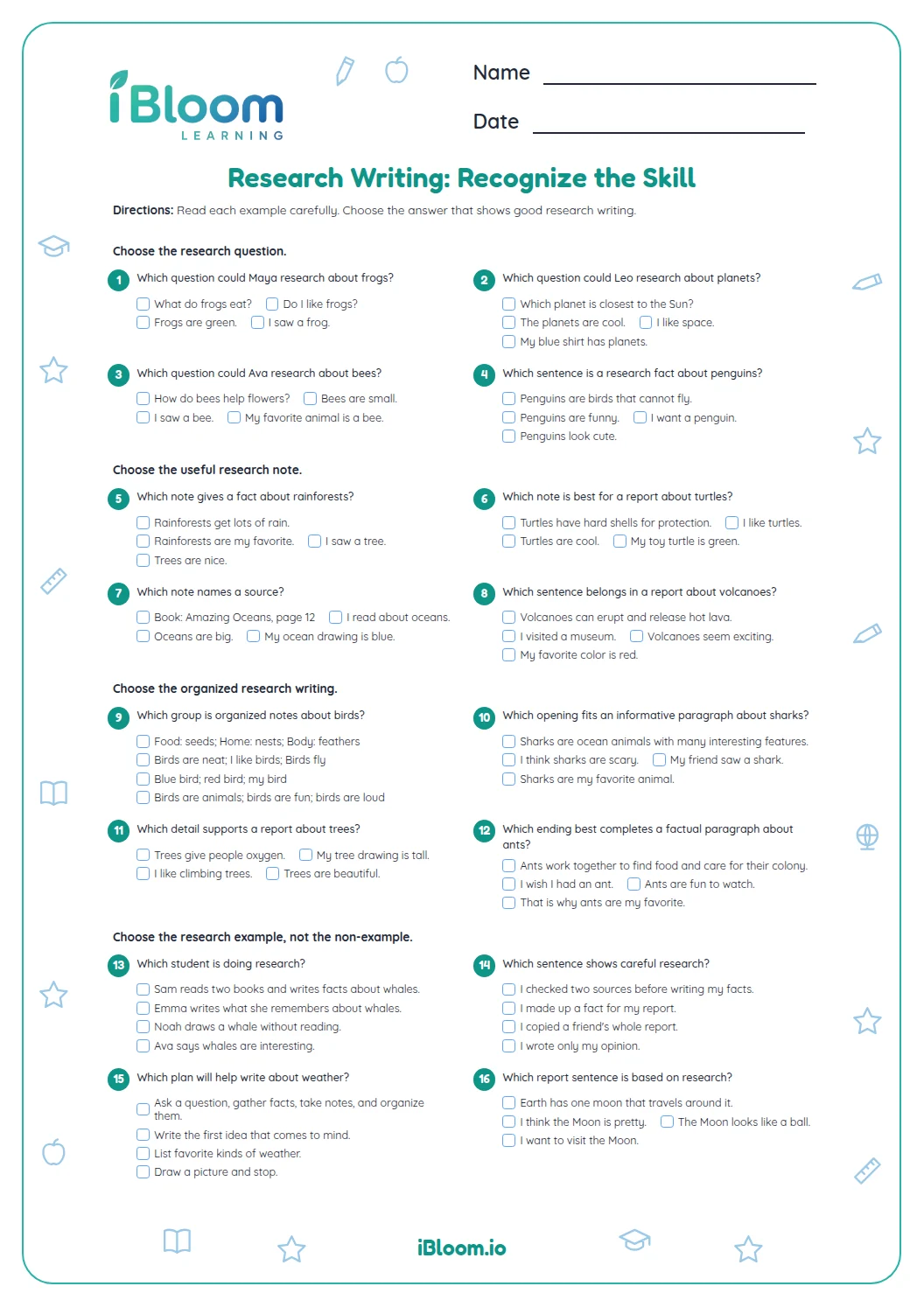
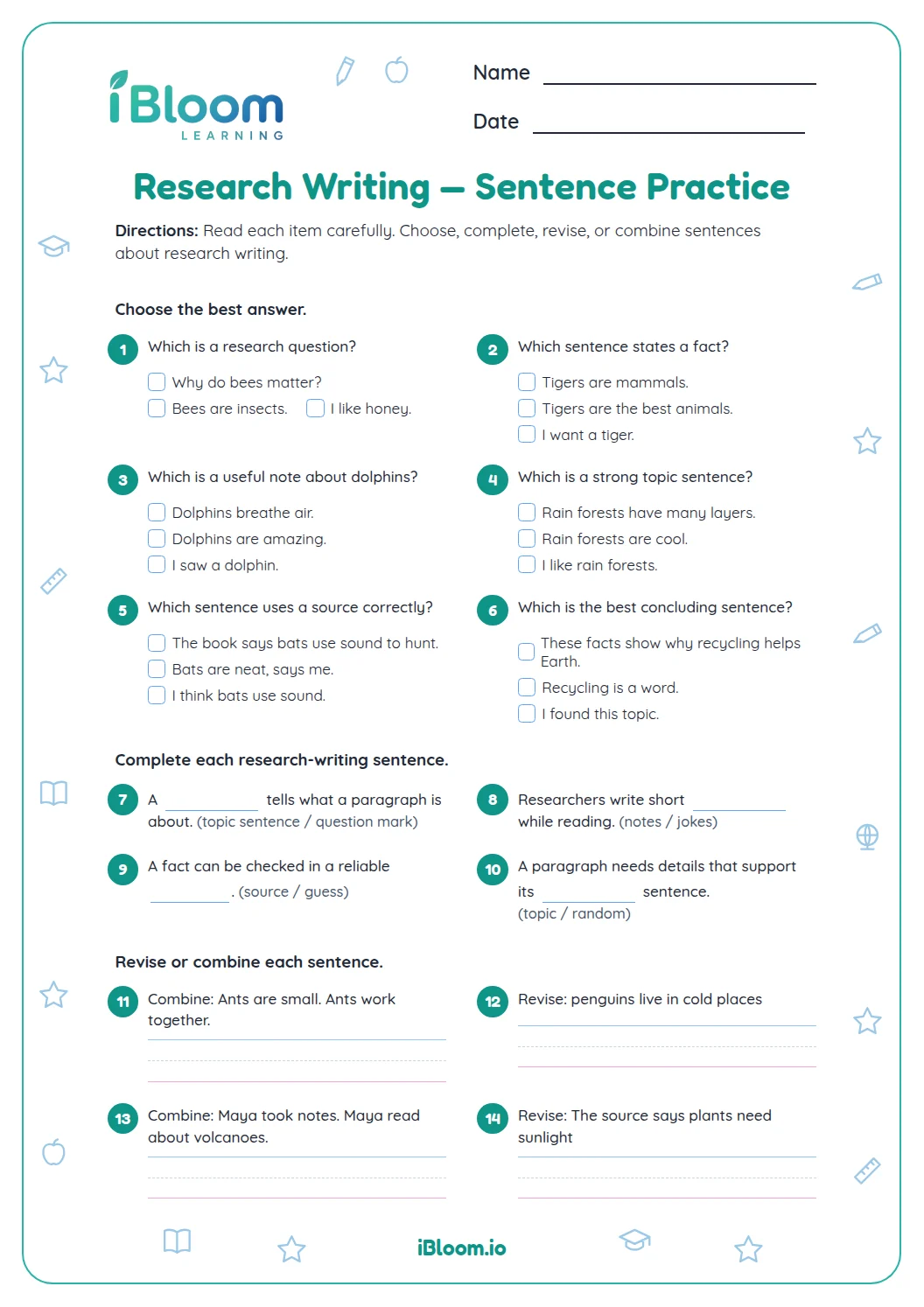
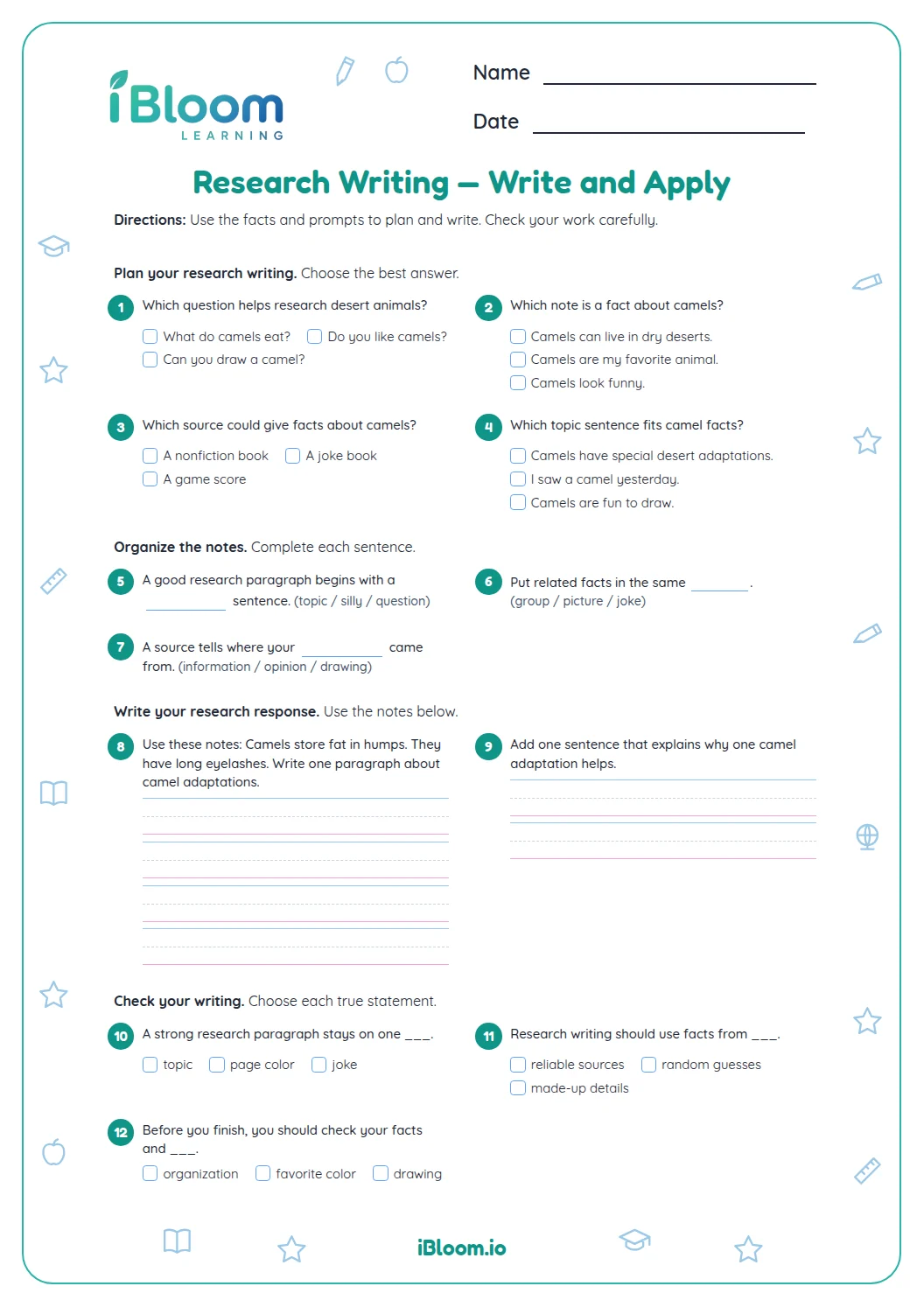
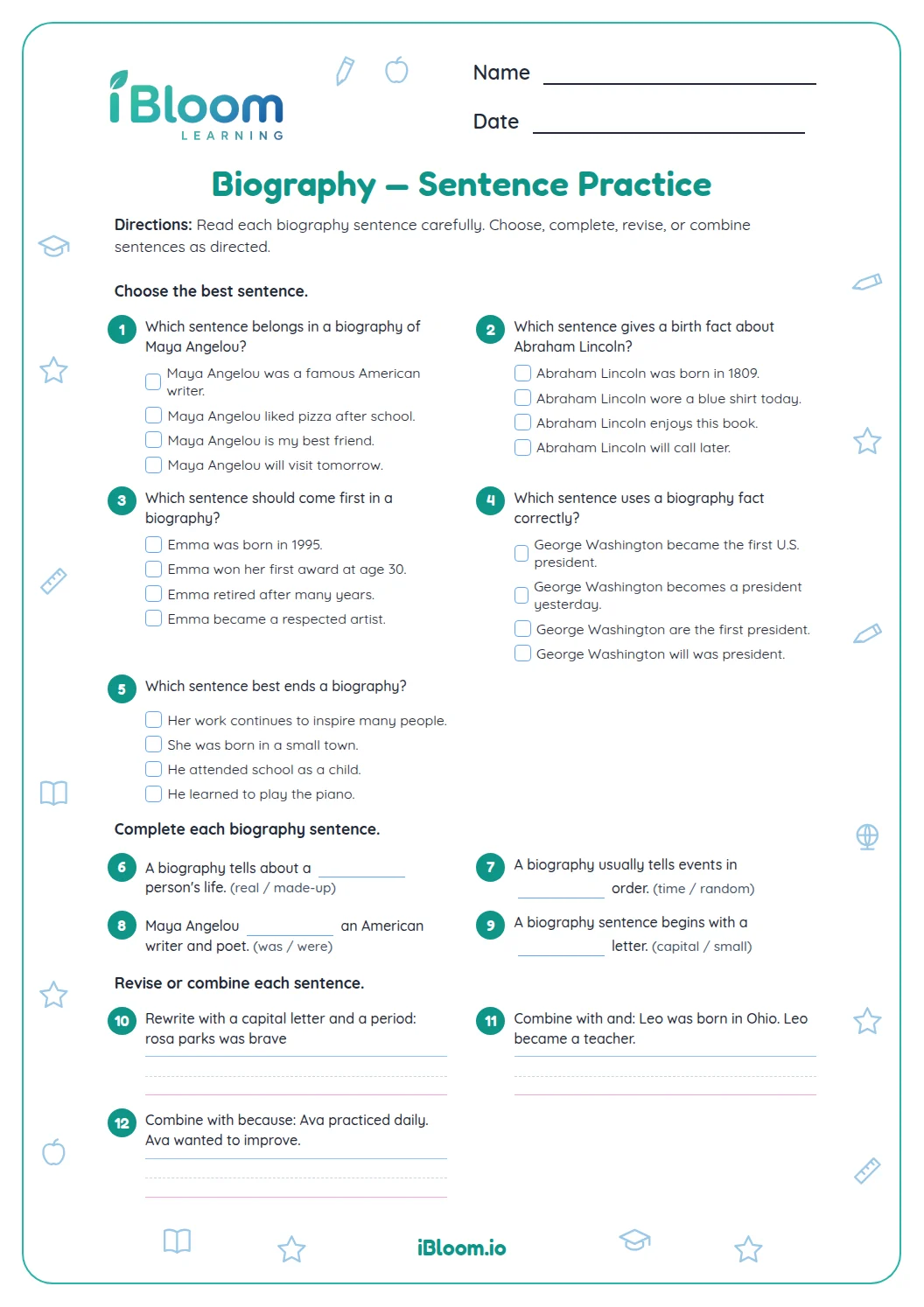
This Grade 3 research-writing worksheet gives students 14 short editing tasks. Children correct capitalization, add end punctuation, fix a misspelled word, identify a fact, and recognize focused research questions about bees, butterflies, and plants. It aligns with CCSS L.3.2 for capitalization, punctuation, and spelling, and includes a separate answer key with corrected sentences and sample responses.
Aligned to L.3.2
What should students check when editing a research sentence?
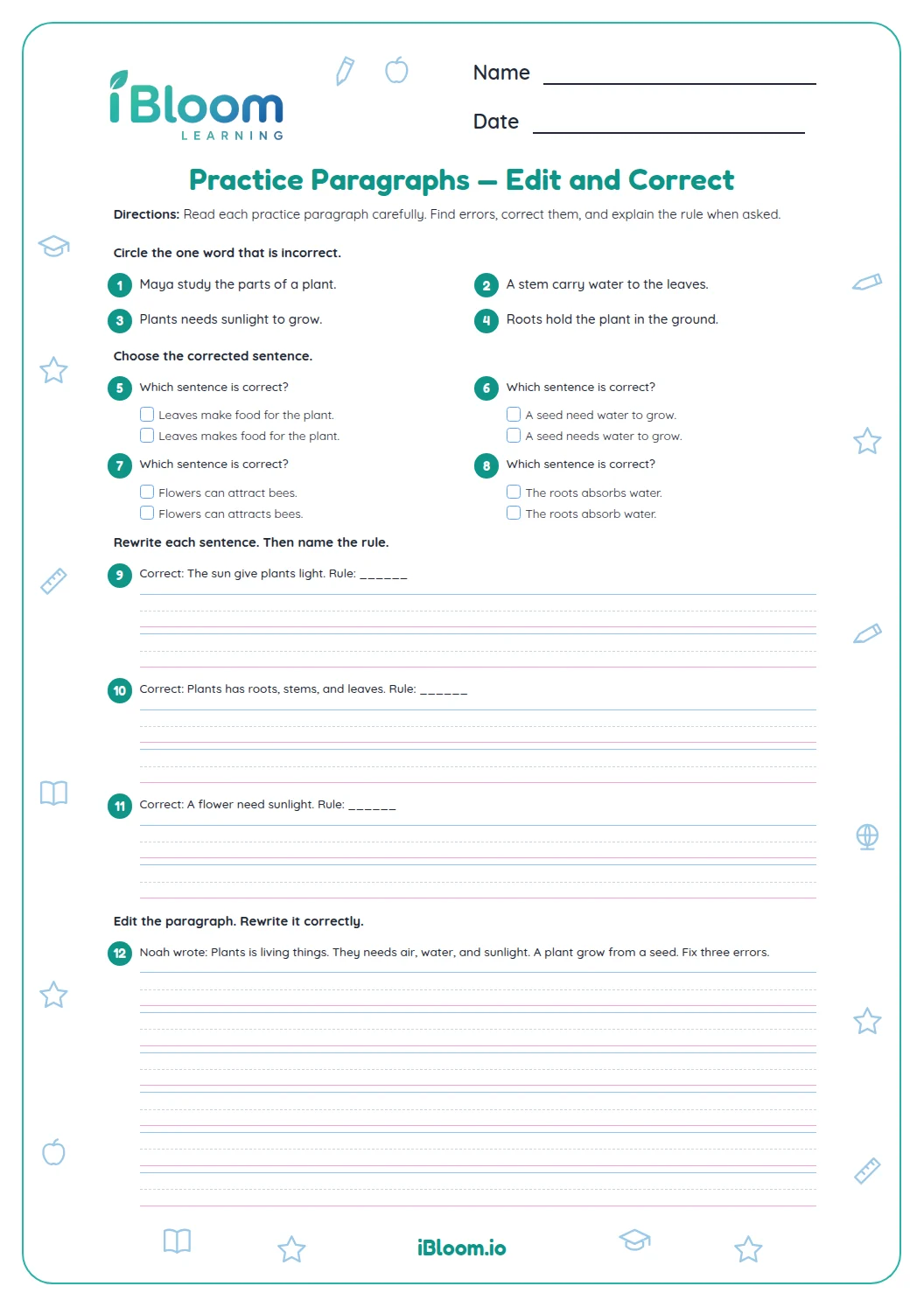
Check the first letter, the end mark, and the spelling of important words. Question 3, “A bee visits a flower,” needs a period; question 7, “A seed needs soil,” also needs a period. Question 6 changes “plants” to “Plants” at the start of a sentence.
- 1A bee visits a flower
- 2Add a period: A bee visits a flower.
How can students distinguish a fact from an opinion?
A fact can be checked with evidence; an opinion tells what someone thinks or likes. “A seed can grow into a plant” is a fact. “Bees are my favorite” expresses a preference, so it is not a research fact.
What makes a research question useful?
A focused question asks something a reader can investigate. “What do butterflies eat?” points toward a specific fact to find. The worksheet asks students to recognize questions like this as useful guides for research.
How to edit each research sentence
- 1Read the whole sentence before changing anything.
- 2Check whether the first word needs a capital letter.
- 3Listen for the end of the sentence and add its period.
- 4Use a known spelling pattern to correct “rots” to “roots.”
- 5Ask whether a statement can be checked or is a personal opinion.
- 6Check whether a research question asks for a fact that can be found about its topic.
Editing slips to watch for
The mistake
Adding a period but leaving the first word lowercase.
The fix
Check both ends: begin the sentence with a capital and close it with a period.
The mistake
Treating a personal favorite as a report fact.
The fix
Ask whether another reader could check the statement with evidence.
The mistake
Writing a broad question that does not guide research.
The fix
Name the topic and ask for a specific detail, such as what butterflies eat.
Curriculum alignment
This worksheet practices the following standard.
Edit research sentences for capitalization, punctuation, and spelling.
On this sheet: Students correct capitalization, end punctuation, and spelling in research sentences.
Show the official wordingHide the official wording
Demonstrate command of the conventions of standard English capitalization, punctuation, and spelling when writing.
What to practice next
Make more practice
Further reading
Questions parents and teachers ask
Which conventions does this research worksheet practice?
Students check sentence beginnings, end punctuation, and spelling in research sentences. For example, “the dog runs.” becomes “The dog runs.” The worksheet also asks them to identify a fact and choose a focused question that could guide research.
What is the corrected sentence for “A seed needs soil”?
The sentence is already complete as written: “A seed needs soil.” Question 7 asks students to add the missing period, so the finished sentence begins with a capital A and ends with a period. The answer key shows the complete version.
How can a student tell a fact from an opinion?
A fact can be checked, while an opinion expresses a personal view. “A seed can grow into a plant” can be checked with evidence, so question 12 calls it a fact. “Bees are my favorite” would be an opinion because it describes a preference.
What makes “What do butterflies eat?” a useful question?
It asks for a specific detail about butterflies that research can answer. A student can look for a reliable source, take a short note about butterfly food, and use that fact in a report. The worksheet also asks students to suggest a question about plants.
Does the worksheet have an answer key?
Yes. The separate two-page key gives corrected sentences, the fact answer, and sample research questions. Students can compare their wording with the model and keep another clear, accurate question when it investigates the same topic. The answer key supports a quick review together.