



About this worksheet
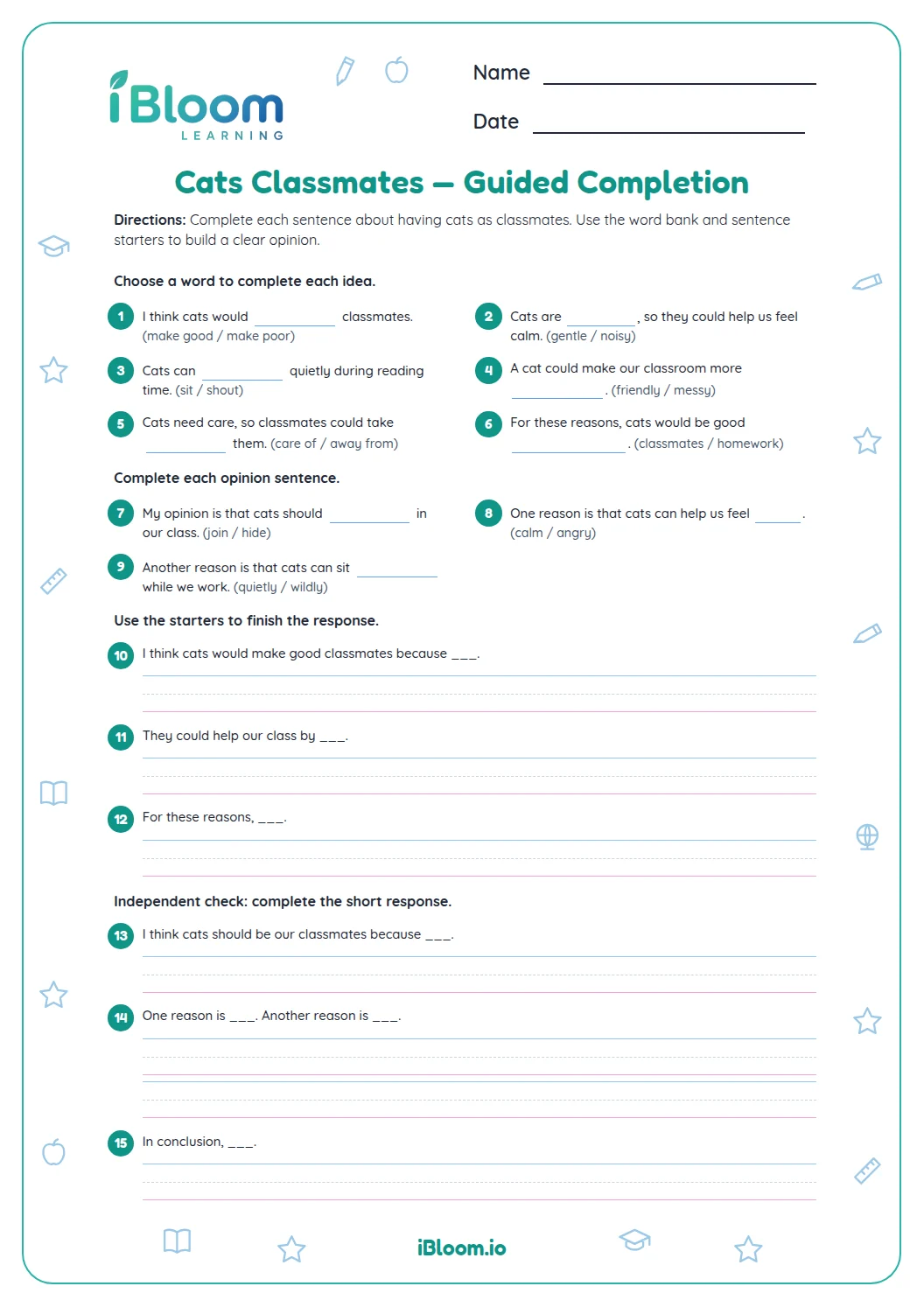
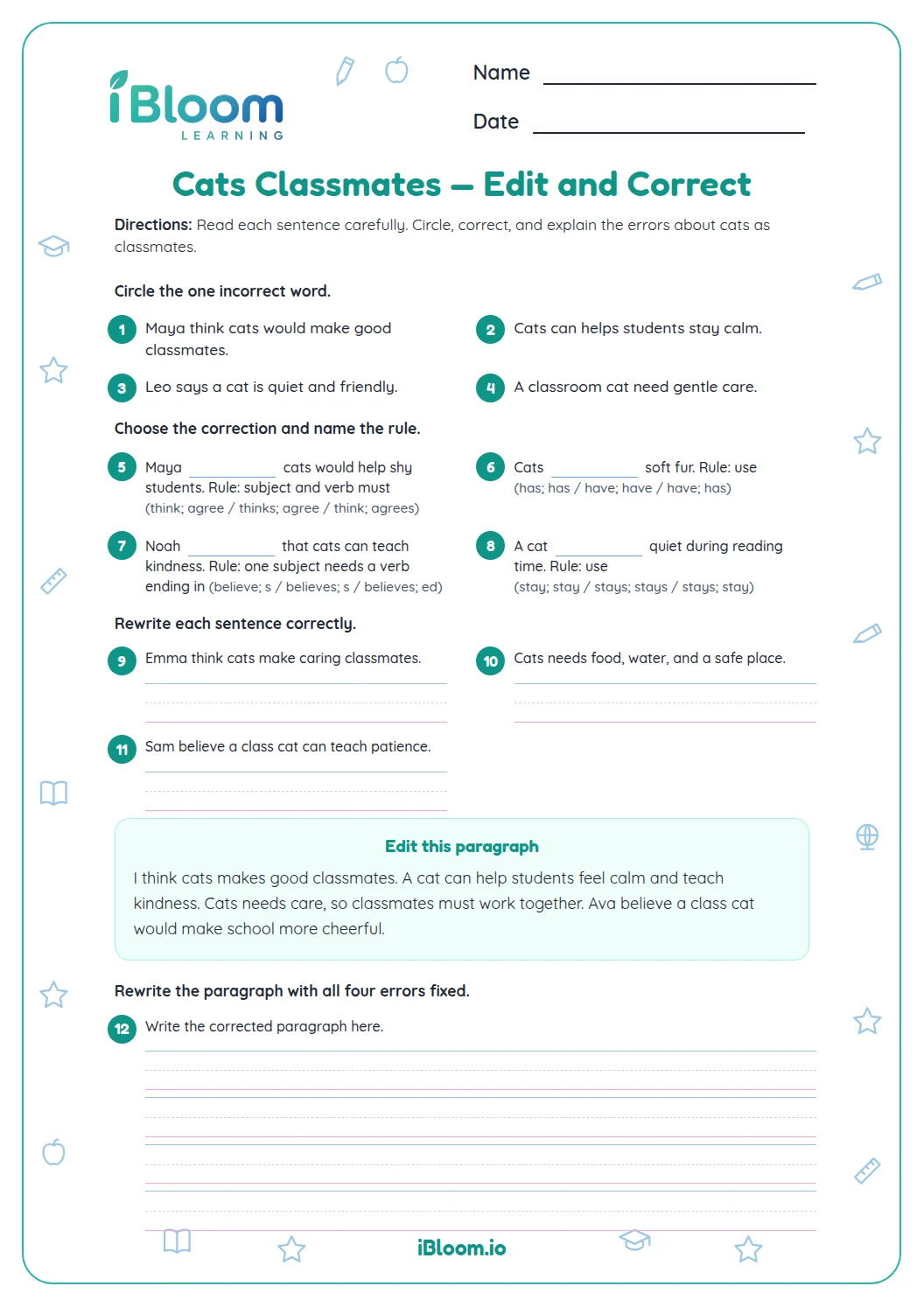
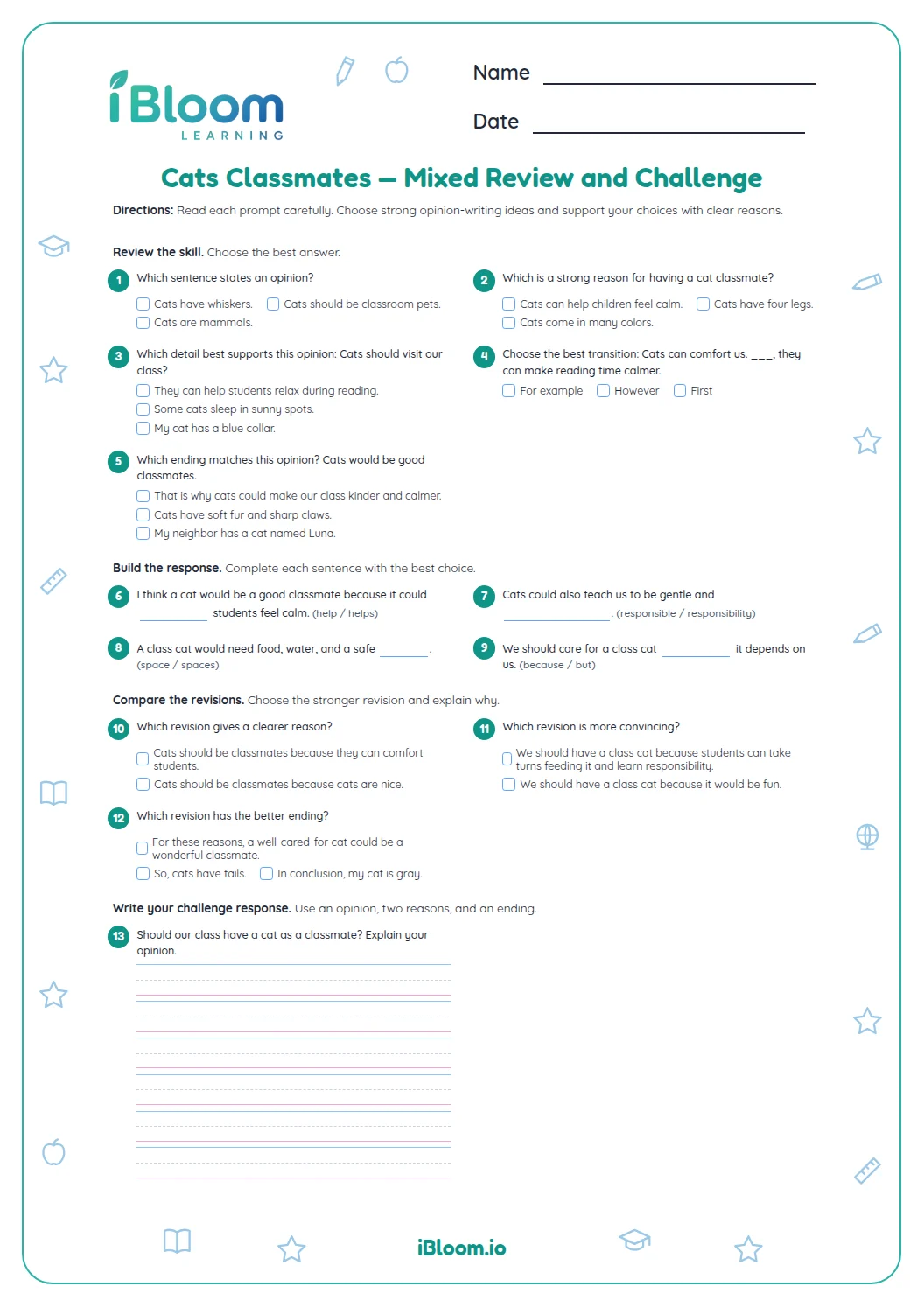
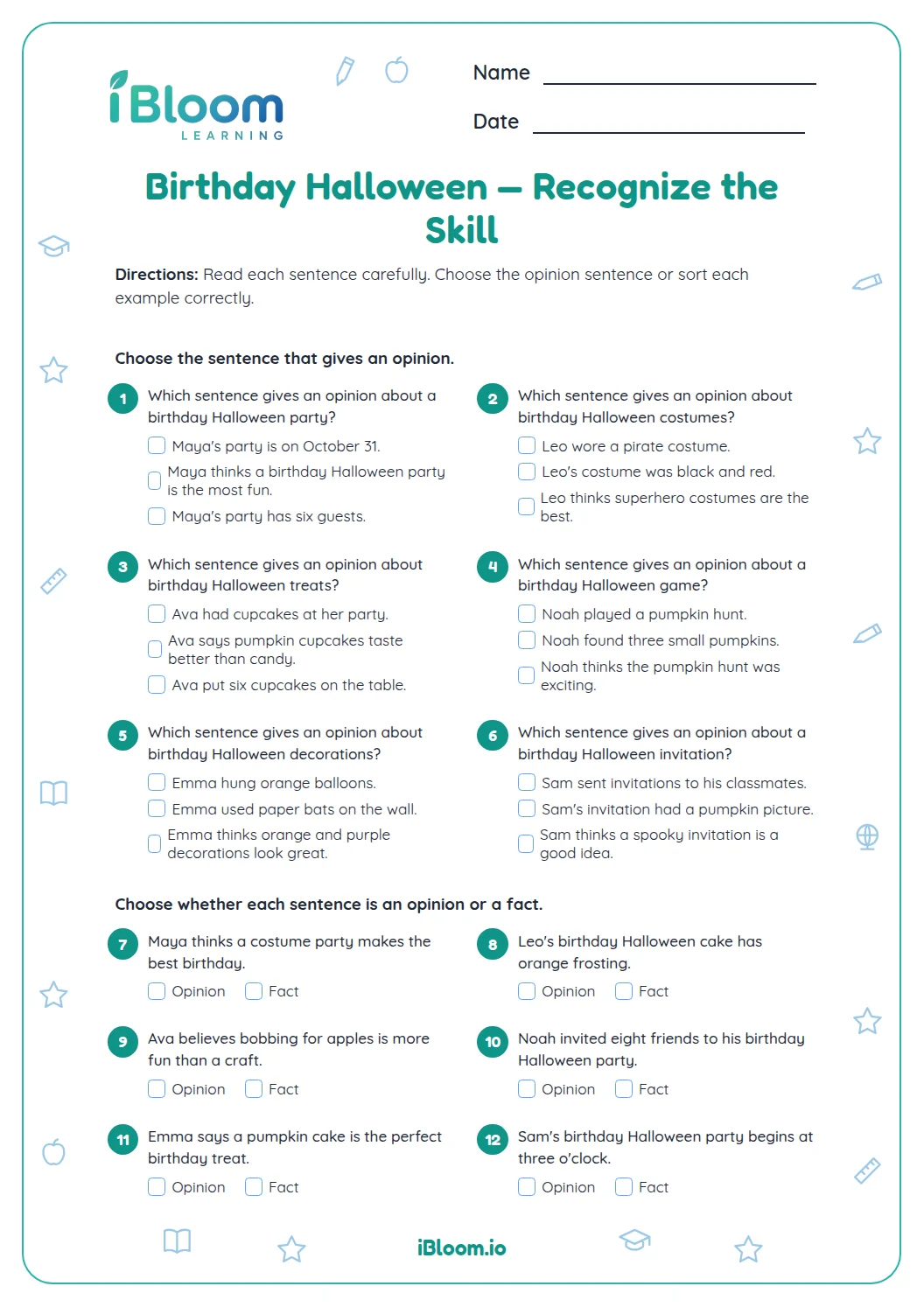
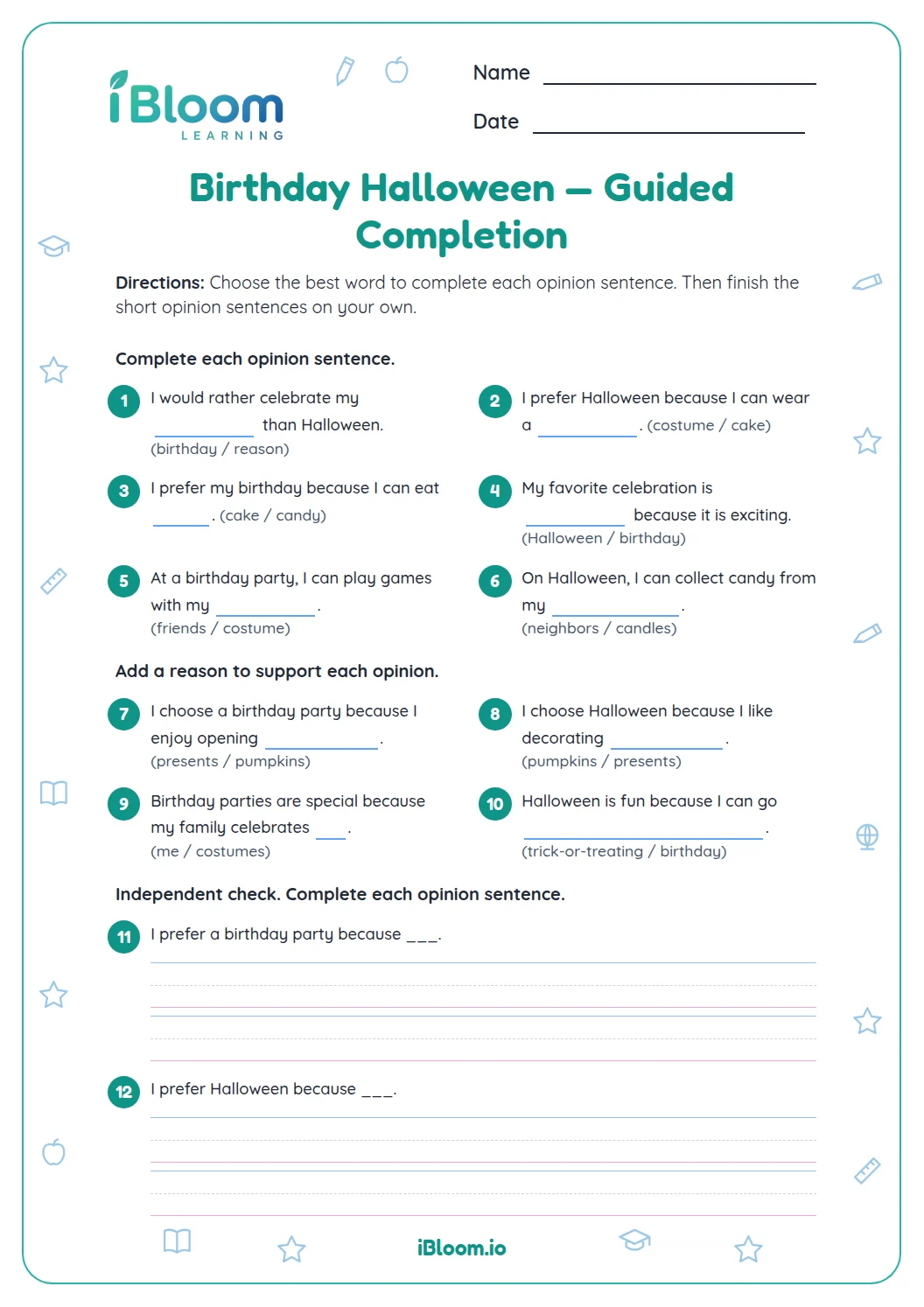
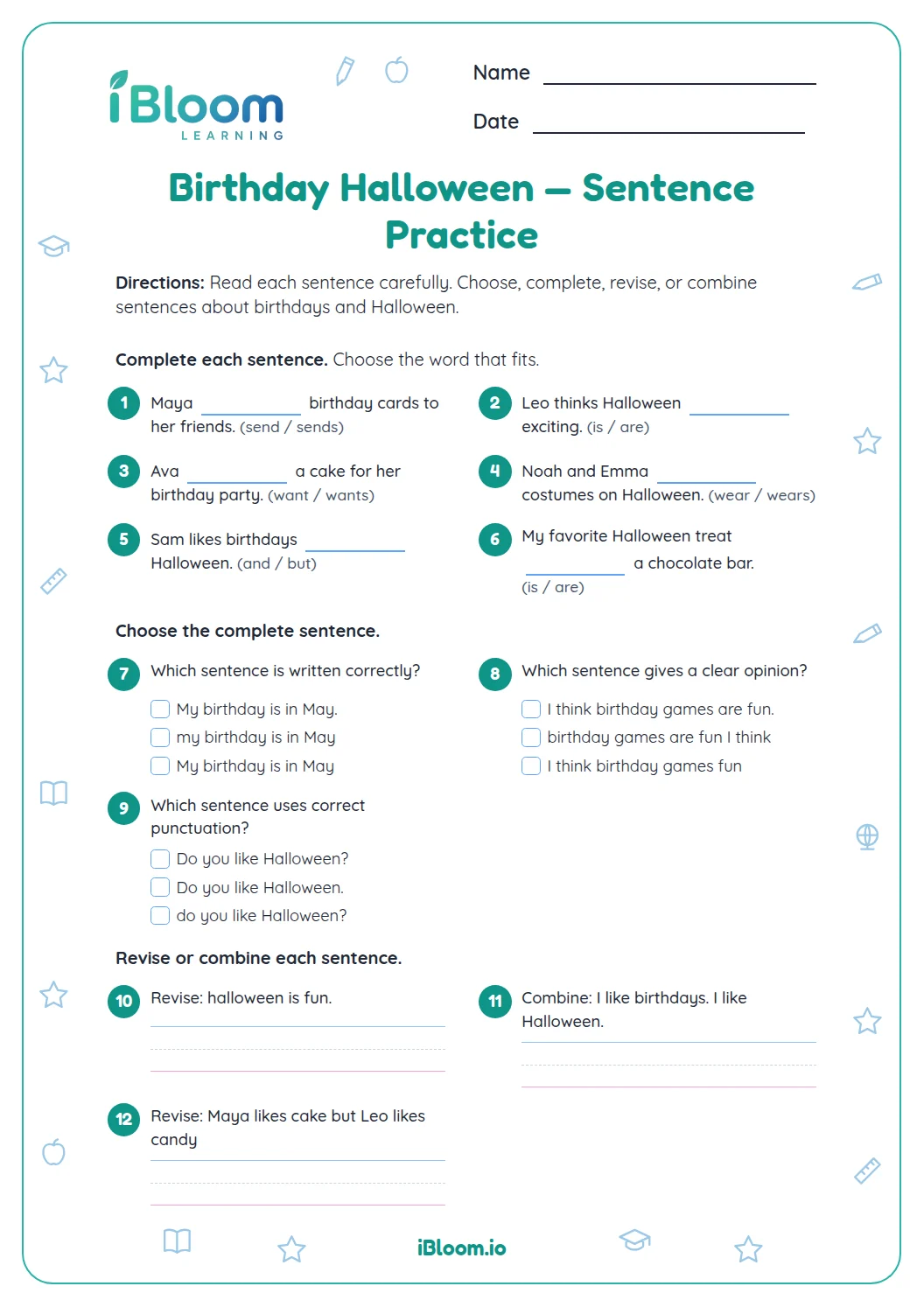
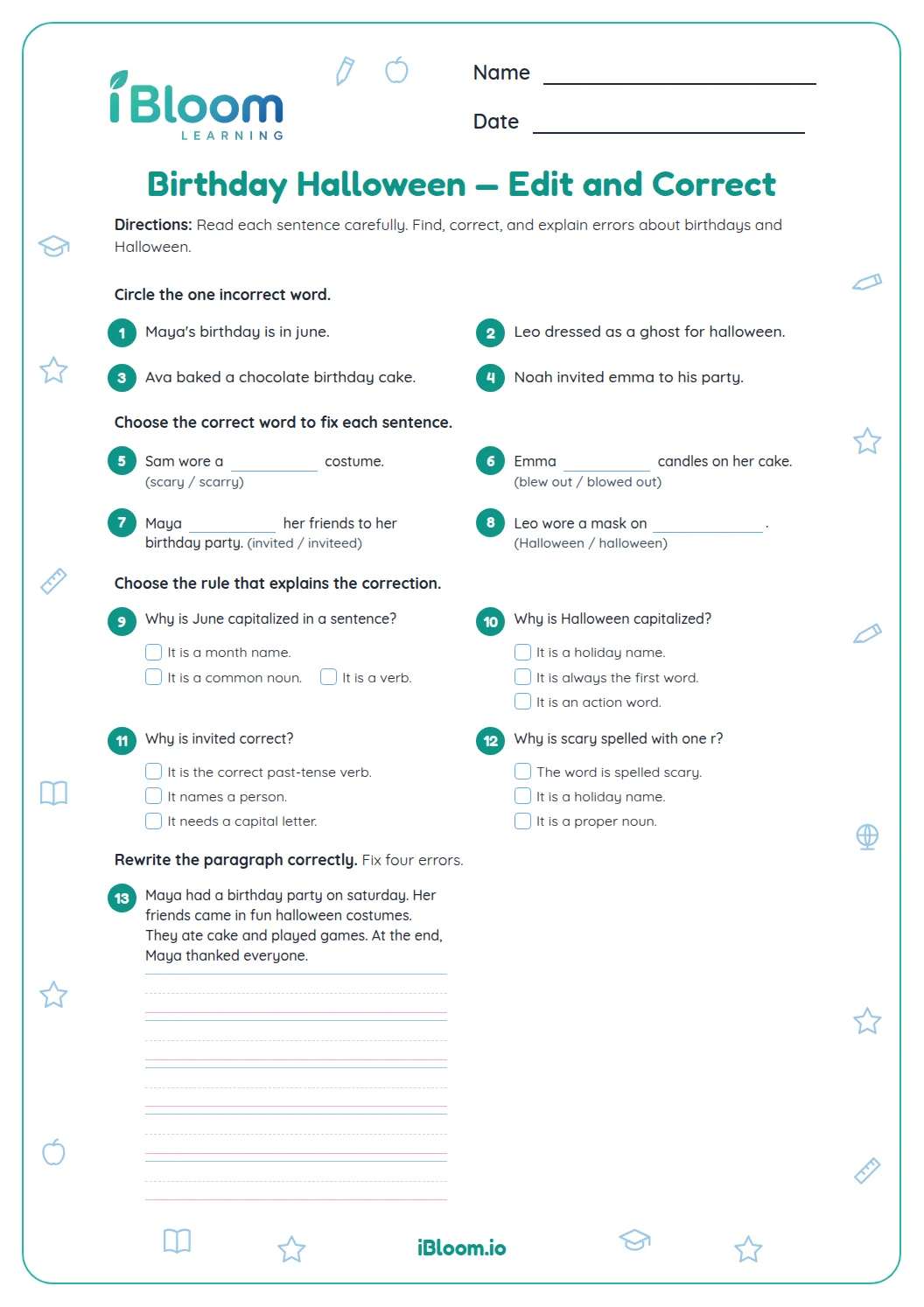
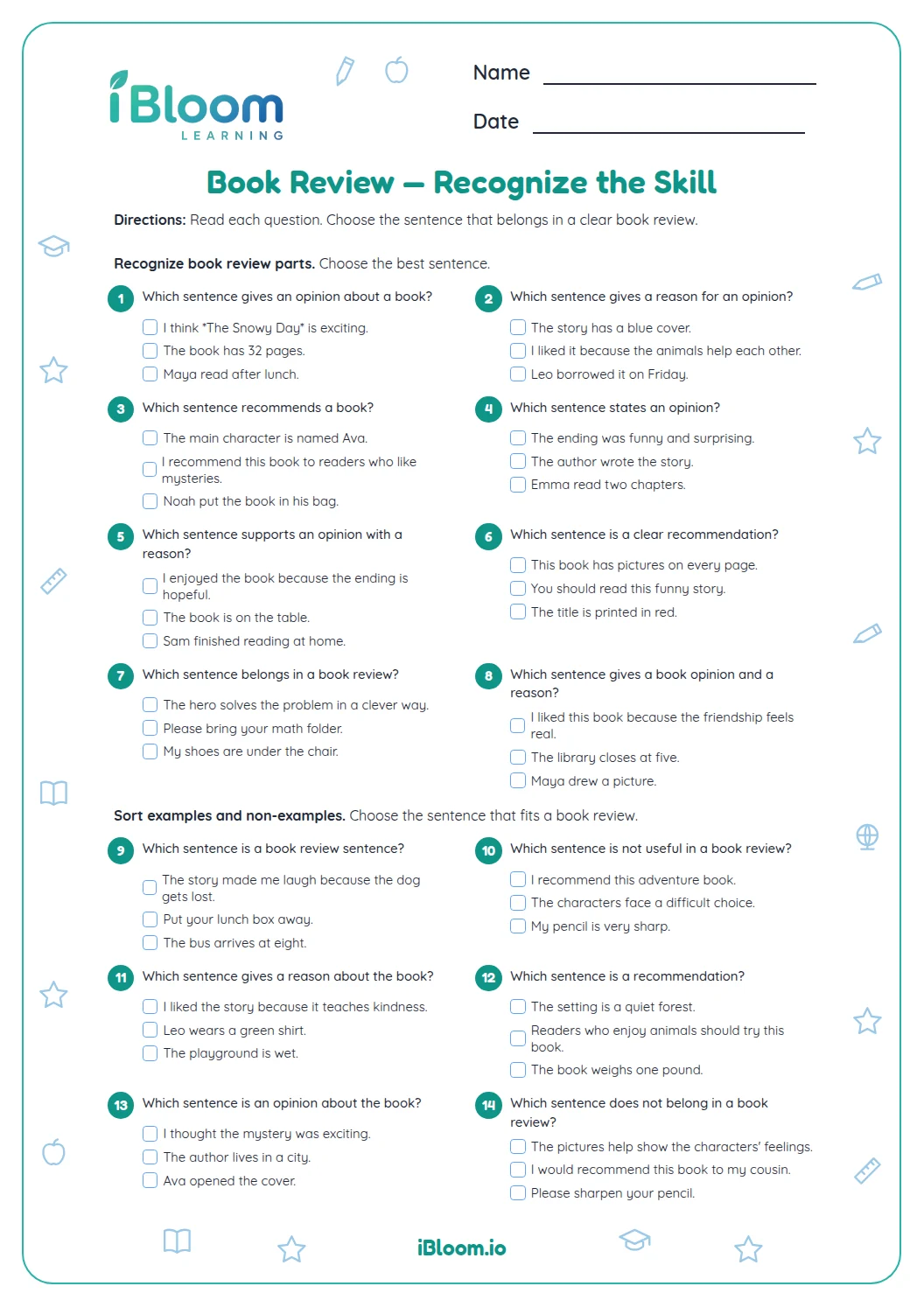
This Grade 3 opinion-writing worksheet uses cats and classmates to help students distinguish a viewpoint from the reason or example that supports it. Across 14 multiple-choice questions, students identify opinions, select relevant details, and choose reasons that connect to a stated opinion. A separate answer key lists each selection. The practice focuses on supporting a point of view with reasons, as described in Common Core W.3.1.
Aligned to W.3.1
How can a student spot an opinion?
An opinion tells what a writer thinks or prefers. A reason explains why the writer holds that view, while an example gives a specific instance. The first 12 items ask students to distinguish these jobs and select support that fits cats or classmates.
- 1Why might I like Lee as a classmate?
- 2He listens to me.
- 3Listening explains why Lee is a good classmate.
What makes a reason support an opinion?
A useful reason connects directly to the viewpoint. If the opinion is that group work is enjoyable, a detail about sharing ideas can support it; a detail about the color of a backpack cannot. Read the whole sentence and check whether the second idea explains the first.
How can a student write an opinion with a reason?
Questions 13 and 14 ask students to select a reason that supports a stated opinion. A useful reason connects directly to the viewpoint; a detail about whiskers or desks may be true but does not explain why cats make good pets or classmates improve school.
How to use this worksheet
- 1Read the directions and scan the whole part.
- 2Underline or name the information that matters.
- 3Choose a strategy and show the calculation.
- 4Write a complete answer with its unit when needed.
- 5Check the answer key and correct any missed step.
Common mistakes and quick fixes
The mistake
Starting to calculate before identifying what the prompt asks.
The fix
Say the unknown aloud, then choose the operation that finds it.
The mistake
Leaving off a unit or context label.
The fix
Reread the question and include the requested unit in the answer.
The mistake
Accepting an answer without checking it.
The fix
Use the inverse operation or estimate to see whether the result makes sense.
Common Core alignment
This worksheet practices the following Common Core skill.
State a point of view and support it with clear reasons.
On this sheet:
Show the official wordingHide the official wording
Write opinion pieces on topics or texts, supporting a point of view with reasons.
What to practice next
Make more practice
Further reading
Questions parents and teachers ask
What does this worksheet practice?
It practices identifying opinions and choosing reasons or examples that support a viewpoint. All 14 questions use compact choices about cats, classmates, or fictional situations. The final items ask students to select a reason that connects directly to a stated opinion, and the key lists each selection.
How is an opinion different from a reason?
An opinion tells what someone thinks or prefers; a reason explains why. “Group projects are fun” is a viewpoint, while “we can share ideas” explains one possible reason. Questions on this page ask students to identify each job and connect supporting ideas to a viewpoint.
What is the difference between a reason and an example?
A reason explains why a viewpoint makes sense. An example gives a particular instance that illustrates an idea, such as describing one time a classmate helped. The worksheet includes choices that distinguish these roles, then asks students to write a reason of their own.
How many questions are on the worksheet?
There are 14 multiple-choice questions, followed by a separate answer key. Students identify viewpoints, reasons, and examples, then choose related support for opinions about cats and classmates. Each item offers two brief choices so students can focus on the sentence’s job.
Are there many correct responses to the last two questions?
The final two items offer several possible statements and ask students to choose the one that explains the opinion. A statement can be true but still fail to support the viewpoint, so check whether it answers “Why might the writer think this?” The key shows the intended connection.