
About this worksheet
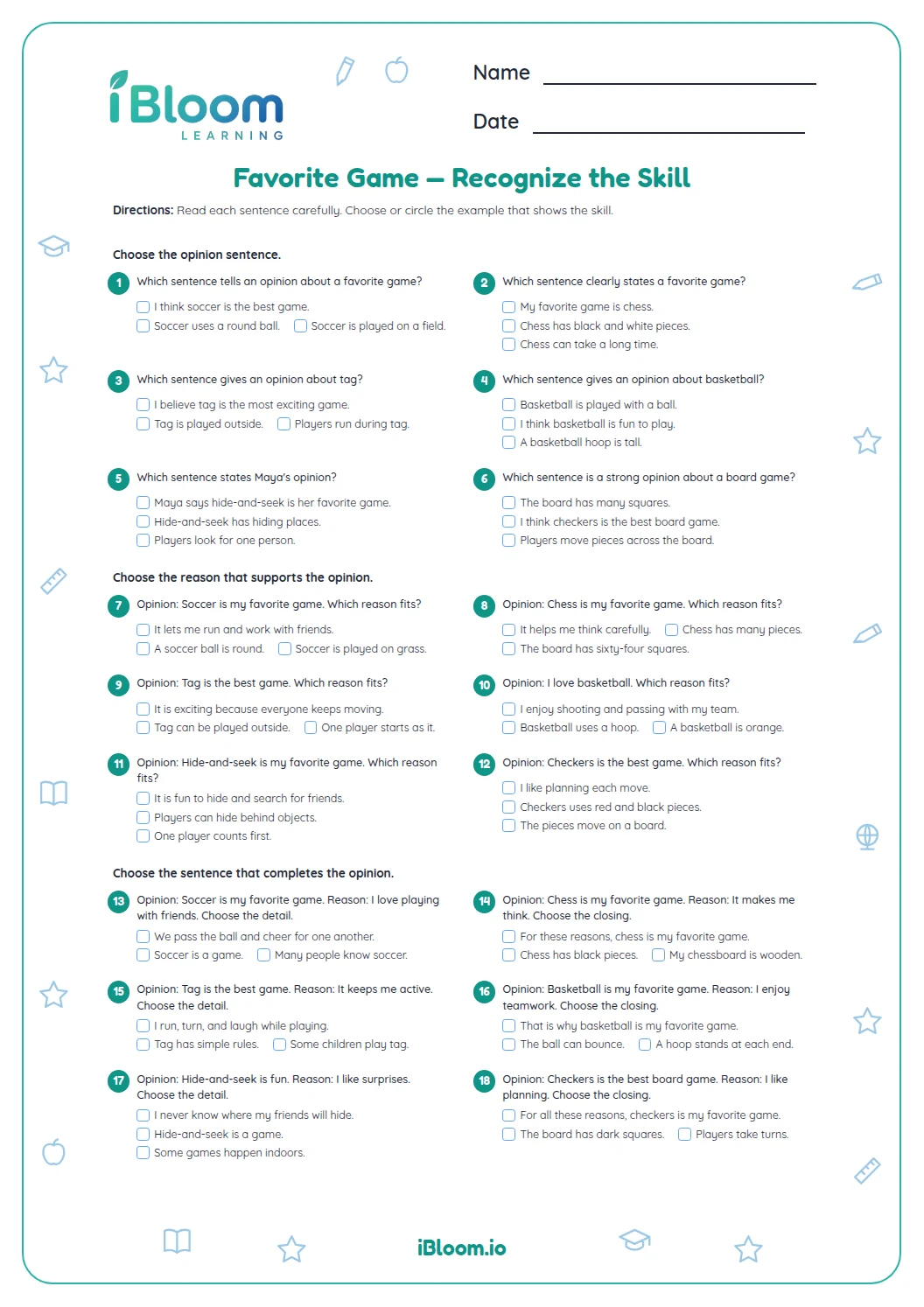
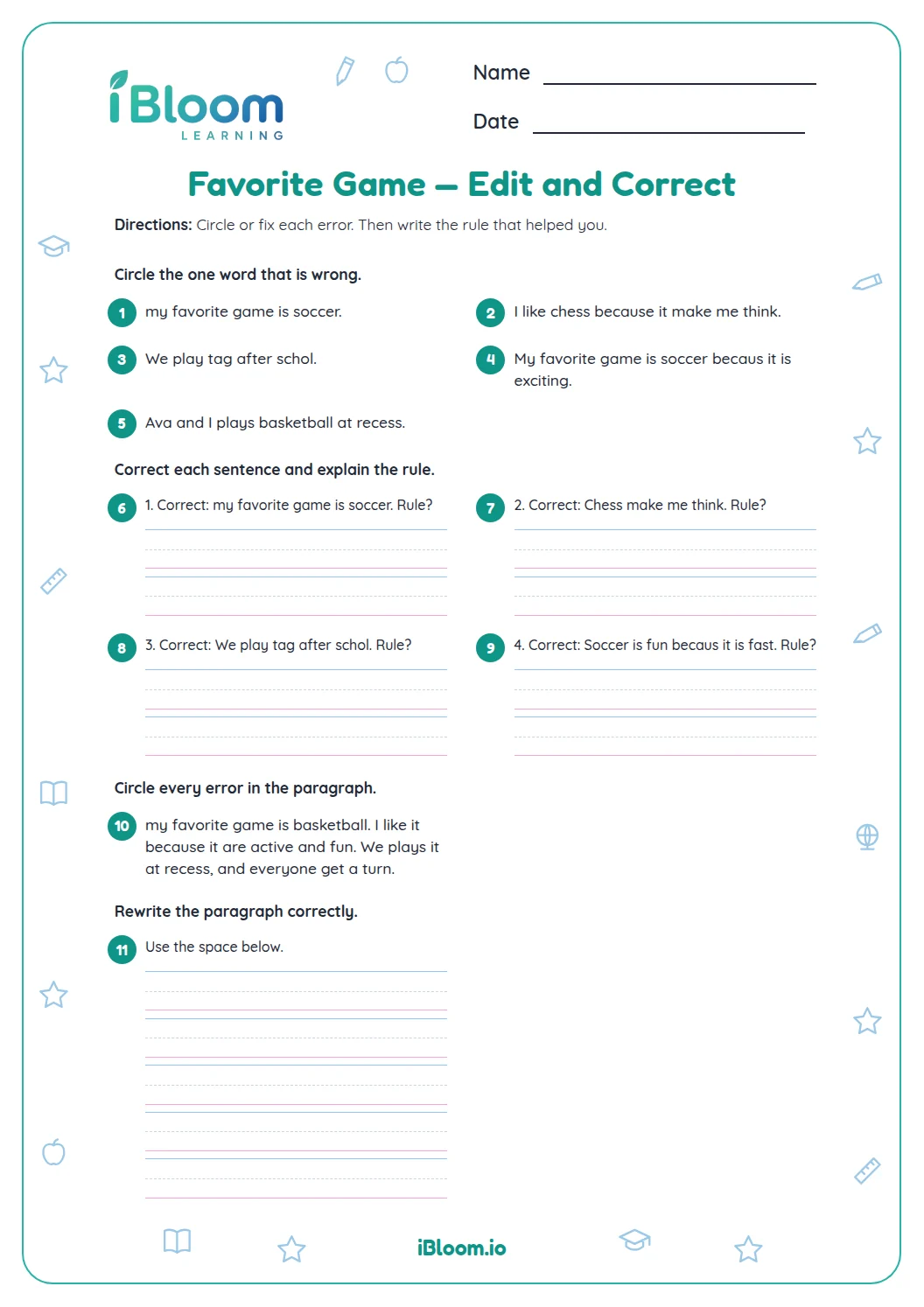
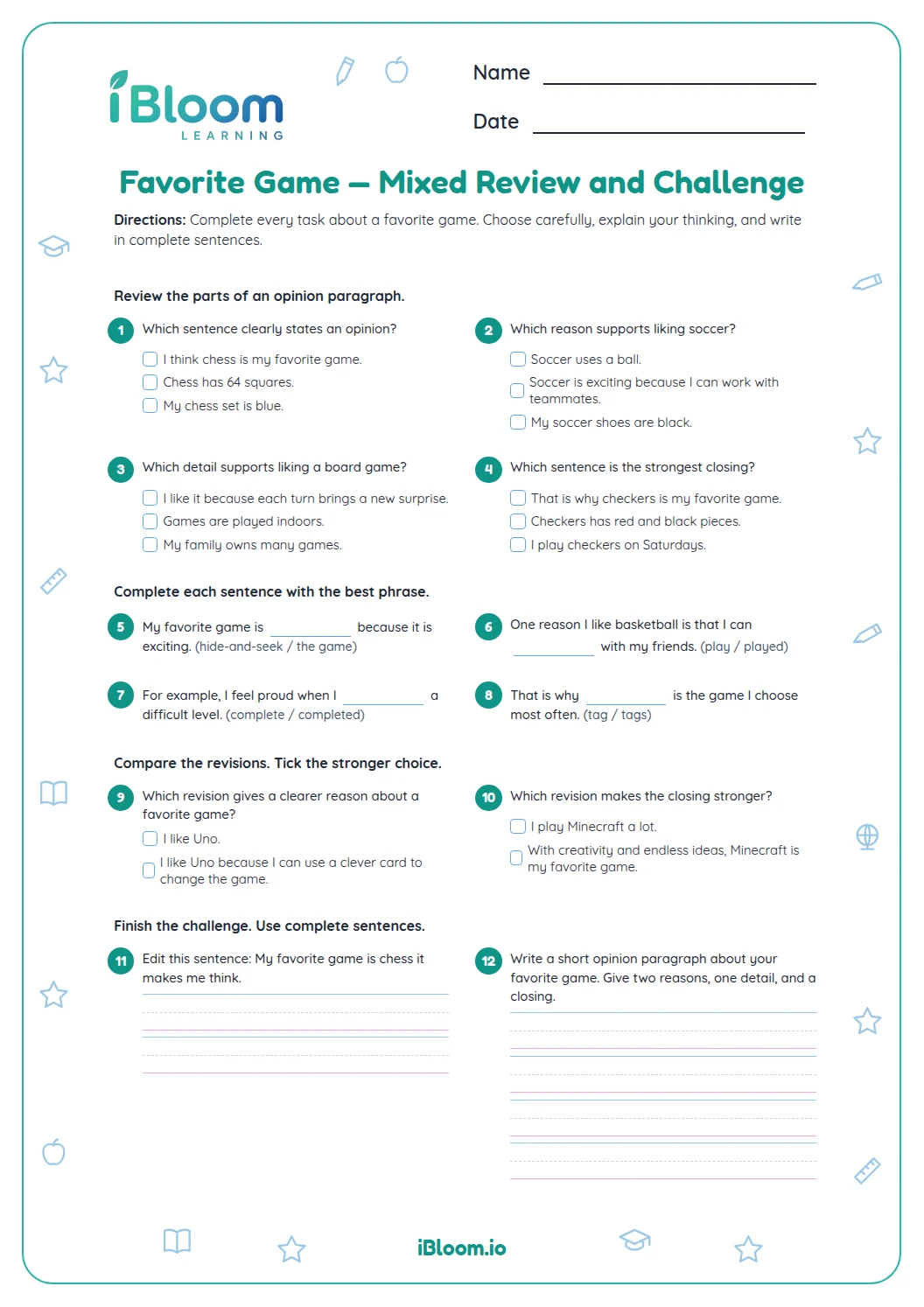
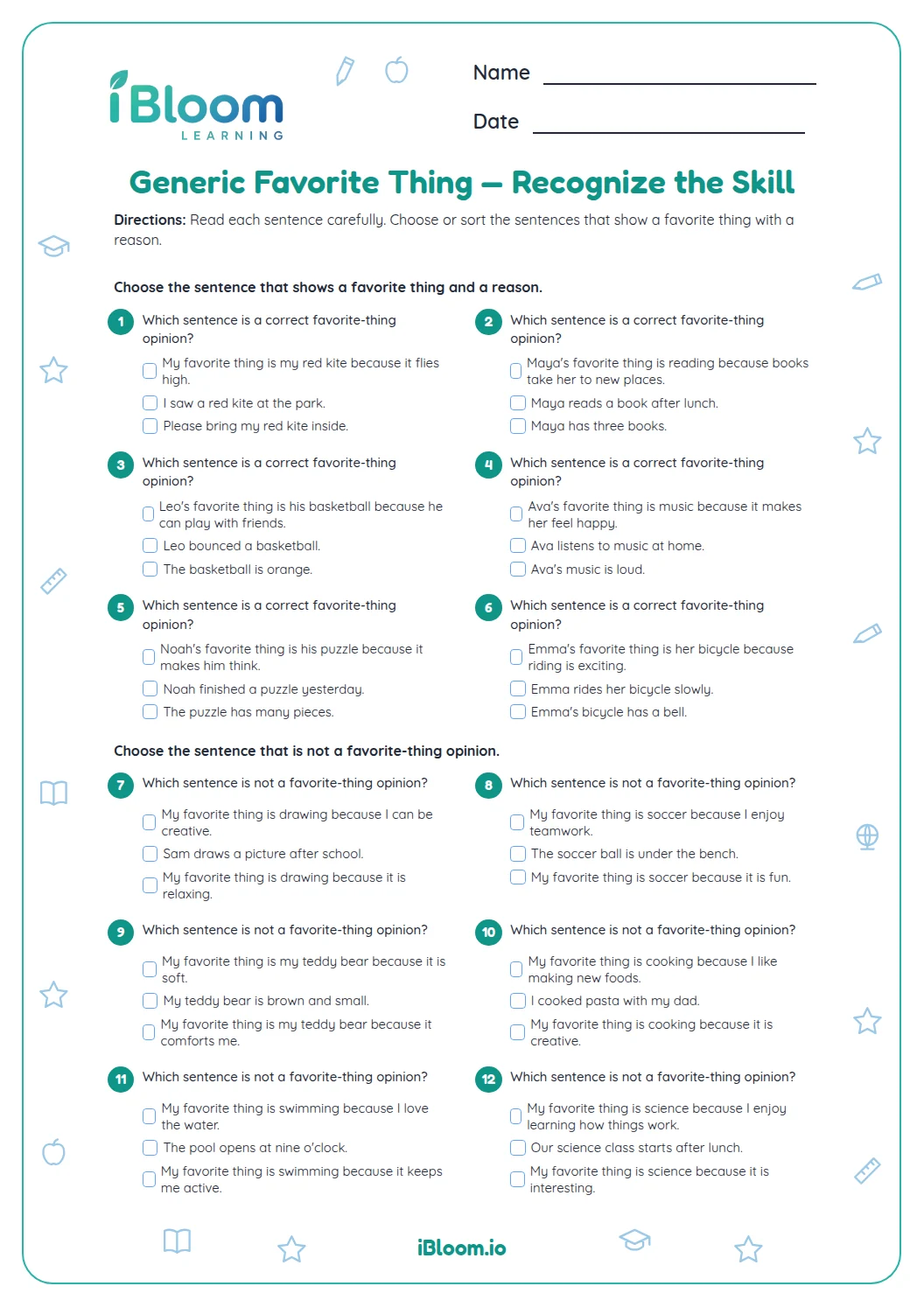
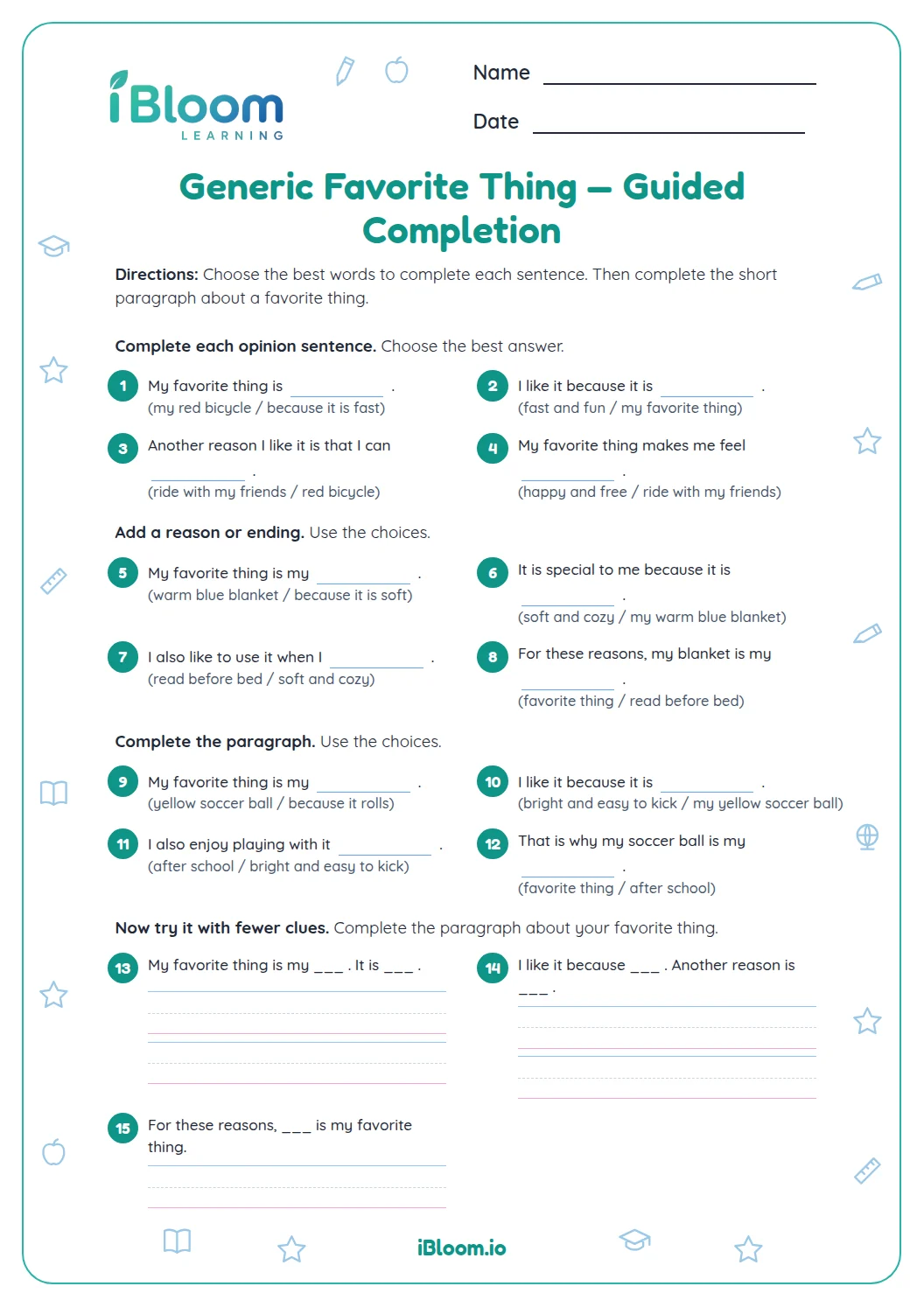
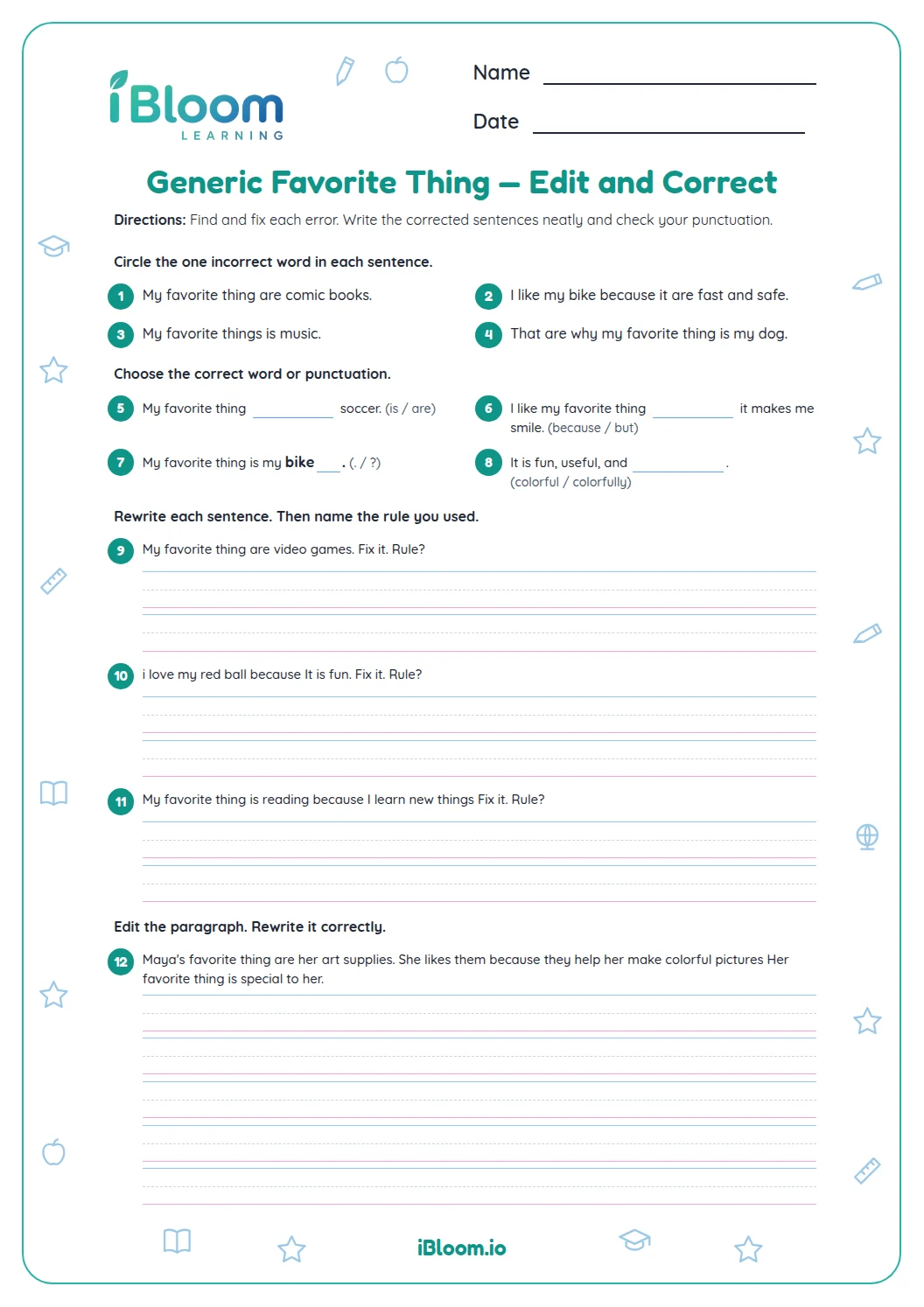
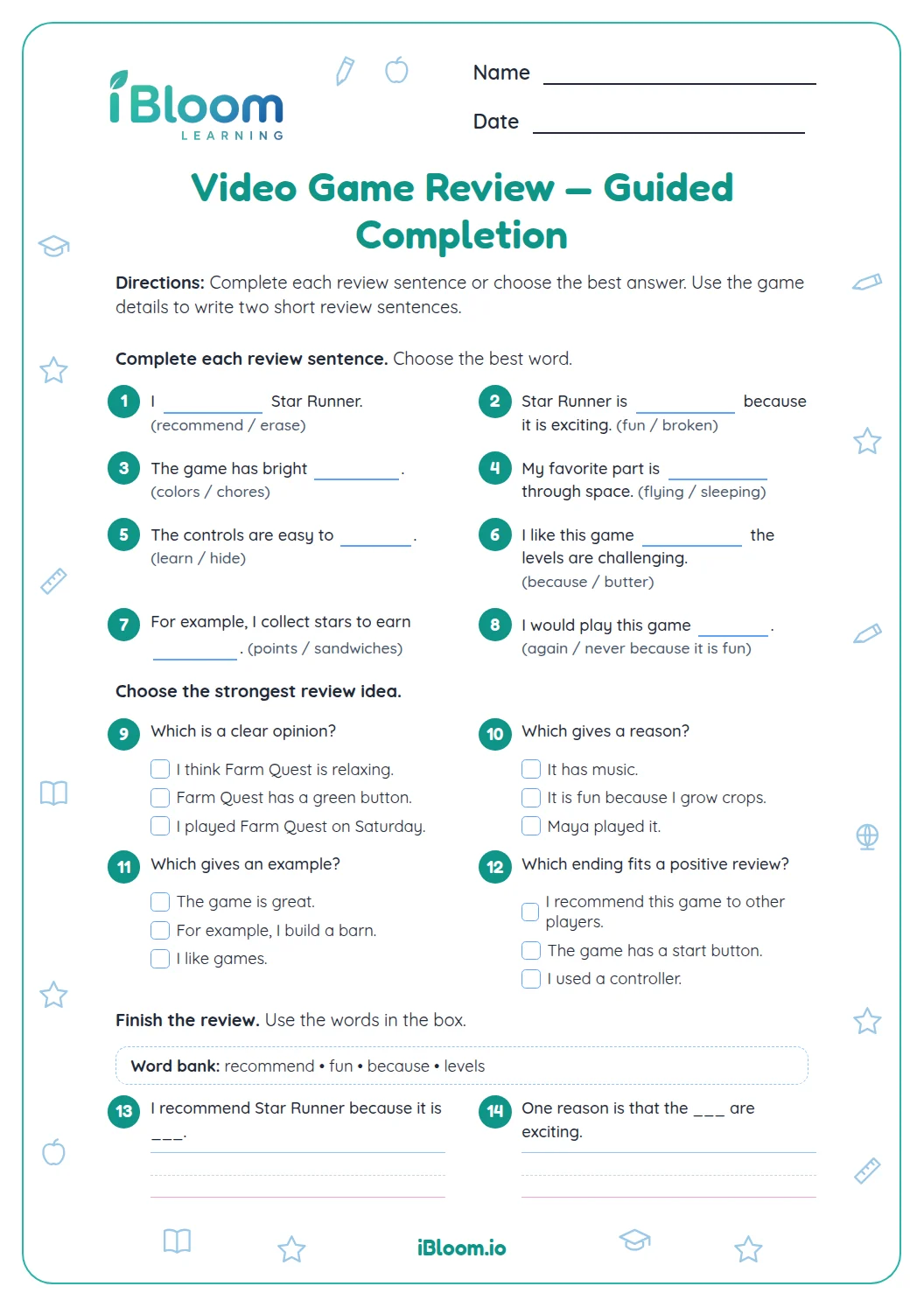
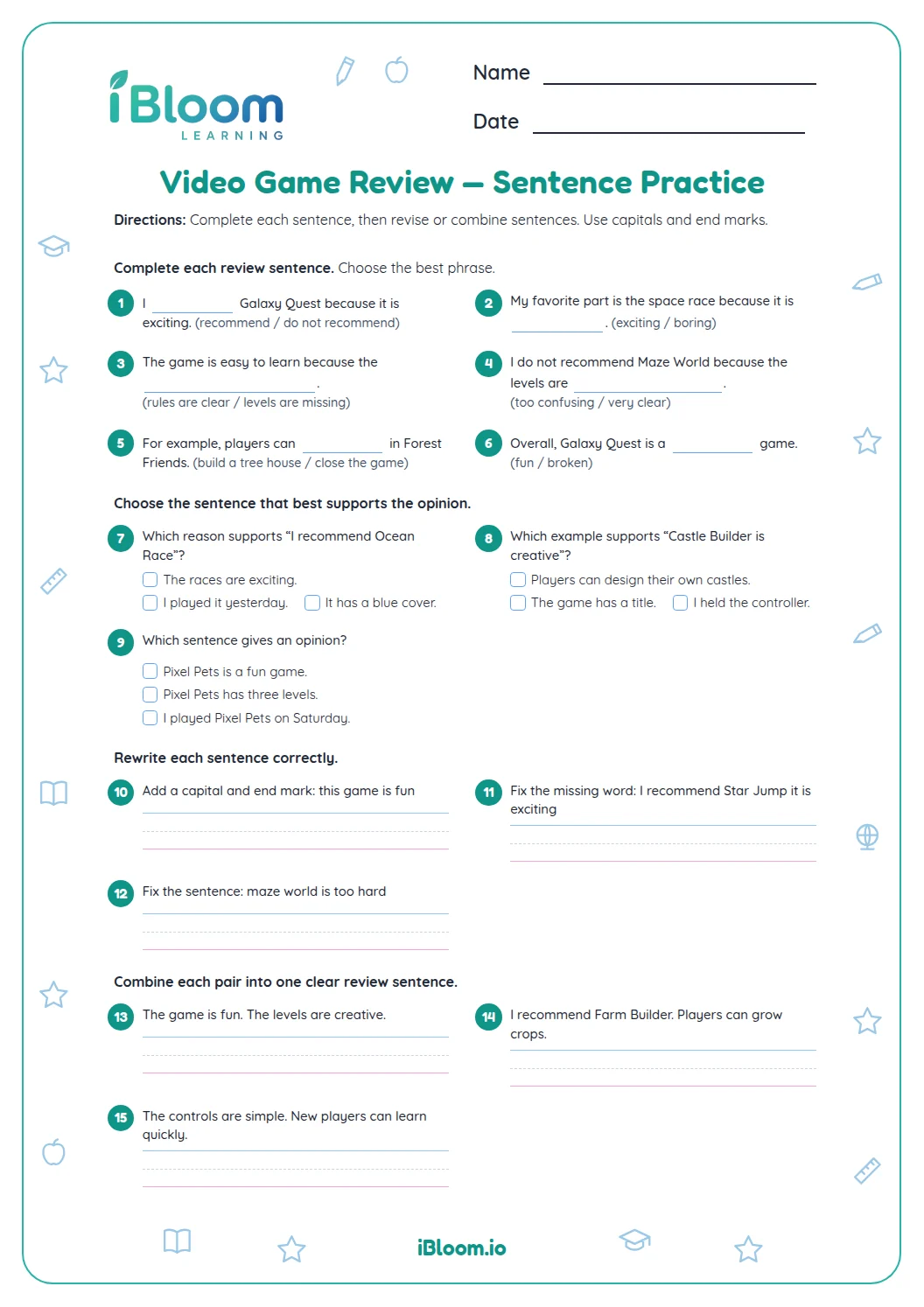
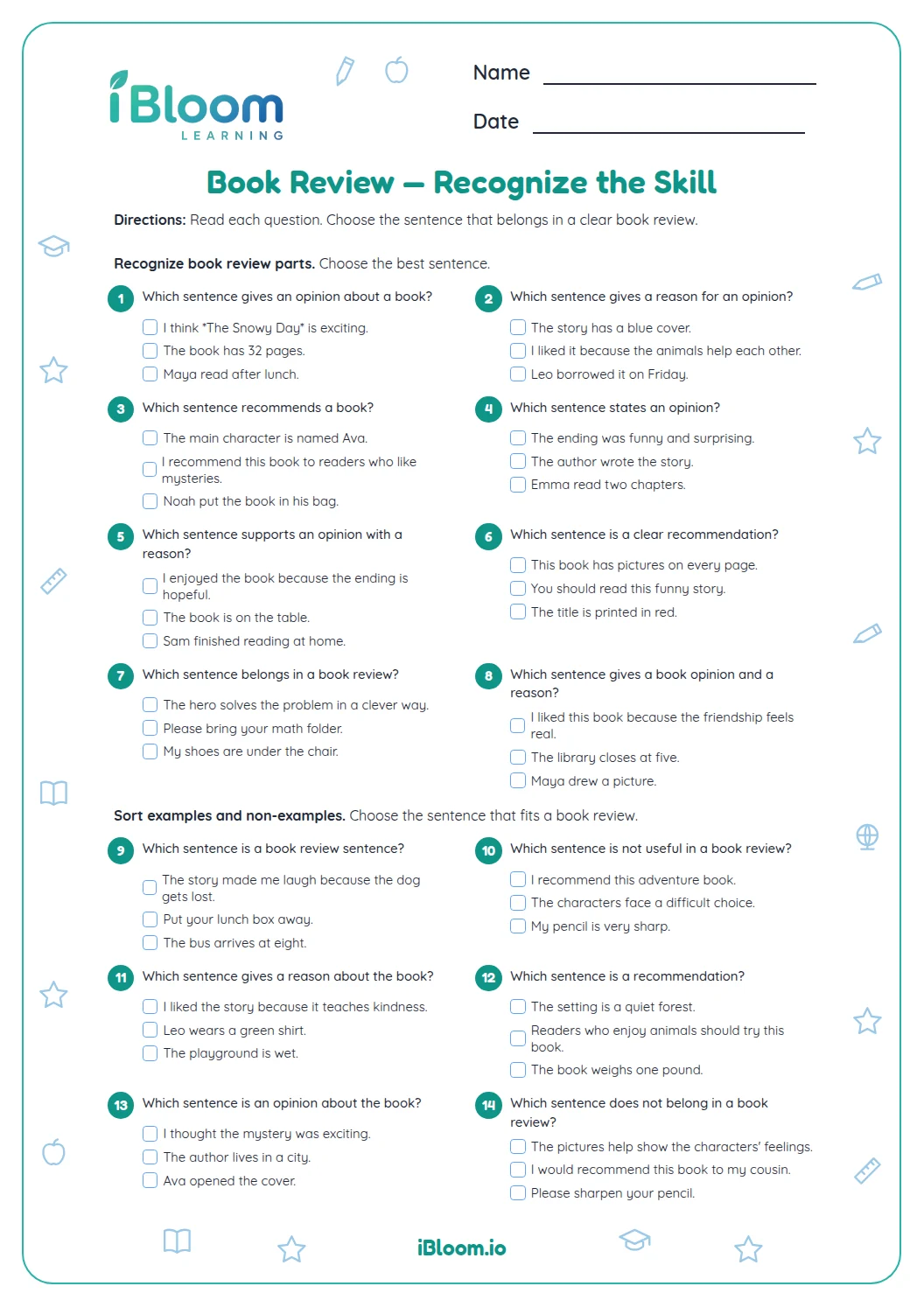
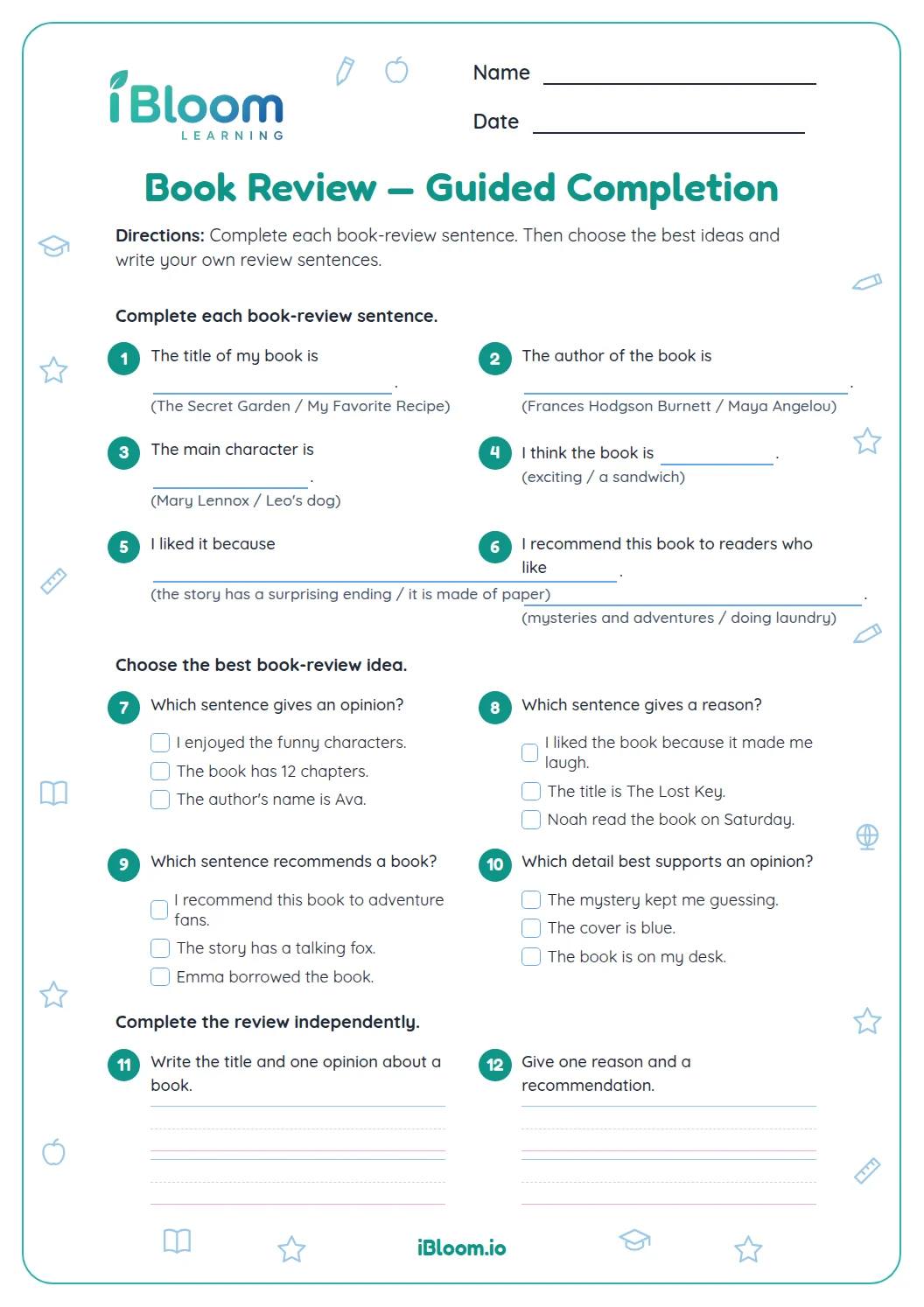
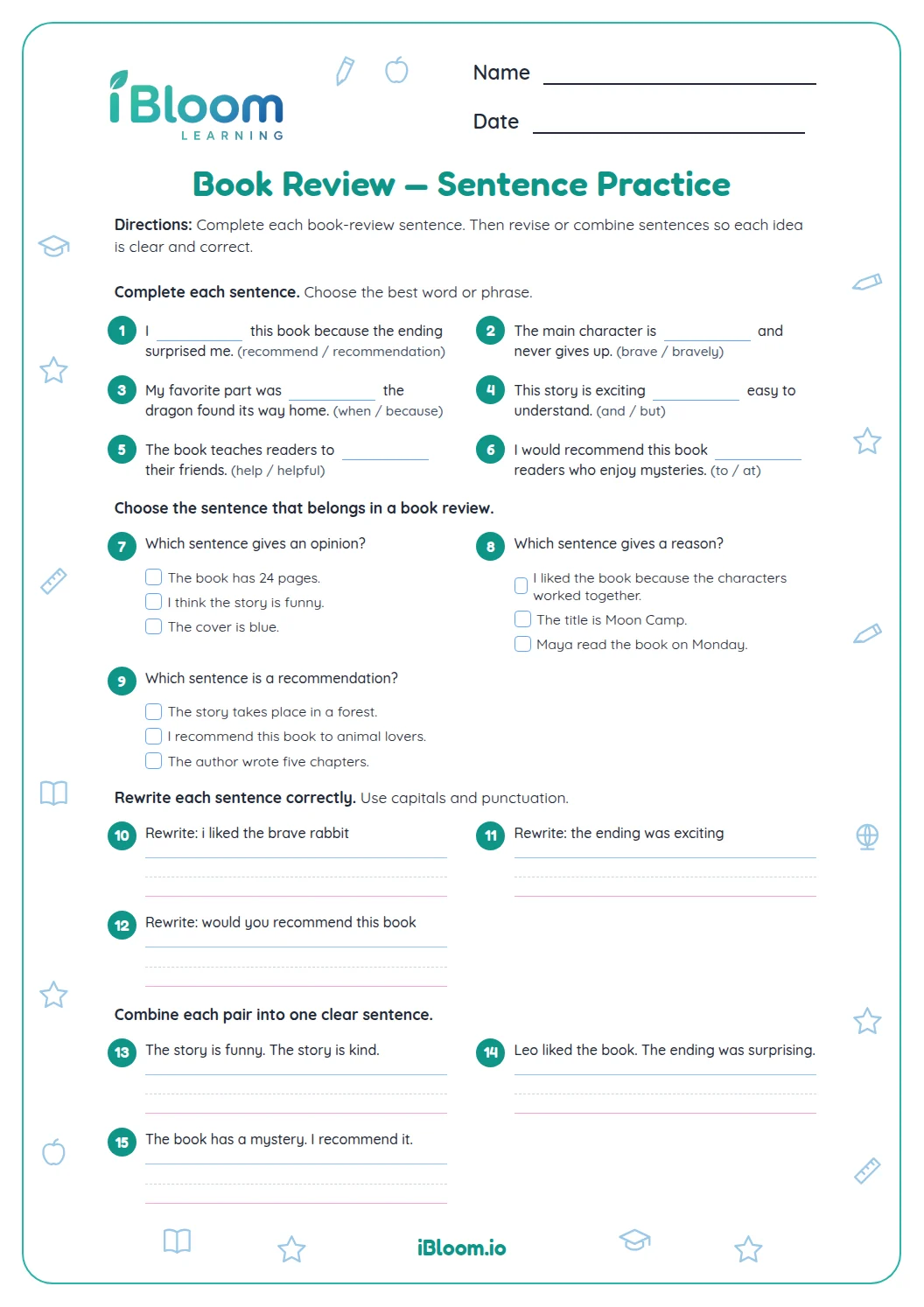
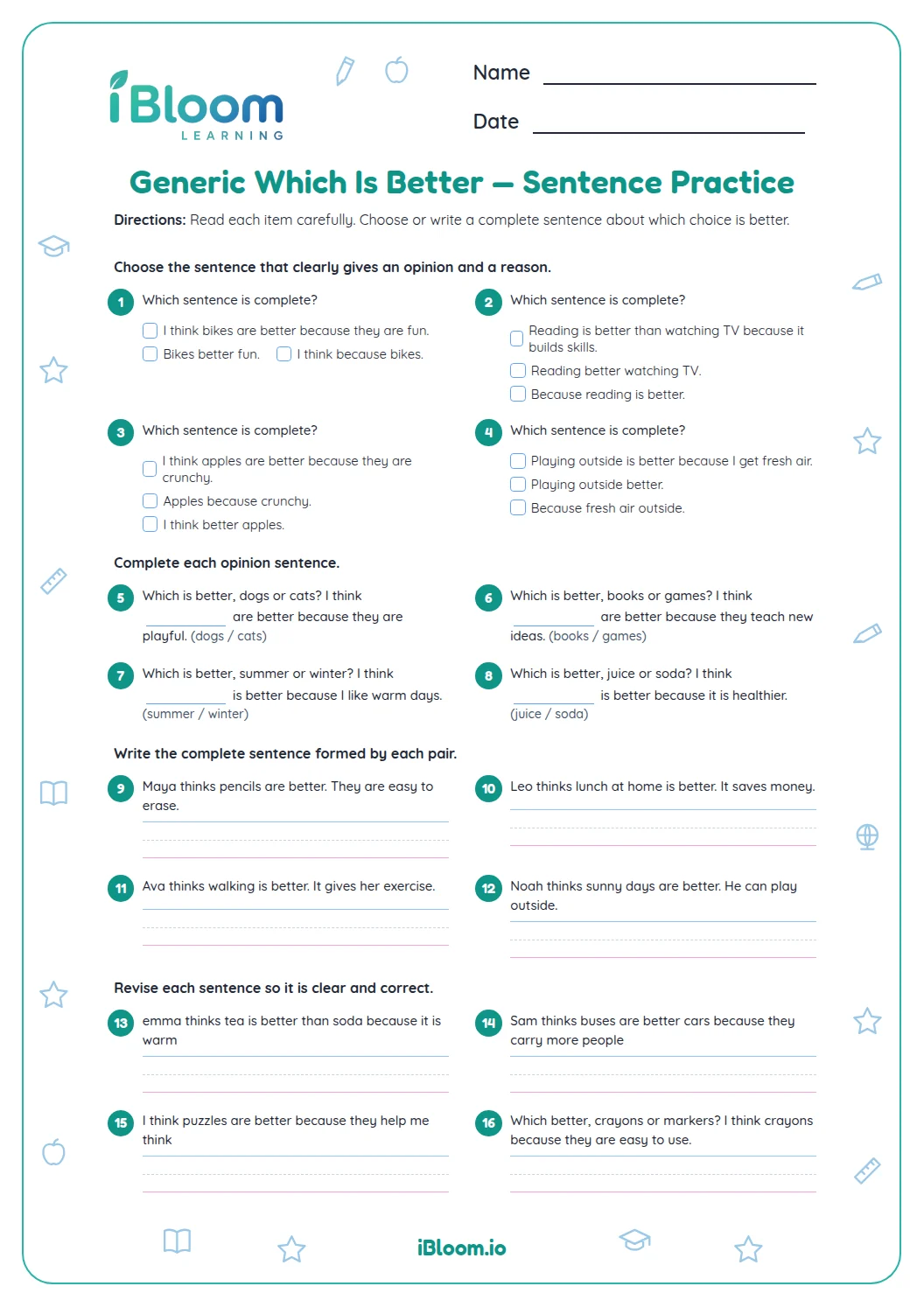
This Grade 3 printable gives students focused sentence practice with the topic of favorite games. In Part A, they identify complete opinions, reasons, capitals, and end marks. In Part B, they fill one missing word in opinion sentences about games. The 14 questions keep attention on sentence meaning and conventions, and a separate answer key shows the expected response for every item.
How can a student recognize a complete opinion?
An opinion tells what the writer thinks, and a complete sentence expresses a whole thought. Question 1 includes a subject, verb, and preference: “I like tag after school.” The other choices are a fragment or a dependent clause.
- 1I like tag after school. → complete opinion
- 2Because we play tag. → a reason fragment, not a complete sentence
Which words connect an opinion to a reason?
Because introduces a reason: “I like soccer because I can play with my team.” Although signals a contrast between two ideas. In Part B, read the whole sentence after filling the blank so both parts fit.
How do capitals and end marks help a sentence?
A sentence begins with a capital letter and ends with punctuation that matches its purpose. Question 5 asks for a period after a statement, and question 6 asks which version begins with a capital.
How to use this worksheet
- 1Read each choice aloud and listen for a complete thought.
- 2For an opinion, look for words that tell what the writer prefers.
- 3In Part B, read both sides of the blank before choosing a word.
- 4Use because to introduce a reason and although to show contrast.
- 5Check capitals and end marks as you reread the answers.
Common mistakes and quick fixes
The mistake
Choosing a fragment such as “Because we play tag” as a complete sentence.
The fix
Ask whether the words express a full thought; add the main idea if needed.
The mistake
Using although where the sentence needs a reason.
The fix
Use because to explain why; use although to show a contrast.
The mistake
Leaving a lowercase first letter or choosing a question mark for a statement.
The fix
Begin with a capital and choose end punctuation that matches the sentence.
What to practice next
Make more practice
Further reading
Questions parents and teachers ask
What skills does this worksheet practice?
The page practices complete opinion sentences, reasons, linking words, capitalization, and end punctuation. Students first select a sentence that fits a prompt, then fill one missing word in game-related sentences. The answer key identifies the expected choice or word so a parent can review each item.
How many questions are included?
There are 14 questions in two parts. Part A has seven multiple-choice sentence checks about opinions, complete thoughts, reasons, capitals, and punctuation. Part B has seven fill-in sentences about favorite games, using words such as because, although, with, is, and to.
Does the child need to have one particular favorite game?
No personal game choice is required to answer the page. The sentences mention several familiar games, and every blank has a word that makes the sentence read clearly. A child can still talk about their own favorite game after finishing the fixed-answer practice.
What is the difference between an opinion and a fact?
A fact can be checked, such as “Chess has a board.” An opinion tells what someone thinks or prefers, such as “I prefer cards.” Question 2 asks students to recognize a reason, while question 4 asks them to spot a preference.
How does because help a sentence?
Because introduces a reason for the idea before it. In “I like puzzles because they make me think,” the first part states a preference and the second explains why. The worksheet uses similar sentences so students can notice how the linking word joins related ideas.
How should I use the answer key?
Use the key to check the selected sentence or missing word. If a child suggests a different word, read the completed sentence aloud and discuss whether it preserves the intended meaning. The multiple-choice items have one listed answer, and each fill-in is designed around a specific word.