
About this worksheet
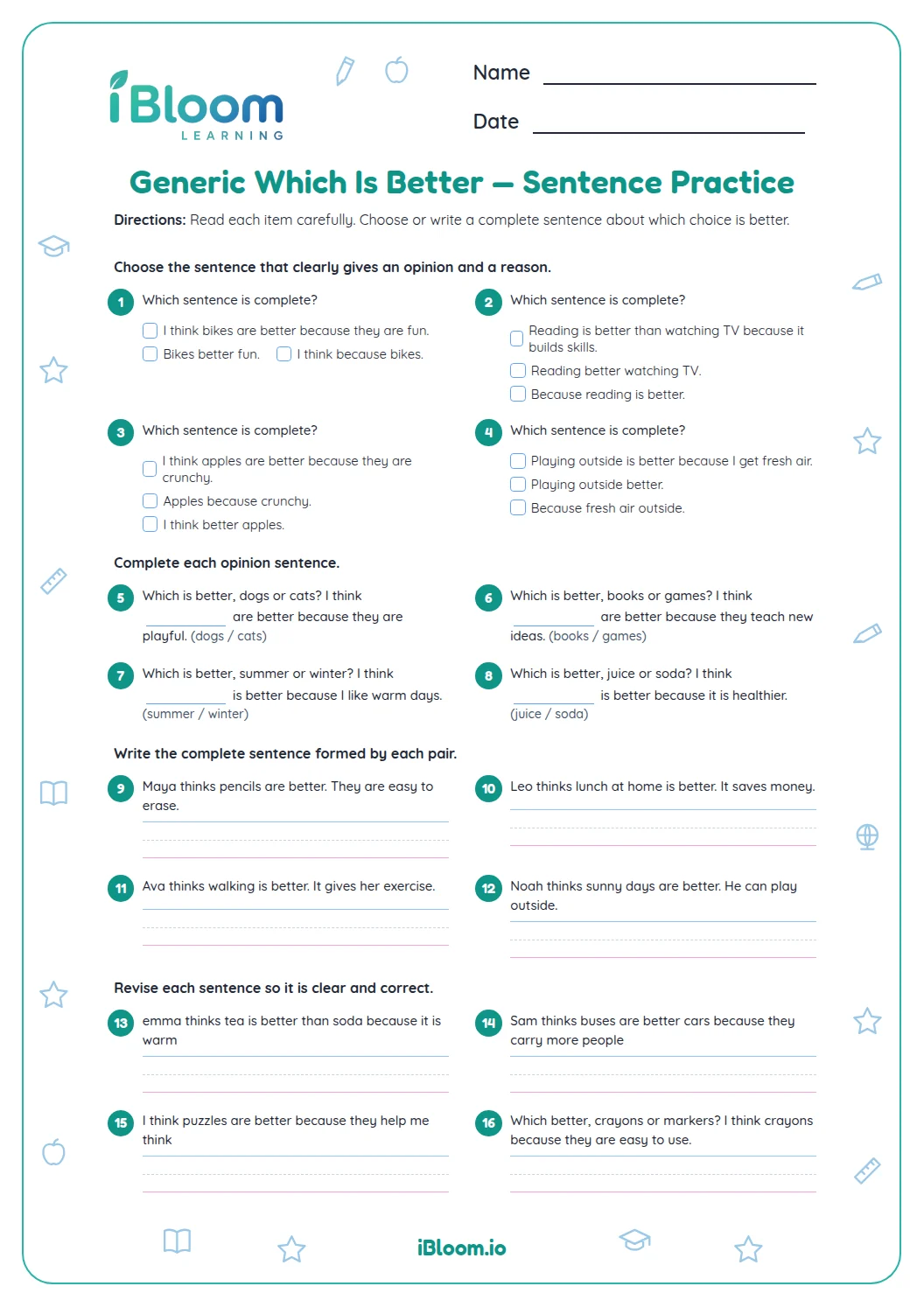
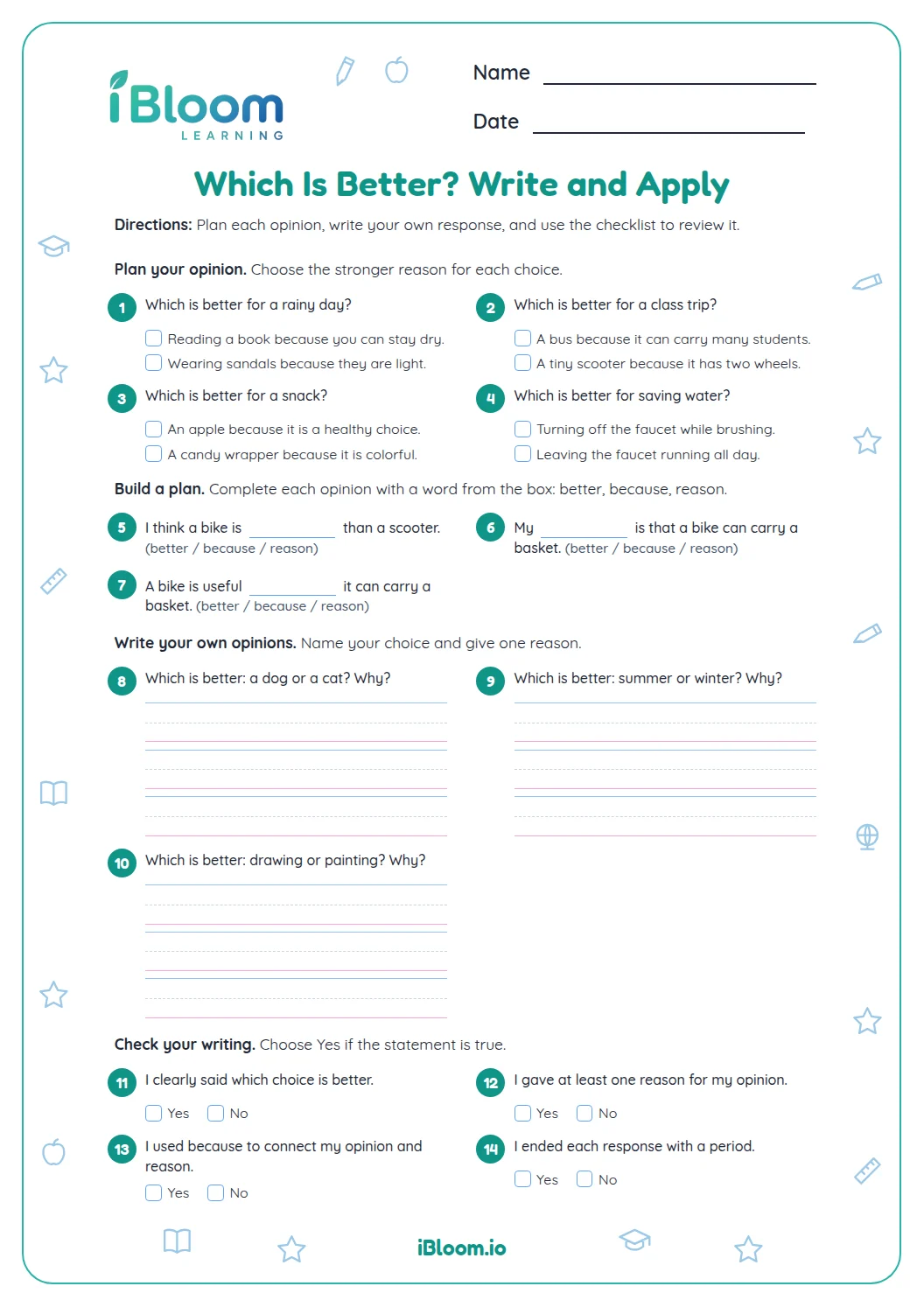
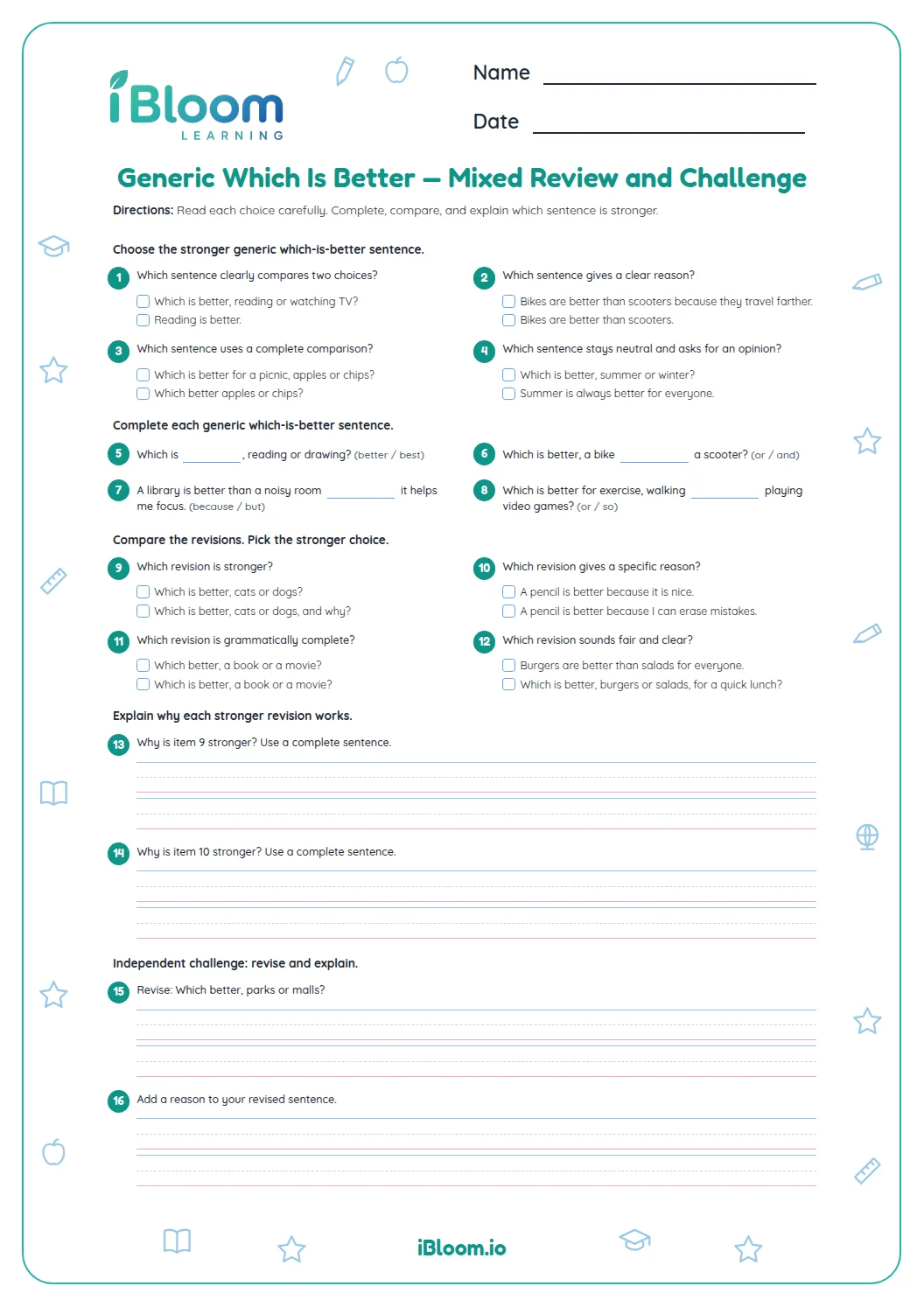
This Grade 3 worksheet uses “Which is better?” questions to practice editing. In Part A, students compare two versions and choose the one with correct capitalization and punctuation. In Part B, they supply a missing capital, comma, or question mark. The two-page sheet includes a separate two-page answer key.
Aligned to L.3.2
What do students edit?
Part A asks students to compare two versions of a “Which is better?” question. Part B gives a question with one missing capital, comma, or question mark. Together, the tasks build editing from recognizing a correct model to supplying a mark.
- 1Which is better, music or art___ → ?
How can students check a question?
Read from the beginning to the end: start with a capital, put a comma after “Which is better,” and finish with a question mark. Then read the question aloud to check that the punctuation matches its purpose.
How is the practice arranged?
Part A has seven multiple-choice edits. Part B has seven full-question rewrites, so students move from spotting a correct model to making the correction themselves.
How to use this worksheet
- 1Read the directions and look at one example.
- 2Complete each part in order, showing work where there is room.
- 3Read answers aloud or check each written result.
- 4Use the key to review and correct any missed items.
Common mistakes and quick fixes
The mistake
Skipping a key detail in the prompt.
The fix
Read the full question before responding.
The mistake
Writing an answer without checking it.
The fix
Use the worked example and key to review.
The mistake
Moving on after an error.
The fix
Correct the response and explain what changed.
This worksheet practices the listed Common Core skill.
Edit capitalization and punctuation in written questions.
On this sheet: Edit capitalization and punctuation in written questions.
Show the official wordingHide the official wording
Demonstrate command of the conventions of standard English capitalization, punctuation, and spelling when writing.
What to practice next
Make more practice
Further reading
Questions parents and teachers ask
How many questions are on this worksheet?
There are 14 questions in two parts. Part A has seven choices between two versions, and Part B has seven missing-mark items. The separate answer key gives the correct choice or the capital or punctuation mark for every item.
What kinds of marks do students add?
The questions practice a capital at the start, a comma after “Which is better,” and a question mark at the end. For example, “Which is better, reading or drawing?” uses the comma to separate the opening phrase from the choices.
Can students use this worksheet before writing opinions?
Yes. Students edit the comparison questions before responding to one. They practice making each question readable with a capital, a comma after the introductory phrase, and a question mark. The prompts compare familiar choices such as books, games, food, and places.
How should I check the answers?
Use the key to check the missing letter or mark, then read the corrected question aloud. A question should begin with a capital, separate the introductory phrase with a comma, and end with a question mark. Read each corrected question aloud to hear its punctuation.
How long does the practice take?
Plan for about 15 minutes. Students can complete Part A, check a few corrections together, then finish Part B. The two worksheet pages are followed by a separate answer key. The key is printed after the worksheet pages for checking.