


About this worksheet
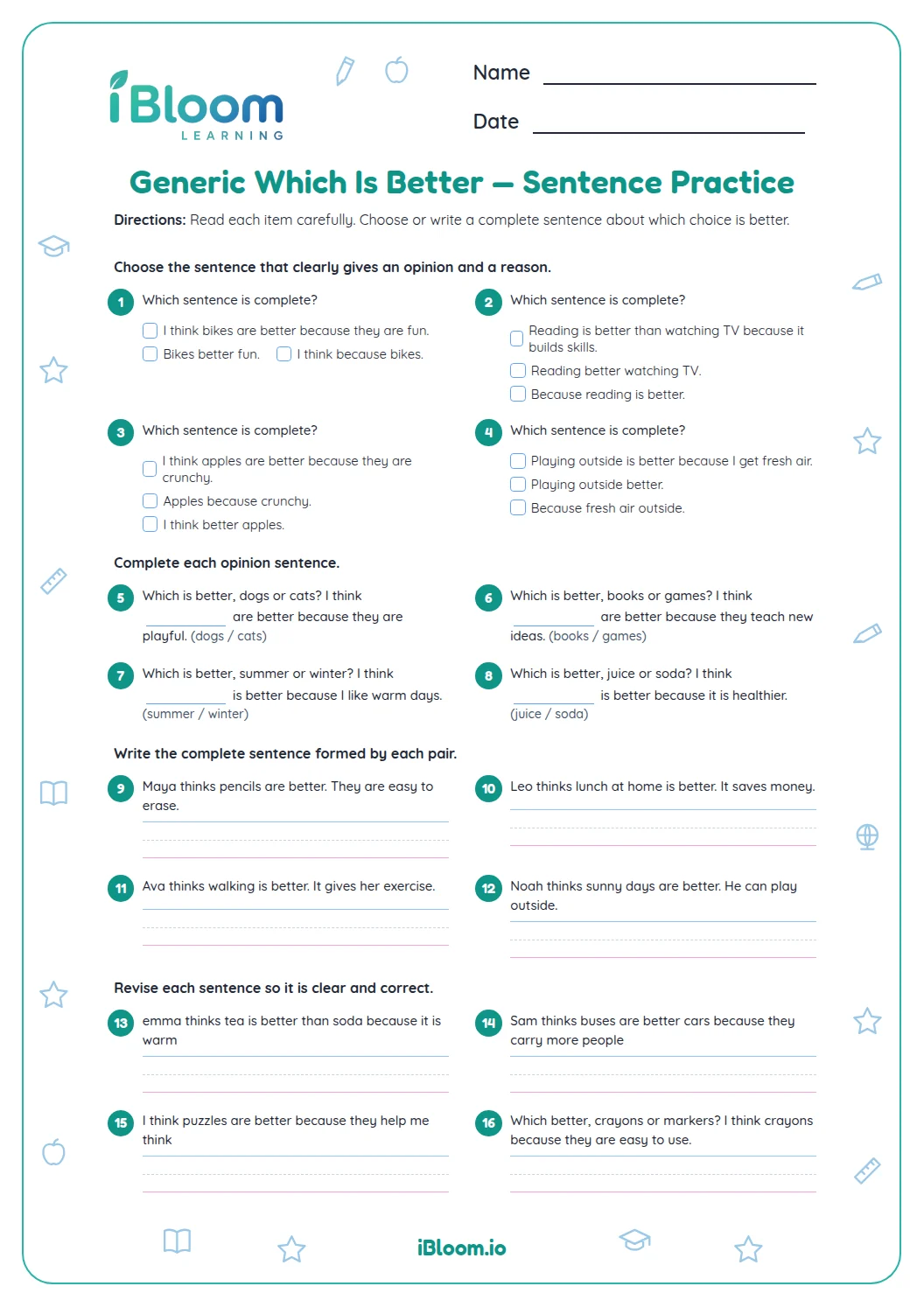
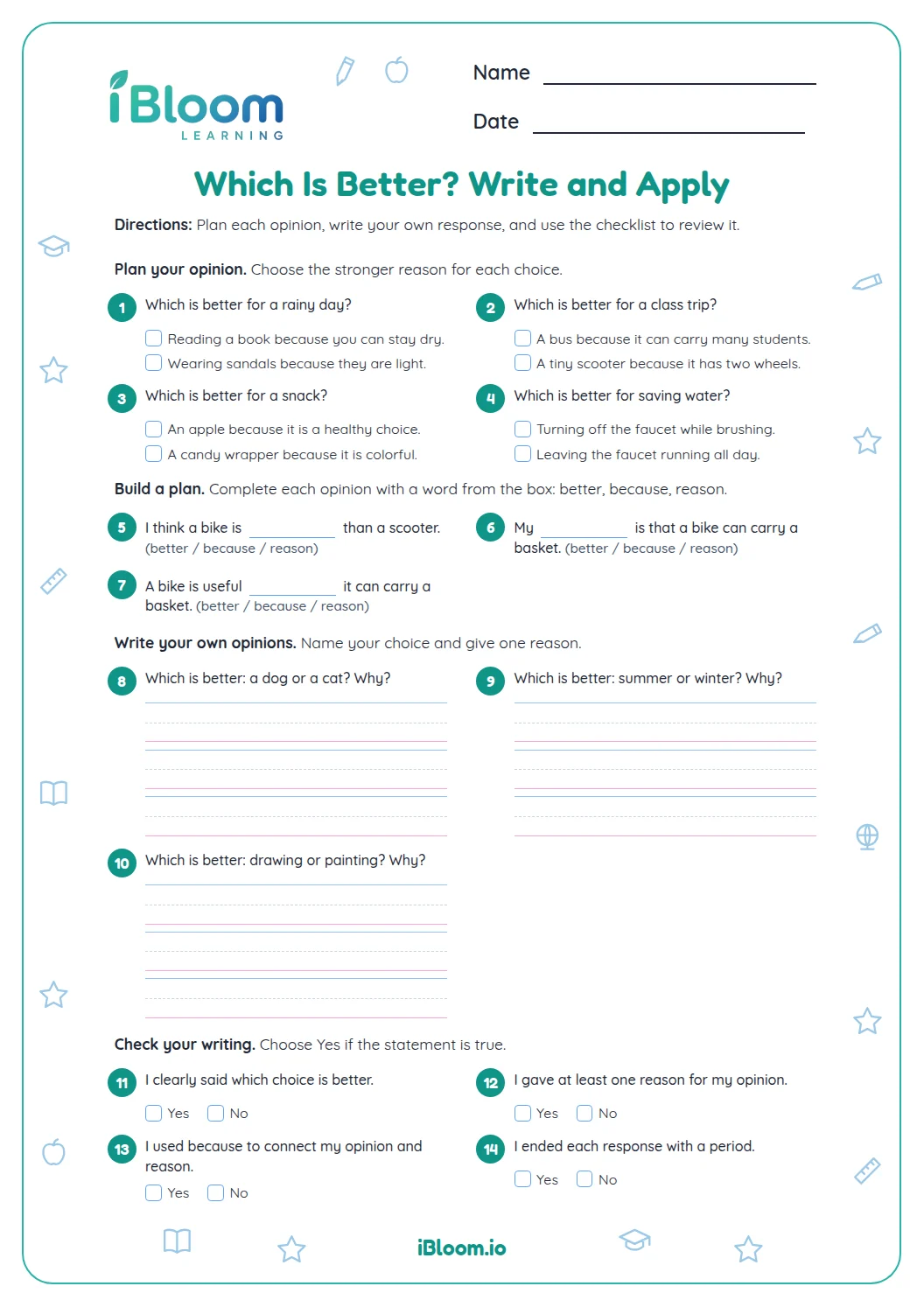
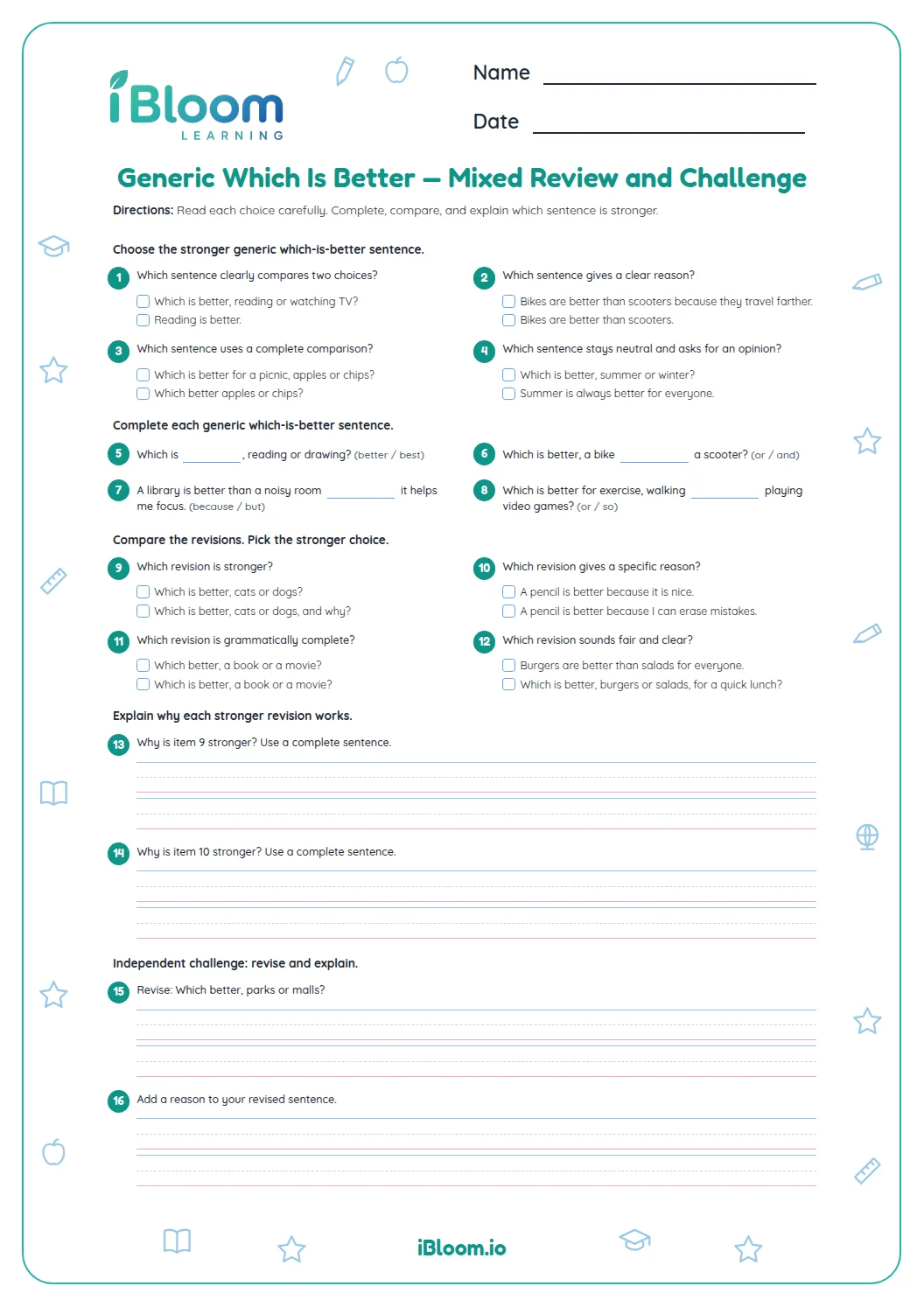
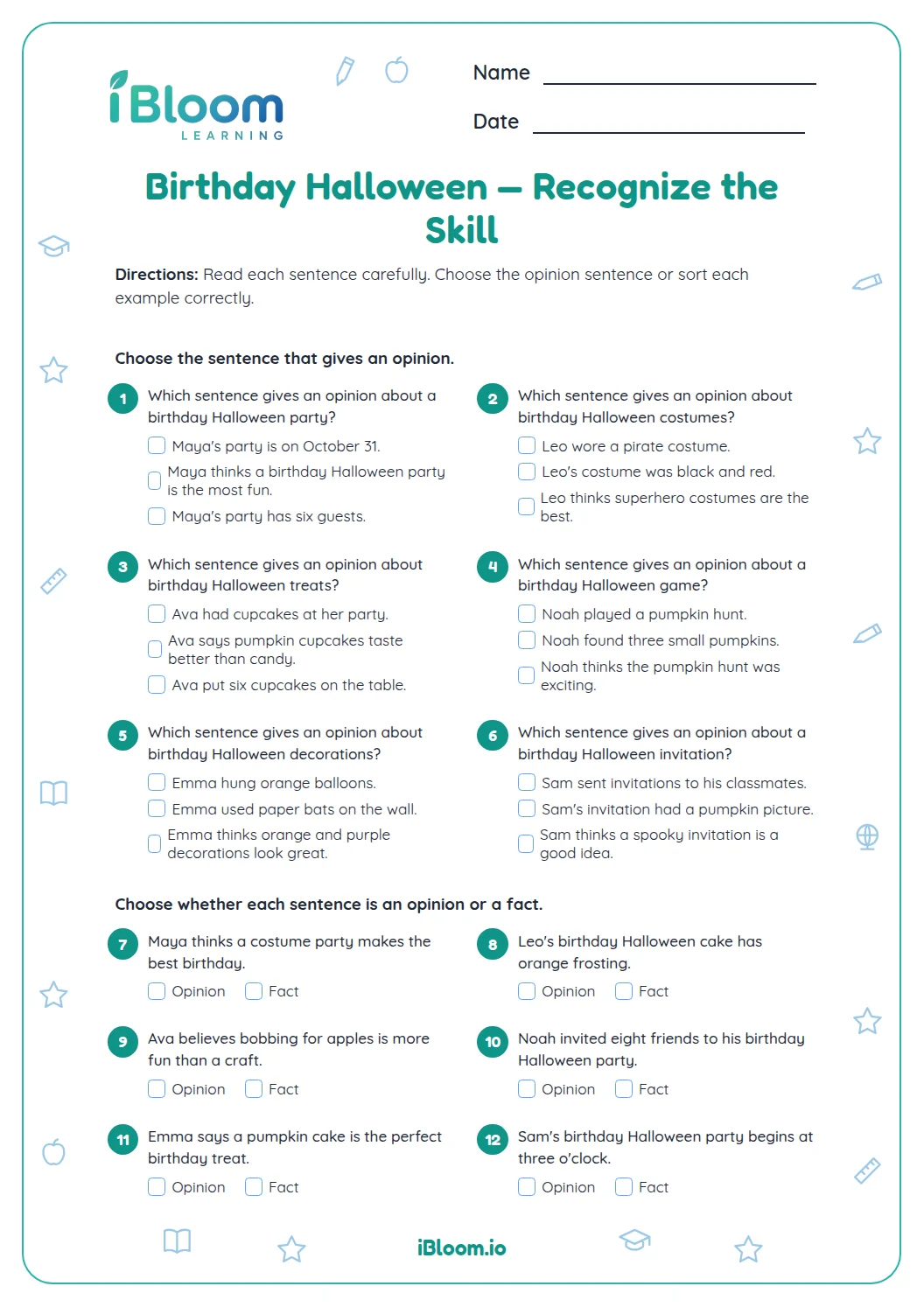
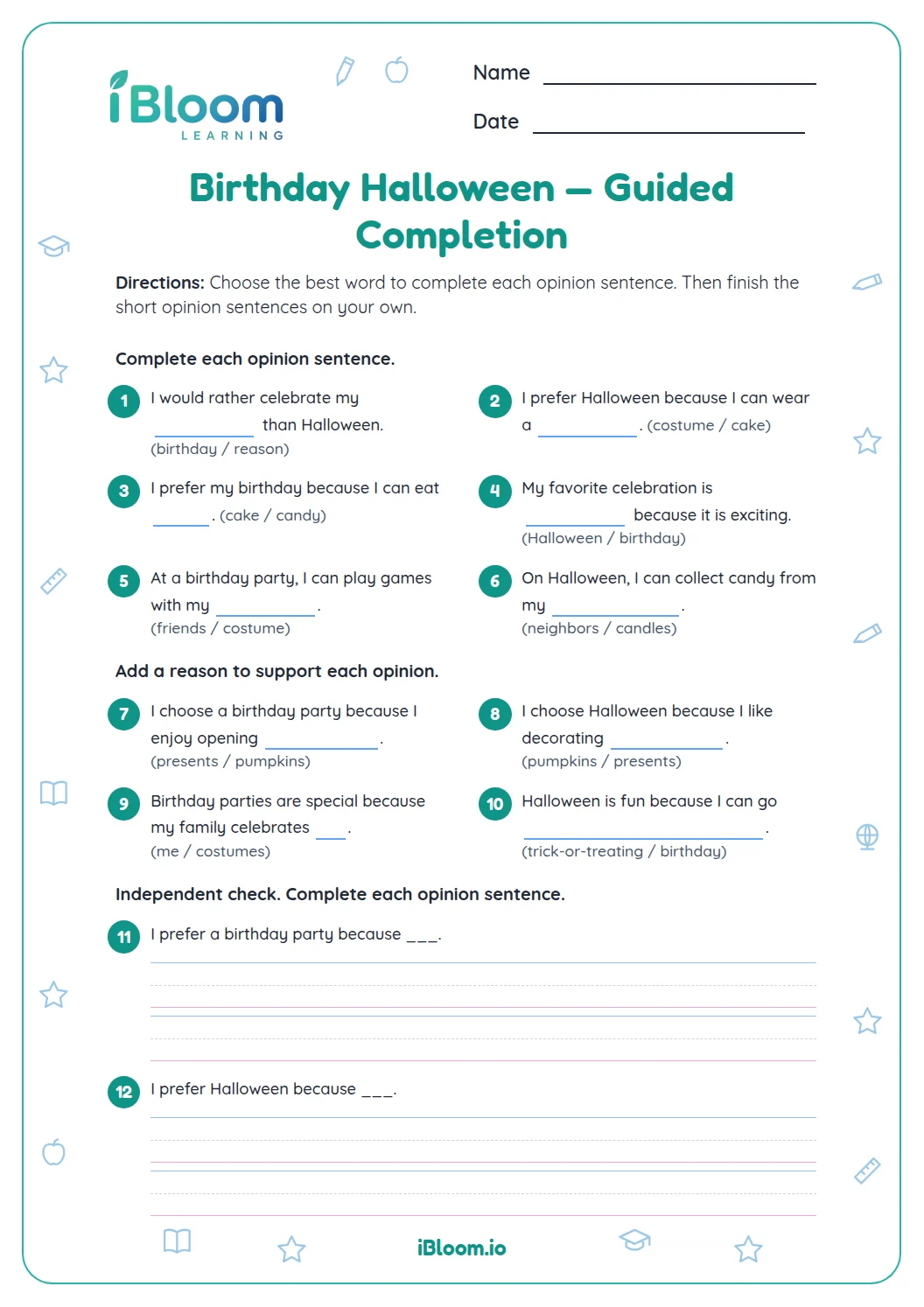
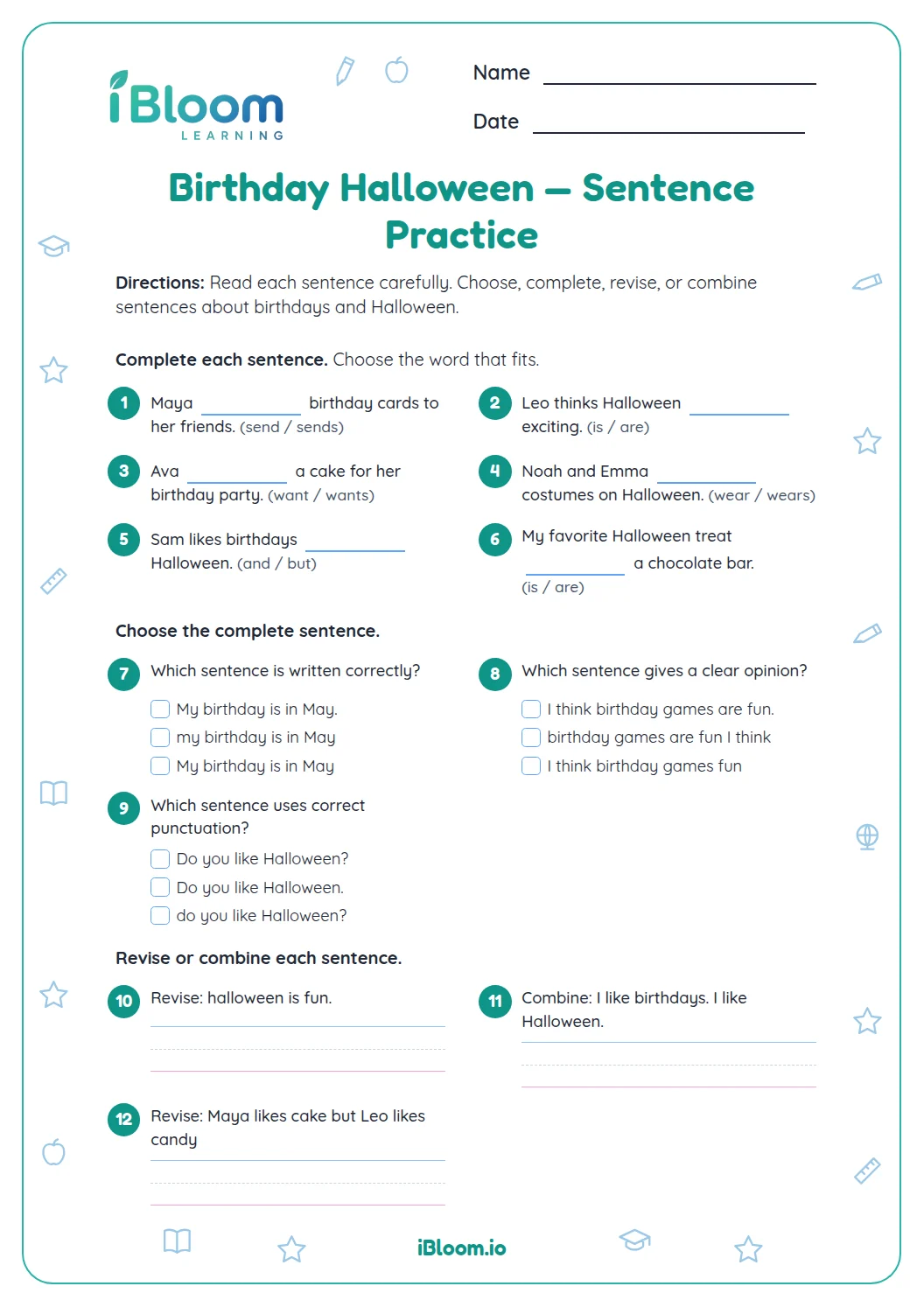
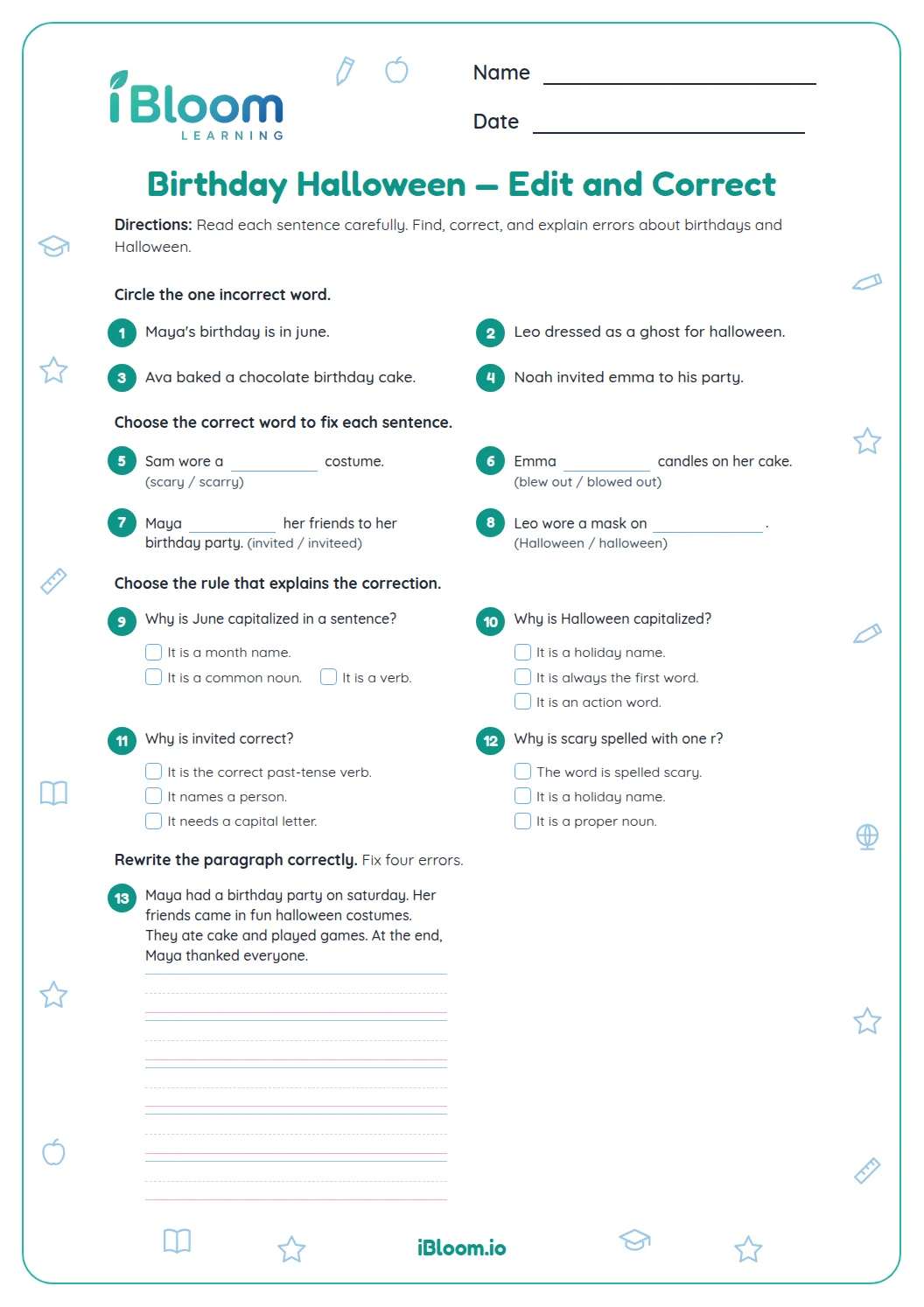
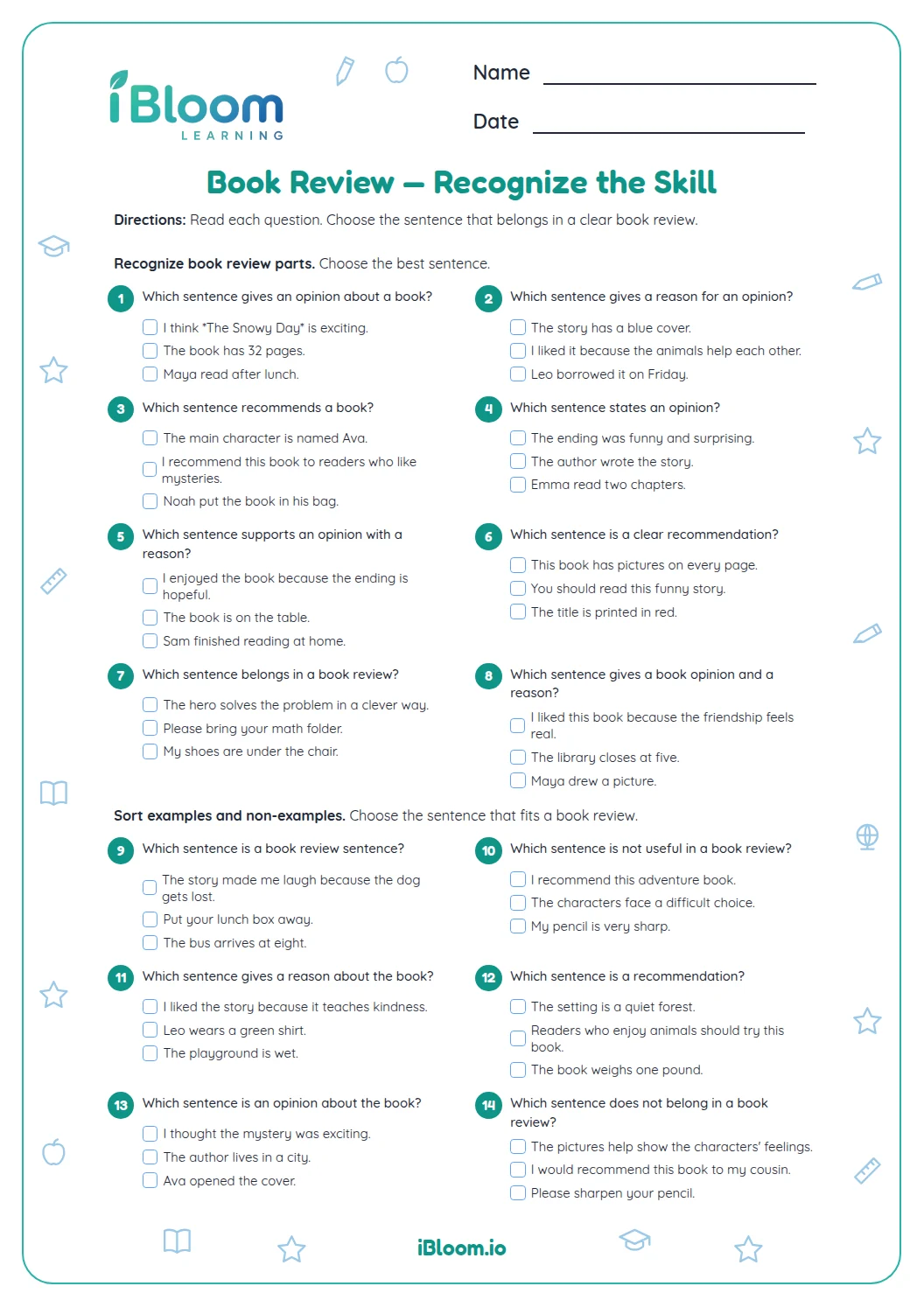
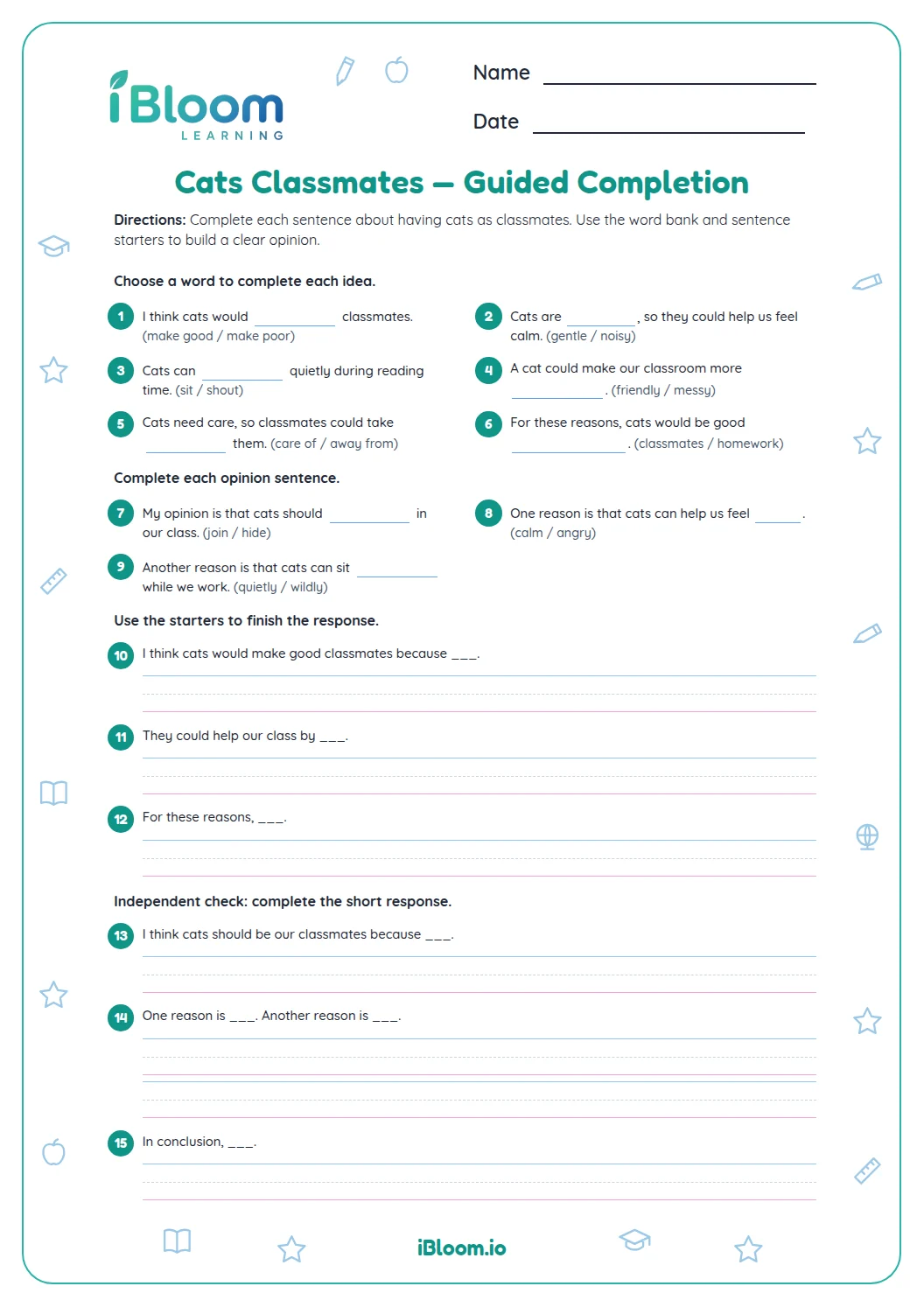
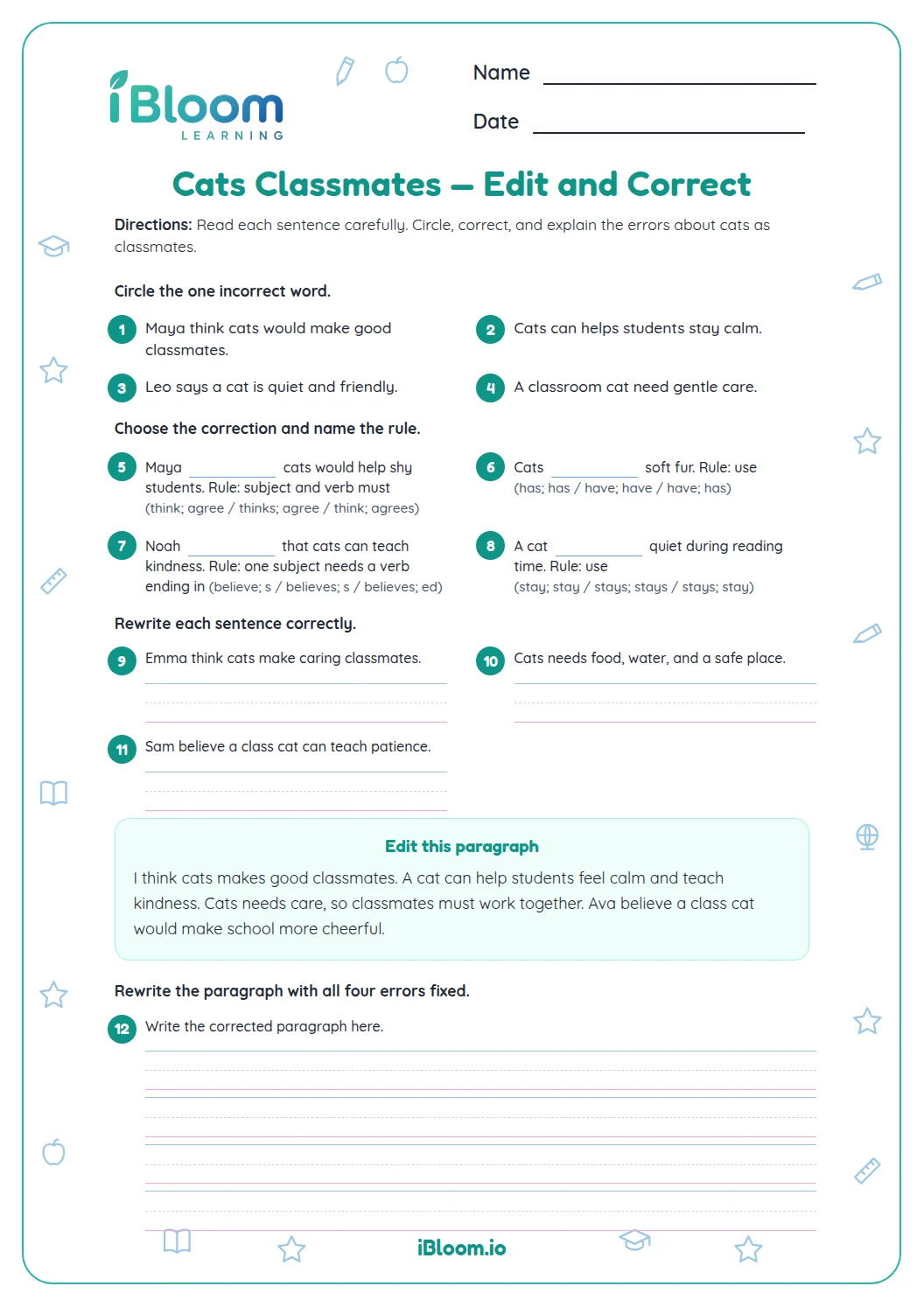
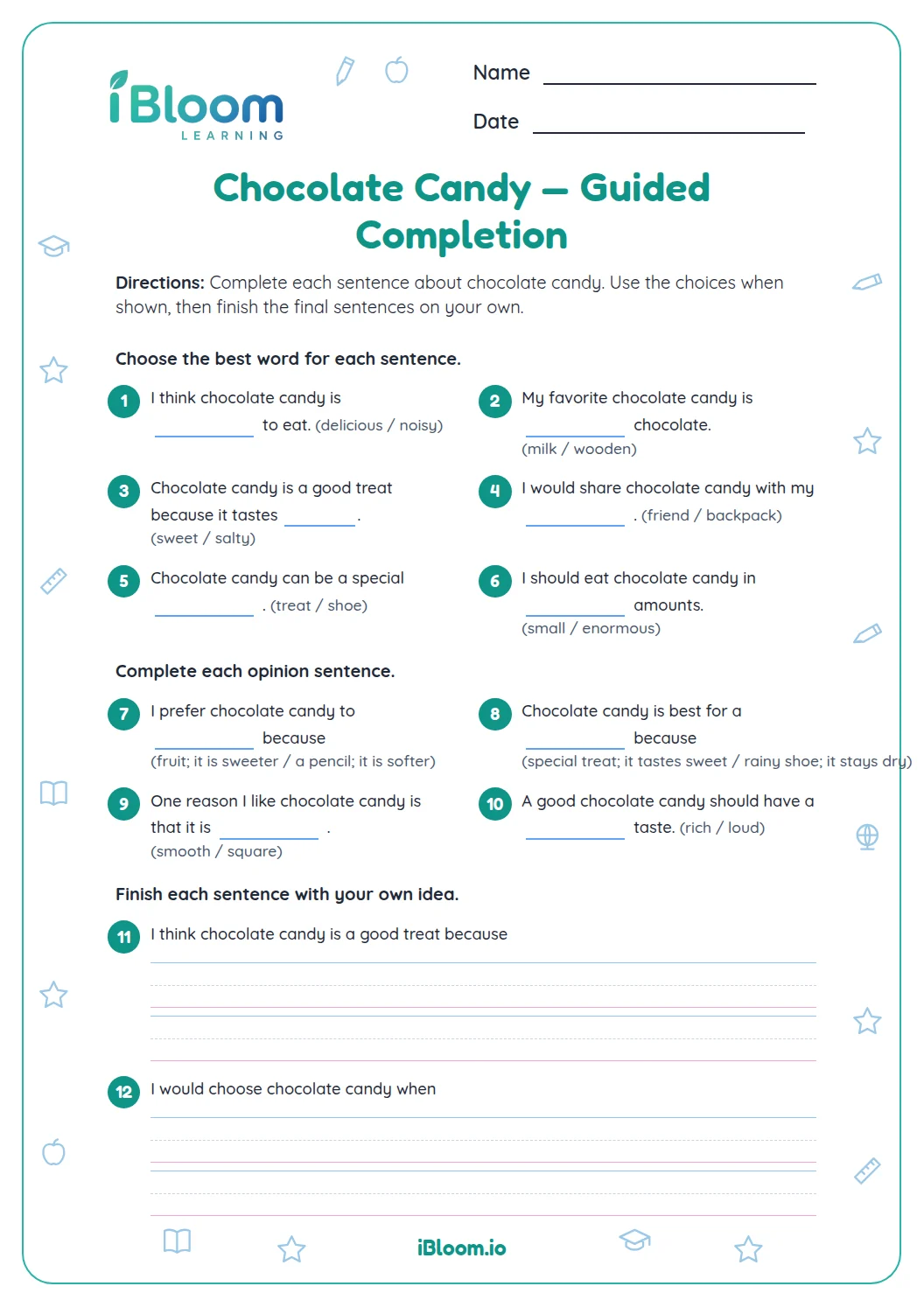
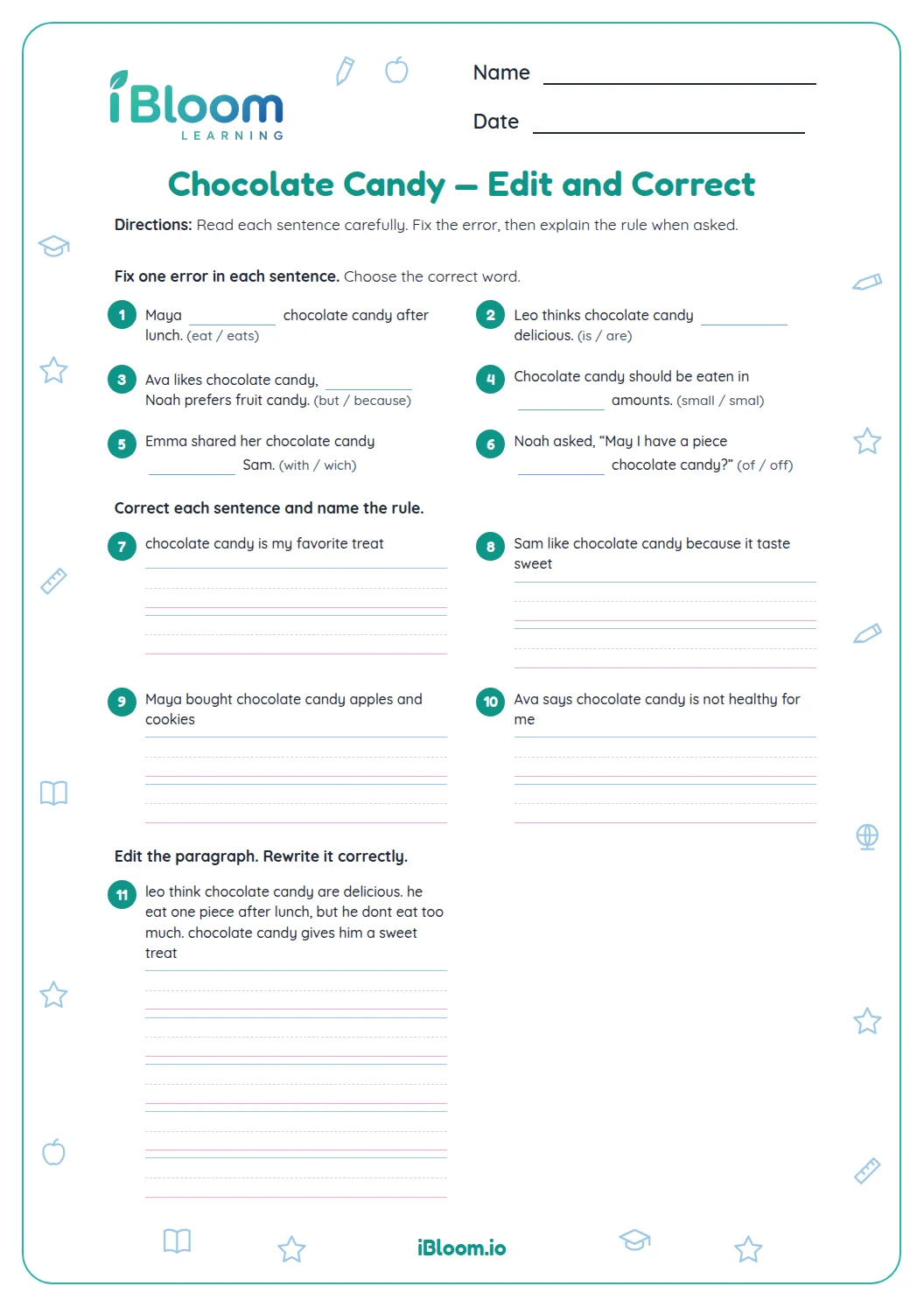
This free printable worksheet is for Grade 3 learners practicing opinion writing with reasons and details. It includes 16 questions arranged in parts that move from guided recognition or direct practice to independent application, plus a separate answer key for checking responses.
How can learners practice opinion writing with reasons and details?
A clear opinion paragraph names a view and supports it with a reason. Question 2 models both parts: “I like bikes” states a view, and “because riding is fun” explains it.
What is on the worksheet?
The 16 items move from supported practice to independent application. The answer key is a separate page.
How to use this worksheet
- 1Read the directions before starting each part.
- 2Complete the early items together if a reminder is useful.
- 3Work through the remaining questions in order.
- 4Use the answer key after finishing to review answers.
Common mistakes and quick fixes
The mistake
Rushing past an important word in the prompt.
The fix
Underline the action word and identify what the question asks.
The mistake
Skipping a check after finding an answer.
The fix
Read the prompt again and see whether the answer fits.
The mistake
Leaving a response incomplete.
The fix
Return to each item and fill every requested blank or line.
What to practice next
Questions parents and teachers ask
How many questions are included?
There are 16 questions in two parts. Learners first recognize opinions, reasons, and paragraph order, then complete sentence beginnings with a reason, detail, or closing idea. This gives a clear way to review the skill together and discuss how the response fits the question.
What makes a reason support an opinion?
A reason explains why the writer holds the opinion. For example, “I like bikes because riding is fun” pairs a view with an explanation. A useful detail adds information that helps the reader understand that reason. This gives a clear way to review the skill together and discuss how the response fits the question.
Can a learner give a different answer from the key?
Yes. Several sentence completions allow many sensible responses. The key offers a sample; accept a different completion if it forms a clear sentence and logically supports the opinion or completes the requested paragraph part. This gives a clear way to review the skill together and discuss how the response fits the question.
How can the sentence starters help?
Read the whole starter before writing. A blank after “because” calls for a reason; a blank after “so we can” calls for a result or purpose. Reread the finished sentence to make sure the idea fits both the grammar and the opinion.
Is an answer key included?
Yes. The separate key gives the correct multiple-choice responses and sample sentence completions. For open responses, use the examples as a guide and check that the learner’s idea matches the prompt. This gives a clear way to review the skill together and discuss how the response fits the question.