

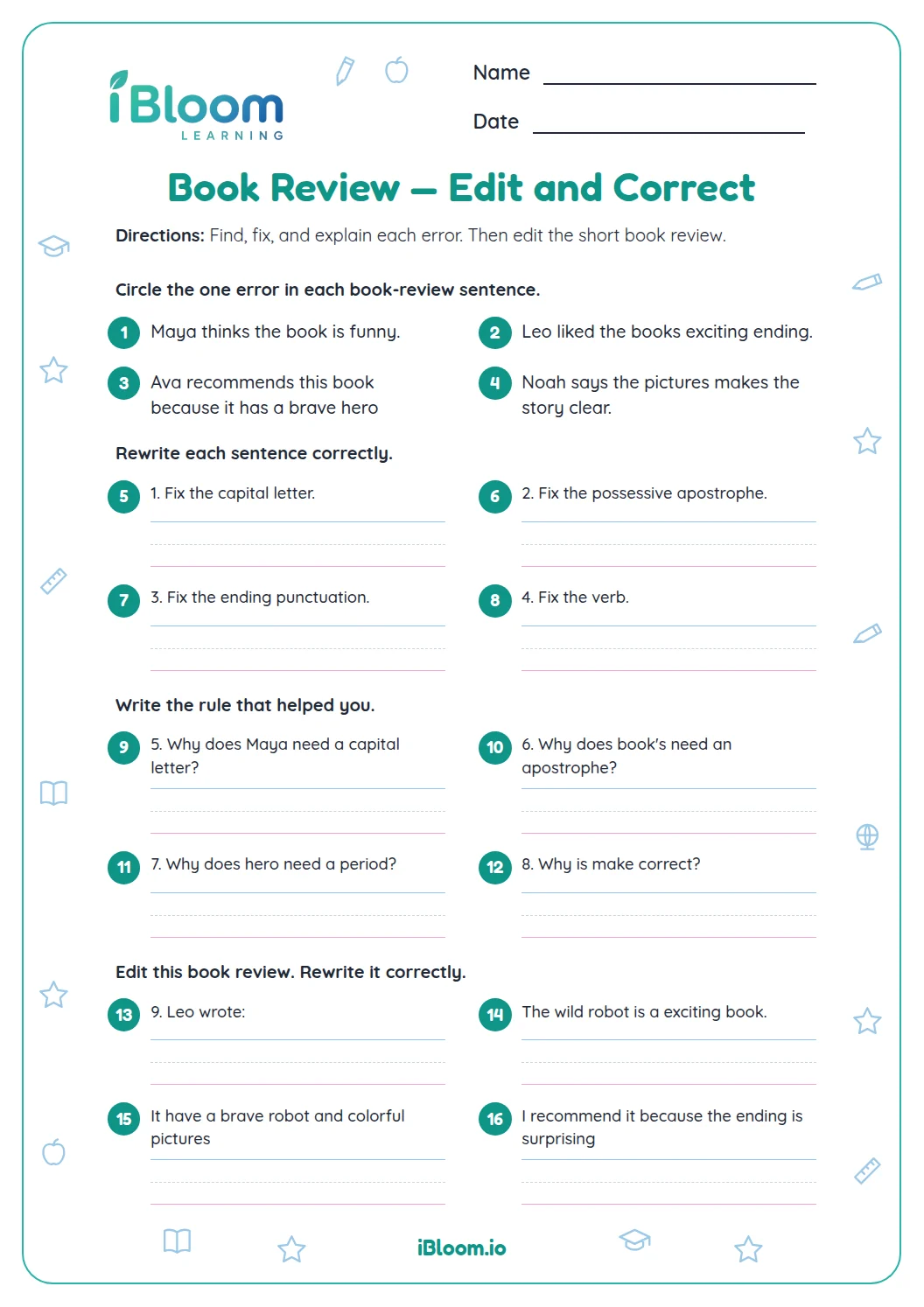
About this worksheet
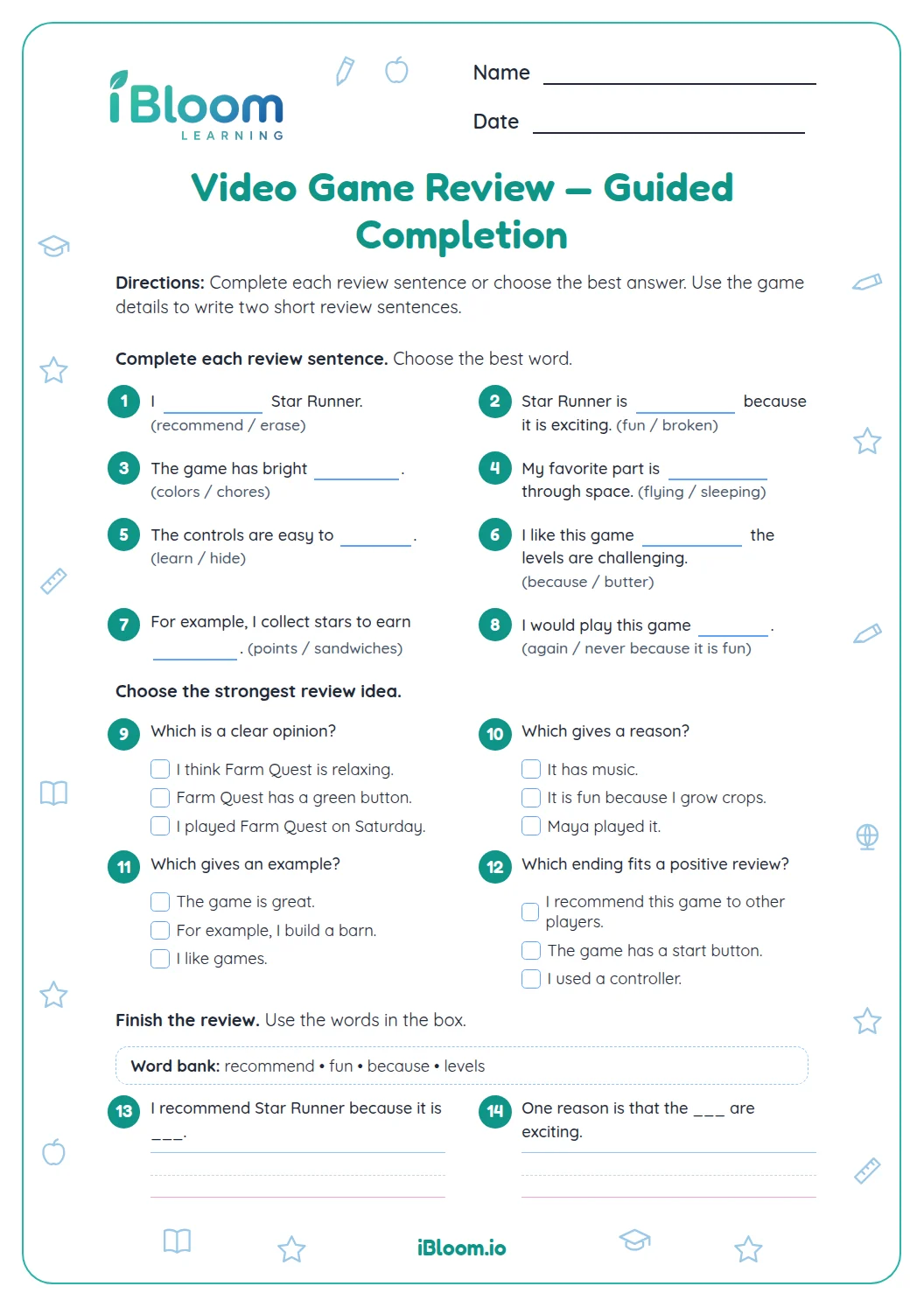
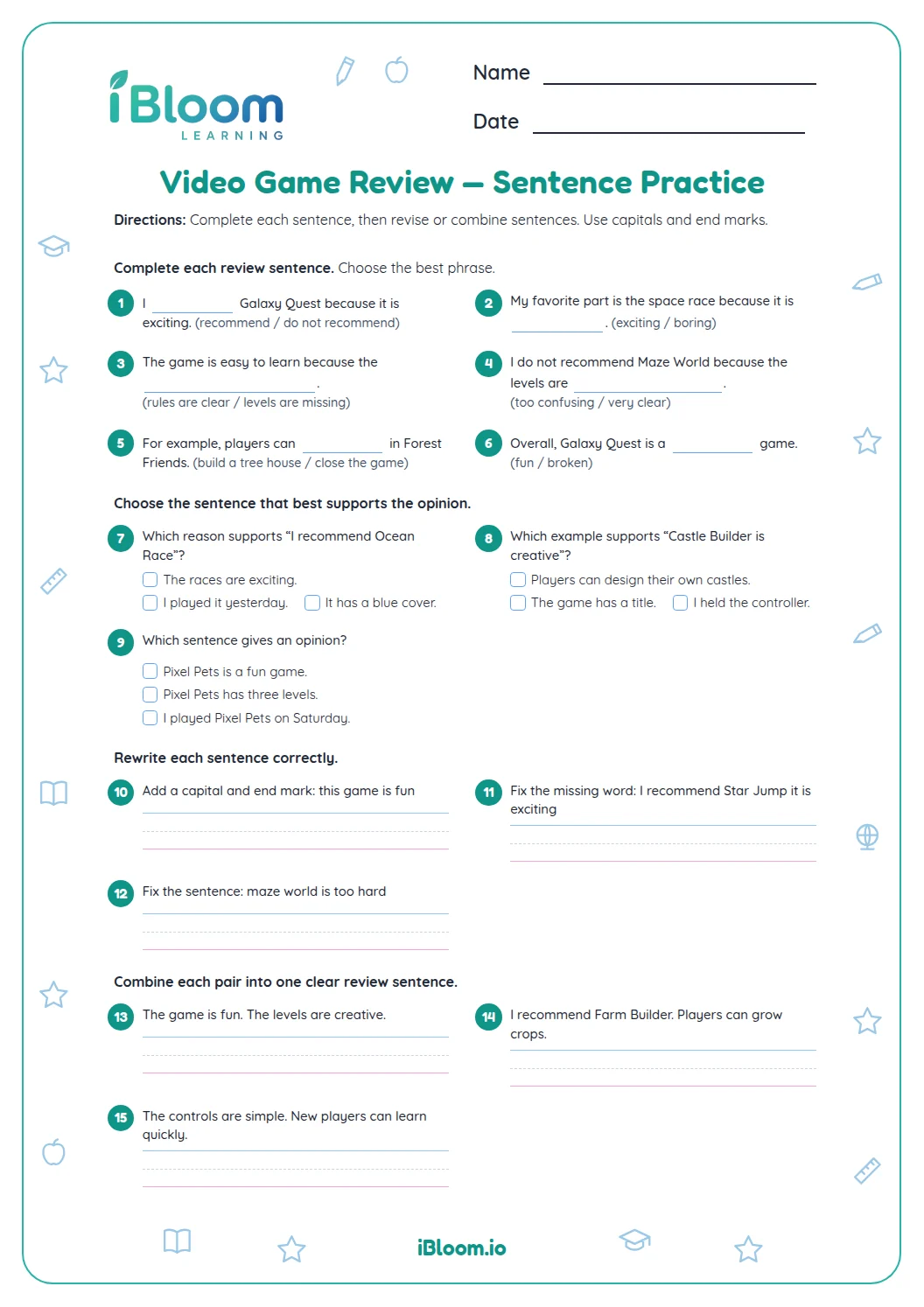
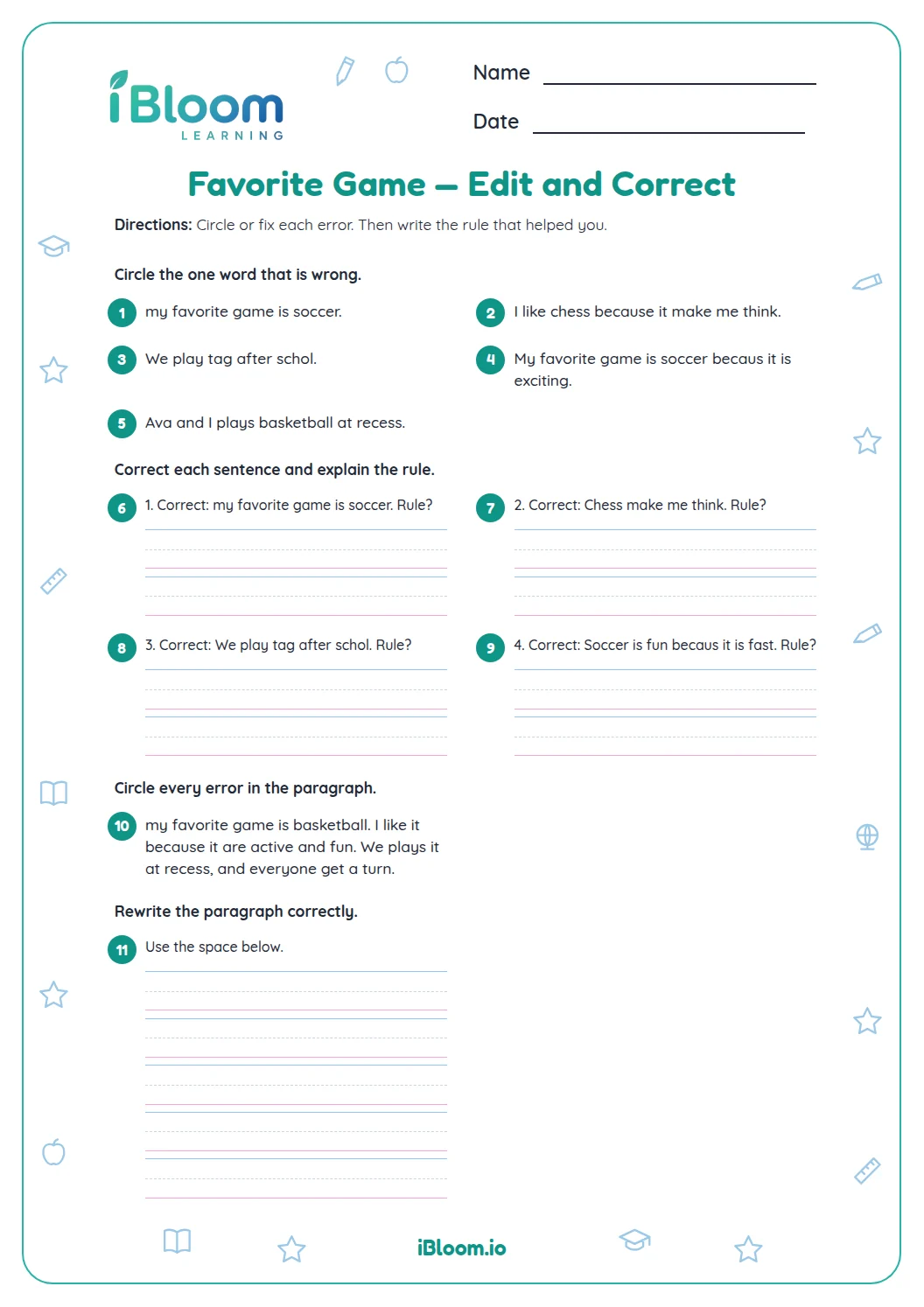
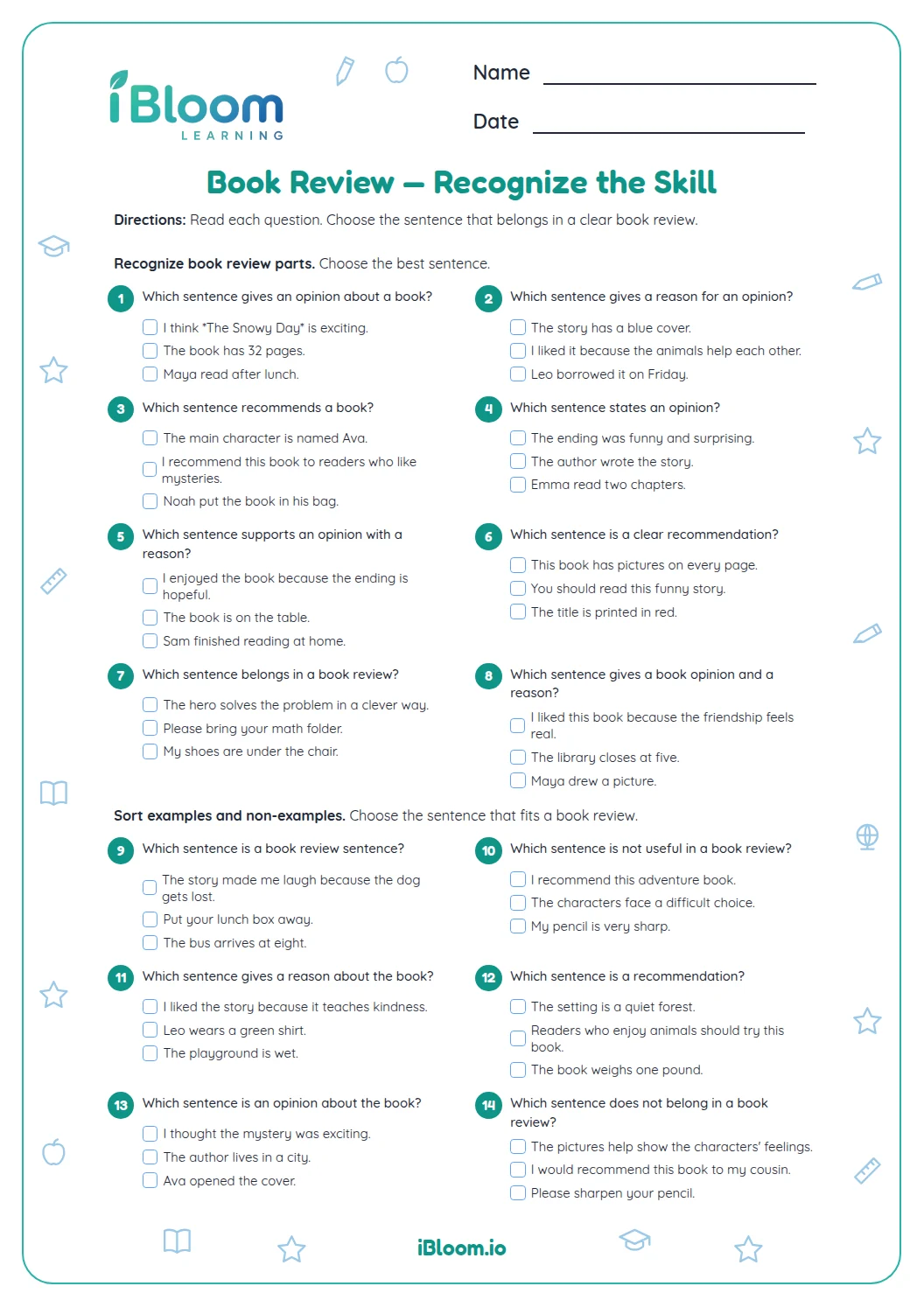
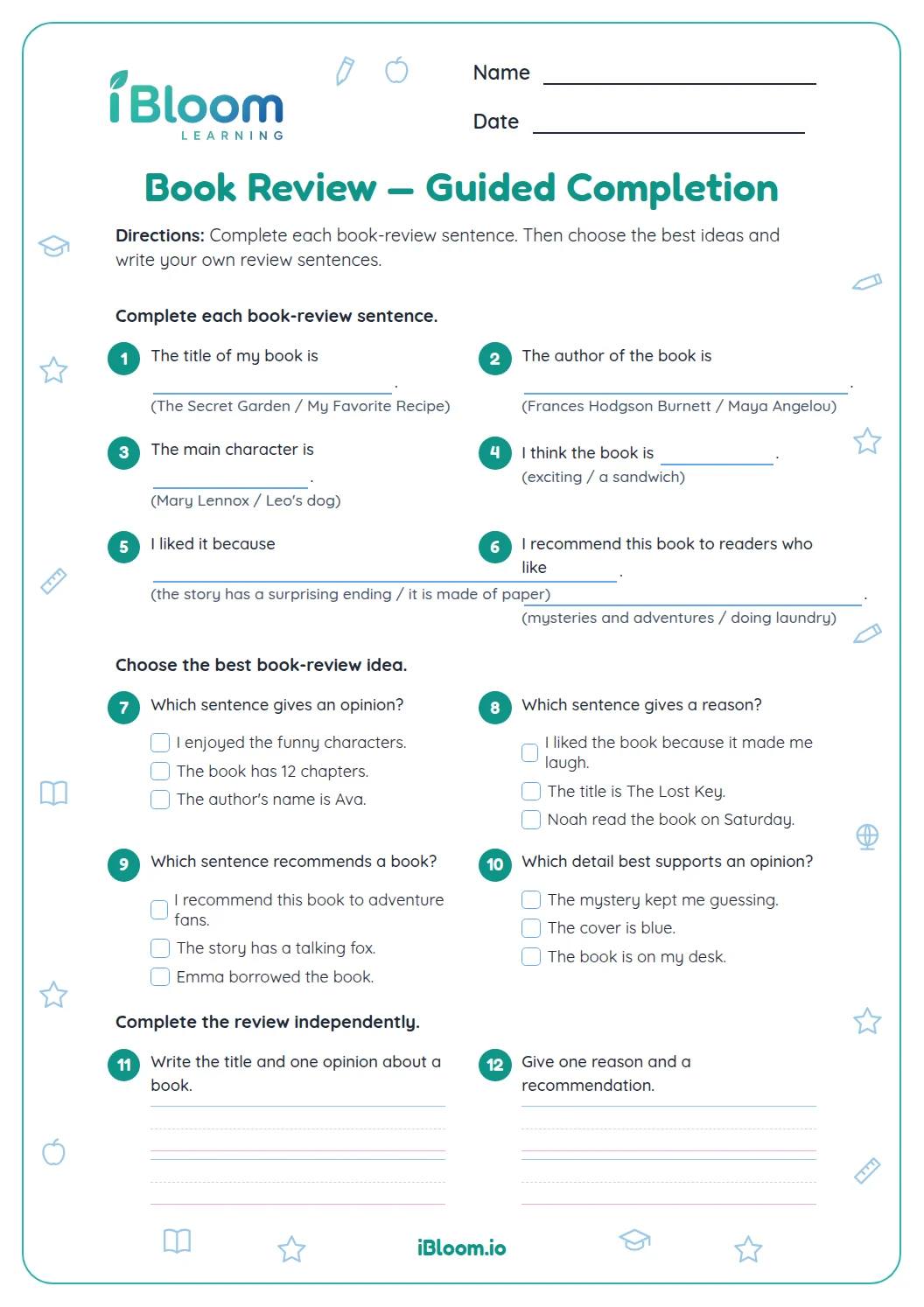
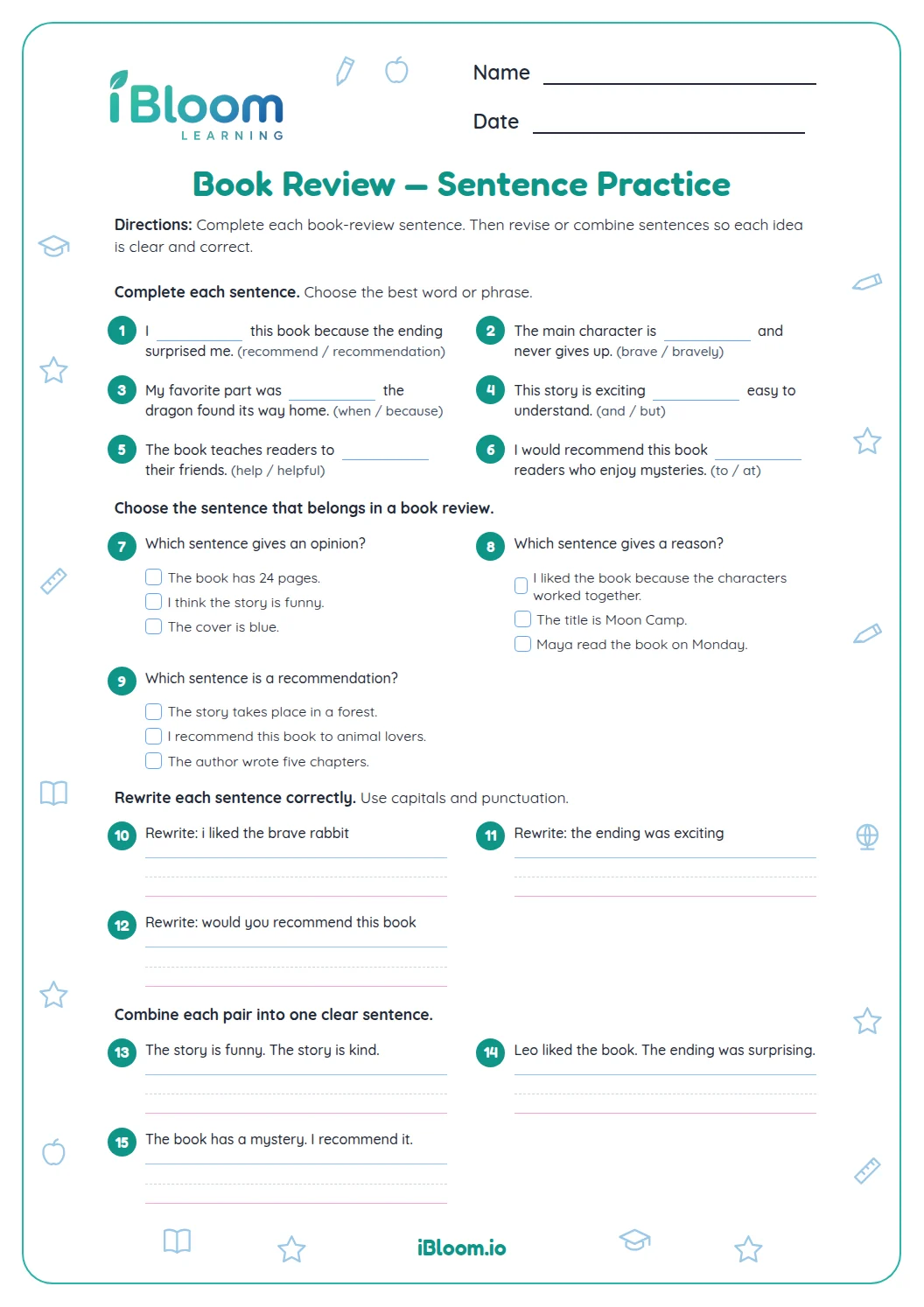
This Grade 3 worksheet gives students a compact editing review built around a video game opinion. Fourteen questions ask them to correct capitalization and punctuation, recognize complete thoughts, identify an opinion and its reason, stay on topic, and choose specific details. The answer key is printed separately.
Aligned to 3.L.2
What should a writer check first?
Check sentence beginnings, game-title capitals, and end marks. In question 1, the blank begins a sentence, so it needs a capitalized word. The title keeps capitals as a proper name.
- 1___ favorite game is Robot Race.
- 2Begin a sentence with a capital.
- 3Choose “My.”
How can a review support an opinion?
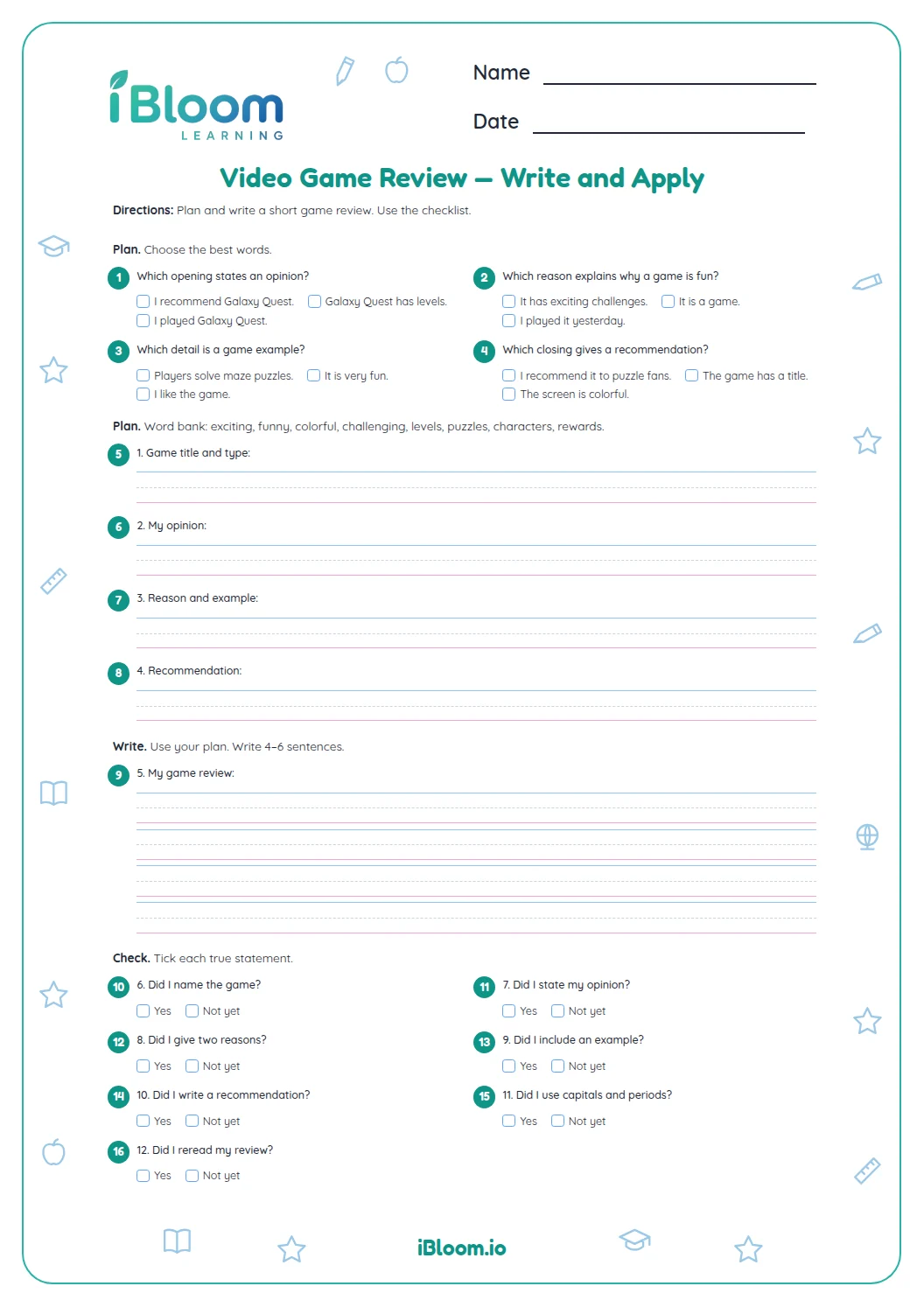
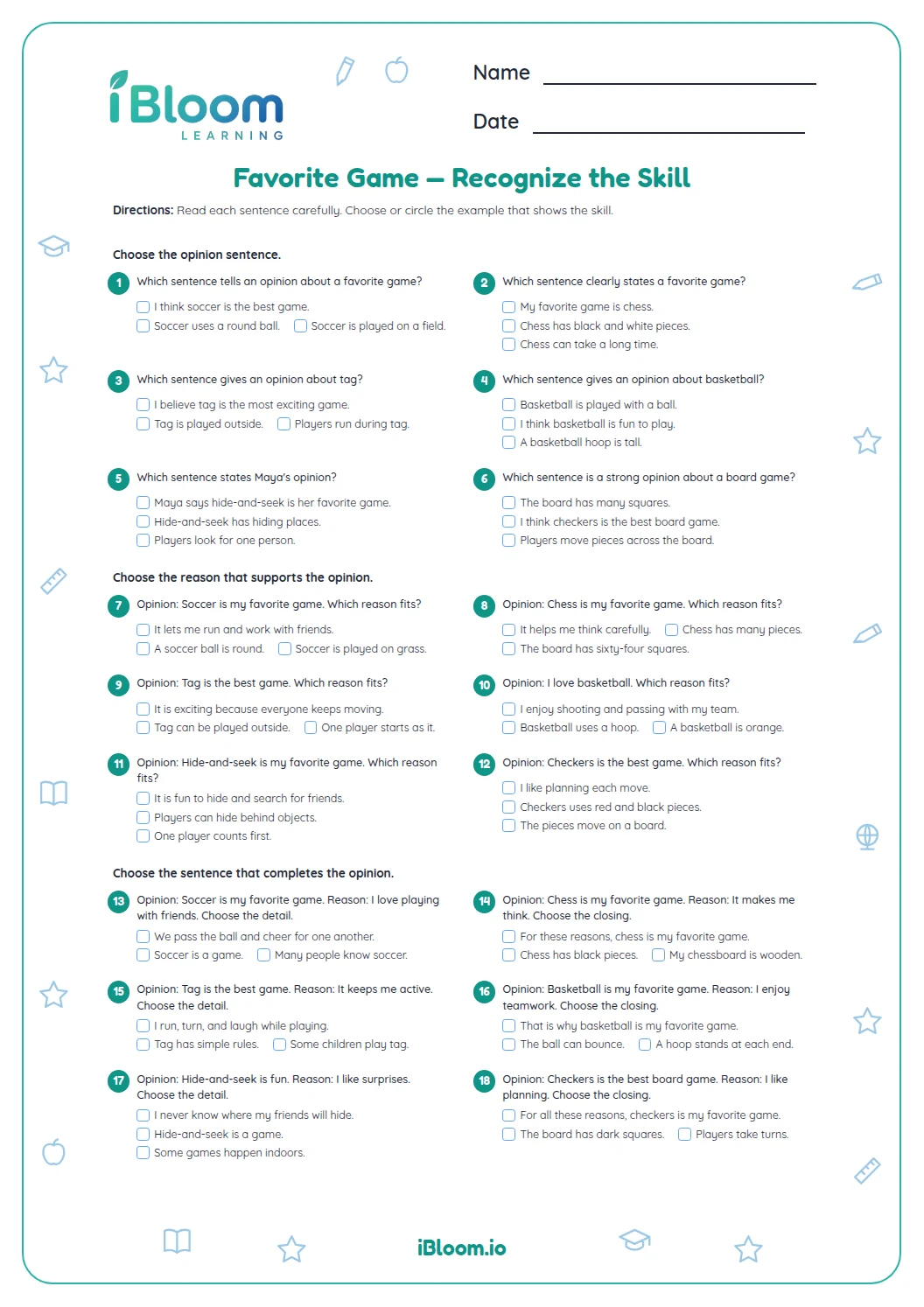
A useful opinion review names a view and gives a reason. “I recommend it because the puzzles make me think” tells what the writer thinks and why. A complete sentence also needs a subject and a verb, and it should stay on the game-review topic.
How can the final edit make a review stronger?
Replace broad praise with a specific detail. “The game is fun because each level has a new puzzle” tells readers what makes the game enjoyable. End with a recommendation that helps a reader decide whether the game might interest them.
What skills do the three parts cover?
Part A checks capitals and punctuation. Part B focuses on complete, on-topic review sentences, opinions, and reasons. Part C asks students to polish spelling, details, and a recommendation.
How to use this worksheet
- 1Read the whole sentence before choosing an edit.
- 2Check the first word, names, spelling, and end punctuation.
- 3Ask whether the sentence is a complete thought.
- 4Look for an opinion with a reason that stays focused on the game.
- 5Choose details that explain why a reader might enjoy the game.
Mistakes to watch for
The mistake
Capitalizing every word in a sentence
The fix
Capitalize the first word and proper names or titles; keep ordinary words lowercase.
The mistake
Giving an opinion without a reason
The fix
Add a because-clause that names a real feature, such as puzzles, levels, or controls.
The mistake
Joining two complete thoughts with only a comma
The fix
Use a period and start the next sentence with a capital, or connect the thoughts with a suitable conjunction.
Common Core alignment
The editing questions practice grade-level English conventions.
Students correct capitalization, punctuation, and spelling in review sentences.
On this sheet: The worksheet asks students to edit capitalization, punctuation, and spelling.
Show the official wordingHide the official wording
Demonstrate command of the conventions of standard English capitalization, punctuation, and spelling when writing.
What to practice next
Make more practice
Further reading
Questions parents and teachers ask
What should students check when editing?
Start with sentence capitals and end punctuation, then check spelling and whether each sentence is complete. For an opinion review, also check that the opinion has a reason and the details stay on the game topic. Ask the student to point to the capital, end mark, complete thought, or reason that supports the edit.
How is an opinion different from a fact in a review?
A fact can be checked, such as a game having four levels. An opinion tells what the writer thinks, such as “I think the puzzle level is the best.” A strong review can include both. Ask the student to point to the capital, end mark, complete thought, or reason that supports the edit.
Why include a reason after an opinion?
A reason helps readers understand the writer’s view. “I recommend it because the puzzles make me think” gives a recommendation and explains what makes the game appealing. Ask the student to point to the capital, end mark, complete thought, or reason that supports the edit.
How many questions does the worksheet include?
There are 14 multiple-choice questions in three parts. They cover conventions, complete and focused sentences, opinions and reasons, precise details, and review endings. Ask the student to point to the capital, end mark, complete thought, or reason that supports the edit.
Does this activity ask students to write about a game they own?
No. The questions use a made-up game review context, so students can focus on editing choices without needing to know a particular video game. They can discuss why a sentence is clear or correct. Ask the student to point to the capital, end mark, complete thought, or reason that supports the edit.
Is an answer key included?
Yes. A separate answer key identifies the best edit for each question. Ask students to name the feature they checked, such as a capital, a complete thought, or a supporting reason. Ask the student to point to the capital, end mark, complete thought, or reason that supports the edit.