

About this worksheet
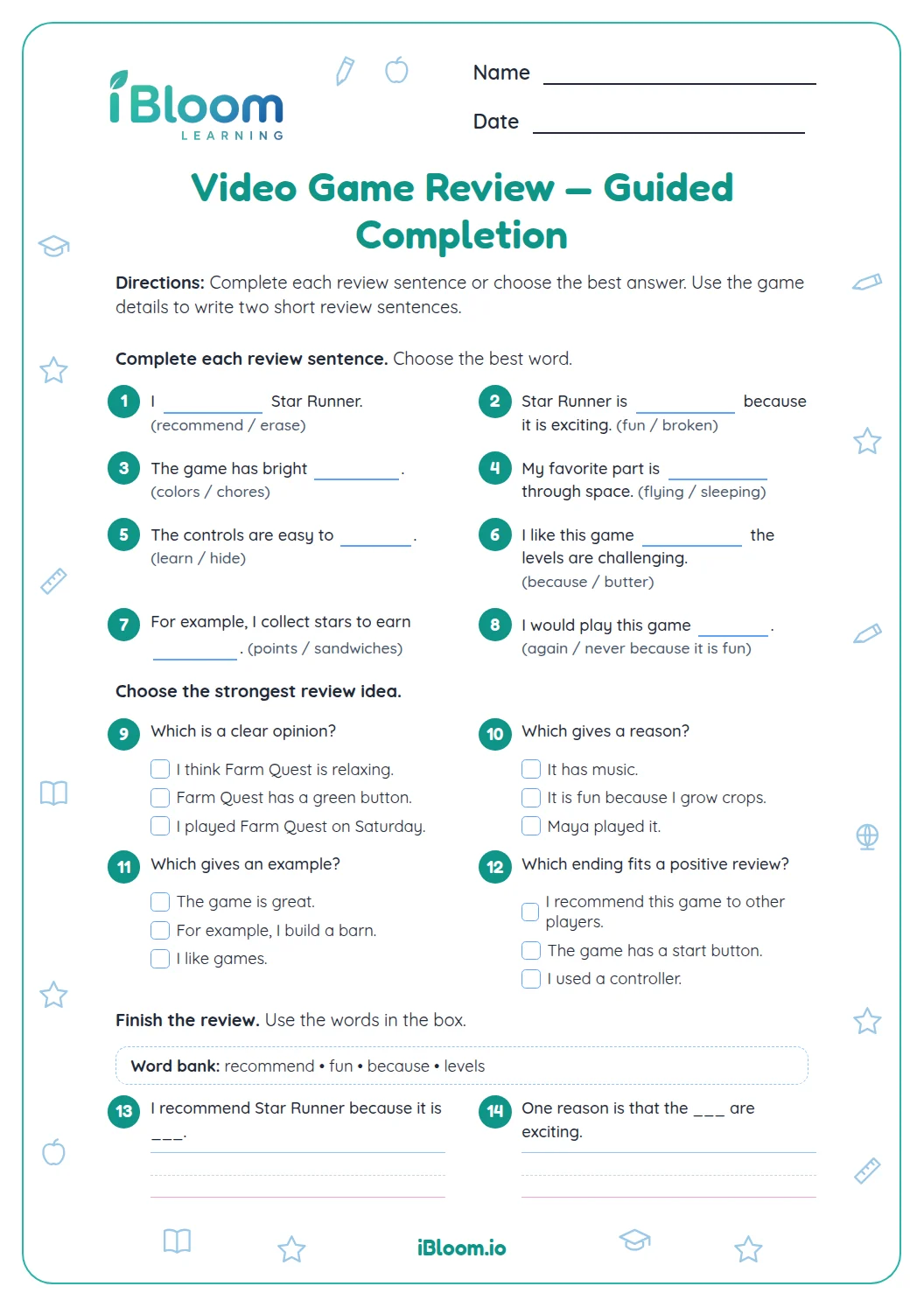
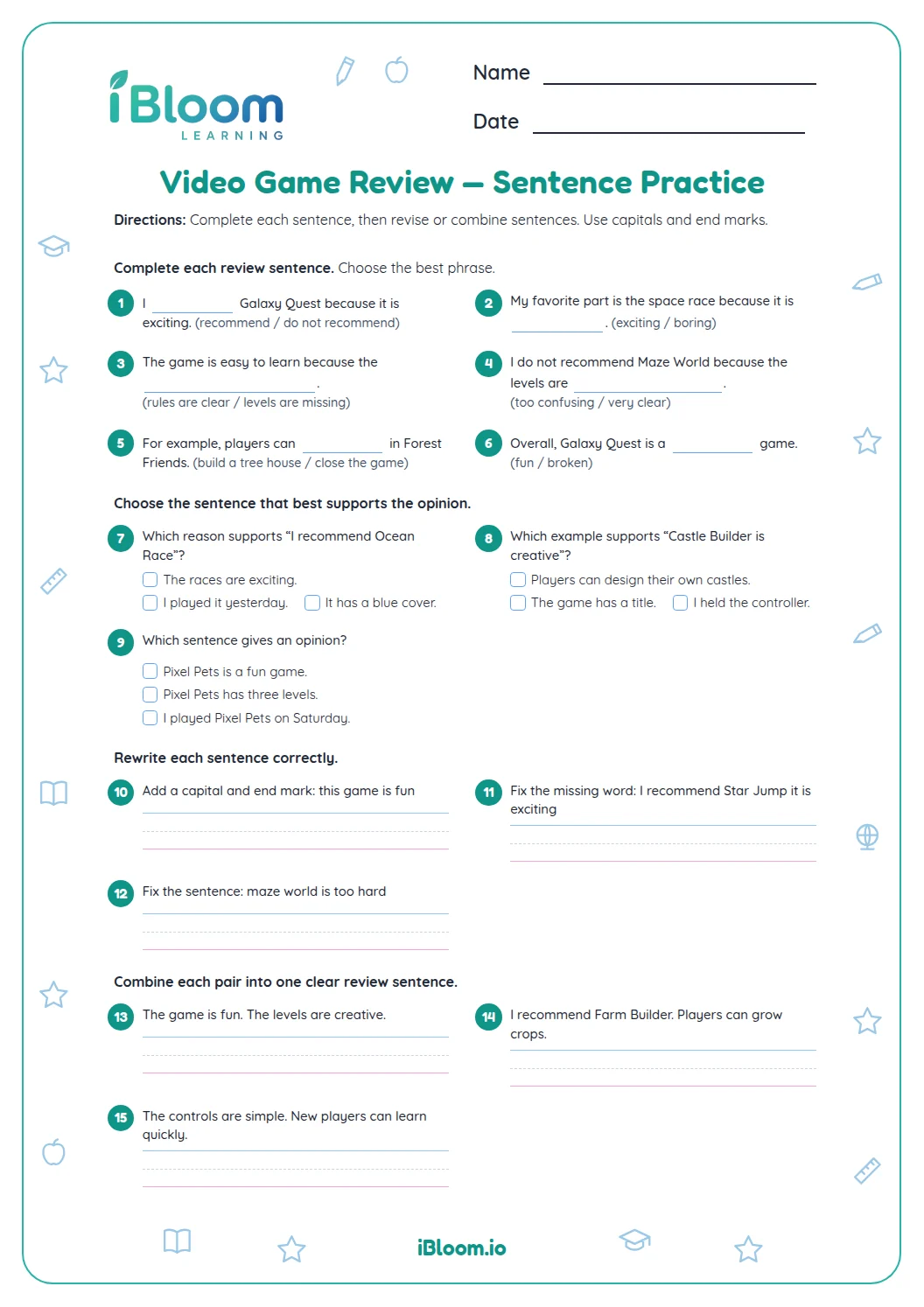
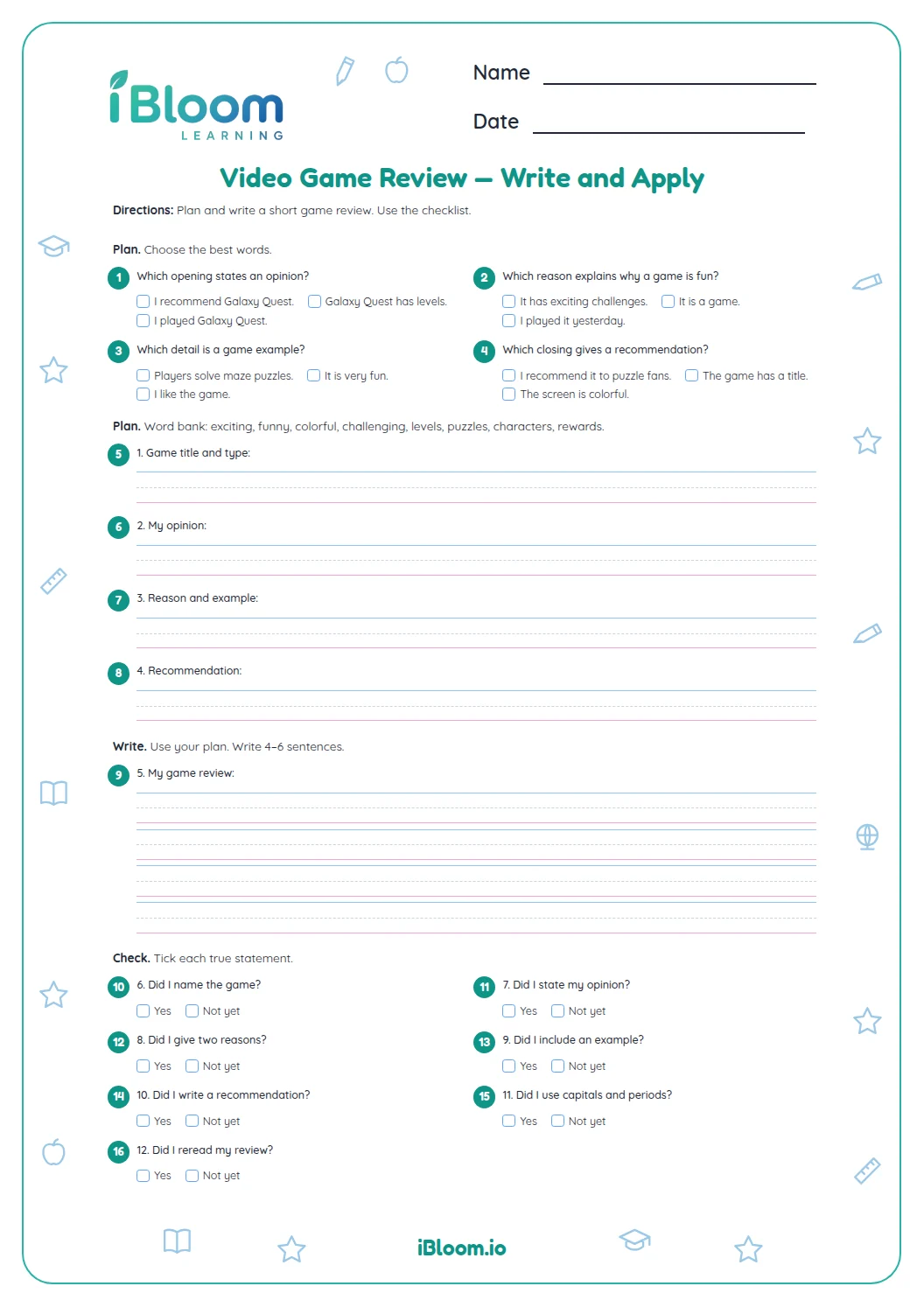
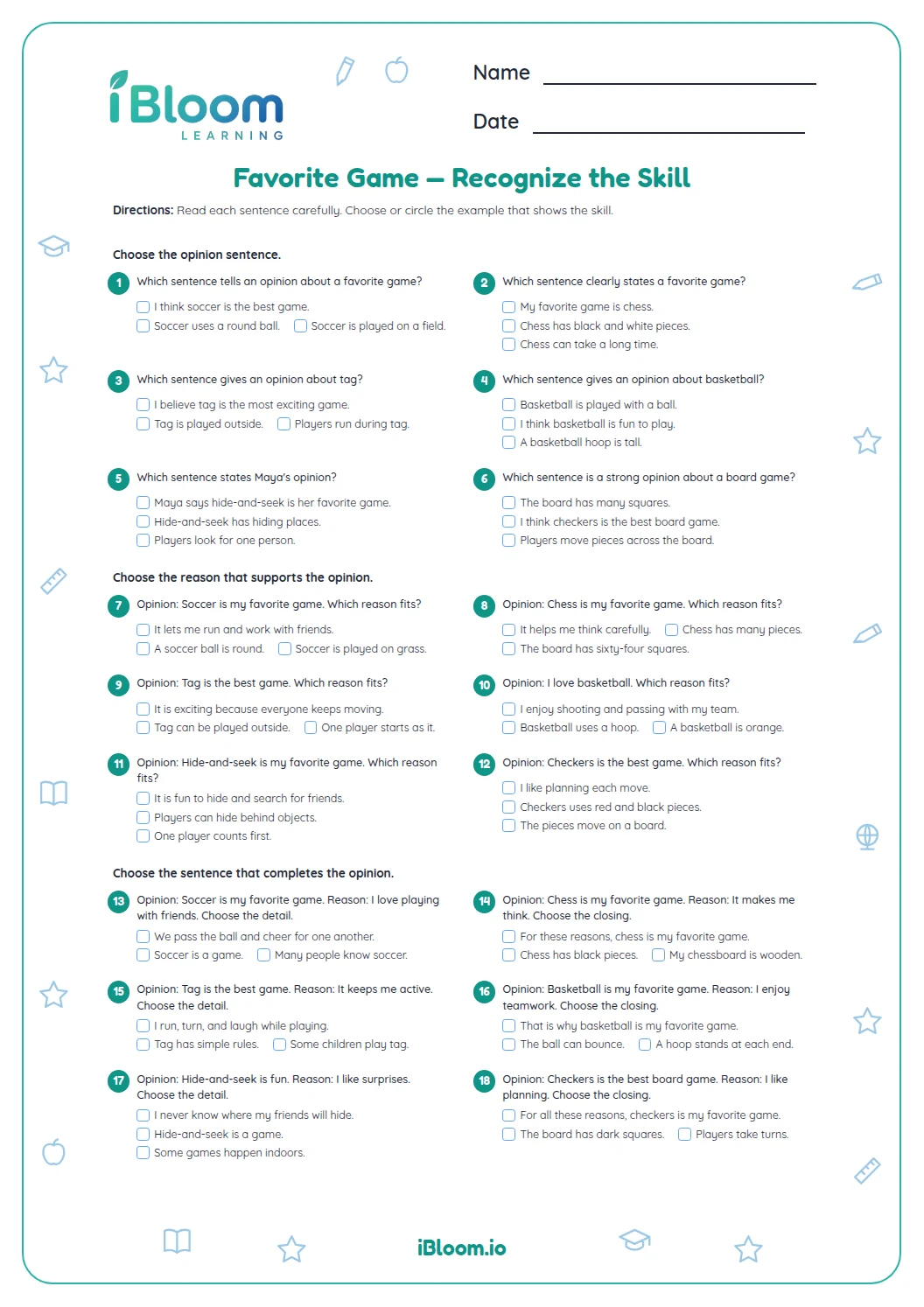
This Grade 3 worksheet helps students recognize three jobs a sentence can do in a video game review: state a viewpoint, explain why, or give a specific example. Students read 14 short sentences about fictional games and select Opinion, Reason, or Example. A separate answer key lists each label. Signal phrases help, but students should also check what the full sentence contributes.
How can you spot an opinion in a review?
Each of the 14 fictional game-review sentences has one main job: state a viewpoint, explain why, or give a specific instance. Students choose one label per sentence. Words such as “because” or “during level two” can help, but the full meaning matters too.
- 1“In one round, my robot crossed three bridges.”
- 2This names one particular event from play.
- 3Choose Example.
What makes a reason support an opinion?
A reason explains why a reviewer likes or recommends something. “The puzzles make me think carefully” gives a reason; it tells what makes the game appealing. A sentence about one particular puzzle or round is an example.
How do facts and examples help a review?
The questions use fictional game titles and review details. Students distinguish judgments such as “exciting” from explanations and specific events. Each sentence is intended to do one job so students can check their choices against the separate key.
How to use this worksheet
- 1Read the whole mini review.
- 2Find words that state a view, such as “I like” or “I recommend.”
- 3Look for a reason that explains the view.
- 4Separate checkable facts and example details from a reviewer’s opinion.
- 5Notice linking words such as “because.”
- 6Use the answer key to review the review parts.
Common mistakes and quick fixes
The mistake
Choosing a game detail as the opinion.
The fix
Ask which words tell what the reviewer thinks or recommends.
The mistake
Calling “because” itself the reason.
The fix
Read the words after because; they explain why.
The mistake
Choosing a vague statement such as “It is good” as strong support.
The fix
Look for a specific game detail that explains the opinion.
What to practice next
Make more practice
Further reading
Questions parents and teachers ask
What is an opinion in a game review?
Students read brief statements from fictional video-game reviews and label each one Opinion, Reason, or Example. The categories distinguish a reviewer’s view from a supporting explanation or a specific detail. For instance, “I recommend this game” states a view, while “For example, the first level has a bridge” gives an example.
How are facts different from opinions?
An opinion states what a reviewer thinks or recommends. A reason explains why the reviewer holds that view. An example gives a specific detail, often introduced by “For example,” to show what the reviewer means. The worksheet includes all three kinds of sentence so students can compare their different roles.
What does because do in a review?
There are fourteen multiple-choice questions, and each offers the same three categories: Opinion, Reason, and Example. The two worksheet pages use fictional game reviews, and the separate two-page answer key identifies each sentence’s role. Children select one label per sentence rather than writing a full review.
How many questions are on this sheet?
Ask what the sentence contributes to a review. If it tells what the writer thinks, it is an opinion; if it explains why, it is a reason; if it gives one specific instance, it is an example. Then compare with the key and ask which words helped identify the role.