
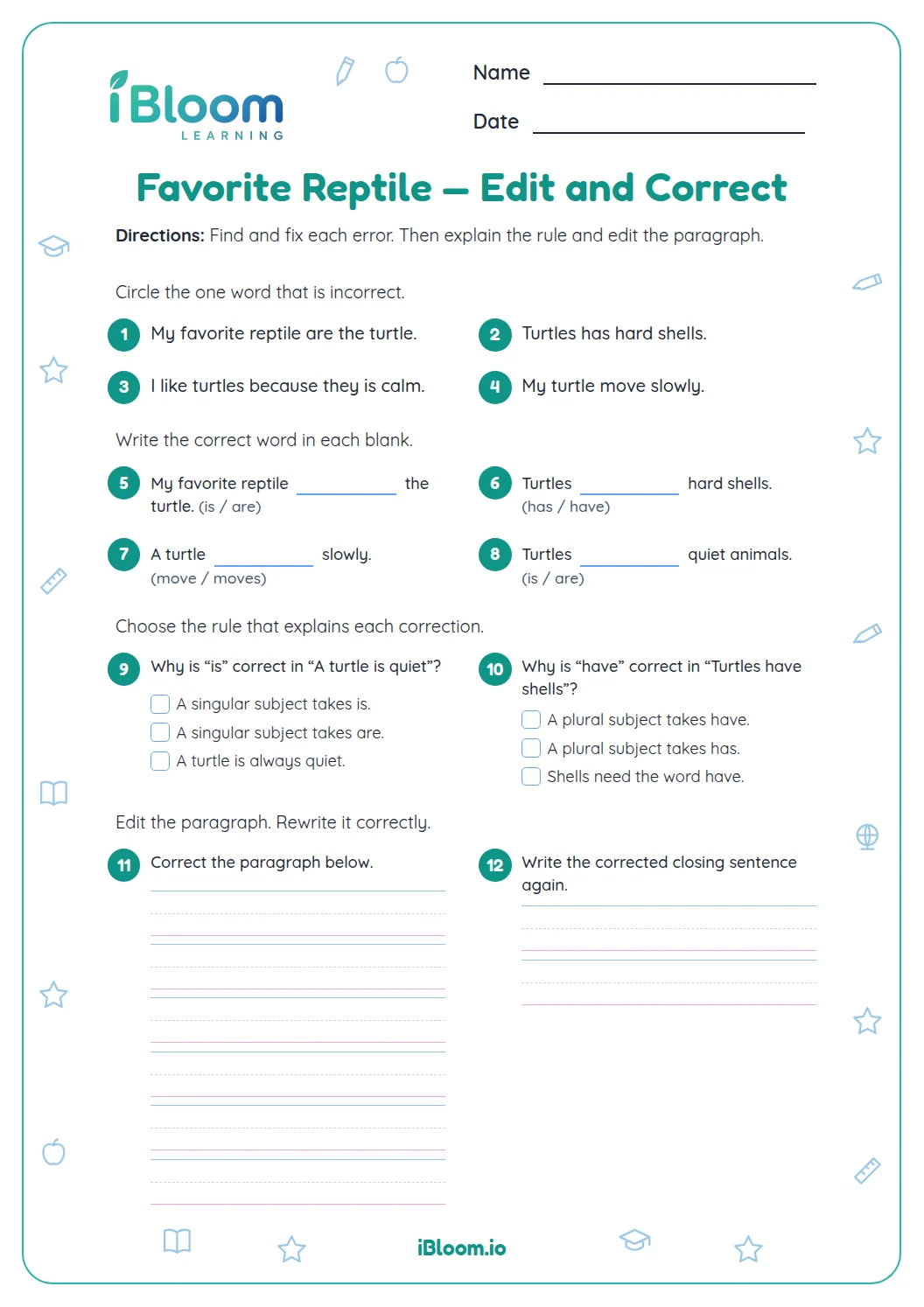
About this worksheet
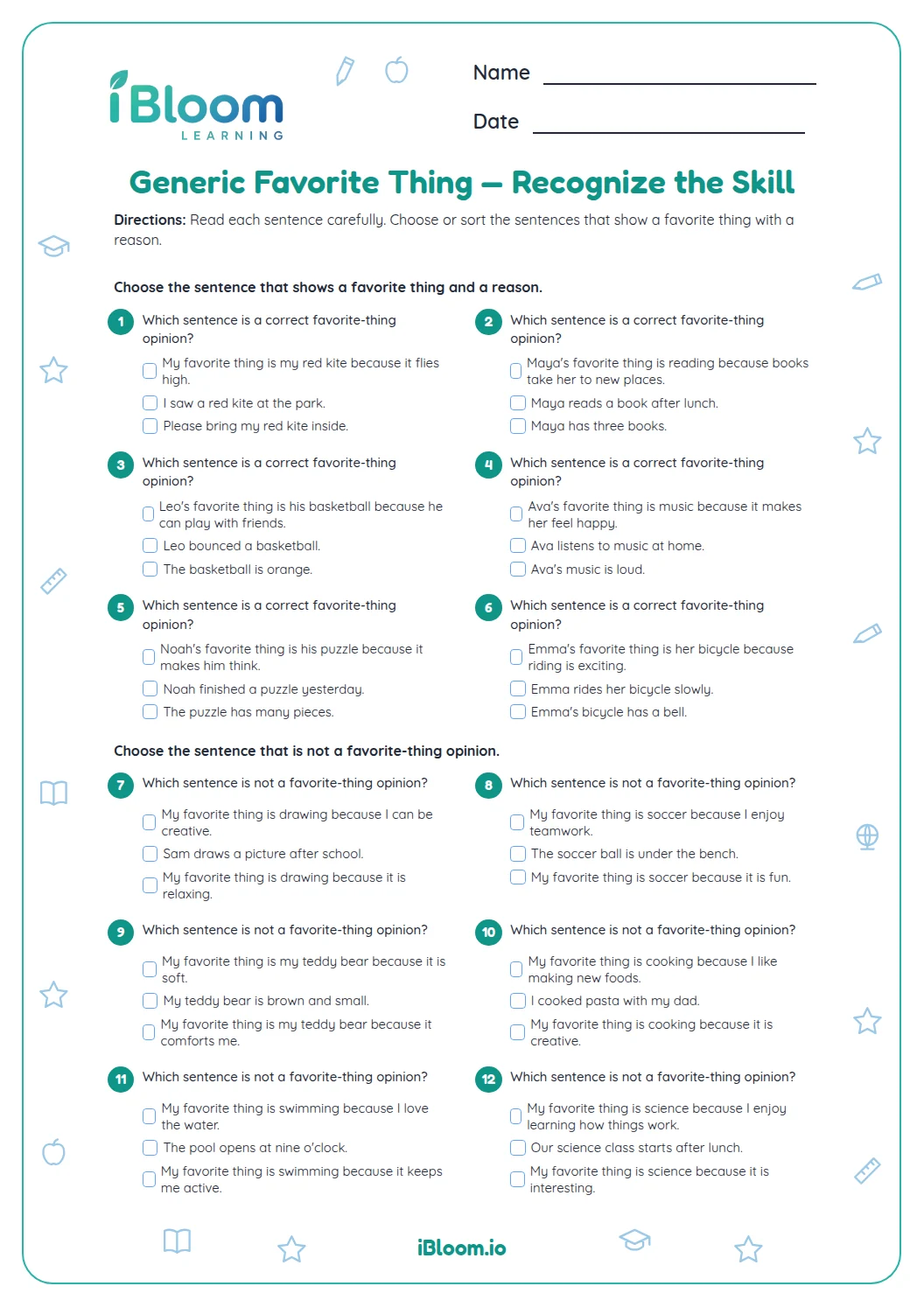
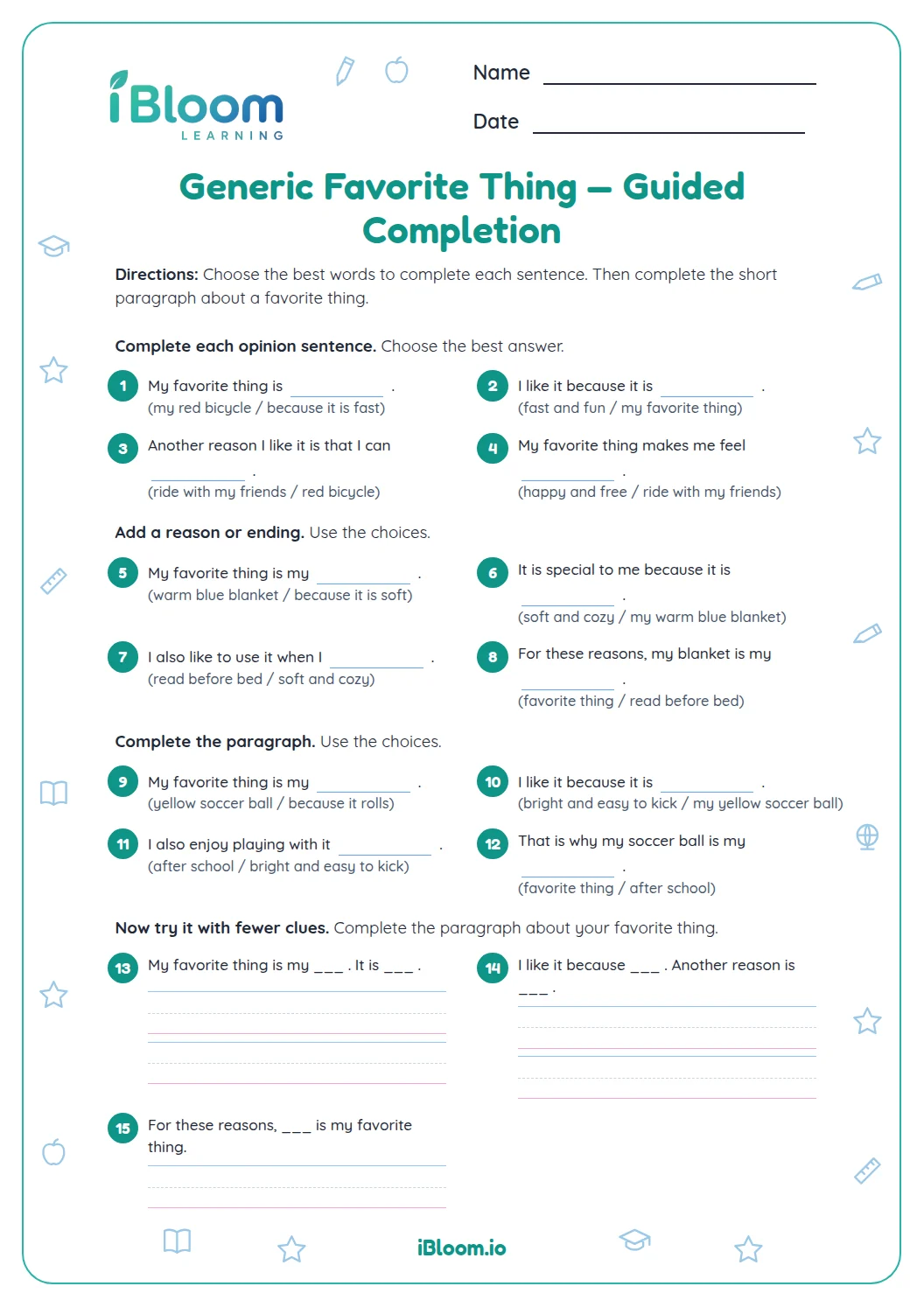
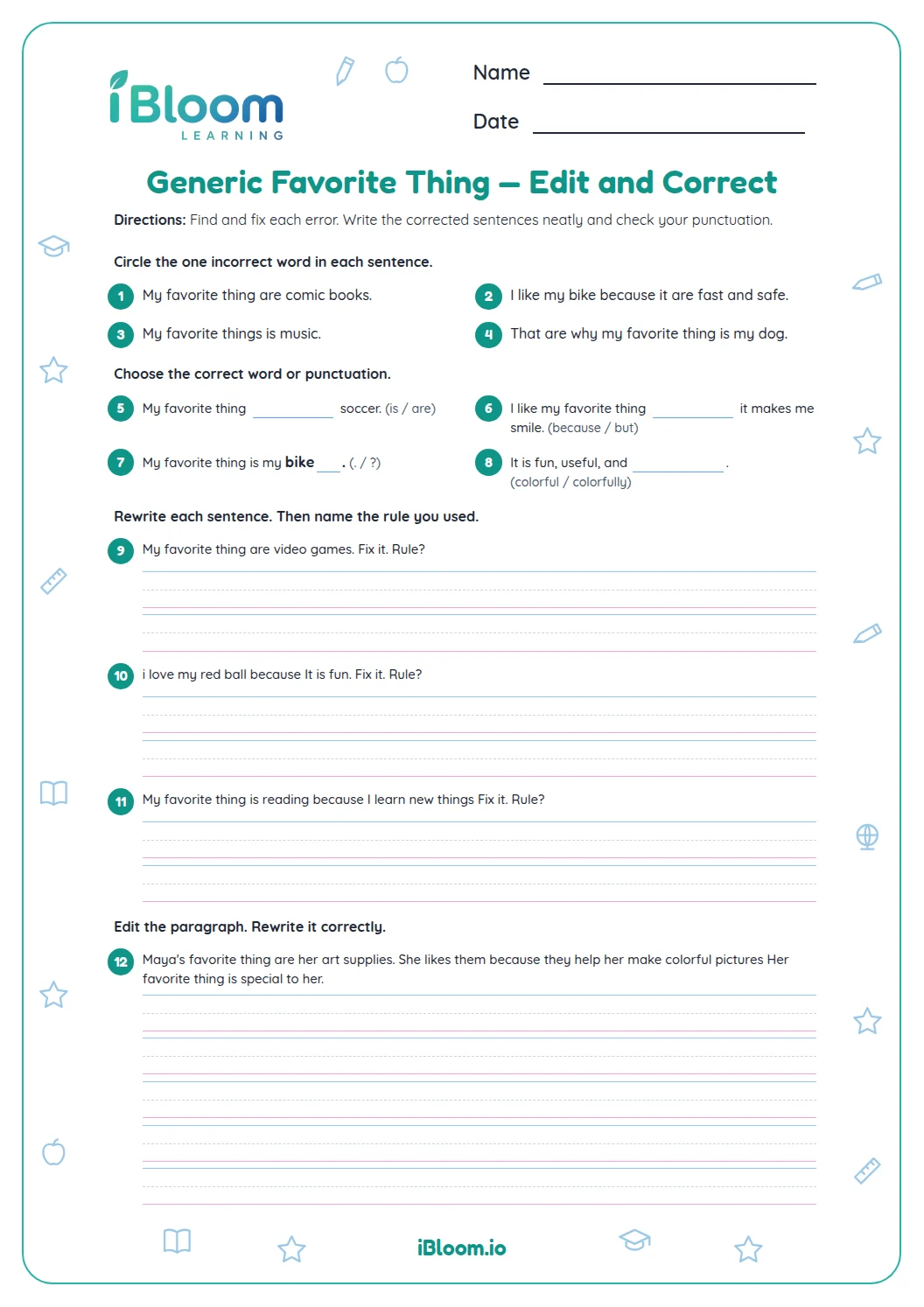
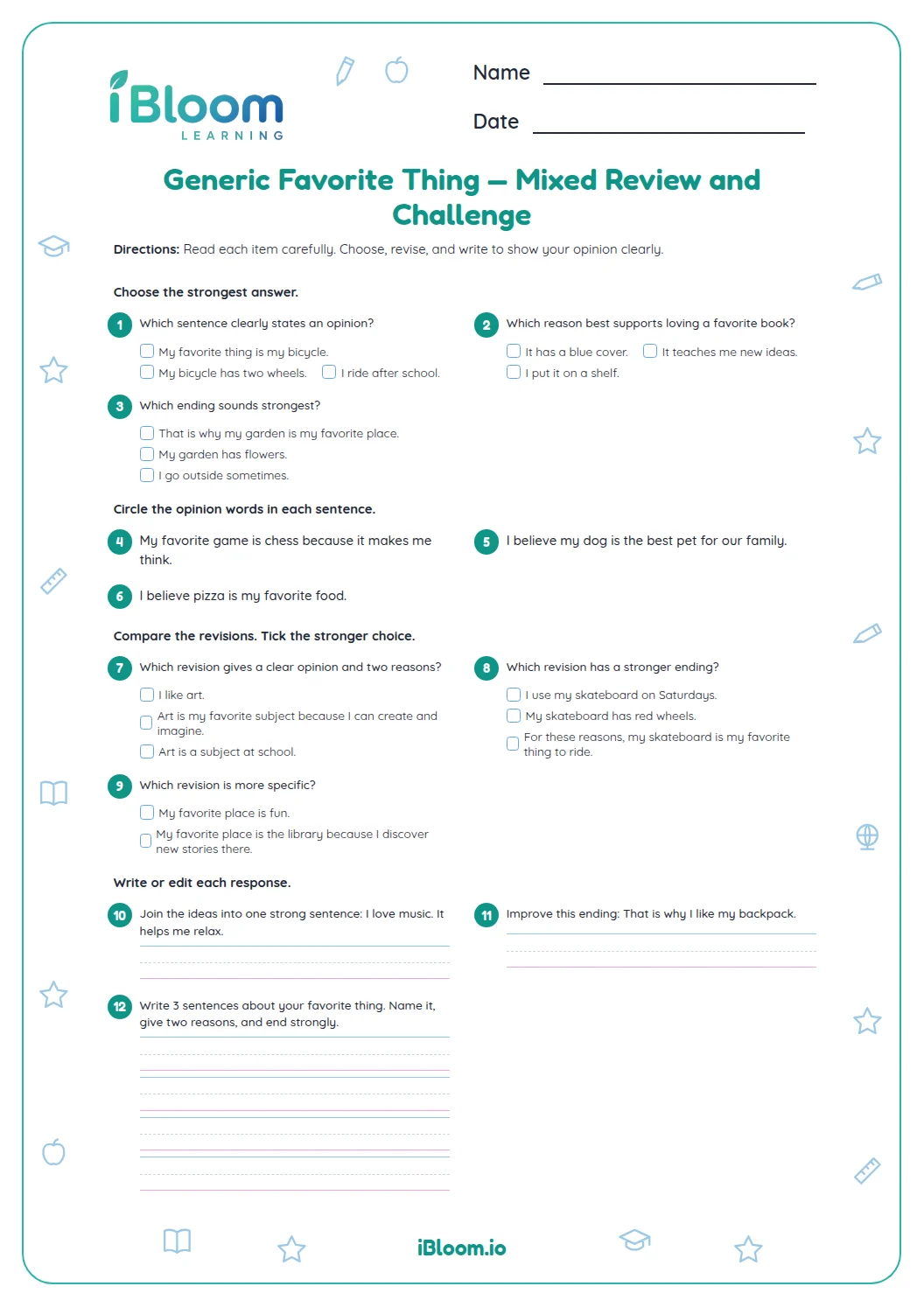
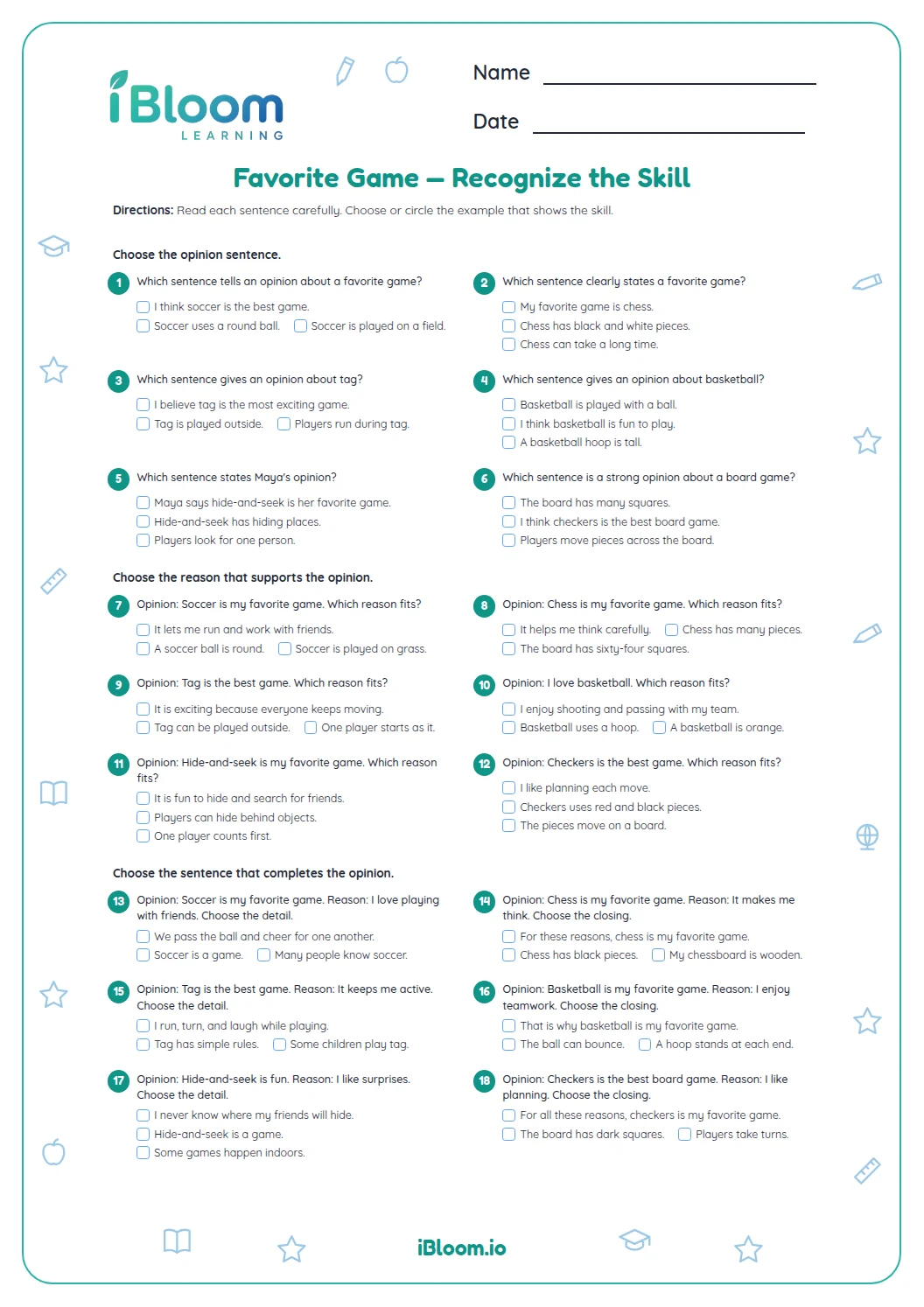
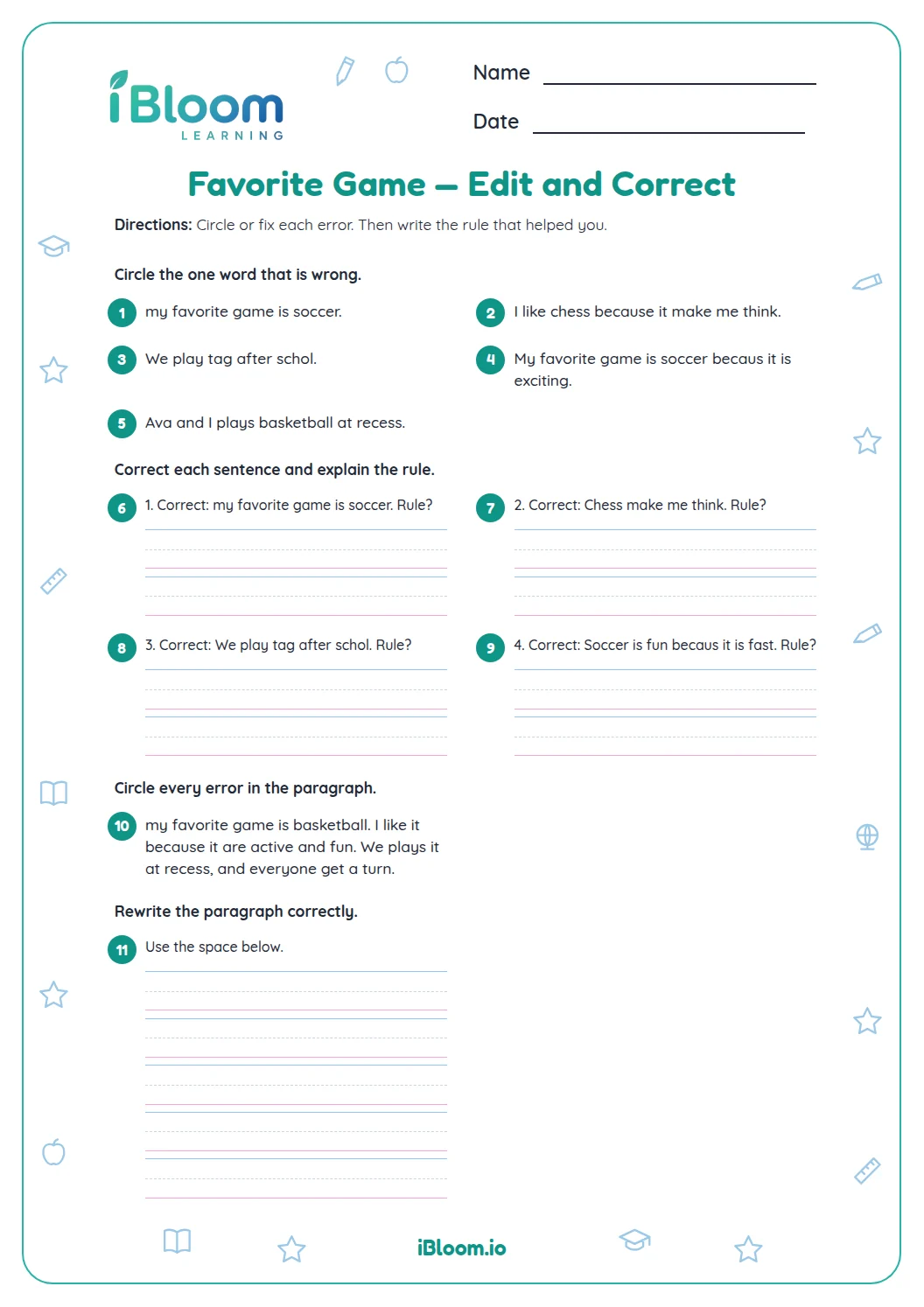
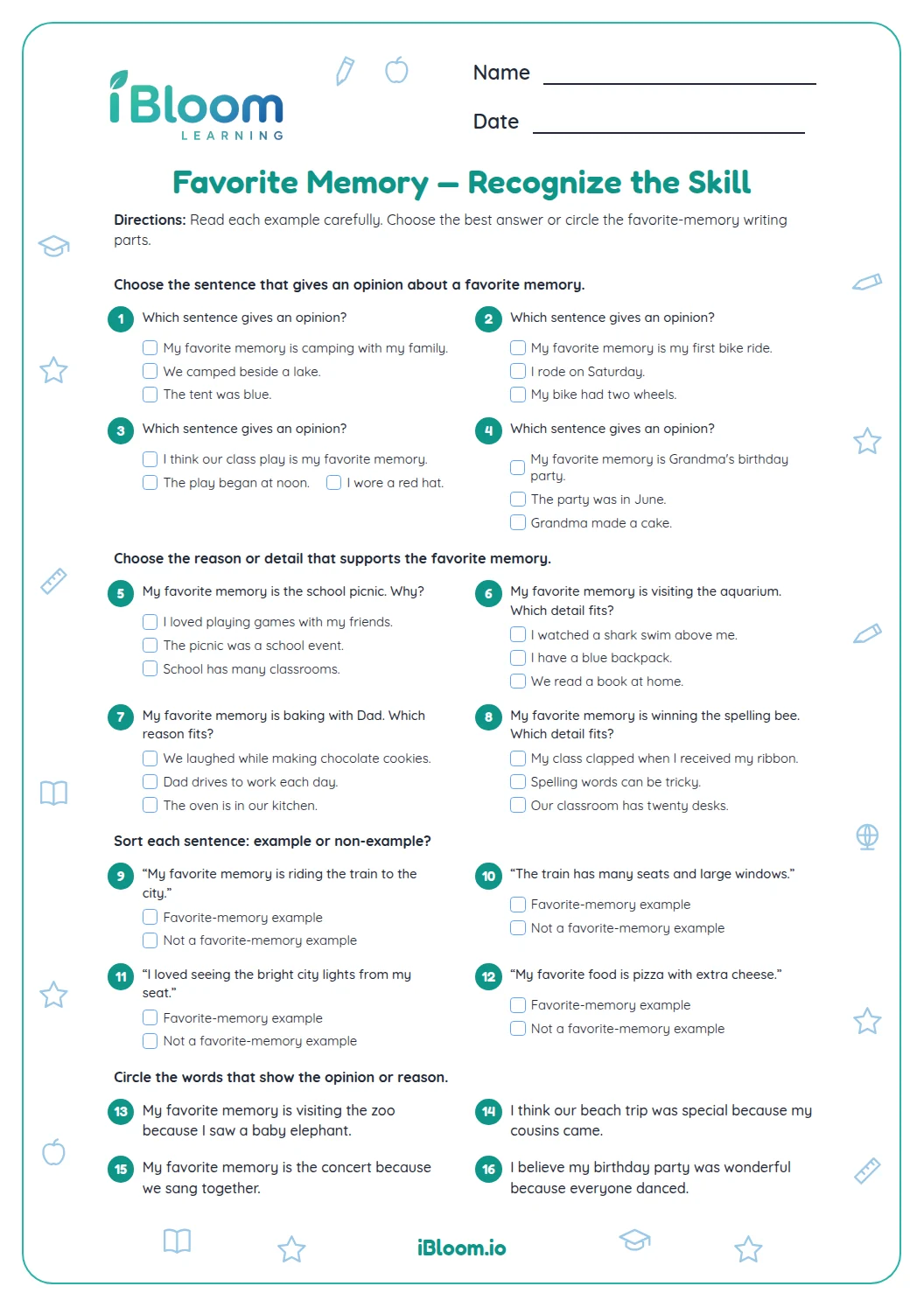
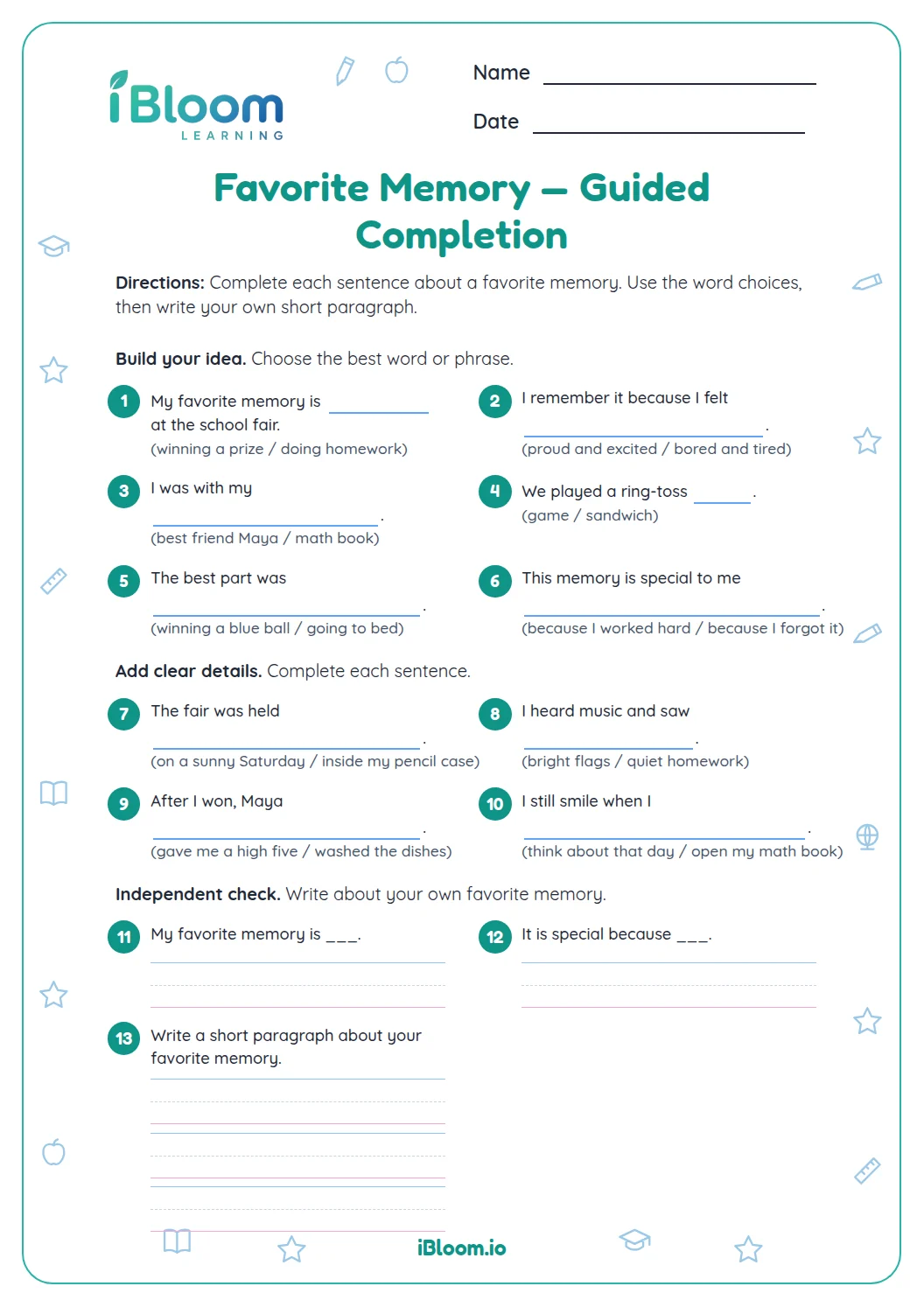
This printable helps Grade 3 writers practice opinion writing through short prompts about favorite things. Learners recognize opinions and reasons, choose linking words, and write their own preference with a supporting reason. This practices CCSS W.3.1, supporting a point of view with reasons. A separate answer key gives fixed answers and sample responses.
Aligned to W.3.1
How do you recognize an opinion and its reasons?
An opinion tells what a writer likes, prefers or believes. A reason explains why. A detail should connect directly to that reason.
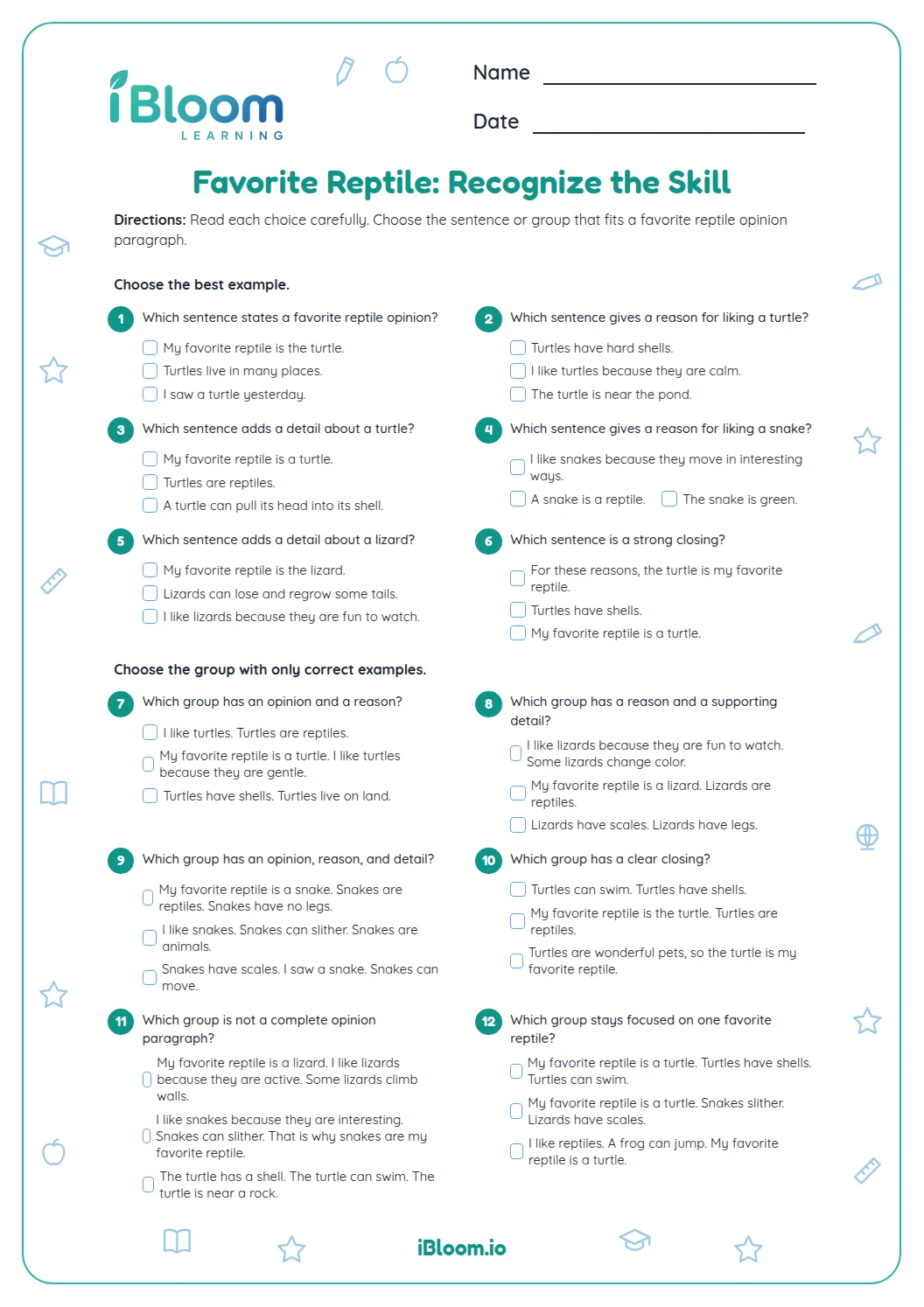
- 1“My favorite game is tag.” → Opinion
- 2“It has a bell that rings clearly.” → Supporting detail
Which words connect an opinion to its reasons?
Because introduces a reason. Also can add another connected reason. Use these words to make the relationship between ideas clear.
What makes a complete opinion sentence?
Name the preference, then add a reason that belongs with it. End with punctuation and reread to make sure the sentence expresses one complete thought.
How to work through the page
- 1Read the part heading and directions first.
- 2Answer recognition items by checking what the prompt asks.
- 3For sentence writing, include a complete thought and end punctuation.
- 4Reread each response aloud to check that it makes sense.
Common mistakes and quick fixes
The mistake
Choosing an incomplete thought because it starts with a capital letter.
The fix
Check that the sentence tells a complete idea, not only who or what.
The mistake
Adding details that do not support the prompt.
The fix
Reread the question and keep every detail connected to its topic.
The mistake
Forgetting punctuation at the end.
The fix
Read the sentence aloud, then add the punctuation that fits its purpose.
Common Core alignment
This worksheet practices the listed Common Core skill through its questions and written responses.
State a favorite and support the opinion with a reason.
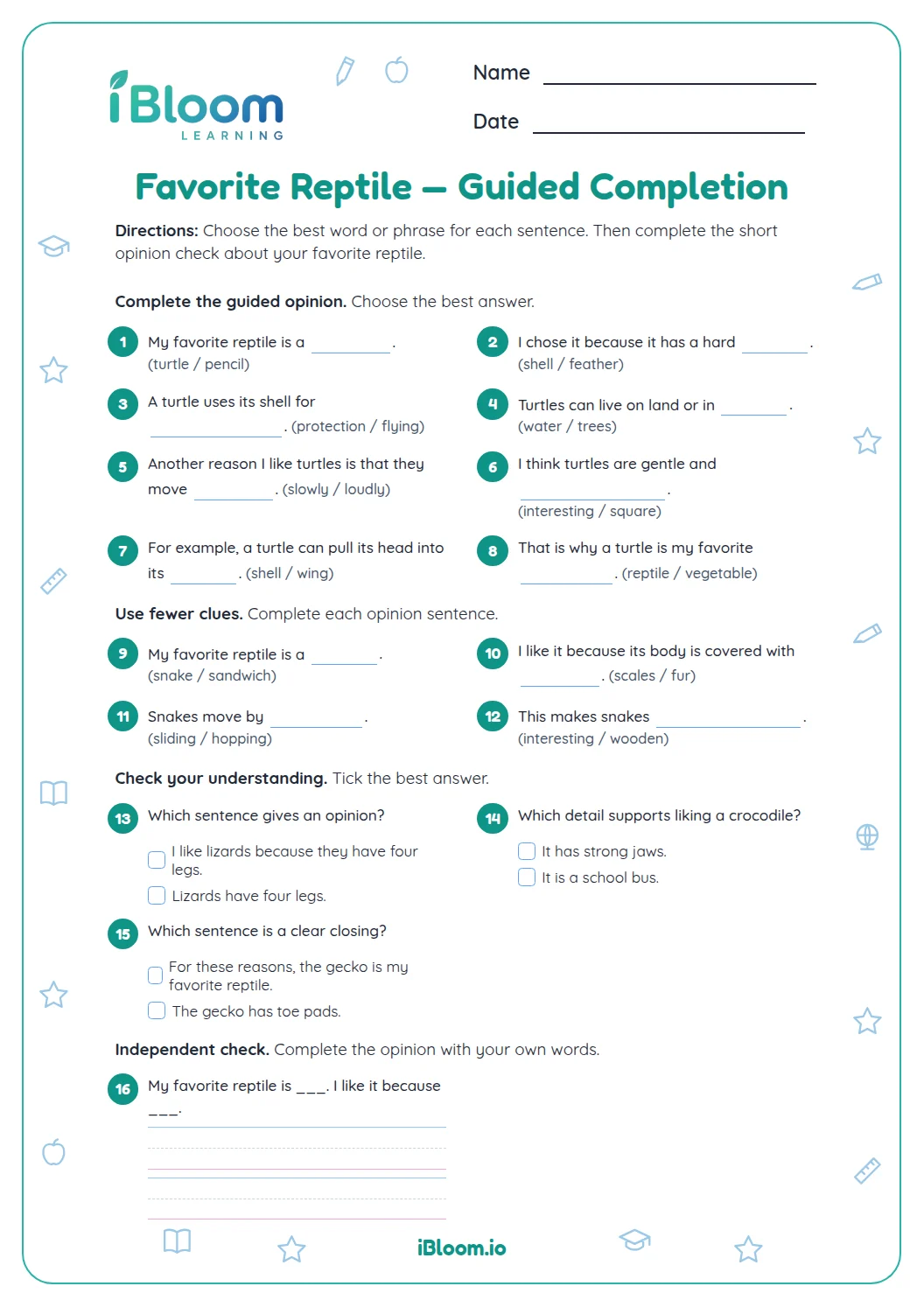
On this sheet: Part B asks writers to state a preference and give a connected reason.
Show the official wordingHide the official wording
Write opinion pieces on topics or texts, supporting a point of view with reasons.
What to practice next
Make more practice
Further reading
Questions parents and teachers ask
What should a good opinion response include?
A clear preference and at least one reason that explains it. The open-ended items accept many choices; the sample answers show one possible way to connect the opinion and reason. Invite the student to point to the words in the prompt that guided the choice or response, then reread the answer together.
Can a student choose a different favorite?
Yes. Personal preferences will vary. Check that the response names a favorite, gives a related reason when requested, and forms a complete sentence. Invite the student to point to the words in the prompt that guided the choice or response, then reread the answer together.
How does “because” help?
Because signals that the words after it explain the opinion. In question 3, it connects liking puzzles with the reason that they make the writer think. Invite the student to point to the words in the prompt that guided the choice or response, then reread the answer together.
What is the difference between an opinion and a fact?
An opinion expresses a preference or belief; a fact can be checked. The worksheet contrasts “I like soccer best” with the checkable shape of a soccer ball. Invite the student to point to the words in the prompt that guided the choice or response, then reread the answer together.
How can students improve a short opinion?
Add a relevant reason and a detail. Instead of only naming a favorite, explain what makes it enjoyable, useful or special to the writer. Invite the student to point to the words in the prompt that guided the choice or response, then reread the answer together.