
About this worksheet
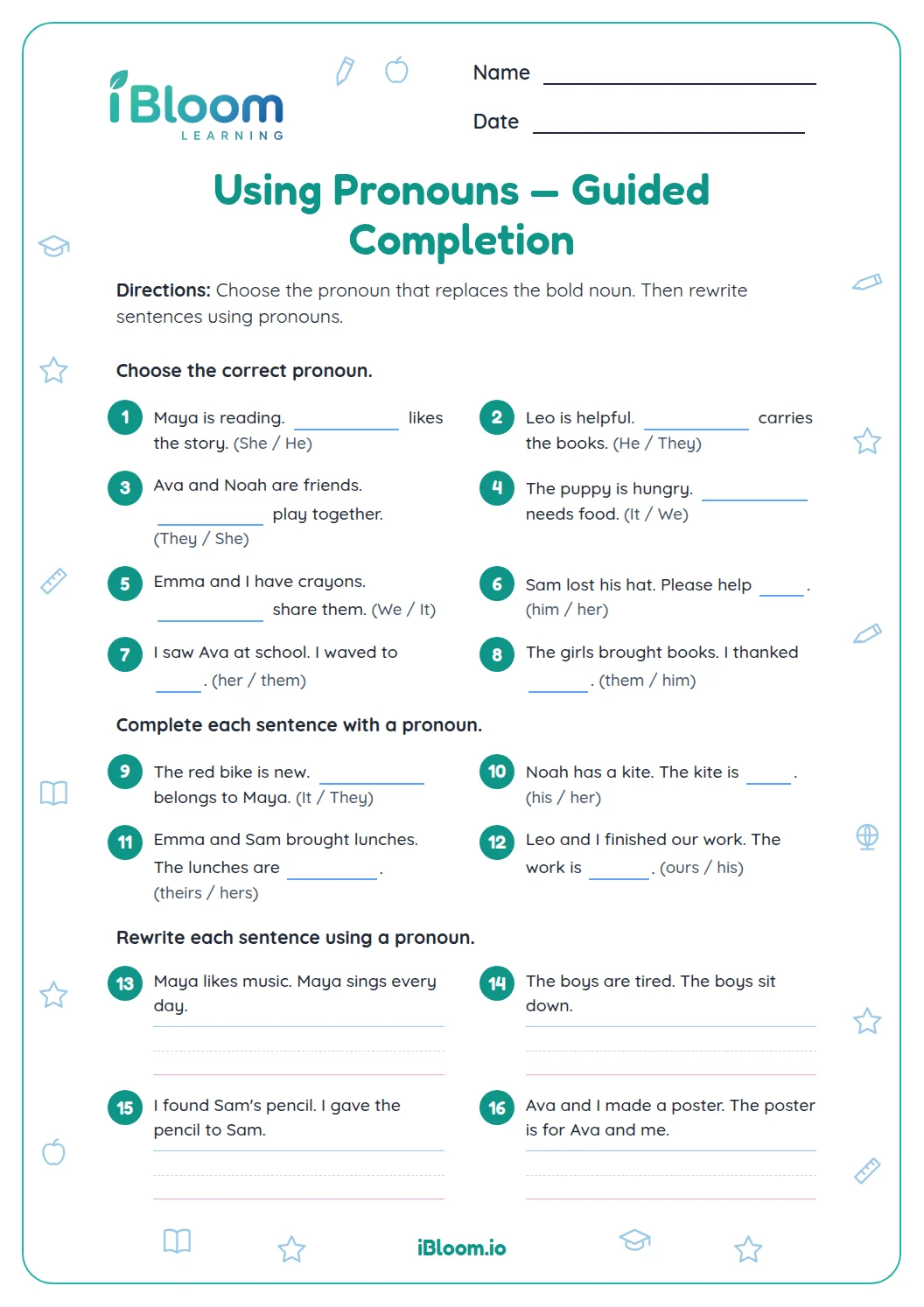
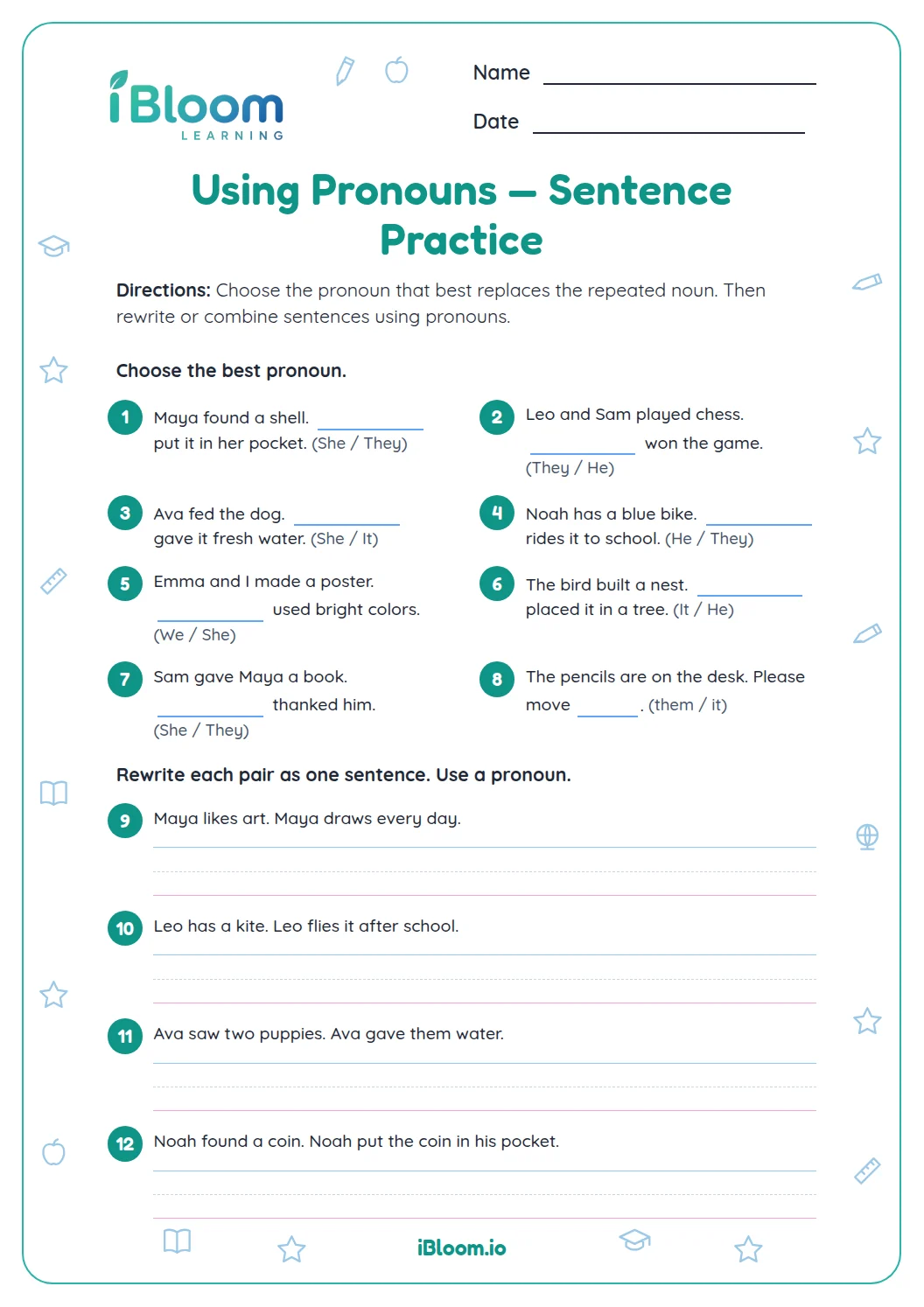
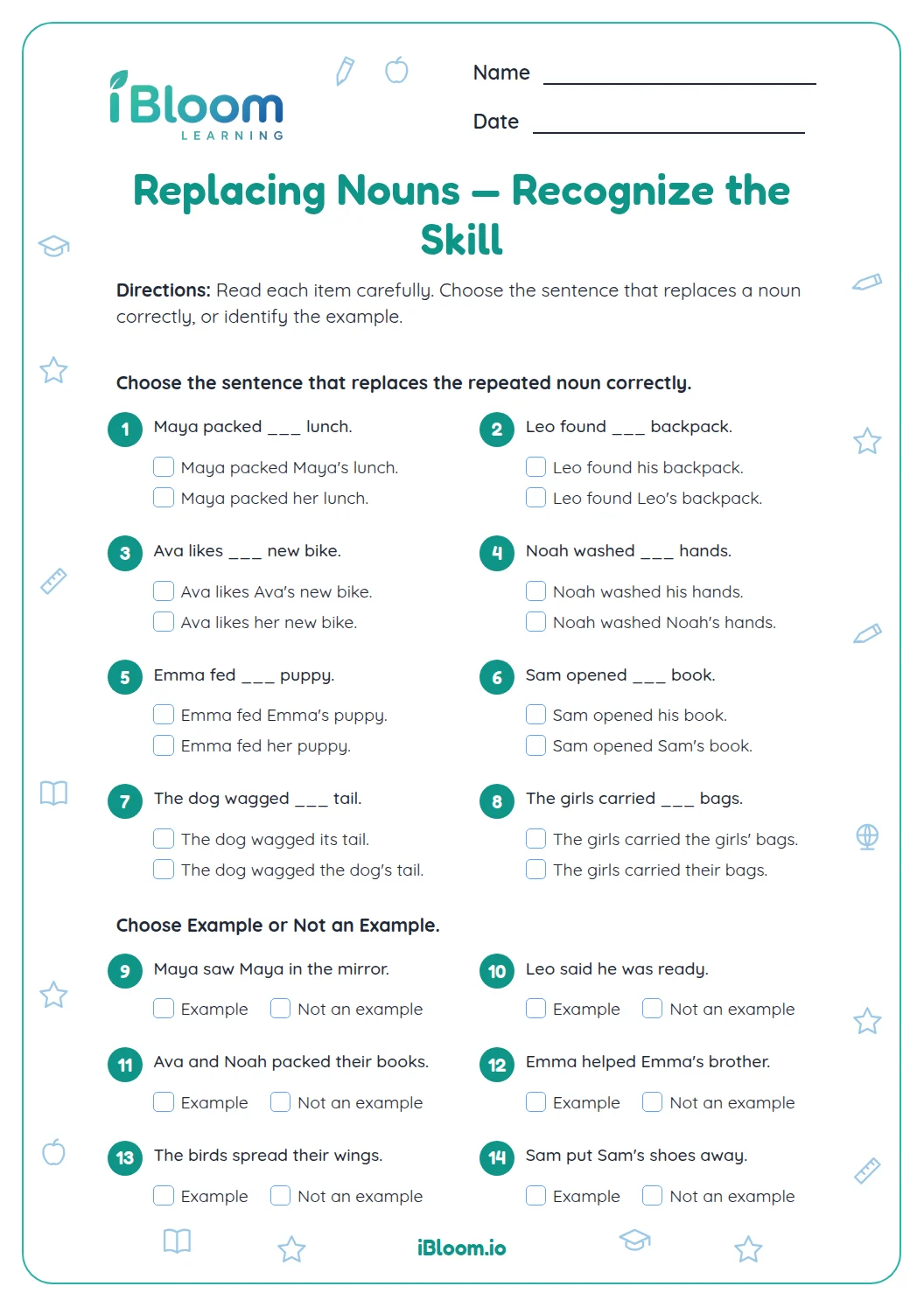
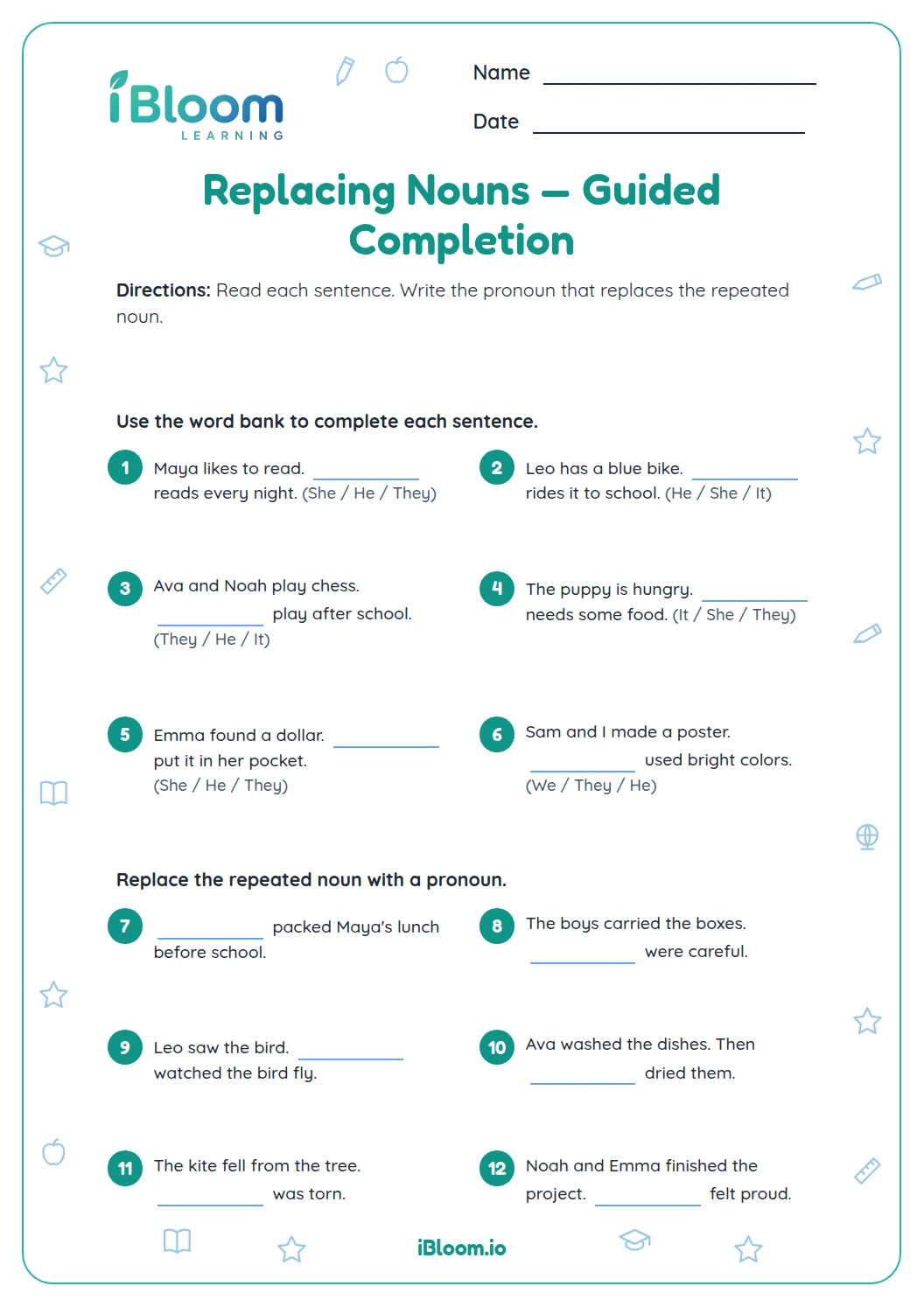
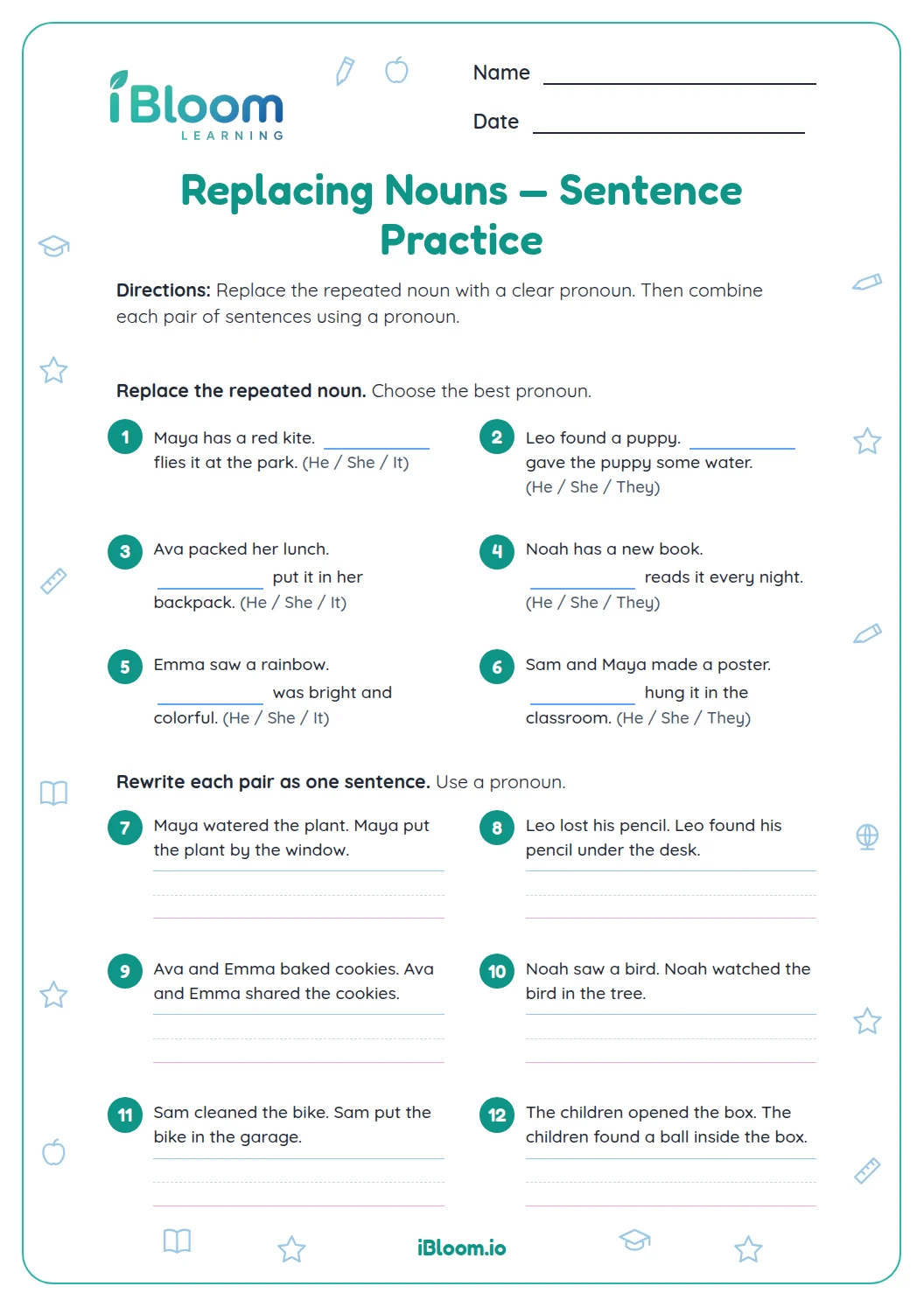
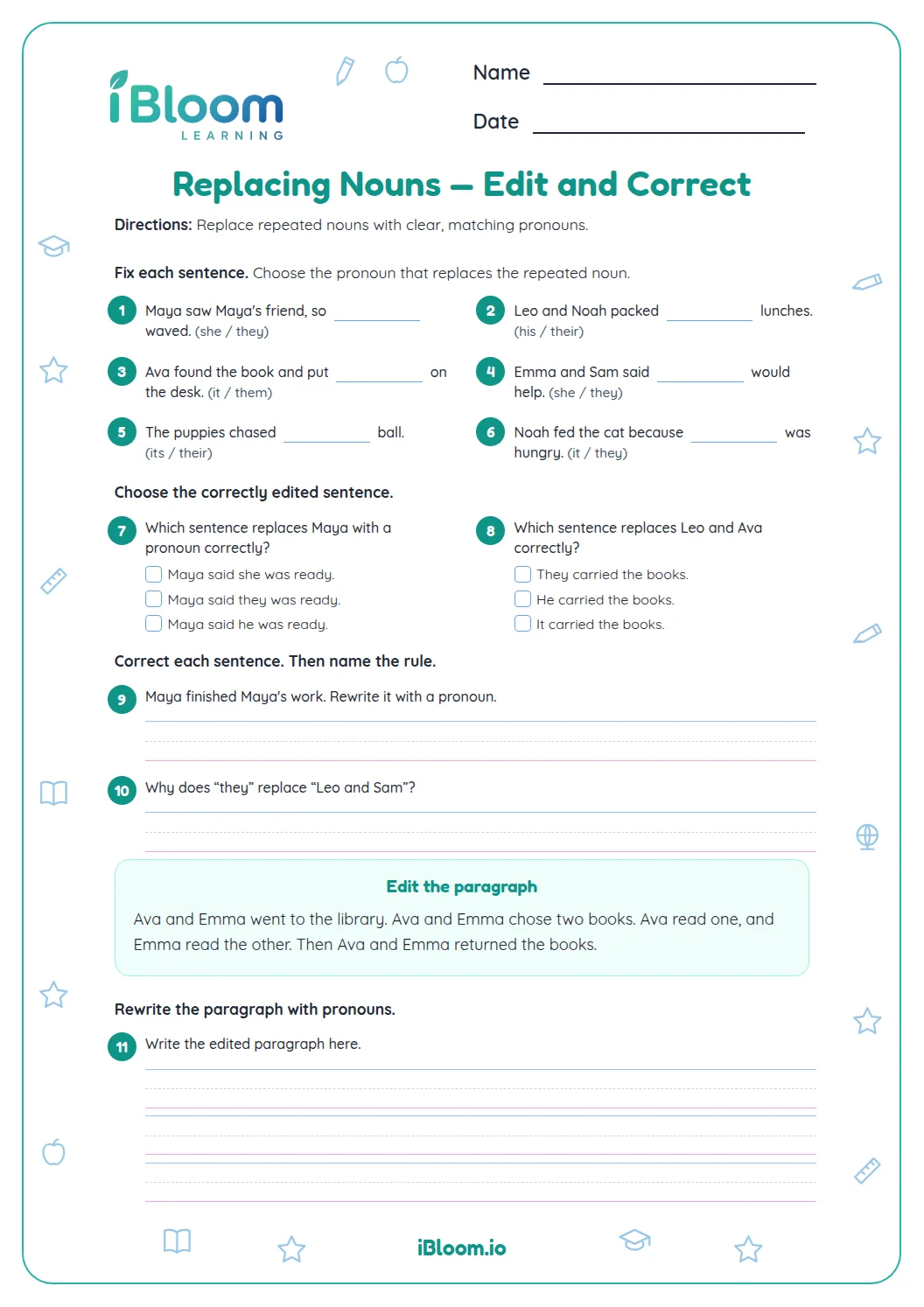
This worksheet helps Grade 3 students recognize pronouns and connect them to the nouns they replace. Part A asks children to locate a pronoun already used in a sentence. Part B asks them to choose a pronoun that matches a named person, group, or thing in a new sentence. The choices include singular and plural pronouns and first, second, and third person forms.
Aligned to L.3.1a
What do pronouns do?
Pronouns take the place of nouns. In “Lena packed her lunch,” her is a pronoun connected to Lena. A pronoun can name the speaker (I, we), the person spoken to (you), or someone or something being discussed (he, she, it, they).
A pronoun should make sense with the noun it replaces. A single person named Omar can be replaced by he in this worksheet sentence. A group such as the girls can be replaced by they.
What is on this worksheet?
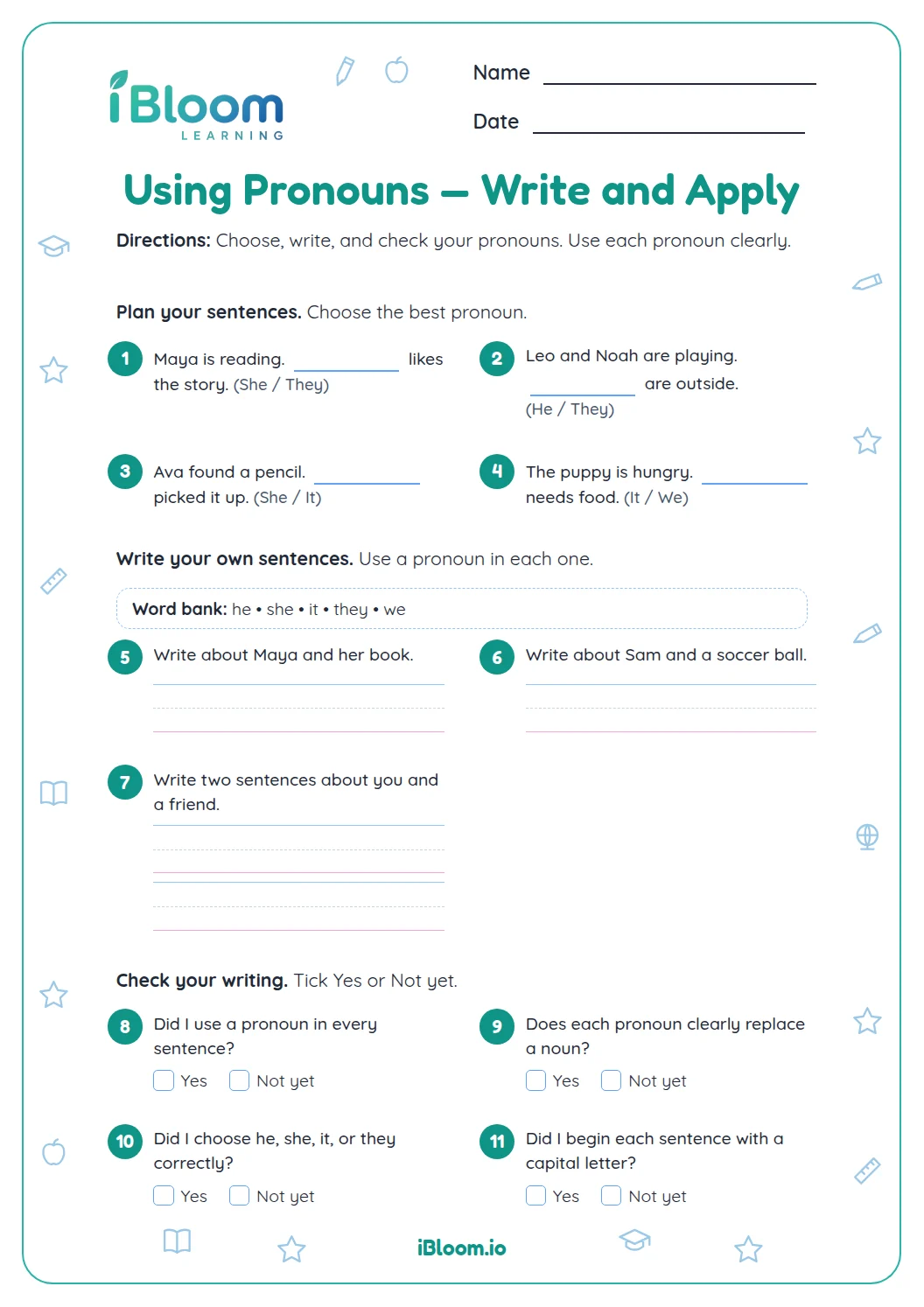
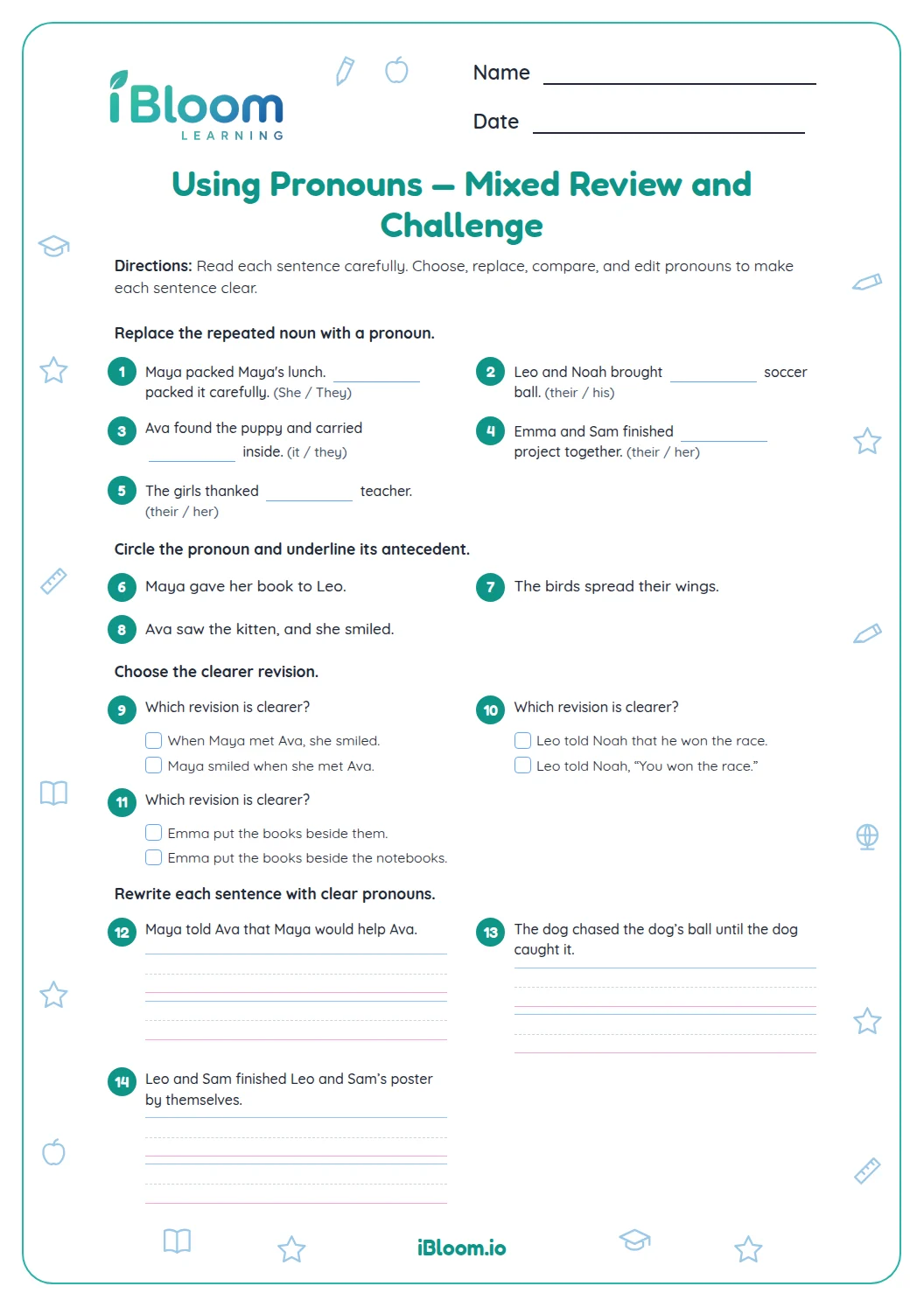
Part A has six sentences. Students find and write a pronoun in each one. Part B has nine short sentences with a named person, group, or thing and three choices. Students choose a pronoun that can take the noun’s place and still make sense in the sentence.
The questions use clear referents and familiar vocabulary. The answer key gives one intended pronoun for each item.
How to use this worksheet
- 1Read the sentence and find the person, group, or thing being discussed.
- 2For Part A, look for a word that stands in for a noun.
- 3For Part B, say the named noun in place of each choice and listen for the one that fits.
- 4Check whether the sentence is about one person, a group, or a thing.
- 5Review the answer key and ask the child to explain what noun each pronoun replaces.
Common mistakes and quick fixes
The mistake
Choosing a pronoun that does not match the number of the noun, such as they for one book.
The fix
Ask whether the named noun means one or more than one.
The mistake
Choosing a familiar pronoun without checking the sentence.
The fix
Read the full sentence with the pronoun inserted.
The mistake
Calling every short word a pronoun.
The fix
Ask which noun or noun phrase the word stands for.
Common Core alignment
This page connects the worksheet practice to the stated Common Core skill.
Explain what pronouns do in sentences.
On this sheet: Part A identifies pronouns in sentences, and Part B selects pronouns that can replace named nouns.
Show the official wordingHide the official wording
Explain the function of nouns, pronouns, verbs, adjectives, and adverbs in general and their functions in particular sentences.
What to practice next
Further reading
Questions parents and teachers ask
How can a student tell whether a word is a pronoun?
A pronoun stands for a person, group, or thing named by a noun. In a sentence, ask what person or thing the word refers to. Words such as she, it, we, and they can act as pronouns when they take a noun’s place.
What is the difference between Part A and Part B?
Part A asks students to identify a pronoun already used in a sentence. Part B gives a named person, group, or thing and asks students to choose a pronoun that fits in a new sentence. Together, the parts practice recognition and replacement.
Why does the pronoun have to match the noun?
A pronoun should refer to the same person or thing as the noun it replaces. A singular name such as Omar can be replaced with he in these examples, while a group such as the girls can be replaced with they. Read the whole sentence to check.
Can more than one pronoun replace a noun in real writing?
Sometimes context or a person’s preference affects which pronoun is appropriate. These practice items give a clear referent and answer choices to focus on matching a pronoun to the noun. In real communication, use the pronoun the person uses for themself.
What does the answer key show?
The key marks the intended sentence or pronoun for each question. For Part A, ask the student to name the noun or person the pronoun stands for. For Part B, reread the sentence with the selected pronoun to check that it fits.