


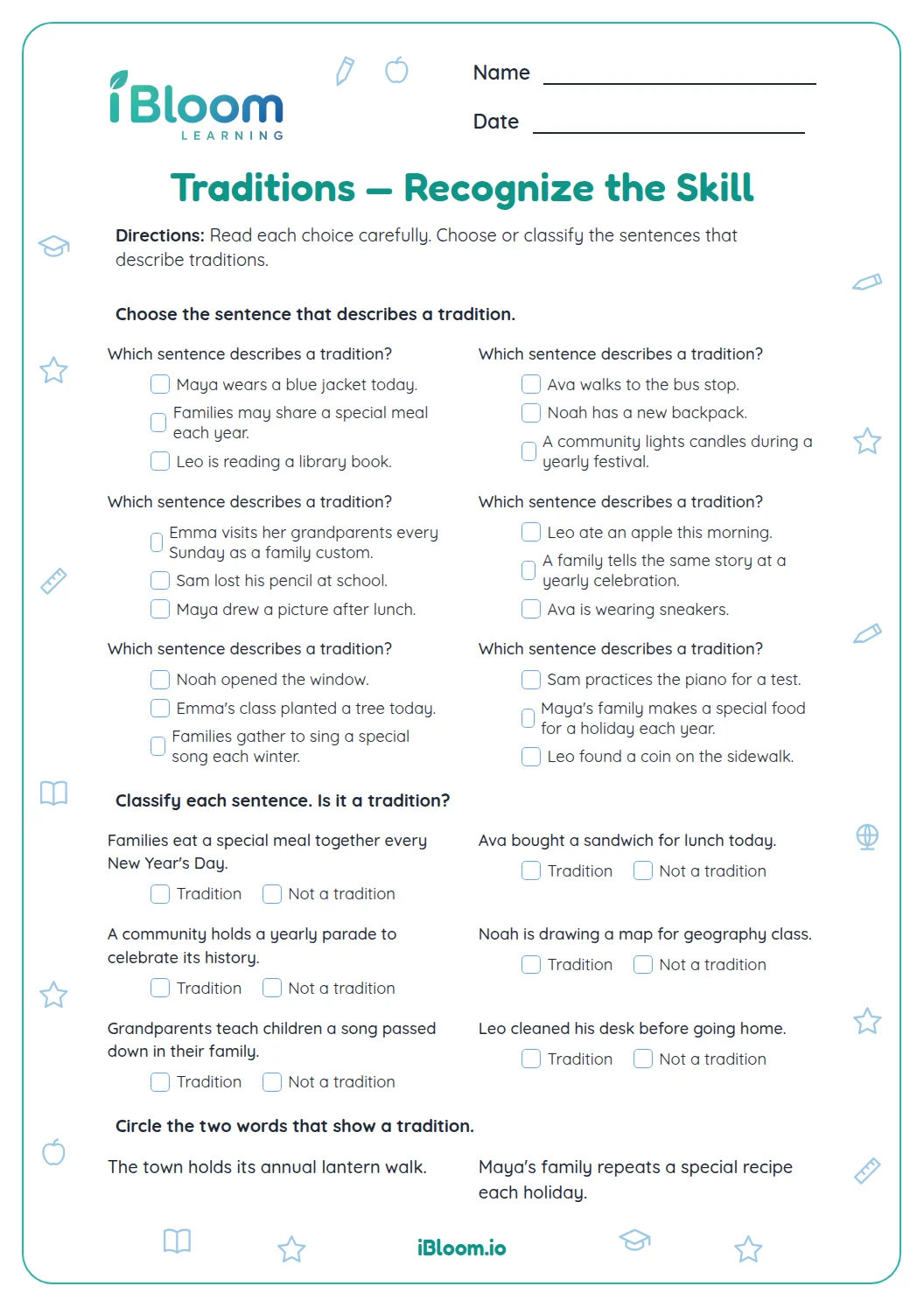
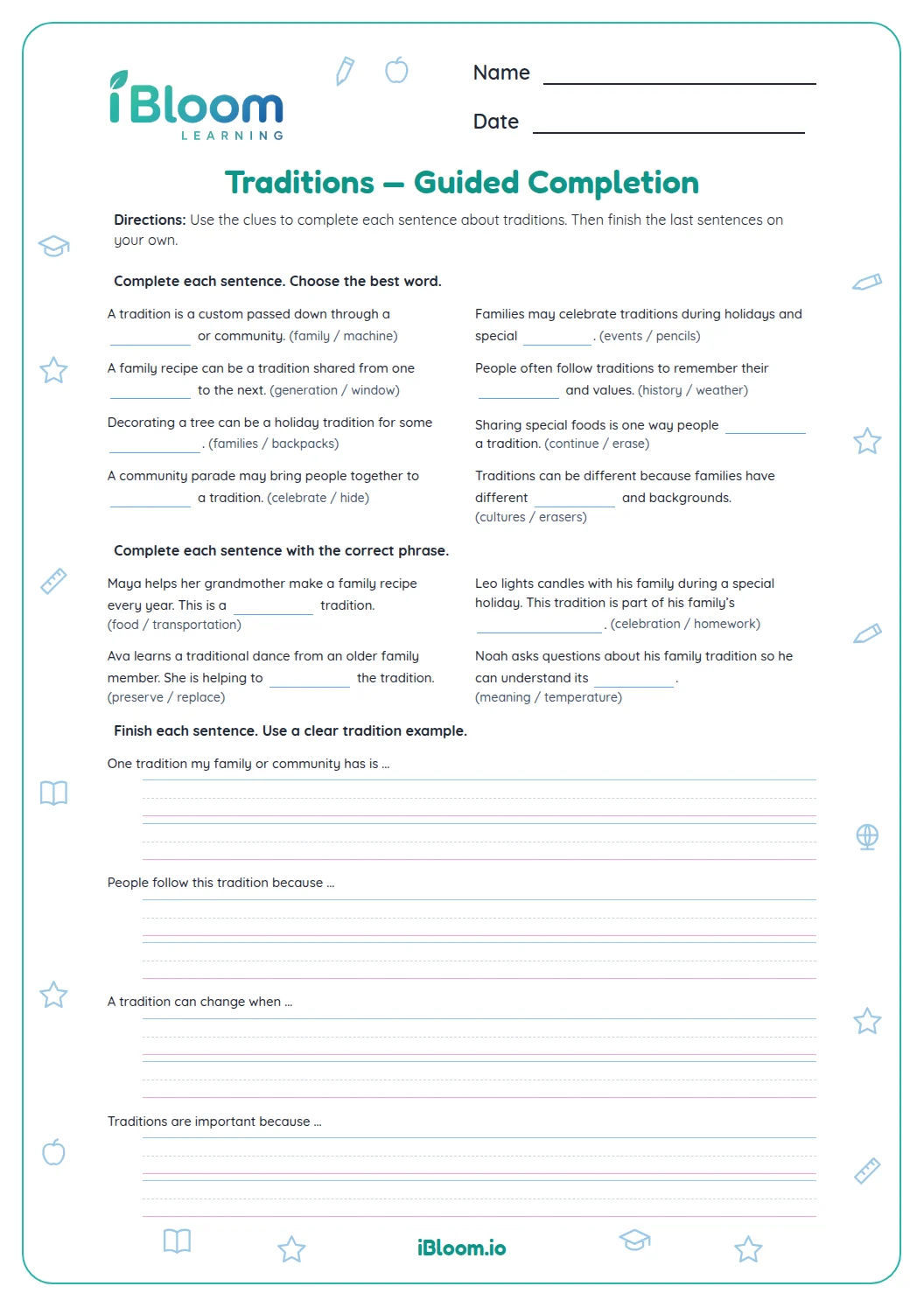


About this worksheet
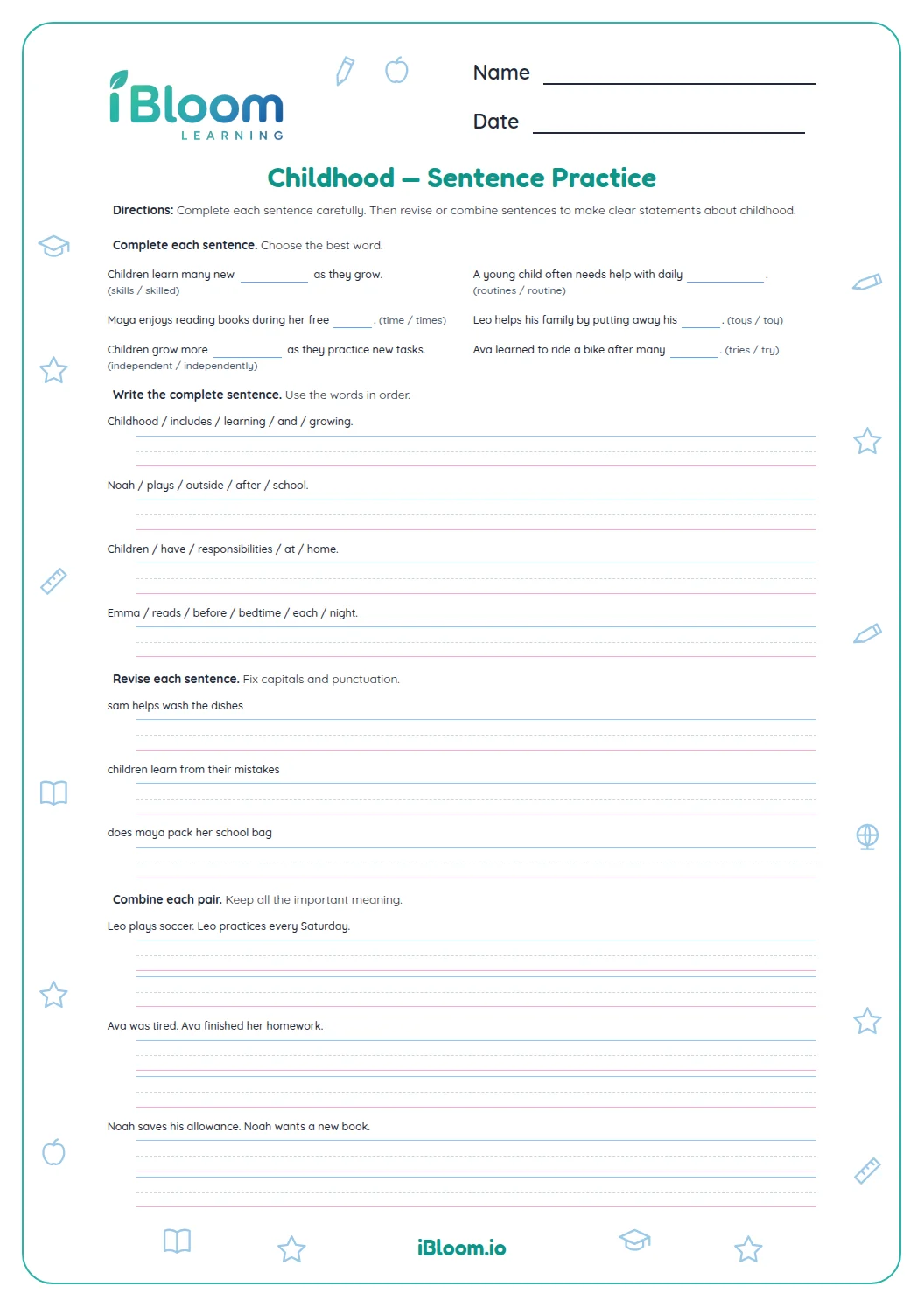
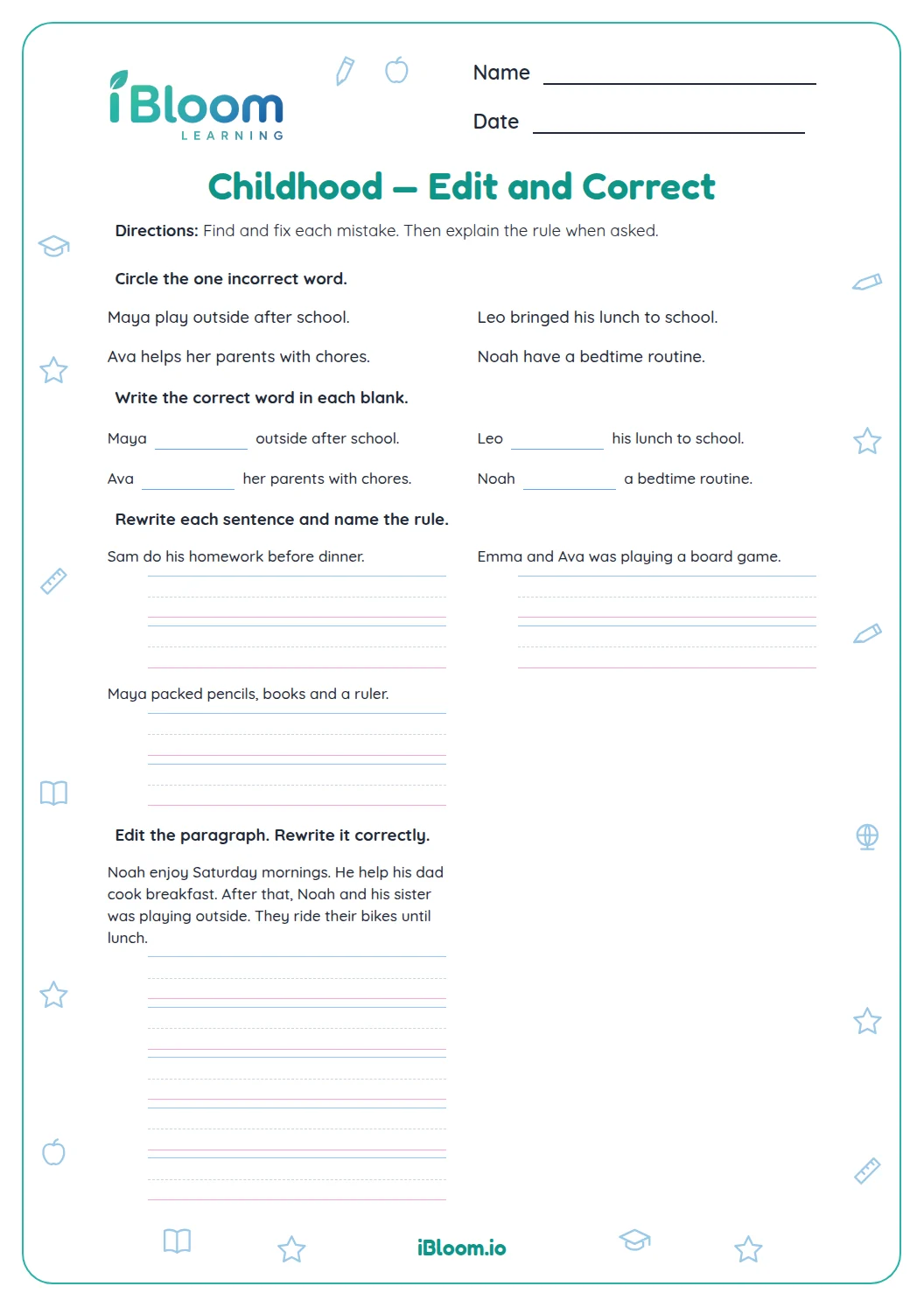
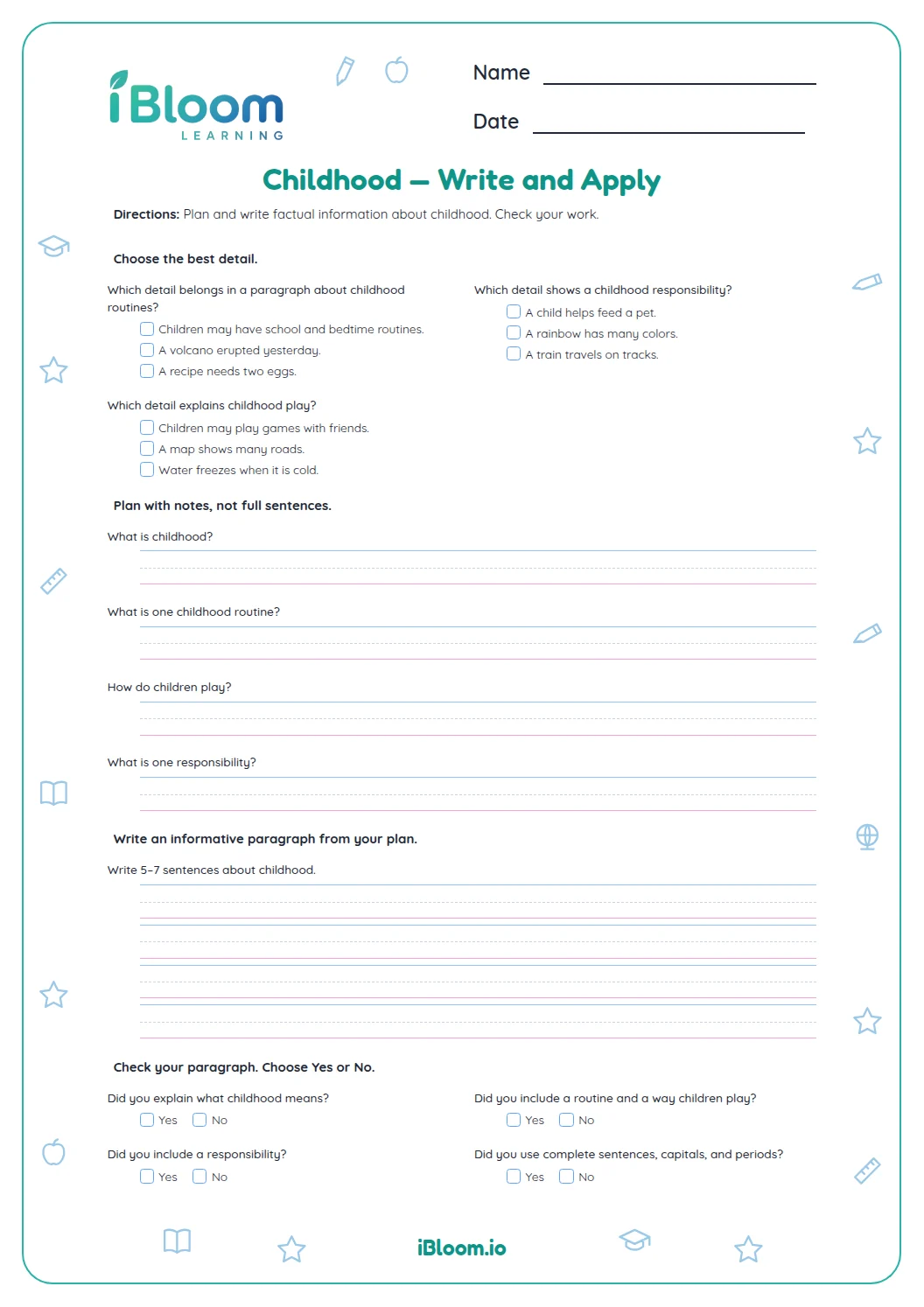
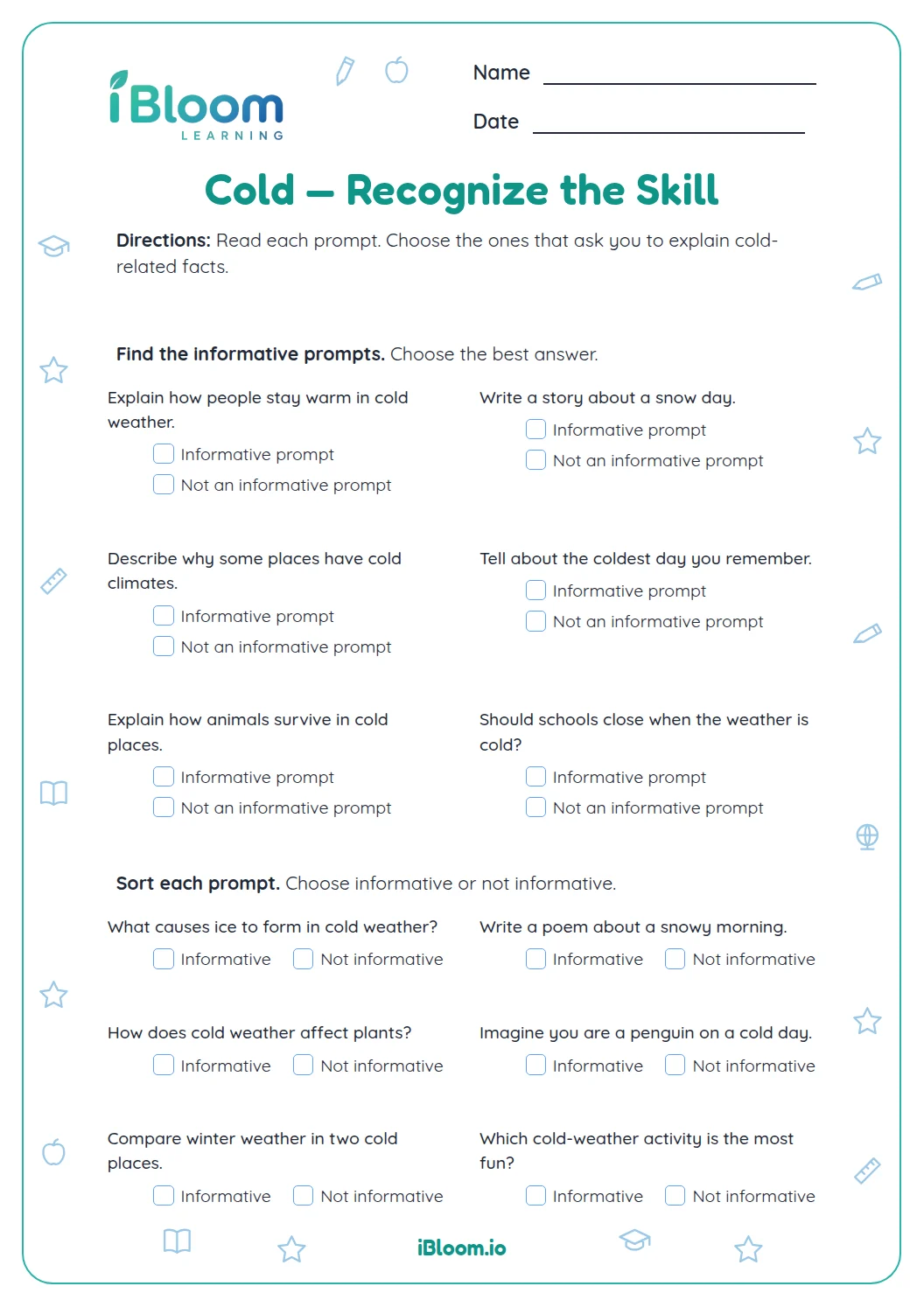
This free printable worksheet helps Grade 4 students make clear choices while planning and writing informative text about childhood routines, games, and responsibilities. Its 14 questions review factual details, topic sentences, transitions, order, revision, and a short explanation. Students practice selecting and organizing information for an informative paragraph in line with CCSS W.4.2. The separate answer key gives correct choices and a sample response for the writing task.
Aligned to W.4.2
How do you choose a good topic and detail?
The worksheet has two parts. Part A focuses on selecting factual, relevant information and transitions. Part B applies those choices to topic sentences, organization, revision, and a short informative response.
Question 2 asks which detail best supports “Learning to ride a bike.” A helmet helps protect a rider, so that detail fits the topic and teaches the reader something relevant.
- 1Topic: Learning to ride a bike
- 2Relevant detail: A helmet helps protect a rider.
- 3Why it fits: It gives useful information about riding safely.
How do transitions and order help a reader?
Part B asks students to organize a topic, details, transitions, and a sensible order. Question 14 applies these choices in a short explanation of how to care for a library book.
Question 9 asks students to order the steps: keep the book clean, turn pages carefully, and return it on time.
- 1Some children help at home. ___, they may sort laundry.
- 2The second sentence gives one example.
- 3“For example” links the detail to the topic.
- Part A: choose facts and details that fit a topic
- Part B: choose a topic, transitions, order, and relevant details
- Question 14: write three facts in a clear order
- The answer key includes a sample response
What writing skills does this set review?
The 14 questions move from recognizing informative sentences to organizing details. The final response uses two facts to explain a childhood responsibility.
- Part A: choose facts and details that fit a topic
- Part B: choose a topic, transitions, order, and relevant details
- Question 14: explain book care with two facts
- The answer key gives a sample response
How can students work through the page?
- 1Read the topic in each question and keep the reader’s purpose in mind: to learn.
- 2Choose facts and explanations rather than opinions such as “best” or “most fun.”
- 3Check that each detail teaches something about the stated topic.
- 4Use transitions such as “First,” “Next,” and “For example” to connect ideas.
- 5For the writing prompts, draft one focused sentence before adding details.
- 6Reread each response and check that it stays on topic and is easy to understand.
Common mistakes and quick fixes
The mistake
Using an opinion as the main information, such as saying a tradition is “the best.”
The fix
Replace the rating with a fact or explanation that teaches the reader about it.
The mistake
Adding a detail that is true but unrelated to the topic.
The fix
Ask how the detail helps explain the topic sentence; remove it if it does not.
The mistake
Listing steps out of order or without a transition.
The fix
Put actions in the order they happen and add a word such as “Next.”
Common Core alignment
The prompts practice clear explanations, focused details, and informative writing about familiar topics.
Write to explain a topic with clear ideas and relevant information.
On this sheet: Students select, organize, and draft details that explain a topic.
Show the official wordingHide the official wording
Write informative/explanatory texts to examine a topic and convey ideas and information clearly.
What to practice next
Make more practice
Further reading
Questions parents and teachers ask
What is informative writing?
Informative writing teaches the reader about a topic with facts and relevant details. This worksheet asks students to choose useful information, organize steps, and explain how to care for a library book using two facts. The answer key includes choices and a sample response.
How is a fact different from an opinion?
The printable has two worksheet pages and a separate two-page answer key. Part A asks students to choose informative details and transitions; Part B focuses on organizing and revising ideas before a short written explanation about caring for a library book.
What makes a supporting detail relevant?
A relevant detail explains or gives an example of the paragraph topic. For a paragraph about learning to ride a bike, helmet safety fits because it is part of riding safely. The worksheet asks students to distinguish useful facts from unrelated ones.
Why does the worksheet practice transitions?
Question 14 asks students to write two facts about caring for a library book. One might explain keeping the book clean; another might describe turning pages carefully or returning it on time. The key offers a sample, and other accurate facts can also fit.
What does the writing task ask students to do?
Question 14 asks students to write three facts explaining how children can care for a library book. A clear response stays on that topic and places the facts in a sensible order. The key provides one sample response. Encourage students to reread each choice and explain how it fits the topic.
Does the worksheet include an answer key?
Yes. The answer key follows the two worksheet pages and gives the correct choices for the selection questions. It also includes a sample response for question 14; students may use different accurate facts and wording. Encourage students to reread each choice and explain how it fits the topic.