





About this worksheet
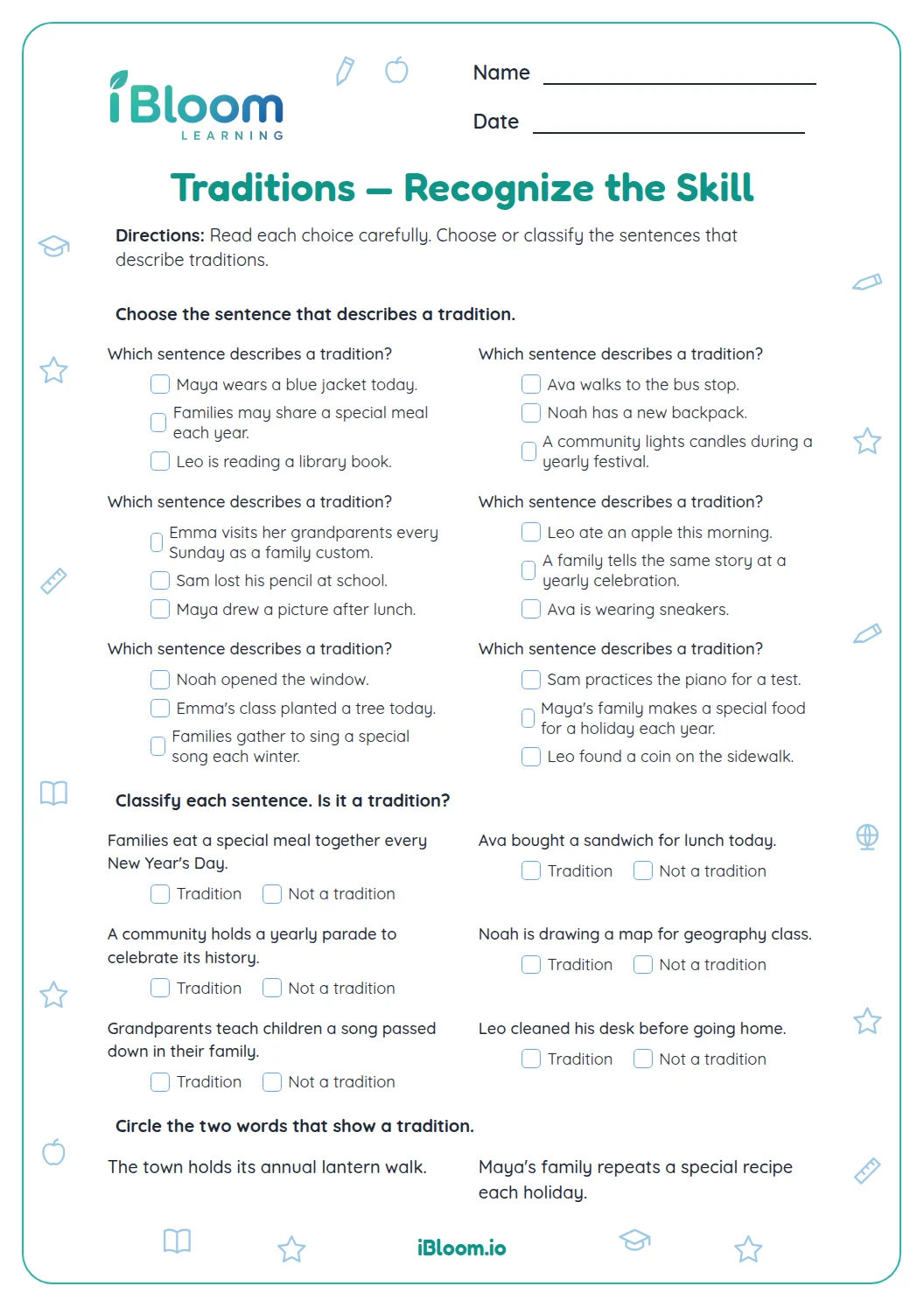
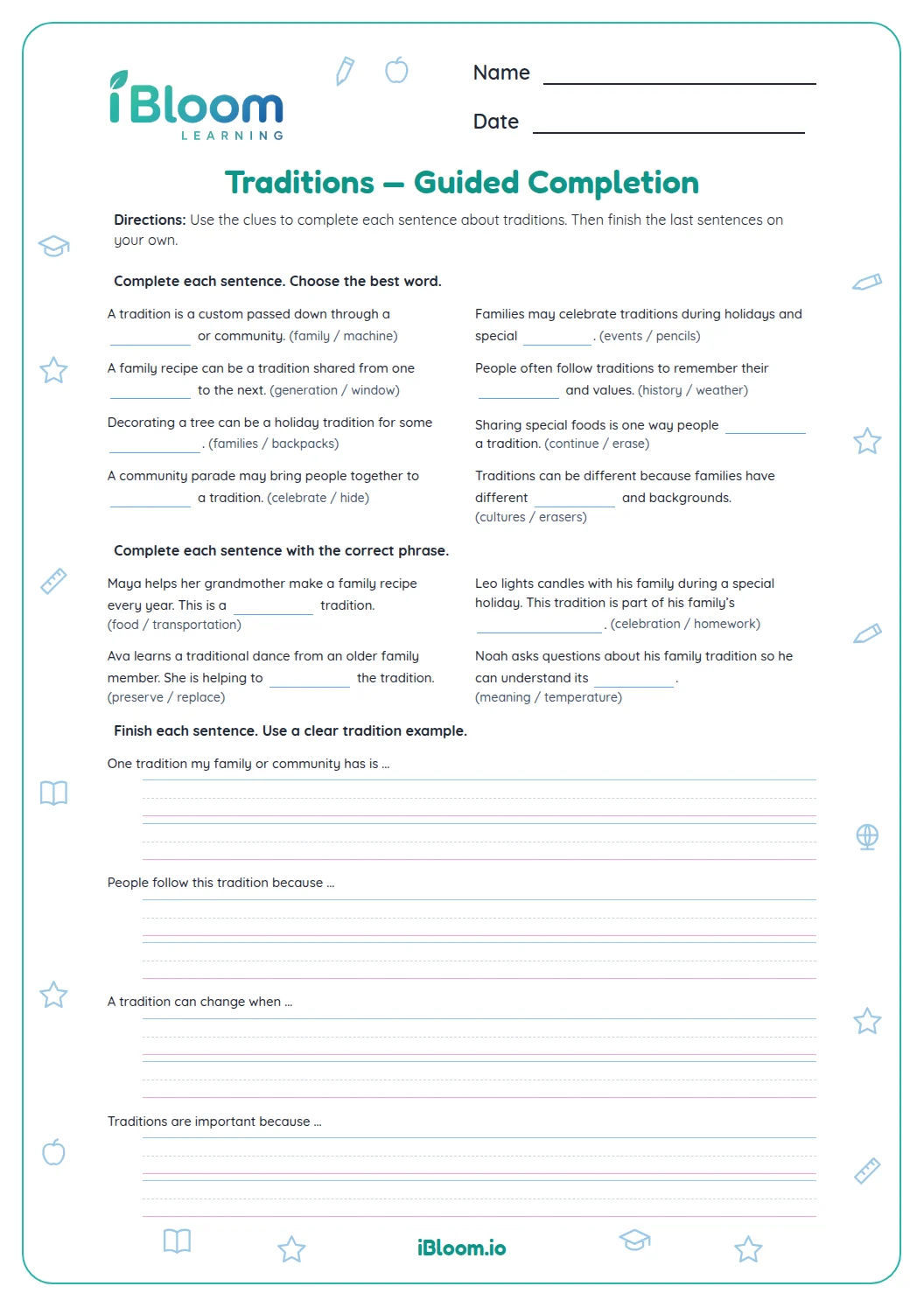
This free printable Grade 4 worksheet helps students explain traditions with focused topics and useful details. Its 14 questions practice topic sentences, supporting details, transitions, headings, ordered steps, and a short informative paragraph. These tasks align with CCSS W.4.2: examining a topic and conveying ideas and information clearly. The separate key includes sample responses.
Aligned to W.4.2
What will learners practice in informative writing about traditions?
The three parts guide students from planning a focused topic, to choosing a supporting detail, to organizing information clearly. The final prompts apply those choices in explanations and a short informative paragraph.
- 1Question 4: Choose the detail that best supports “Our neighborhood celebrates the first day of summer together.”
- 2“Neighbors bring food to a shared picnic.” The detail shows what people do together.
- Plan a focused topic
- Choose a supporting detail
- Organize the information
How can learners work through informative writing about traditions?
The three parts guide students from planning a focused topic, to choosing a supporting detail, to organizing information clearly. The final prompts apply those choices in explanations and a short informative paragraph.
- 1Question 4: Choose the detail that best supports “Our neighborhood celebrates the first day of summer together.”
- 2“Neighbors bring food to a shared picnic.” The detail shows what people do together.
How can an adult support this informative writing about traditions practice?
Yes. The open writing prompts invite students to describe a real tradition they know. They can name when it happens, explain what people do, and add details that help a reader understand why it matters.
How to use this worksheet
- 1Name the tradition and focus the topic sentence.
- 2Choose details that explain what people do or why it matters.
- 3Use a transition to show order or connection.
- 4Add a heading when it helps readers identify the topic.
- 5Check the paragraph for a topic sentence, relevant details, and a closing thought.
Common mistakes and quick fixes
The mistake
Adding an interesting detail that does not support the topic.
The fix
Ask whether the detail teaches the reader about this tradition.
The mistake
Listing steps without showing their order.
The fix
Use words such as first, next, and then.
The mistake
Ending without a closing thought.
The fix
Add a final sentence that sums up the explanation.
Common Core alignment
This worksheet gives students focused practice with the writing work named in this standard.
write informative texts that examine a topic and convey ideas clearly
On this sheet: Learners plan and write focused explanations about traditions.
Show the official wordingHide the official wording
Write informative/explanatory texts to examine a topic and convey ideas and information clearly.
What to practice next
Make more practice
Further reading
Questions parents and teachers ask
What informative writing skills does this traditions worksheet practice?
Students focus a topic, choose supporting details, use transitions, add headings, and write explanations about traditions. The final item asks for a three-sentence paragraph with a topic sentence, two details, and a closing thought. Students can reread the topic sentence and check that each detail belongs.
How many questions and pages are included?
The worksheet has 14 questions in three parts and fills four worksheet pages. A separate four-page key gives sample answers for writing prompts and the correct choice for the supporting-detail question. Students can reread the topic sentence and check that each detail belongs.
Can students write about a tradition from their own family?
Yes. The open writing prompts invite students to describe a real tradition they know. They can name when it happens, explain what people do, and add details that help a reader understand why it matters. Students can reread the topic sentence and check that each detail belongs.
What makes a detail support a topic sentence?
A supporting detail gives relevant information about the topic. For a neighborhood summer celebration, neighbors bringing food to a shared picnic supports the idea more directly than a fact about the color of the sun. Students can reread the topic sentence and check that each detail belongs.
How should the paragraph in question 14 be checked?
Check that it has three sentences: a focused topic sentence, two details about the tradition, and a closing thought. The key’s garden example is one model; students can use another tradition and different accurate details. Students can reread the topic sentence and check that each detail belongs.