





About this worksheet
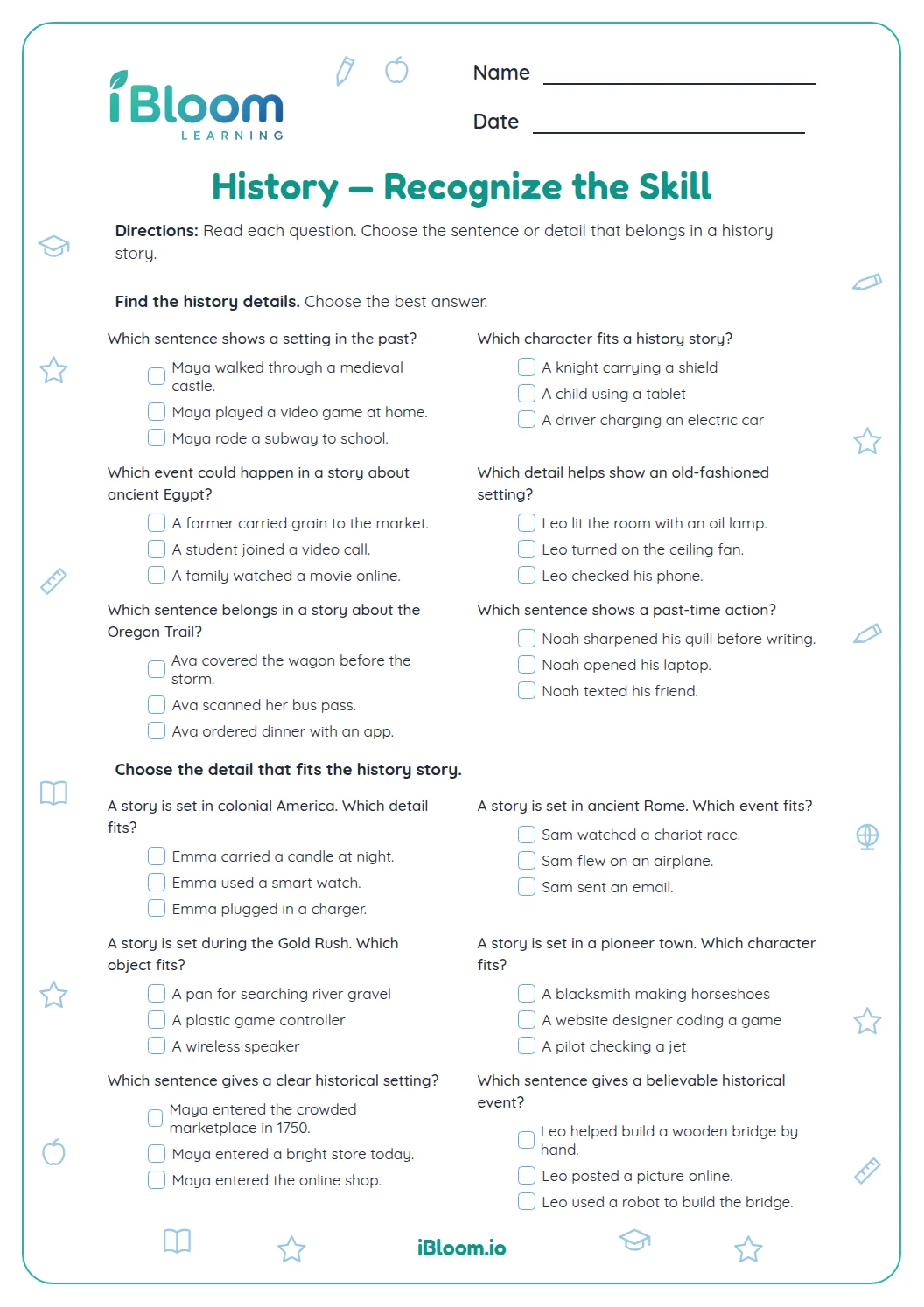
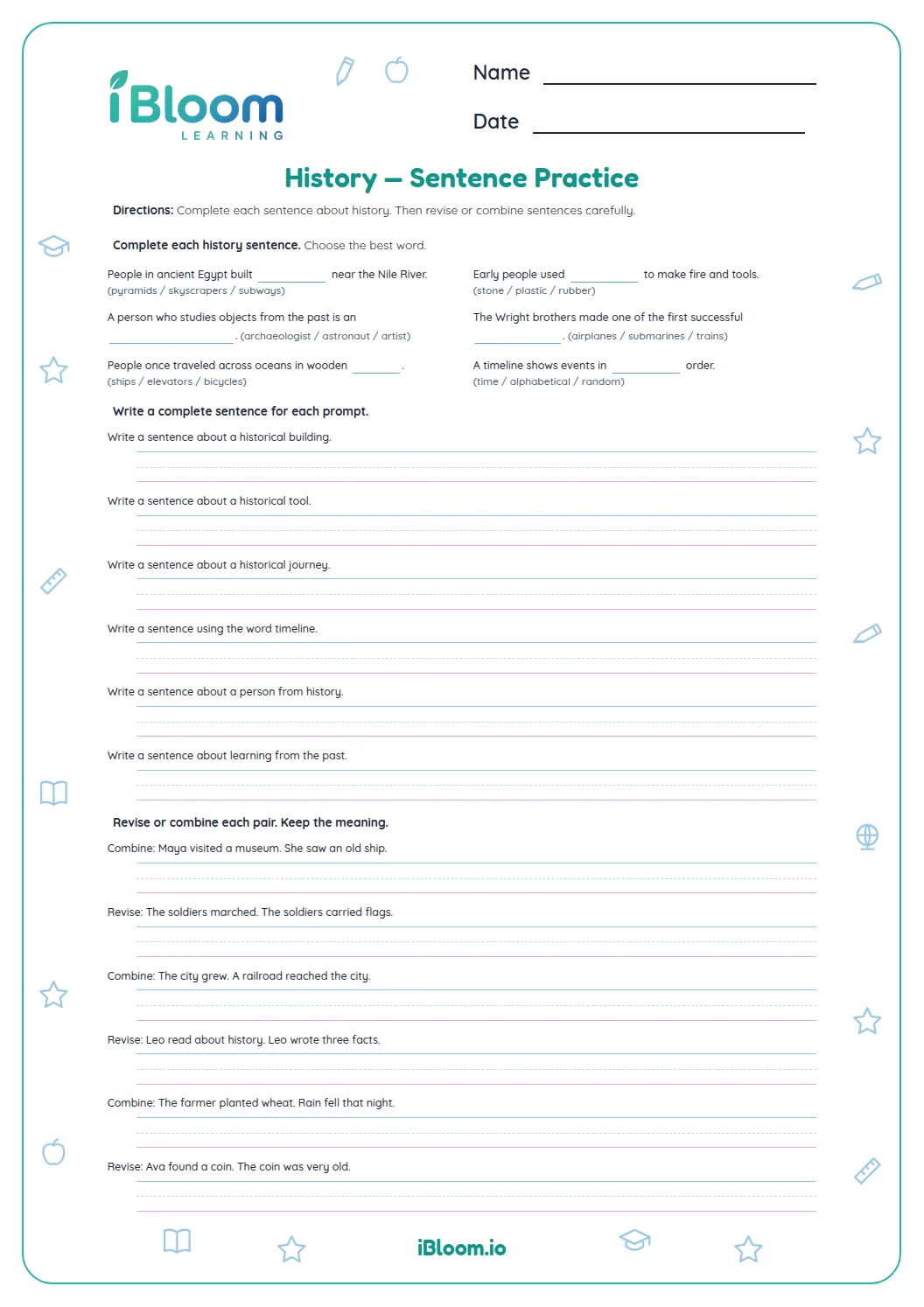
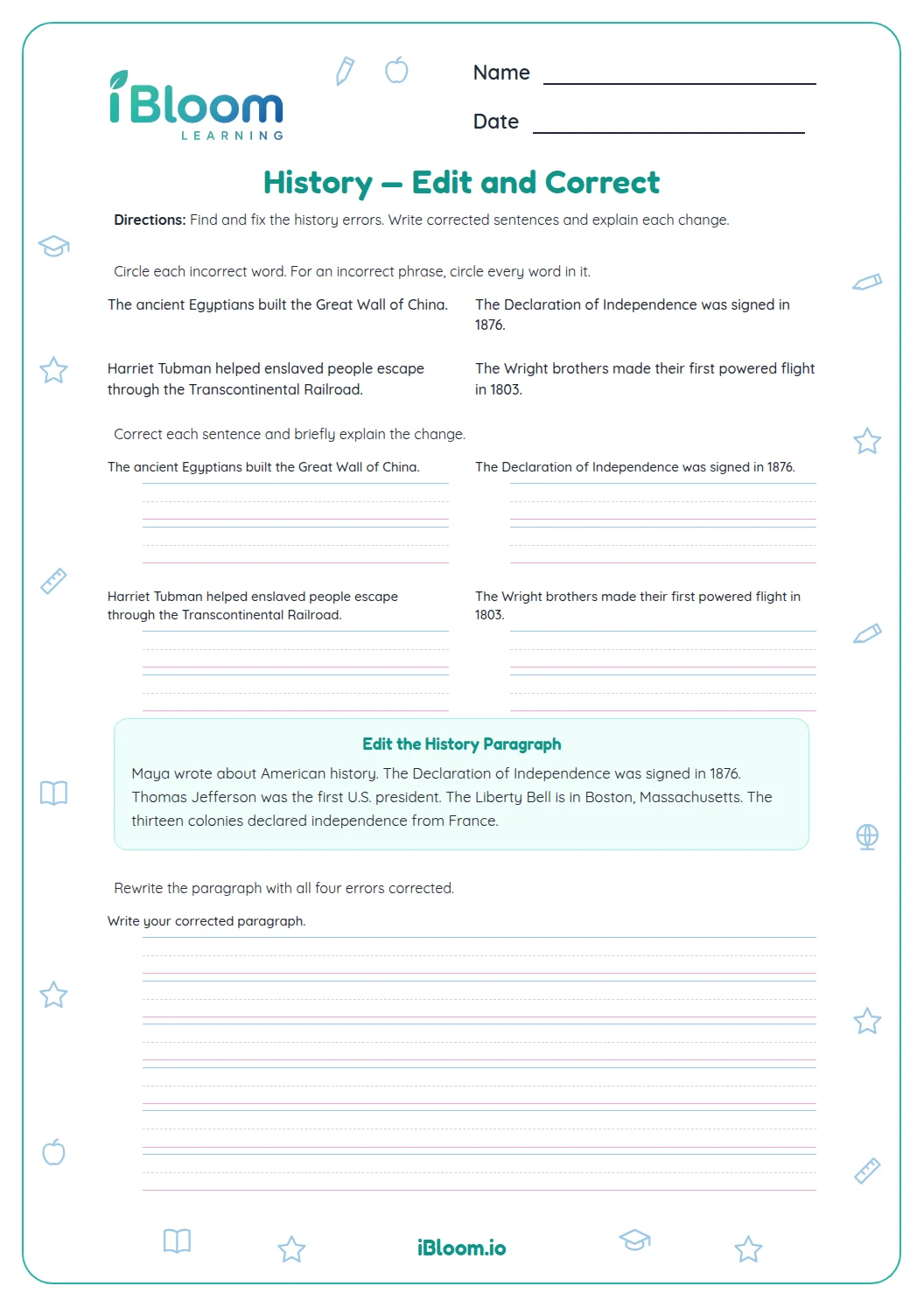
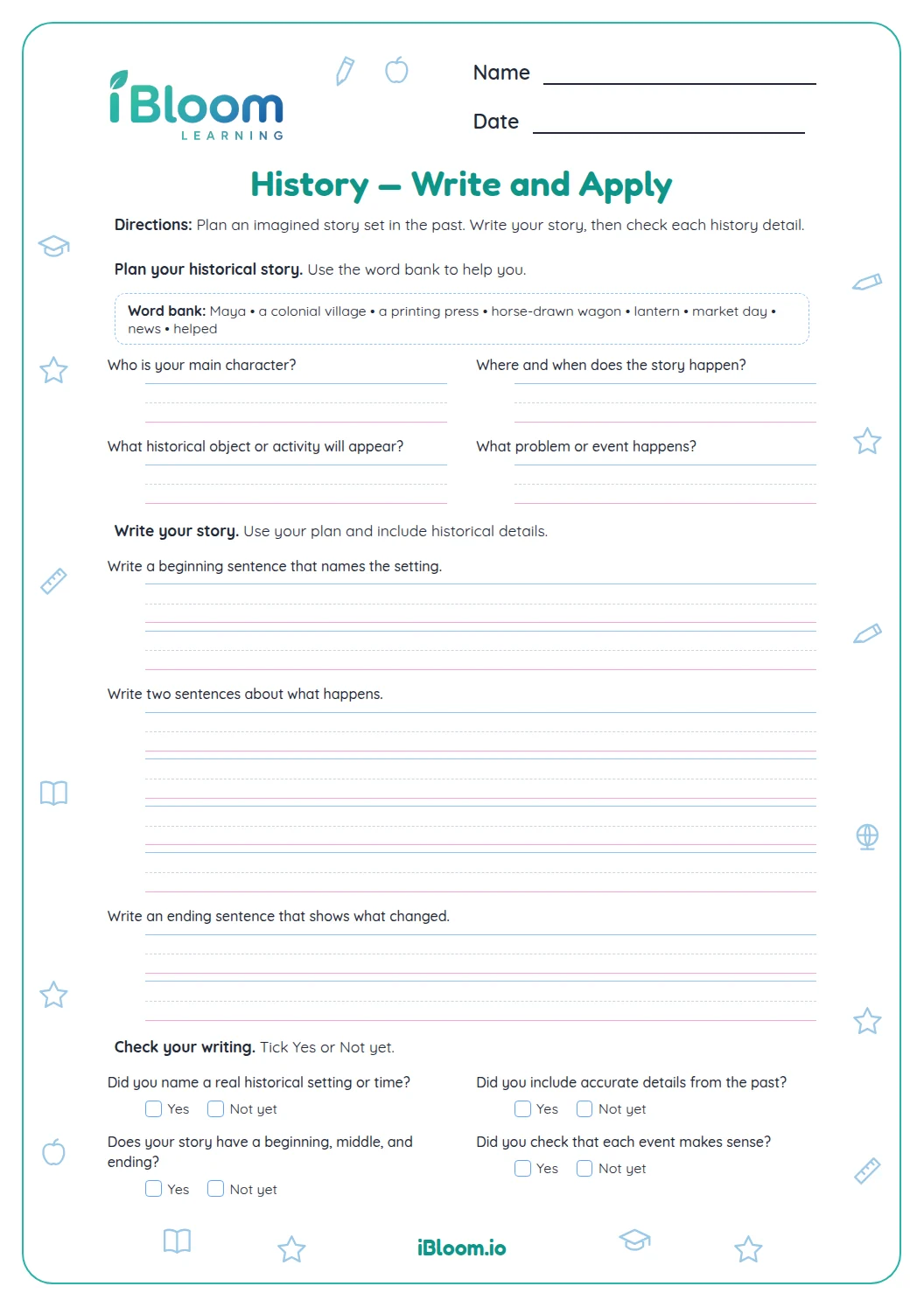
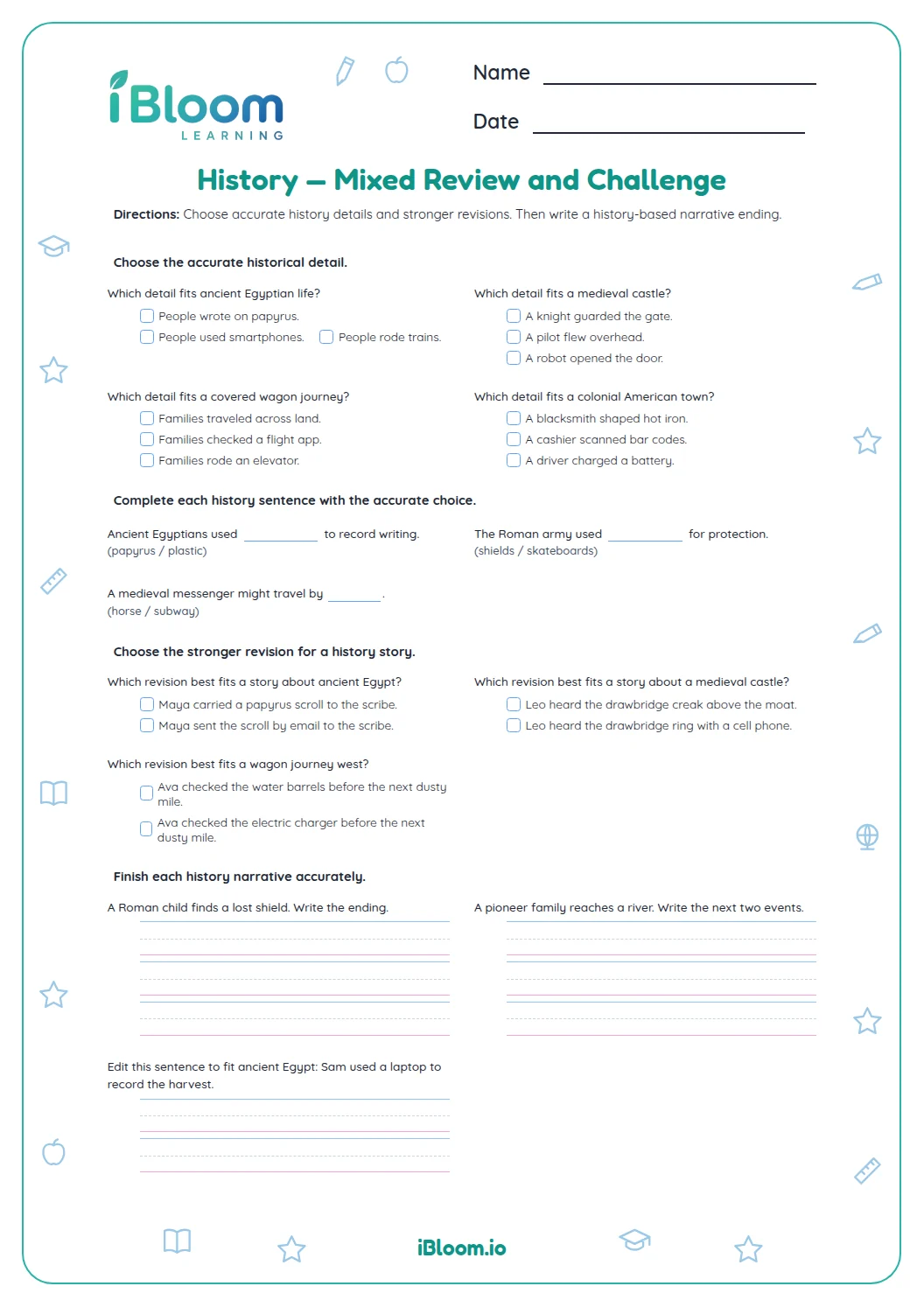
This free printable Grade 4 narrative writing worksheet uses scenes from ancient Egypt, medieval castles, the Oregon Trail, and colonial America. Students select historically fitting story details, complete a short narrative plan, and finish four scene sentences. The 14 questions practice setting, sequence, dialogue, sensory description, and an ending connected to the story. It practices CCSS W.4.3 and includes a separate answer key with sample responses.
Aligned to W.4.3
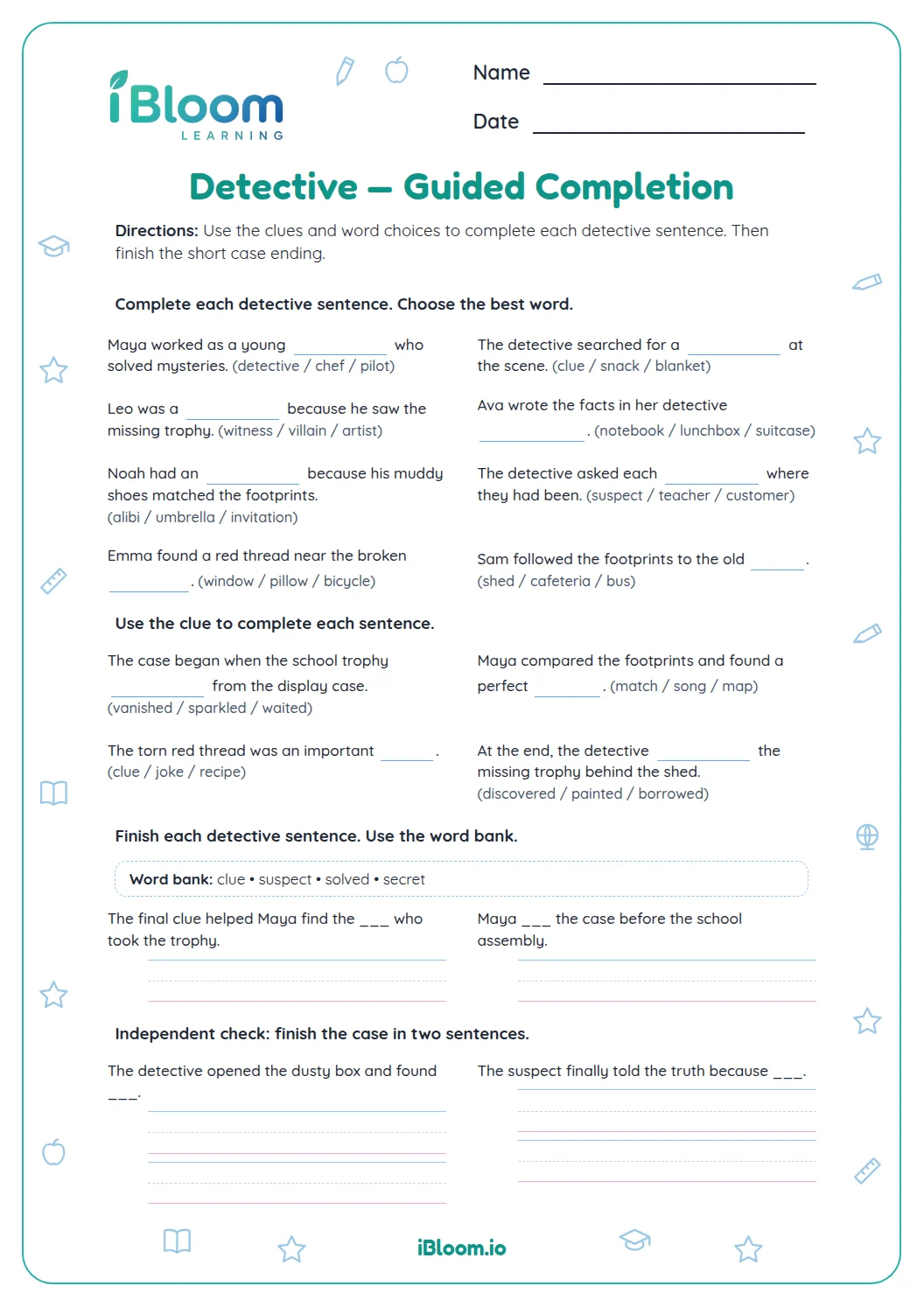
What is on this guided completion sheet?
Part A asks children to choose story details that orient a reader and keep events in order. Part B completes a narrative plan using transitions, dialogue, sensory details, and events. Part C completes four story sentences with a reason, next event, dialogue, or sensory detail.
The settings suggest a past time, such as a station in 1903 or a history museum. Children invent the scene details; the worksheet does not require research about a particular historical event.
- Part A: choose five narrative craft decisions.
- Part B: complete five story-writing choices.
- Part C: complete four scene sentences.
What belongs in a strong story opening?
An opening can establish the situation and introduce a character or narrator. “In 1903, Mara hurried to the train station because she had a letter to deliver” gives a time, person, place, and reason to keep reading.
A date alone is not enough; pair it with a character and an event or goal.
How do transitions help a story?
Transitions show how events connect in time. Words such as first, next, later, and finally help the reader follow what happens. Choose a transition that matches the sequence instead of adding one at random.
- 1Ben finds a note. What might happen next?
- 2Choose an event that follows finding the note.
- 3Sample: He reads the note and hurries to tell his sister.
How can dialogue and sensory details build a scene?
Dialogue shows what a character says and can reveal a response. Sensory details help a reader imagine what a character sees, hears, smells, tastes, or feels. Keep each addition connected to the scene so the story continues naturally.
How to use this worksheet
- 1Read the scene prompt and identify its character, setting, and problem.
- 2In Part A, choose details that help the reader understand the scene.
- 3In Part B, select the story-writing word or idea that fits the blank.
- 4In Part C, add one sentence that follows the prompt and moves the scene forward.
- 5Compare with the key’s samples; other relevant, well-sequenced writing can also work.
Common slips and fixes
The mistake
Starting with events before the reader knows the situation.
The fix
Name the character and what is happening before adding later events.
The mistake
Using a transition that conflicts with the timeline.
The fix
Check which event happened first and choose next, later, or finally accordingly.
The mistake
Adding a vivid detail unrelated to the scene.
The fix
Choose dialogue or a sensory detail that shows a character’s response to this moment.
Common Core alignment
This page guides children through Grade 4 narrative planning and development.
Plan a narrative with characters, details, an event sequence, and a fitting conclusion.
On this sheet: Parts A–C practice story openings, transitions, dialogue, sensory details, and endings.
Show the official wordingHide the official wording
Write narratives to develop real or imagined experiences or events using effective technique, descriptive details, and clear event sequences.
What to practice next
Make more practice
Further reading
Questions parents and teachers ask
Is this a history facts worksheet?
This is a narrative writing worksheet that uses historical settings as story prompts. Children practice story openings, event order, dialogue, sensory details, and conclusions. They invent the scene rather than answering questions about a real historical person or event.
How many questions are on the worksheet?
There are 14 items in three parts: five story choices, five narrative-plan completions, and four scene-sentence completions. The answer key includes sample completions for the final part. Plan for about 25 minutes so children have time to consider how each detail fits the story.
What makes an event sequence clear?
A clear sequence lets the reader understand what happened first and what followed. Transitions such as first, next, later, and finally can signal that order. Part B and Part C ask children to choose or add an event that follows the story situation.
Can a child write a different answer from the key?
Yes. The key gives sample completions for the scene sentences, and another answer can work if it fits the story and makes sense. For example, after a lantern goes out, a character might say, “Stay close,” or use another line that responds to the darkness.
What narrative details does Part C practice?
The final items practice a story reason, next event, dialogue, and sensory detail. These moves support story development before a child writes a longer narrative independently. For instance, a detail should fit the character’s situation and help a reader picture the moment.