


About this worksheet
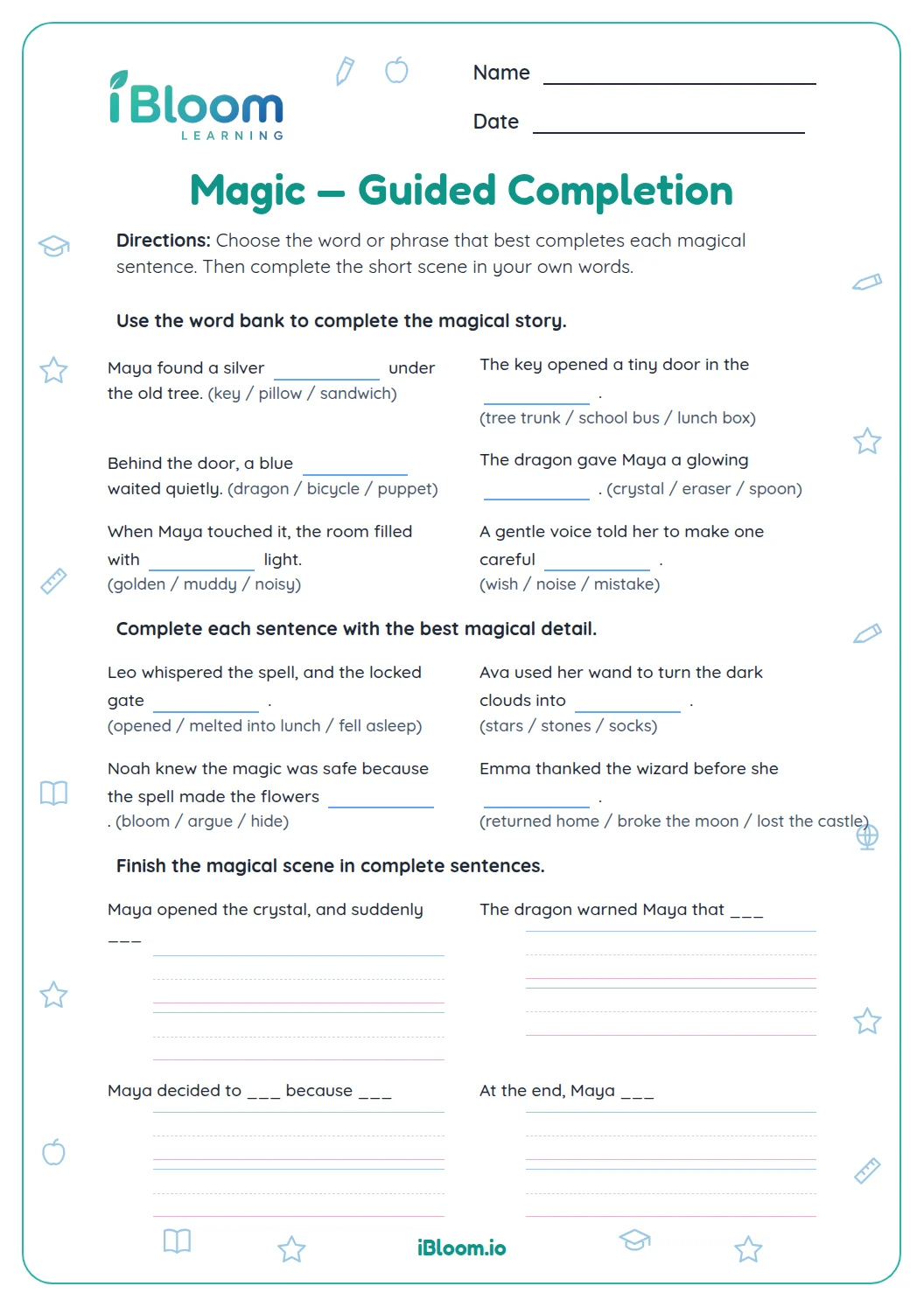
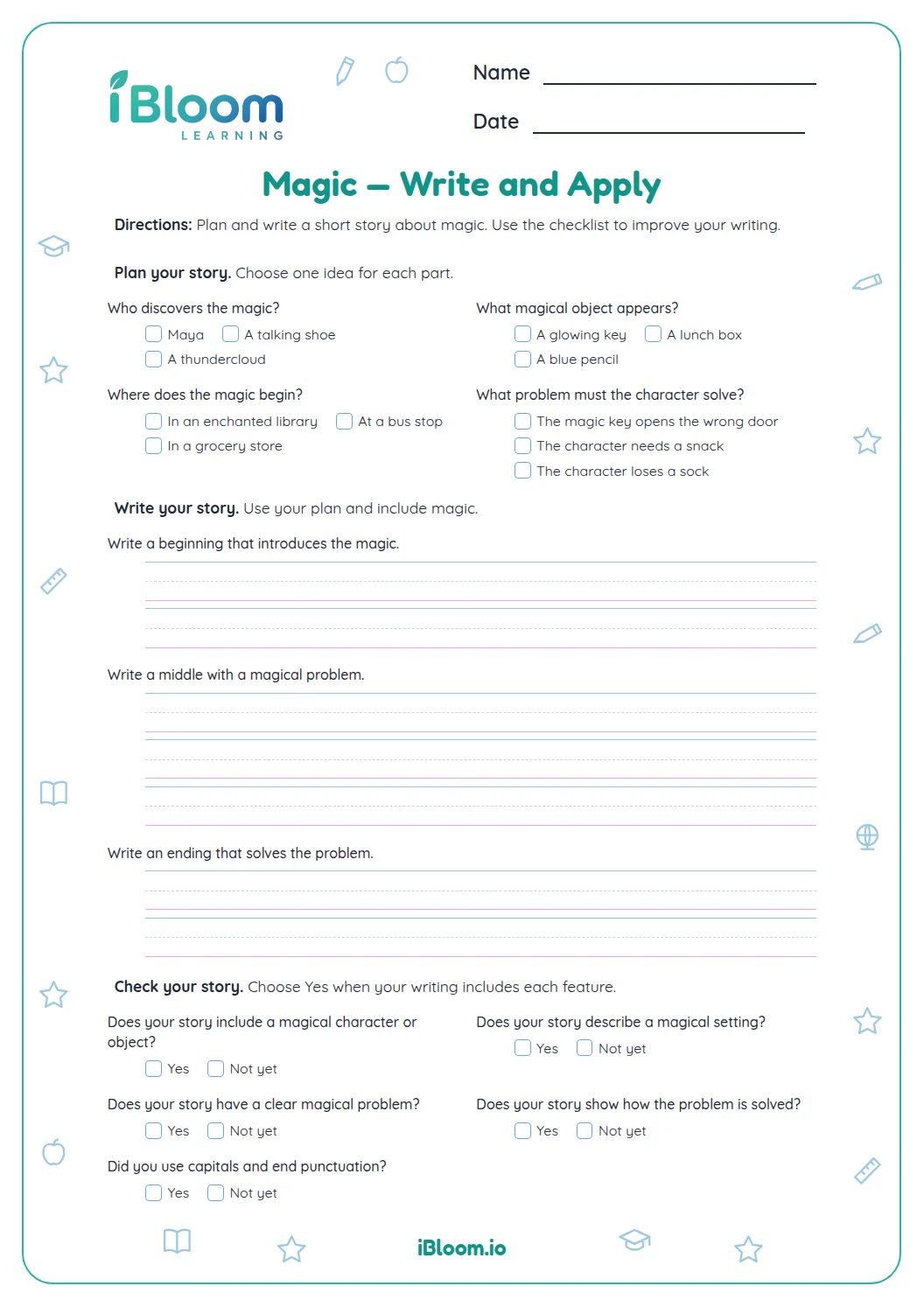
This Grade 4 worksheet practices vivid sentences for a magic-adventure story. Fourteen short items ask students to identify strong character, action, setting, and sensory details, a clear goal, and correctly punctuated dialogue. The separate answer key lists each choice.
What is on this worksheet?
Build vivid narrative sentences. The activities move from recognizing the idea to applying it independently.
- Work through the parts in order
- Check answers with the key
How to use this worksheet
- 1Read the full scene or sentence before choosing a detail.
- 2Look for a concrete action, setting clue, or sensory image.
- 3Use the choices to compare precise language with vague wording.
- 4Write a complete sentence when the prompt asks for one.
- 5Check punctuation and compare open responses with the key’s models.
Common mistakes and quick fixes
The mistake
Naming an emotion without showing a clue.
The fix
Add an action or physical detail that lets the reader infer the feeling.
The mistake
Using a vague word such as “thing.”
The fix
Choose a precise noun or verb that helps the reader picture the scene.
The mistake
Putting dialogue punctuation outside the quotation marks.
The fix
Keep commas and end marks inside the closing quotation mark.
What to practice next
Questions parents and teachers ask
What makes a narrative sentence vivid?
A vivid narrative sentence gives a reader a clear action and a useful detail about character, setting, or the senses. This worksheet asks students to choose language that helps picture a magic-adventure scene. The answer key lists the best fit for each item.
What is a sensory detail?
A sensory detail tells what a character might see, hear, smell, taste, or feel. Students use sound and smell clues in the magic scenes, such as groaning hinges or a sharp potion scent. These details make an action easier to picture.
How can a sentence show nervousness?
A writer can show nervousness through an observable action instead of naming the feeling. In one item, Lena’s trembling hands provide that clue. Readers use the character’s behavior to infer how she feels in the moment. Students can point to the exact words that create the clue.
What does the dialogue question practice?
The dialogue item asks students to recognize where the end mark belongs in quoted speech. In “Wait!” called Jo, the exclamation mark stays inside the quotation marks. The other choice places it outside and is not correct. Students can point to the exact words that create the clue.
Are there many possible answers?
These 14 questions are multiple choice, so each has one intended answer shown in the key. Students can still discuss why a detail works, especially when it adds an action, setting, sound, or character goal to the magic scene.