

About this worksheet
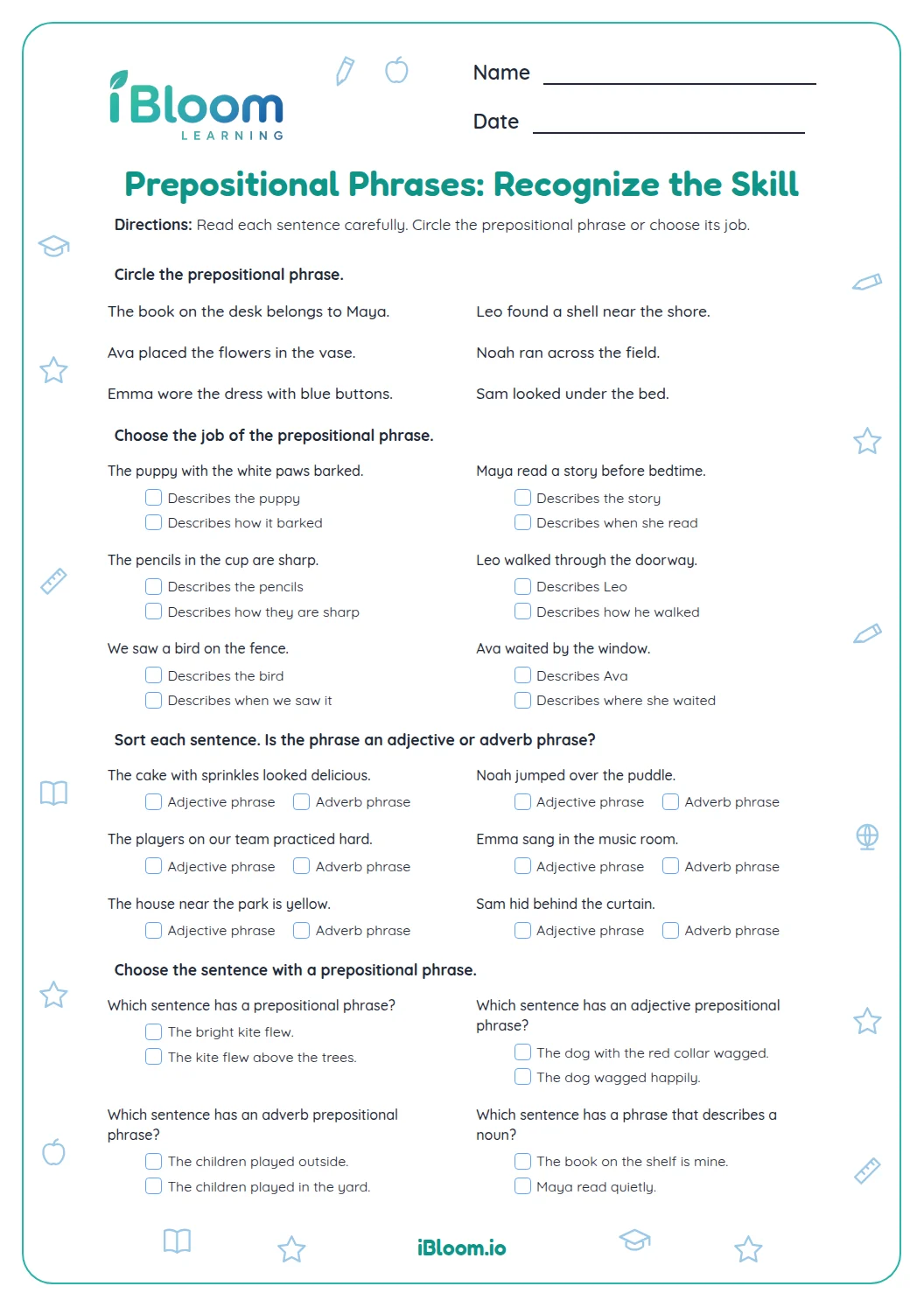
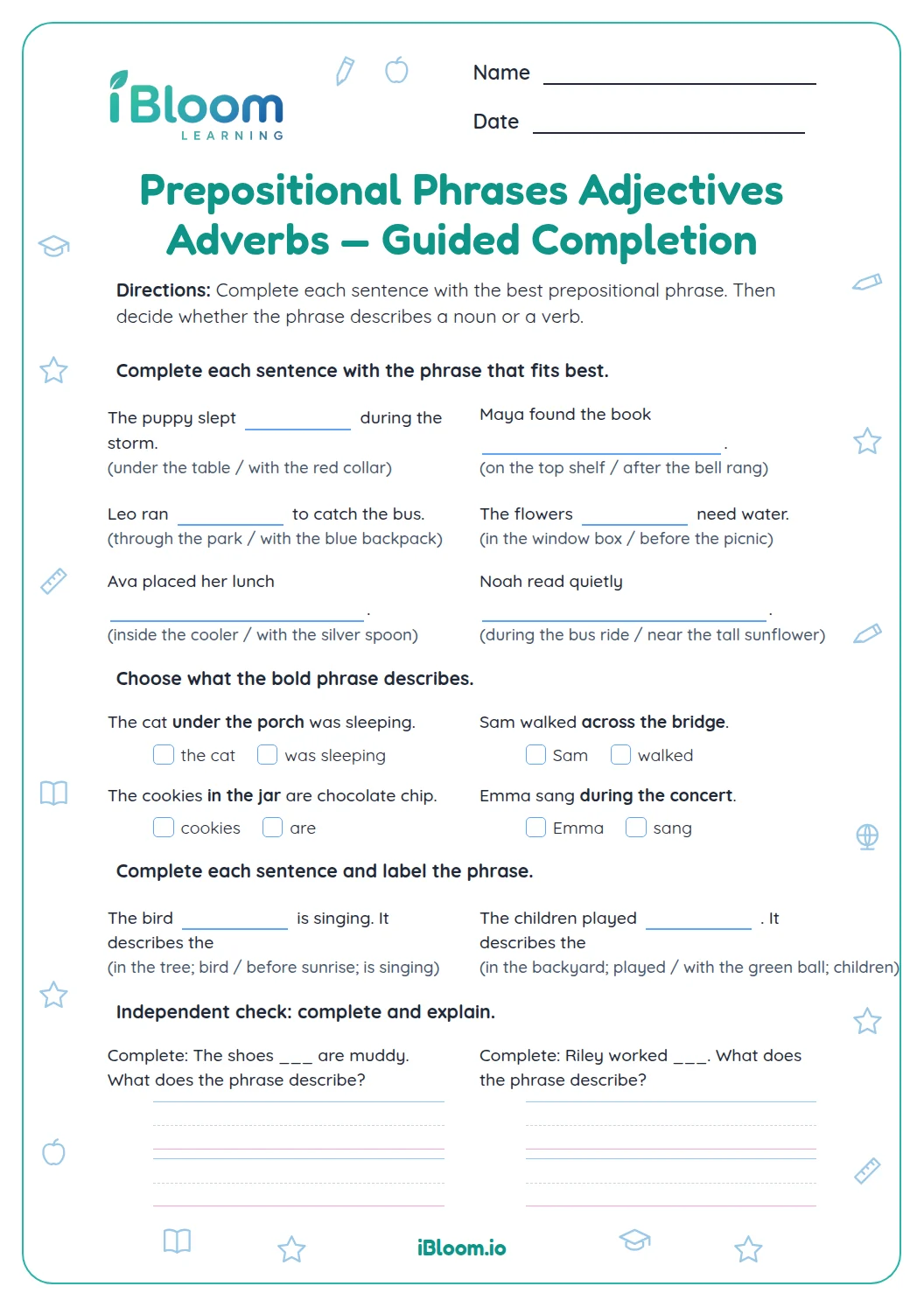
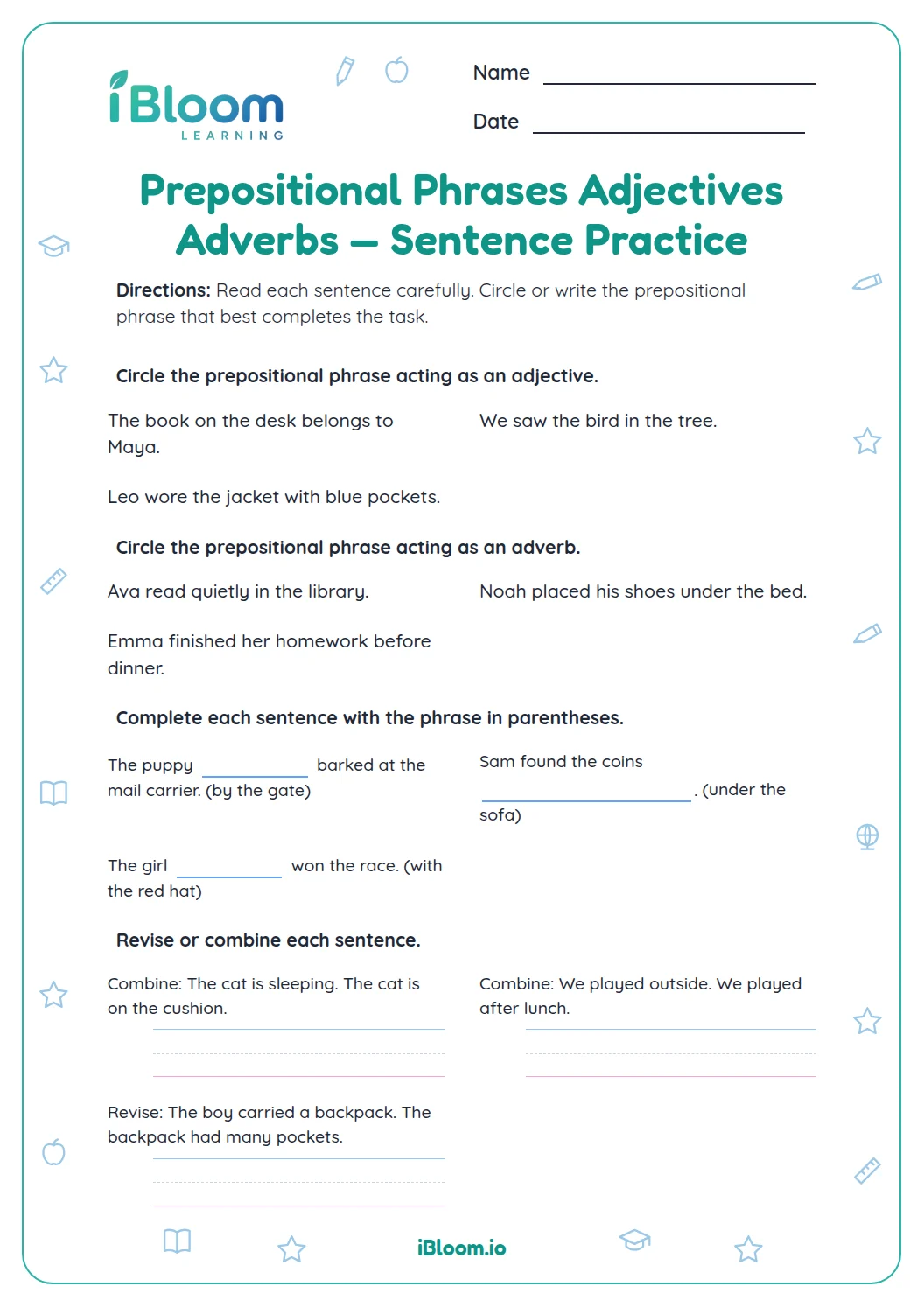
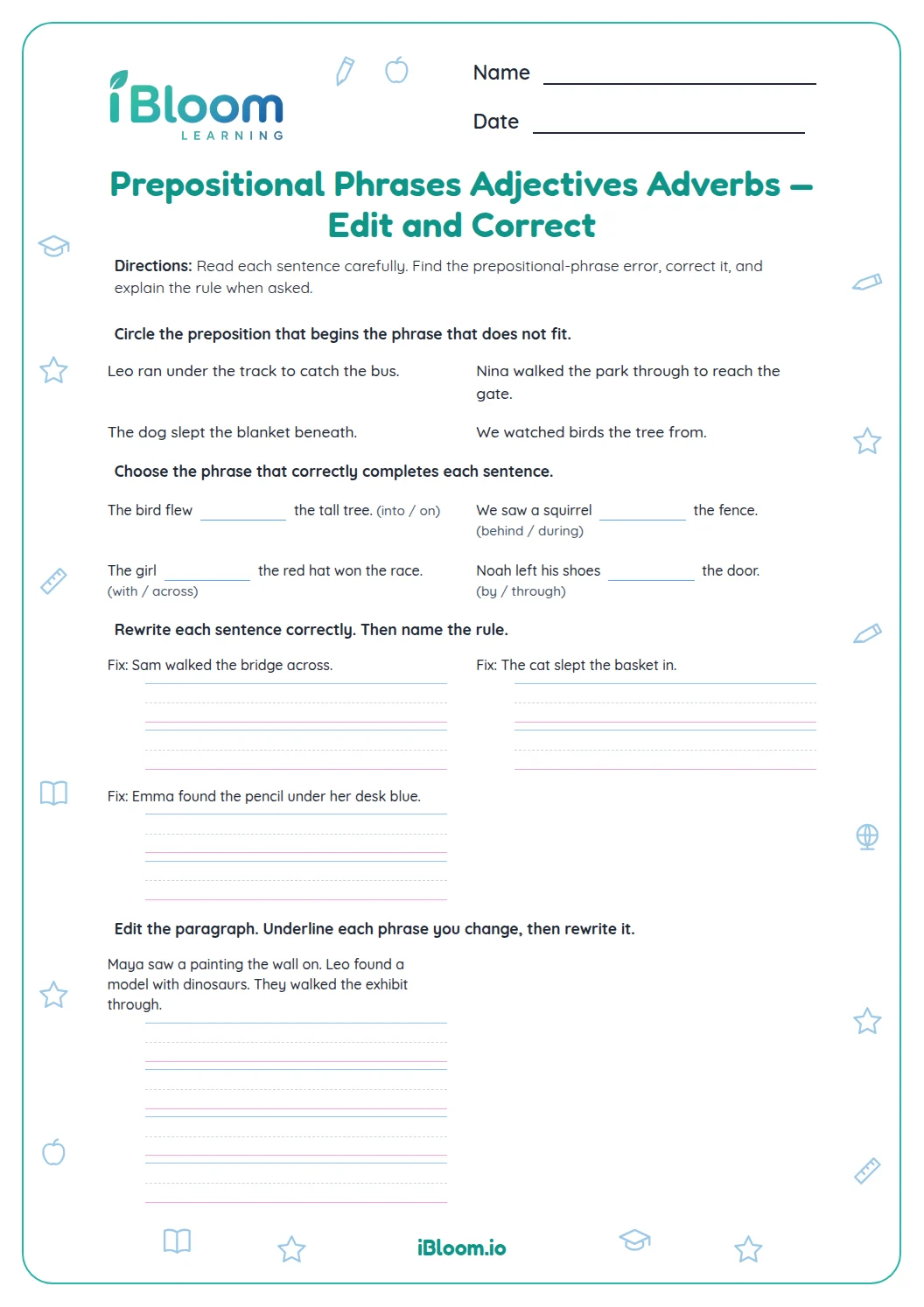
This Grade 4 worksheet focuses on how a prepositional phrase works inside a sentence. Students identify whether a phrase describes a noun or a verb, choose a phrase in a sentence that performs a specified job, and use phrases in original writing. Part A builds recognition; Part B moves into sentence completion and application. The answer key gives the selected phrases and sample sentences, with other clear, grammatical responses acceptable. The practice supports Common Core work on using prepositions and prepositional phrases in context.
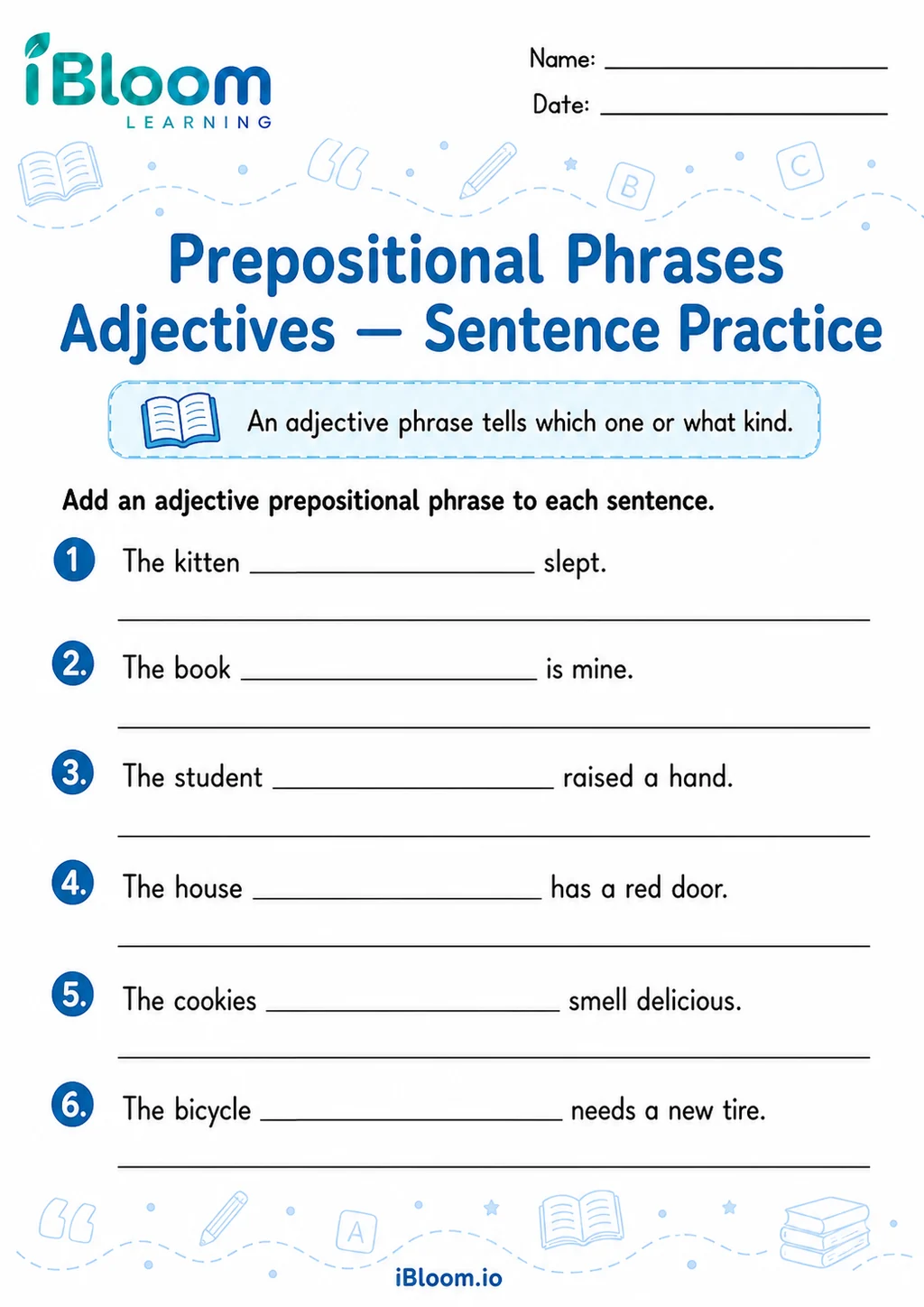
When does a prepositional phrase act like an adjective?
It acts like an adjective when it describes a noun. In “the book on the desk,” the phrase “on the desk” tells which book.
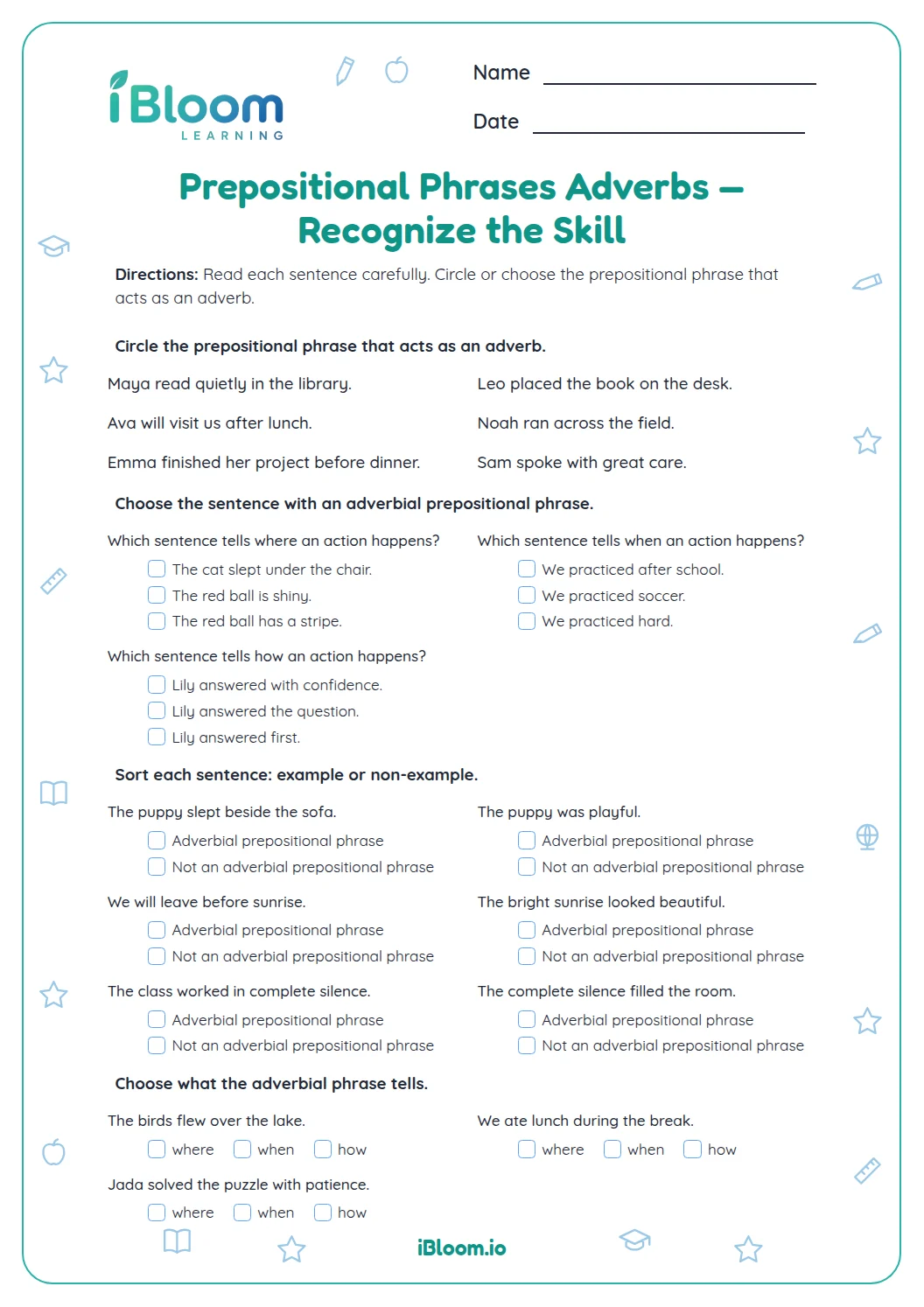
Part A asks students to connect each phrase to the noun or verb it describes.
- 1“The book on the desk is mine.” The phrase tells which book, so it describes “book.”
When does a prepositional phrase act like an adverb?
It acts like an adverb when it describes an action. In “The children played beside the river,” the phrase tells where they played, so it describes the verb “played.”
Location, time and manner phrases can give details about an action.
- 1“The children played beside the river.” The phrase explains where they played.
How can writers use a phrase clearly?
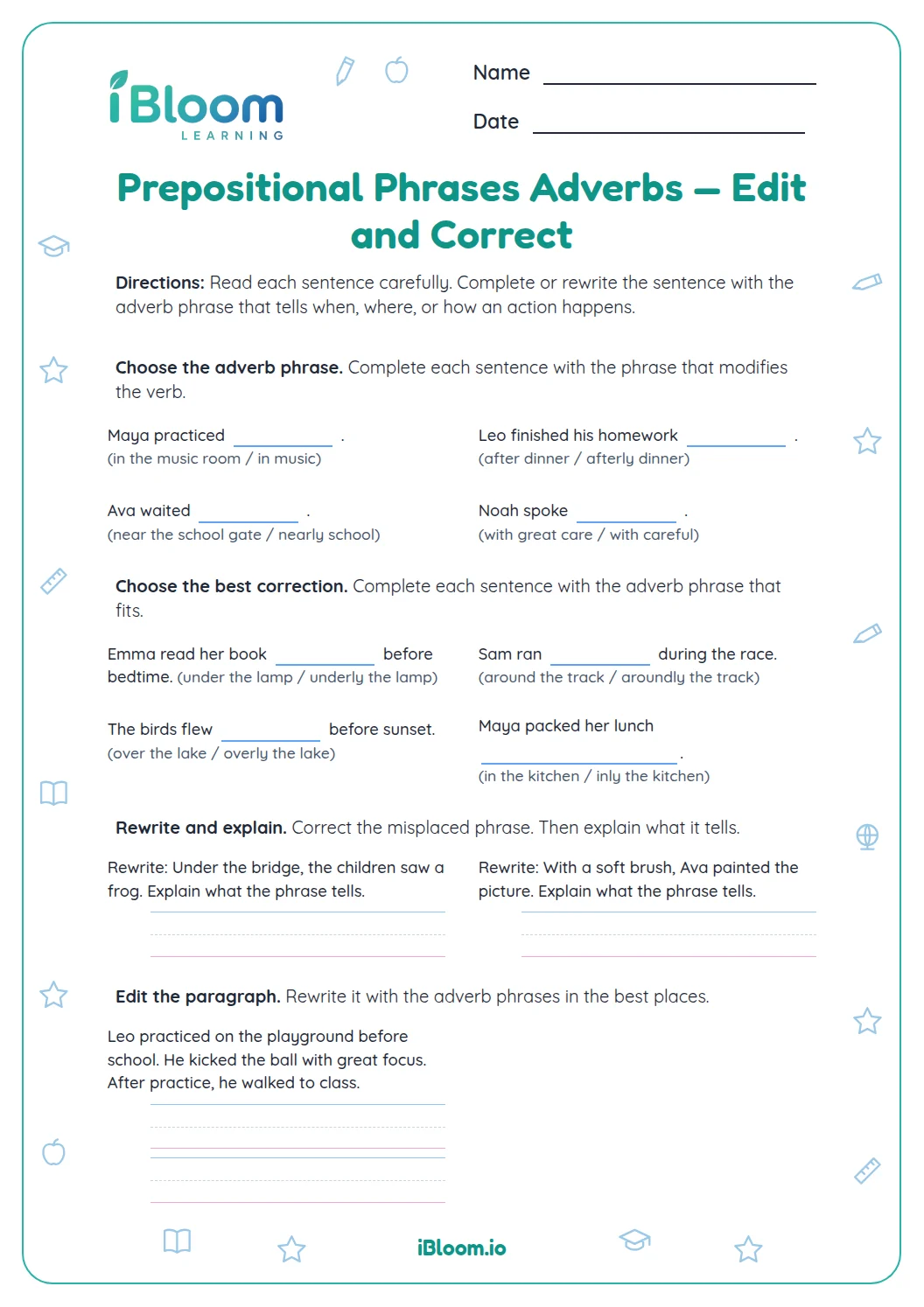
Choose a phrase that fits the sentence and place it near the word it describes. In original writing, test the phrase by asking what noun or action it adds information about.
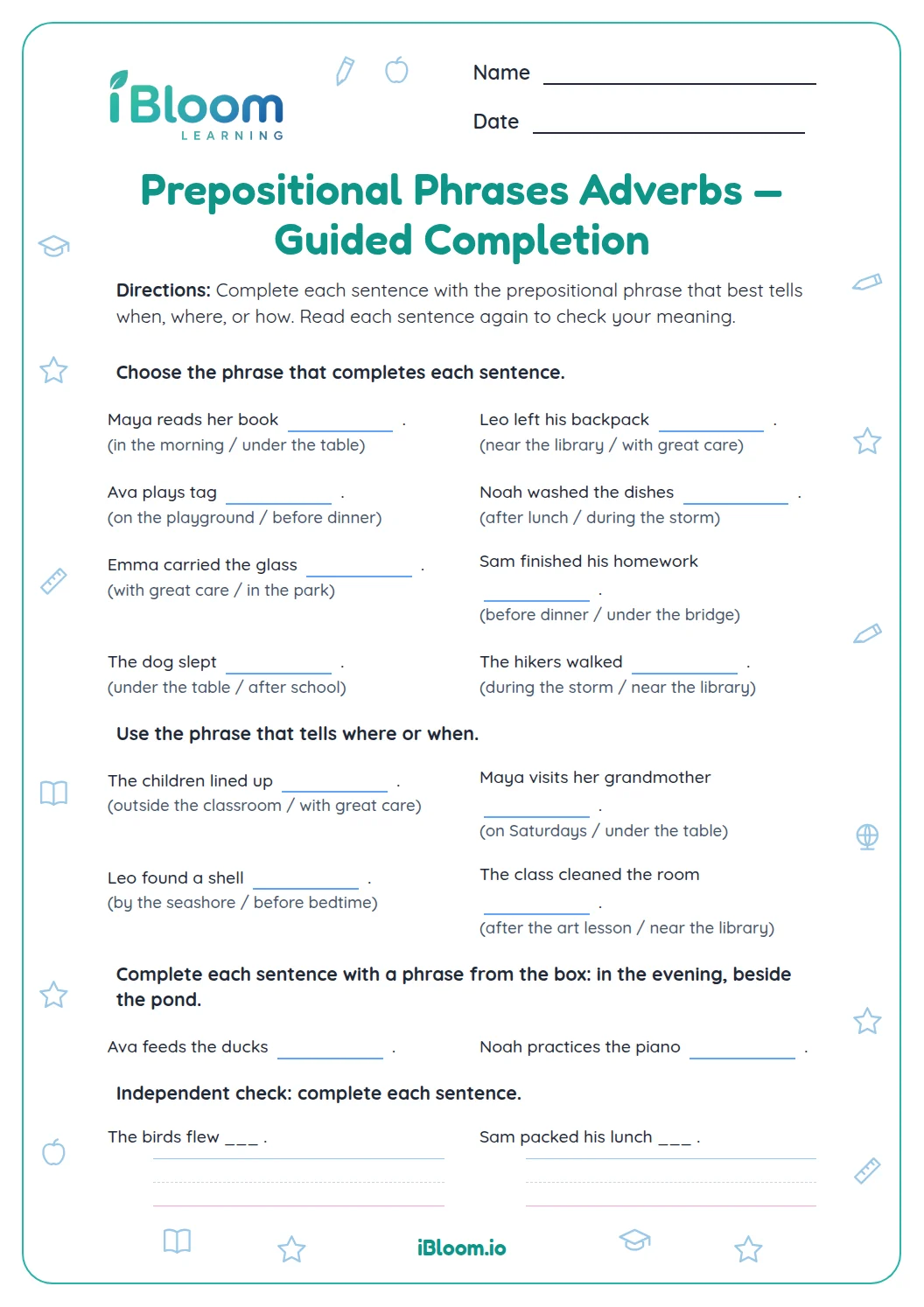
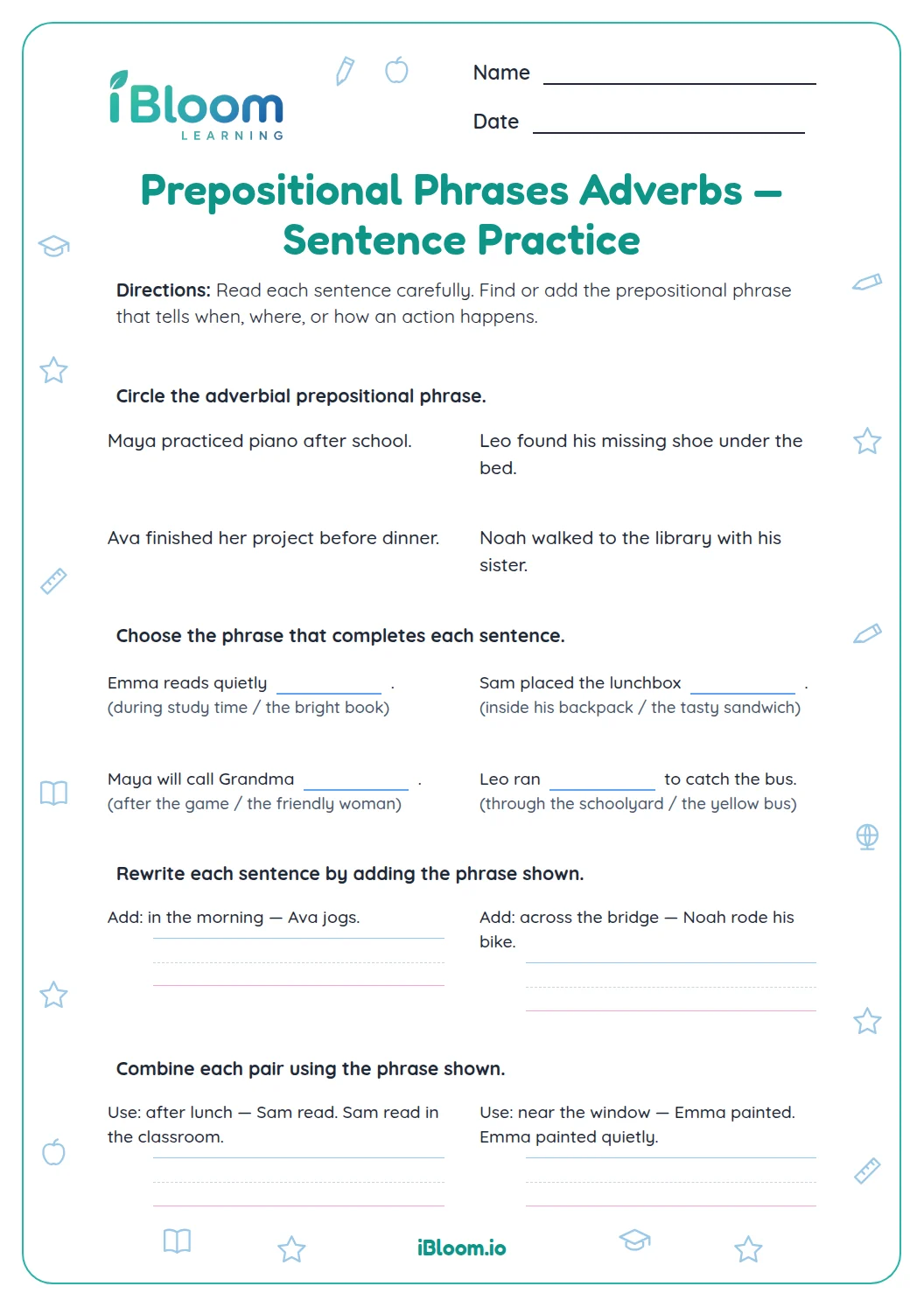
Part B moves from selecting a fitting phrase to writing complete examples.
- 1“The children played under the old oak tree.” The phrase adds where they played.
How to use this worksheet
- 1Read each complete sentence before deciding what a phrase describes.
- 2In Part A, underline the phrase and draw an arrow to the noun or verb it modifies.
- 3In Part B, read the sentence aloud with each candidate phrase to see what fits.
- 4For original sentences, make the phrase’s relationship clear and keep the sentence complete.
- 5Check the answer key for phrase choices and compare your own sentences with the sample.
Common mistakes and quick fixes
The mistake
Calling every location phrase an adjective.
The fix
Ask whether it describes a noun or an action.
The mistake
Choosing a phrase that fits the topic but not the sentence grammar.
The fix
Read the whole sentence with the phrase inserted.
The mistake
Writing a phrase without a complete sentence.
The fix
Add a subject and verb around the phrase.
What to practice next
Make more practice
Questions parents and teachers ask
What is a prepositional phrase?
A prepositional phrase begins with a preposition and includes its object and any describing words. Examples on this worksheet include “on the desk,” “through the park,” and “with confidence.” The phrase adds information about a noun or an action.
How can I tell whether a phrase describes a noun or a verb?
Find the word the phrase gives more information about. If it identifies or describes a person, place or thing, it acts like an adjective. If it tells where, when or how an action happens, it acts like an adverb.
Are the sample sentences the only correct answers?
No. The answer key gives one model for each open writing prompt. Other complete sentences are correct when they use the required phrase exactly and make its meaning clear. For the two-sentence question, one phrase should describe a noun and the other an action.
Why does Part A ask which word a phrase describes?
The target word reveals the phrase’s job. In “The book on the desk is mine,” the phrase tells which book. In “Maya ran through the park,” it adds information about the action ran. This gives students a concrete way to identify function.
What should a student check after writing a sentence?
Check that the sentence has a subject and verb, includes the requested phrase, and places the phrase so its meaning is clear. Then ask what word the phrase describes. That final check connects the sentence writing back to the skill in Part A.