




About this worksheet
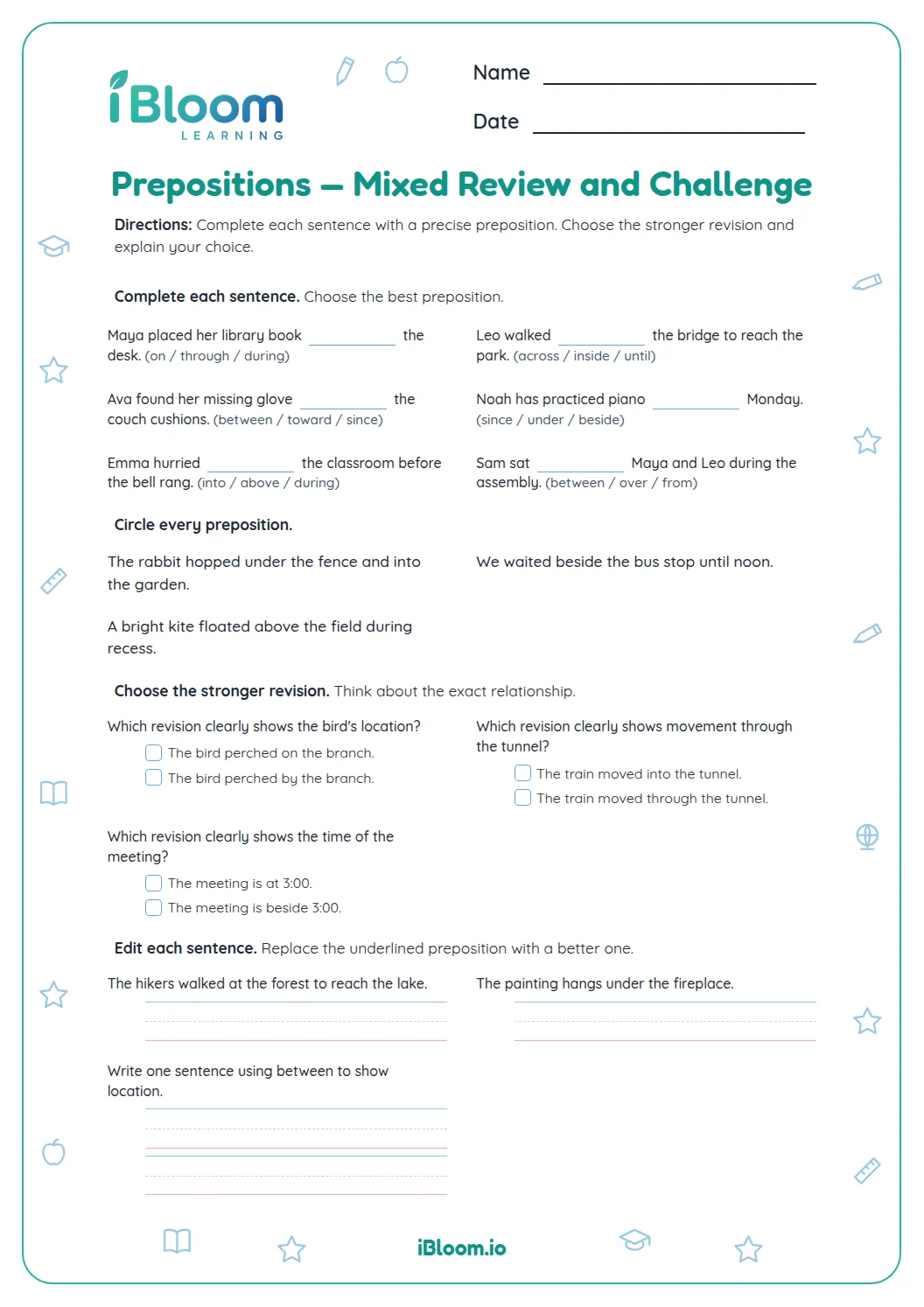
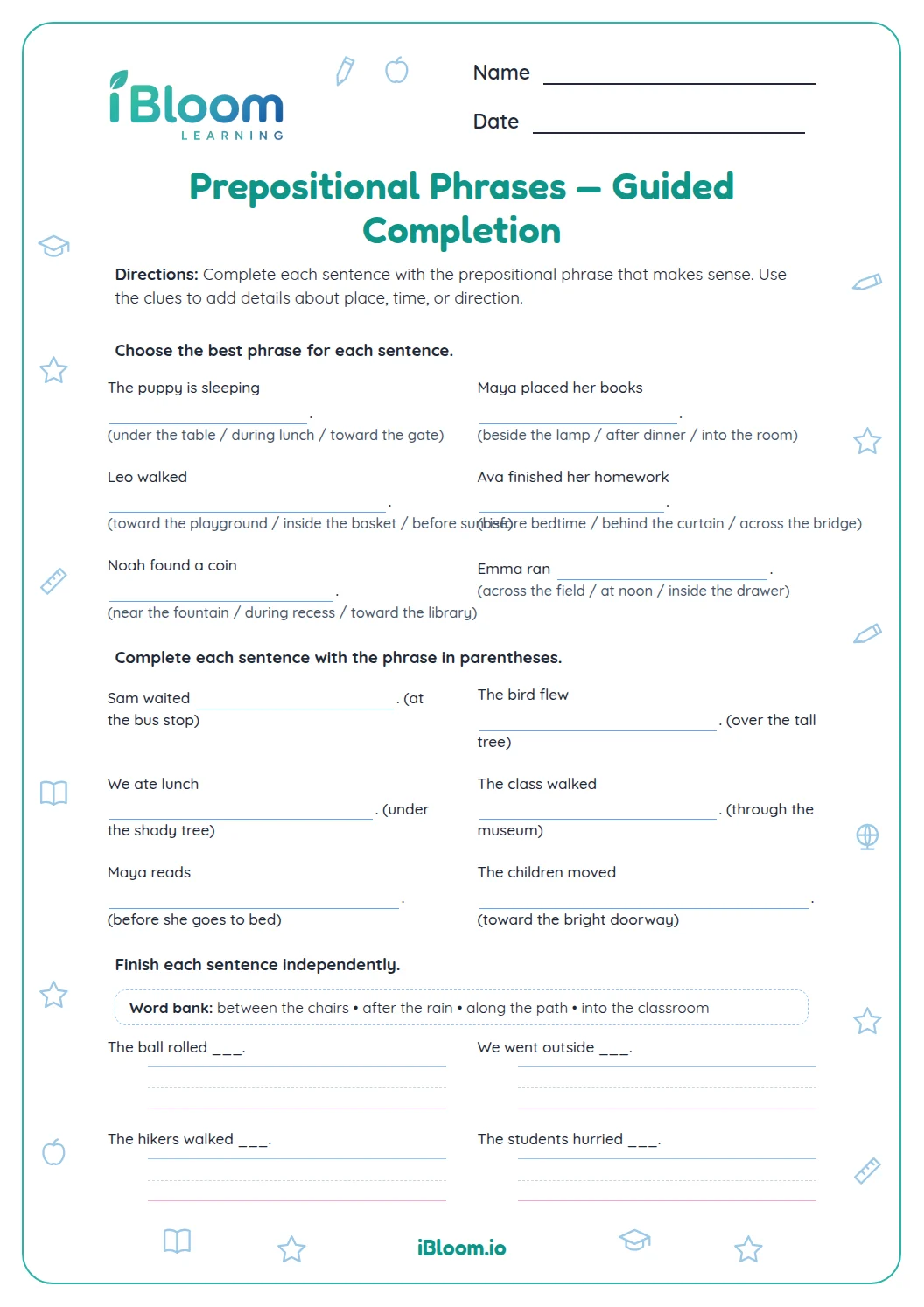
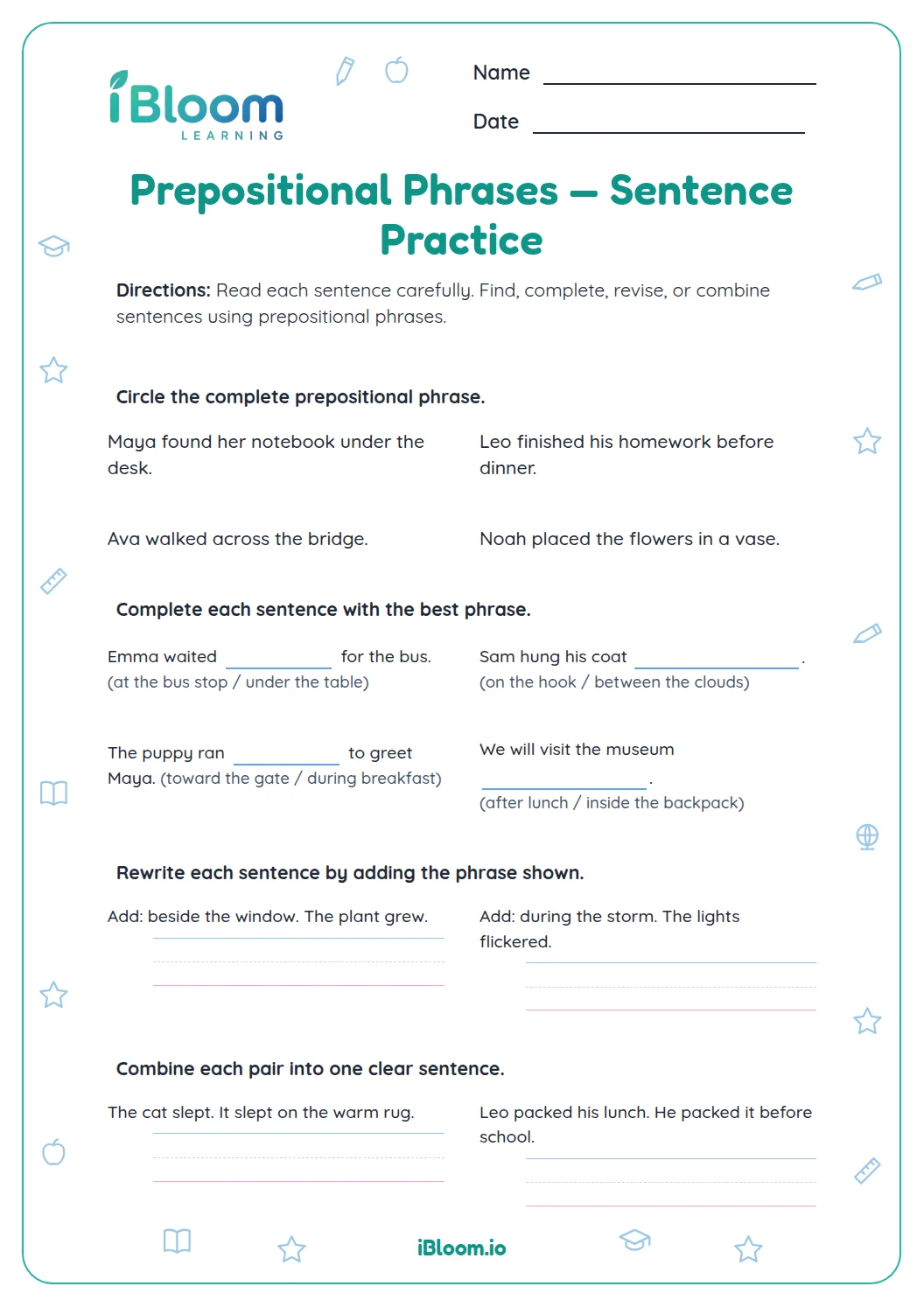
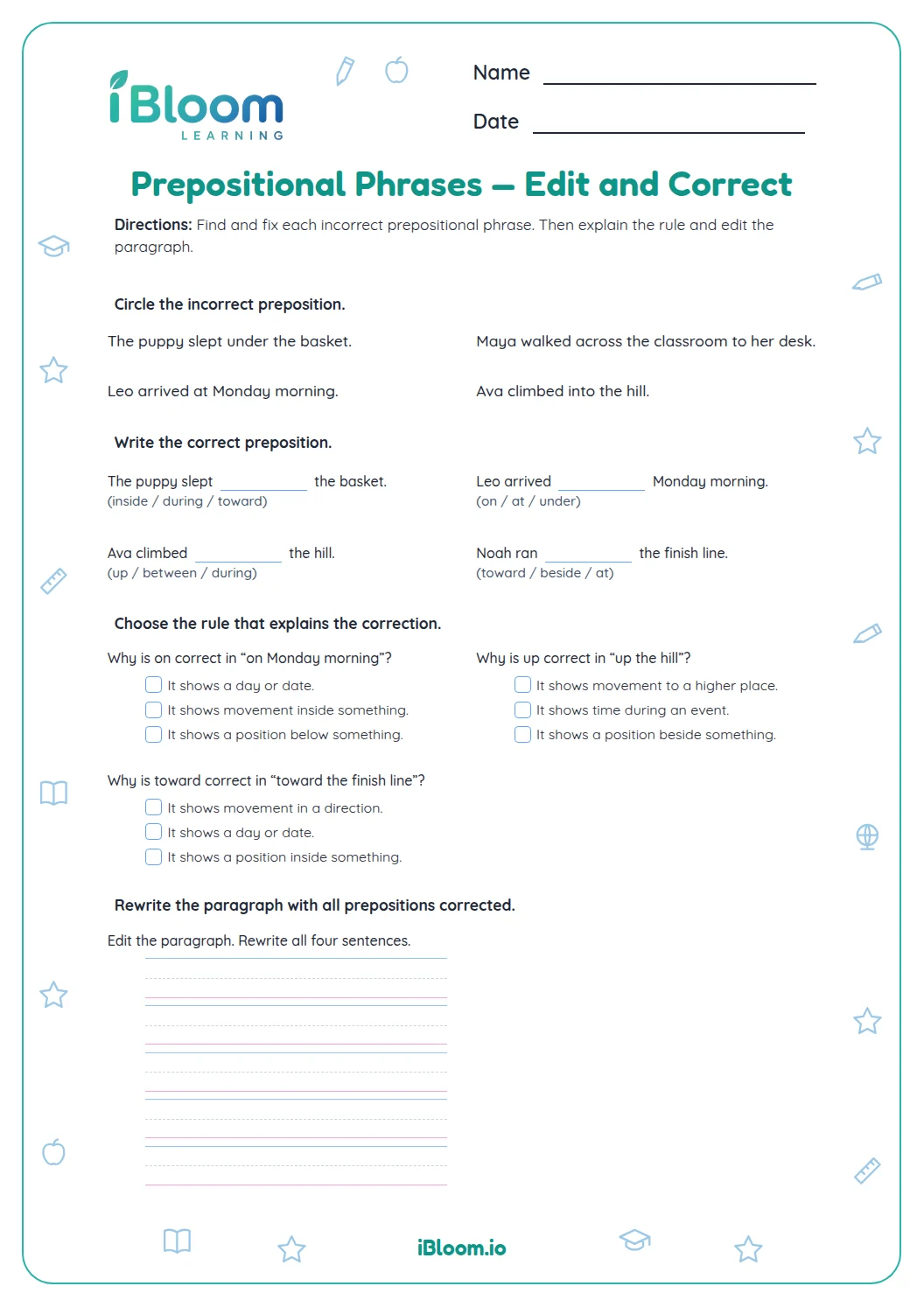
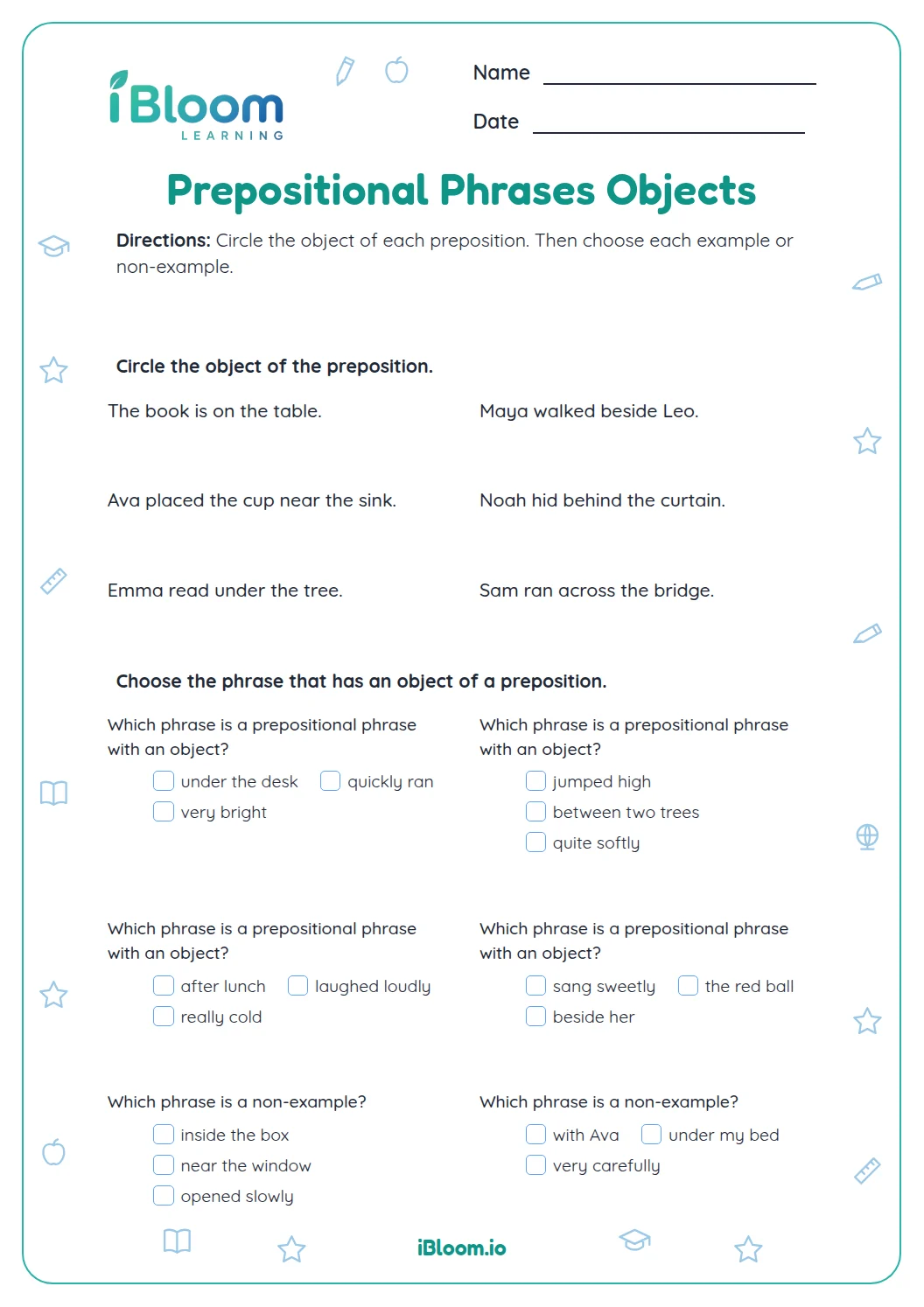
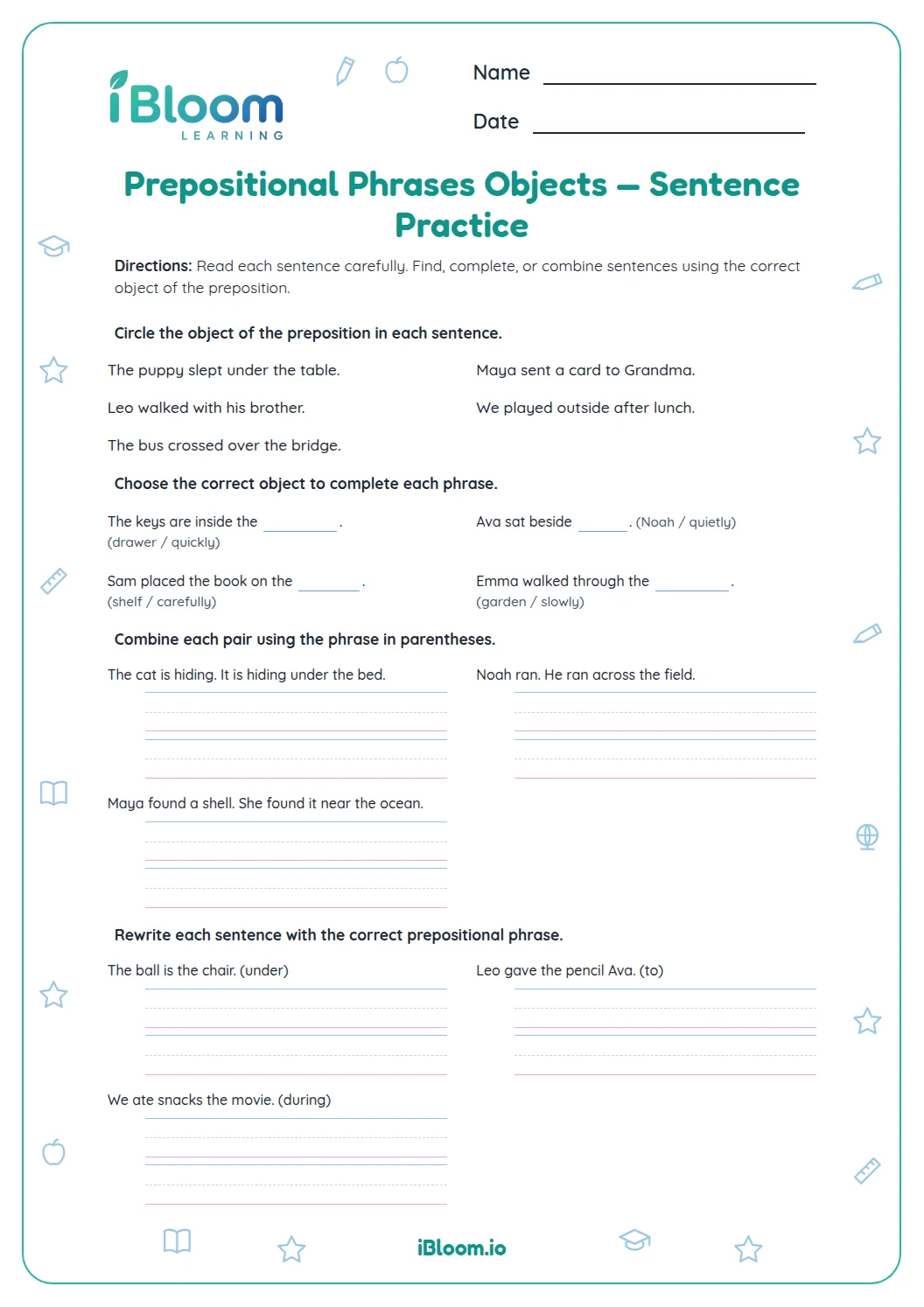
This Grade 4 printable moves from recognizing prepositions to using them in context. Students choose a preposition in five sentence examples, then write the missing preposition in nine more sentences. The work practices Common Core Language standard L.4.1, command of English grammar and usage. The key lists each answer.
Aligned to L.4.1
What does a preposition do?
A preposition shows a relationship between a noun or pronoun and another word. It can tell where something is (under the chair), where it moves (through the tunnel), or when an event happens (after the game).
On this sheet, students first choose a preposition from three words to complete five sentences, then use context clues to write the missing preposition in nine more sentences.
- 1The backpack is ___ the chair.
- 2Choose under: it tells where the backpack is.
- 3The phrase under the chair is a prepositional phrase.
How does the practice build?
Part A offers three word choices to complete five sentences. Part B gives nine sentence-completion prompts that ask students to apply prepositions for place, movement, or time.
What is a prepositional phrase?
A prepositional phrase begins with a preposition and includes its object, often a noun or pronoun. In “beside the lamp,” beside is the preposition and the lamp is its object. Together, the words tell where something is.
How to use this worksheet
- 1Read the whole sentence and locate the blank.
- 2For choices, test which word creates a sensible relationship.
- 3For Part B, use the clue to decide which preposition fits.
- 4Read the completed sentence aloud and check its meaning.
- 5Check the answer key if a different preposition seems possible.
Common mistakes and quick fixes
The mistake
Choosing an adverb because it also describes an action.
The fix
Ask whether the word shows a relationship to a noun, often where or when.
The mistake
Writing only a preposition without its object in the sentence.
The fix
Add a noun or pronoun after it, such as “beside the lamp.”
The mistake
Using a phrase that does not fit the sentence.
The fix
Read the whole sentence with the phrase and check that the relationship is clear.
Common Core alignment
This worksheet gives children focused practice with a specific Common Core skill.
Use prepositions and their phrases in complete sentences.
On this sheet: Students choose and write prepositions to complete sentences and form prepositional phrases.
Show the official wordingHide the official wording
Demonstrate command of the conventions of standard English grammar and usage when writing or speaking.
What to practice next
Make more practice
Further reading
Questions parents and teachers ask
What is a prepositional phrase?
A prepositional phrase starts with a preposition and includes its object. In “under the chair,” under is the preposition and the chair is its object; together they tell where the backpack is located in relation to the chair.
Which kinds of relationships can a preposition show?
Prepositions can show place, movement, direction, or time. This sheet uses examples such as across a field, through a gate, and before a show. Students use the surrounding sentence to decide which relationship makes sense. The examples include both single words and phrases that give useful context.
How many writing questions are included?
Part B has nine sentence-completion questions. Each gives a context clue for choosing a preposition about place, movement, or time; the key lists a sample answer. Read the whole sentence to check the relationship. The sample responses demonstrate how the clues point to a word.
Does the answer key expect the exact sample sentence?
No. The key gives one possible answer for each prompt. Another answer is acceptable when it completes the sentence and expresses the relationship described in the clue. For example, nearby wording can make a different location term fit.
Why do some choices in Part A not fit?
The incorrect choices describe how something happens or what it is like. A preposition instead shows a relationship, such as where the backpack is or where someone walked. Look for the word that connects the noun to the rest of the sentence.