





About this worksheet
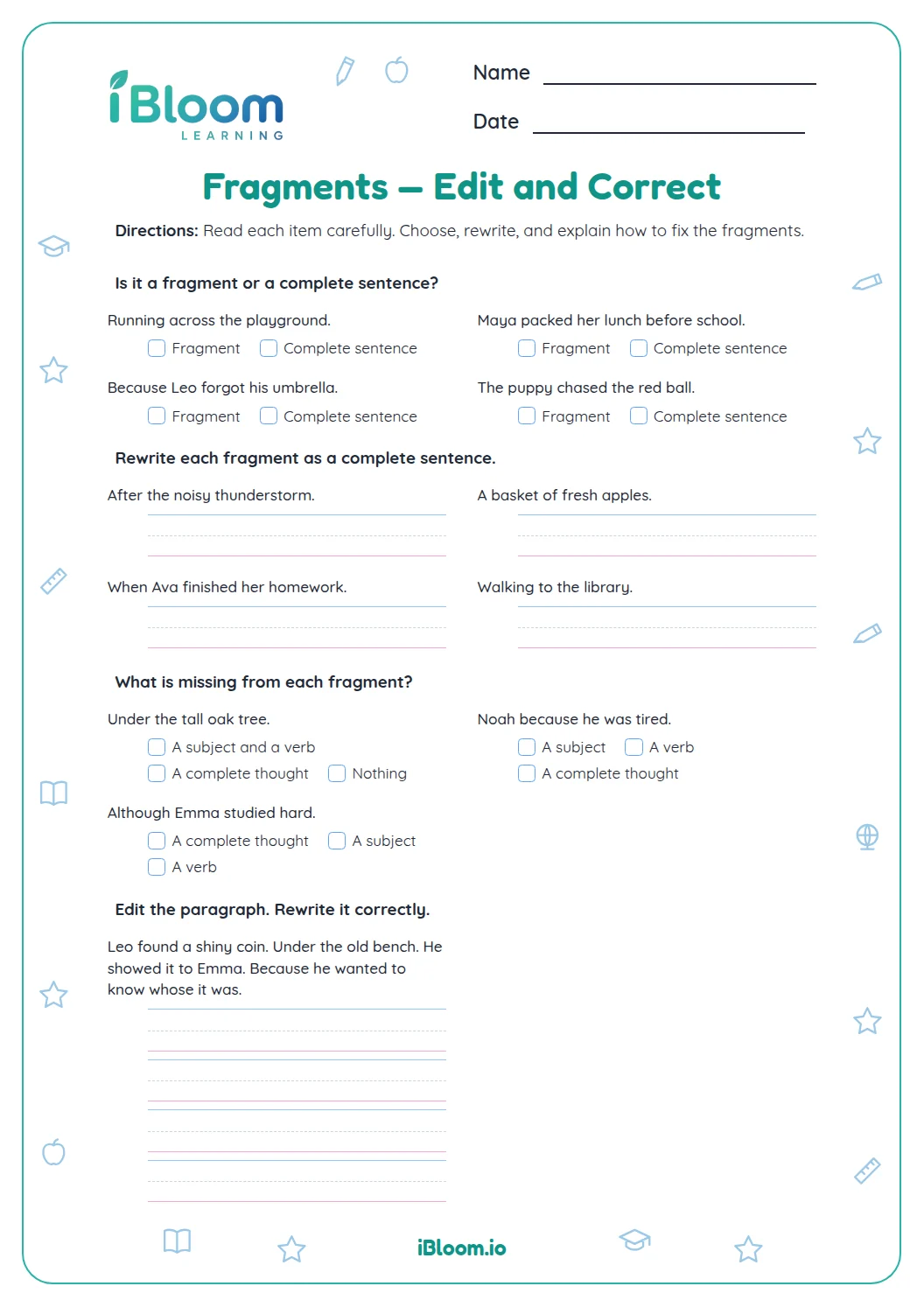
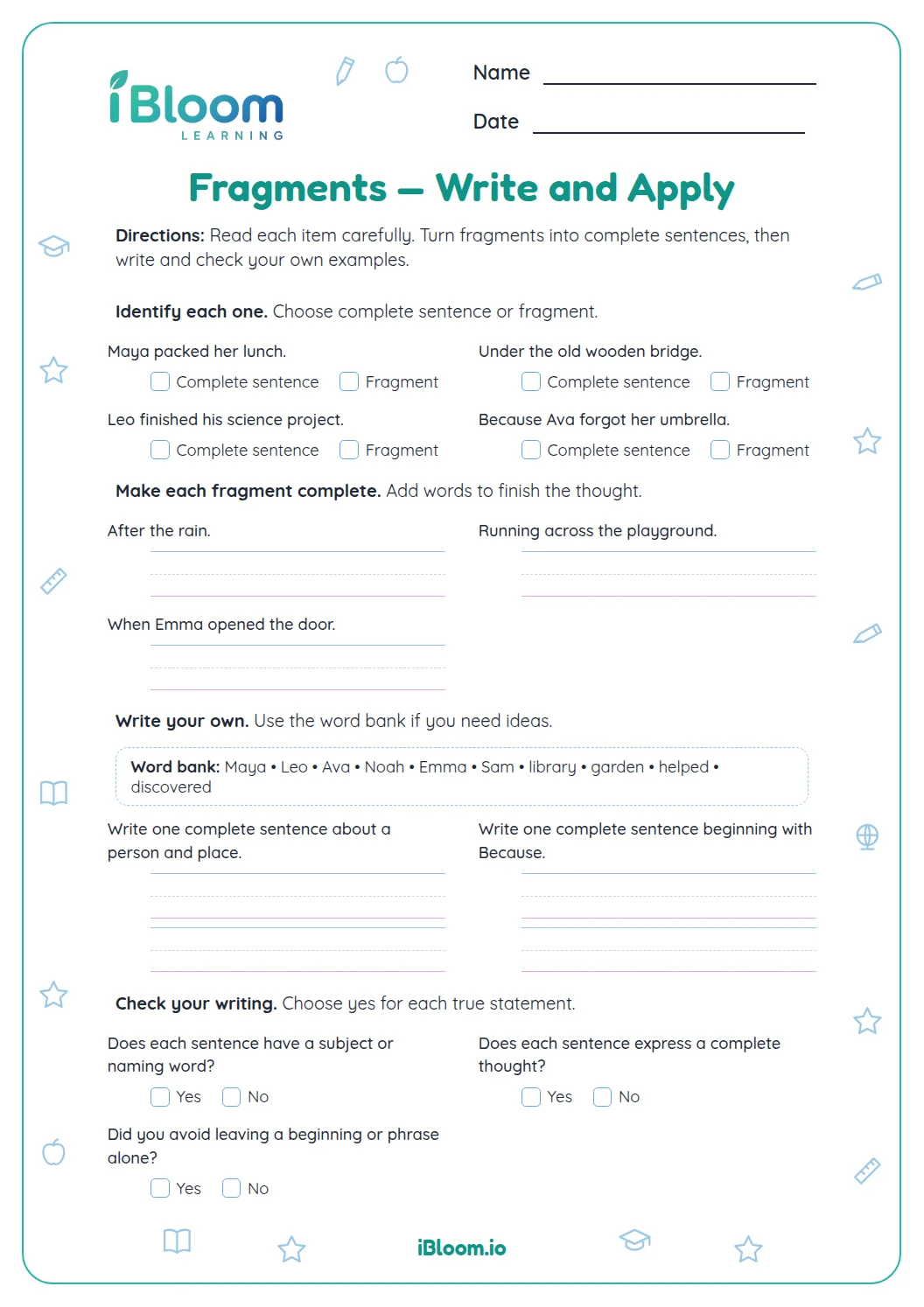
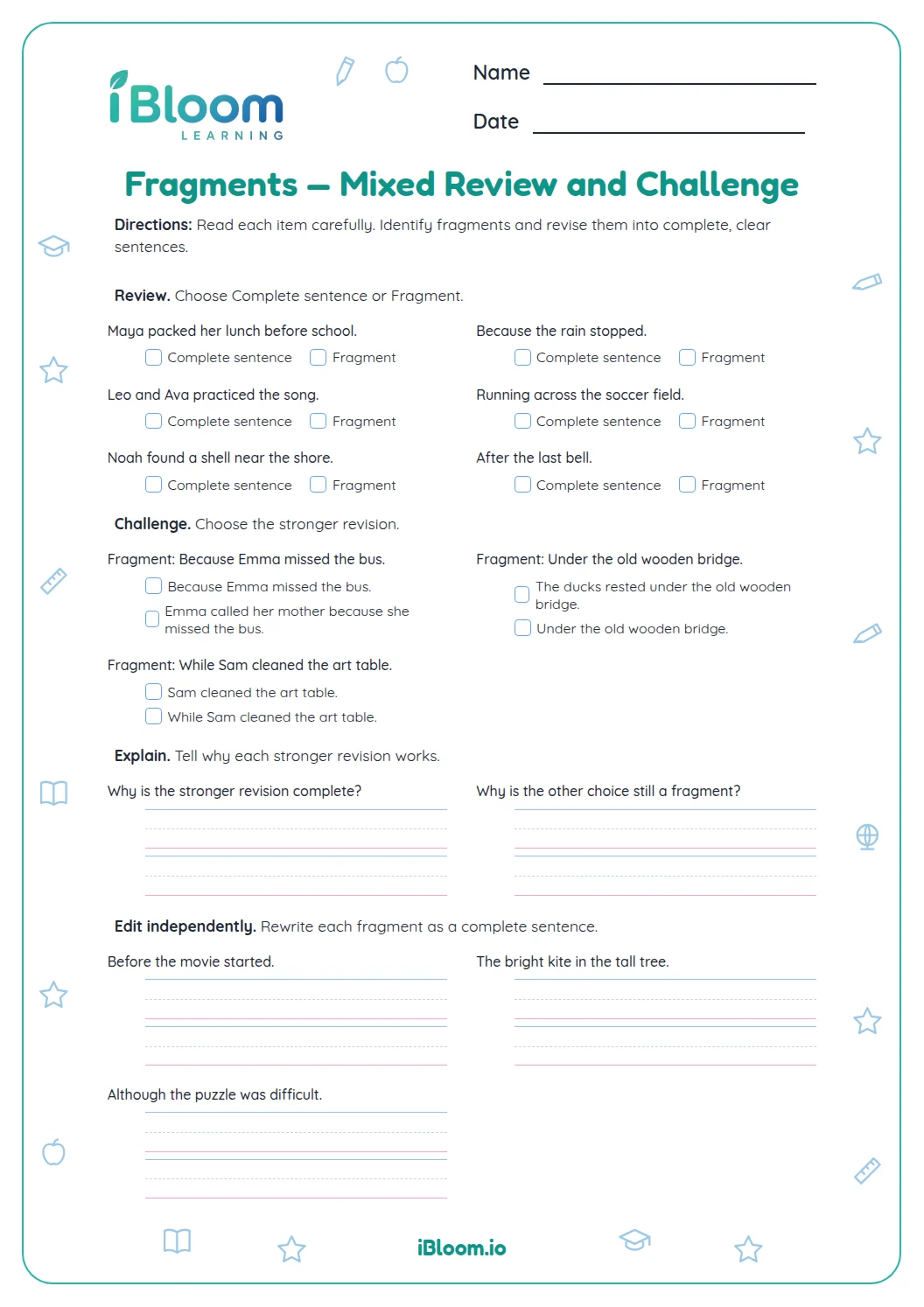
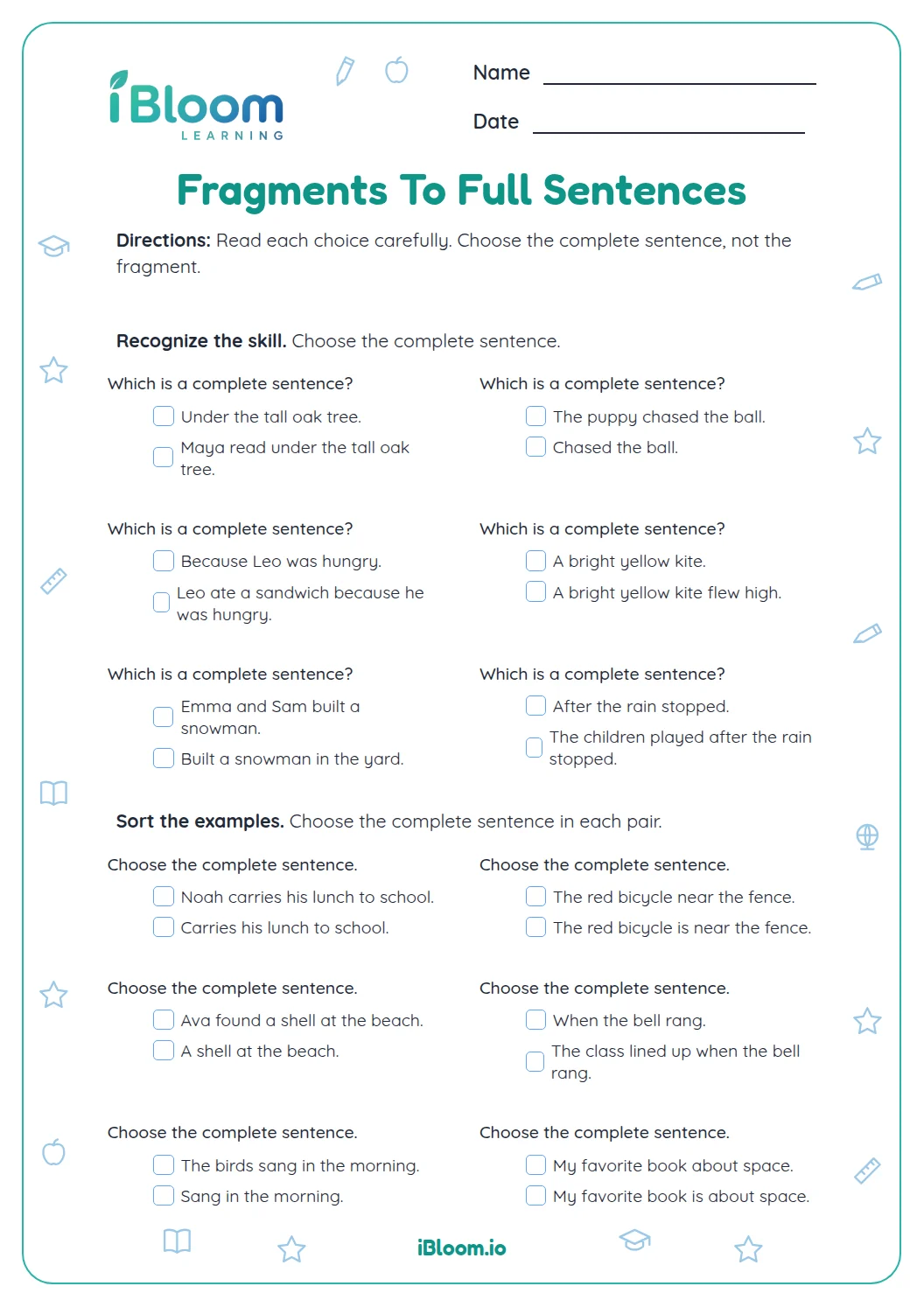
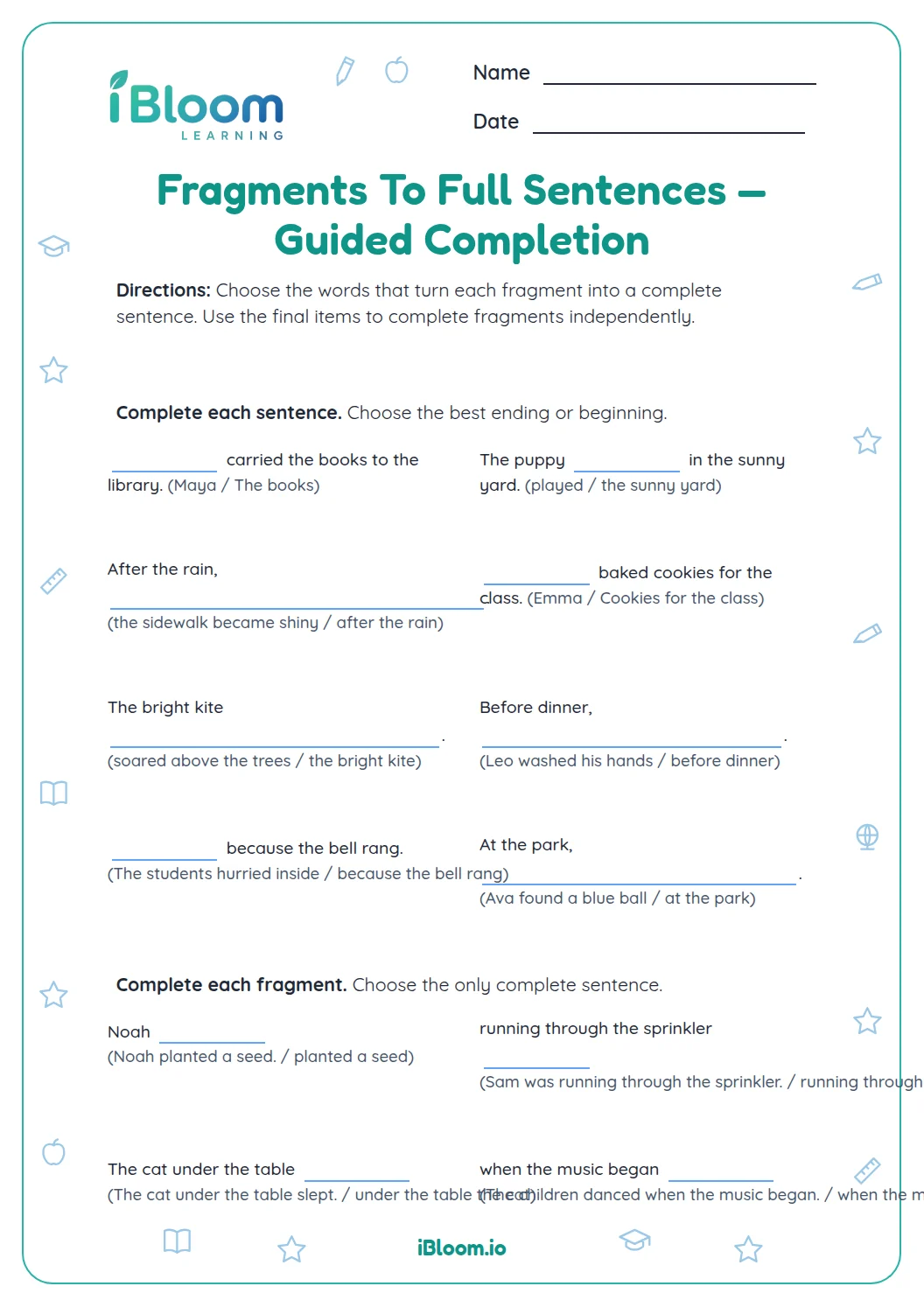
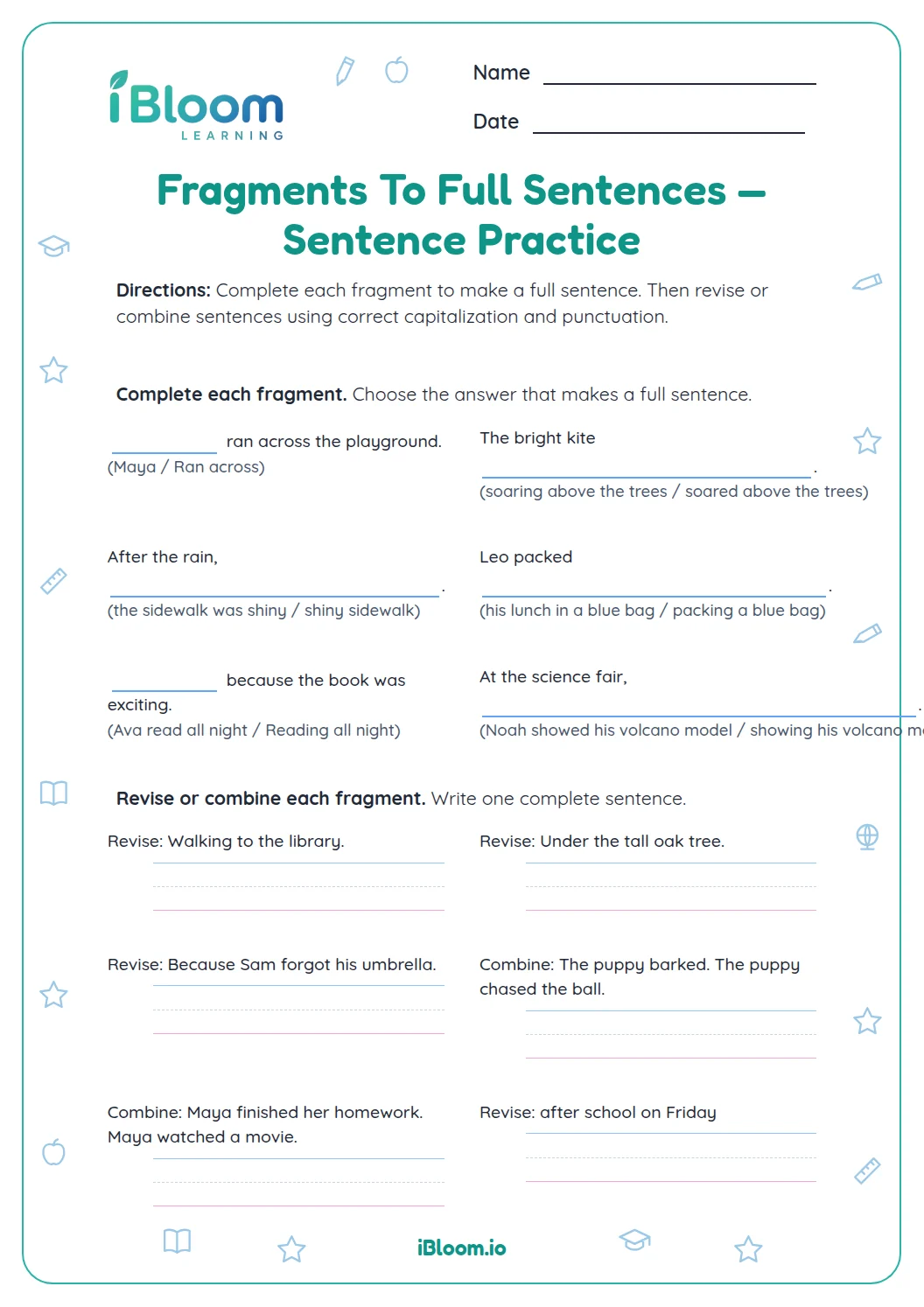
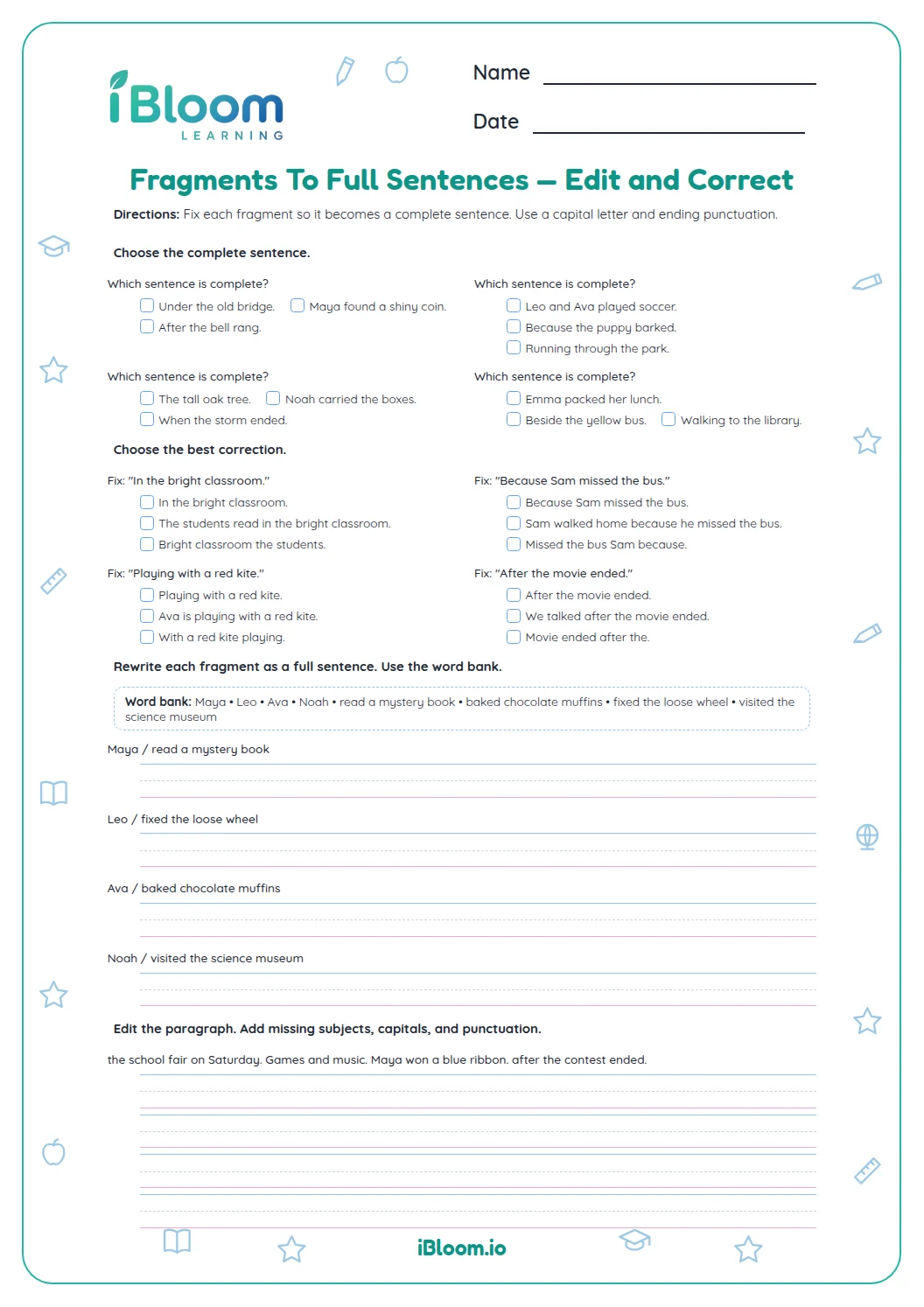
This Grade 4 sentence worksheet helps students tell complete sentences from fragments and revise unfinished thoughts. Part A has 12 examples to label; Part B has four fragments to complete in the student’s own words. The practice supports CCSS L.4.1.f, which asks students to recognize and correct fragments when editing. A separate answer key includes sample repairs.
Aligned to L.4.1.f
How can you spot a sentence fragment?
A complete sentence tells a whole thought. It names a subject and says what the subject does or is. A fragment may start with a dependent word such as because, when or although, then leave the thought unfinished.
In question 2, “Because the rain stopped” makes a reader wait: what happened because the rain stopped? That missing main idea makes it a fragment.
- 1Question 1: C — it states a general complete idea.
- 2Question 2: F — “Because” leaves the thought unfinished.
What can you add to repair a fragment?
Add a subject, an action, or a main clause so the words tell what happened. “When the snow began to fall” can become “When the snow began to fall, we went inside.” Keep the original idea while finishing it.
How does the worksheet move from labeling to revising?
Part A asks you to label twelve examples. Part B gives four fragments to finish in your own words; the answer key provides one sample for each.
How to use this worksheet
- 1Read each item once for meaning.
- 2In Part A, write C if the thought is complete and F if it is unfinished.
- 3Check dependent beginnings such as because, when and although.
- 4In Part B, add a main thought that finishes each fragment.
- 5Read each revision aloud to make sure it sounds complete.
Common mistakes and quick fixes
The mistake
Marking “Because the rain stopped” complete because it has a subject and verb.
The fix
Read the opening word and ask what happened because the rain stopped.
The mistake
Calling any short group of words a fragment.
The fix
Length does not decide; check whether it expresses a whole thought.
The mistake
Adding words that do not finish the original idea.
The fix
Keep the starter idea and add a main clause that tells what happened.
Common Core alignment
This practice applies the Grade 4 editing standard for complete sentences.
Recognize and correct sentence fragments when editing.
On this sheet: Recognize and correct sentence fragments when editing.
Show the official wordingHide the official wording
Produce complete sentences, recognizing and correcting inappropriate fragments and run-ons.
What to practice next
Make more practice
Further reading
Questions parents and teachers ask
What is a sentence fragment?
A fragment is a group of words that does not express a complete thought. It may be missing a subject, a verb, or the main clause needed to finish an idea. On this page, children identify fragments and then revise four of them into complete sentences.
How many questions are on the worksheet?
There are 16 questions in two parts. The first 12 ask children to label complete sentences and fragments; the last four ask them to rewrite fragments as complete thoughts. Invite the child to explain the choice in their own words, then compare it with the skill practiced on this page.
What is one clue that a sentence is unfinished?
A beginning such as “Because,” “When,” or “Although” can signal that more information is needed. Ask what happened because, when, or although; if the sentence does not answer that, it may be a fragment. Invite the child to explain the choice in their own words, then compare it with the skill practiced on this page.
Should children copy the exact sample sentence in the key?
No. The answer key gives one possible repair, but children may use different words. Their revision should add a complete main thought and keep the original idea. Invite the child to explain the choice in their own words, then compare it with the skill practiced on this page.
What should I do after this practice?
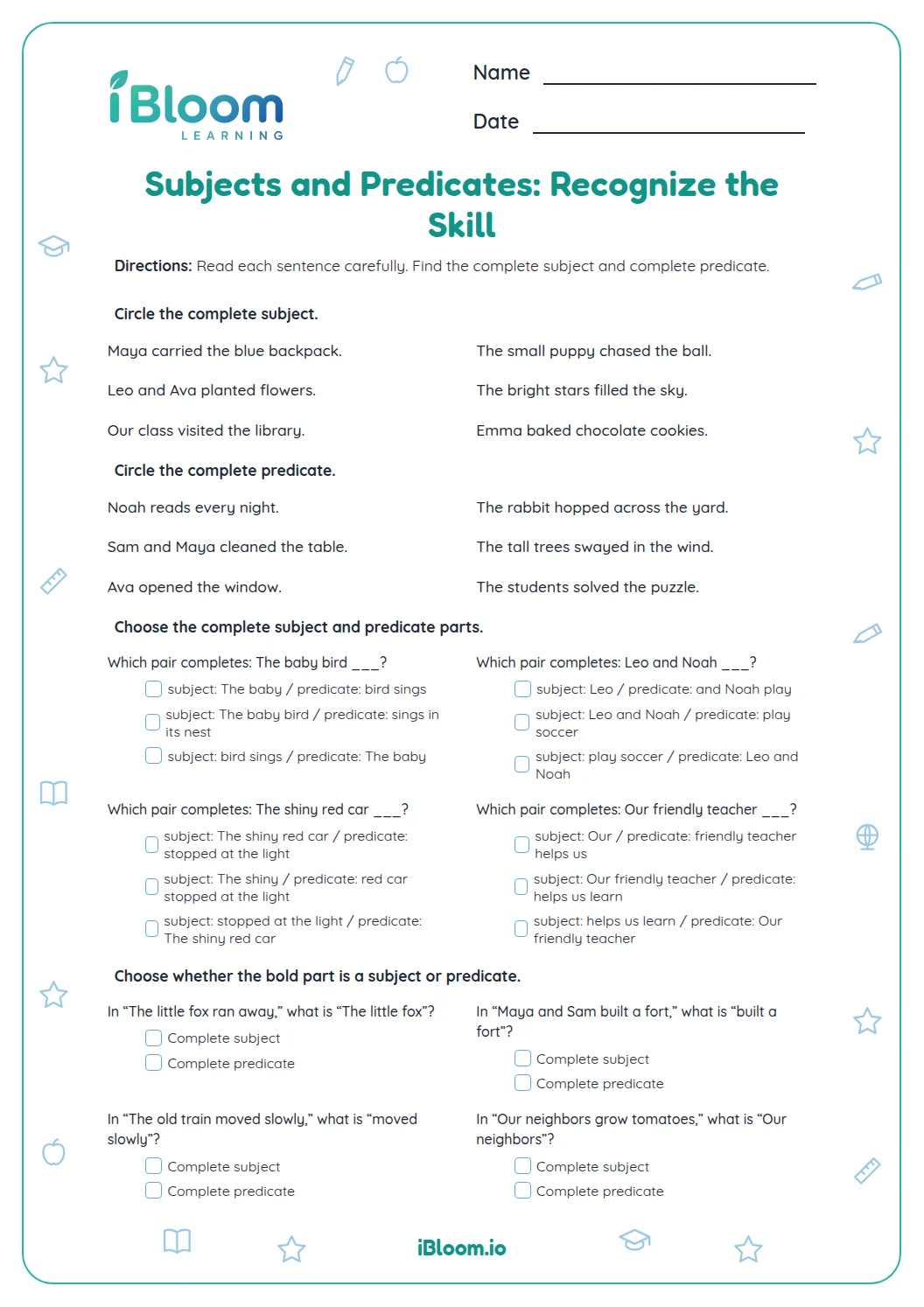
Ask your child to read a short paragraph aloud and pause at each period. Then check whether every sentence expresses a complete thought. The linked sentence worksheets offer practice combining ideas and finding subjects or predicates. Invite the child to explain the choice in their own words, then compare it with the skill practiced on this page.