







About this worksheet
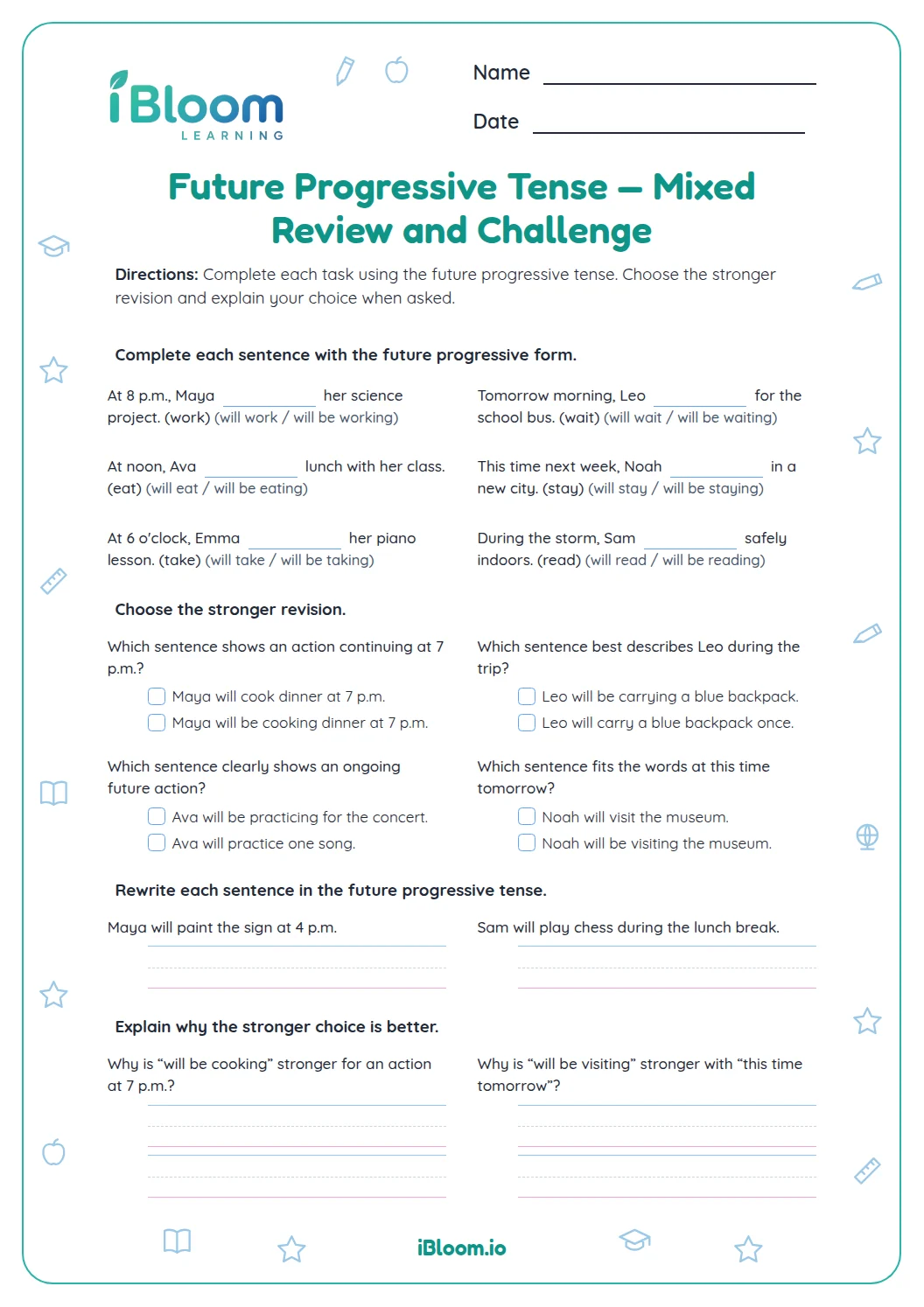
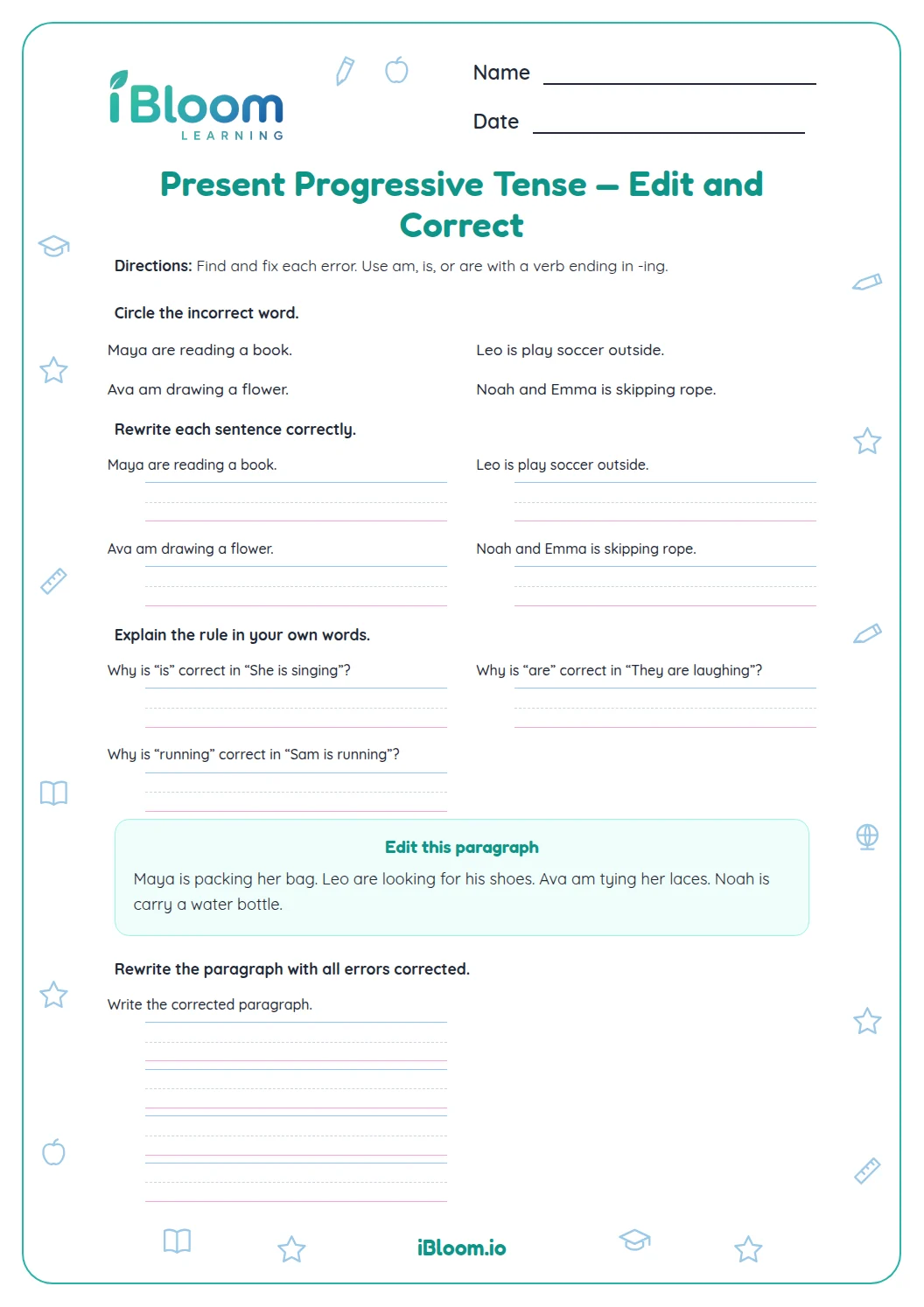
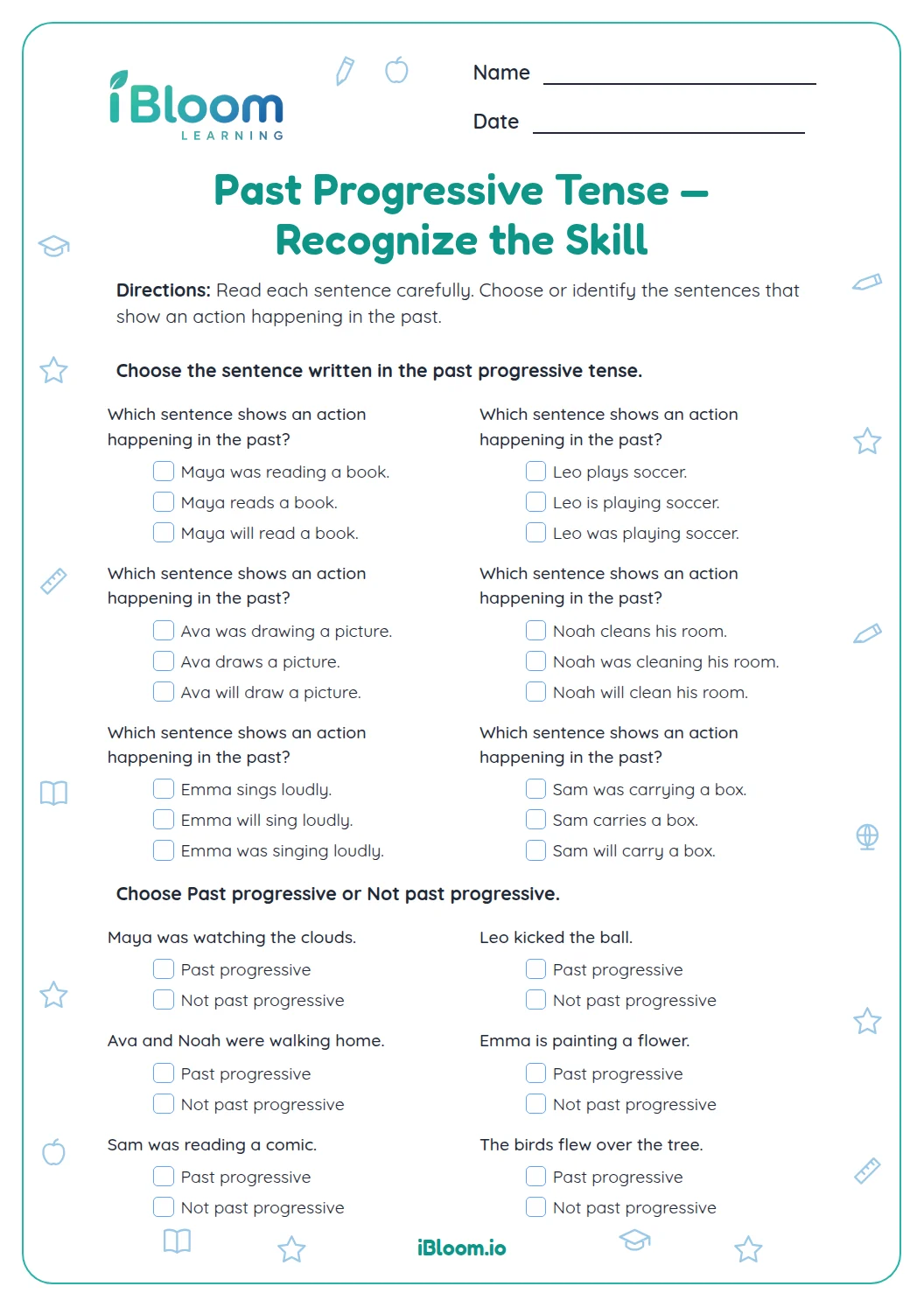
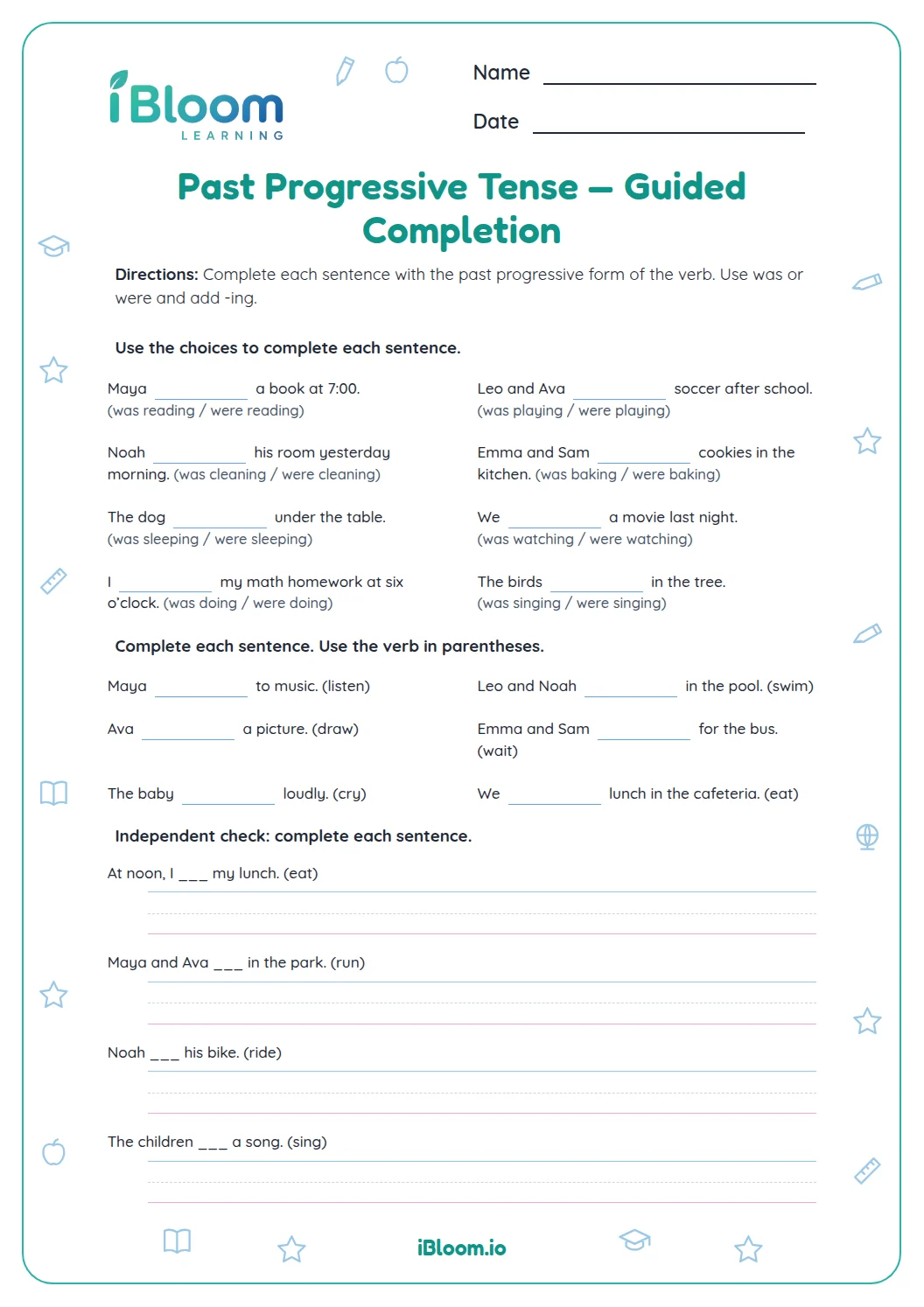
This free Grade 4 worksheet has 15 questions about the future progressive tense. Part A asks learners to recognize phrases that use will be plus an -ing verb. Part B provides eight sentences to complete, and the final item asks for one original future progressive sentence. The old sheet included extended writing and a checklist; this replacement gives focused recognition, completion, and one short application task. It practices CCSS L.4.1.b, forming and using progressive verb tenses.
Aligned to L.4.1.b
What is included in the worksheet?
There are 15 questions in three parts: six recognition items, eight sentence completions, and one short original sentence. Time phrases such as “at noon tomorrow” help learners connect the verb form to an action underway in the future.
The old page asked for several longer responses and a self-check. This replacement keeps the write-and-apply goal with one original sentence after structured practice.
How is the future progressive formed?
Use will be followed by the -ing form of the main verb. The phrase describes an action that will be in progress at a particular future time.
- 1“At 8 tonight, I will be reading my science book.” The verb phrase is will be reading.
What makes the final answer complete?
The final item asks for a sentence about tomorrow at 4:00. Check that it names an action and uses will be followed by a verb ending in -ing.
How to use this worksheet
- 1In Part A, select the phrase or sentence that uses the future progressive.
- 2In Part B, complete each verb phrase with an -ing form.
- 3Write one sentence about an action in progress tomorrow at 4:00.
- 4Check each phrase for will be and the -ing form, then compare with the key.
Common mistakes and quick fixes
The mistake
Writing “will reading” and leaving out be.
The fix
Check that the phrase includes will be before the -ing verb.
The mistake
Writing “will be read” instead of the progressive form.
The fix
Use the -ing form, reading, after will be.
The mistake
Giving a future action without a time when it is underway.
The fix
Include the future time clue requested in the final prompt.
Common Core alignment
This Grade 4 worksheet practices forming and using a progressive verb tense.
Form and use the future progressive verb phrase in sentences.
On this sheet: Recognition, completion, and writing items practice the progressive form.
Show the official wordingHide the official wording
Form and use the progressive (e.g., I was walking; I am walking; I will be walking) verb tenses.
What to practice next
Make more practice
Further reading
Questions parents and teachers ask
What does this future progressive tense worksheet practice?
This Grade 4 printable has 15 questions focused on future progressive tense. Learners identify the tense, complete verb phrases, and write one sentence of their own. The answer key is on its own page, so an adult or student can check responses after the practice is complete.
How can I help if a learner gets stuck?
Read the full prompt together and return to the clue or rule that the item asks about. “At 8 tonight, I will be reading” uses will be and the -ing form reading. Ask the learner to explain why the answer fits before checking the key; that keeps the discussion tied to the skill on this sheet.
How many questions are on the printable?
There are 15 questions, arranged in two parts that move from guided recognition to more independent practice. The page copy and answer key follow the same question numbering, making it easy to review a specific response without repeating the whole activity.
Is an answer key included?
Yes. A separate answer key is included with answers for the 15 worksheet questions. For any response that can vary, the key provides a model or accepts equivalent wording when it meets the stated skill; review those responses by checking the rule, not handwriting or personal preference.
What is one example from the future progressive tense practice?
“At 8 tonight, I will be reading” uses will be and the -ing form reading. A correct response includes a future time and the will be + -ing form. The worksheet includes other examples so learners can apply the same idea across different prompts, then use the separate key to check their work.