



About this worksheet
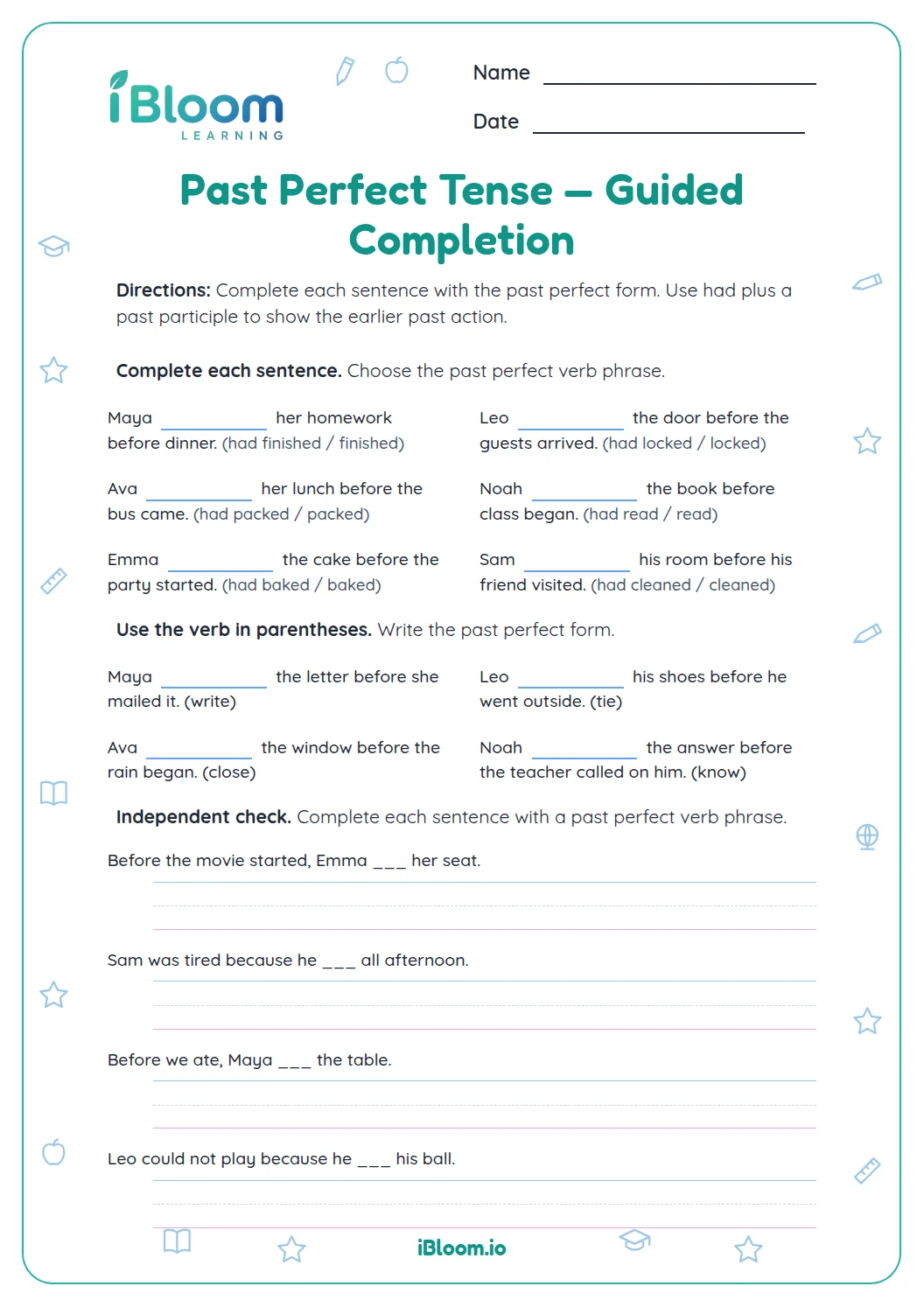
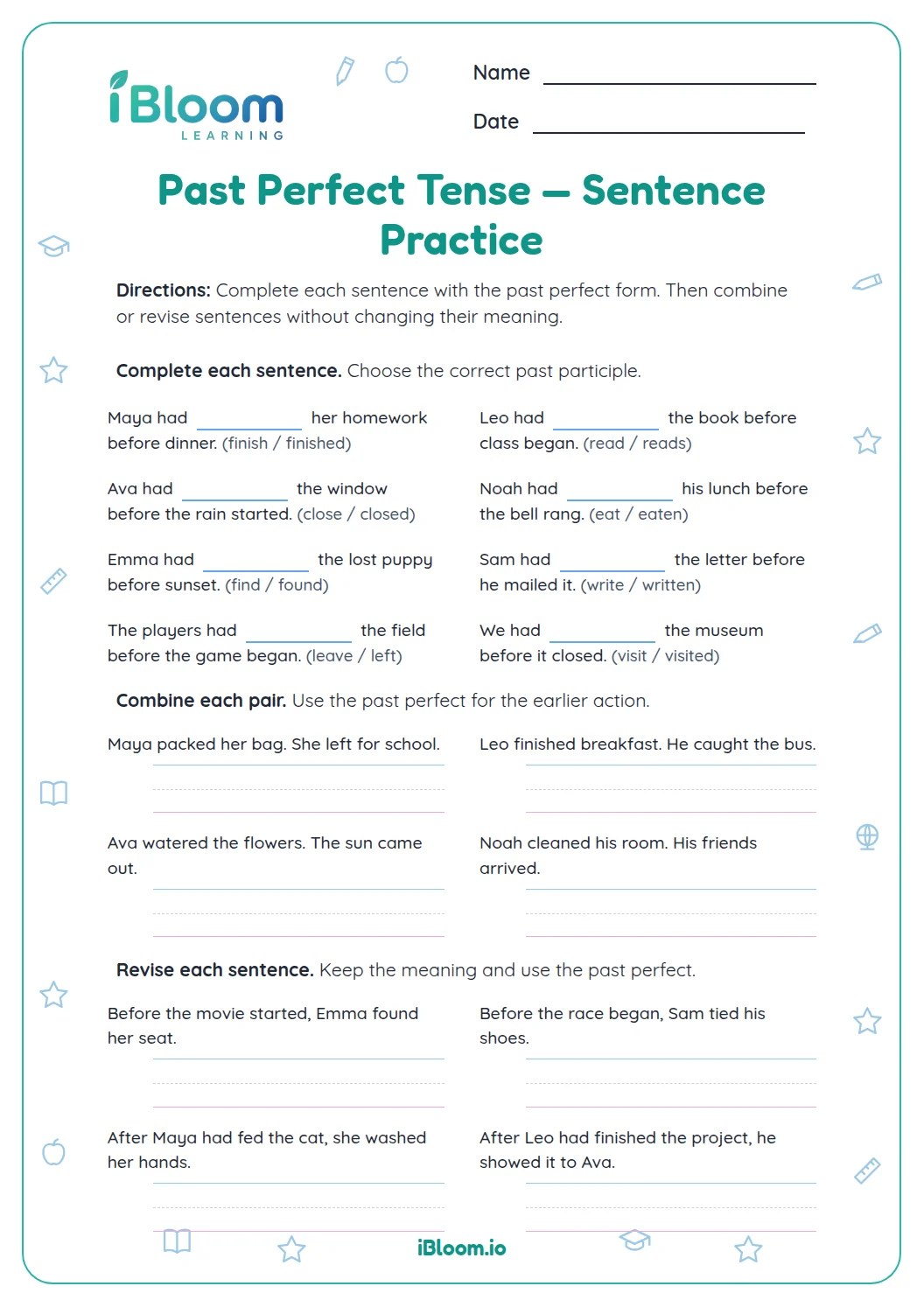
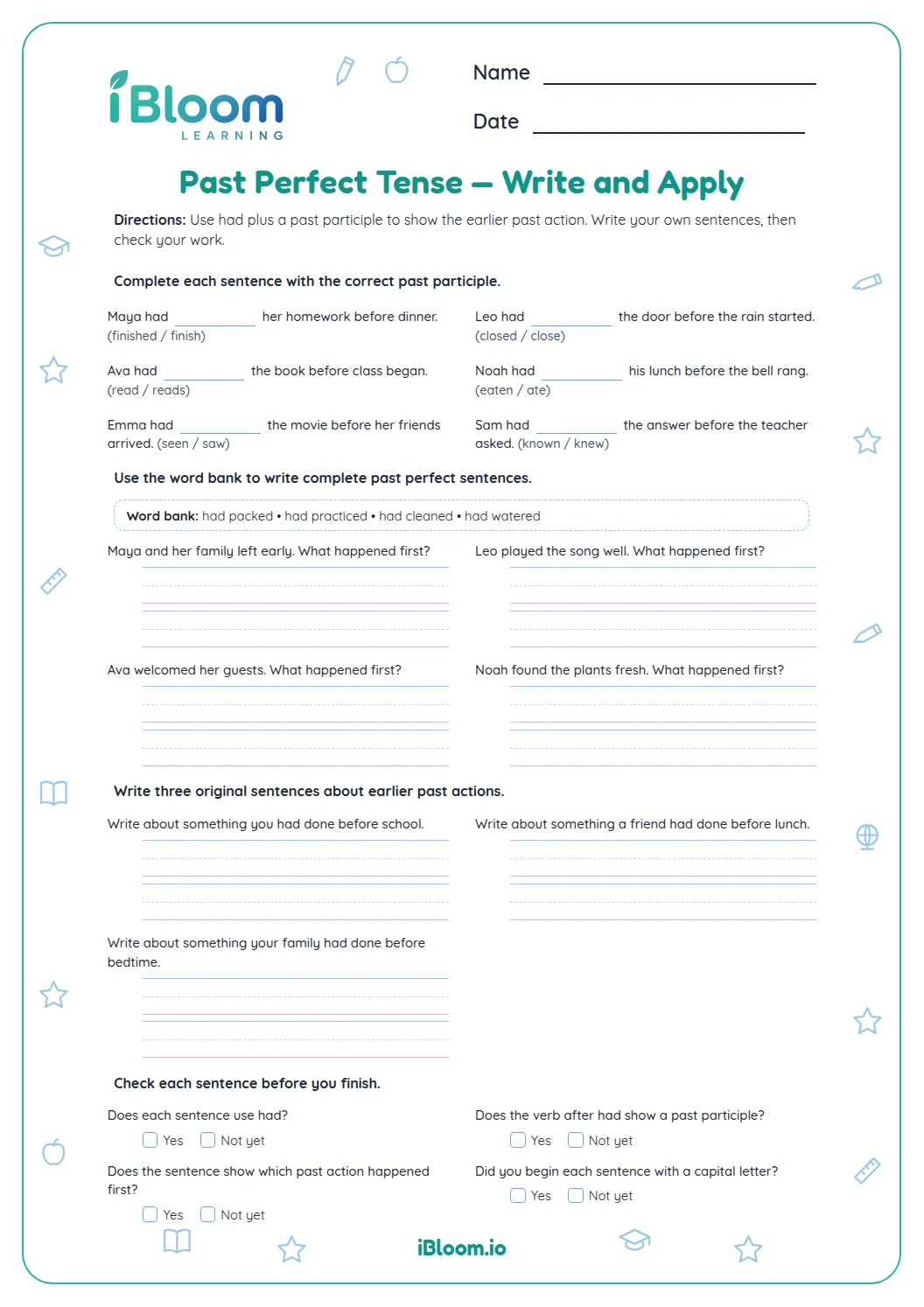
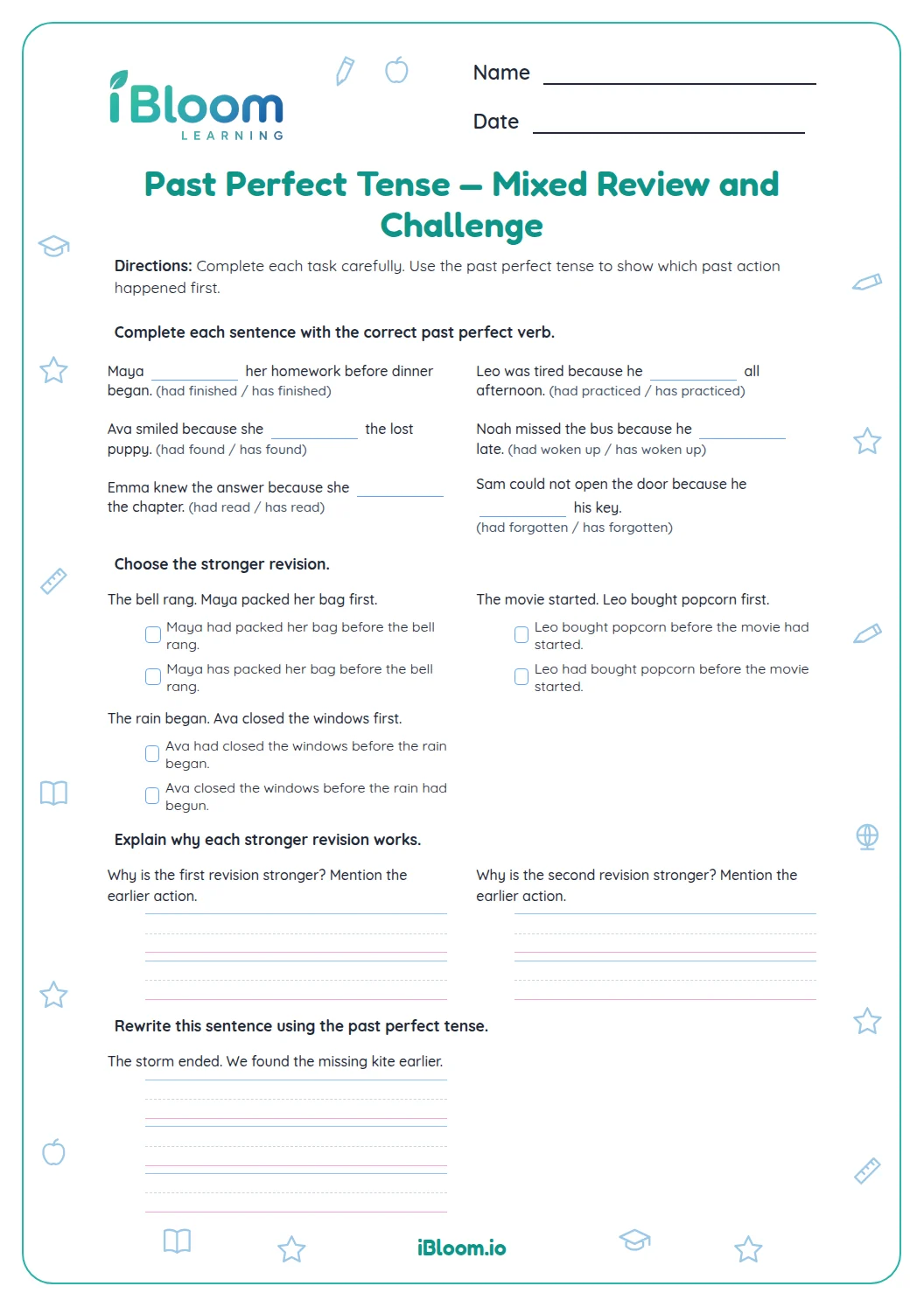
This worksheet practices recognizing and forming past perfect verb phrases. Part A asks students to identify sentences with had plus a past participle; Parts B and C complete phrases in short, clear sentences. Examples show an action completed before another past event, and the separate key lists each answer.
Aligned to L.5.1.b
How can students recognize the past perfect?
A past perfect verb phrase combines had with a past participle. In “Maya had packed,” the phrase is had packed.
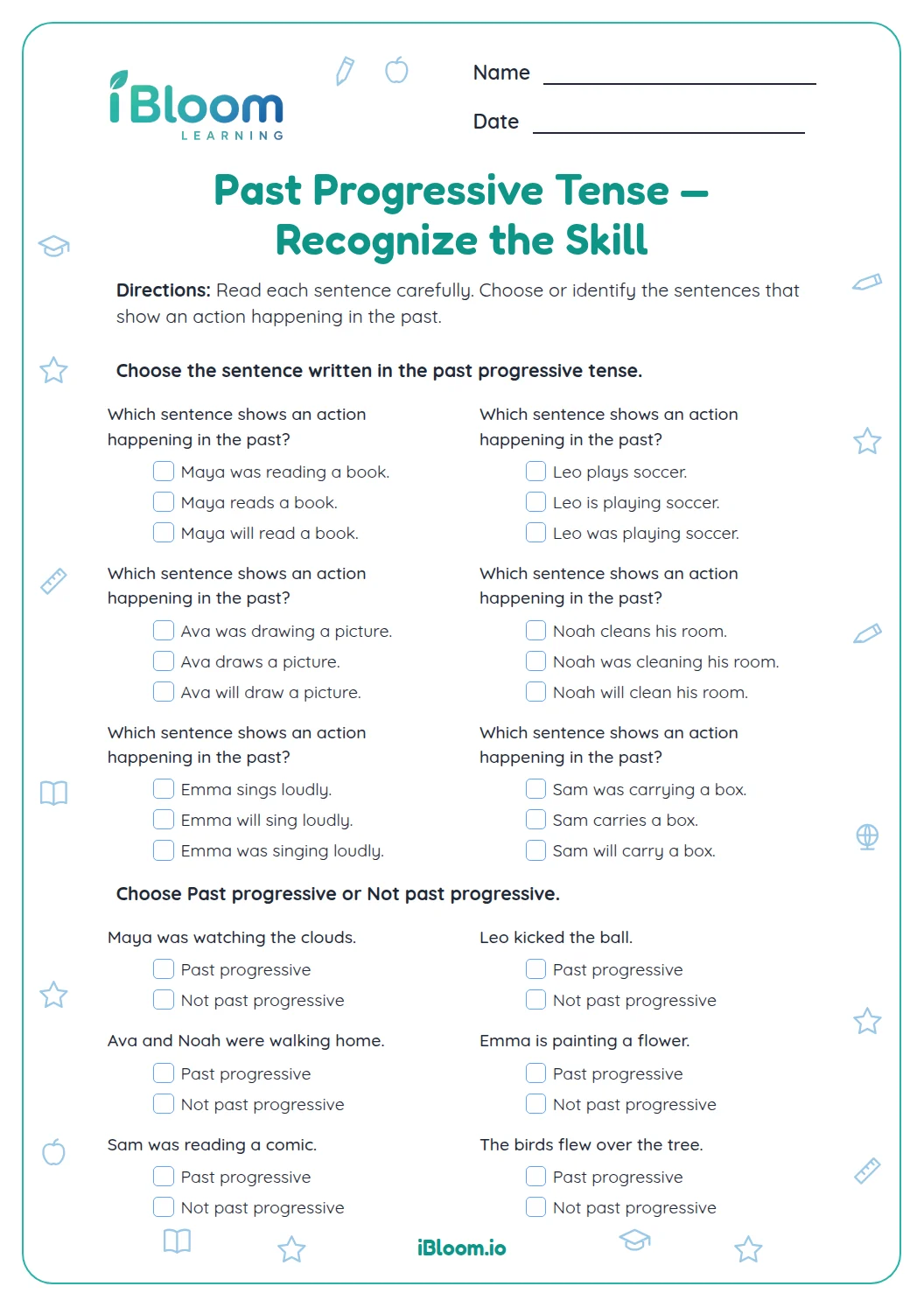
Part A asks students to recognize this form among other verb tenses. Parts B and C ask them to complete the same kind of phrase in context.
- The helper word is had
- Keep the past participle with had
- Time clues such as before help show the sequence
How to use the worksheet
- 1In Part A, find had and check that a past participle follows it.
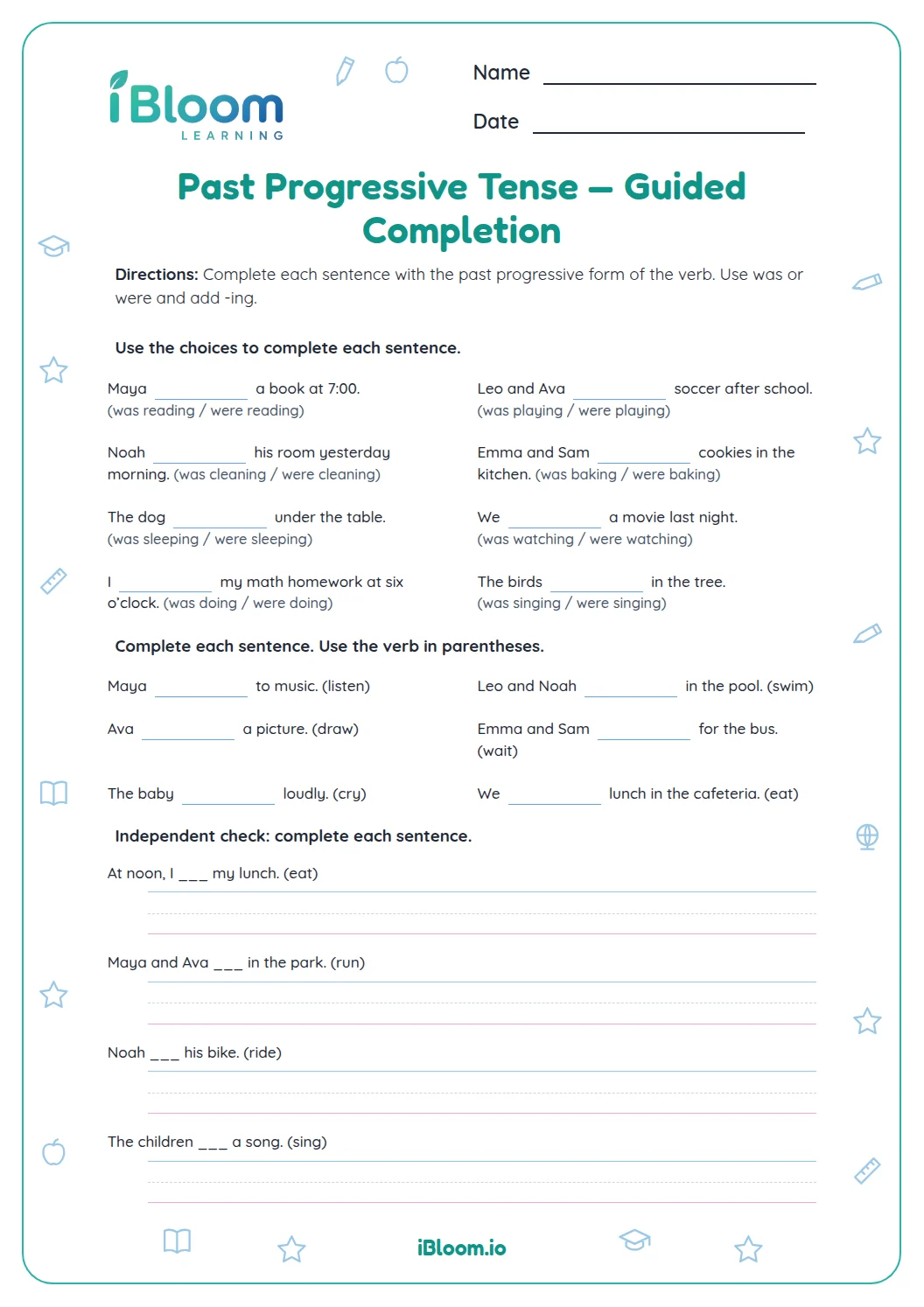
- 2In Part B, change the verb in parentheses to its past participle and add had.
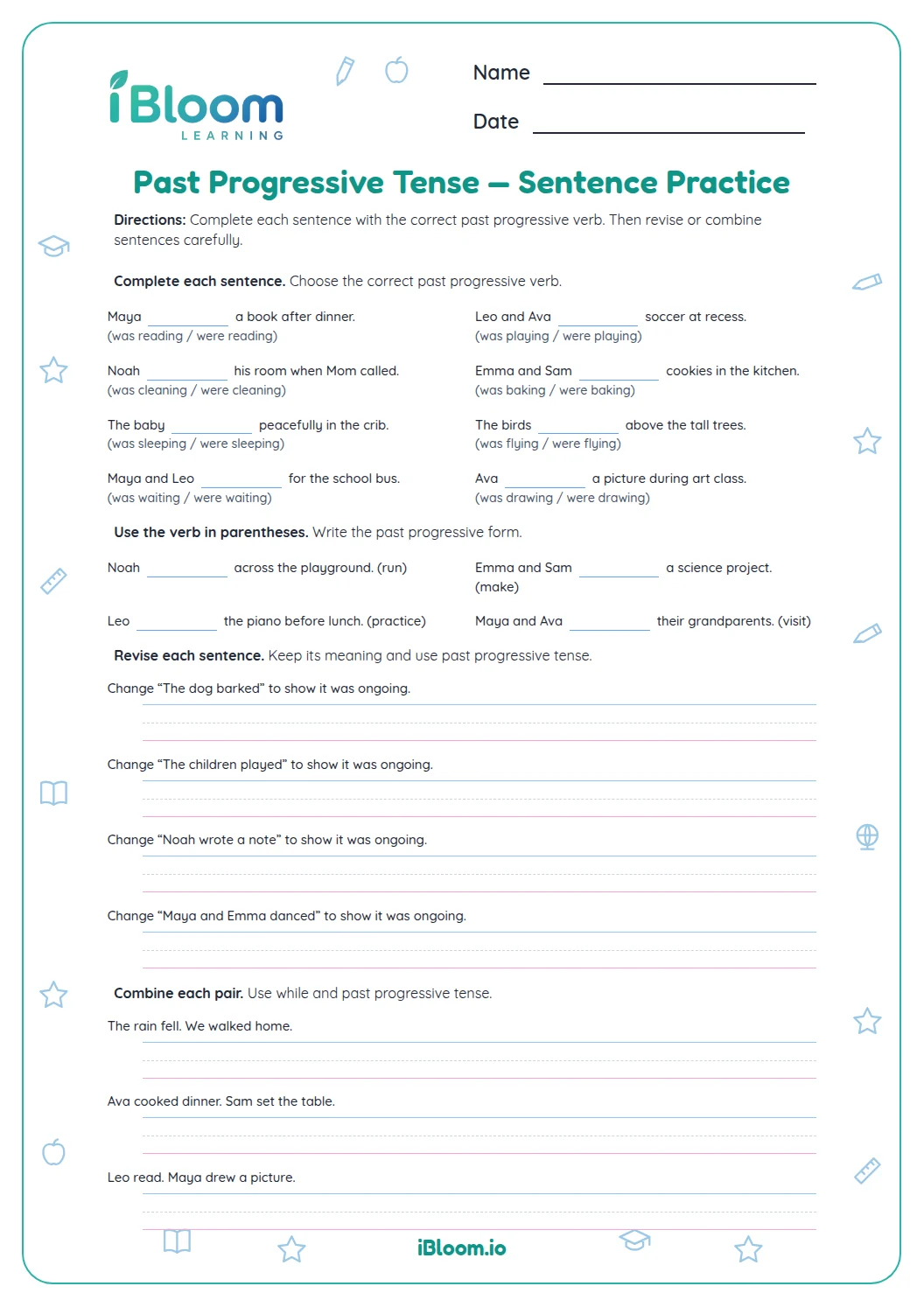
- 3In Part C, copy both words in the verb phrase.
- 4Read the whole sentence to check that the earlier action happens first.
Common recognition slips
The mistake
Writing only the participle, such as “finished,” when asked for the phrase.
The fix
Copy both words: had finished.
The mistake
Choosing “was writing” because it describes a past action.
The fix
Past progressive uses was or were plus an -ing verb; past perfect uses had plus a past participle.
The mistake
Using the simple past “wrote” after had.
The fix
Use the participle form: had written.
Common Core alignment
The questions practice recognizing and using perfect verb phrases in sentences.
Recognize had plus a past participle as a perfect verb phrase in context.
On this sheet: Students recognize past perfect phrases and supply had plus a past participle in sentences.
Show the official wordingHide the official wording
Form and use the perfect (e.g., I had walked; I have walked; I will have walked) verb tenses.
What to practice next
Questions parents and teachers ask
How do students recognize the past perfect tense?
Look for had followed by a past participle, as in had packed or had driven. The two words work together as one verb phrase. In these sentences, the phrase tells about an action completed before another event in the past. Students should copy both words when asked for the whole phrase.
How is past perfect different from simple past?
Simple past names an action that happened, such as “The team practiced.” Past perfect uses had plus a participle, such as “The team had practiced before lunch,” to show that action was complete before another past event. The time order in the full sentence helps explain why the writer chose that form.
What does had finished show?
Had finished is a past perfect verb phrase: had is followed by the participle finished. It can show that finishing was complete before another past event. In the worksheet, students first recognize this pattern and then use it to complete short sentences.
What is a past participle?
A past participle is a verb form used with a helping verb. Some end in -ed, such as finished; others change form, such as write to written or drive to driven. The worksheet asks students to use the correct form after had. Reading the phrase aloud can help check that both parts are present.
Which words make up a past perfect phrase?
The phrase uses had followed by a past participle, as in had packed or had driven. Keep both words together when identifying the phrase. The first part of the worksheet asks students to recognize this pattern among simple past and present progressive examples.
How can students check a completed phrase?
Read the sentence from beginning to end and check that had comes before the past participle. Then consider the time clue, such as before or by the time. The key provides the target phrase so students can compare the verb form and discuss how it fits the sentence.