




About this worksheet
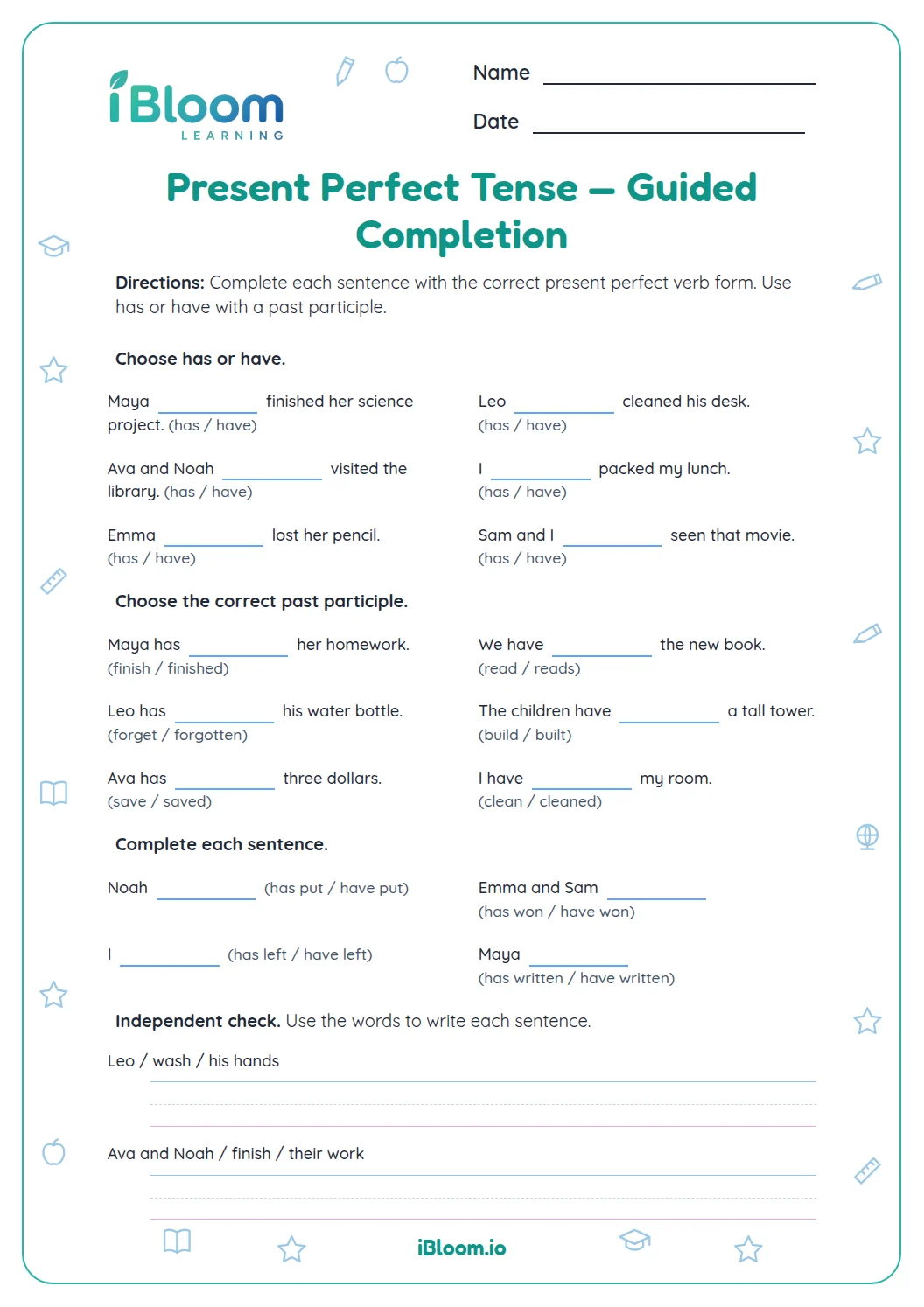
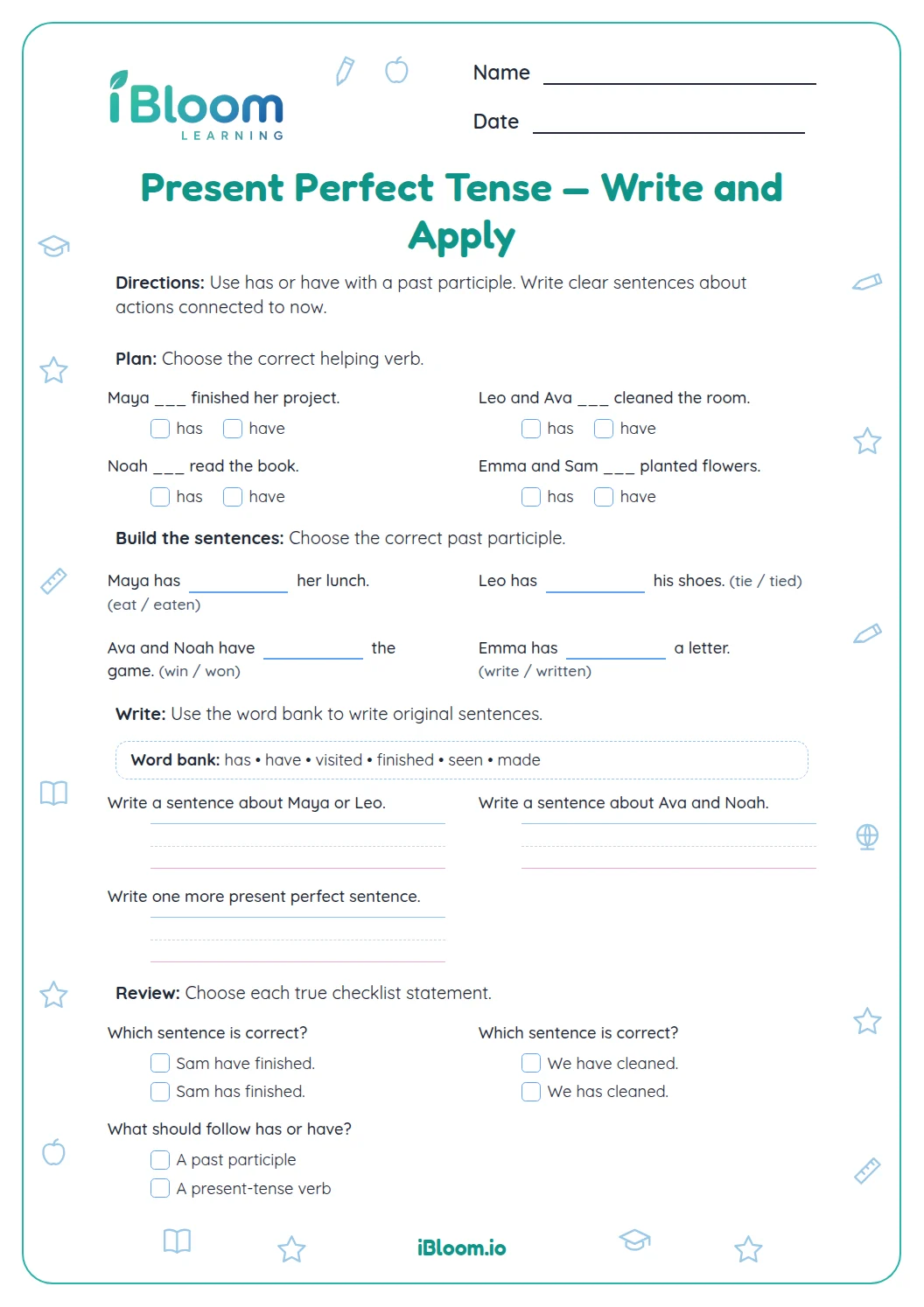
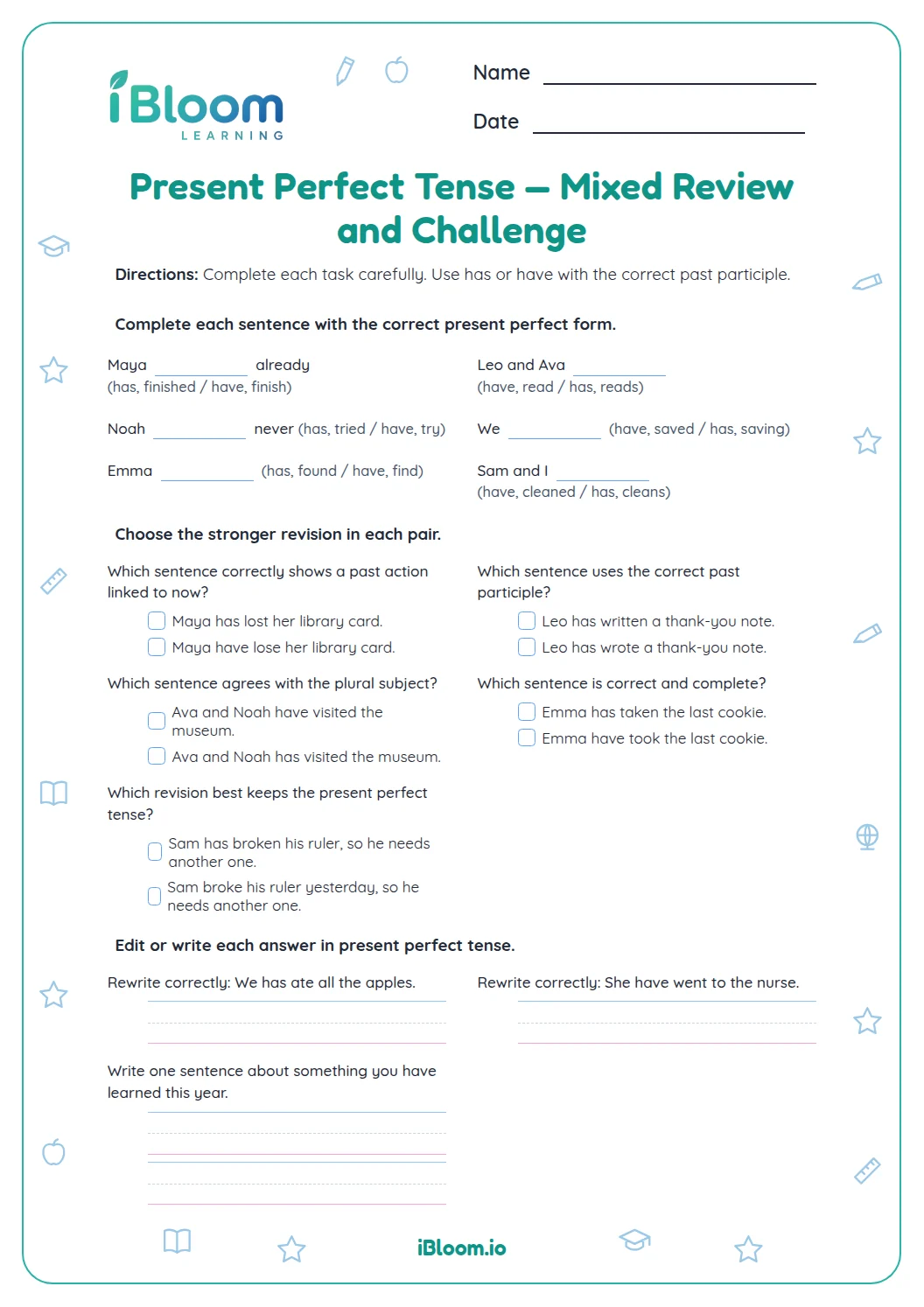
This Grade 4 grammar worksheet helps students recognize the present perfect tense: has or have followed by a past participle. Across 14 questions, students identify the verb phrase, choose the correct helping verb, and complete examples such as “She has seen the rainbow.” The questions also contrast present perfect with simple past, progressive, and future forms. A separate answer key is included. The practice supports Common Core L.4.1, command of standard English grammar.
Aligned to L.4.1
What is the present perfect pattern?
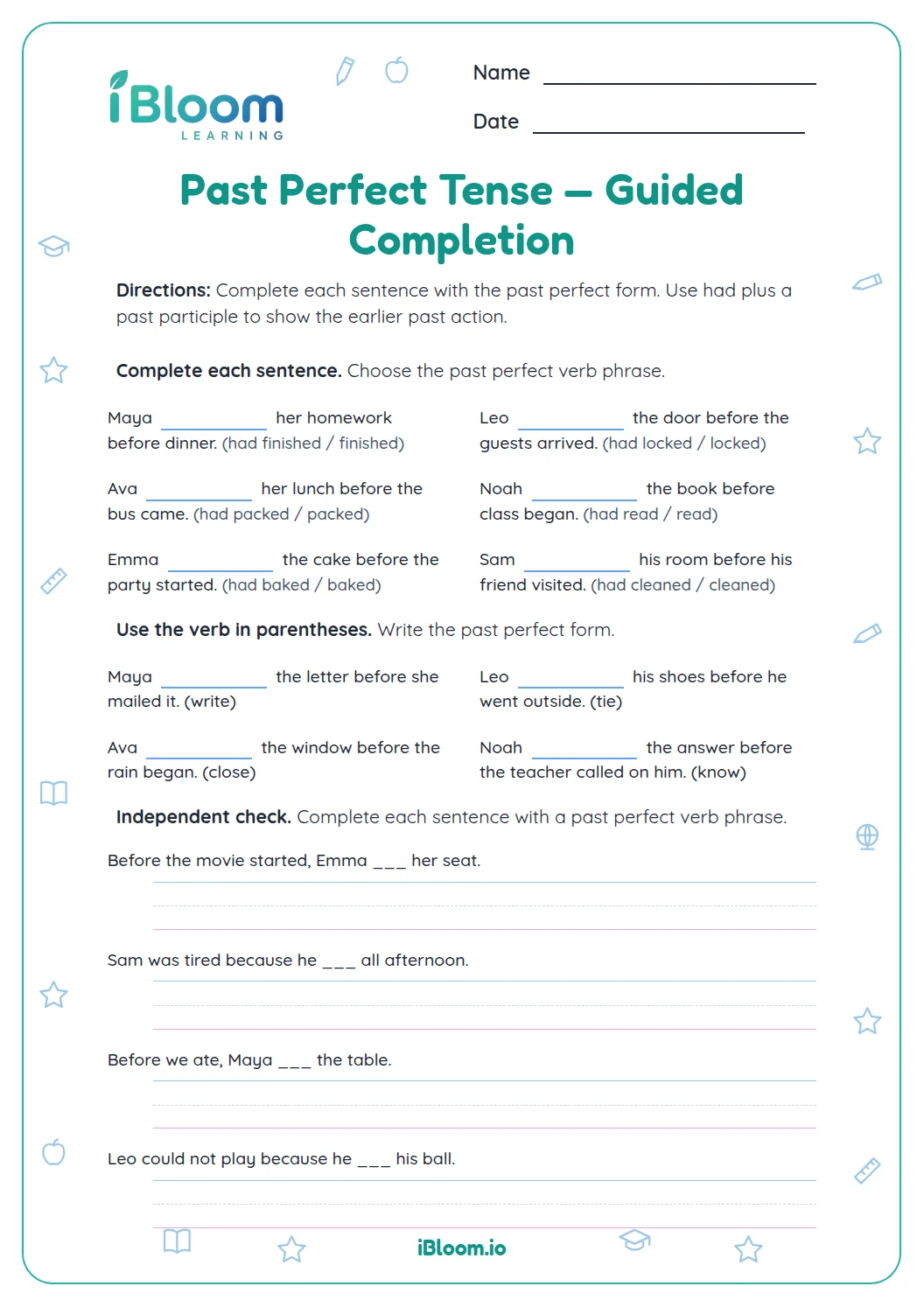
The present perfect uses has or have with a past participle: has finished, have visited, has gone. The helping verb changes with the subject: use has with he, she, it, or one person or thing; use have with I, you, we, they, or a plural subject.
The form often describes an experience or completed action connected to the present.
How do you distinguish it from simple past?
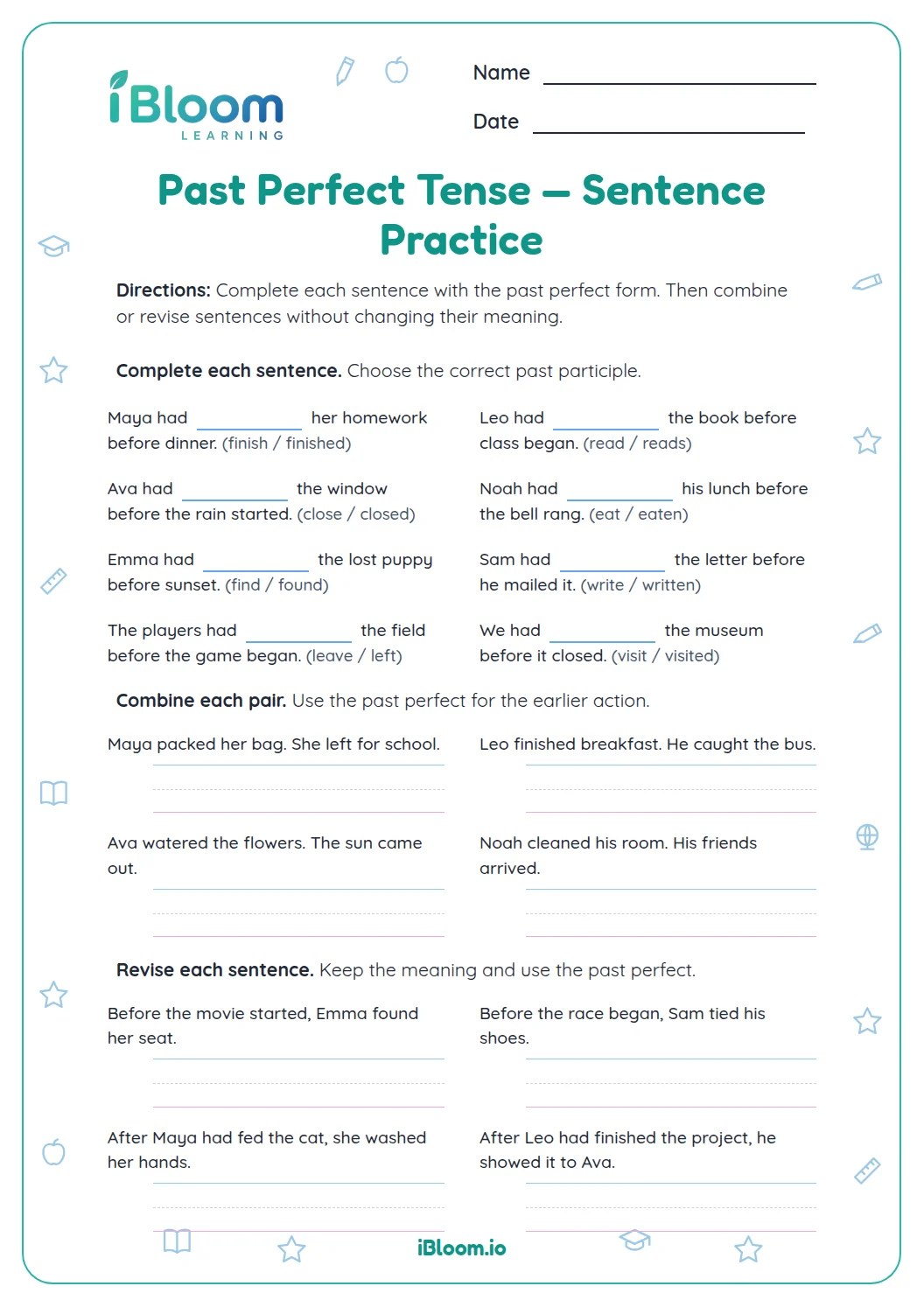
Look for the helping verb has or have. “I painted yesterday” is simple past; “I have painted” is present perfect. An -ed ending by itself does not make a verb present perfect.
- 1Maya has finished her book.
- 2Helping verb: has
- 3Past participle: finished
- 4Together, “has finished” is present perfect.
What will students identify?
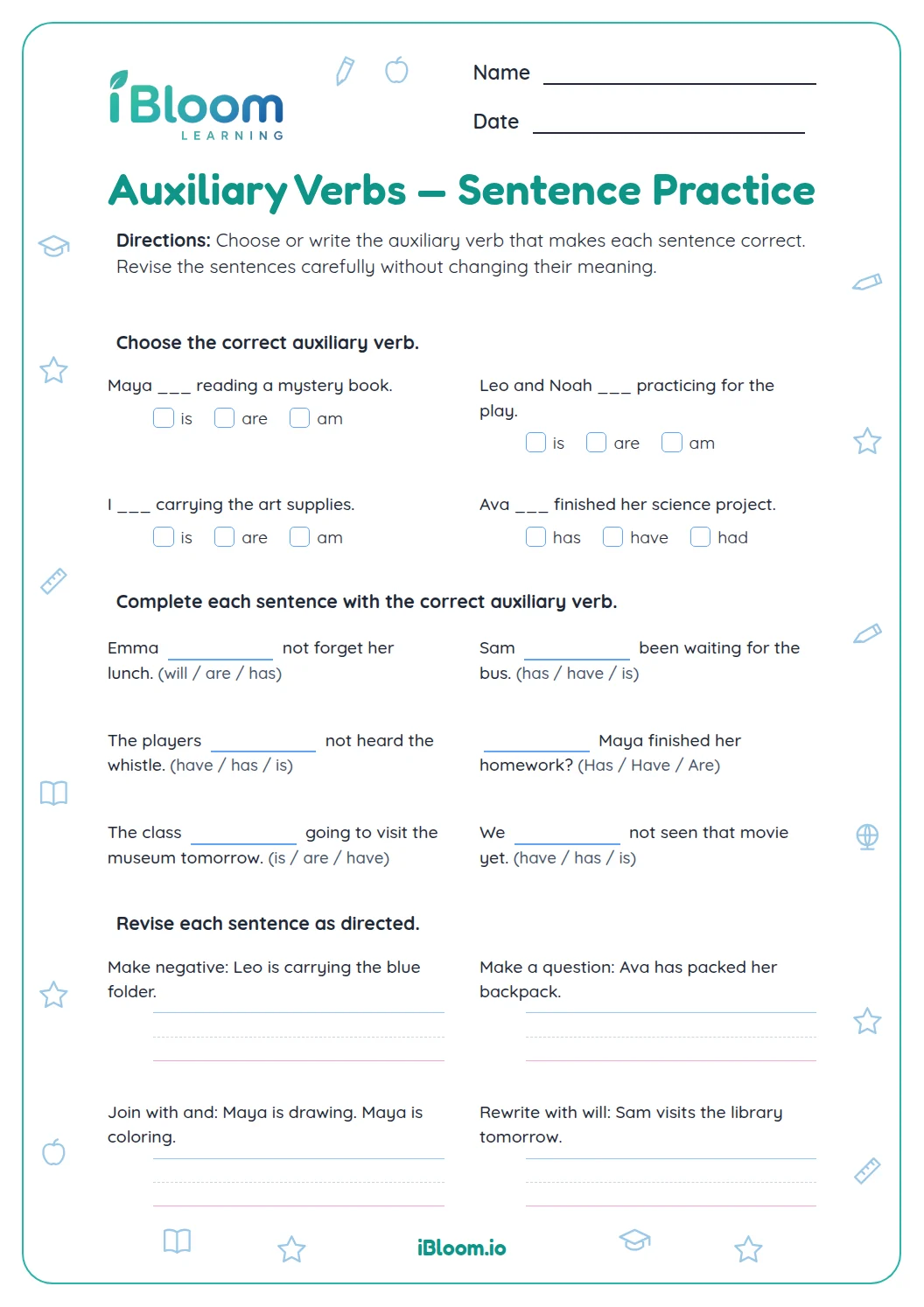
Part A compares present perfect sentences with other verb forms. Part B practices matching has or have to the subject. Part C asks students to identify helping verbs and verb phrases or complete a sentence.
For irregular verbs, the participle may look different from the simple past: see becomes seen, and go becomes gone.
How to use this worksheet
- 1Find has or have in the sentence.
- 2Check that it is followed by a past participle.
- 3Match has or have to the subject.
- 4In a choice question, compare the full verb phrase, not just the main verb.
- 5Check the key and explain which word is the helping verb.
Mistakes to watch for
The mistake
Calling any past-tense verb present perfect.
The fix
Look for has or have before the participle.
The mistake
Using have with a singular third-person subject.
The fix
Use has with he, she, it, or one person or thing.
The mistake
Using the simple past instead of the participle.
The fix
Learn irregular pairs such as saw/seen and went/gone.
Curriculum alignment
This printable connects focused practice with a Common Core learning goal.
Recognize and use standard English verb forms in sentences.
On this sheet:
Show the official wordingHide the official wording
Demonstrate command of the conventions of standard English grammar and usage when writing or speaking.
What to practice next
Make more practice
Further reading
Questions parents and teachers ask
What words form the present perfect?
Present perfect uses has or have with a past participle, as in has finished or have gone. The worksheet asks students to spot the complete verb phrase, choose the helping verb that matches its subject, and recognize a correct participle.
Why is “I painted yesterday” simple past?
The sentence has no helping verb has or have, so painted is a simple-past verb here. “I have painted” uses have plus a past participle and is present perfect. The worksheet contrasts these forms so students look at the whole verb phrase.
How do has and have match the subject?
Use has with a singular third-person subject such as Lena, my brother, or the puppy. Use have with I, you, we, they, or a plural subject such as the players. Questions 7–11 practice choosing the helping verb. For example, the players have practiced, while the puppy has eaten.
What is included in the printable?
The two-page worksheet has 14 questions in three parts: identify present-perfect sentences, select has or have, and recognize or complete a present-perfect form. A separate two-page answer key lists the correct choices. The key also shows the correct helping verb and participle in the completion item.
What is a past participle?
A past participle is the verb form used after has or have in the present perfect. Some are regular, such as painted; irregular forms include seen and gone. In question 13, students complete “She ___ (see) the rainbow” with has seen.