


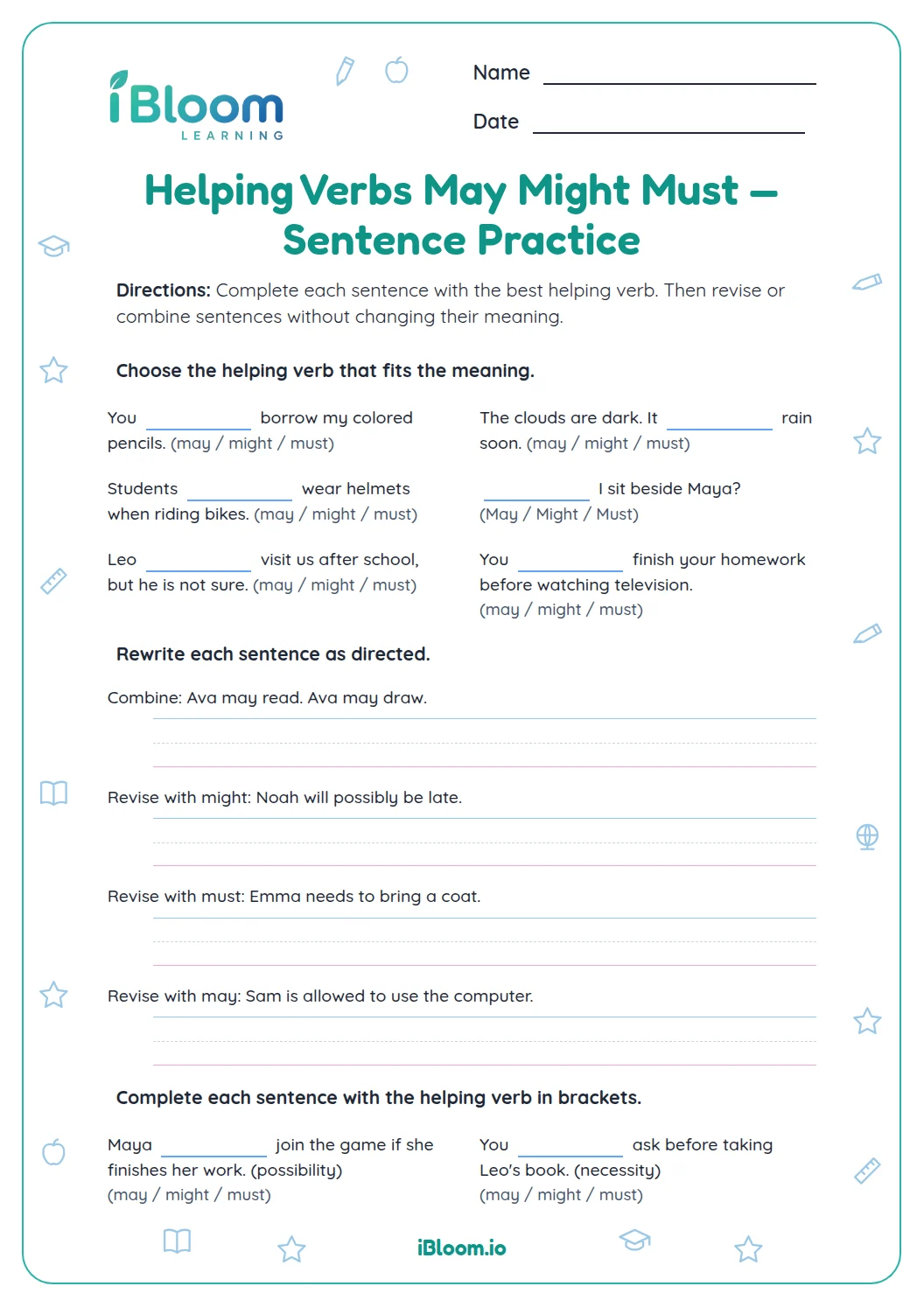
About this worksheet
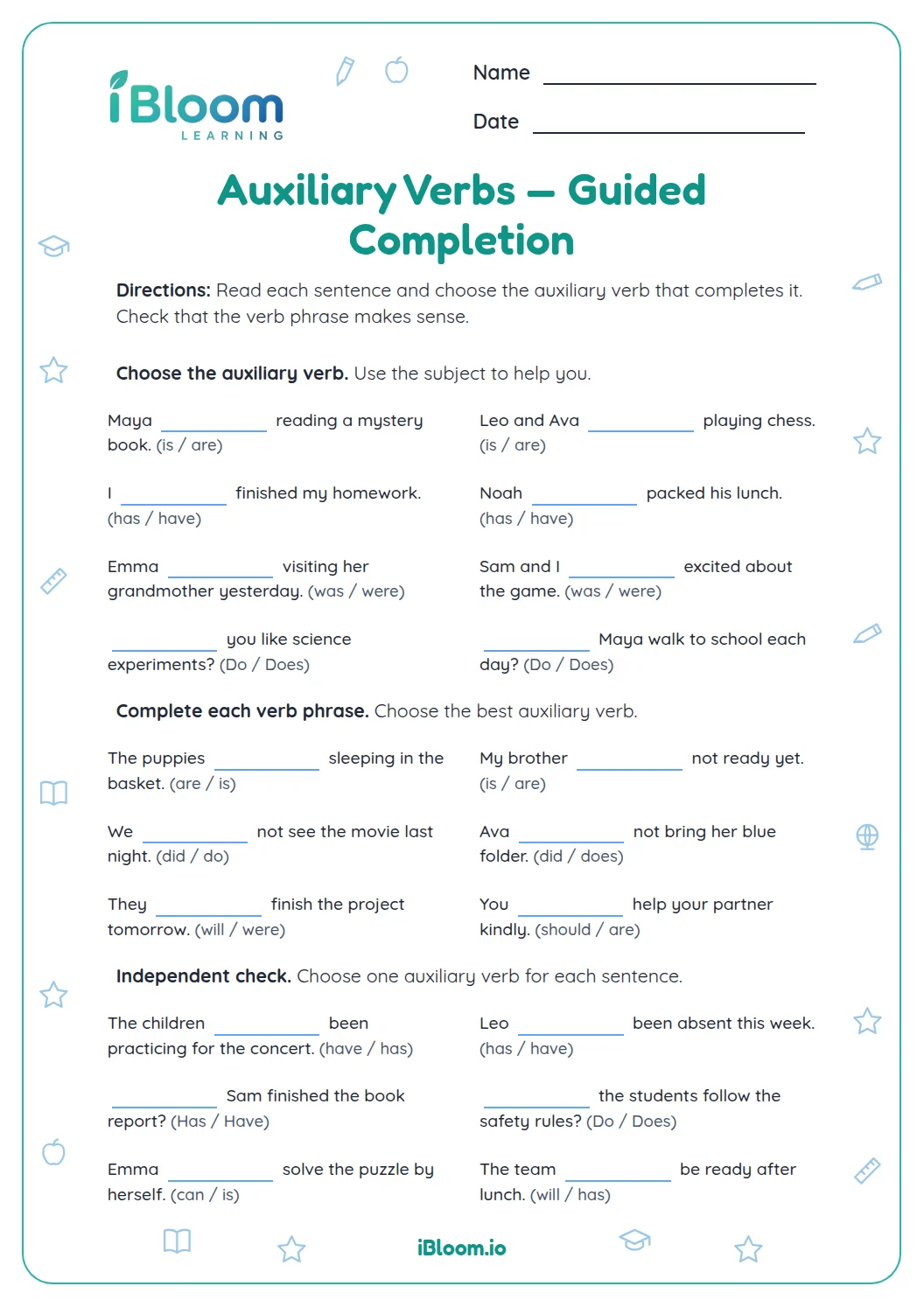
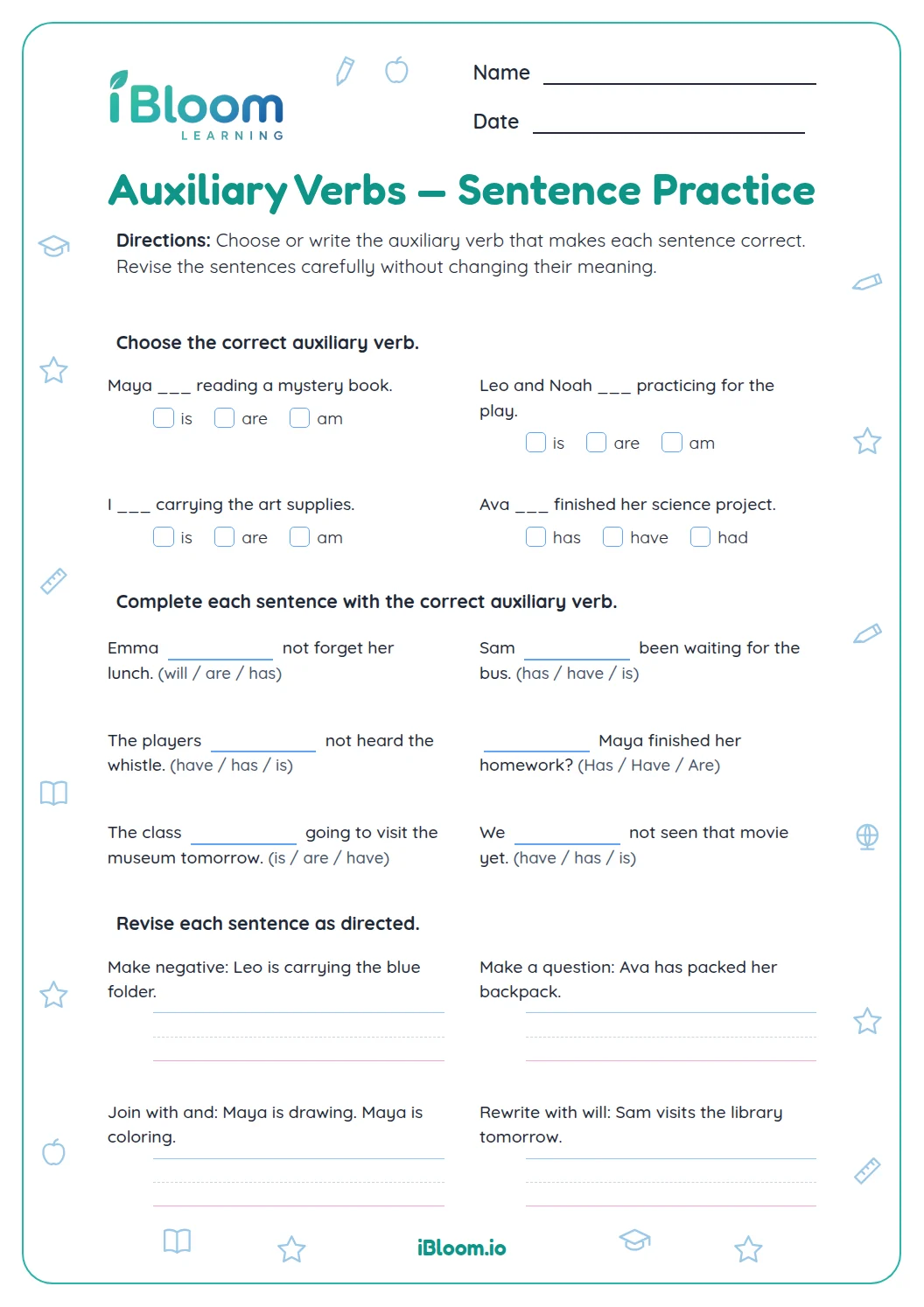
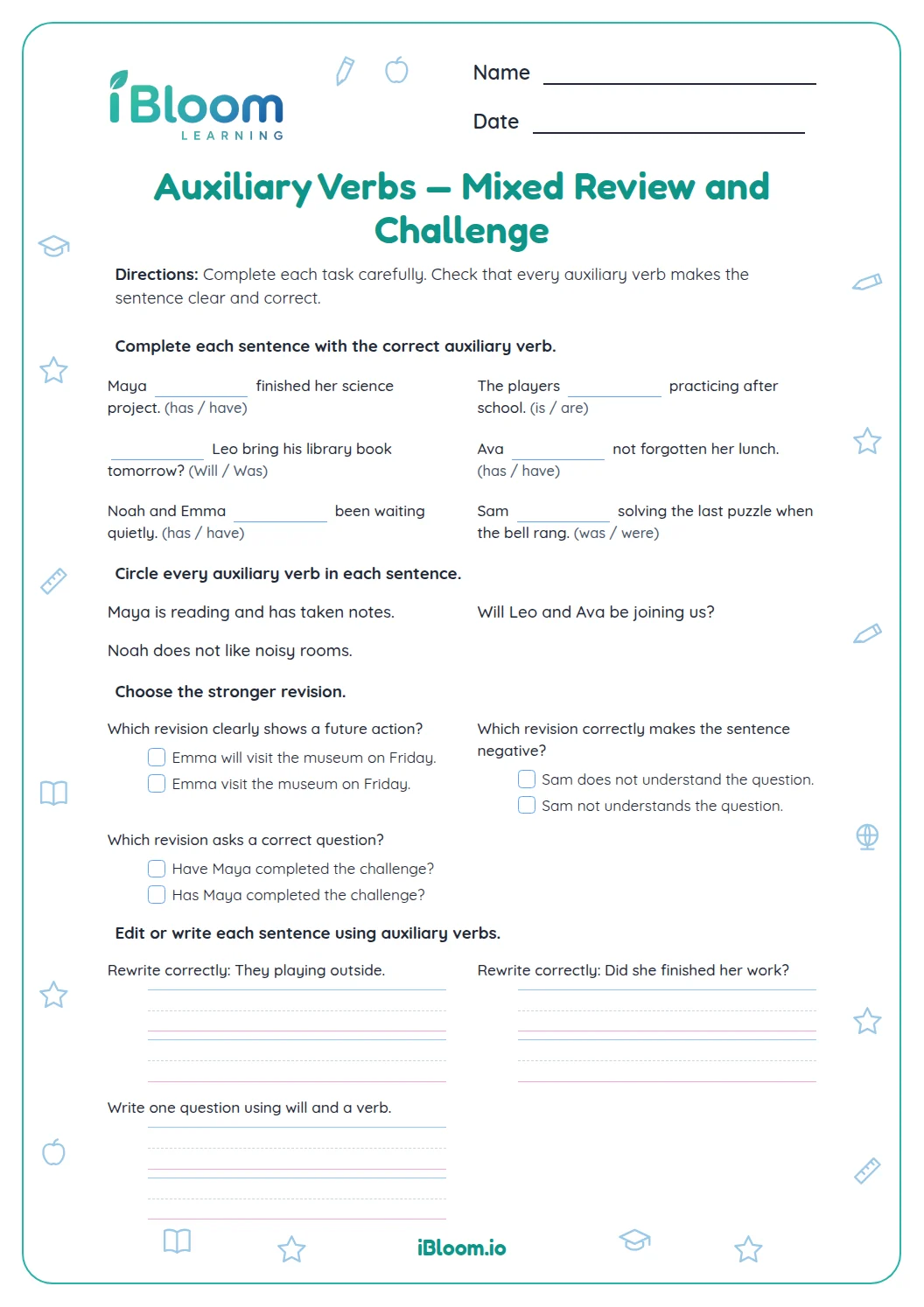
This Grade 4 grammar worksheet practices auxiliary, or helping, verbs in progressive verb phrases. Students identify the helping verb in sentences, then edit incorrect forms so the verb agrees with its subject. The 14 questions move from recognition to sentence correction, with a separate answer key for checking each response. The practice supports Common Core L.4.1.b by asking students to form and use progressive verb tenses.
Aligned to L.4.1.b
How can you find a helping verb?
Look for the verb phrase. The helping verb comes before and works with the main verb. In “Maya is painting,” “is” helps “painting.”
- 1Maya is painting a sign. → is is the helping verb.
How do you edit a helping verb?
Match the helping verb to its subject. Use “is” with a singular subject and “are” with a plural subject in these present progressive sentences.
- 1He are carrying → He is carrying.
How do helping verbs form progressive tenses?
Helping verbs such as am, is, are, was, and were pair with an -ing verb to show an ongoing action. The worksheet includes present and past progressive examples, such as “Maya is painting” and “They were waiting.”
How to use this worksheet
- 1Read the whole sentence, not just the verb word.
- 2Find the main action verb.
- 3Look for a helping verb that works with it.
- 4Check that the helping verb agrees with the subject.
- 5Read the corrected sentence aloud to check that it sounds complete.
Common mistakes and quick fixes
The mistake
Choosing the main action verb as the helping verb.
The fix
Find the word that comes before and supports the main verb.
The mistake
Using “are” with a singular subject such as “he.”
The fix
Match a singular subject with “is” in a present progressive phrase.
The mistake
Changing the main verb but leaving the agreement error.
The fix
Check the subject and helping verb together after editing.
Common Core alignment
These standards describe the reading, writing, or math students practice on this page.
Form and use progressive verb tenses with helping verbs.
On this sheet:
Show the official wordingHide the official wording
Form and use the progressive (e.g., I was walking; I am walking; I will be walking) verb tenses.
What to practice next
Make more practice
Further reading
Questions parents and teachers ask
How many questions are on this worksheet?
There are 14 questions in three parts. Part A asks students to identify a helping verb in a sentence, Part B asks them to correct an agreement error, and Part C gives one final correction. The answer key shows the selected verbs and corrected sentences.
What is an auxiliary verb?
An auxiliary verb, also called a helping verb, works with a main verb to form a verb phrase. In “They were waiting,” “were” is the auxiliary verb and “waiting” names the action. Part A asks students to identify this helping word in complete sentences.
What does the editing section ask students to fix?
Part B presents sentences with a helping verb that does not agree with its subject. Students rewrite the sentence with the correct form, such as changing “He are carrying” to “He is carrying.” Part C gives one more sentence to correct and reread.
Can “is” be a helping verb?
Yes. In “She is waiting,” “is” helps the main verb “waiting” form the present progressive tense. The word “is” can also work as a linking verb in a different sentence, so students should look at the whole verb phrase to decide how it functions.
How can a student check a correction?
Read the subject and verb phrase together, then check agreement and meaning. For example, “They are building a model” pairs the plural subject “they” with “are.” The corrected sentence should keep the original action while fixing the helping verb. Rereading aloud can help catch a mismatch.