




About this worksheet
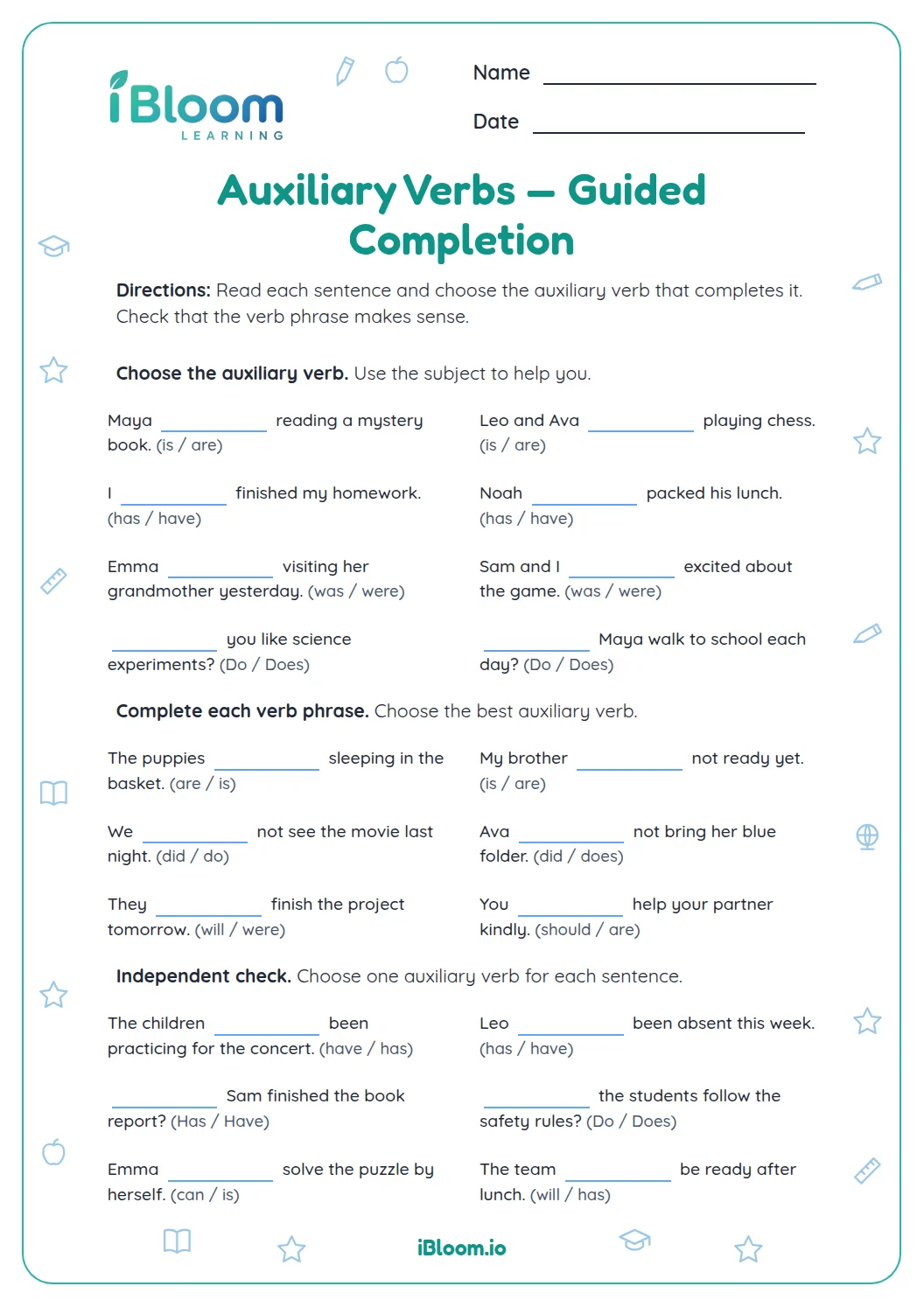
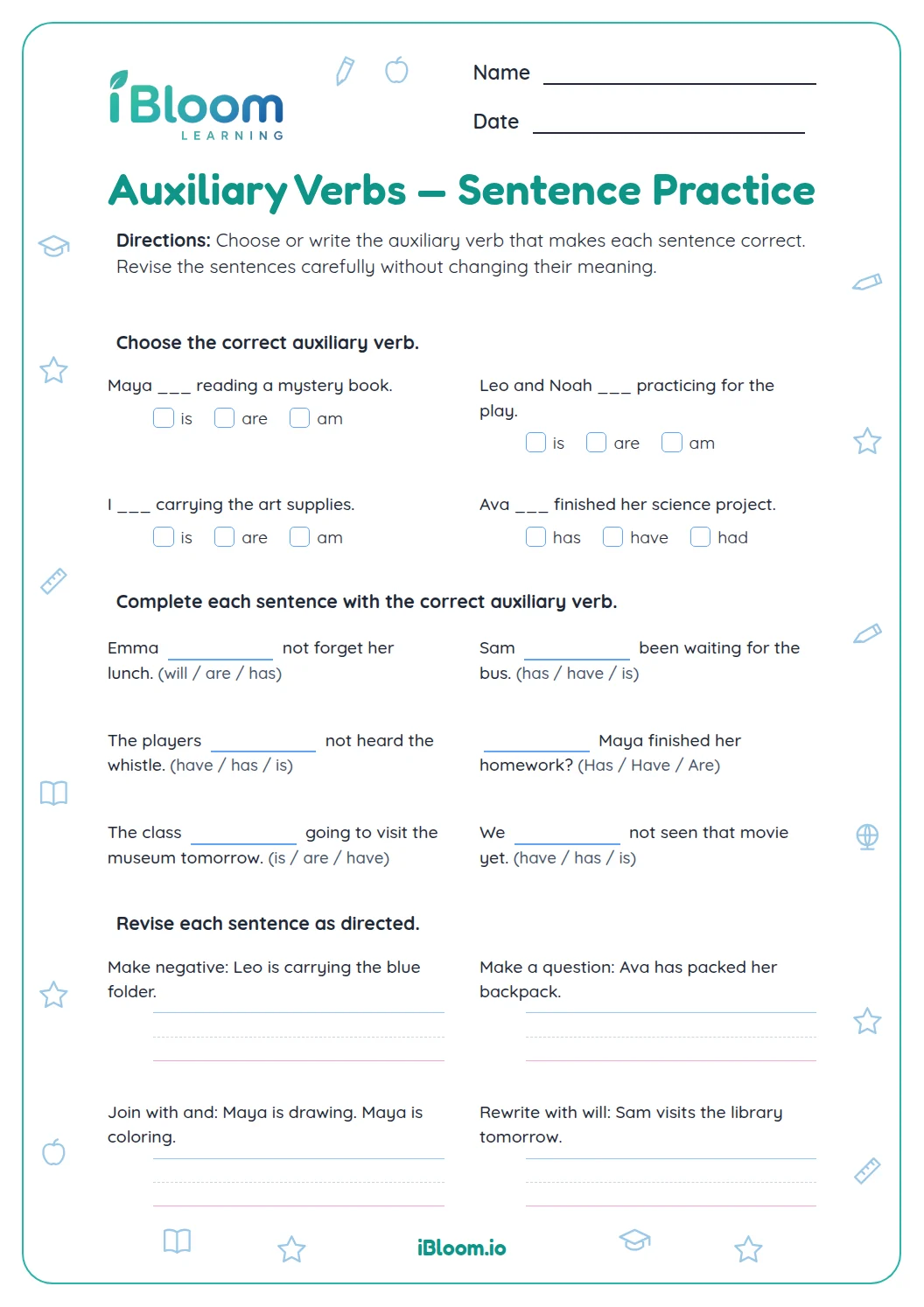
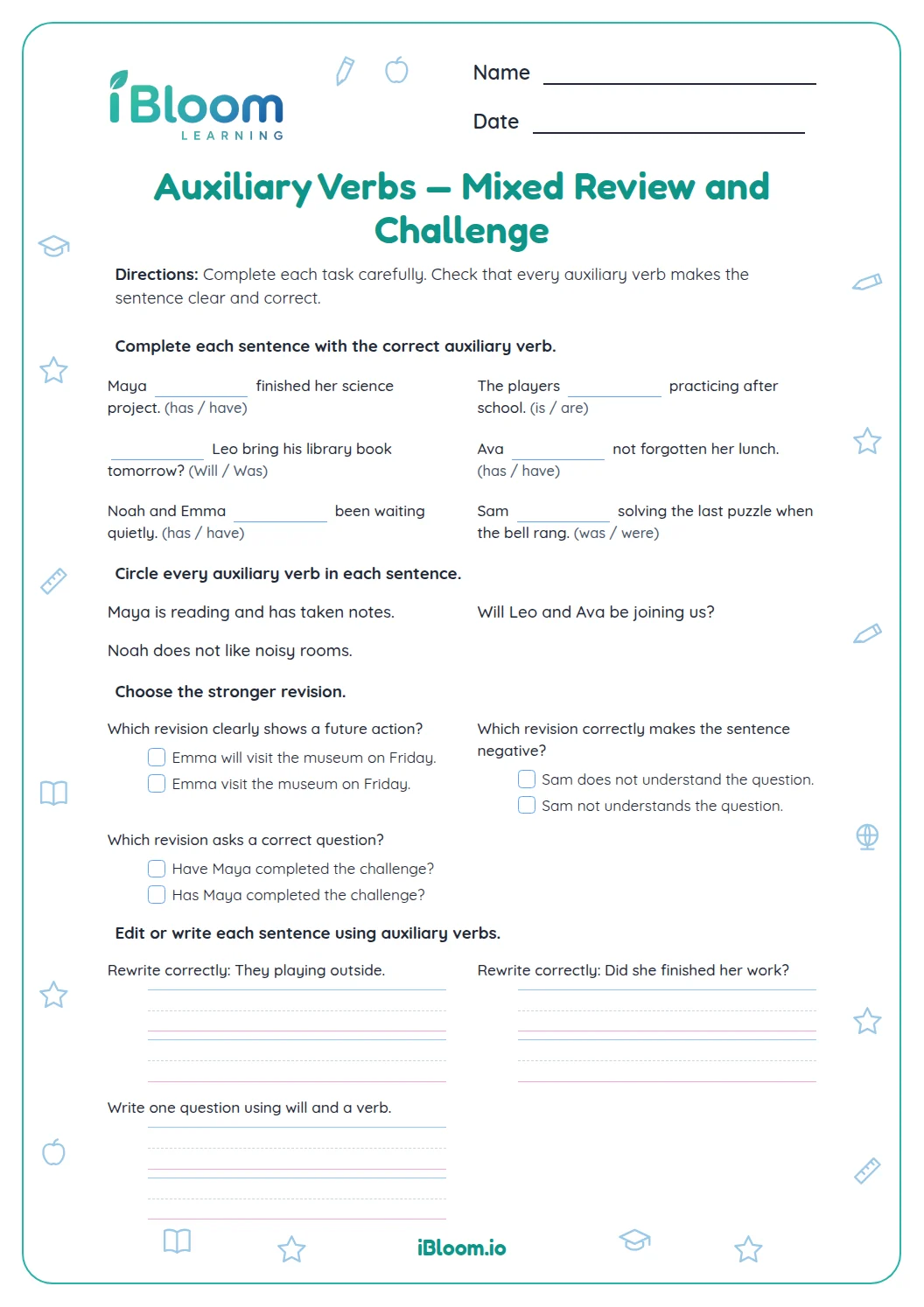
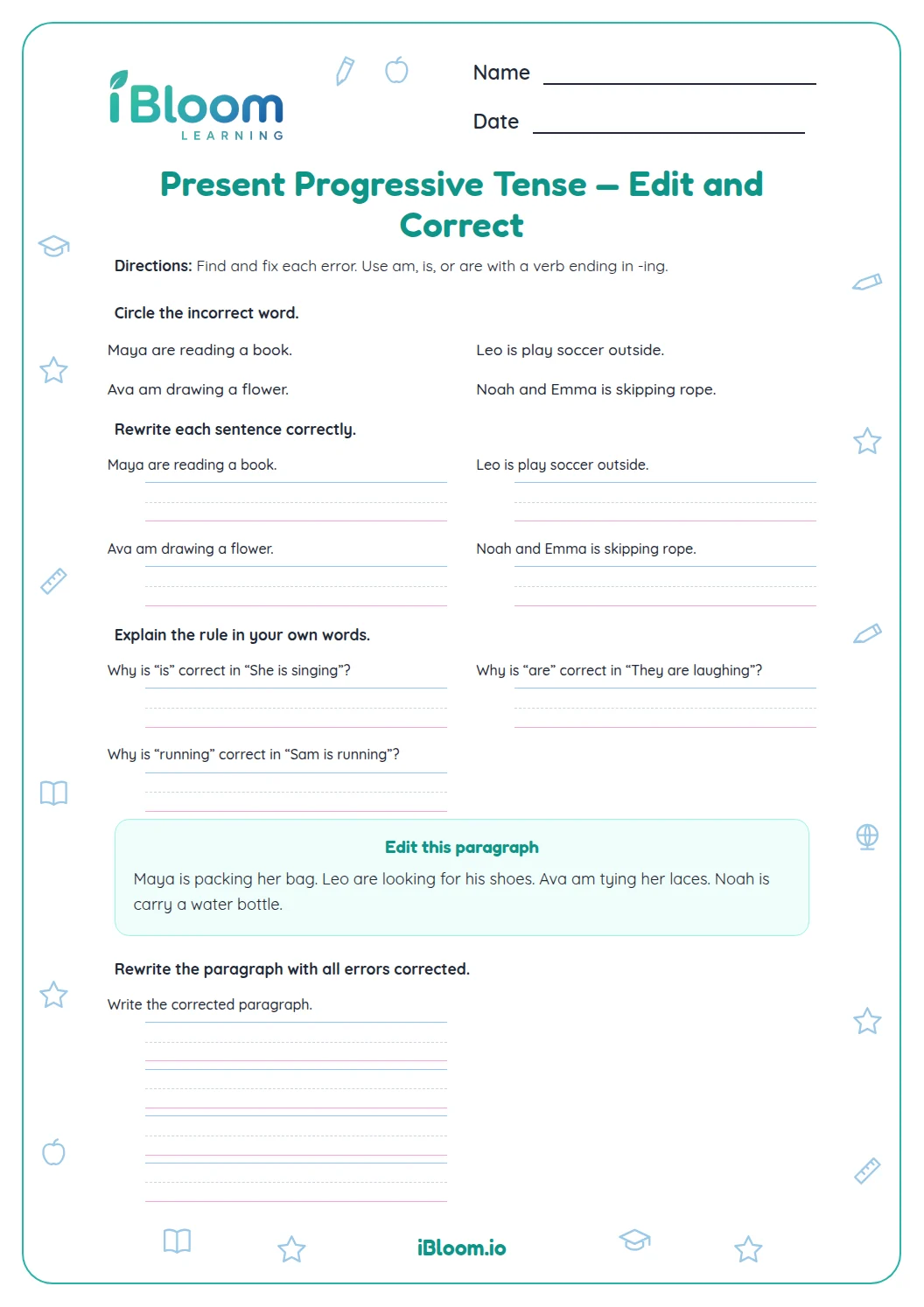
This printable gives students 14 questions to practice helping verbs in action at Grade 4. The answer key follows the same order and accepts the listed responses.
Aligned to 4.L.1.b
Which word is the helping verb?
A helping verb works with a main verb. In “We are painting,” are helps the -ing verb painting show an action in progress.
- 1We are painting the fence.
- 2Helping verb: are
- 3-ing verb: painting
- Part A: complete progressive verb phrases
- Match the helping verb to its subject
How does the helping verb match the subject?
Choose the helping verb in context, distinguish past and present progressive forms, then explain or write an example.
- Part B: identify and apply helping verbs
- Part C: explain or write an example
How can students use the pattern in writing?
To change “The children play outside now” into a progressive phrase, write “The children are playing outside now.” Keep the subject, choose a matching helper, and change the main verb to its -ing form.
How to use this worksheet
- 1Find the action verb and look for an -ing ending.
- 2Identify the helping verb that comes before it.
- 3Match am, is, or are to a present-tense subject.
- 4Use was or were for an action in progress in the past.
- 5Reread the whole sentence to check agreement and meaning.
Common mistakes and quick fixes
The mistake
Using is with a plural subject, as in “The players is warming up.”
The fix
Use are with a plural subject: “The players are warming up.”
The mistake
Leaving out the helping verb before an -ing verb.
The fix
Say the full verb phrase aloud: “are flying,” “was moving.”
The mistake
Changing the subject while revising the verb.
The fix
Keep the original subject, then choose the helper that agrees with it.
Common Core alignment
Students form and use progressive verb phrases throughout this worksheet.
Form and use present and past progressive verb phrases.
On this sheet: Questions practice present and past progressive verb phrases, including subject and helping-verb agreement.
Show the official wordingHide the official wording
Form and use the progressive (e.g., I was walking; I am walking; I will be walking) verb tenses.
What to practice next
Make more practice
Further reading
Questions parents and teachers ask
What does a helping verb do in these sentences?
This printable has 14 questions about helping verbs in progressive phrases. Students complete phrases, identify helping verbs in context, and write or explain examples. The answer key lists each expected verb and gives sample wording for the two open responses.
How does a student choose between am, is, and are?
Use am with I, is with a singular subject, and are with you or a plural subject. The worksheet asks students to apply this agreement in examples such as “The birds are flying.” Try the sentence aloud with each possible helping verb.
When do students use was or were?
Use was or were with an -ing verb to describe an action in progress in the past. For example, “I was waiting” and “The players were warming up.” Match was or were to the subject. The subject and helping verb should agree in the finished sentence.
What should a rewritten sentence include?
For this sheet, a progressive verb phrase includes a helping verb plus an -ing verb. “The children are playing outside now” is one model; answers may vary when students write their own sentences. A complete response keeps the original meaning while changing the verb form.
How can the answer key handle different student sentences?
The key provides examples for open writing prompts. A student’s sentence can differ and still be correct if it includes the requested helping verb, an -ing verb, and a complete thought with matching subject and verb. Check both the helping verb and the -ing form in each response.