
About this worksheet
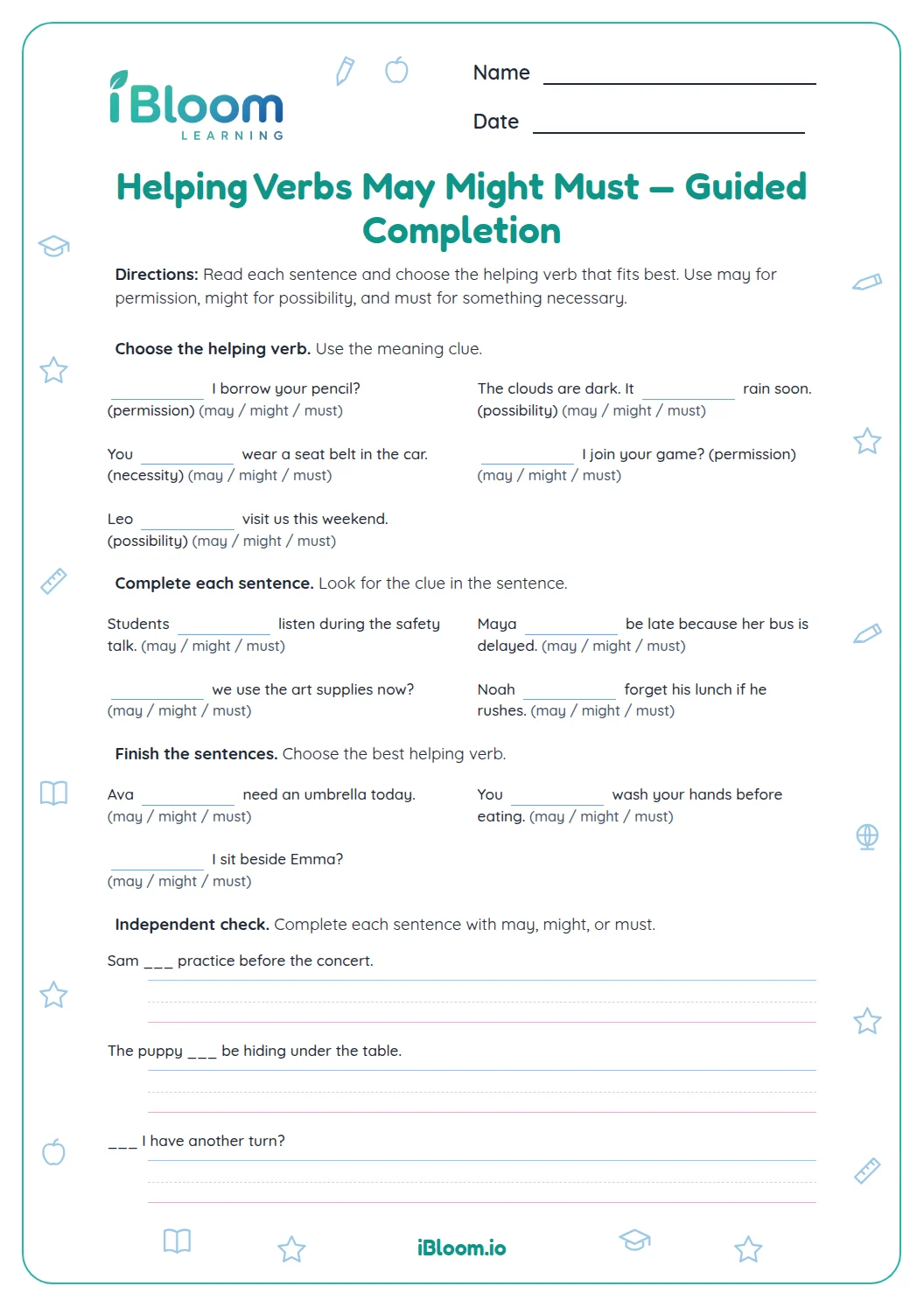
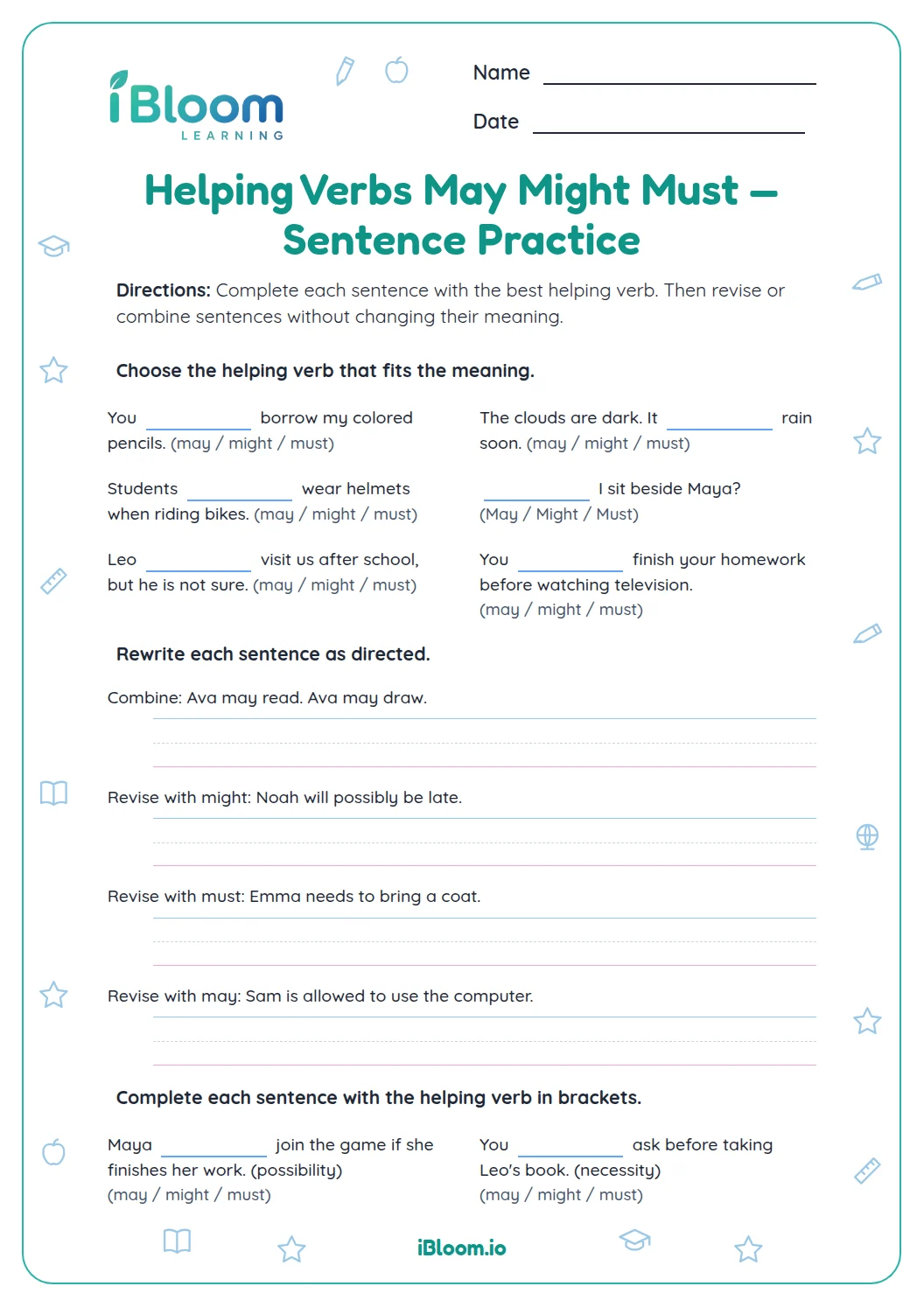
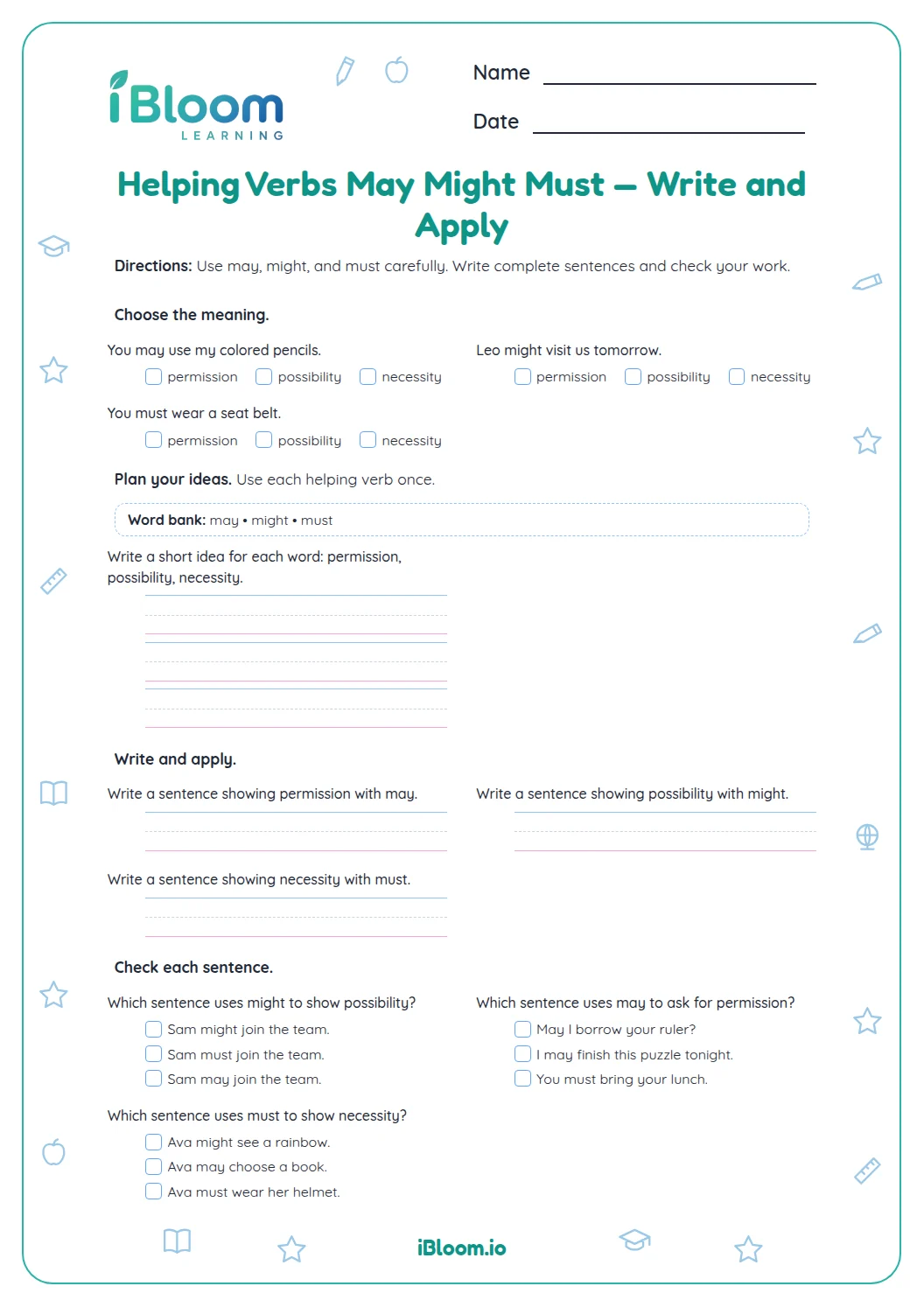
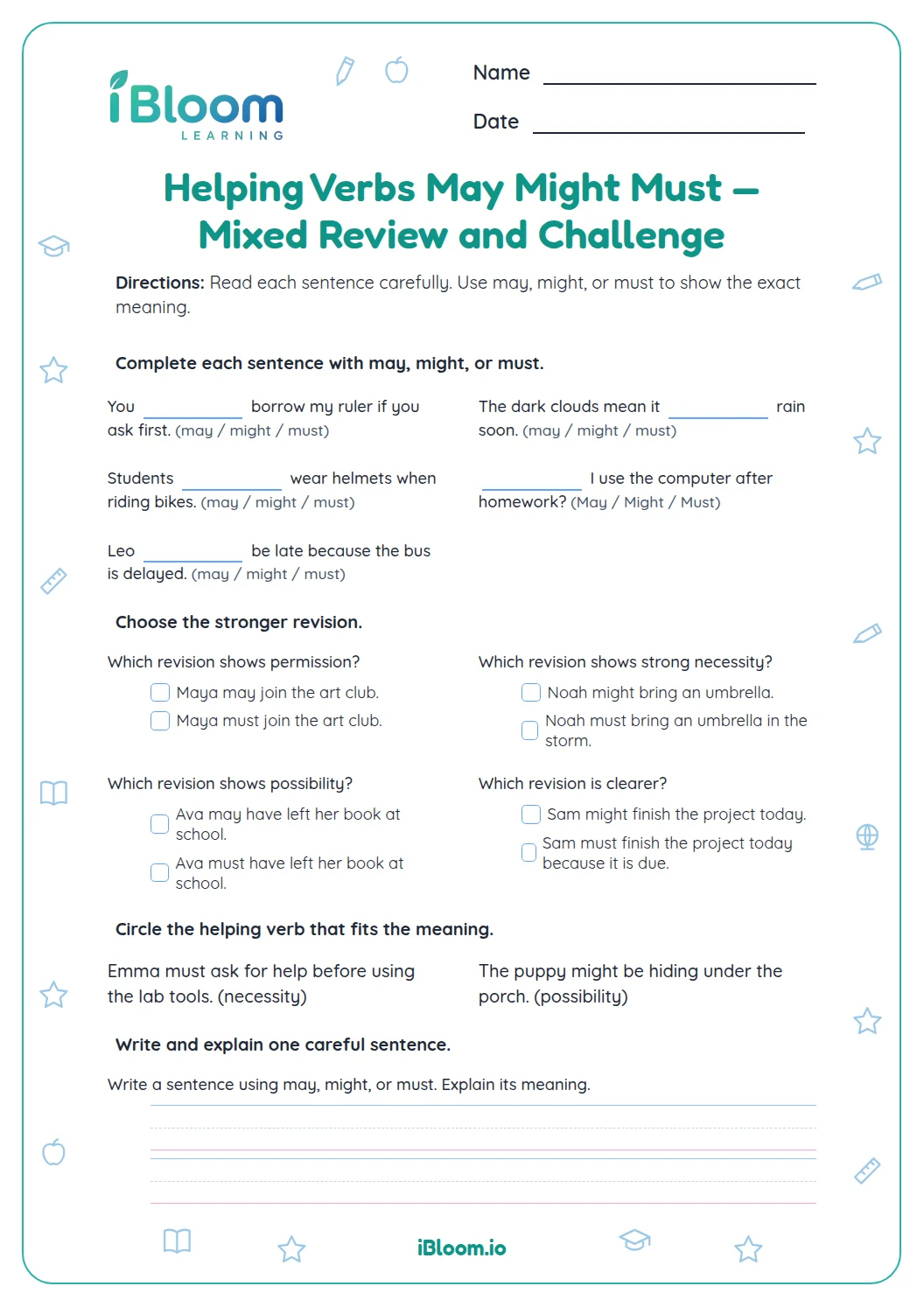
This free Grade 4 worksheet practices the helping verbs may, might and must. In Parts A and B, students read complete contexts and identify whether a modal signals permission, possibility or necessity. Part C asks them to write three short sentences and explain each modal’s meaning. The separate answer key includes sample responses for the open-ended items. This sentence-level grammar practice aligns with CCSS L.4.1.
Aligned to L.4.1
What does each modal verb tell the reader?
The first two parts ask students to match may, might or must with permission, possibility or necessity. The full sentence supplies the clue: a question asking to borrow a ruler is a request, while a rule requiring a helmet signals necessity.
The sheet replaces the old page’s mixed exercise with consistent practice on the three meanings named in its title.
How can a student tell permission from possibility?
Look at the sentence around the modal. A speaker asking “May I borrow your ruler?” is requesting permission; a forecast saying it might rain describes something that could happen. The answer depends on the sentence’s purpose.
- 1“May I borrow your ruler?” → permission
- 2The speaker is asking to do something.
What do students write in Part C?
Students write one request with may, one rule with must and one uncertain possibility with might. The answer key gives sample sentences; a student’s wording can differ while keeping the same meaning.
How to use this worksheet
- 1Read the whole sentence before choosing a meaning.
- 2Ask whether the speaker requests permission, describes a possibility or states a requirement.
- 3For each written item, include the named modal in a complete sentence.
- 4Use the answer key to check the meaning, not just the verb.
Common mistakes and quick fixes
The mistake
Treating every question with may as a possibility.
The fix
Check whether the speaker is asking permission, as in “May I borrow…?”
The mistake
Reading might as a requirement.
The fix
Replace it mentally with “could”; might signals possibility.
The mistake
Using must for something that is only uncertain.
The fix
Use must for a rule or need, and might for something that could happen.
Common Core alignment
This activity practices a skill named in the Common Core standards.
Use standard English grammar when speaking or writing.
On this sheet: The practice asks students to apply grammar choices in complete sentences.
Show the official wordingHide the official wording
Demonstrate command of the conventions of standard English grammar and usage when writing or speaking.
What to practice next
Make more practice
Further reading
Questions parents and teachers ask
What does this worksheet teach about may, might and must?
Students identify whether these modal verbs express permission, possibility or necessity. They then write one sentence with each verb, using the sentence meaning as a guide. The answer key includes sample responses for the writing items. Point to the words in the sentence that make the meaning clear.
How many questions are on the printable?
There are 15 questions in three parts: 12 multiple-choice items and three short writing prompts. Students first recognize meanings in context, then use may, might and must in their own sentences. The answer choices name the three meanings practiced on this page.
What is the difference between may and might here?
Both words can express possibility in English, so the worksheet uses the surrounding context to make the intended meaning clear. A polite request such as “May I borrow your ruler?” signals permission; an uncertain forecast with might signals possibility. This final section gives students a chance to apply the meanings themselves.
How long should students spend on this page?
Plan for about 15 minutes, with a little more time for Part C. Students write three sentences and explain what each modal signals, then compare the meaning of their examples with the answer key. For example, asking to borrow a classroom tool is a request for permission.
Can a student’s written answer differ from the key?
Yes. The last three answers are samples because students can phrase a request, rule or possibility in different ways. Check that each sentence uses the required modal and expresses the requested meaning. Students can compare each choice with the sentence clue before answering.
Which standard is practiced?
The worksheet aligns with CCSS L.4.1, which addresses standard English grammar and usage. Students apply modal verbs in complete sentences and distinguish how their use changes a sentence’s meaning. Each sample includes the modal and the meaning it communicates.