


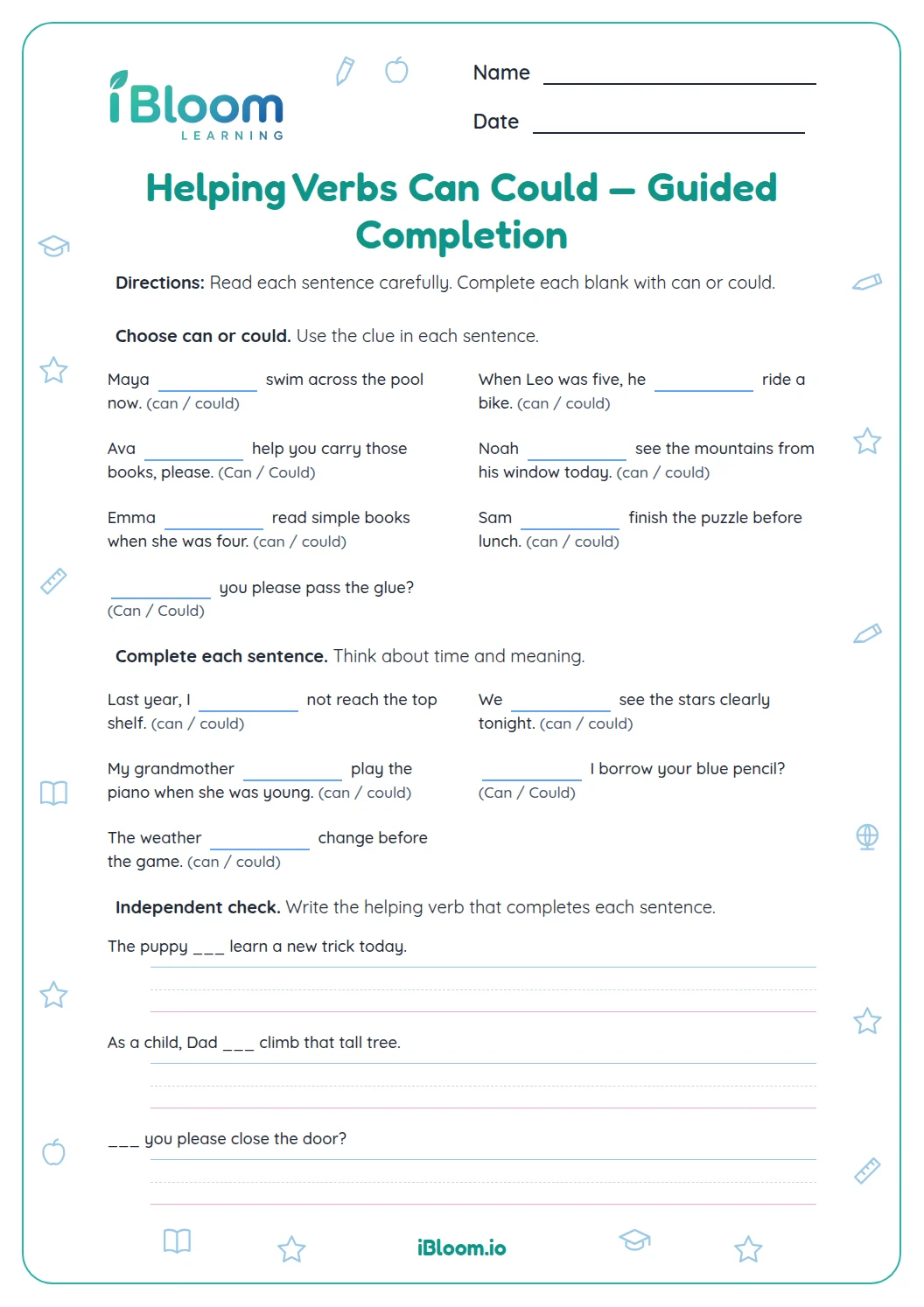
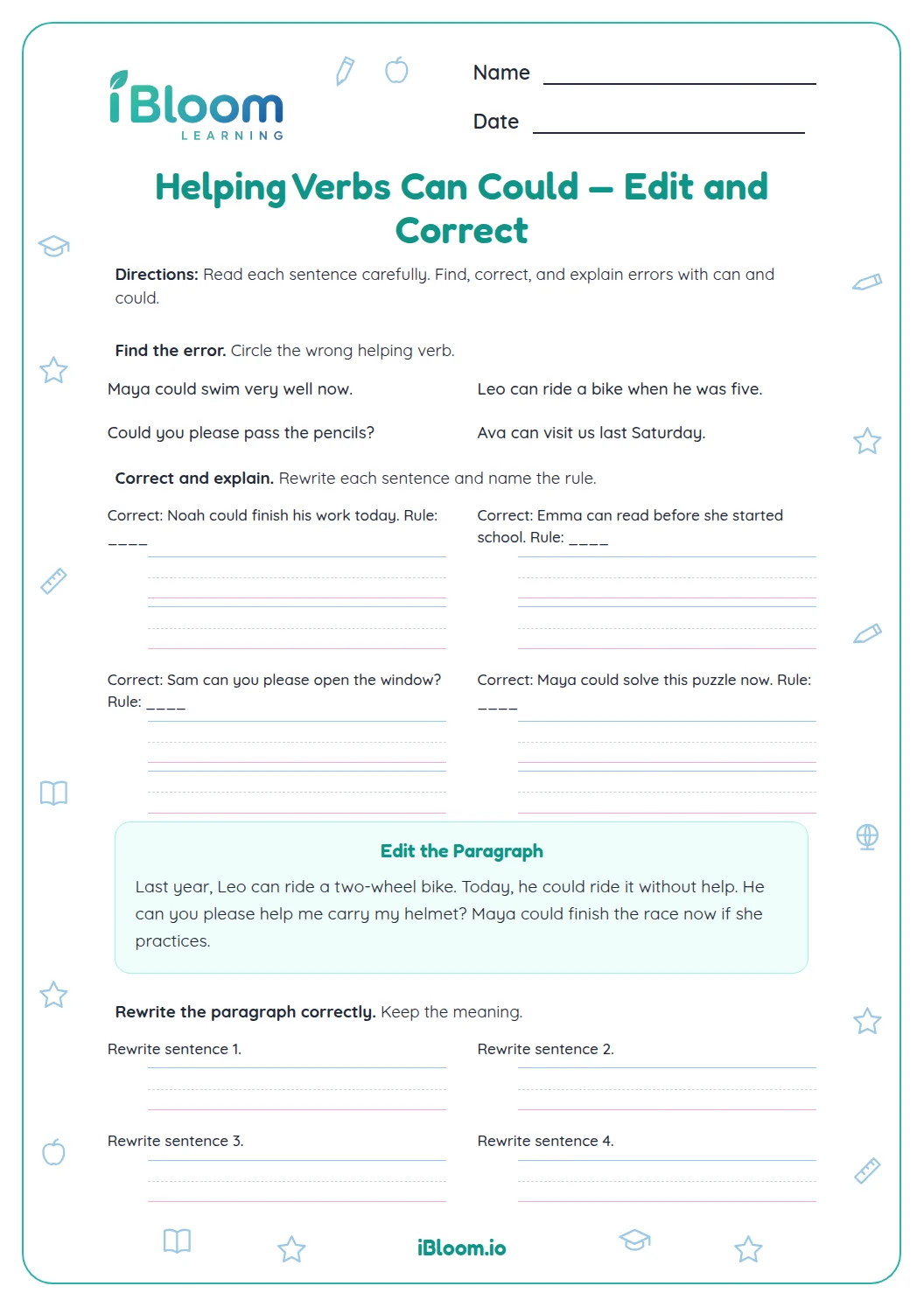
About this worksheet
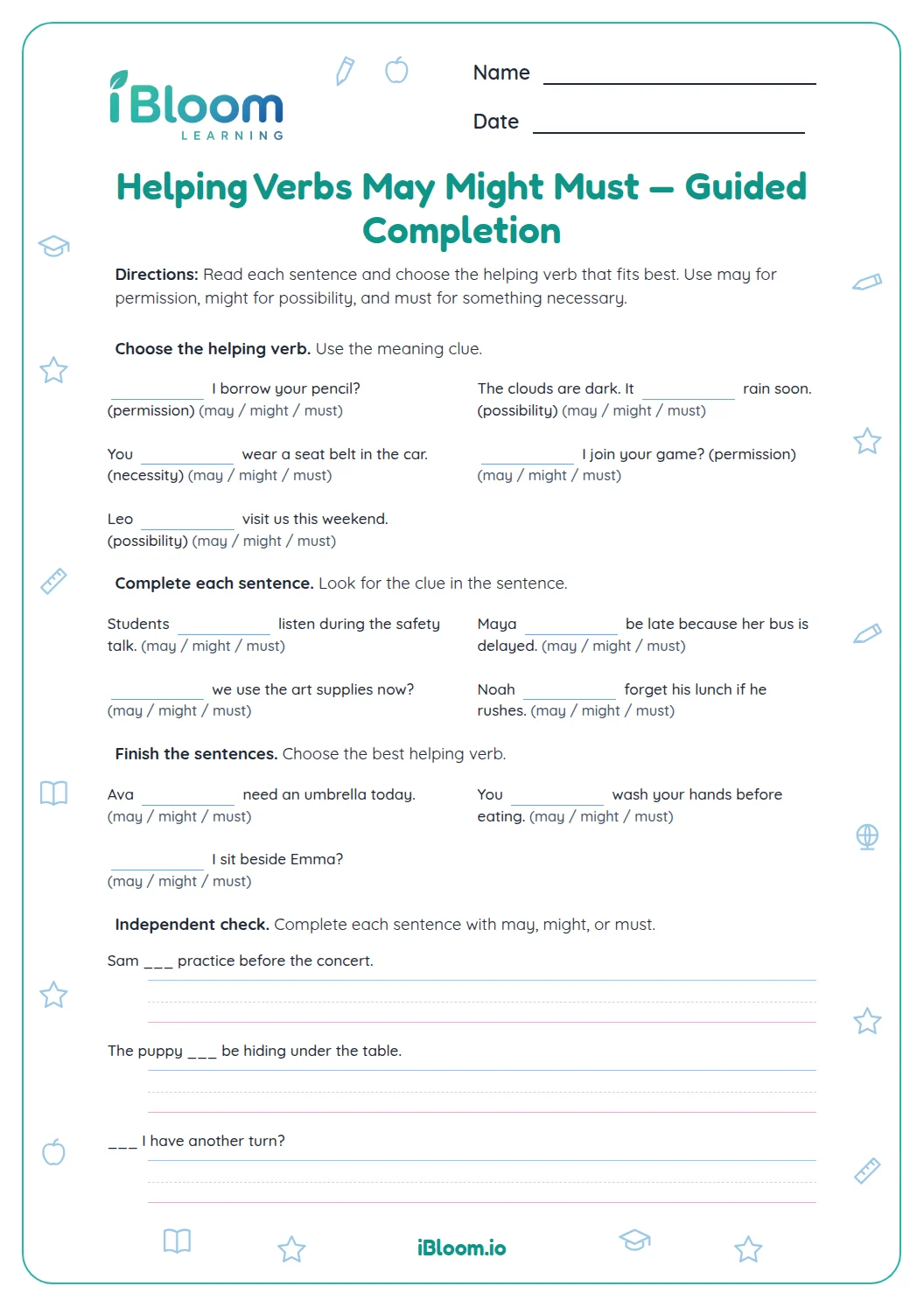
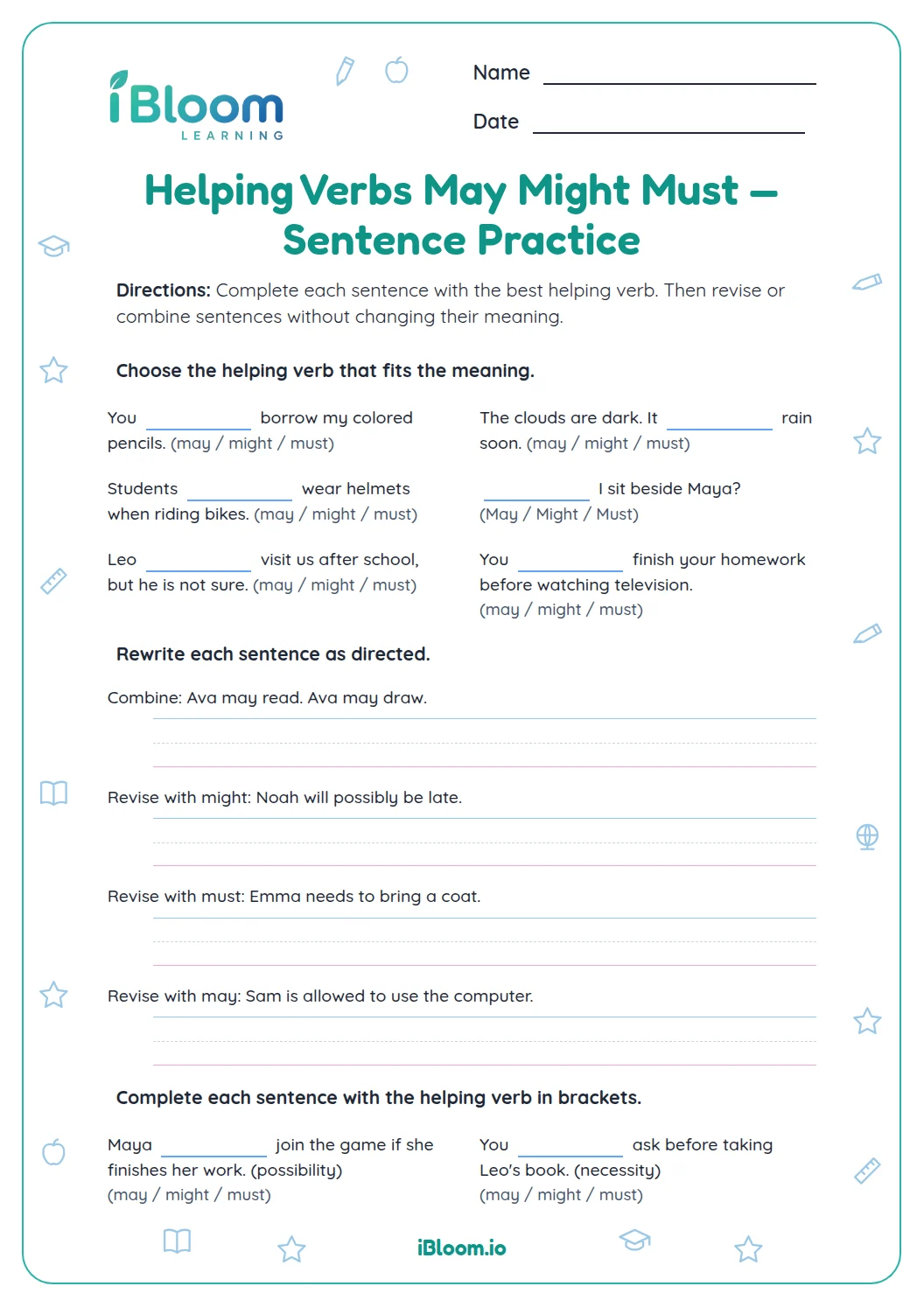
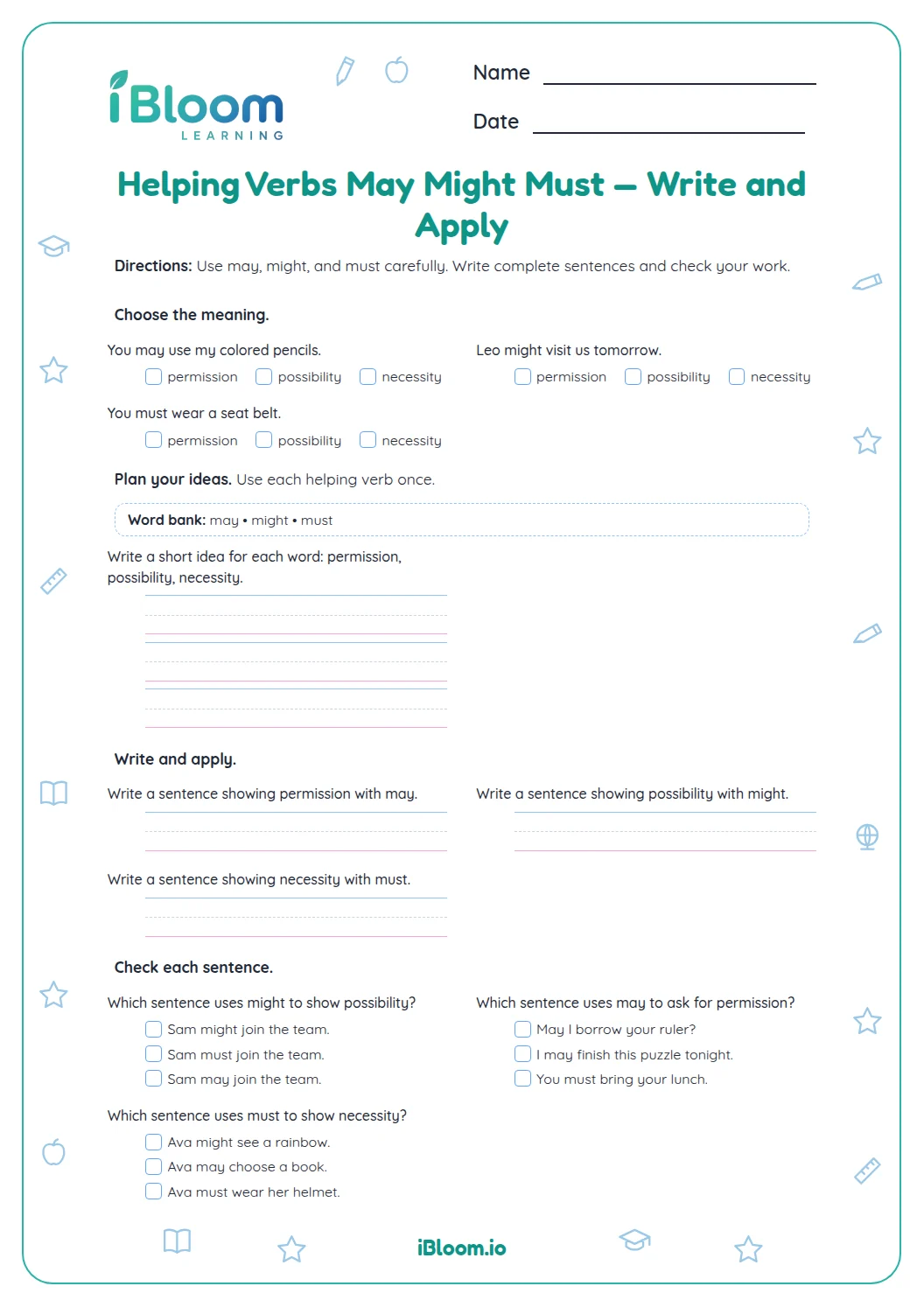
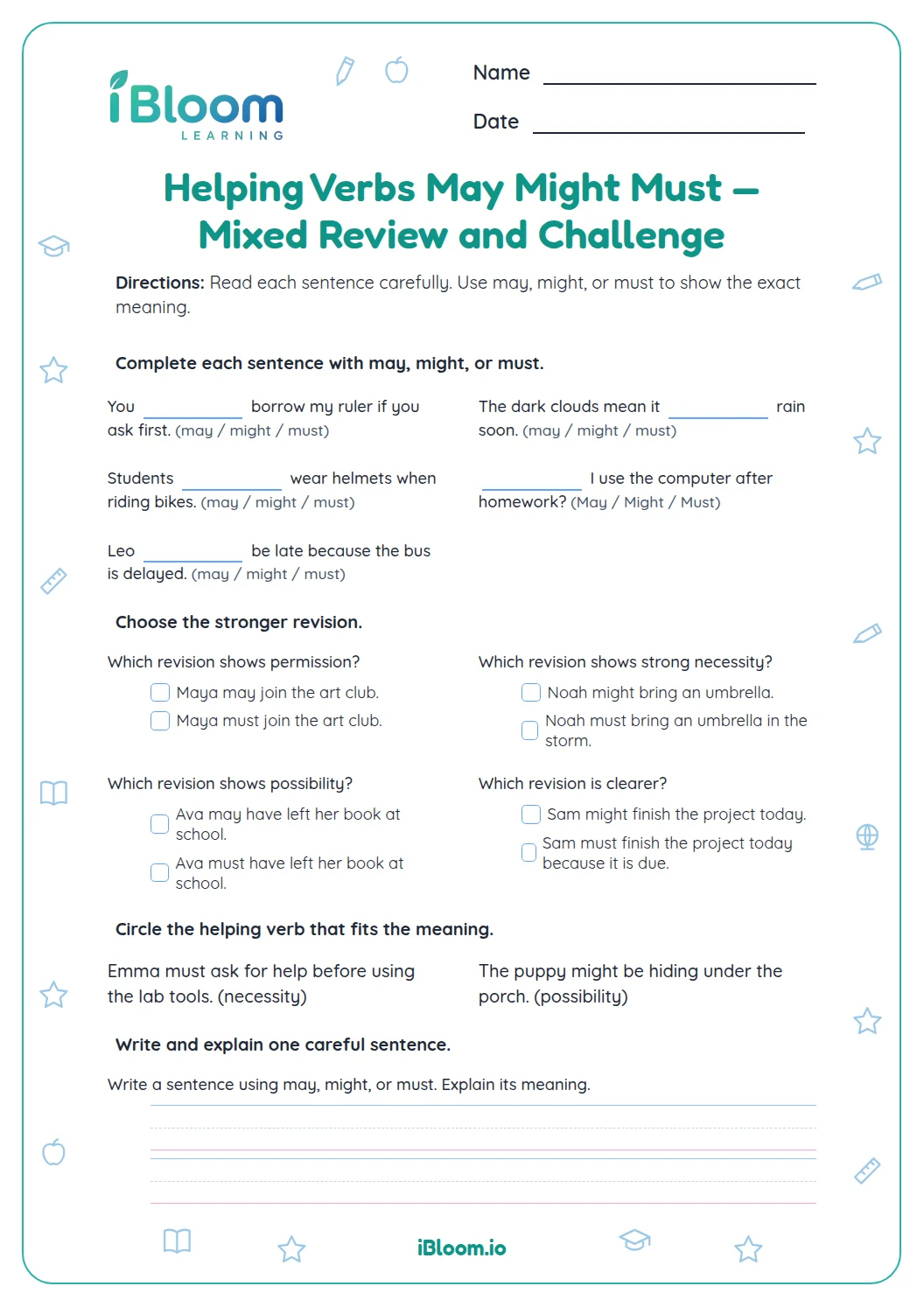
This free printable Grade 4 worksheet focuses on the modal helping verbs may, might, and must. Part A asks learners to correct a verb that conflicts with a sentence clue, such as changing must to may when asking permission. Part B completes sentences using the sentence clues. It has 16 questions across two pages and a separate two-page answer key.
Aligned to L.4.1.c
How does the sheet practice may, might, and must?
Part A presents eight sentences with a modal that conflicts with its clue. Learners choose a replacement. Part B gives eight sentence completions about permission, a less certain possibility, or a requirement.
- Part A: 8 modal-verb edits
- Part B: 8 sentence completions
- Use context to distinguish permission, possibility, and requirement
How can a learner correct a modal verb?
Read the context for the condition it signals. A request for permission calls for may; an uncertain possibility can use might; a requirement calls for must.
- 1I must borrow your ruler? I am asking permission.
- 2Replace must with may: “May I borrow your ruler?”
How do may, might, and must differ here?
May can ask permission or describe something allowed. Might signals a possibility that is uncertain. Must signals a requirement. Read the whole sentence, because the surrounding clue determines which meaning fits.
How can adults support the editing?
Have the learner underline the clue first: asking permission, uncertainty, or a rule. Then read the sentence with the replacement modal and check that the condition still matches. For an open completion, accept the listed answer that matches the stated context.
How to use this worksheet
- 1Read the instruction line and look over the first part together.
- 2Complete the first question as a model, naming the clue or step used.
- 3Finish the rest of that part independently.
- 4Move to the next part and use the same strategy on the new format.
- 5Check answers with the key and revisit any missed item.
Modal-verb mix-ups and quick fixes
The mistake
Using must for a request asking permission.
The fix
For a polite permission question, try may: “May I borrow your ruler?”
The mistake
Using must when an event is possible but uncertain.
The fix
Use might when the clue says the event may happen but is not certain.
The mistake
Using may for a rule or requirement.
The fix
Use must when the sentence says something is required.
Common Core alignment
This worksheet asks students to correct helping verbs so each sentence follows standard English usage.
Use modal auxiliaries such as may and must to show different conditions.
On this sheet: Learners edit and complete sentences using may, might, and must to express permission, possibility, or requirement.
Show the official wordingHide the official wording
Use modal auxiliaries (e.g., can, may, must) to convey various conditions.
What to practice next
Make more practice
Further reading
Questions parents and teachers ask
How many questions are on this modal-verbs worksheet?
There are 16 questions in two parts, with a separate two-page answer key. Part A has eight sentences to edit. Part B has eight sentence completions using may, might, or must, guided by context clues. The two-page worksheet and separate key make it easy to print practice and check responses afterward.
When does the worksheet use may?
May appears in permission questions and in sentences that describe something allowed. For example, “May I borrow your ruler?” asks permission. The learner uses the clue in each sentence to decide whether may fits. The two-page worksheet and separate key make it easy to print practice and check responses afterward.
What does might mean in these questions?
Might signals the less certain possibility in this worksheet. In “It might snow tonight, but the forecast is not certain,” the second clause points to might rather than a requirement expressed with must. The two-page worksheet and separate key make it easy to print practice and check responses afterward.
What does must show?
Must signals a requirement in examples such as following safety rules or returning books by a deadline. Learners use the rule or requirement clue to choose must instead of may or might. The two-page worksheet and separate key make it easy to print practice and check responses afterward.
How should I help if two modal verbs seem possible?
Ask the learner to underline the clue first. Since the three choices have related meanings, reading the whole context helps select the modal that matches the intended condition. The two-page worksheet and separate key make it easy to print practice and check responses afterward.