






About this worksheet
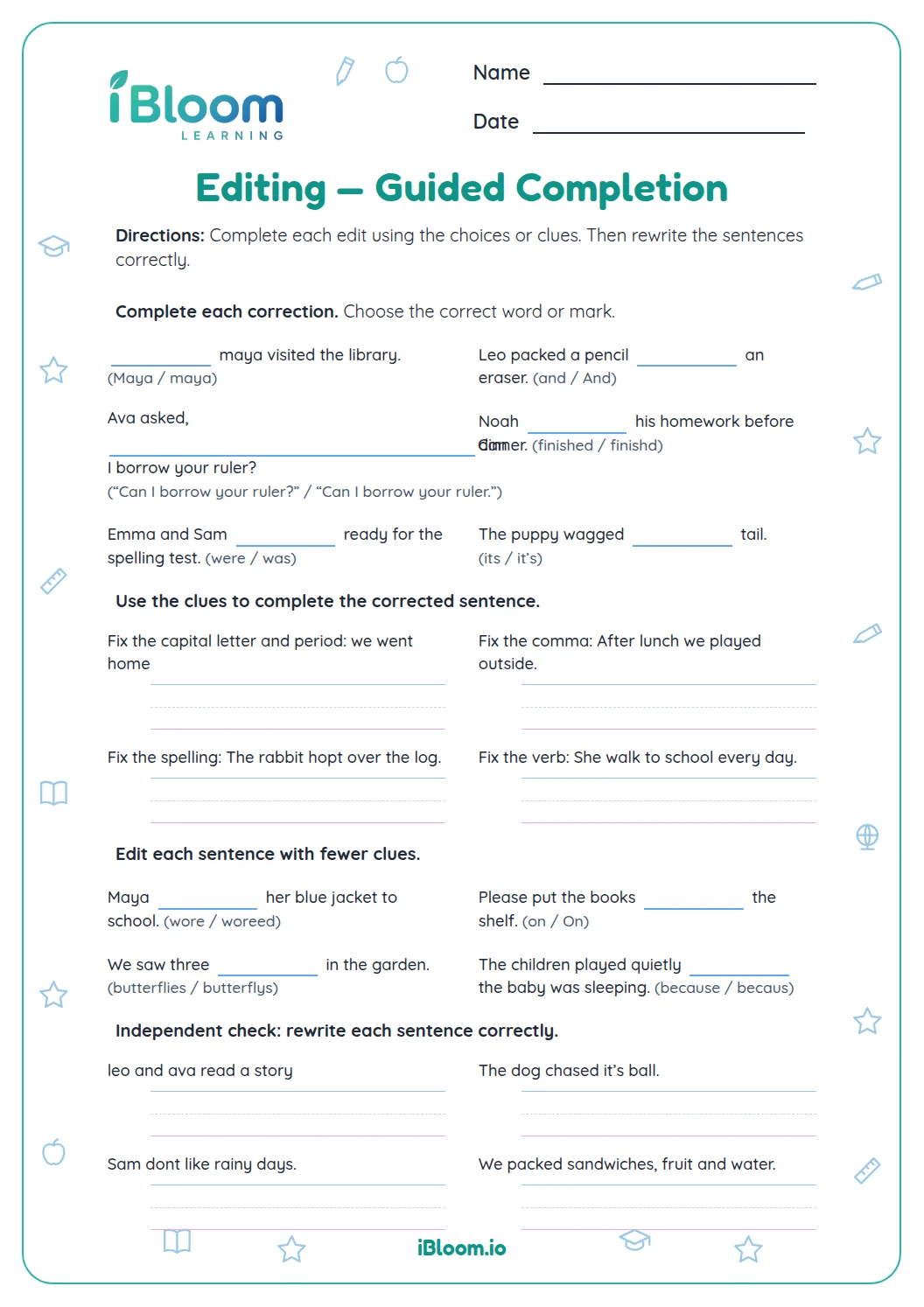
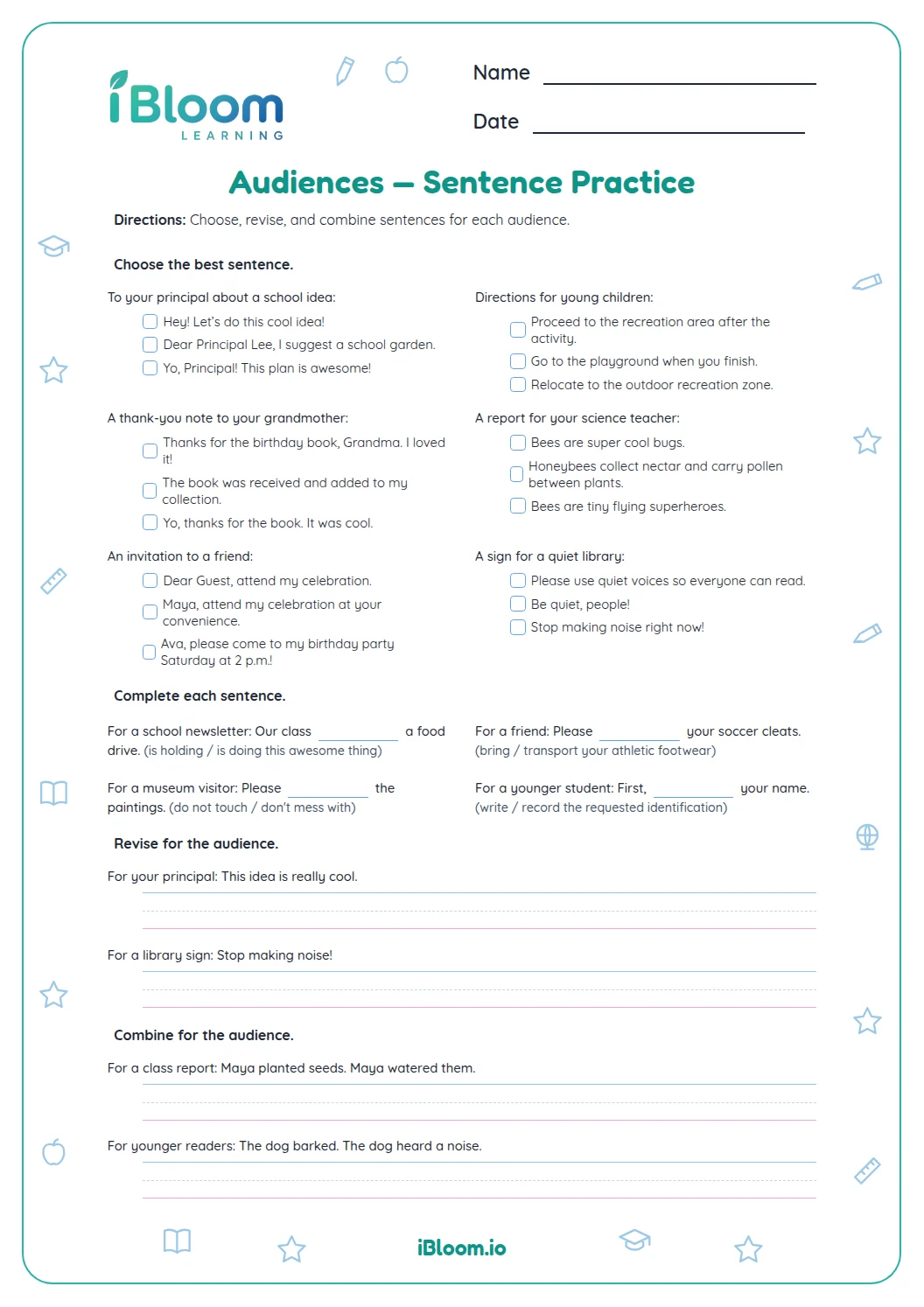
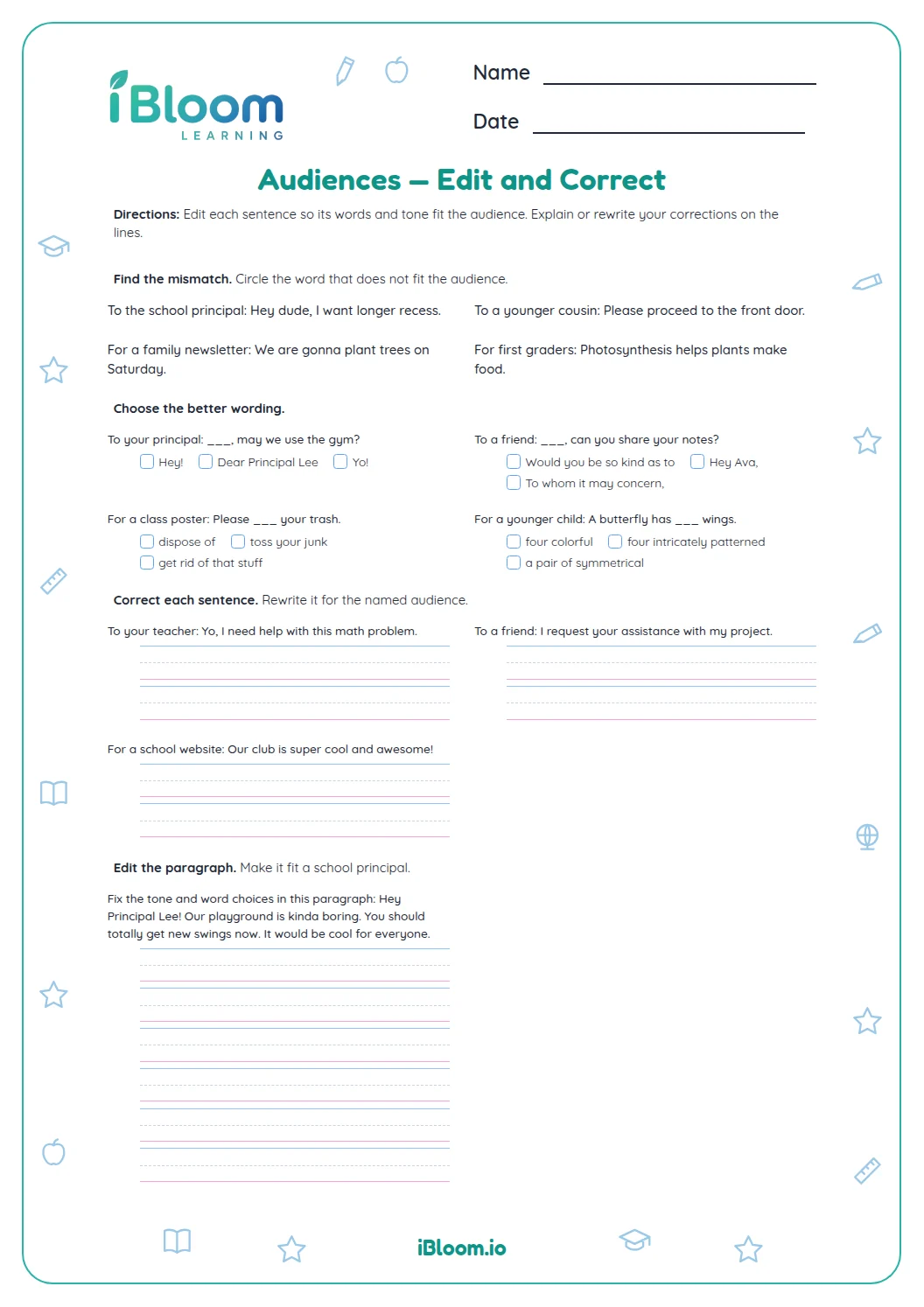
This Grade 4 writing worksheet gives students 14 chances to turn a question into a complete answer and edit sentence conventions. Children choose strong restatements, repair capitalization and punctuation, and write answers that repeat the important subject of the question. The key offers sample responses when wording can vary.
Aligned to CCSS.ELA-LITERACY.L.4.2 and CCSS.ELA-LITERACY.W.4.5
What makes a response a restatement?
A complete response uses the question’s subject and gives an answer. For “Where does Maya volunteer?” the key is “Maya volunteers at the animal shelter,” rather than the fragment “At the animal shelter.”
Which editing skills appear here?
Students fix lowercase sentence beginnings, add missing end punctuation, and separate two complete thoughts in a run-on. These edits make the response easier to read before it is checked for meaning.
How can students write an answer in their own words?
For questions such as why shadows change length, a complete answer names the subject and explains the idea. The key includes a sample, so other accurate sentences can also work.
How to work through the page
- 1Read the whole question before starting the answer.
- 2Underline the person, thing, or idea the question asks about.
- 3Begin the answer with that subject instead of “it” or “because.”
- 4Check that the sentence answers who, what, where, when, why, or how.
- 5Edit the first letter and end mark where the prompt asks.
- 6Compare written answers with the key’s sample, allowing accurate wording differences.
Common slips and fixes
The mistake
Writing only a fragment such as “At the shelter.”
The fix
Turn it into a sentence: “Maya volunteers at the animal shelter.”
The mistake
Starting a sentence with a lowercase letter
The fix
Capitalize its first word and proper names.
The mistake
Leaving two complete thoughts joined without punctuation
The fix
Read the sentence aloud and place the needed end mark between the thoughts.
Curriculum alignment
Students edit capitalization and punctuation in the worksheet sentences.
On this sheet:
Show the official wordingHide the official wording
Demonstrate command of the conventions of standard English capitalization, punctuation, and spelling when writing.
Students revise and edit responses so each one clearly answers its question.
On this sheet:
Show the official wordingHide the official wording
With guidance and support from peers and adults, develop and strengthen writing as needed by planning, revising, and editing.
What to practice next
Make more practice
Further reading
Questions parents and teachers ask
What does it mean to restate a question?
Restating a question means turning it into the beginning of a complete answer. For “Where does Maya volunteer?” a clear response is “Maya volunteers at the animal shelter.” The worksheet contrasts complete sentences with fragments and asks students to write some responses themselves.
How many items are included?
The worksheet has 14 items in two parts. The first part focuses on choosing a strong restatement. The second part asks students to edit sentences or write complete responses, including capitalization, punctuation, and a run-on correction. Students can read each answer aloud to check that it sounds complete.
Is there one exact answer for every writing prompt?
Some prompts have a specific correction, such as adding a question mark or capitalizing the first word. Other items allow more than one well-written answer. The separate key labels those as samples, so a different sentence is fine when it clearly answers the question.
What should a complete answer include?
A complete answer names the person, thing, or idea in the question and responds to what is being asked. Students can check that the sentence makes sense by reading it after the question. The examples on the sheet show how a fragment can become a full sentence.
Which editing conventions does the worksheet practice?
The editing prompts include sentence capitalization, end punctuation, and separating two complete thoughts in a run-on. Students also practice making their written answers clear and complete. The key shows the corrected versions and sample wording for open responses. A final reread helps catch both kinds of errors.