






About this worksheet
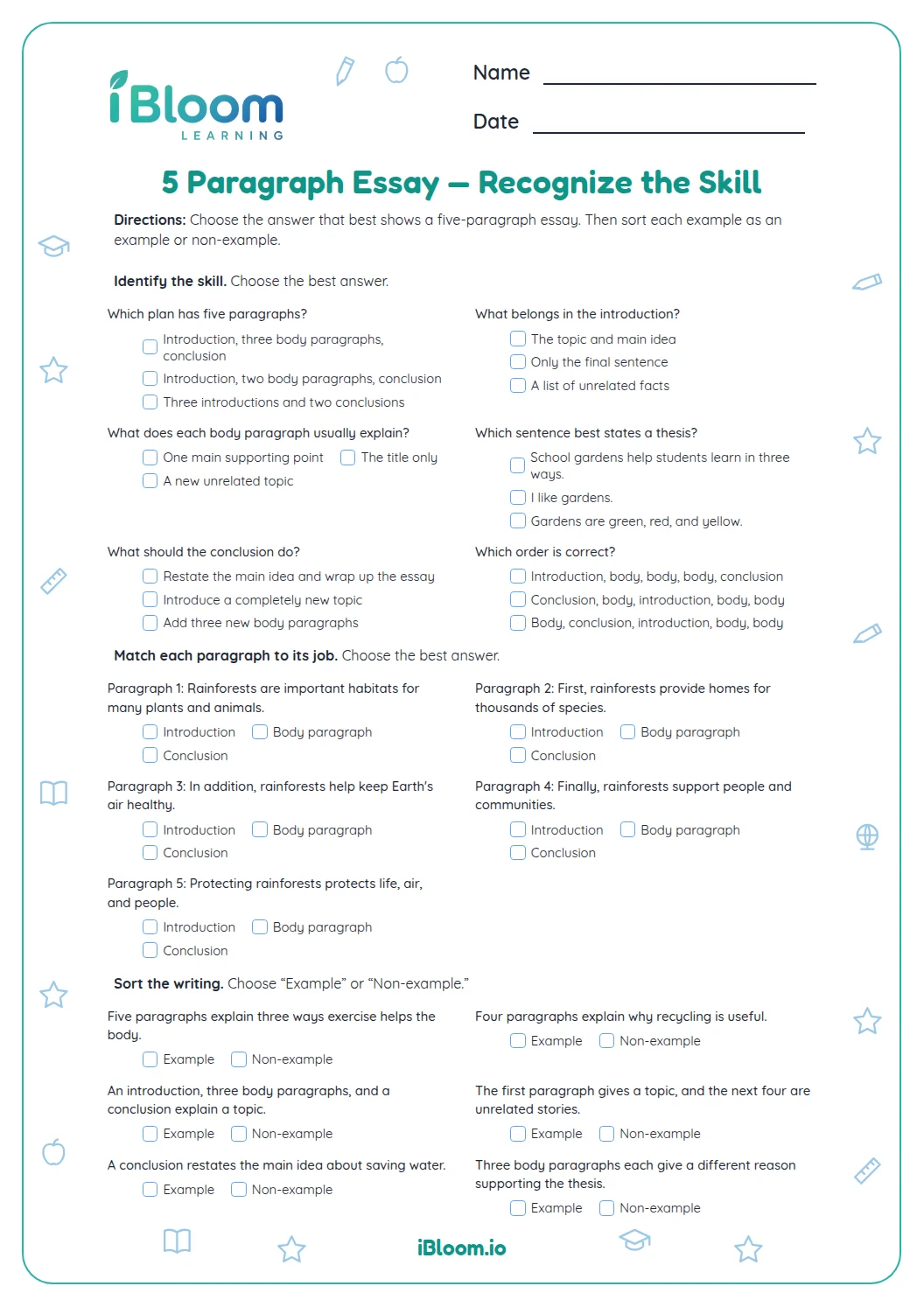
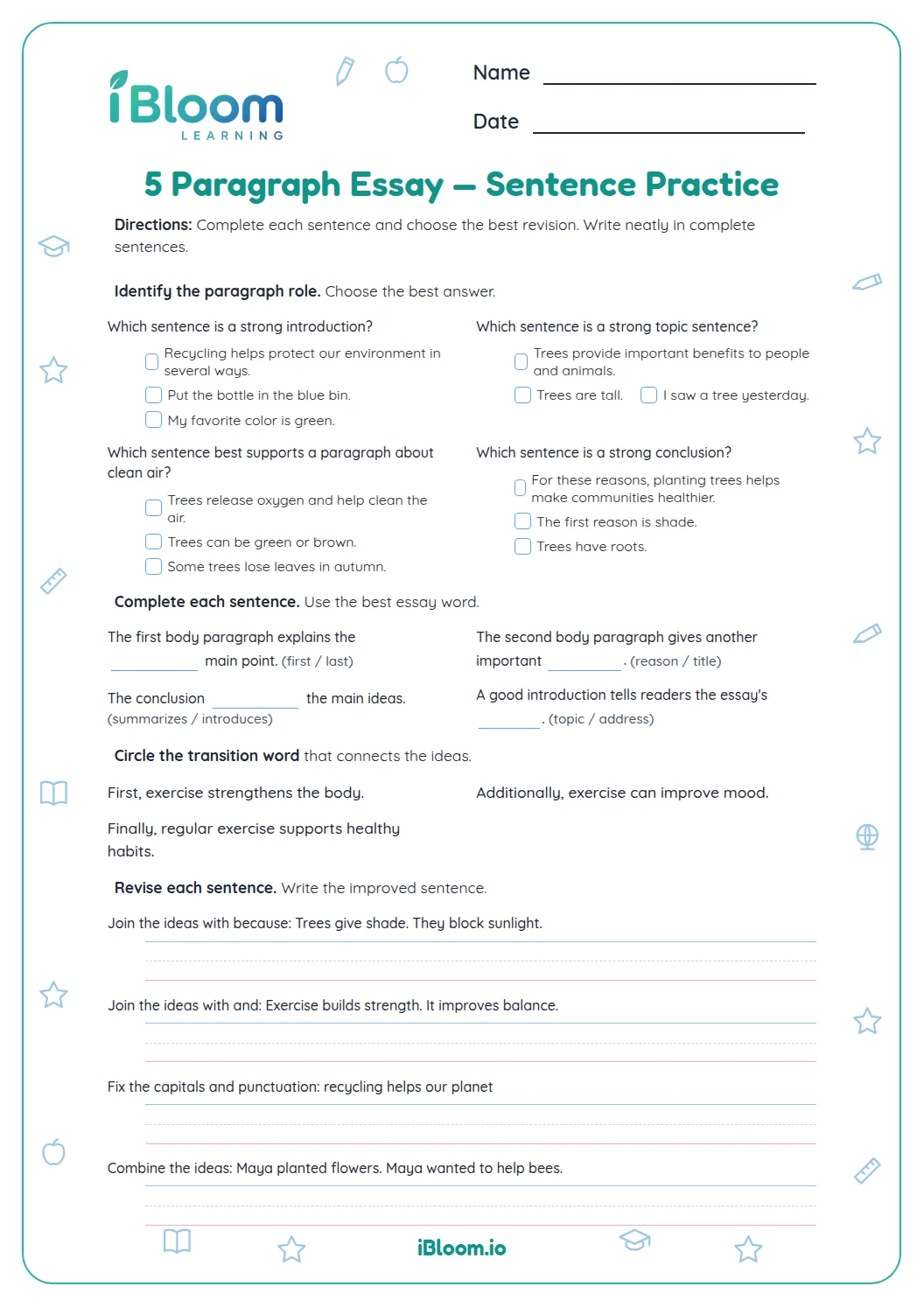
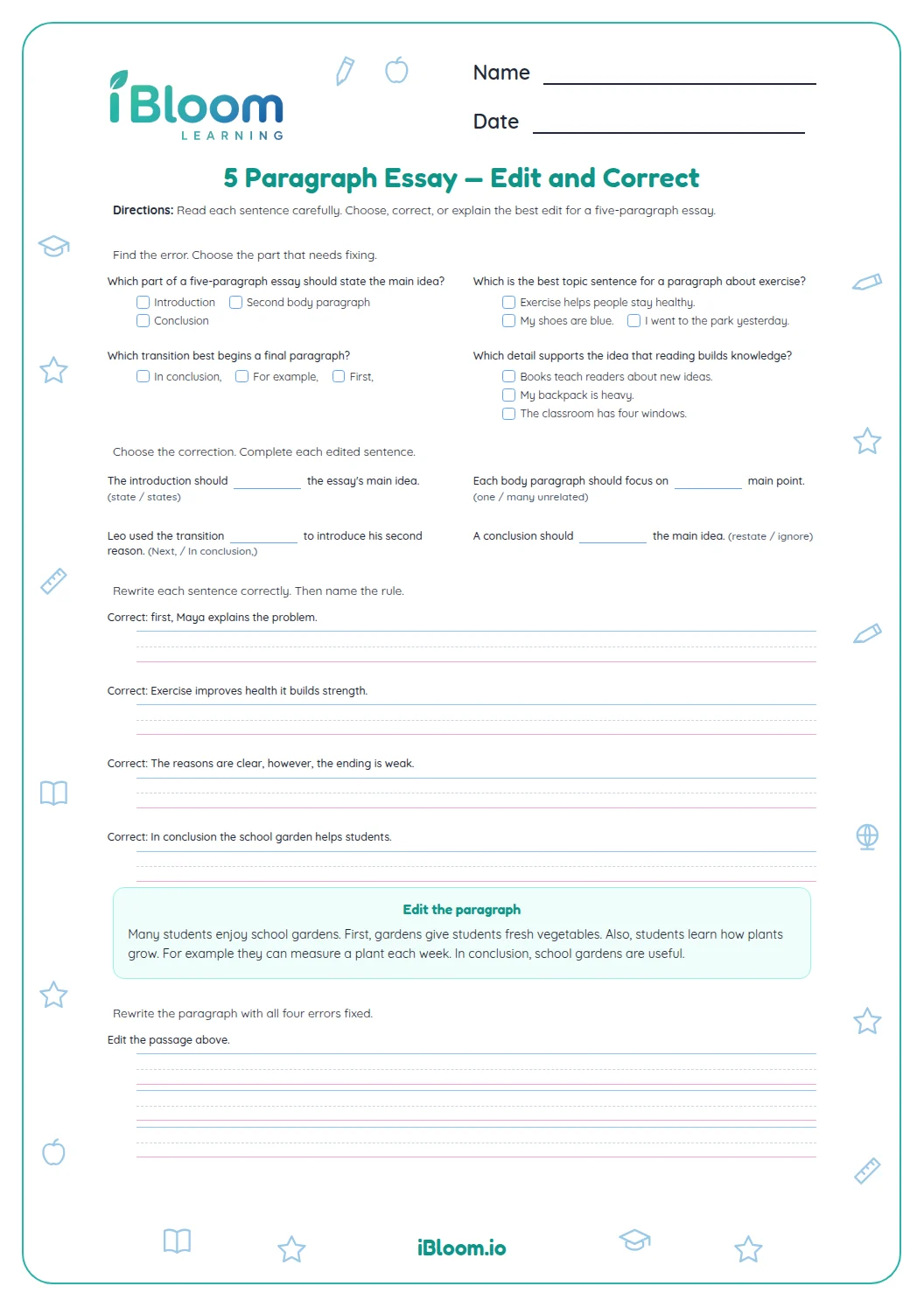
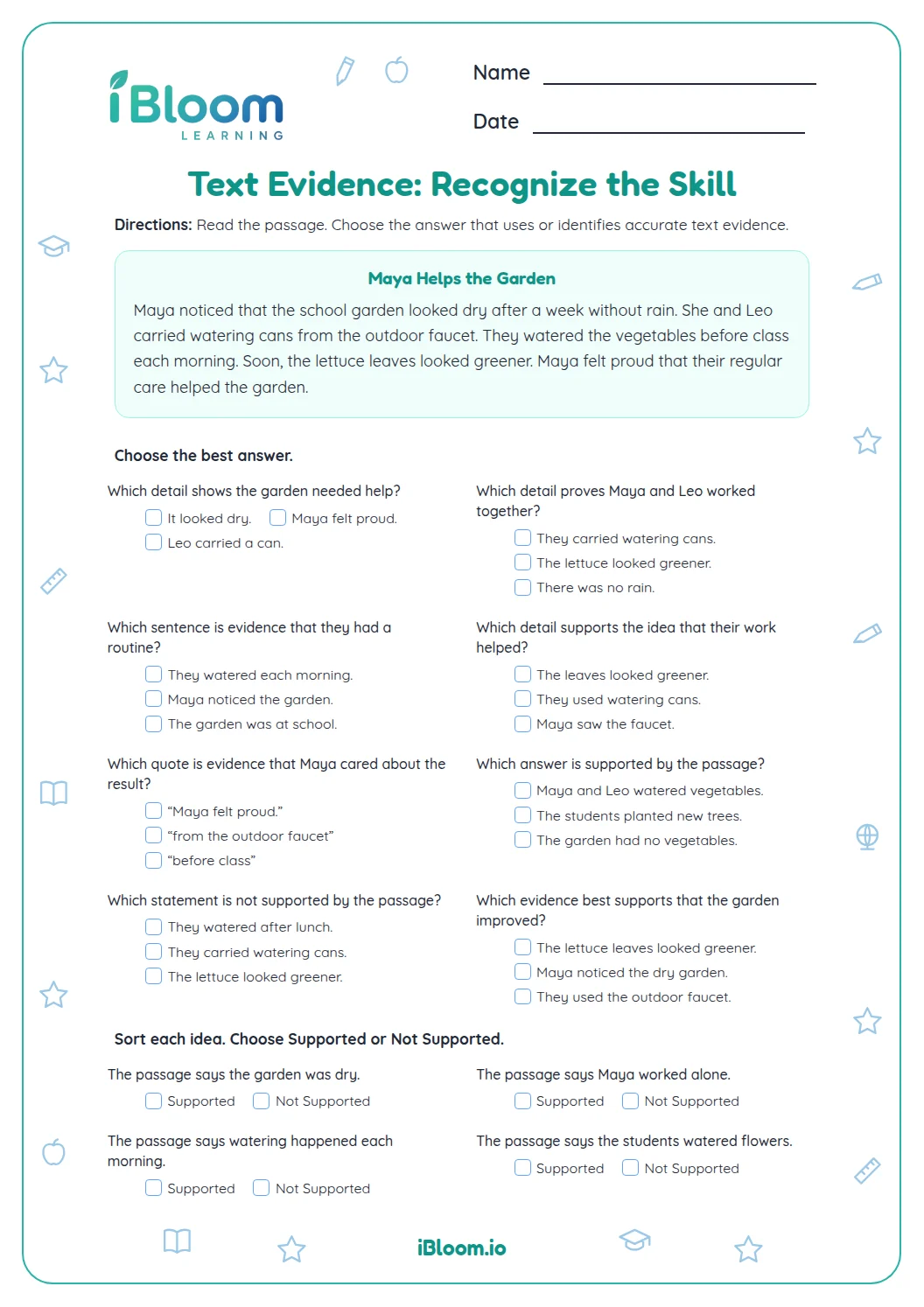
This Grade 5 printable offers fourteen mixed review tasks for a five-paragraph informative essay. Students recognize strong hooks, thesis statements and evidence, then name supporting details and transitions and write their own sentences. The separate answer key includes correct choices and sample responses.
Aligned to W.5.2.b
What makes a strong essay opening?
A hook invites the reader into the topic. A thesis states the main focus the essay will explain.
- 1What if water ran out?
- 2This hook raises a question that invites a reader to think about the topic.
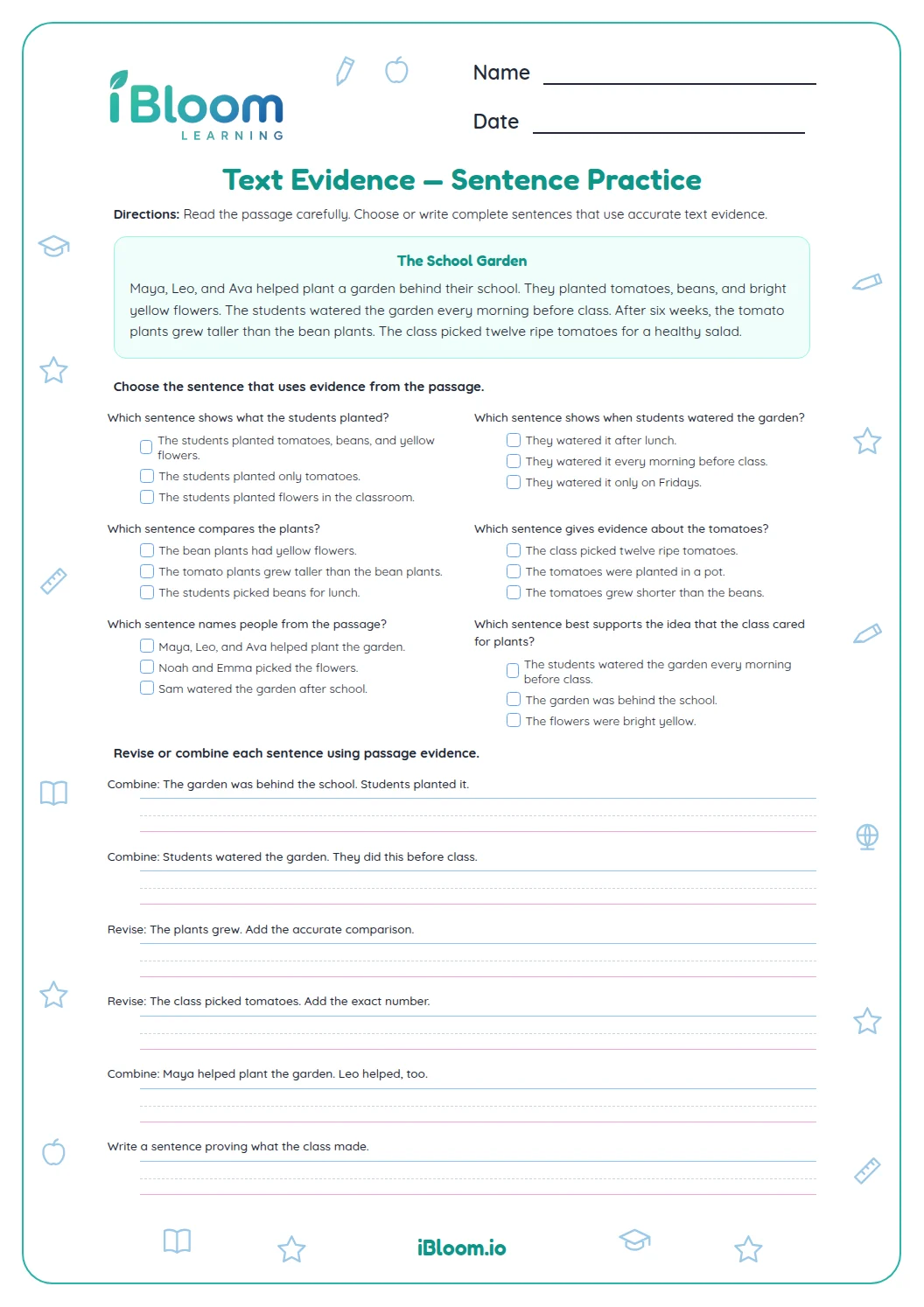
How can evidence support a paragraph?
A useful detail is specific and checkable. The writer can then explain what the detail shows about the main idea.
- 1The height of bean plants each week.
- 2Weekly measurements show how plants grow over time.
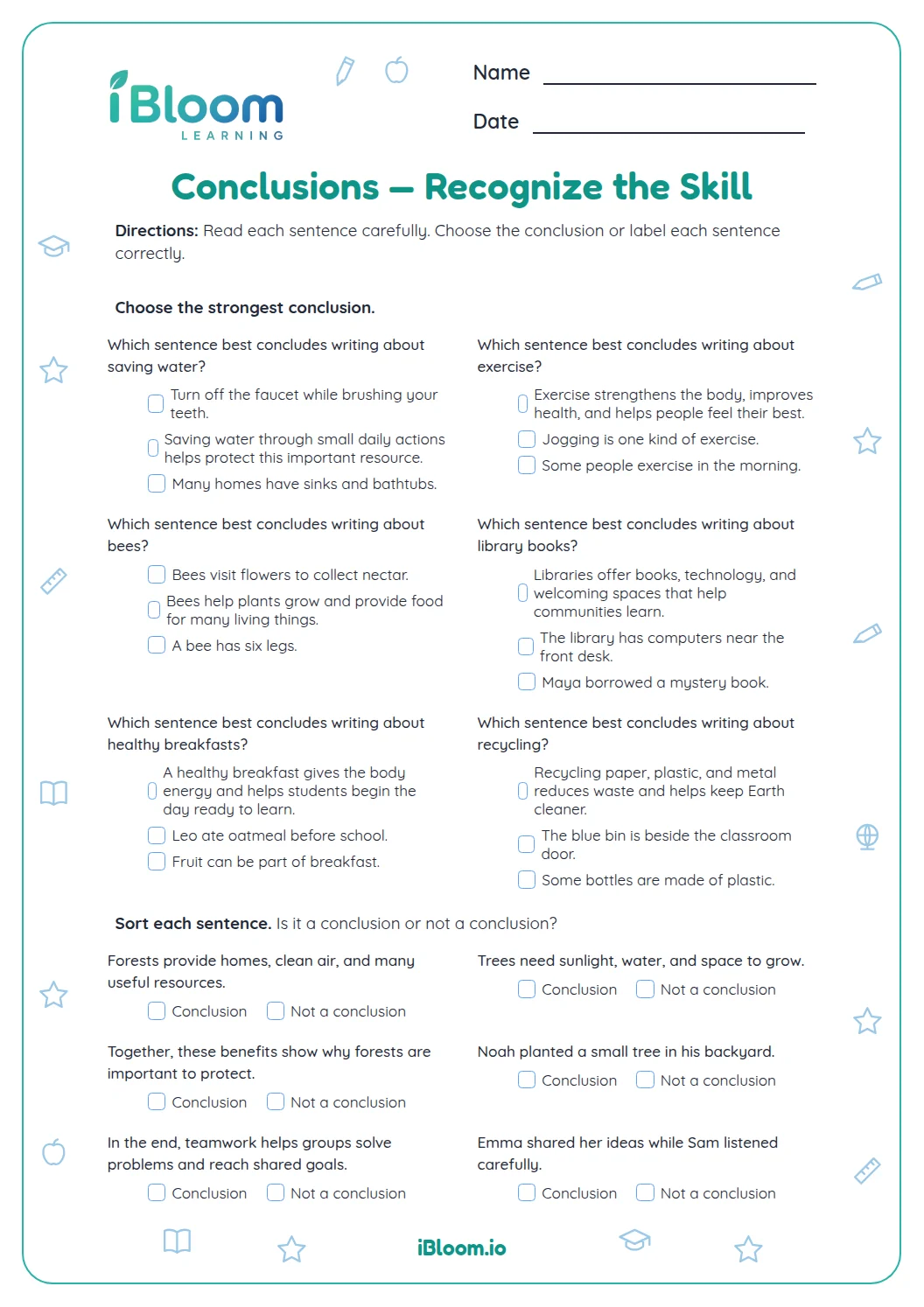
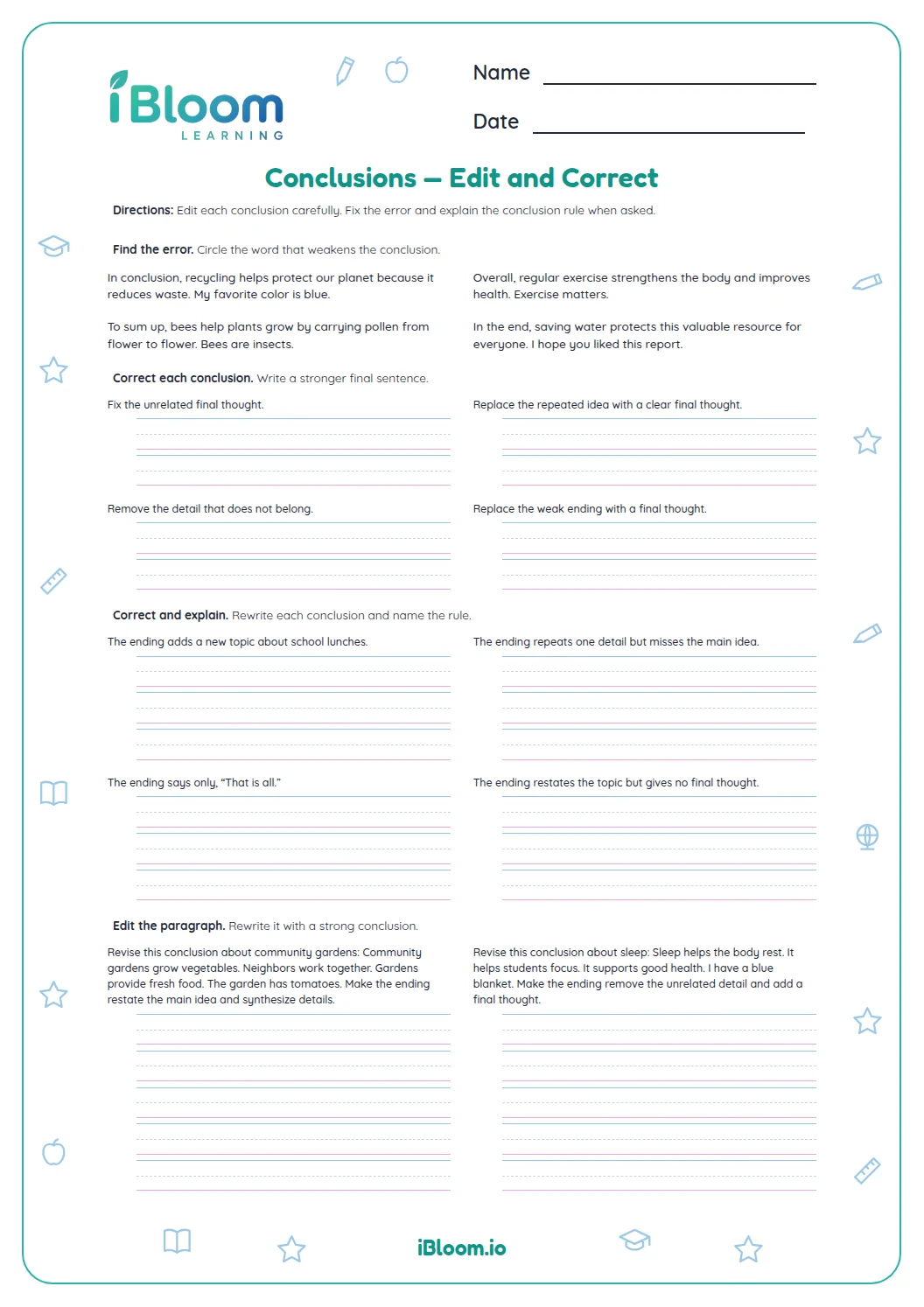
How can a conclusion bring an essay together?
A conclusion restates the main idea in fresh words and leaves the reader with a final thought.
- 1A daily reading habit builds knowledge and confidence.
- 2The sentence closes the essay by returning to the value of reading.
How to use this worksheet
- 1Read each direction and identify the essay part or writing move.
- 2For a hook, choose a line that makes a reader curious.
- 3For evidence, name a fact or detail a reader can check.
- 4For a thesis or conclusion, write one complete focused sentence.
- 5Use the answer key to compare ideas and revise unclear wording.
Common mistakes and quick fixes
The mistake
Choosing a broad thesis such as “Gardens are good.”
The fix
Name a specific focus, such as science learning or teamwork.
The mistake
Treating an opinion as research evidence.
The fix
Use a detail that can be checked or measured.
The mistake
Repeating a fact without explaining its meaning.
The fix
Add what the fact shows about the paragraph’s main idea.
Curriculum alignment
Develop a topic with facts, details and examples.
On this sheet: Students draft topic sentences, supporting details and explanations for informative paragraphs.
Show the official wordingHide the official wording
Develop the topic with facts, definitions, concrete details, quotations, or other information and examples related to the topic.
What to practice next
Make more practice
Further reading
Questions parents and teachers ask
Are the sample responses the only correct answers?
No. The key gives one possible response for each open-ended writing prompt. Another sentence is correct when it answers the task, stays on topic, and reads clearly. Students can compare the purpose and details of their sentence with the sample.
Does this worksheet include a full essay to copy?
No. The page breaks essay writing into short parts so students can practice each move. They create original hooks, thesis statements, topic sentences, details, explanations, transitions and conclusions rather than copying a model essay. Ask the student to explain how the response meets the direction before checking the answer key together.
How should a student use the answer key?
Use the key to compare ideas, not to require identical wording. Check whether each sentence performs the requested job and whether a supporting detail connects to its paragraph focus. Encourage a revision when the sentence is unclear. Ask the student to explain how the response meets the direction before checking the answer key together.
What makes a useful supporting detail?
A useful detail is specific and relevant to the paragraph’s main idea. For example, measurements recorded each week provide clearer support for a garden science paragraph than a broad statement that gardens are nice or important. Ask the student to explain how the response meets the direction before checking the answer key together.
How long should students spend?
Most students can complete the ten short writing tasks in about twenty minutes. Writers who need more planning time can finish the essay parts in two sittings and review the sample responses after drafting. Ask the student to explain how the response meets the direction before checking the answer key together.