




About this worksheet
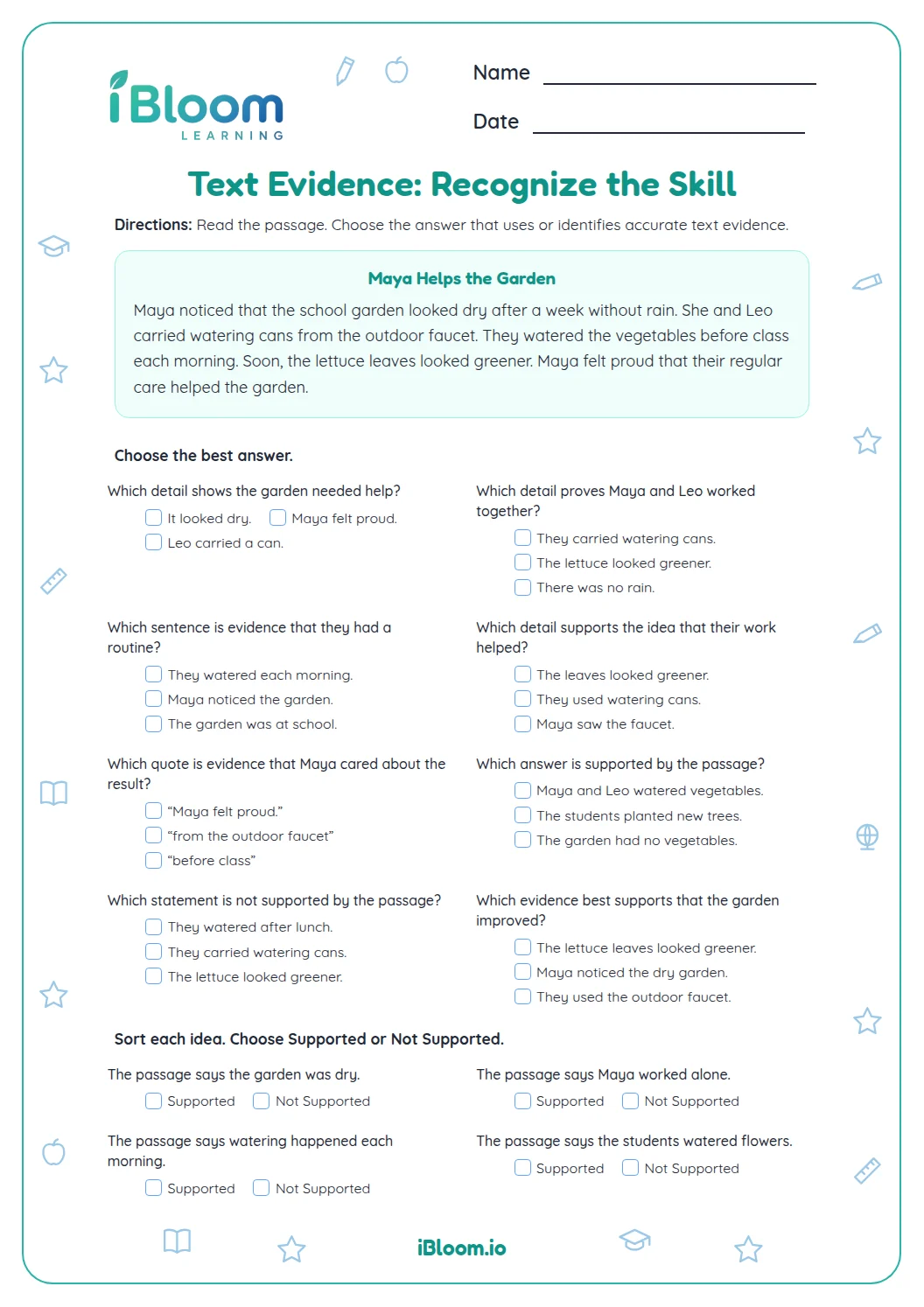
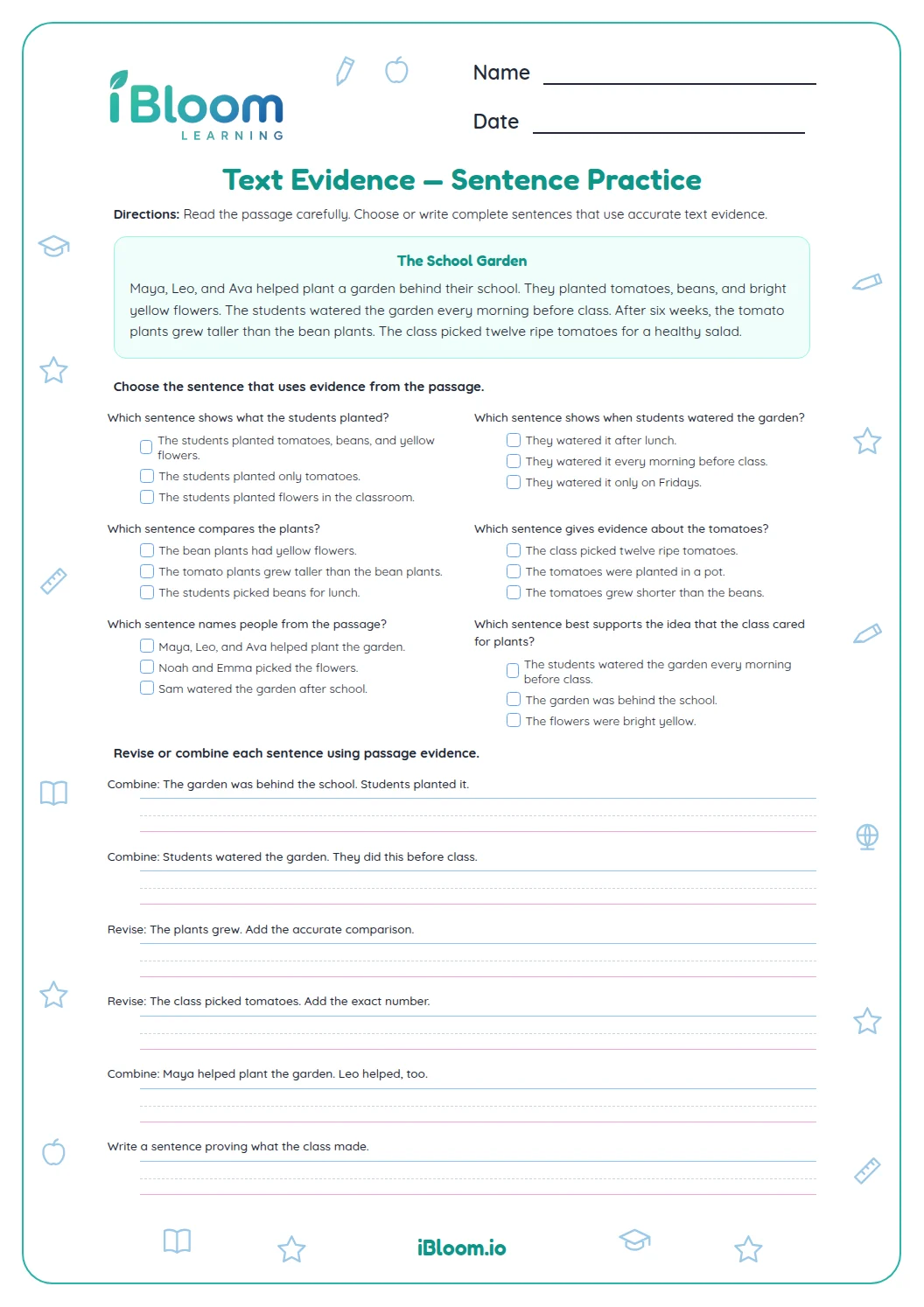
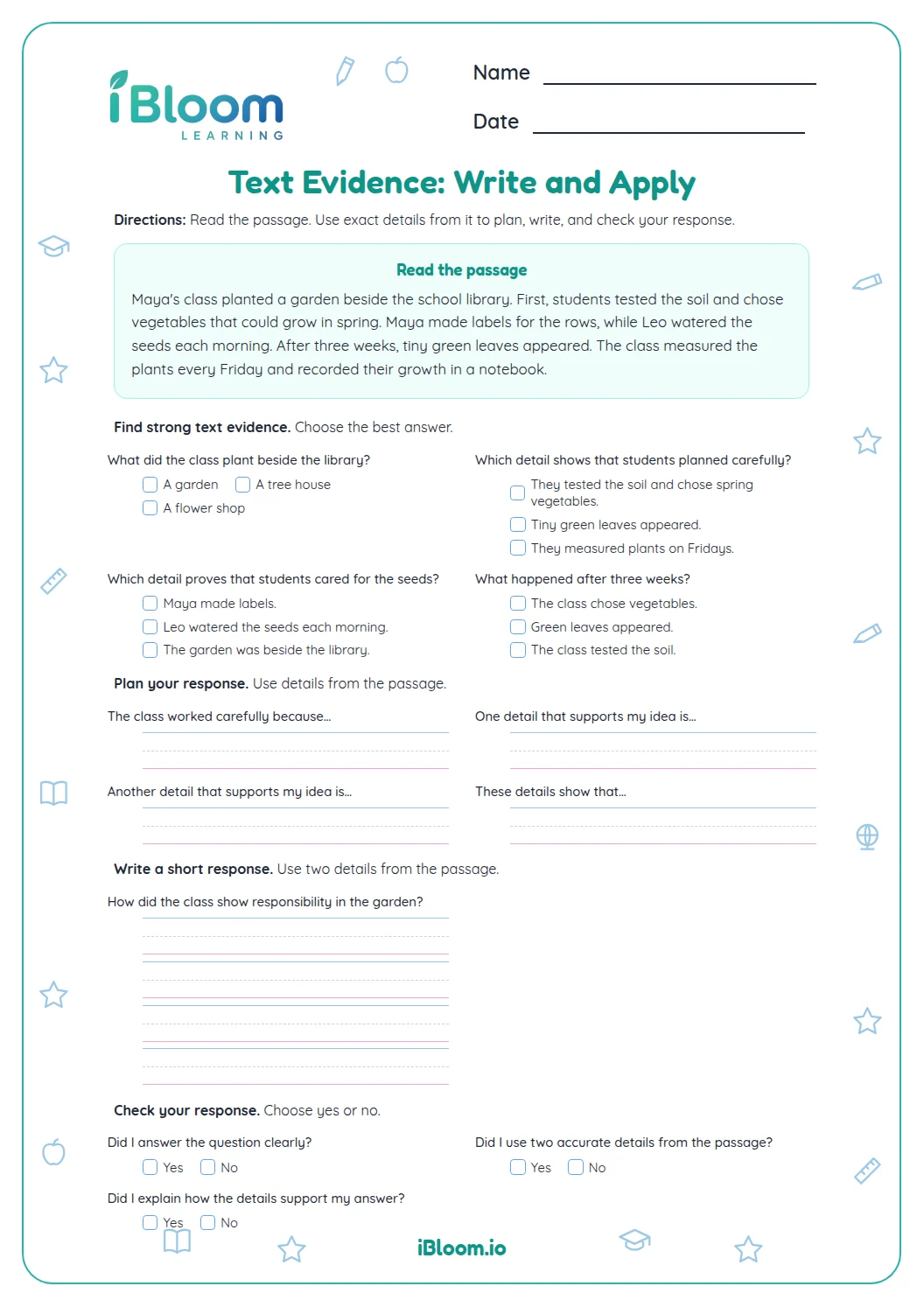
This Grade 5 printable worksheet practices checking whether details support a claim, matching statements to source information, and writing accurate notes. Students work through 10 evidence and source questions, then write four short notes from brief source facts. The answer key includes sample responses for the open-ended items.
What does the worksheet ask students to do?
Questions 1–10 ask students to compare a claim or note with a stated source detail. Questions 11–14 ask them to record the relevant information accurately in their own words.
How can students check whether a detail supports a claim?
Look for a detail that directly measures or describes the change in the claim. Avoid choices that are interesting but unrelated.
- 1The class log changes from 12 inches in April to 20 inches in May.
- 2Answer: The log records a height increase.
What makes a useful source note?
Keep the source’s meaning and important facts, such as a measurement or date. For questions 11–14, the key gives a sample; other wording is fine if it preserves the source detail.
How to use this worksheet
- 1Read the directions at the top of the page together.
- 2Complete the first item slowly and explain the thinking aloud.
- 3Work through the remaining questions in order.
- 4Use the answer key to check each response.
Common mistakes and quick fixes
The mistake
Rushing past a key detail in the prompt.
The fix
Underline the numbers or words that matter before answering.
The mistake
Giving an answer without checking how it fits the question.
The fix
Reread the whole prompt and make sure the response answers it.
The mistake
Stopping after a first attempt.
The fix
Compare the response with the answer key and correct any slip.
What to practice next
Make more practice
Questions parents and teachers ask
What does this worksheet mean by text evidence?
Text evidence is a source detail that supports an idea. Students compare claims with source statements, then write notes that preserve useful facts without adding unsupported information. Ask the learner to name the source detail or calculation that supports the answer before opening the key.
Do students need to read a long passage first?
No. Each question supplies a short source detail or statement in its prompt. This lets students focus on checking evidence, paraphrasing a fact, and recording a source detail clearly. Students can point to the matching source detail and explain the choice before checking the key.
What should a good source note include?
A good note keeps the information that matters to the report and stays faithful to the source. For example, a note about a roof garden should retain its 800-square-foot measurement rather than replace it with a vague description. Check the work by pointing to the matching detail.
How should students answer the writing questions?
Students can write one concise sentence that preserves the source fact. The key provides sample responses for questions 11–14, and other wording can work when it keeps the original meaning accurate. Students can point to the matching source detail and explain the choice before checking the key.
Is an answer key included?
Yes. A separate answer key lists the correct choice for the selected-response items and sample notes for the four written questions. Students can compare their wording with the source and check whether they kept the same meaning. Check the work by pointing to the matching detail.