
About this worksheet
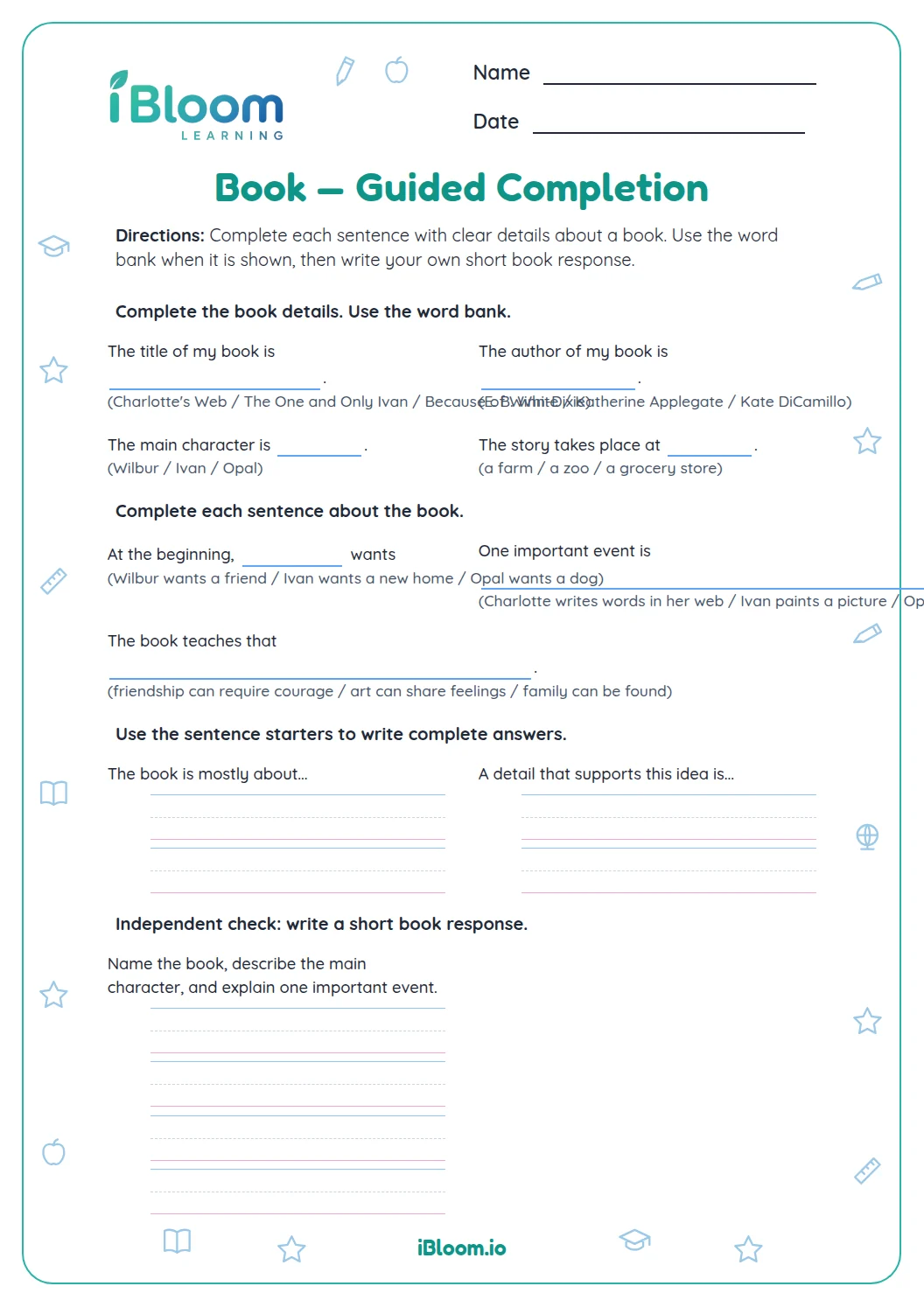
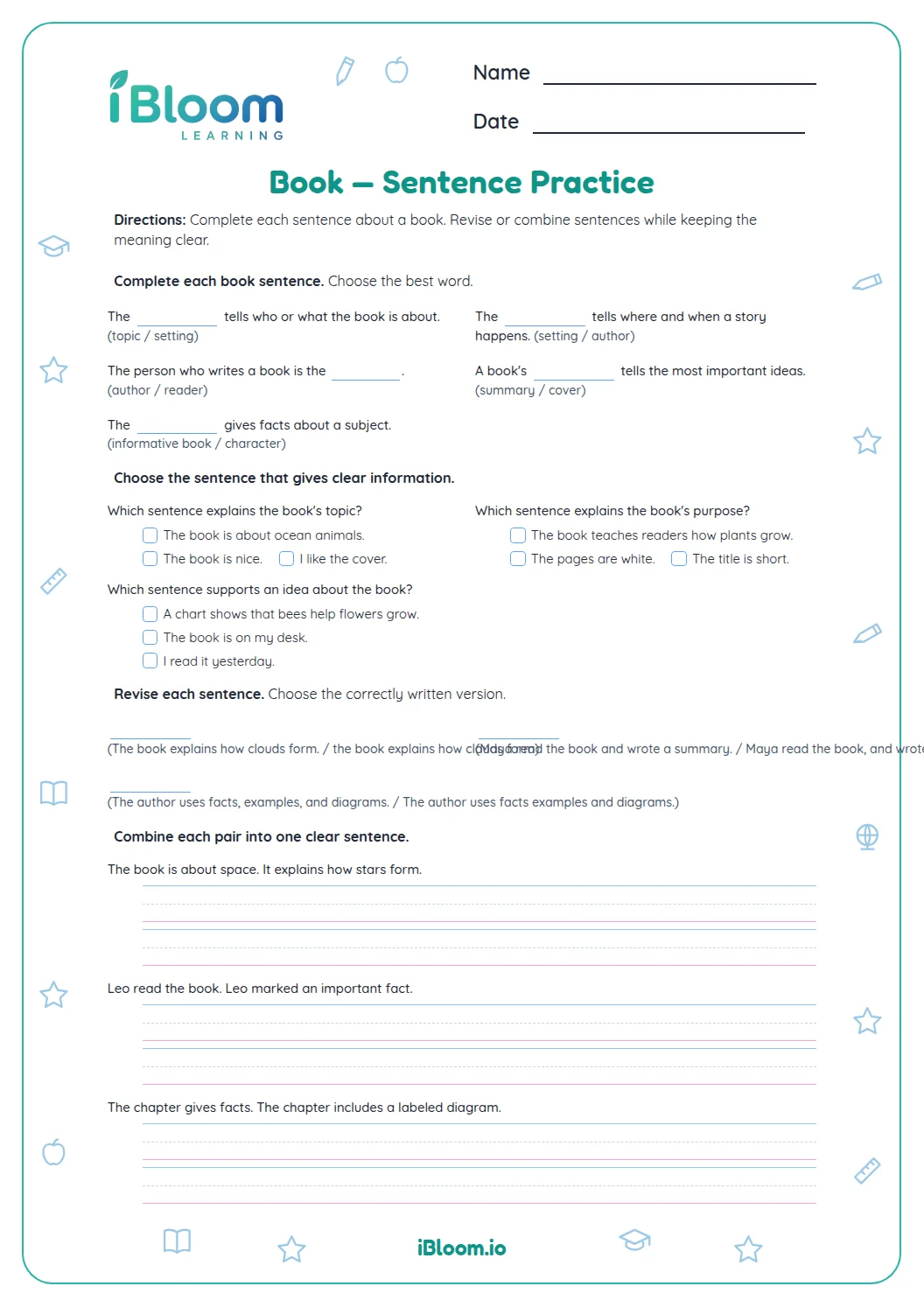
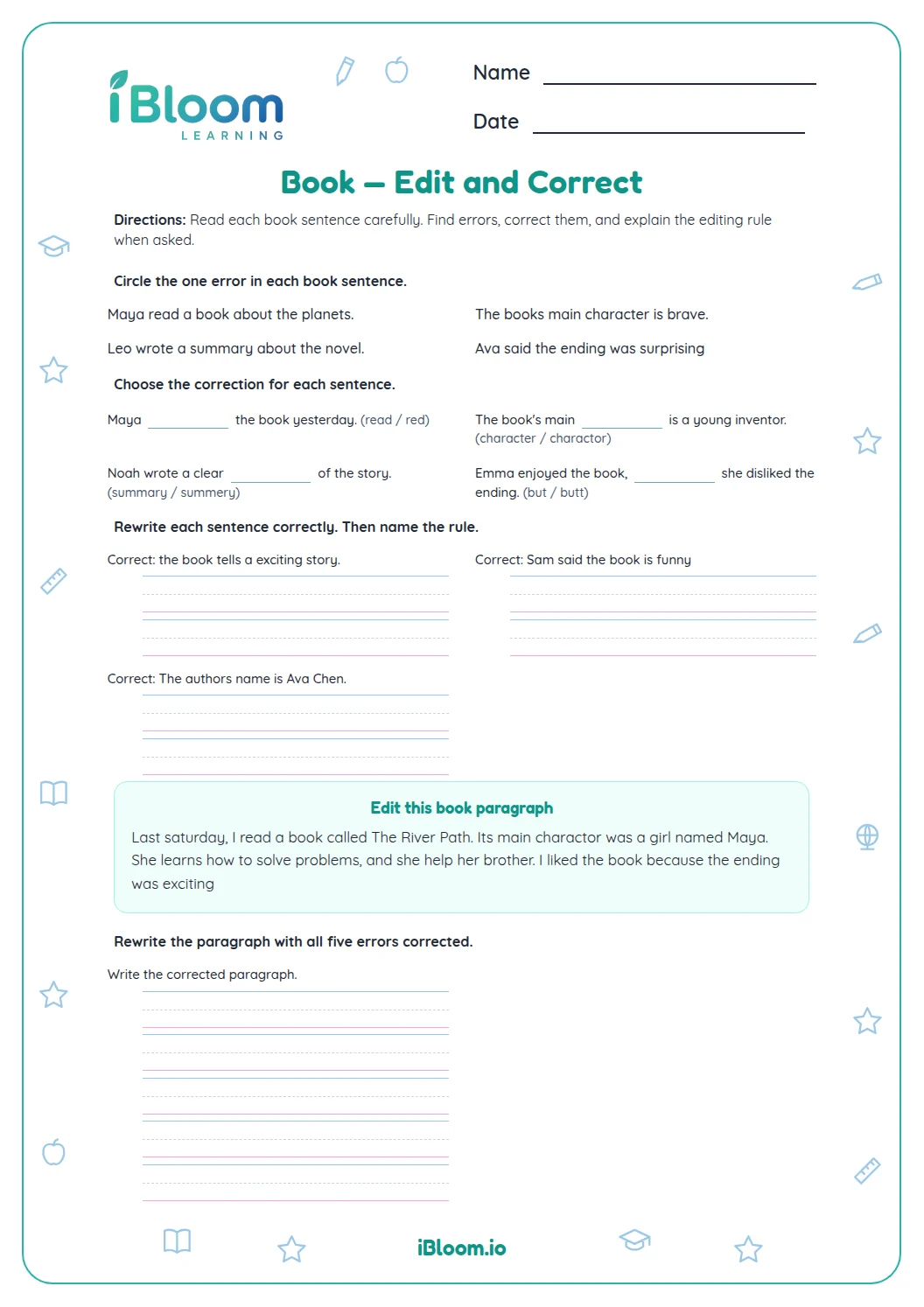
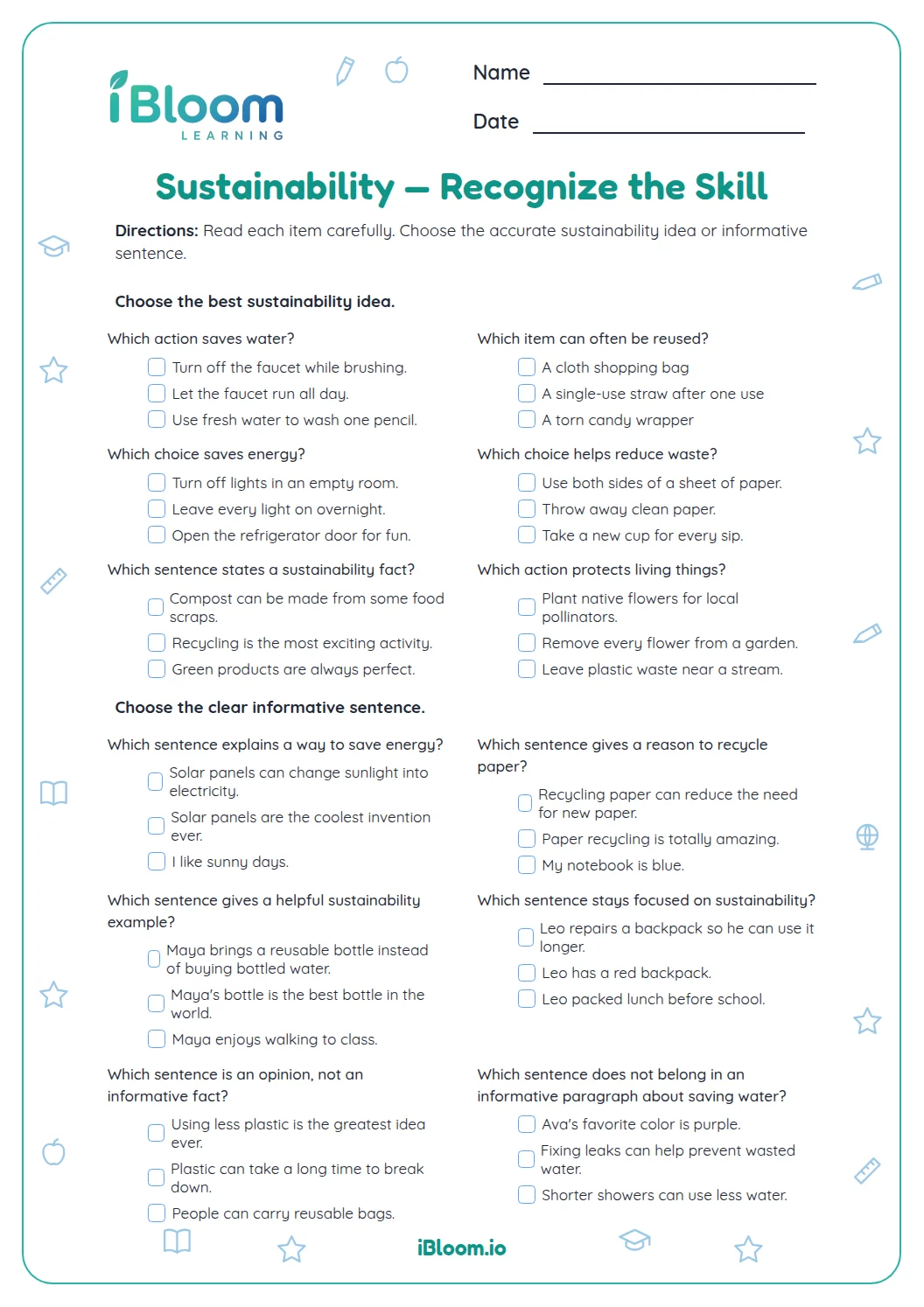
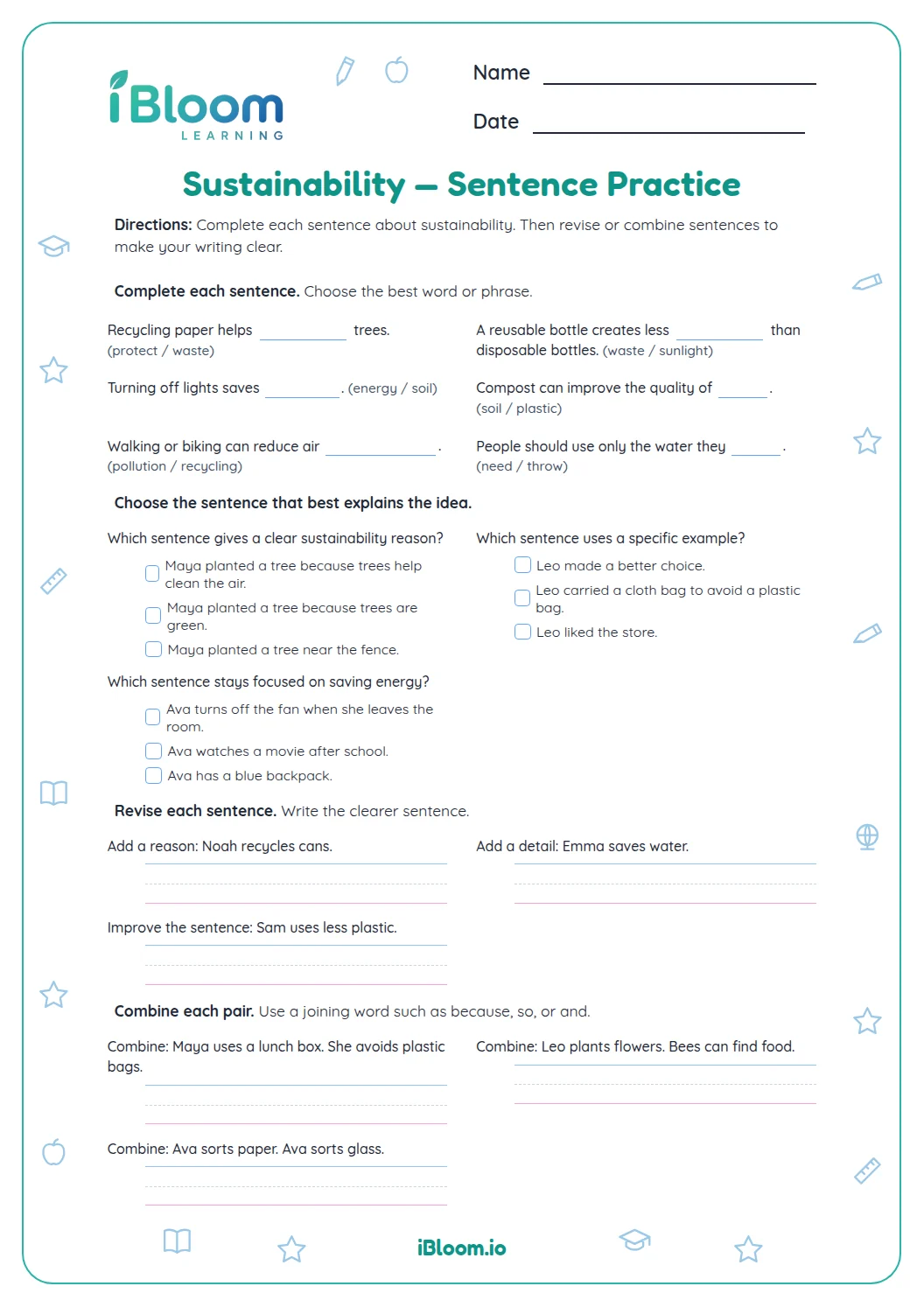
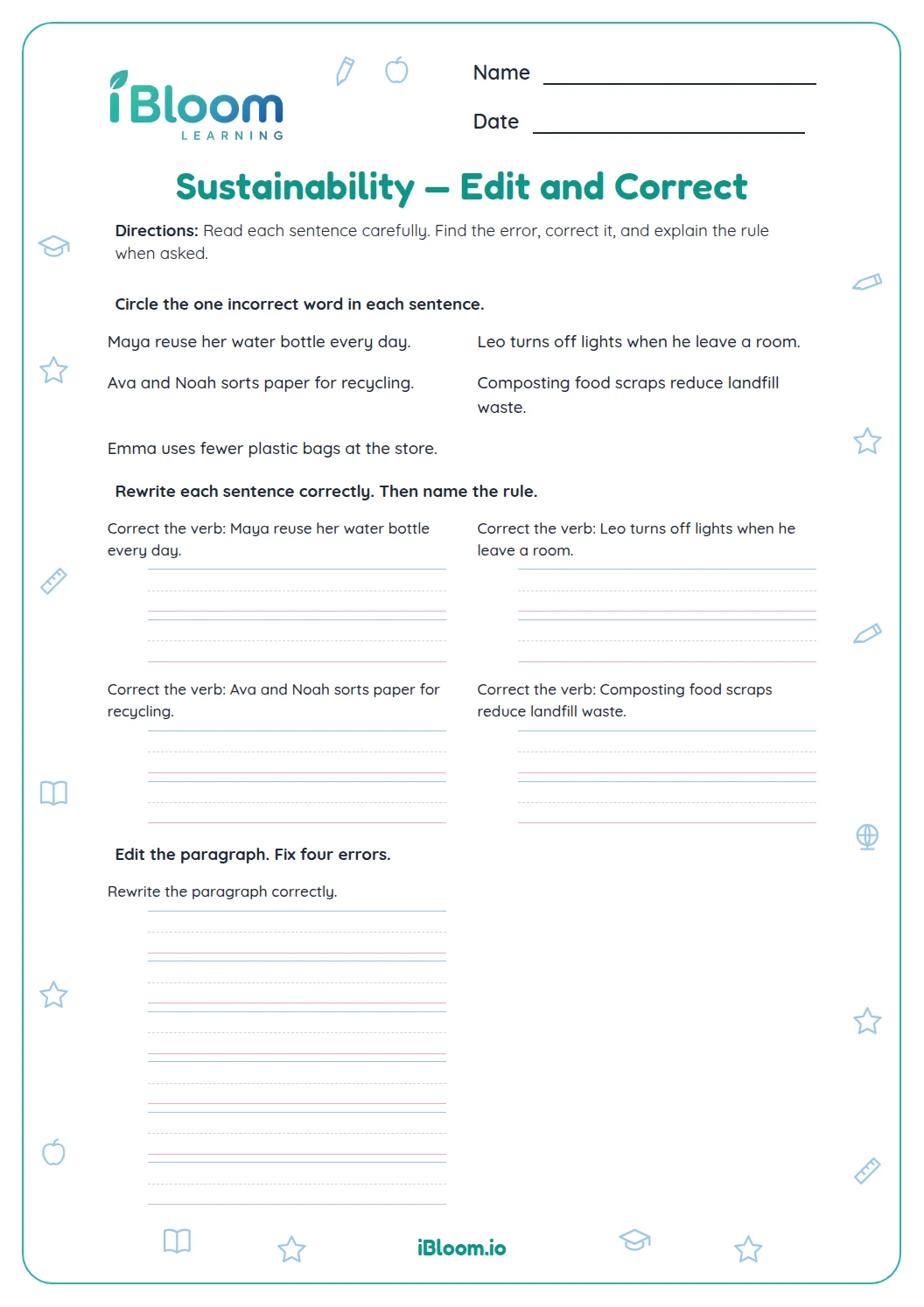
This guided completion sheet keeps the pollinator focus of the original practice while adding a stronger sequence of expert writing moves. Learners select relevant evidence, complete informative sentences, choose transitions, revise vague wording, and write a focused conclusion about how pollinators help plants and how people can support them.
Aligned to W.5.2
What this worksheet practices
Choose relevant pollinator facts, connect them with transitions, revise vague wording, and complete an informative explanation.
How to use the practice
The practice moves from selecting relevant pollinator facts to completing explanations and writing a focused conclusion.
Common Core alignment
This worksheet practices the grade-level skill named in the page title.
Informative Writing
On this sheet: The questions directly practice the skill described by this standard.
Show the official wordingHide the official wording
Write informative/explanatory texts to examine a topic and convey ideas and information clearly.
What to practice next
Make more practice
Further reading
Questions parents and teachers ask
How is informative writing different from a story?
Informative writing explains a topic with facts and details. A narrative tells events in sequence and often includes characters and a problem. This sheet asks learners to complete accurate explanations about pollinators rather than invent a plot. This sheet explains a subject instead of inventing a plot for the reader.
Why do informative paragraphs use transitions?
Transitions show how ideas relate. Words such as next signal sequence, therefore signals a result, and for example introduces evidence. Choosing a transition that matches the relationship helps readers follow the explanation about pollinators. These choices make a technical explanation feel organized.
What makes a strong concluding sentence?
A strong conclusion wraps up the paragraph’s explanation and connects back to its main idea. It should not introduce an unrelated topic or repeat every detail. A final sentence can explain why pollinators matter or leave readers with the central point. This keeps readers focused on the subject.
How can a writer make a vague sentence more informative?
Replace general words with accurate, specific details. Instead of saying bees help stuff, explain that bees move pollen between flowers. A precise fact helps readers understand how pollinators support plants and makes the explanation more useful. Specific information like this improves clarity.