




About this worksheet
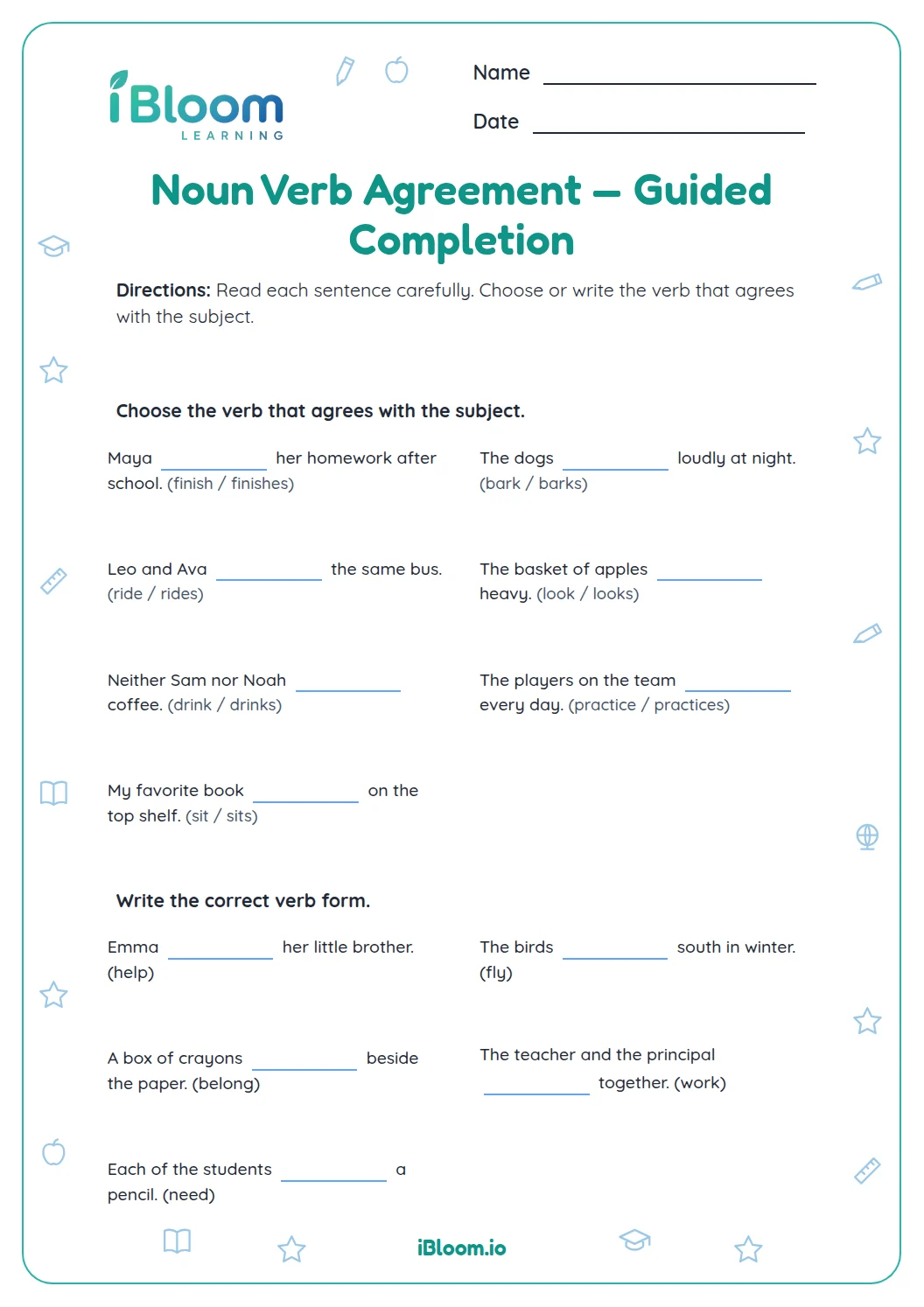
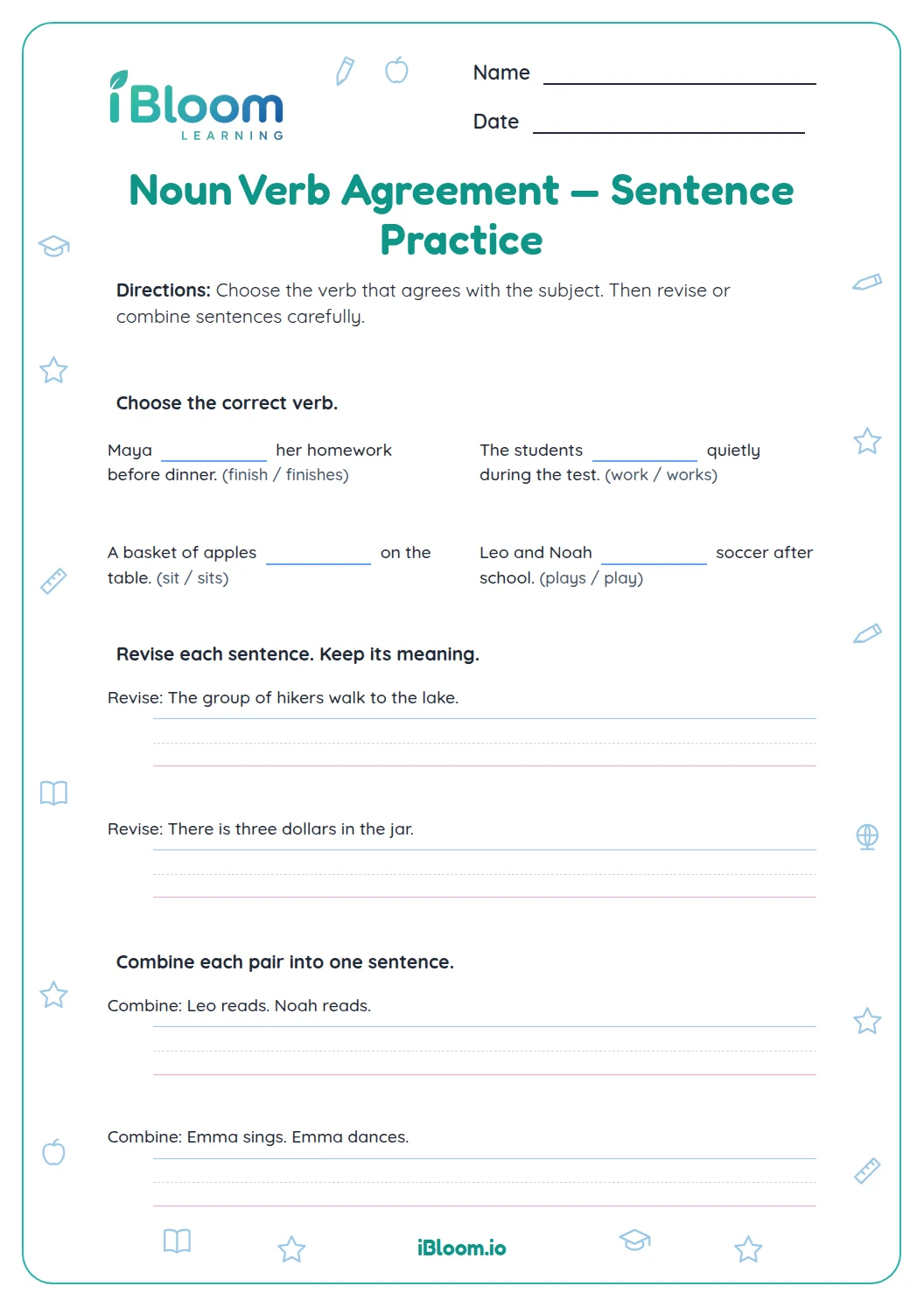
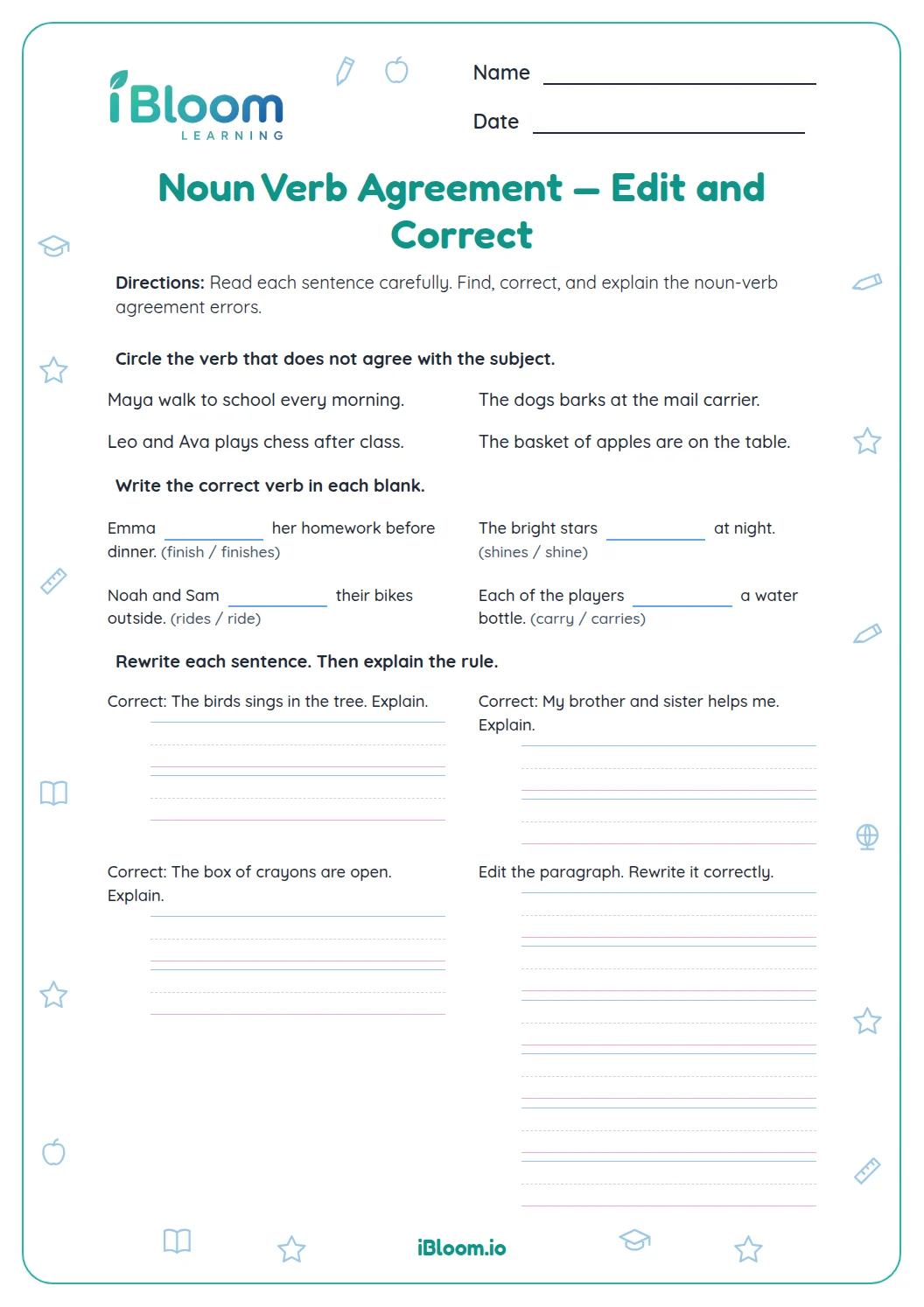
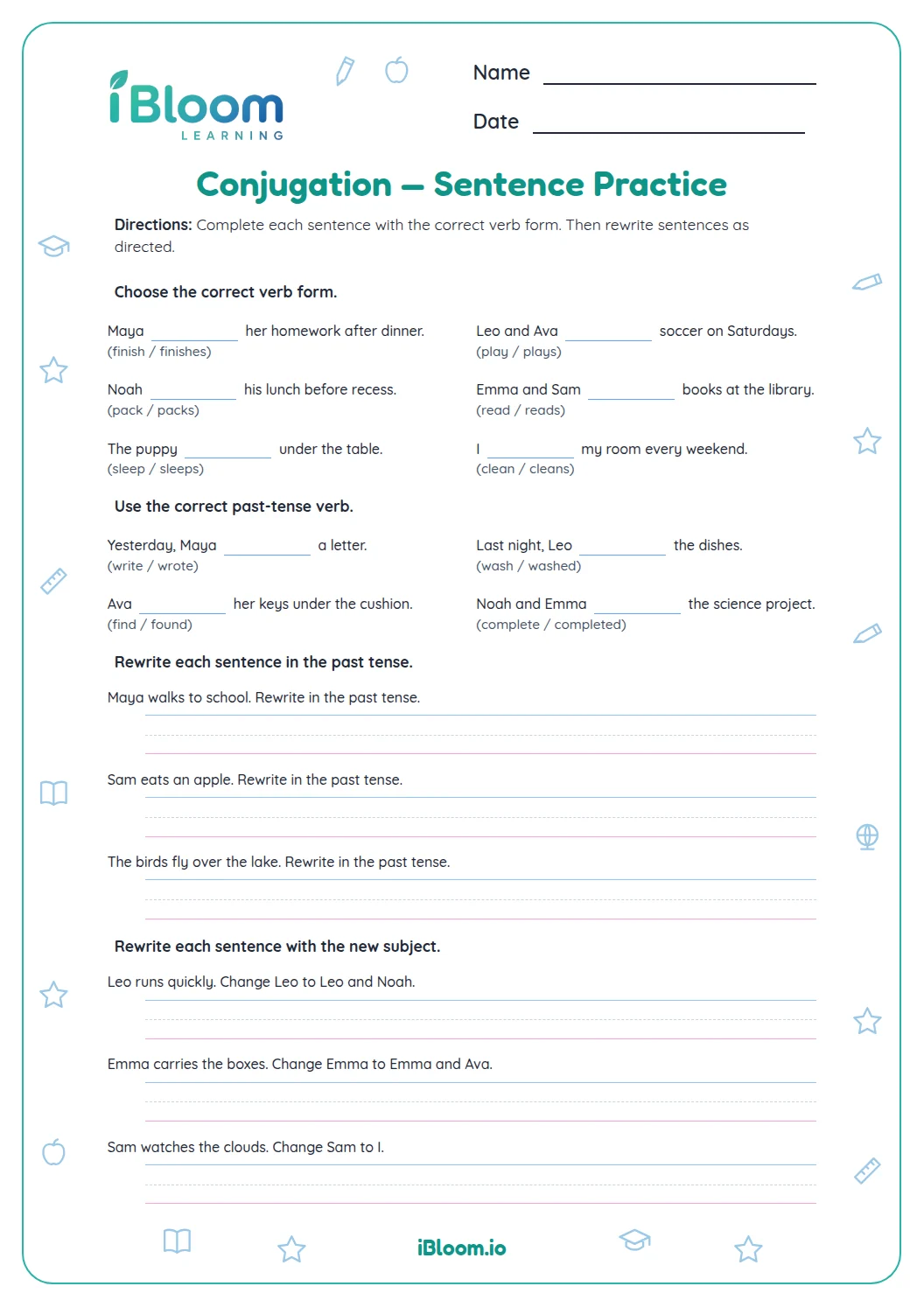
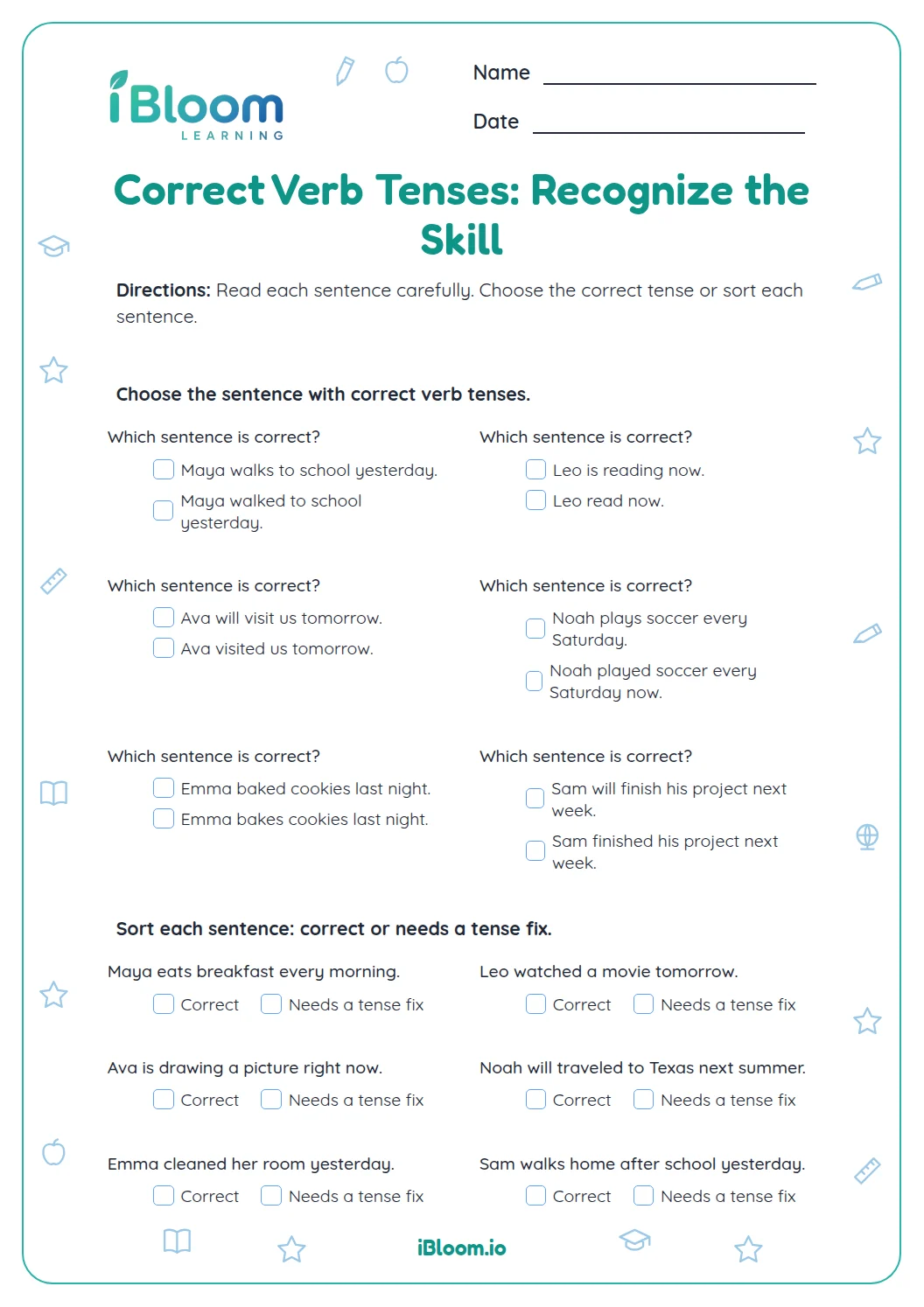
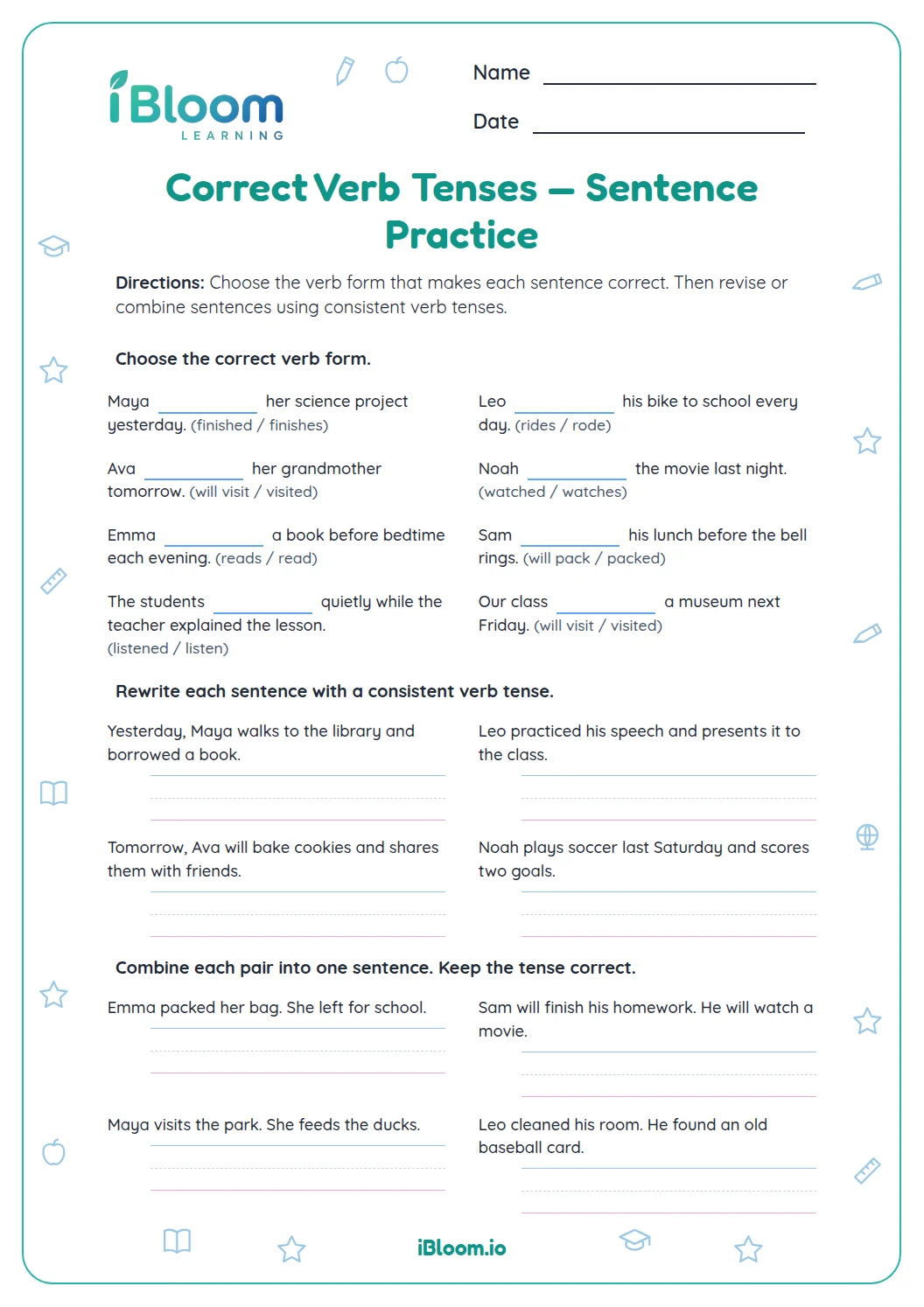
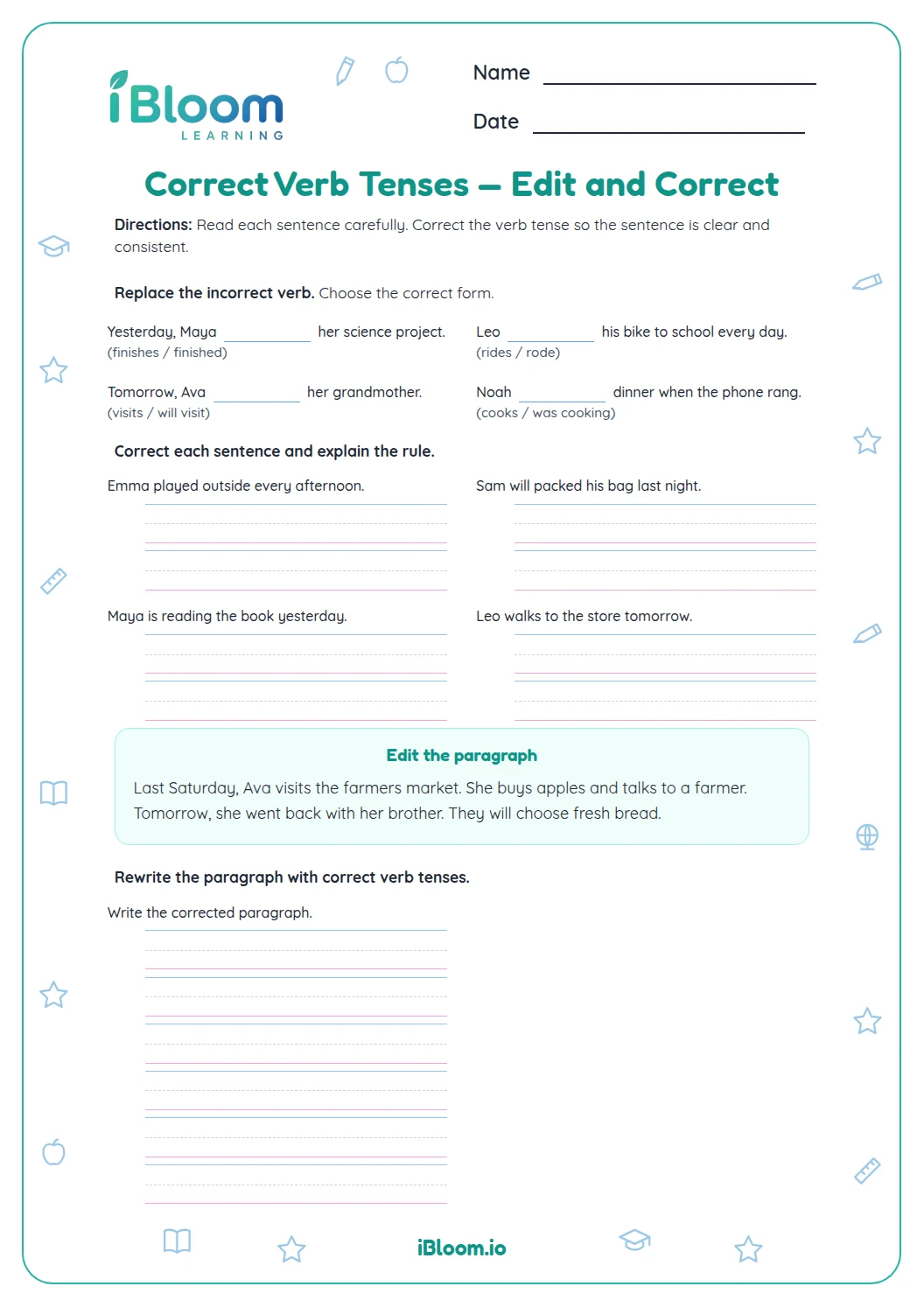
This free Grade 5 worksheet gives students 16 chances to match a verb with its subject. The sentences include plural subjects, compound subjects, indefinite pronouns, and prepositional phrases that can distract from the subject. Part A asks students to supply the verb; Part B asks them to choose the agreeing form. The answer key lists each verb. This grammar practice supports Common Core L.5.1.
Aligned to L.5.1
What is noun verb agreement?
The verb form changes to match whether its subject is singular or plural. “The puppy waits” uses a singular verb; “The puppies wait” uses a plural verb.
- 1A basket of apples ___ on the counter.
- 2The subject is basket, not apples, so the matching verb is sits.
How can you find the subject when words come between it and the verb?
Cross out a prepositional phrase in your mind and locate the noun the sentence is about. In “The list of supplies rests on the desk,” list is the subject; supplies is inside a phrase and does not control the verb.
What happens with compound subjects?
Subjects joined by and usually take a plural verb. With neither…nor or either…or, the verb agrees with the nearer subject in the examples on this page.
How to use this worksheet
- 1Read the sentence and ask who or what does the action.
- 2Mark the simple subject mentally before looking at the verb choices.
- 3Ignore nouns inside phrases such as “of apples” or “on the shelf.”
- 4Check whether the subject is singular, plural, or joined to another subject.
- 5Read the completed sentence aloud and confirm that the verb sounds right.
Common mistakes and quick fixes
The mistake
Choosing apples as the subject in “A basket of apples sits.”
The fix
Ask what sits; the answer is one basket. The phrase “of apples” does not change the subject.
The mistake
Using a singular verb with a subject joined by and.
The fix
Treat “My sister and brother” as two people and choose a plural verb.
The mistake
Letting the first noun control neither…nor agreement.
The fix
Check the subject nearest the verb, as in “Neither the players nor the coach is ready.”
Common Core alignment
Use standard English grammar and usage when writing or speaking.
On this sheet: Students choose verb forms that agree with singular and plural subjects, including subjects separated from the verb.
Show the official wordingHide the official wording
Demonstrate command of the conventions of standard English grammar and usage when writing or speaking.
What to practice next
Make more practice
Further reading
Questions parents and teachers ask
What does subject verb agreement mean?
The verb form matches its subject in number. A singular subject takes a singular form such as “waits,” while a plural subject takes “wait.” On this sheet, children identify the subject first, then use that noun to choose or supply the verb.
Why are there words between some subjects and verbs?
Phrases such as “of apples” and “on the shelf” add information but do not replace the subject. In “A basket of apples sits,” basket controls the verb. Finding the main noun before filling the blank keeps a nearby plural noun from misleading the reader.
How many questions are included?
The sheet has 16 items. Questions 1–8 are fill-in sentences, and questions 9–16 are multiple choice. The answer key lists the matching form for each item, including compound subjects and subjects separated from the verb by a phrase. The mix revisits the same agreement skill with varied subjects.
How do compound subjects affect the verb?
A subject joined by and is plural in these examples: “Mia and her cousins have the key.” With either…or and neither…nor, the verb matches the closer subject in the worksheet’s examples, as in “Neither the players nor the coach is ready.”
What should I do if two answer choices sound possible?
Find the subject and set aside any describing phrase between it and the verb. Then read the sentence with each choice. The correct form matches the subject, not the nearest noun in an extra phrase; “books” does not control the verb in “The books on the shelf belong to Maya.”
What can students practice next?
After checking agreement, students can practice verb tense or sentence writing. Those skills ask them to keep verb choices consistent while building complete sentences. The sibling worksheets linked below offer related practice with verb forms and clear sentence construction in their own writing.