
About this worksheet
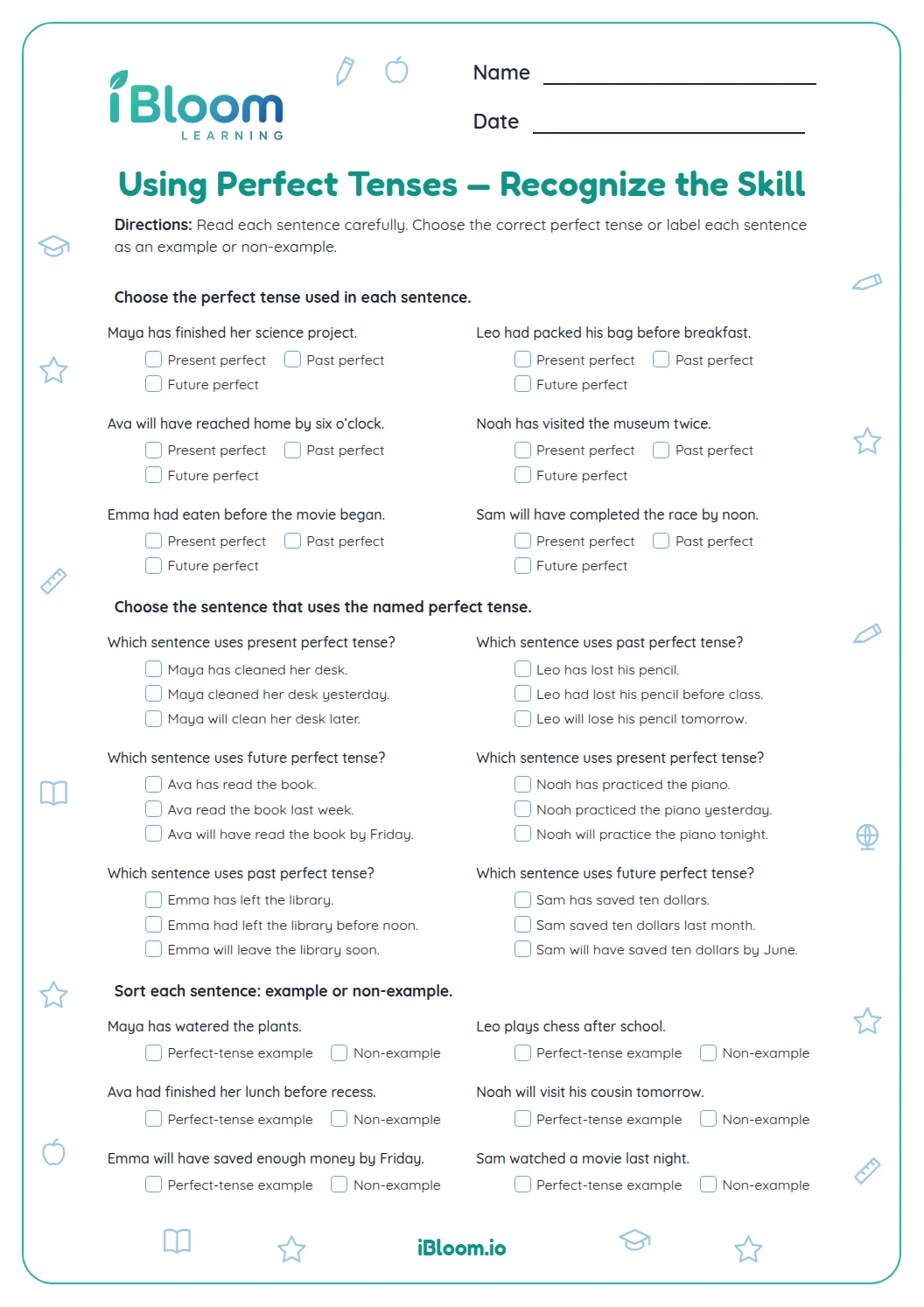
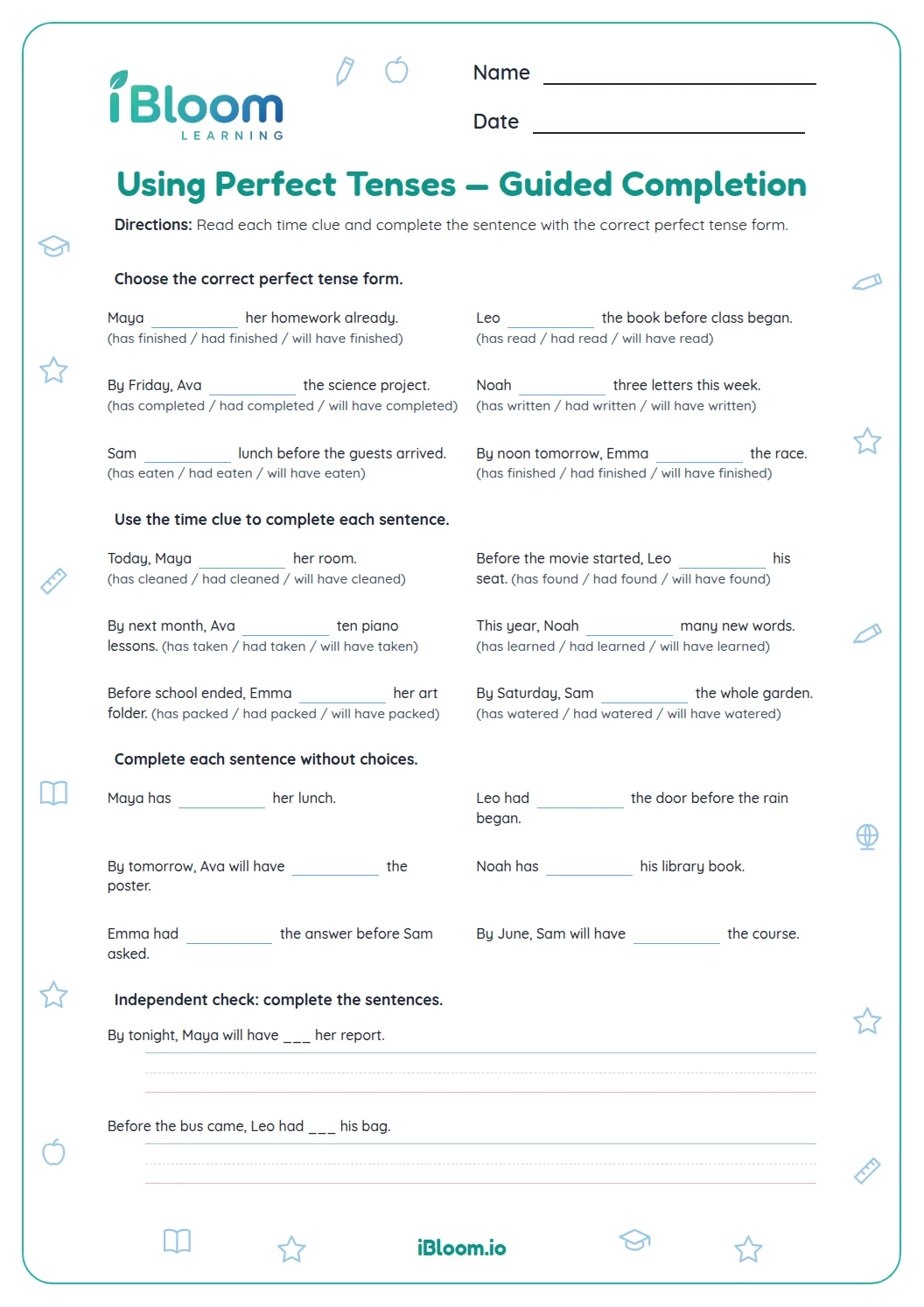
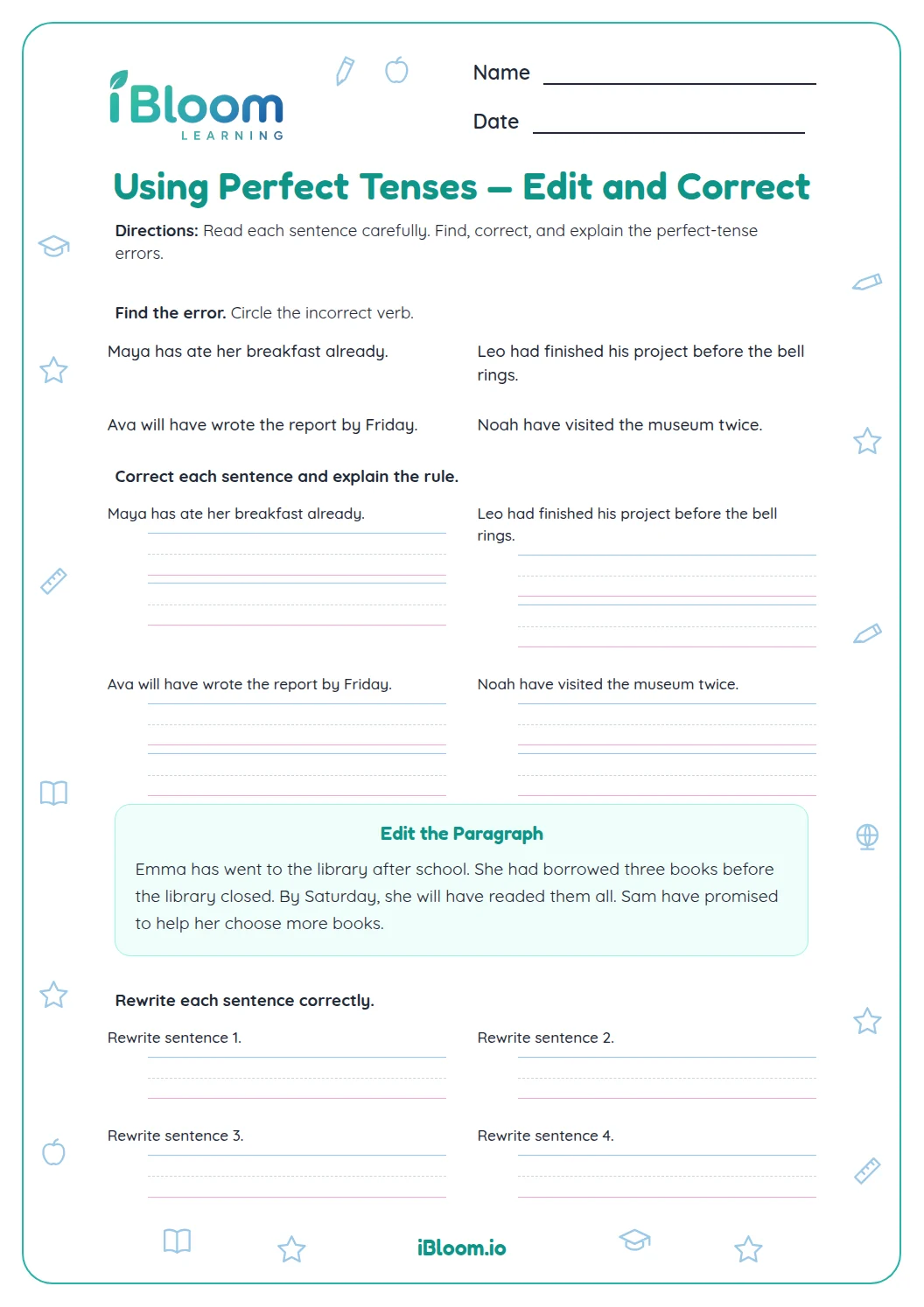
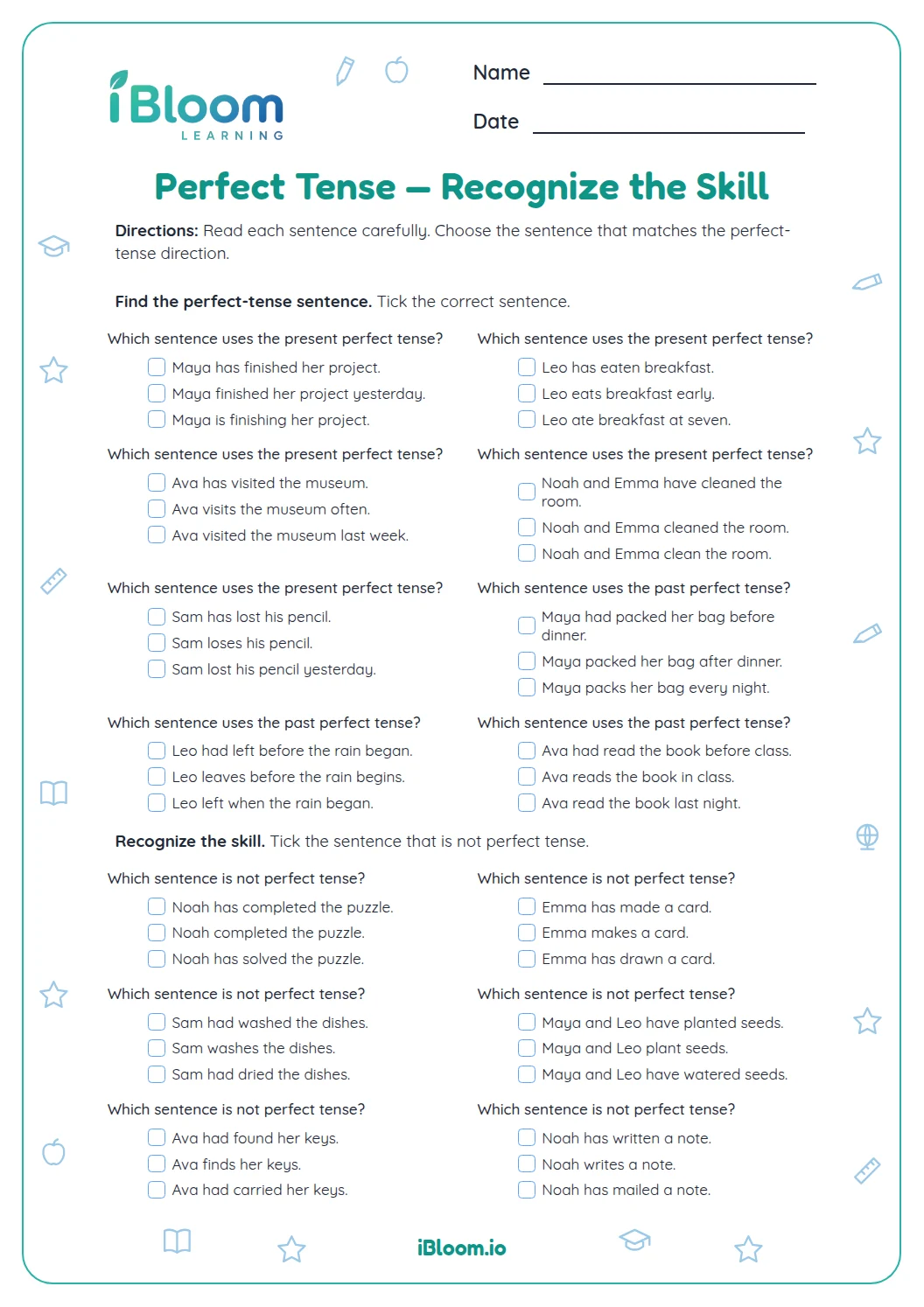
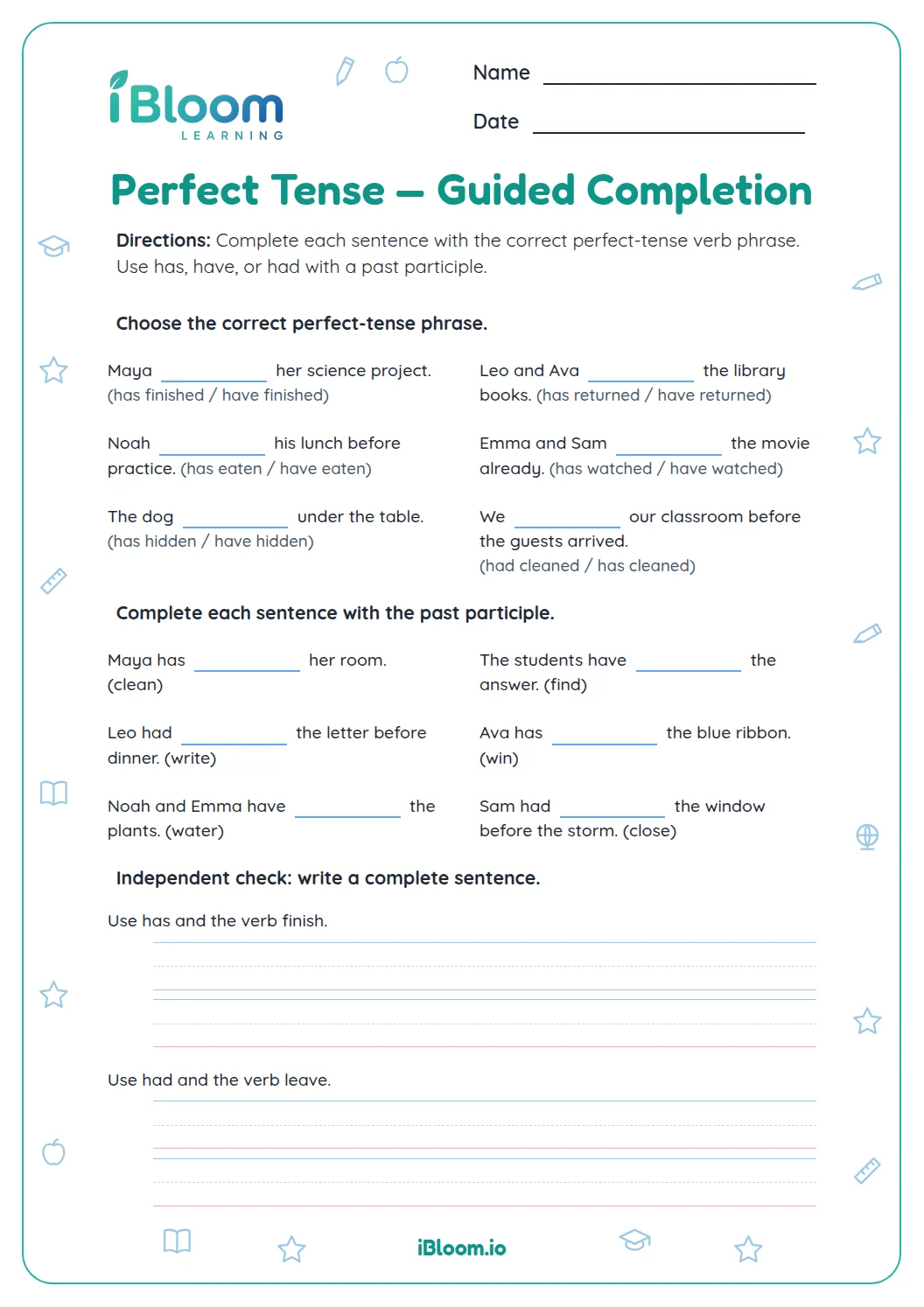
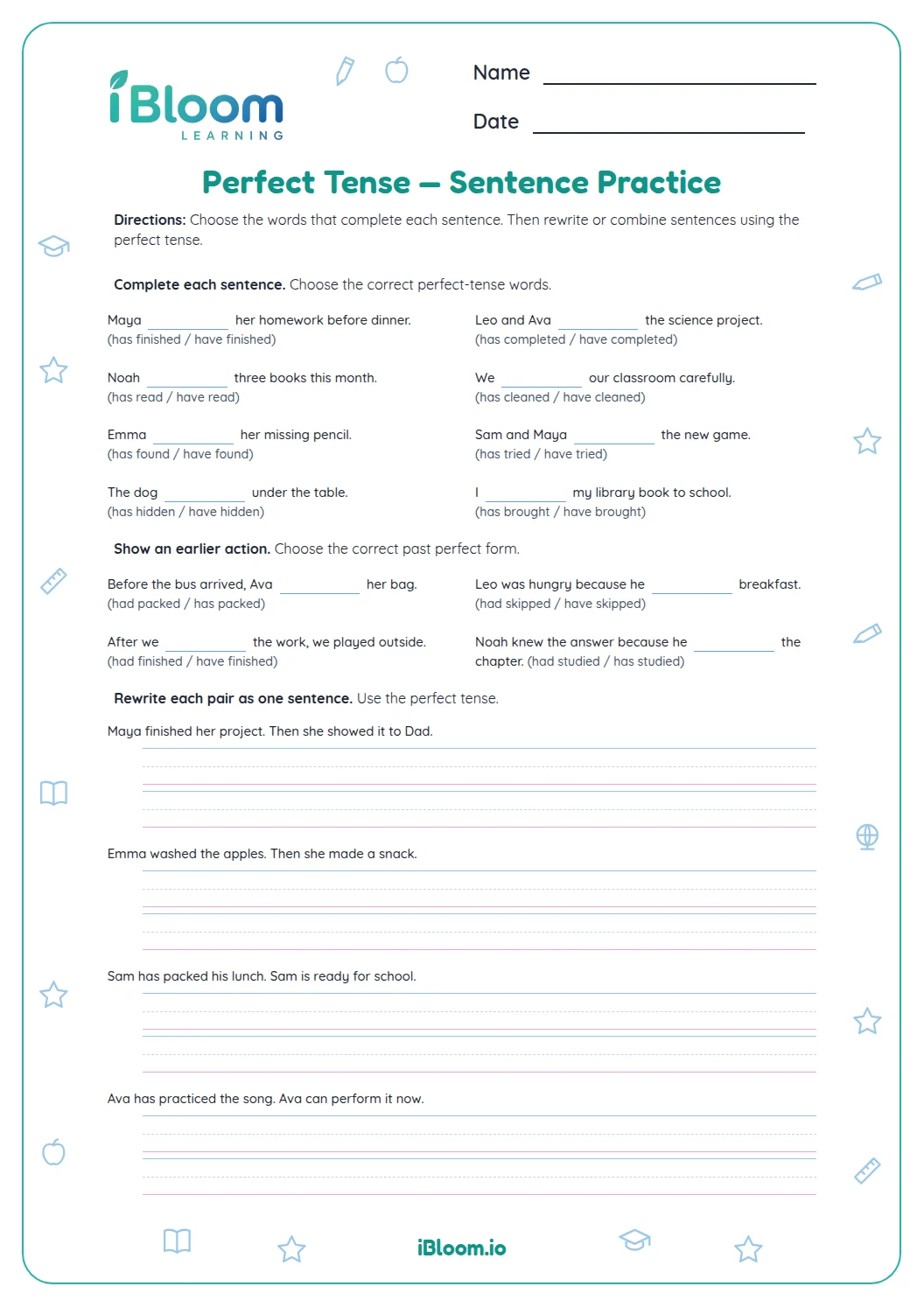
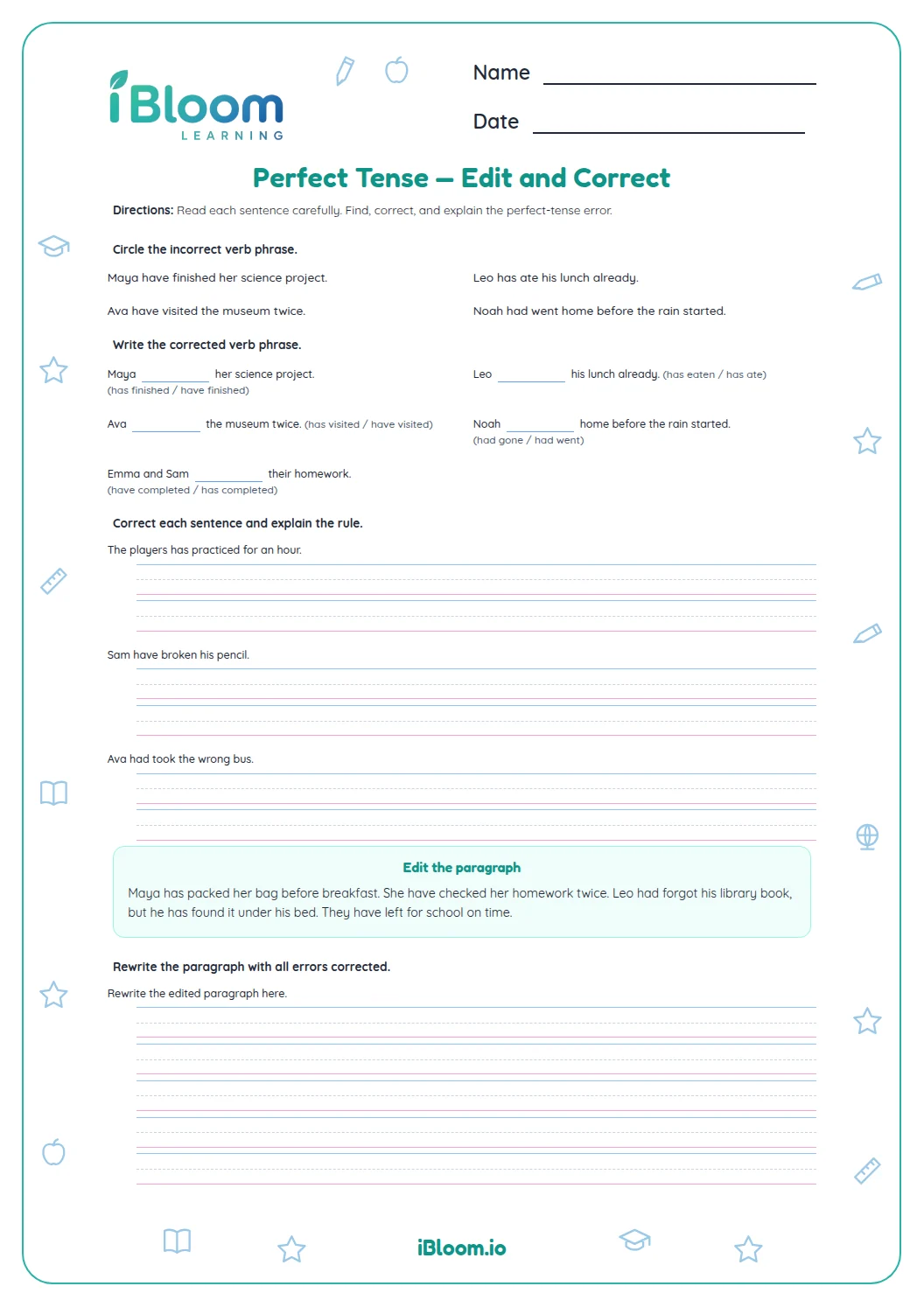
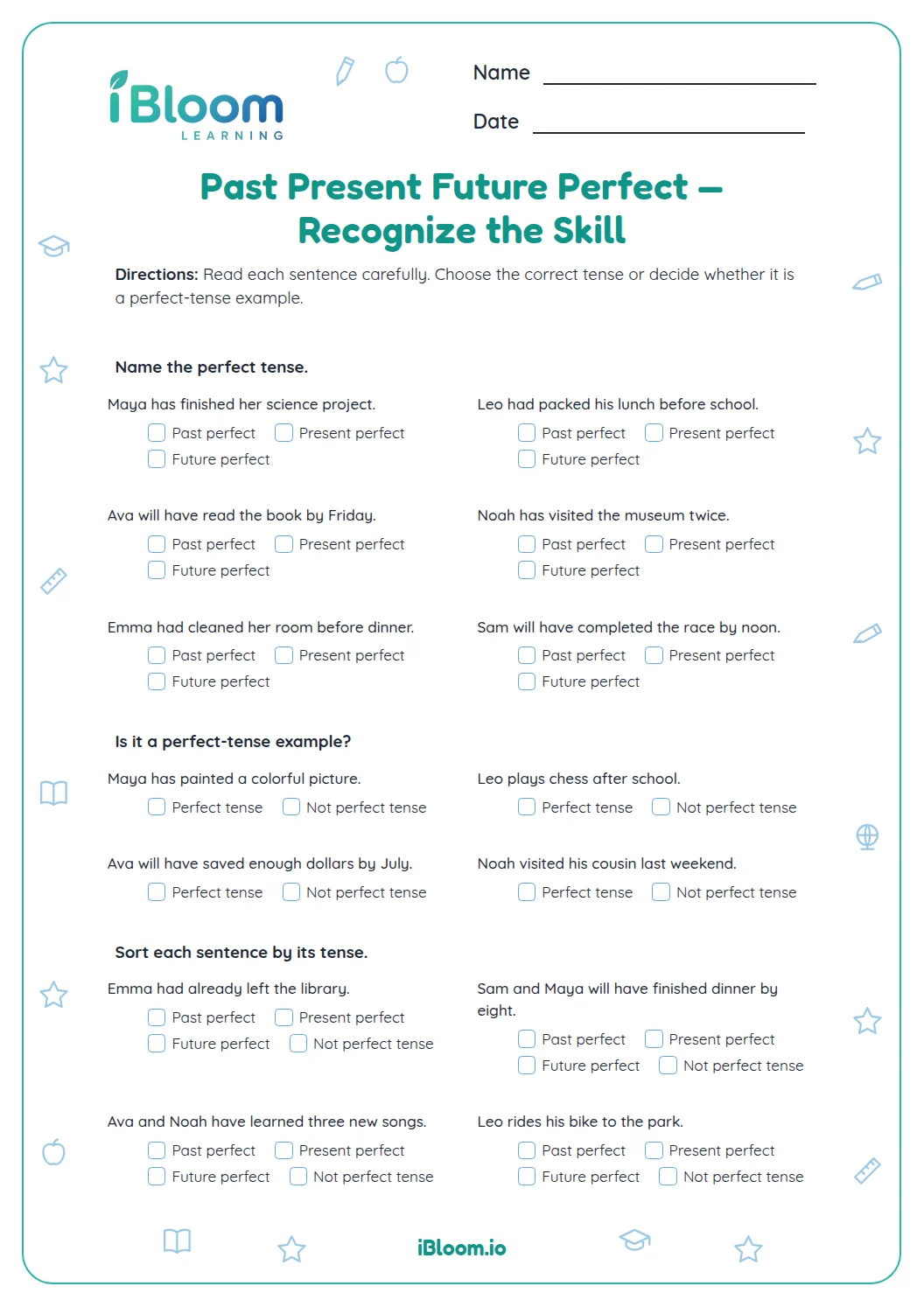
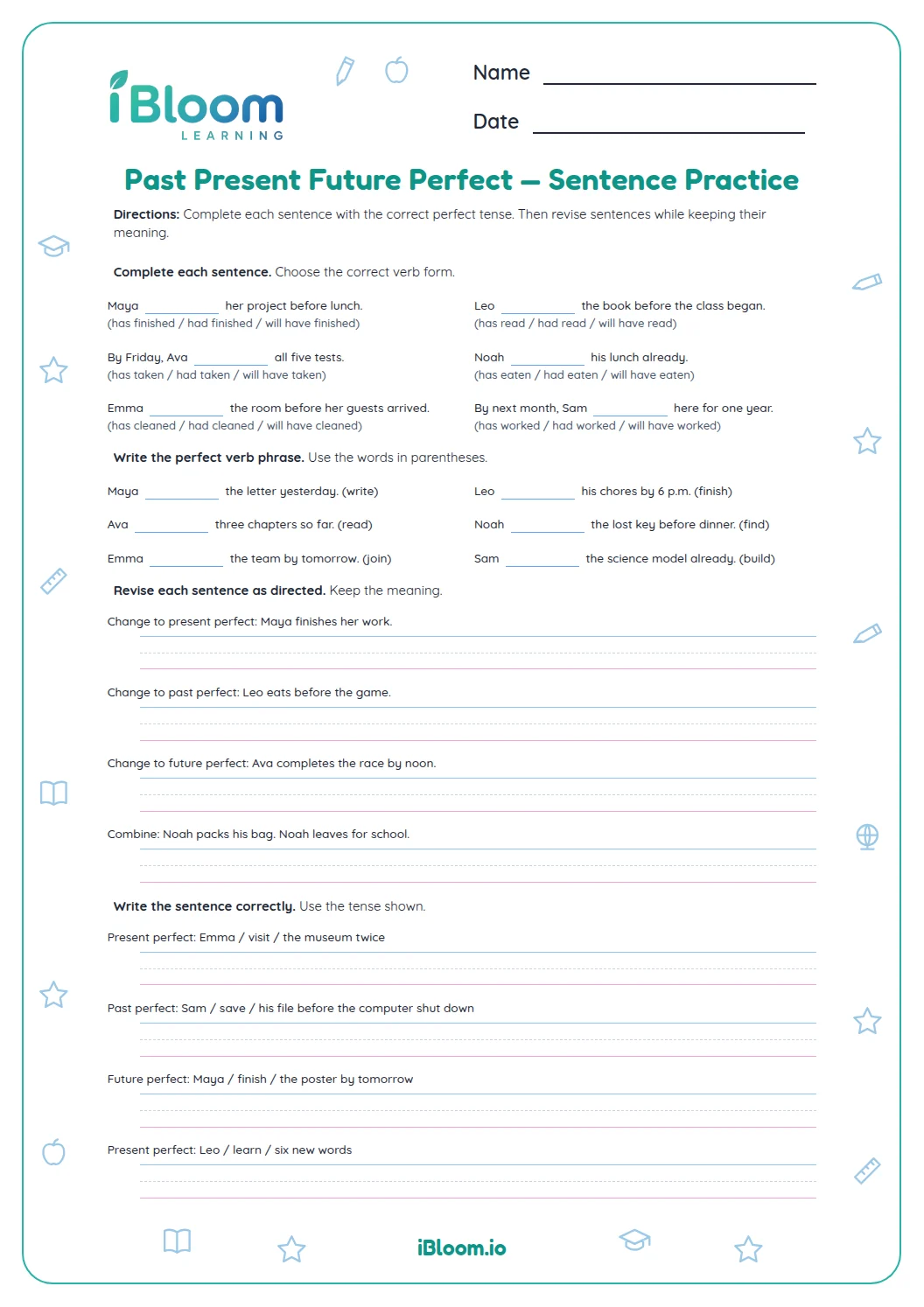
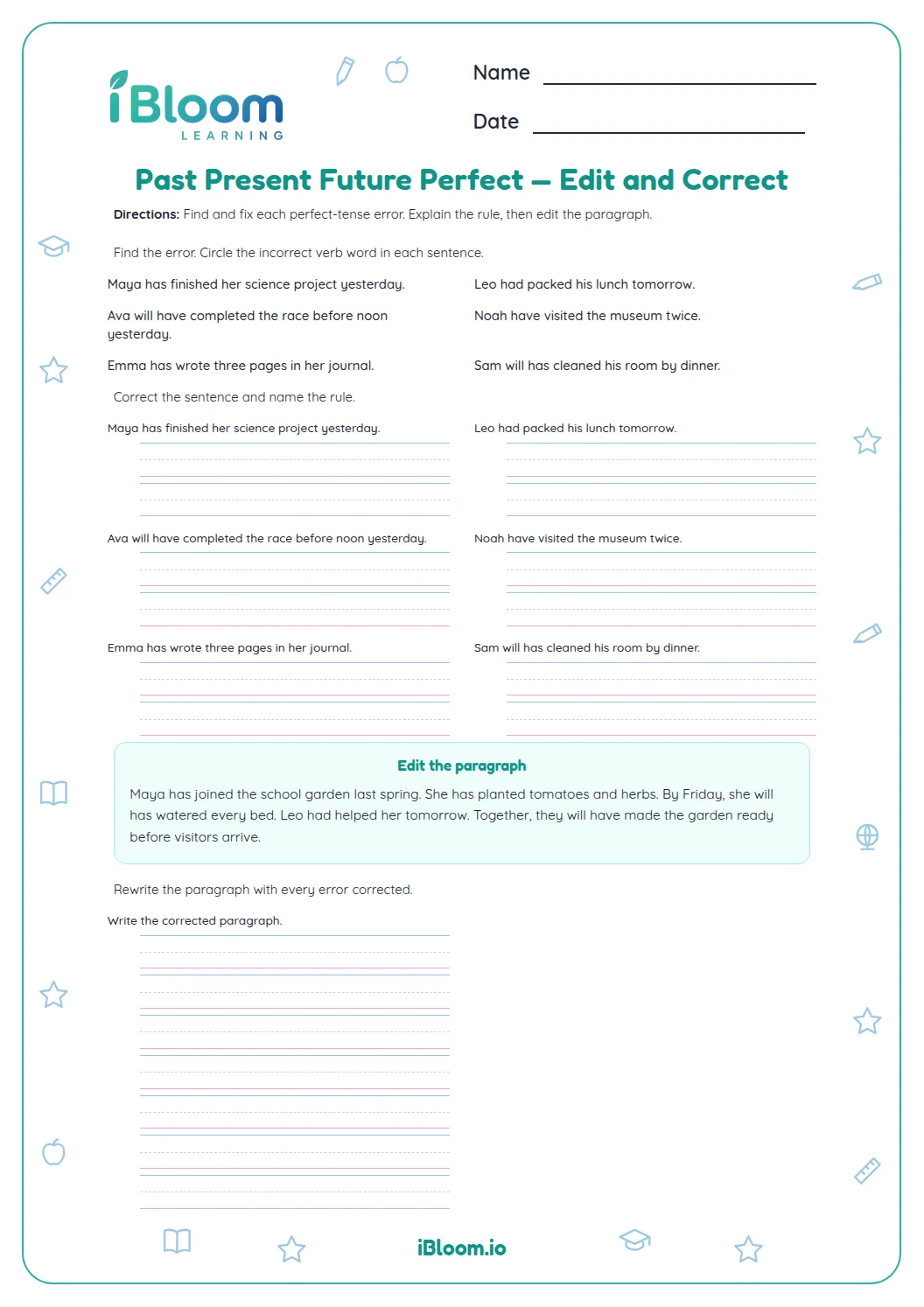
This free Grade 5 worksheet gives students practice forming present, past, and future perfect verbs. They complete sentences, identify tense, revise errors, and write examples. Fourteen questions build from verb forms to original sentences, with a separate answer key. The work practices standard English grammar and usage.
Aligned to L.5.1
How do you form a perfect tense?
A perfect tense pairs a form of have with a past participle. Present perfect uses has or have; past perfect uses had.
Question 3 uses “I have read that book twice.” Read is the past participle of read, so it follows have.
How to use this worksheet
- 1Look for time clues such as already, before, or by Friday.
- 2Choose has or have for present perfect, and had for past perfect.
- 3Use the past participle after the helping verb.
- 4Read the whole sentence aloud to check its time meaning.
- 5For your own sentence, make the time clue and verb form agree.
Common mistakes and quick fixes
The mistake
Using the simple past after has, have, or had.
The fix
Check for an irregular past participle: eaten, gone, seen.
The mistake
Using have with a singular subject.
The fix
Match the helping verb to the subject: he has, they have.
The mistake
Using past perfect without a past reference.
The fix
Show the earlier event with a clue such as “before the bell rang.”
Common Core alignment
This worksheet gives focused practice with the standard below.
Use standard English grammar and verb forms when writing complete sentences.
On this sheet: Students complete, identify, revise, and compose perfect tense sentences.
Show the official wordingHide the official wording
Demonstrate command of the conventions of standard English grammar and usage when writing or speaking.
What to practice next
Make more practice
Further reading
Questions parents and teachers ask
What are perfect verb tenses?
Perfect tenses use a form of have with a past participle. This worksheet practices present, past, and future perfect forms in complete sentences. The sheet includes common forms such as has finished, have read, and had packed. Students also correct forms and write original sentences with perfect tenses.
When do I use has or have?
Use has with a singular subject such as he or Maya, and have with I, you, we, or they. Add the past participle after it. For example, “Maya has finished” uses has because Maya is one person. “We have finished” uses have because we names more than one person.
What is past perfect?
Past perfect uses had plus a past participle to show an action finished before another past event. “Had packed” is one example. For example, “We had packed before the bell rang” shows the packing happened first. The second past event gives a reference point.
Does this worksheet include an answer key?
Yes. The separate answer key lists completions and corrections, plus sample responses for questions where students write their own sentences. For open responses, the key provides a model rather than requiring identical wording. Check that the helping verb and past participle are used correctly.
Does the sheet practice future perfect too?
Yes. Students choose a future perfect form and write a sentence with a time clue. Future perfect uses will have followed by a past participle, as in “By Friday, the class will have completed the project.” The key gives a sample response for the open writing prompt.