



About this worksheet
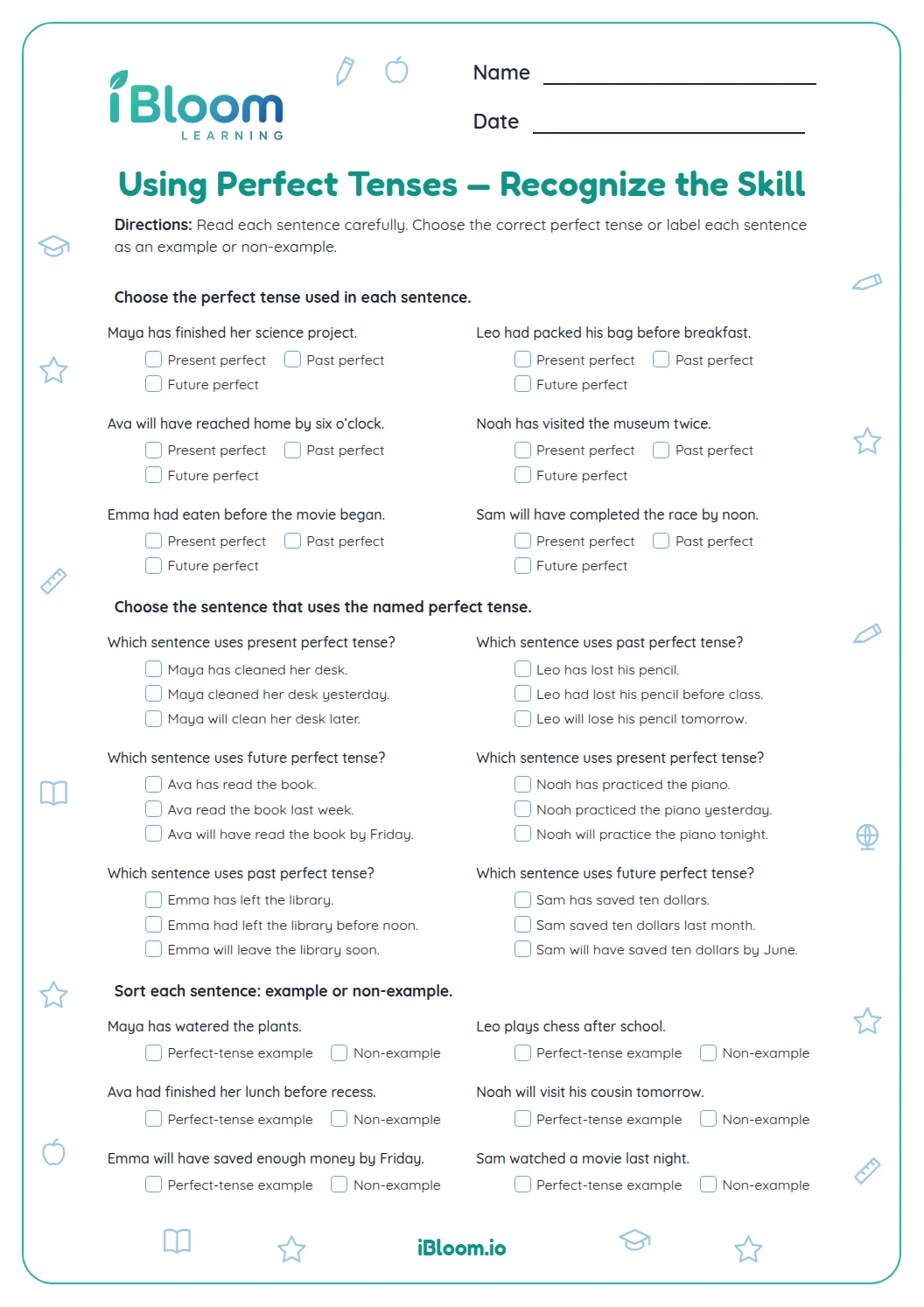
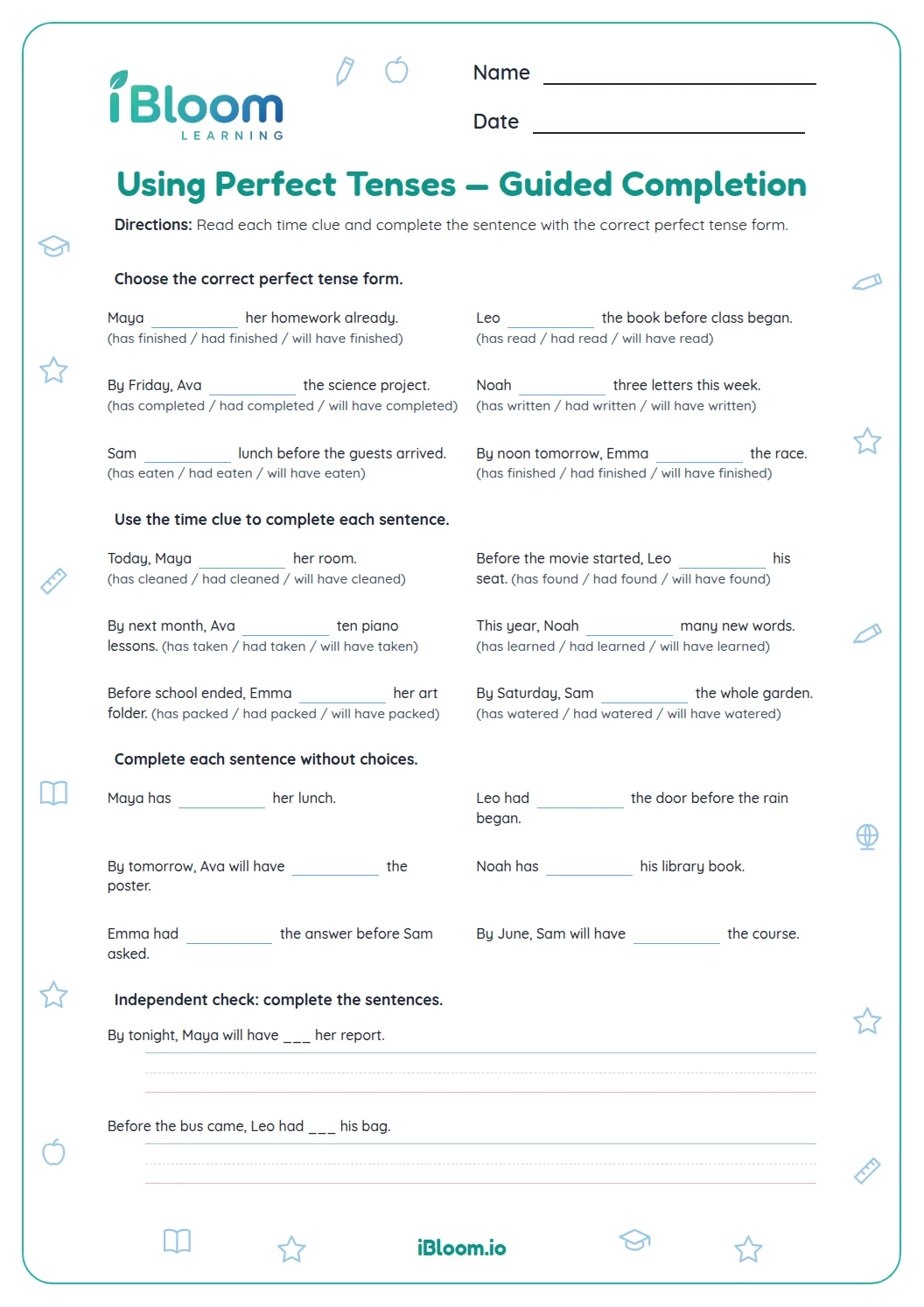
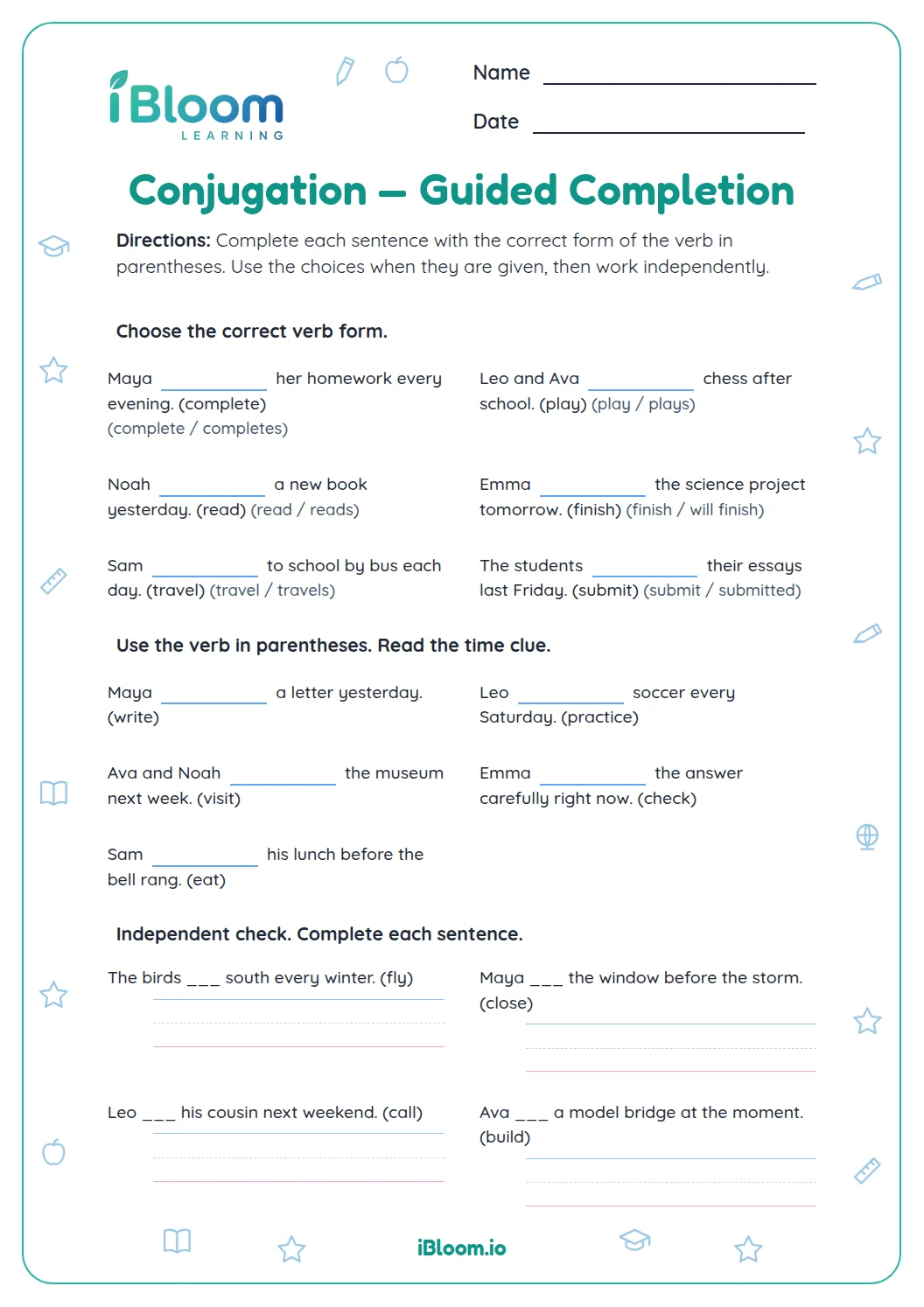
This Grade 5 grammar worksheet practices present, past, and future perfect tenses. Students complete verb phrases using time clues and choose a matching form in one multiple-choice question. The 16 items use have, has, had, and will have with past participles; a separate answer key supports review.
What pattern do perfect tenses follow?
A perfect verb phrase pairs have with a past participle. Present perfect uses have or has; past perfect uses had; future perfect uses will have.
- 1By noon, I ___ my report. (finish; present perfect)
- 2Present perfect uses have + finished: have finished.
How does the time clue choose the tense?
Use present perfect for an action connected to now, past perfect for an action completed before another past event, and future perfect for an action that will be complete by a future time.
How can I check the participle?
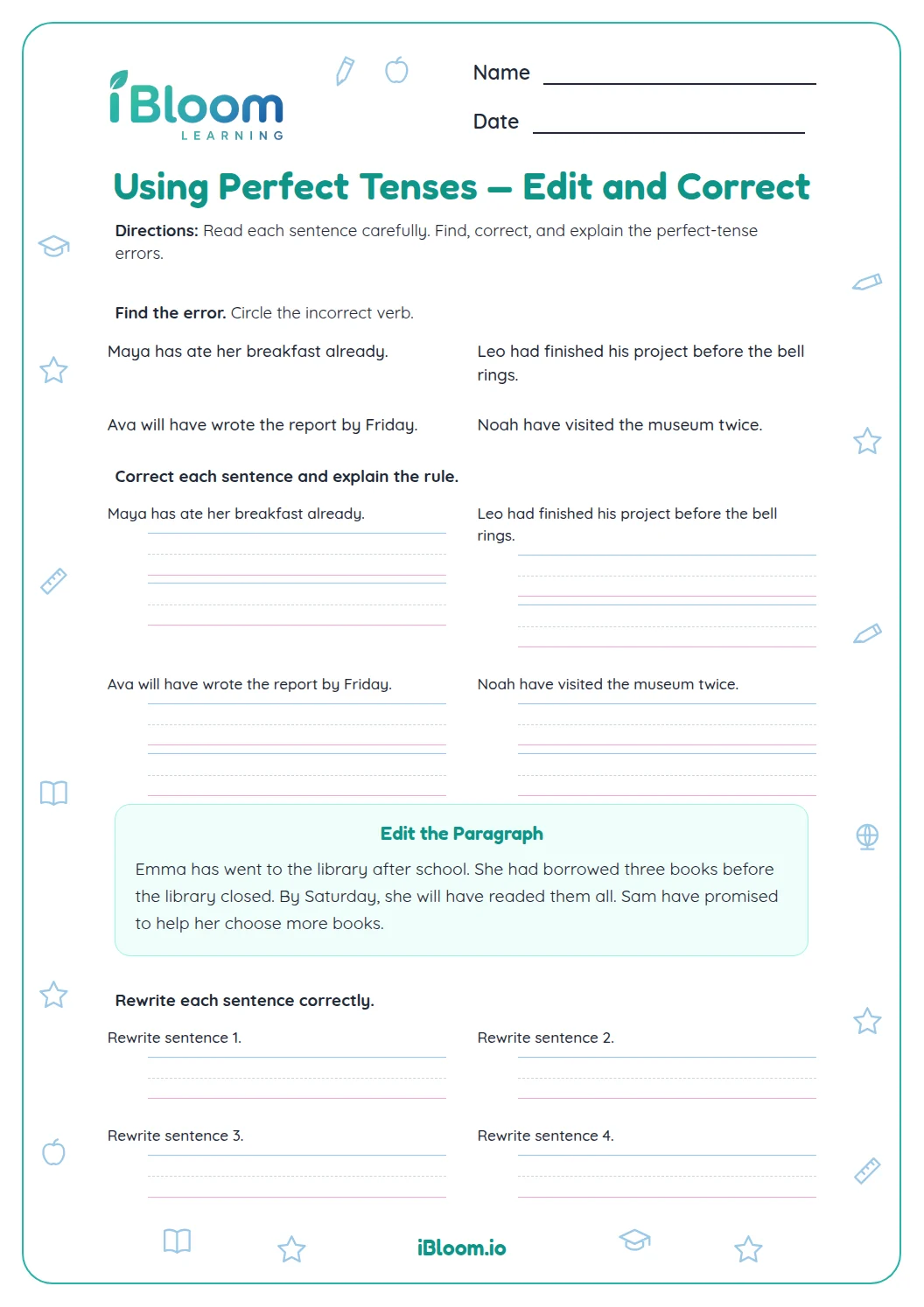
Some participles add -ed, such as practiced. Others change form, such as eat to eaten, write to written, and begin to begun. Check the whole phrase, not only its helping verb.
How to use this worksheet
- 1Circle the time clue in each sentence.
- 2Choose present, past, or future perfect.
- 3Select have, has, had, or will have.
- 4Add the correct past participle.
- 5Read the full sentence aloud to check its timeline.
Common mistakes and quick fixes
The mistake
Using has with I; use have with I.
The fix
Pause and use the clue in the sentence or model to check: using has with i.
The mistake
Using present perfect for an event completed before another past event; use had plus the participle.
The fix
Pause and use the clue in the sentence or model to check: using present perfect for an event completed before another past event.
The mistake
Using the simple past participle alone; include the needed form of have.
The fix
Pause and use the clue in the sentence or model to check: using the simple past participle alone.
What to practice next
Make more practice
Questions parents and teachers ask
What makes a verb phrase perfect?
A perfect verb phrase uses a form of have with a past participle: have finished, had finished, or will have finished. The 16 questions use time clues to choose present, past, or future perfect and include a separate key.
How many questions are on the printable?
There are 16 questions in three parts. Students complete perfect-tense phrases, choose a tense form in one multiple-choice item, and use time clues in further examples. The separate answer key lists each phrase. Every sentence supplies a base verb and time clue.
What should I have ready?
Use a pencil and the printed worksheet. Read the directions once, then encourage the student to work through one item at a time and explain a choice or calculation when it is useful. The answer key makes it easy to review the completed page together.
How can I check the answers?
Use the separate answer key after the student finishes each part. For any answer that differs, return to the clue, operation, or detail in the question and talk through why the key answer fits. This keeps checking connected to the skill.
Can this be used for class or home practice?
The first items focus on building perfect-tense verb phrases, followed by a choice item and more sentences with time clues. Students can complete the page independently or talk through what each clue says about the timeline, then check the separate key.