
About this worksheet
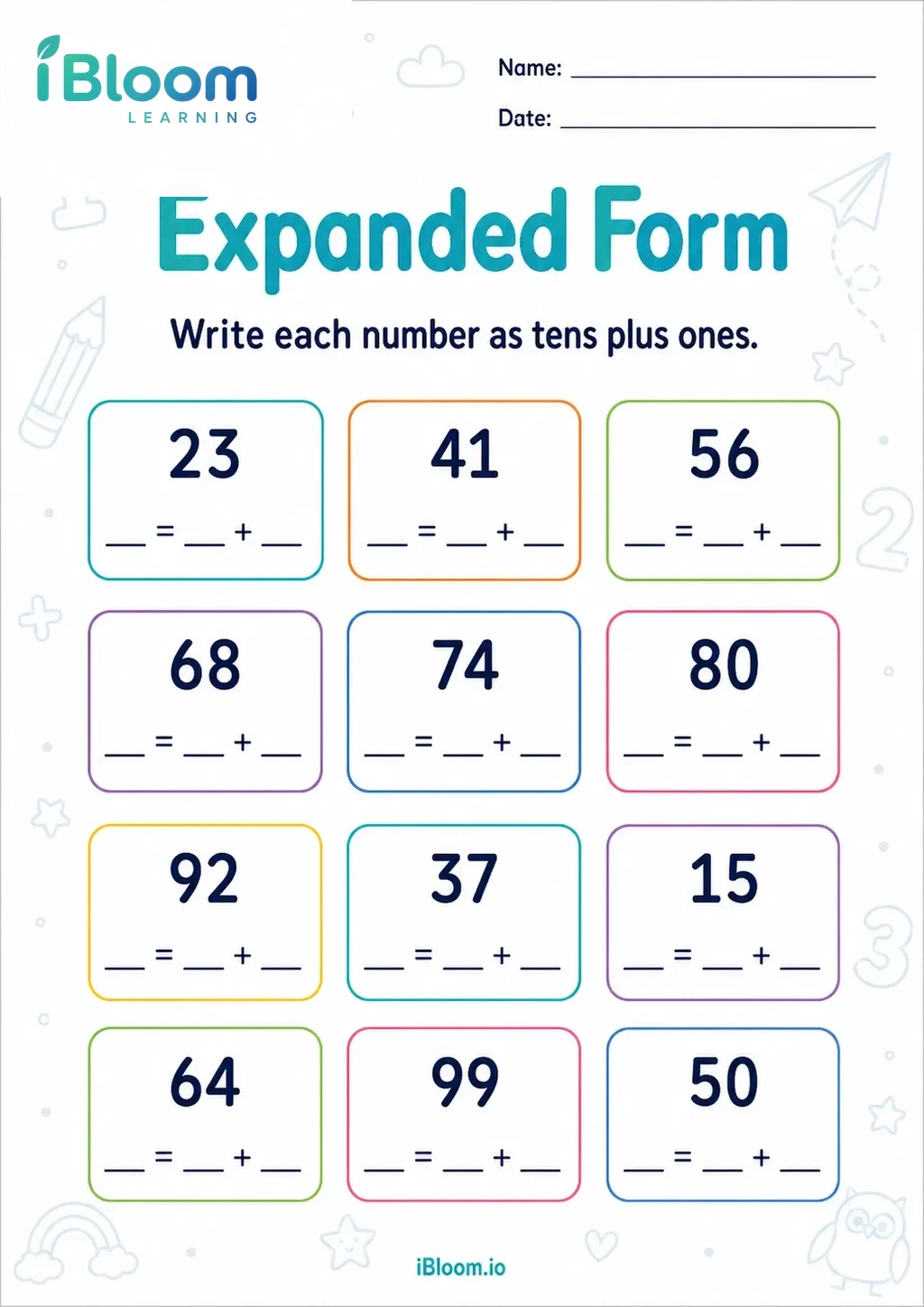
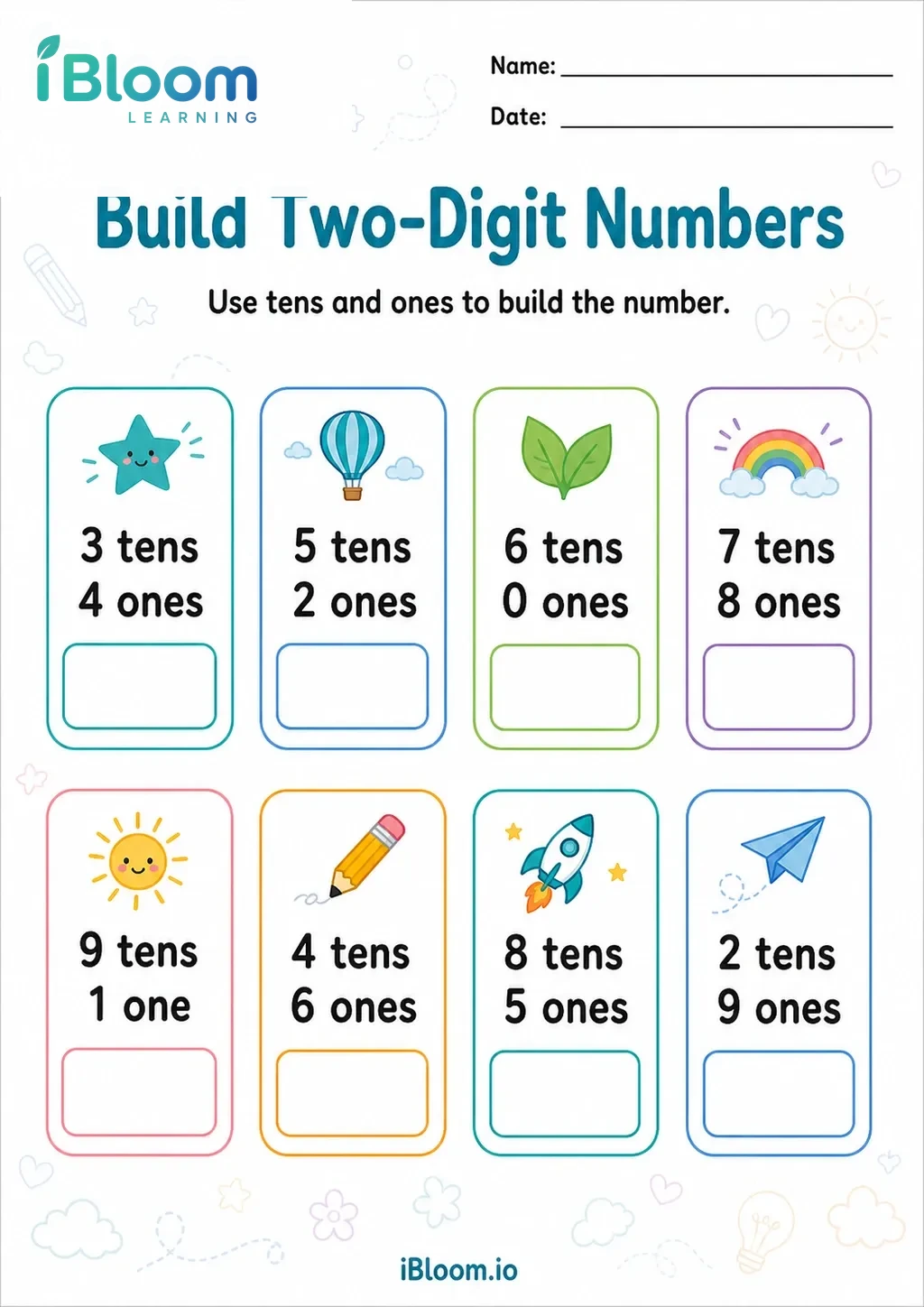
Write each clue as one numeral. The parts keep number names, expanded form, and tens-and-ones clues together so students can focus on one way of reading place value at a time.
Aligned to 1.NBT.B.2
How do place-value clues become numerals?
Read each representation carefully. In “thirty-six,” thirty names 3 tens and six names 6 ones, so the numeral is 36.
Expanded form names the value of each place: 80 + 7 is 87. A tens-and-ones clue such as 4 tens and 3 ones is also 43.
What is in each part?
Part A uses number names, Part B uses expanded form, and Part C combines tens and ones. Part D mixes all three clue types. Every answer is a two-digit numeral from 17 to 95.
How to work through this sheet
- 1Read whether the clue gives a number name, tens and ones, or a sum.
- 2Find the tens value first.
- 3Find the ones value.
- 4Combine them into a two-digit numeral.
- 5Check that the numeral has the same tens and ones as the clue.
Common mistakes and quick fixes
The mistake
Writing 9 tens and 5 ones as 905.
The fix
Nine tens is 90, then add 5 ones to make 95.
The mistake
Reversing the digits in 4 tens and 3 ones.
The fix
Tens go in the left place, so the number is 43.
The mistake
Reading 80 + 7 as 807.
The fix
Add the values: 80 plus 7 equals 87.
Common Core alignment
This worksheet gives practice with the listed Common Core skill.
Read two-digit numbers as tens and ones.
On this sheet: Learners translate tens-and-ones names and expanded forms into standard numerals.
Show the official wordingHide the official wording
Understand that the two digits of a two-digit number represent amounts of tens and ones.
What to practice next
Make more practice
Further reading
Questions parents and teachers ask
What does standard form mean on this worksheet?
It means writing the number as a numeral, such as 36. Each item gives a number name, a tens-and-ones clue, or an expanded sum. The words “standard form” mean one numeral rather than separate place-value parts. For example, 3 tens and 6 ones become 36.
How do tens and ones determine the digits?
The number of tens is the tens digit and the number of ones is the ones digit. So 9 tens and 5 ones make 95. In a two-digit number, the tens digit is written to the left of the ones digit. Reading the clue in that order helps prevent reversing the numeral.
How should a child solve 80 + 7?
Treat 80 as eight tens and 7 as seven ones. Together they make 87, not 807. Add the values rather than writing the two amounts side by side. Eight tens plus seven ones is 80 + 7, which equals 87.
Does the worksheet include expanded form?
Yes. Some prompts show sums such as 80 + 7. Children combine the tens value and ones value to write one numeral. Prompts such as 80 + 7 show expanded values that need combining. Other prompts give a number name or tell how many tens and ones.
How many items are included?
There are 16 questions over two worksheet pages, followed by a separate two-page answer key. The practice mixes number names, tens and ones, and expanded-form sums. The 16 items appear on two practice pages. A separate answer key spans two pages and lists the numeral for each clue.