



About this worksheet
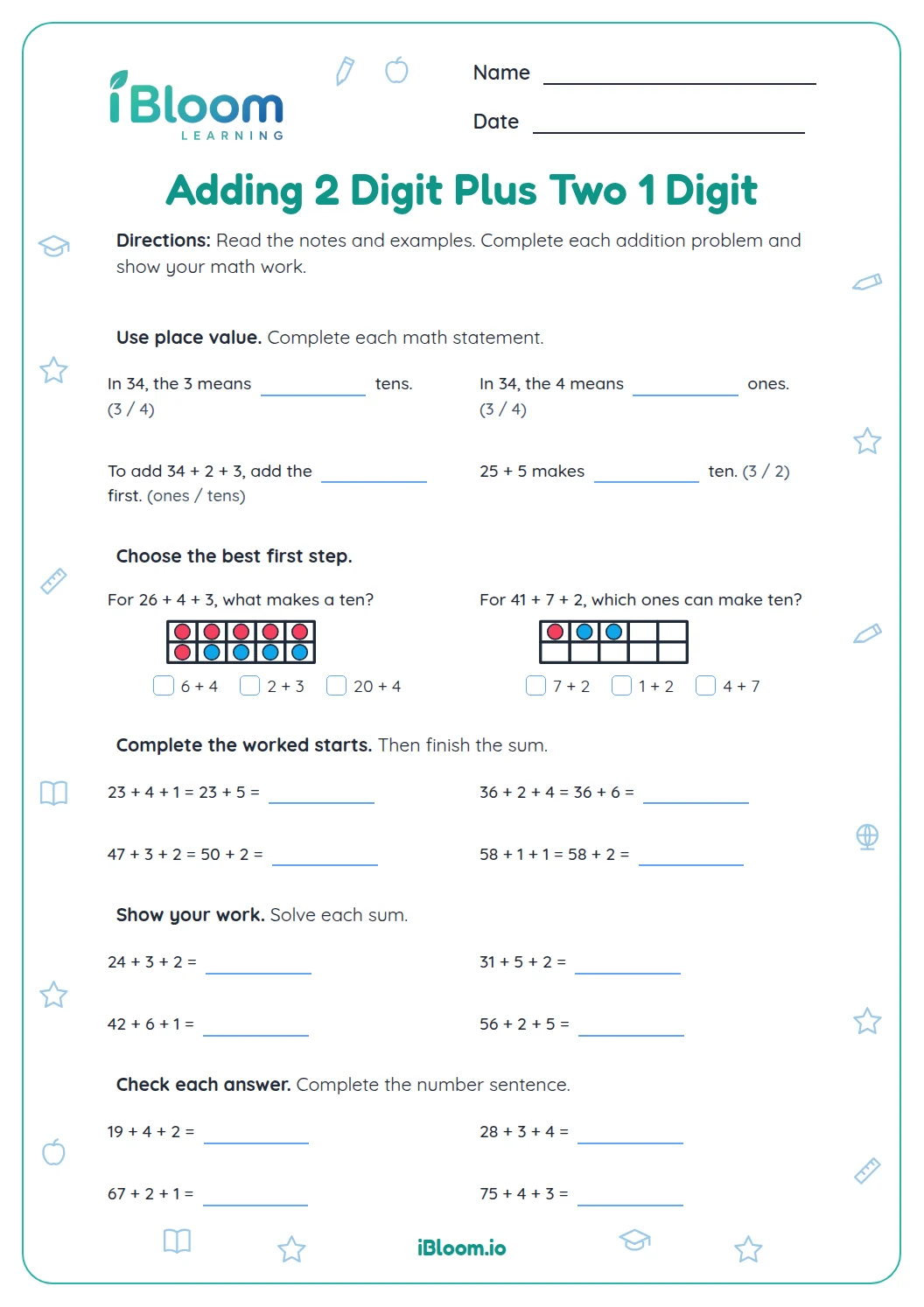
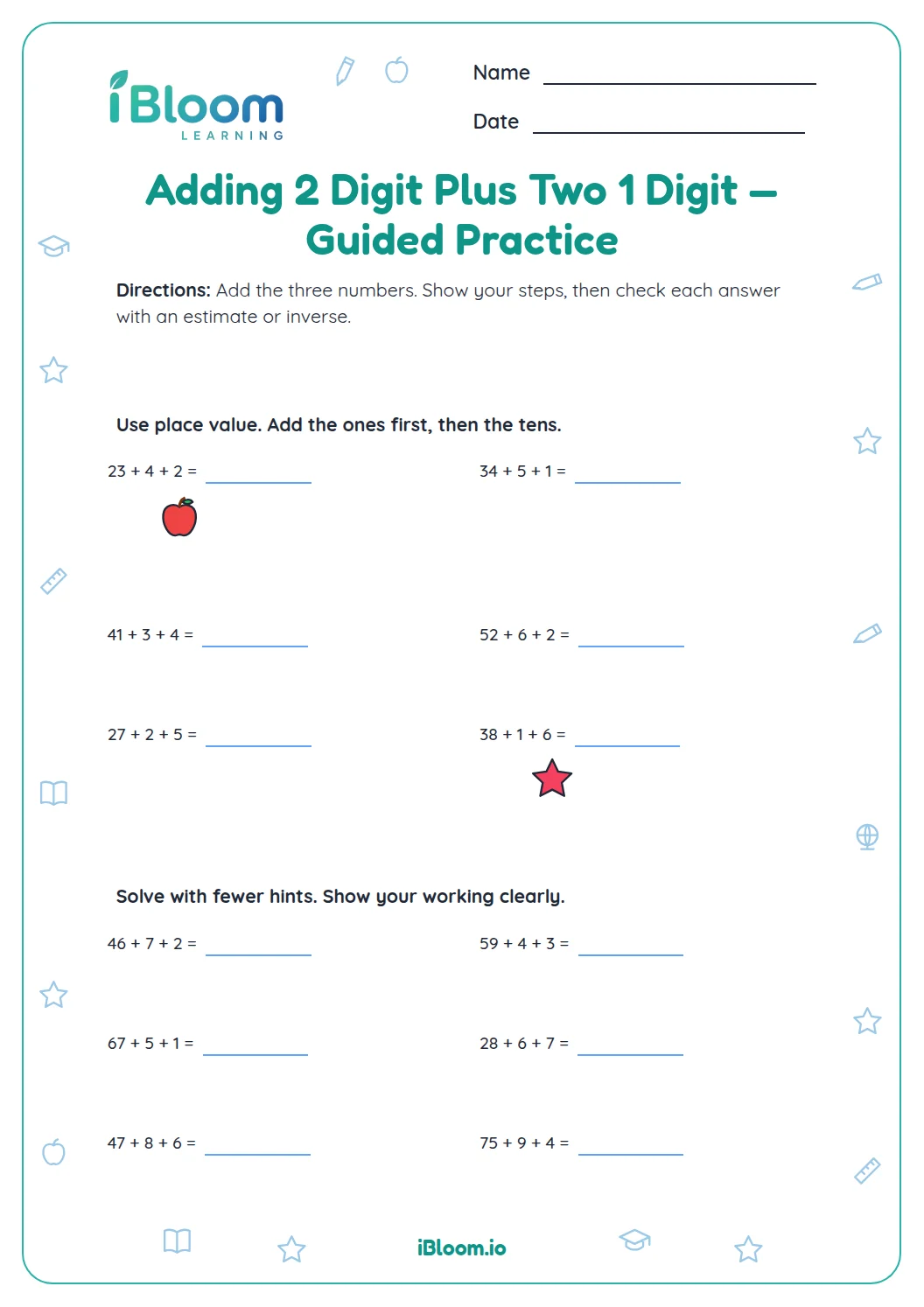
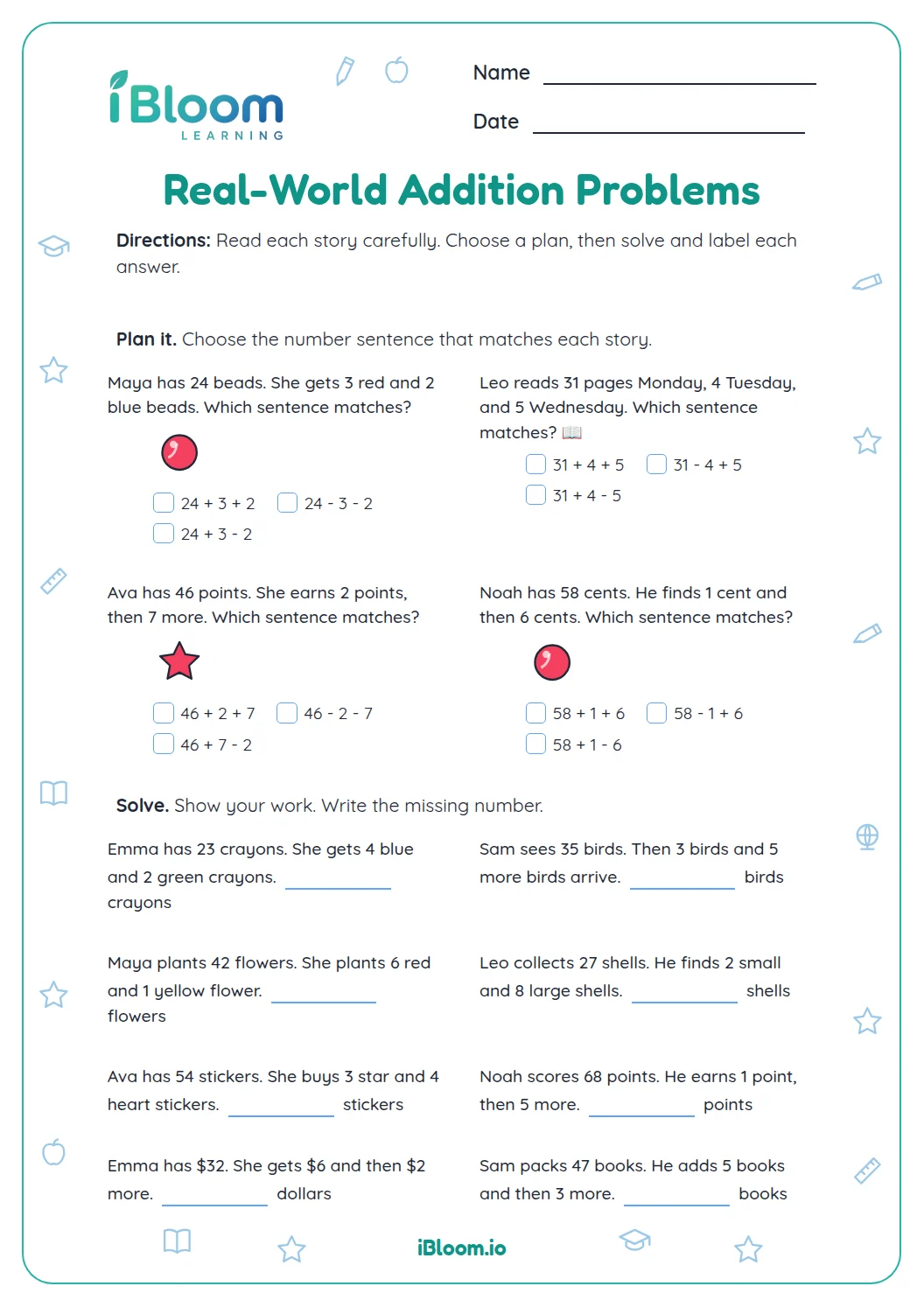
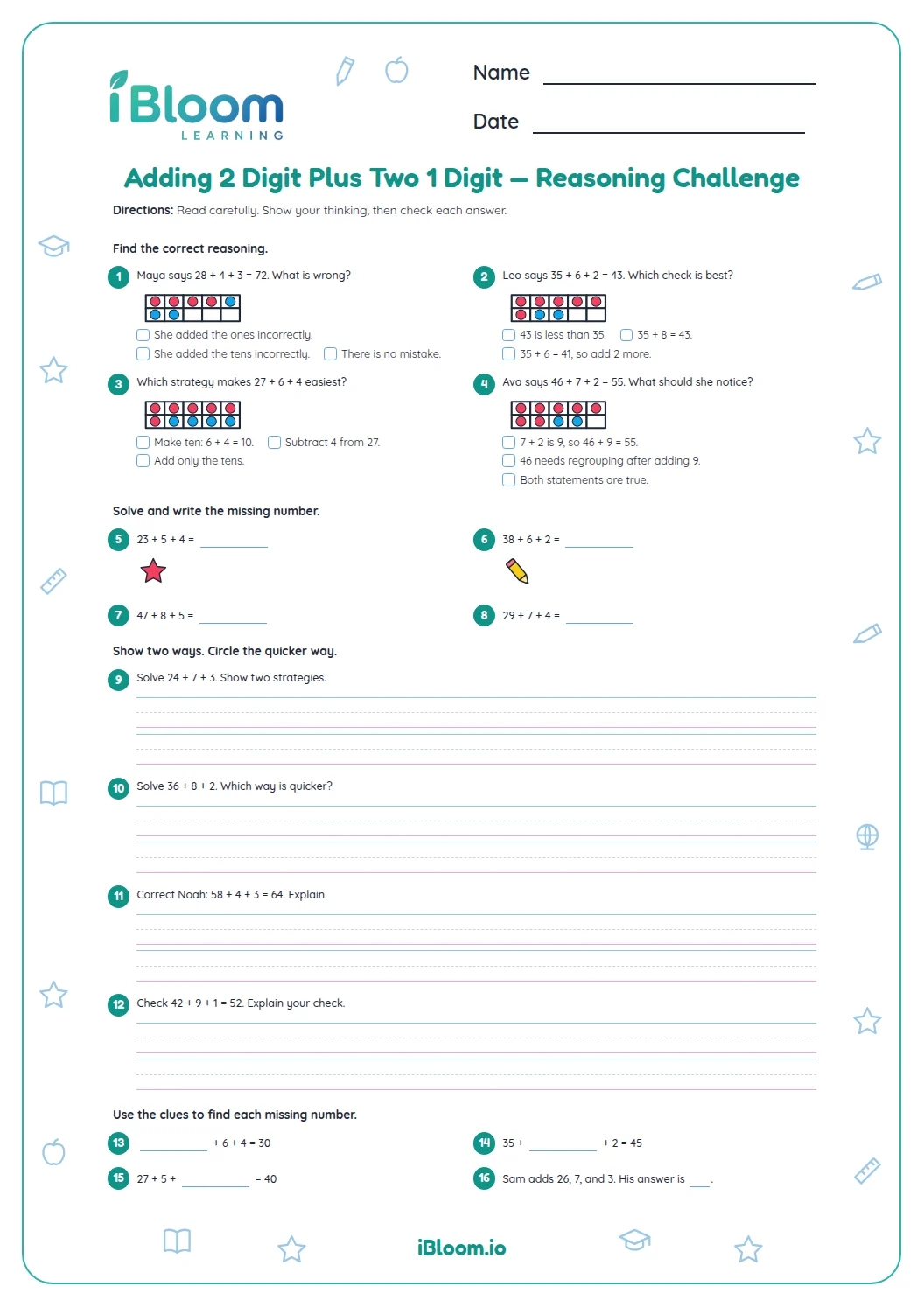
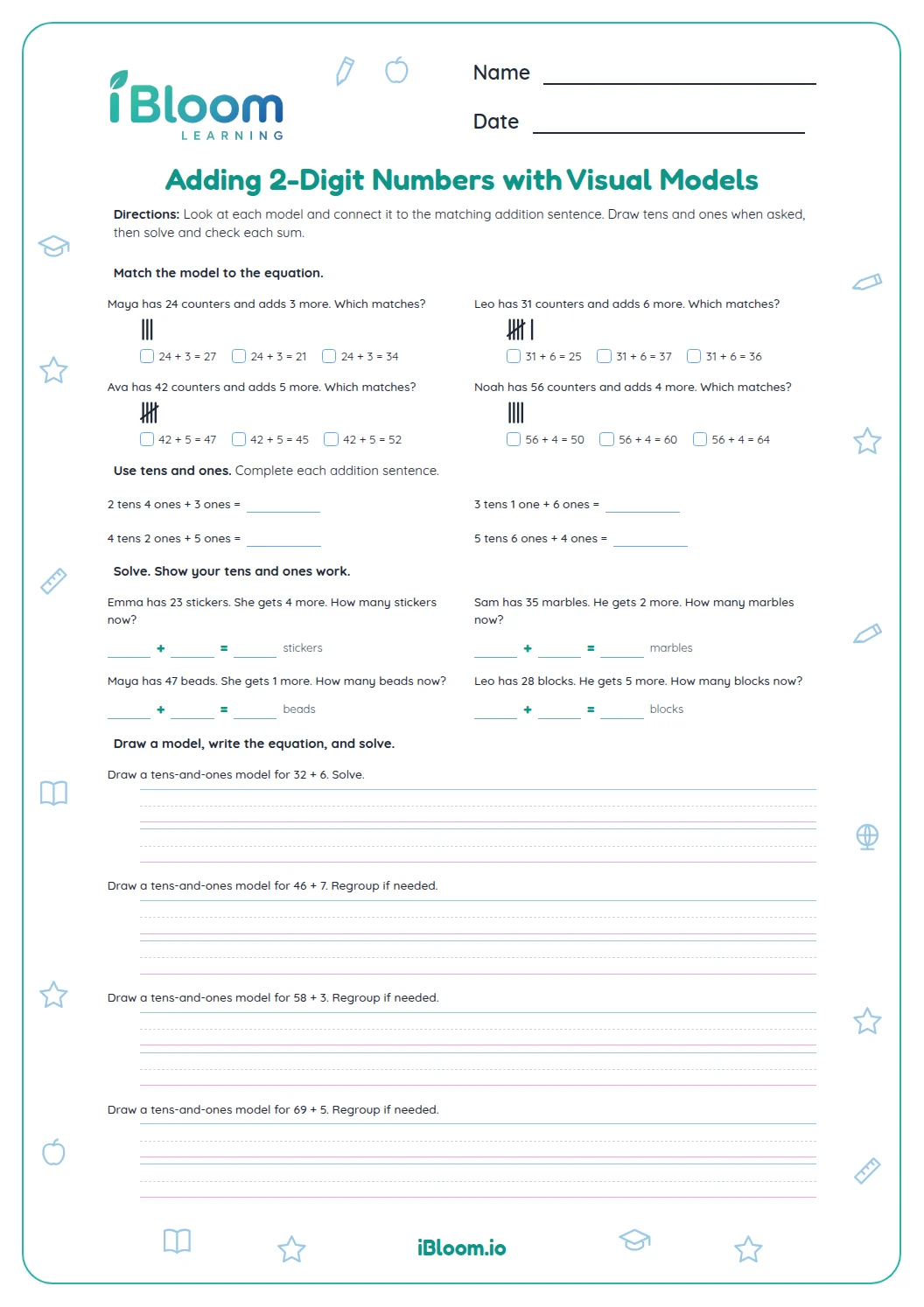
This Grade 2 worksheet practices adding two one-digit numbers to a two-digit number. Five problems show base-ten blocks; the remaining items are multiple-choice sums, including examples that require trading ten ones for one ten. The 16 answers are on a separate key. This practice supports CCSS 2.NBT.B.5.
Aligned to 2.NBT.B.5
How do you add two one-digit numbers to a two-digit number?
This Grade 2 worksheet practices adding two one-digit numbers to a two-digit number. Five problems show base-ten blocks; the remaining items move to equations, including sums that require trading ten ones for one ten. The 16 answers are on a separate key. This practice supports CCSS 2.NBT.B.5.
Add the one-digit addends, then combine their sum with the two-digit number. If the ones make ten or more, trade ten ones for one ten.
- 124 + 3 + 2
- 23 + 2 = 5
- 324 + 5 = 29
- 4So, 24 + 3 + 2 = 29
How is the practice organized?
Work through the prompts in order. Use the models or guided examples to establish the method, then apply the same idea independently.
How can students check their work?
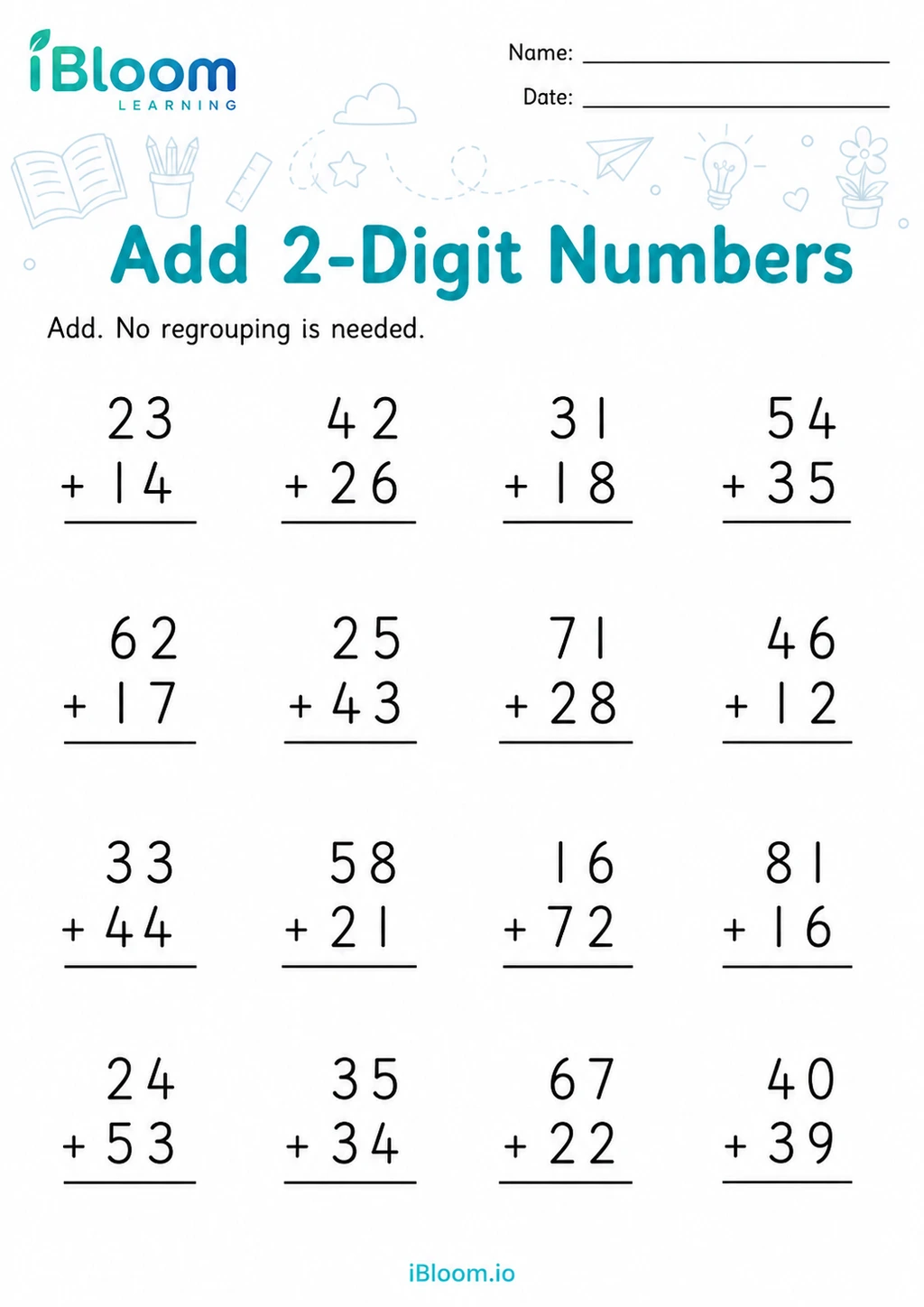
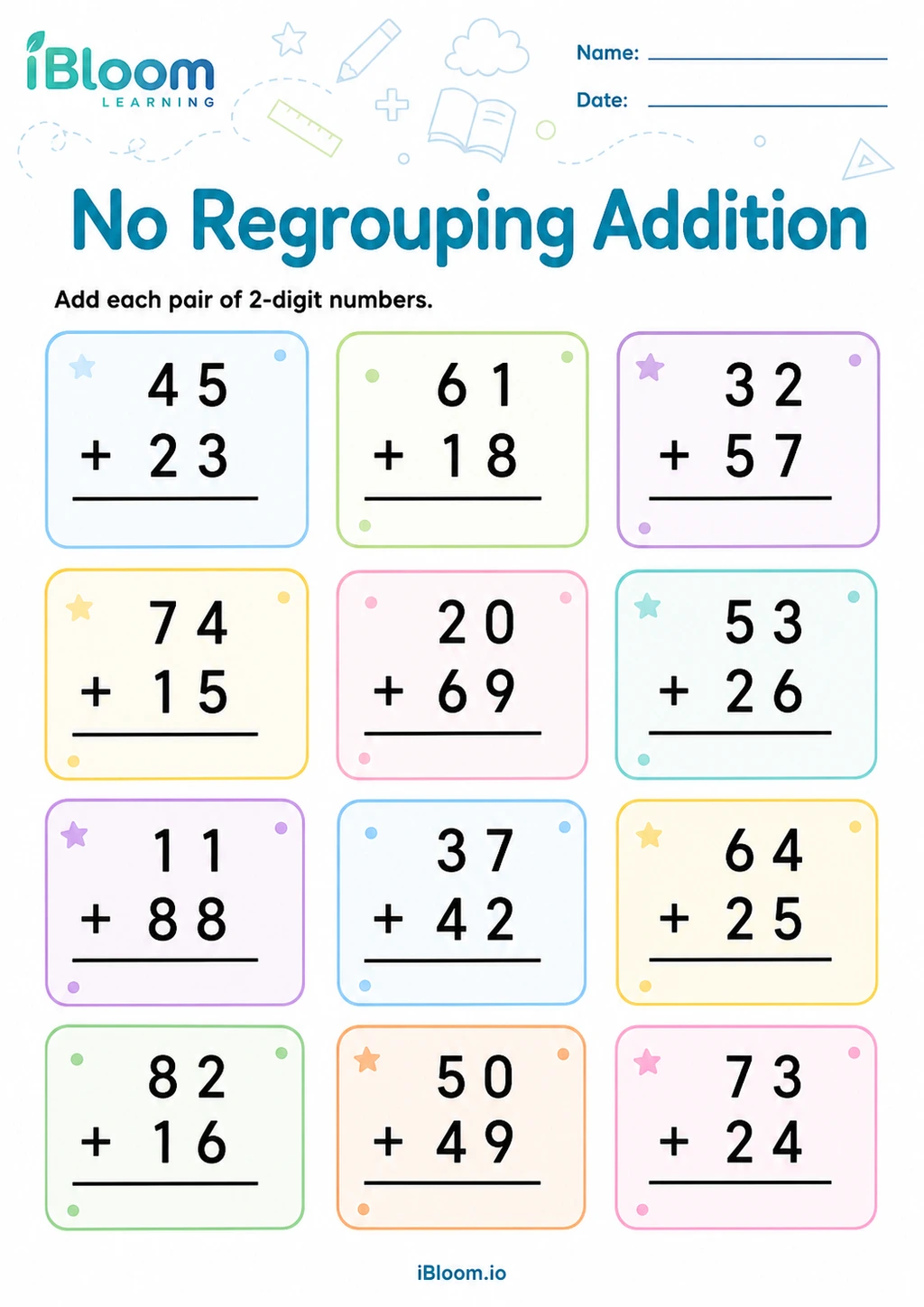
Students add two one-digit numbers to a two-digit number in each of the 16 problems. Five problems include base-ten block models, and the others use equations. Some sums stay within the ones place; others require regrouping ten ones as one ten.
How to use this worksheet
- 1Look at the base-ten blocks in question 1 and name the tens and ones.
- 2Add the two one-digit addends together.
- 3Combine that total with the starting number.
- 4Trade ten ones for one ten when needed.
- 5Use the answer key to check every sum.
Common mistakes and quick fixes
The mistake
Adding the one-digit addends but forgetting the starting number.
The fix
Combine their sum with the two-digit addend.
The mistake
Leaving ten or more ones ungrouped.
The fix
Trade ten ones for one ten and count the leftover ones.
The mistake
Combining digits as though they were one addend.
The fix
Keep the two one-digit addends separate as you add.
Curriculum alignment
This page connects the worksheet practice to the standard below.
Add within 100 using place-value strategies and the relationship between addition and subtraction.
On this sheet: Each item adds a two-digit number and two one-digit addends within 100.
Show the official wordingHide the official wording
Fluently add and subtract within 100 using strategies based on place value, properties of operations, and/or the relationship between addition and subtraction.
What to practice next
Make more practice
Further reading
Questions parents and teachers ask
What does this worksheet ask students to add?
Students add two one-digit numbers to a two-digit number in each of the 16 problems. Five problems include base-ten block models, and the others use equations. Some sums stay within the ones place; others require regrouping ten ones as one ten. Ask the learner to name the tens and ones before writing the sum.
How can a student use the base-ten blocks?
First read the tens and ones in the starting number. Then add the two one-digit amounts to the ones. When there are ten or more ones, trade ten ones for one ten and combine it with the tens already shown. The worksheet includes both modeled and independent examples for this strategy.
Is regrouping included?
Yes. Several sums make ten or more in the ones place, so students must compose a new ten. The equation still represents the same total: count the tens and the leftover ones, then check by adding all three addends again. This keeps place value visible while students practice the same addition skill.
Does the printable include an answer key?
Yes. A separate answer key lists all 16 sums. Have the student finish the worksheet first, then compare each total and revisit any item where the ones or tens were combined incorrectly. Ask the learner to name the tens and ones before writing the sum.
What should students know before starting?
Students should be able to read two-digit numbers as tens and ones and add single-digit numbers. The block models make the starting number visible, while the later equations offer practice applying that place-value strategy without a model. This progression lets students use the model before solving without one.