



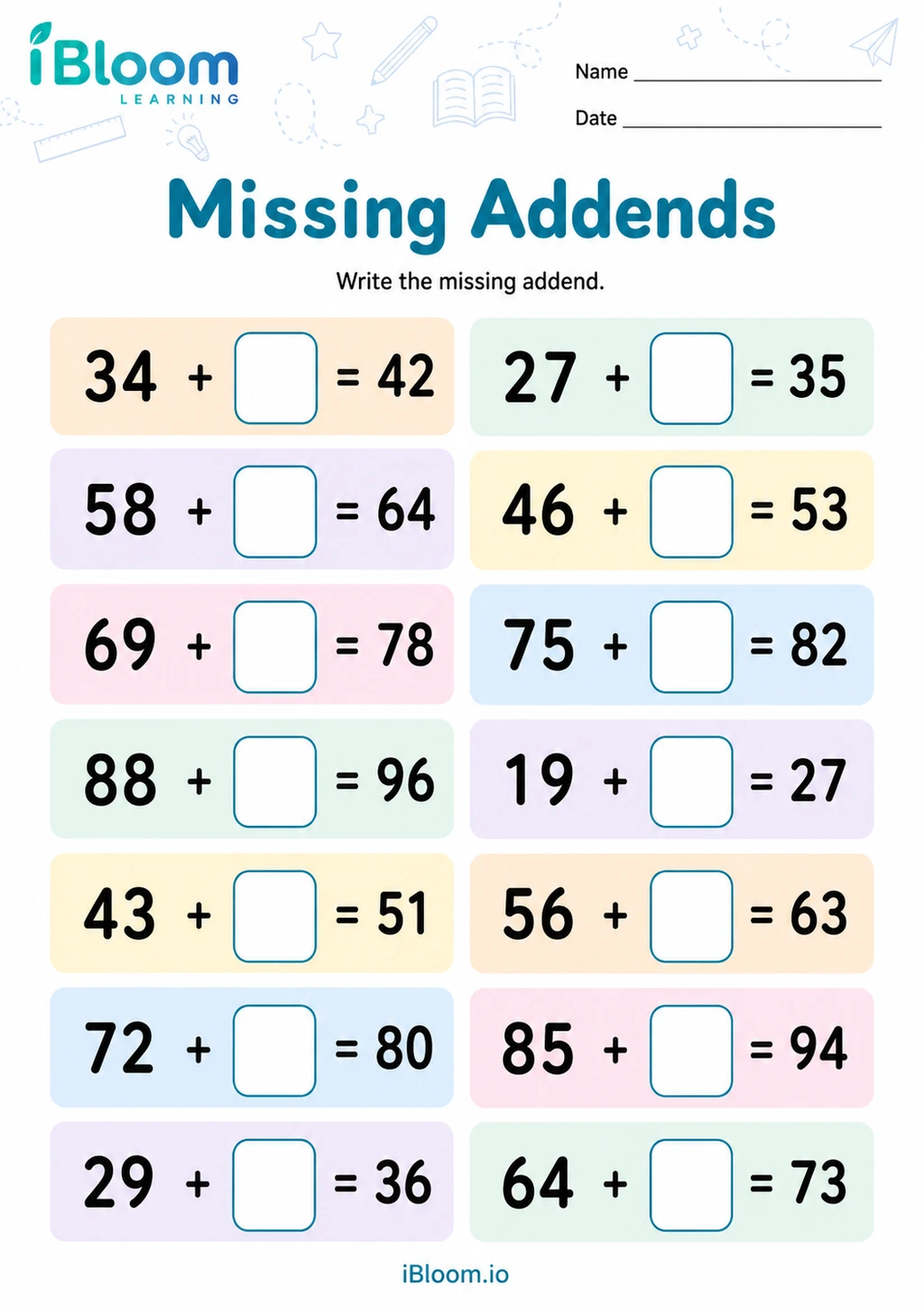
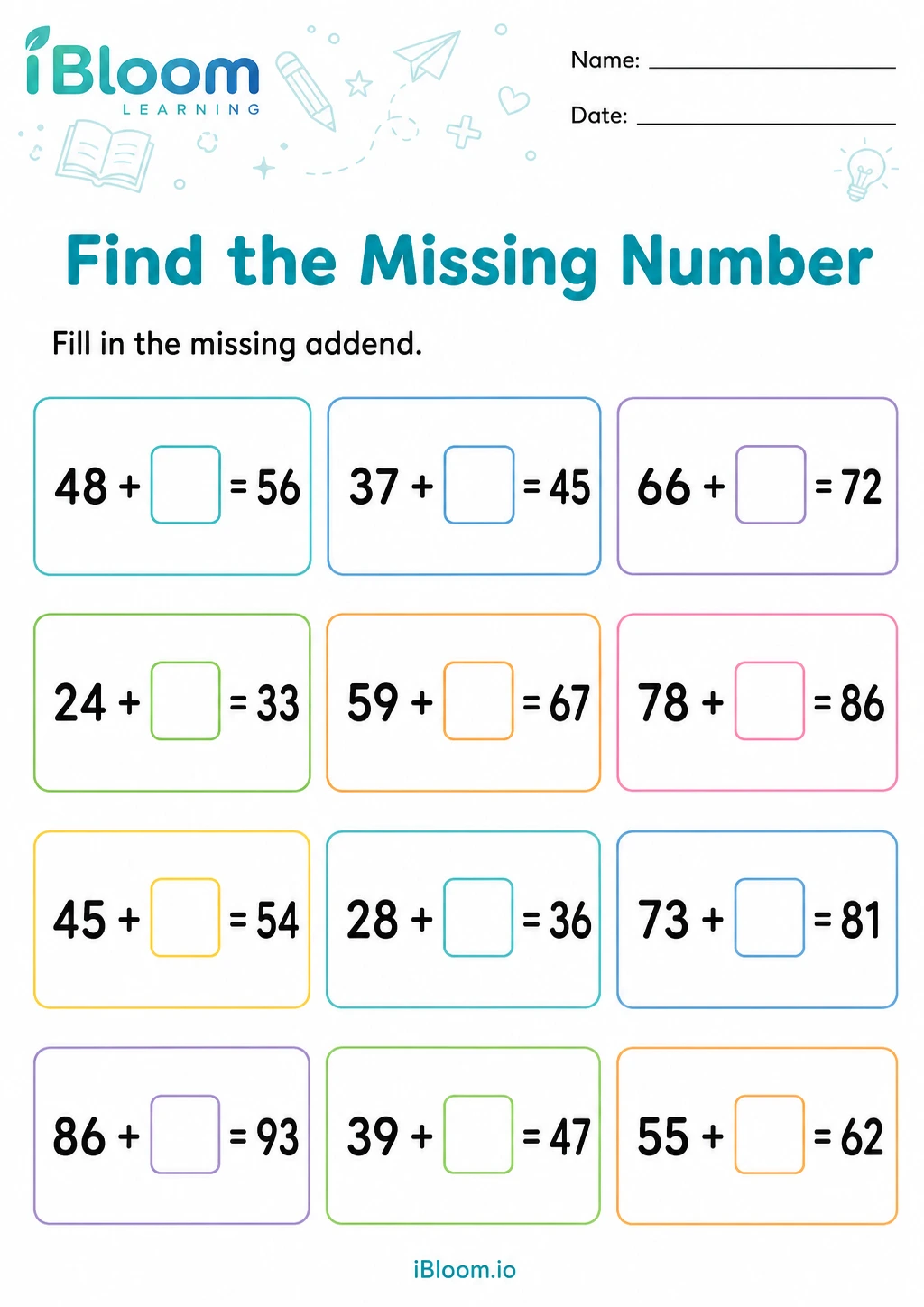
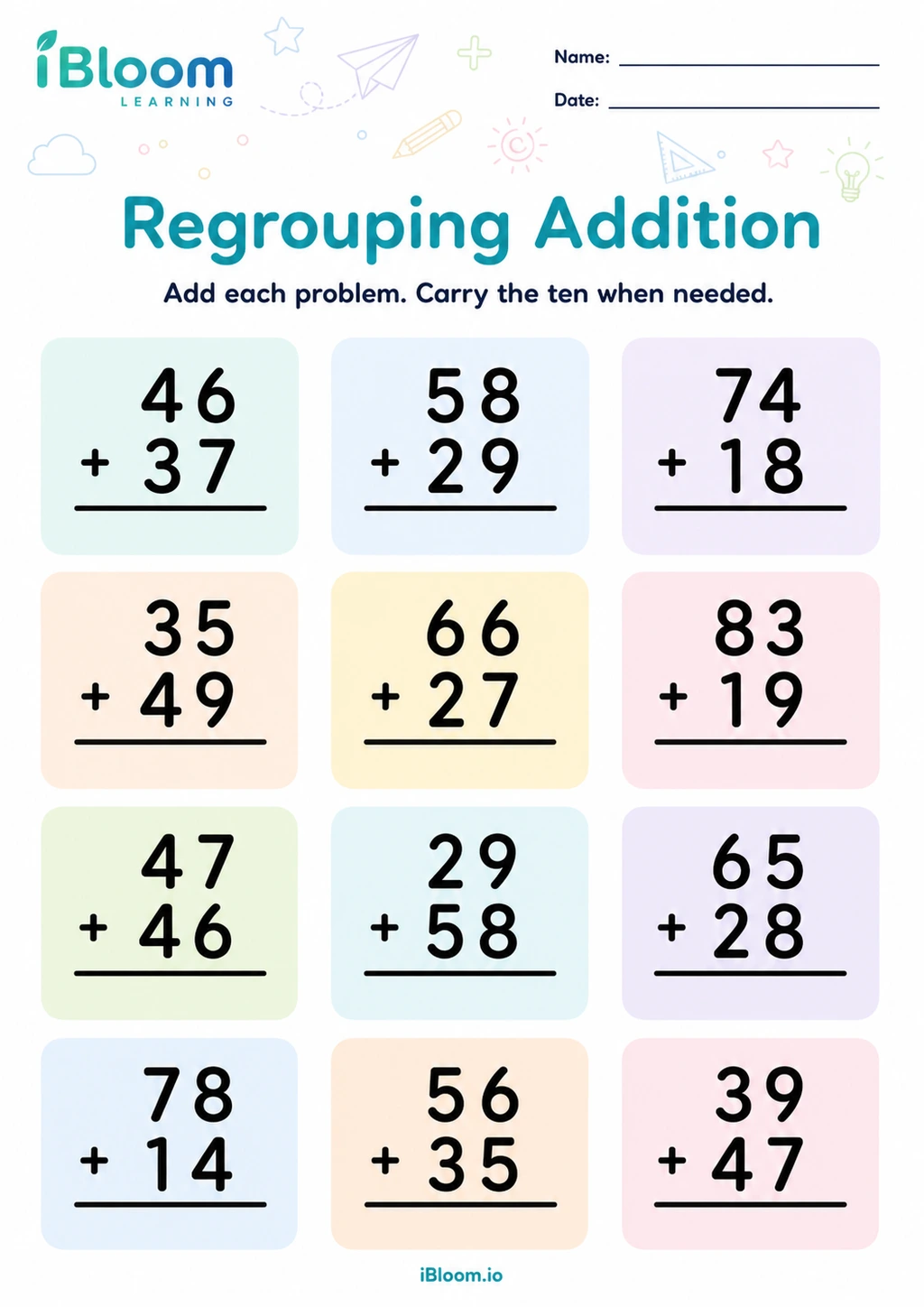
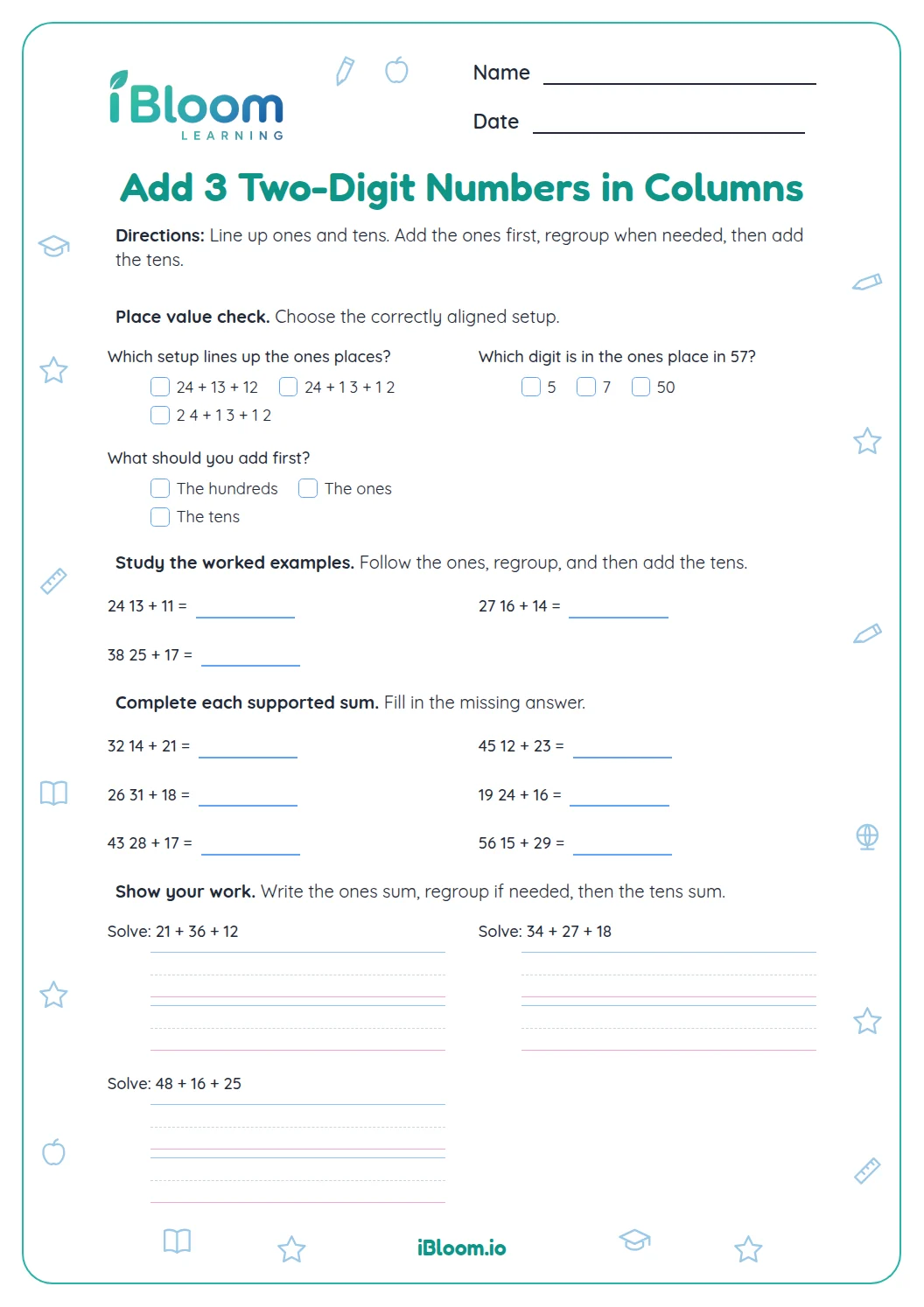
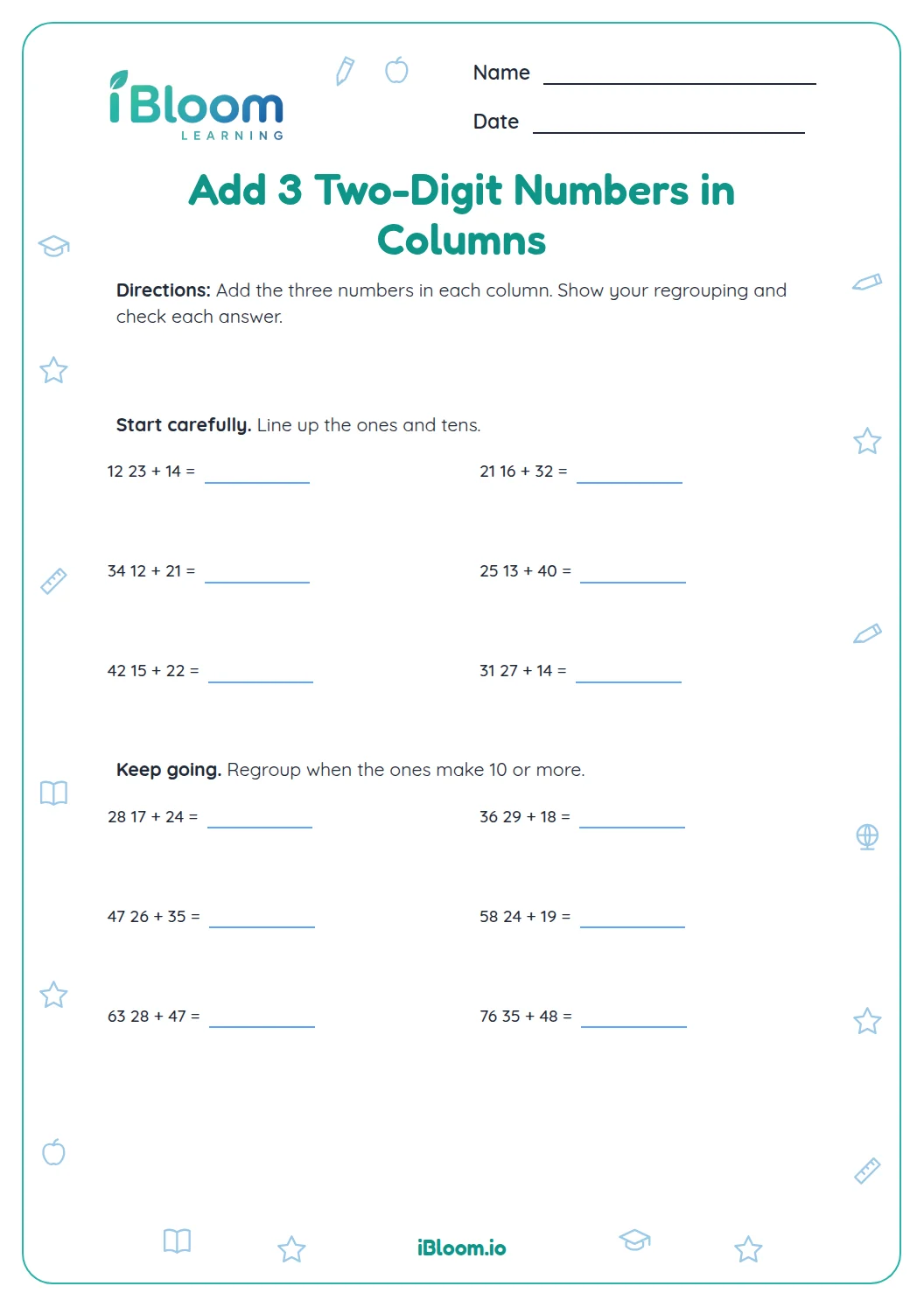
About this worksheet
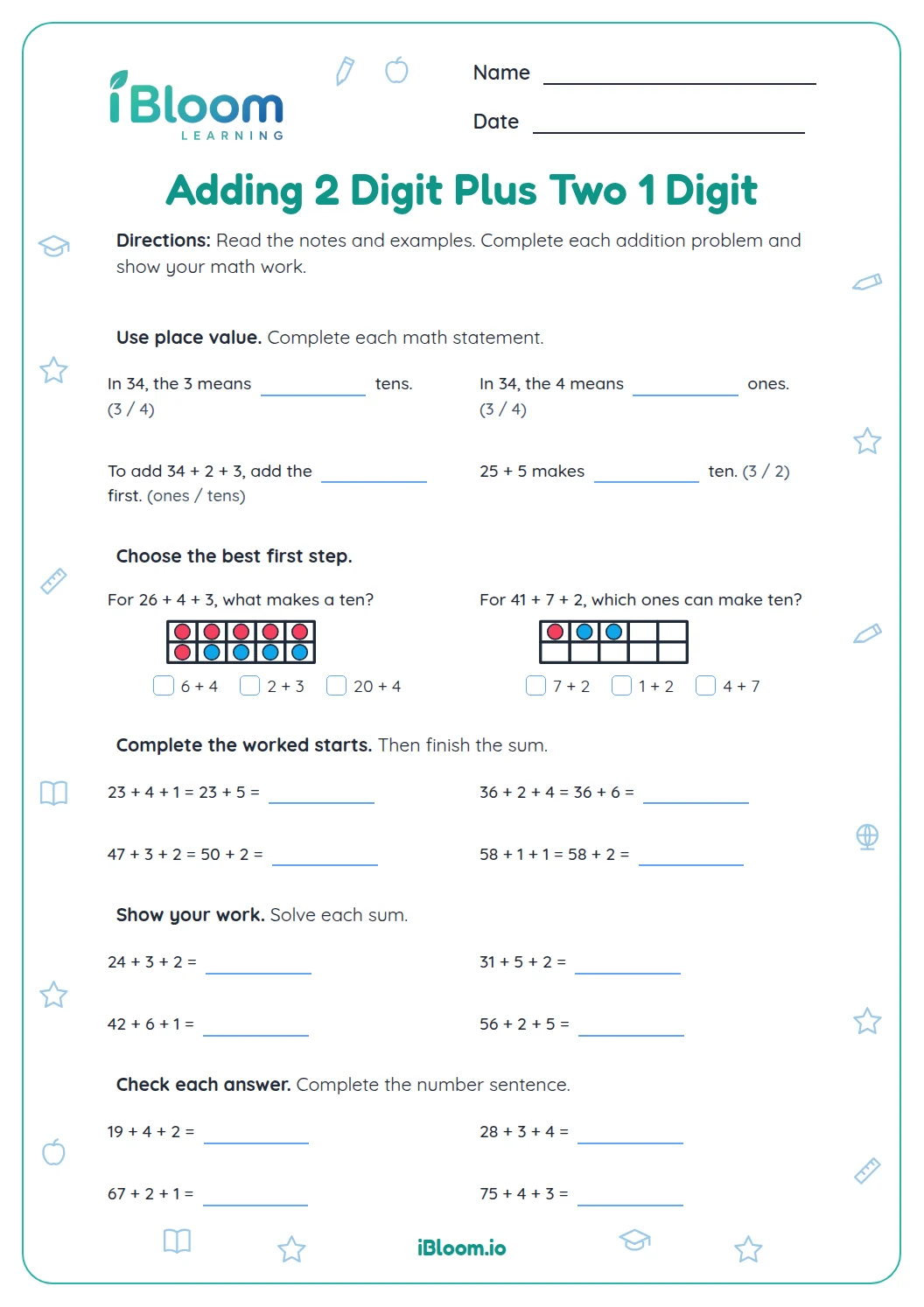
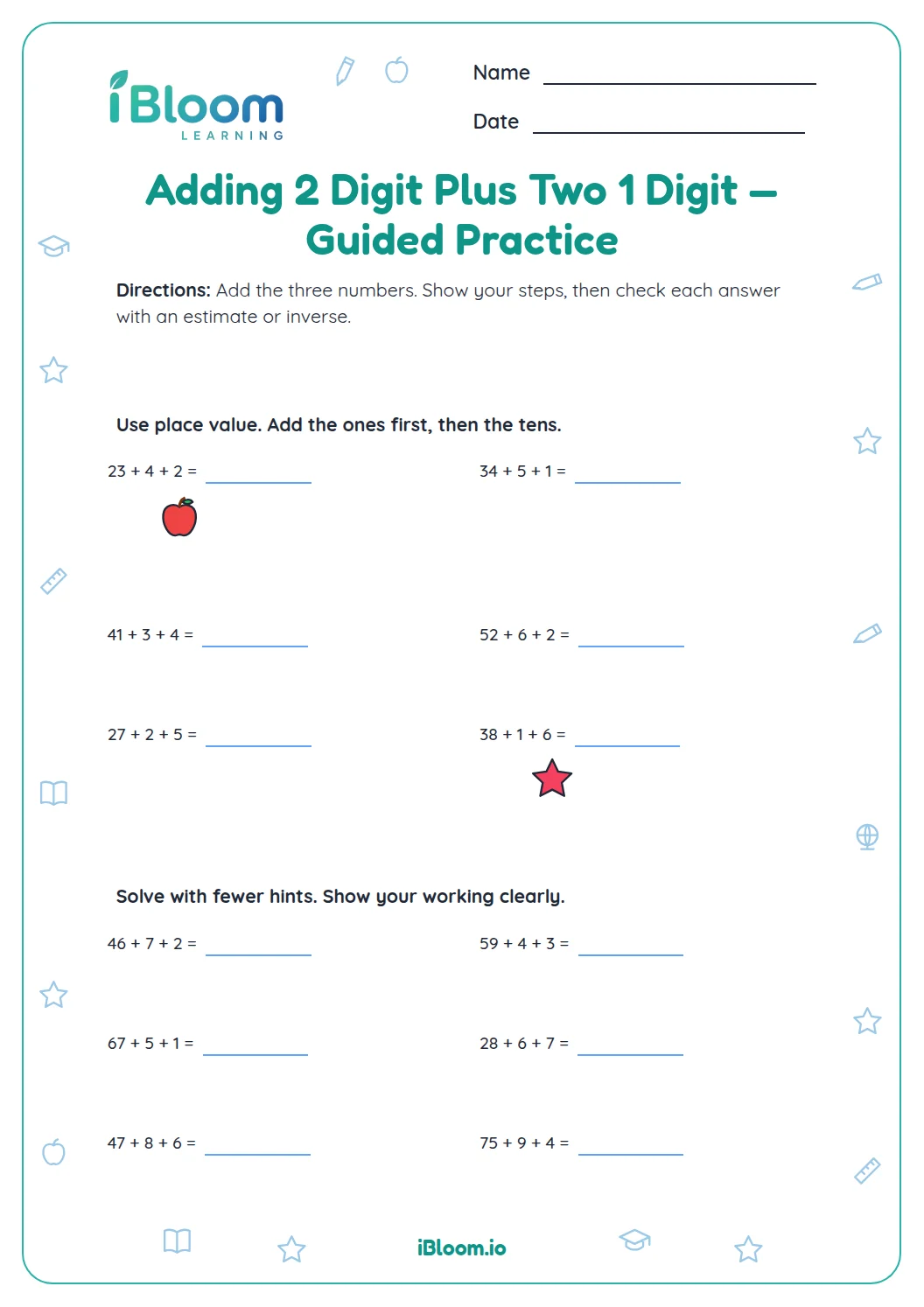
This free printable worksheet gives Grade 2 students independent practice adding one 2-digit number and two 1-digit numbers, such as 28 + 4 + 3. It starts with sums where the ones stay under 10, moves to sums that make a new ten, then asks for a missing number and ends with two short stories. All totals stay within 100. It practices Common Core 2.NBT.B.5, fluent addition within 100 using place value and properties of operations, and it works well after children have added a 2-digit and a 1-digit number. A separate answer key is included.
Aligned to 2.NBT.B.5
What is on this worksheet?
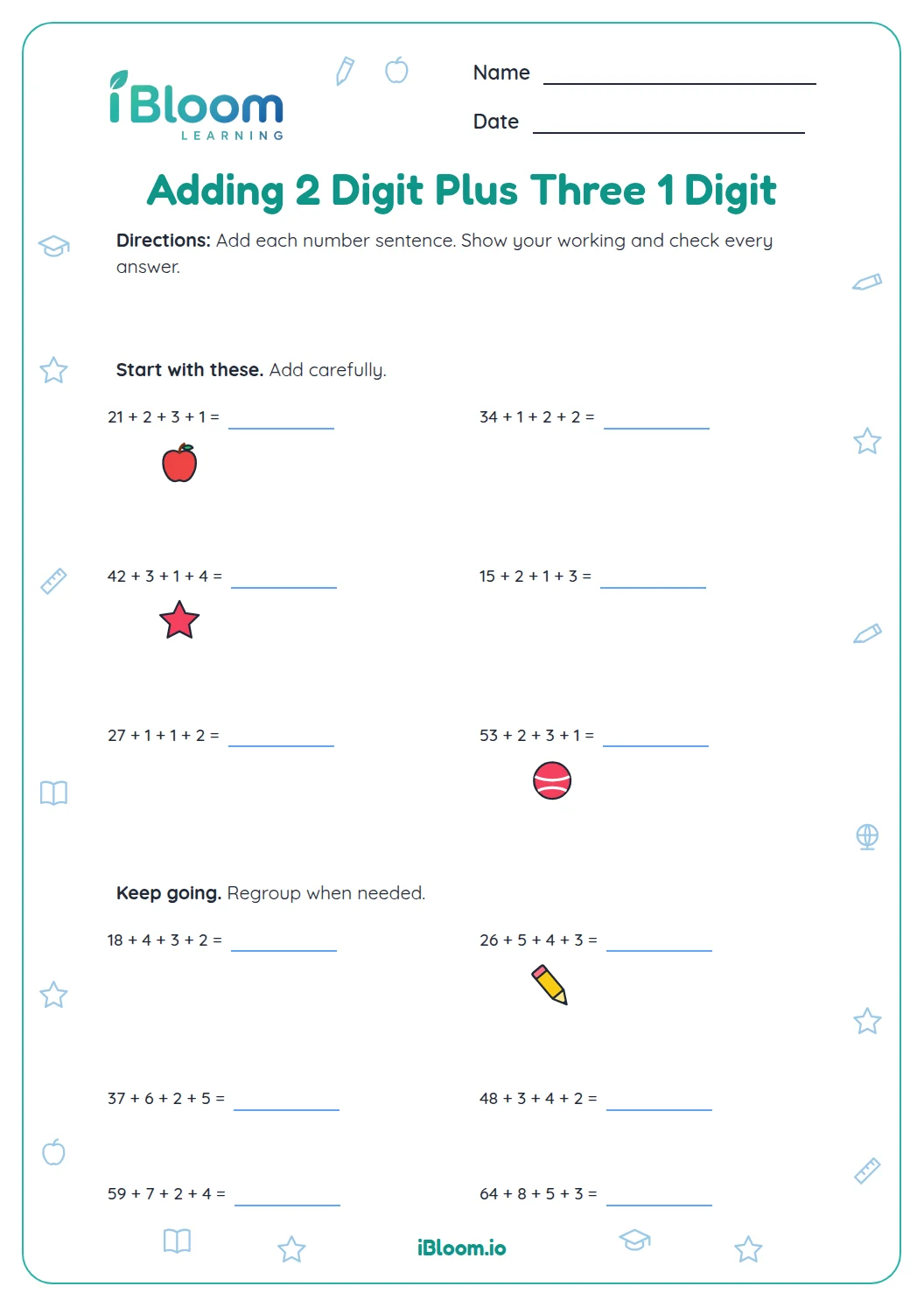
Eighteen questions in four parts, each a little harder than the last. Every sum has one 2-digit number and two 1-digit numbers, and every total is 99 or less, so children can work mentally or jot the ones total beside the sum.
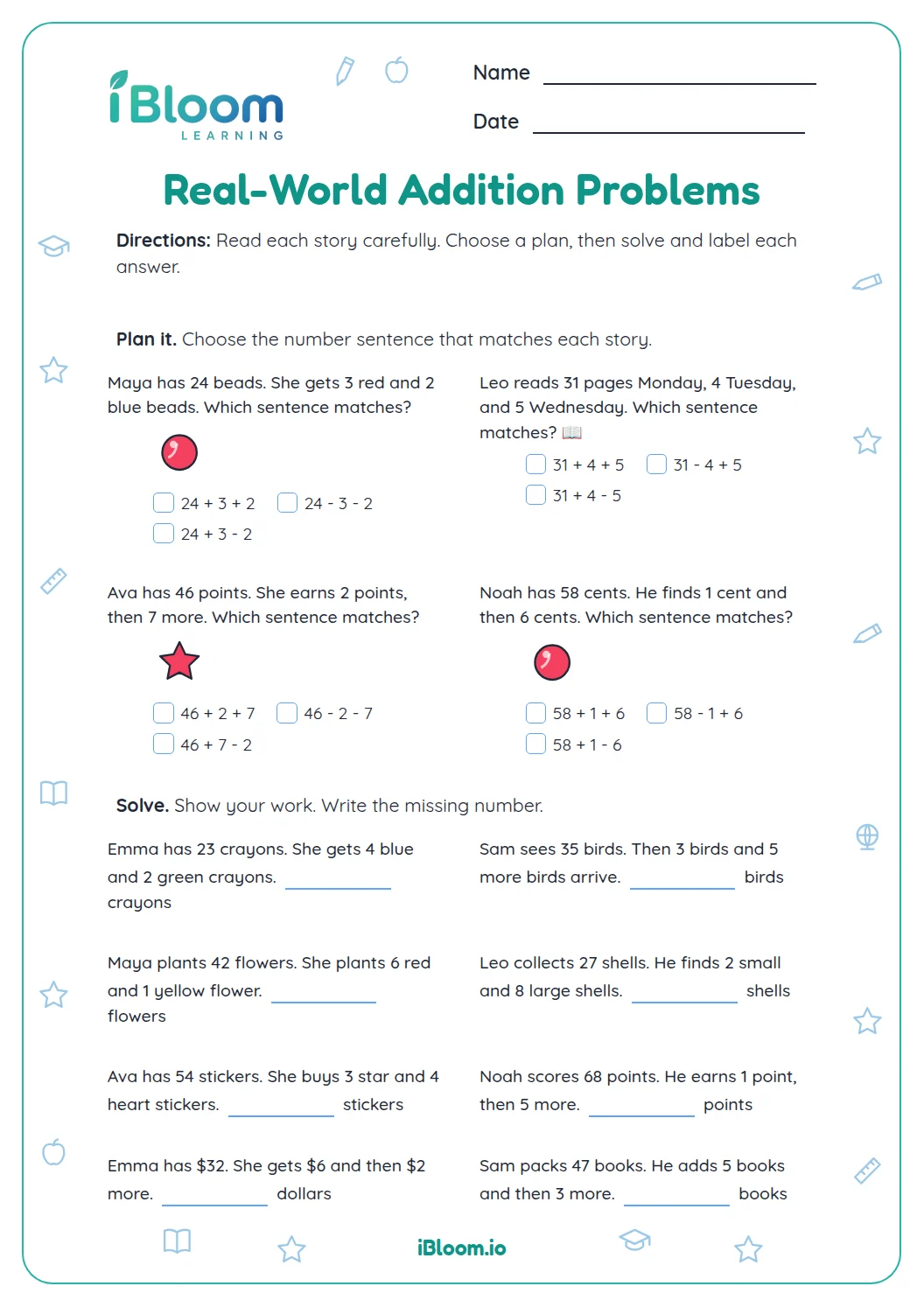
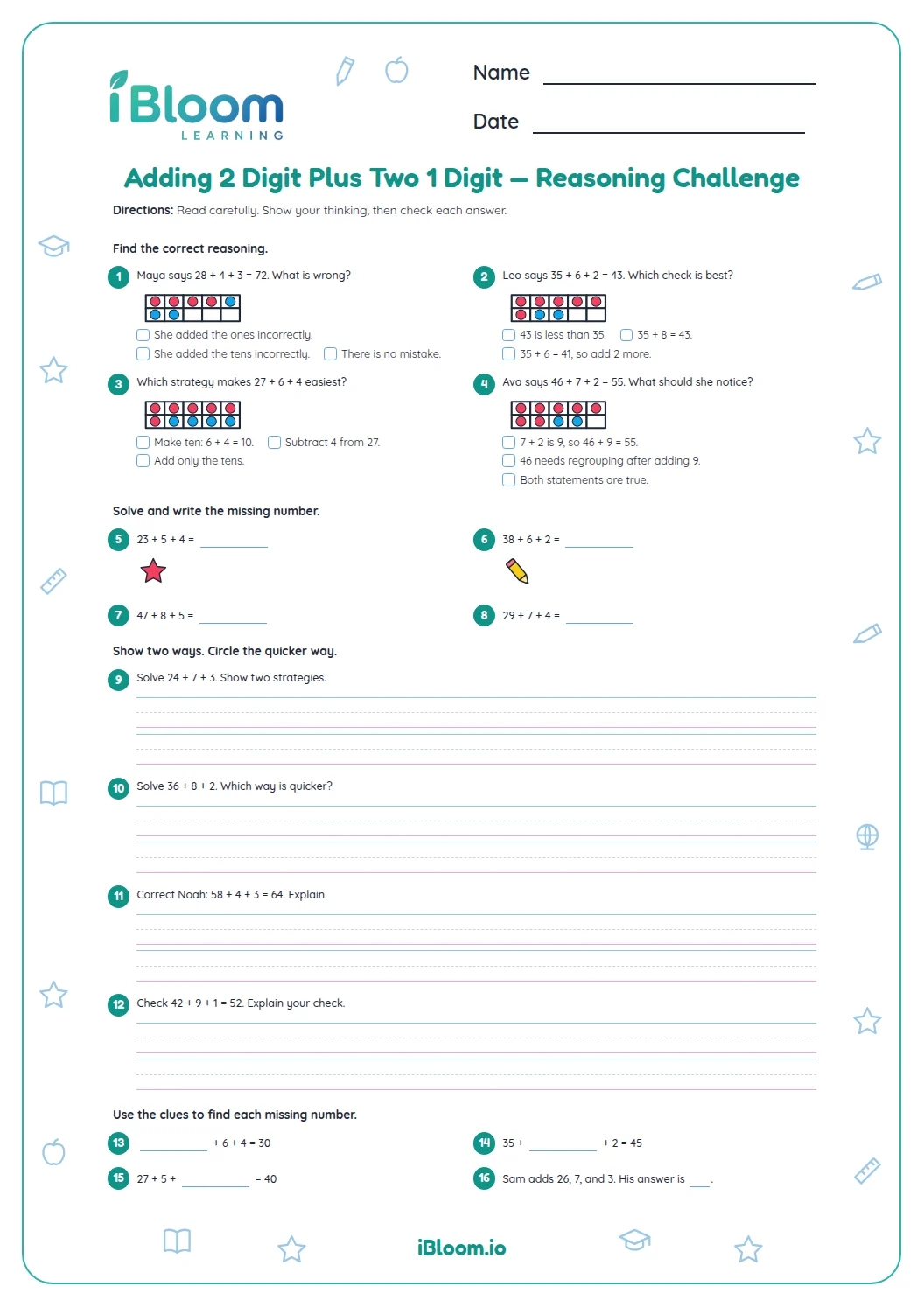
Part A keeps the ones small, so no new ten is needed. Part B uses sums such as 47 + 6 + 8, where the ones pass 9. Part C hides one of the three numbers, and Part D has two short stories with room to write a number sentence.
- Part A, Warm up: six sums where the ones add to 9 or less (questions 1 to 6)
- Part B, Make a new ten: six sums with regrouping (questions 7 to 12)
- Part C, Find the missing number: four number sentences (questions 13 to 16)
- Part D, Solve and show: two stories with working space (questions 17 and 18)
- A separate answer key
What is the easiest way to add three numbers like 28 + 4 + 3?
Two children can add the same sum in different ways, and both are right. Some join the two small numbers first. Others make a ten: 28 needs 2 more to reach 30, so they split the 4 into 2 and 2 and keep going.
A third way works with place value. Add all the ones, 8 + 4 + 3 = 15, and see that 15 ones is 1 ten and 5 ones. Then add that ten to the 2 tens that were already there.
- 128 + 4 + 3 = ___
- 2Join the small numbers: 4 + 3 = 7
- 3Add to the big number: 28 + 7 = 35
- 4Or make a ten: 28 + 2 = 30, then 30 + 2 + 3 = 35
How do you find a missing number in a three-number sum?
In Part C the total is given and one number is hidden, as in 34 + ___ + 5 = 46. Add the two numbers you can see, then ask how far that is from the total.
Here 34 + 5 = 39, and 39 needs 7 more to reach 46. Children can check by putting 7 back in the blank and adding all three numbers again.
How do the two stories connect to the sums?
Question 17 says Maya has 38 stickers, then gets 5 more and 4 more. Question 18 says Leo reads 27 pages on Monday, 6 on Tuesday and 8 on Wednesday. Each story is the same sum as Parts A and B, now with a context.
Asking children to write the number sentence first, 38 + 5 + 4, shows whether they see the story as joining three groups before they calculate.
How to use this worksheet at home or in class
- 1Do one sum from Part B together out loud. Ask your child to tell you how they would add it, and accept any method that works.
- 2Let your child finish Part A alone. These sums have no new ten, so they should feel quick.
- 3In Part B, ask them to circle the two small numbers before adding. Joining them first often makes the sum easier.
- 4For Part C, remind your child to add the numbers they can see first, then see what is needed to reach the total.
- 5In Part D, ask for the number sentence before the answer, and make sure the answer has its unit, stickers or pages.
- 6Check with the answer key, and redo any missed sum with a different method to see if the answers agree.
Common mistakes and quick fixes
The mistake
Forgetting the new ten, such as writing 25 for 28 + 4 + 3 because 8 + 4 + 3 = 15 and only the 5 was kept.
The fix
Write the ones total on the side, 15, and ask how many tens are inside it. One ten joins the 2 tens, so the answer is 35.
The mistake
Adding only two of the three numbers, such as 36 + 7 = 43 for 36 + 7 + 5.
The fix
Put a small dot under each number before starting, and check that every dot has been used. Three numbers, three dots.
The mistake
Writing the sum of the numbers shown instead of the missing number, such as 39 for question 13.
The fix
Say the question aloud: 34 and what and 5 make 46? Then put the answer in the blank and add all three numbers to see if you get 46.
Common Core alignment
Most US states use the Common Core standards or a close state version. This Grade 2 addition standard names the skill on every question of this page.
Add within 100 using place value, properties of operations or the relationship to subtraction.
On this sheet: All 18 questions are sums within 100 that can be solved by place value or by joining numbers in any order.
Show the official wordingHide the official wording
Fluently add and subtract within 100 using strategies based on place value, properties of operations, and/or the relationship between addition and subtraction.
What to practice next
Make more practice
Further reading
Questions parents and teachers ask
Does the order of the three numbers matter?
No. Addition can be done in any order, and the total stays the same. Children can add 28 + 4 first, or join 4 + 3 first, and reach 35 either way. This worksheet leaves the choice to your child, so you can see which order feels easiest.
Why does Part B have regrouping and Part A does not?
Part A lets children practice joining three numbers while the ones stay under 10, so there is no new ten to track. Part B then adds that step, with sums such as 47 + 6 + 8. Seeing the two parts side by side makes the regrouping idea clear.
Can my child use a number line, blocks or drawings?
Yes, any tool is welcome. Hundred charts, base-ten blocks or a quick number line help many second graders, and the space around each number sentence leaves room for them. The goal is a correct answer and a way to explain it, so tools are fine.
How many of the sums should my child get right?
There is no single target, but look at where mistakes happen. Missing sums in Part A suggest a basic fact needs review. Missing sums in Part B usually mean the new ten was forgotten. Missing Part C questions mean the hidden-number idea needs more practice, so use the key to find the pattern.
What if my child adds the ones but forgets the tens?
Ask your child to say each number as tens and ones. In 47 + 6 + 8, the 47 is 4 tens and 7 ones. After adding the ones, the new ten must be added to the 4 tens. Writing the tens and ones on the side makes the step easier to remember.
What should come after this worksheet?
Try adding a 2-digit number and three 1-digit numbers, or move to adding two 2-digit numbers in columns with regrouping. If any sums here still feel slow, repeat Part B on another day. The addition generator can also make fresh sums at the same level.