



About this worksheet
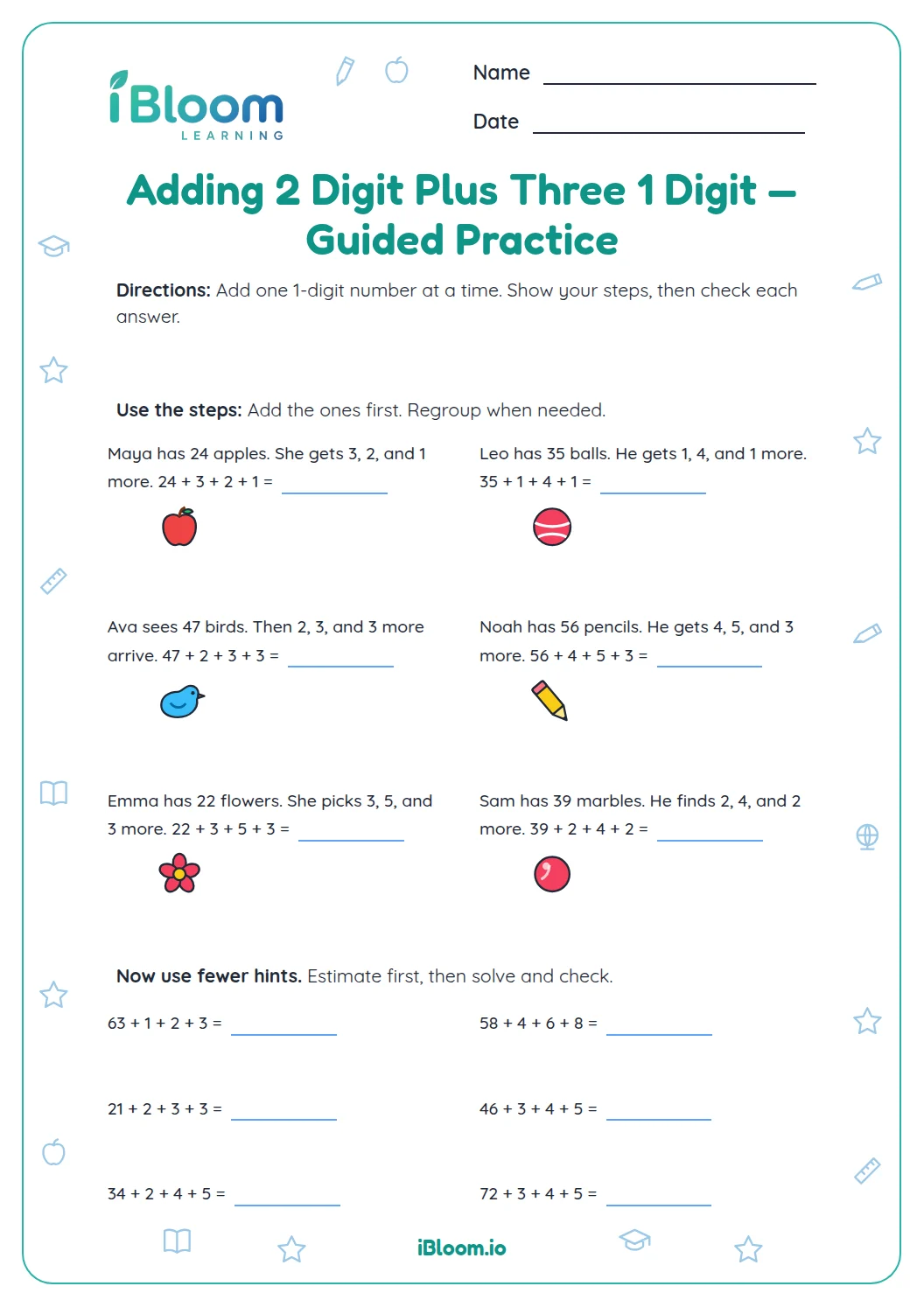
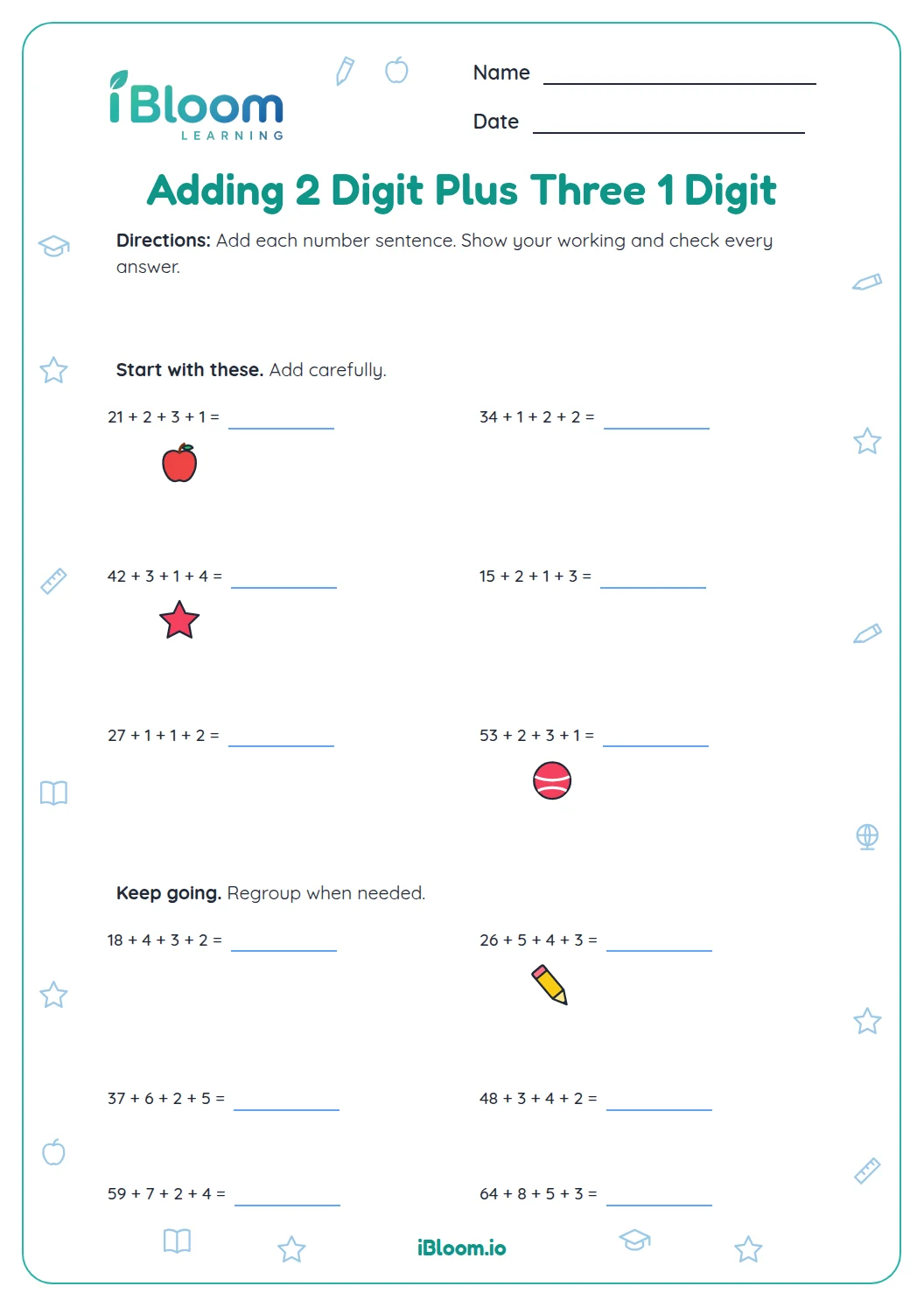
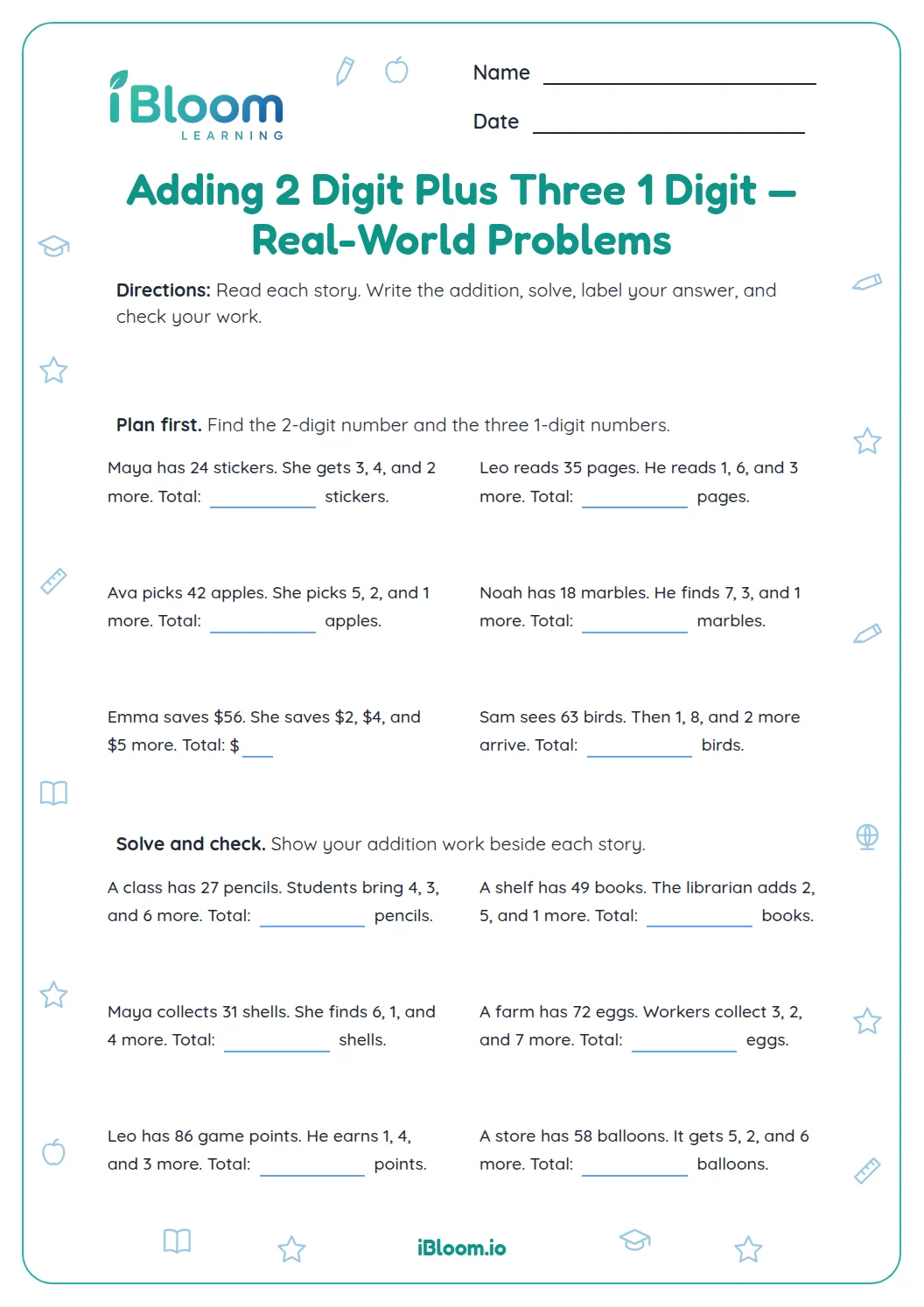
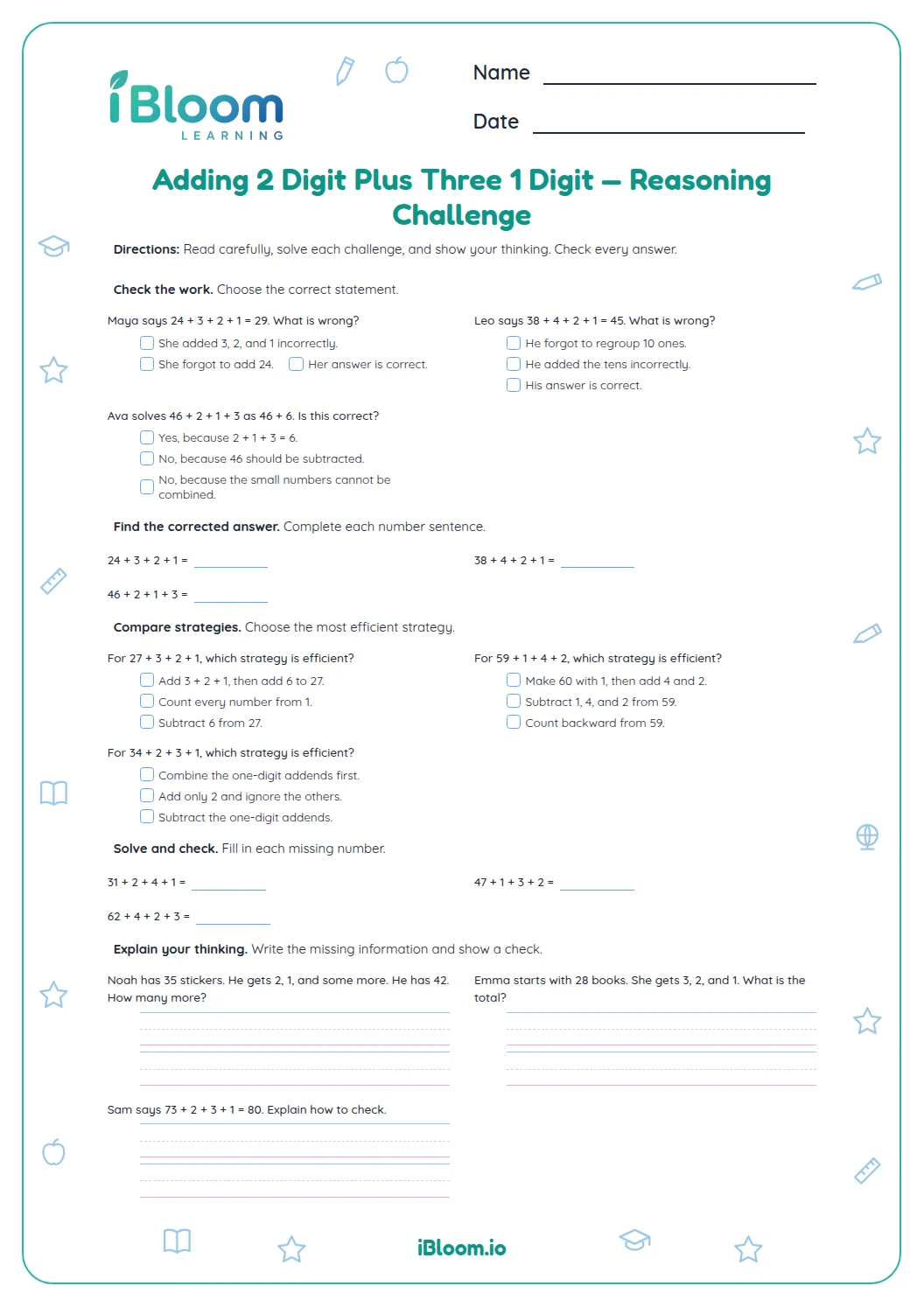
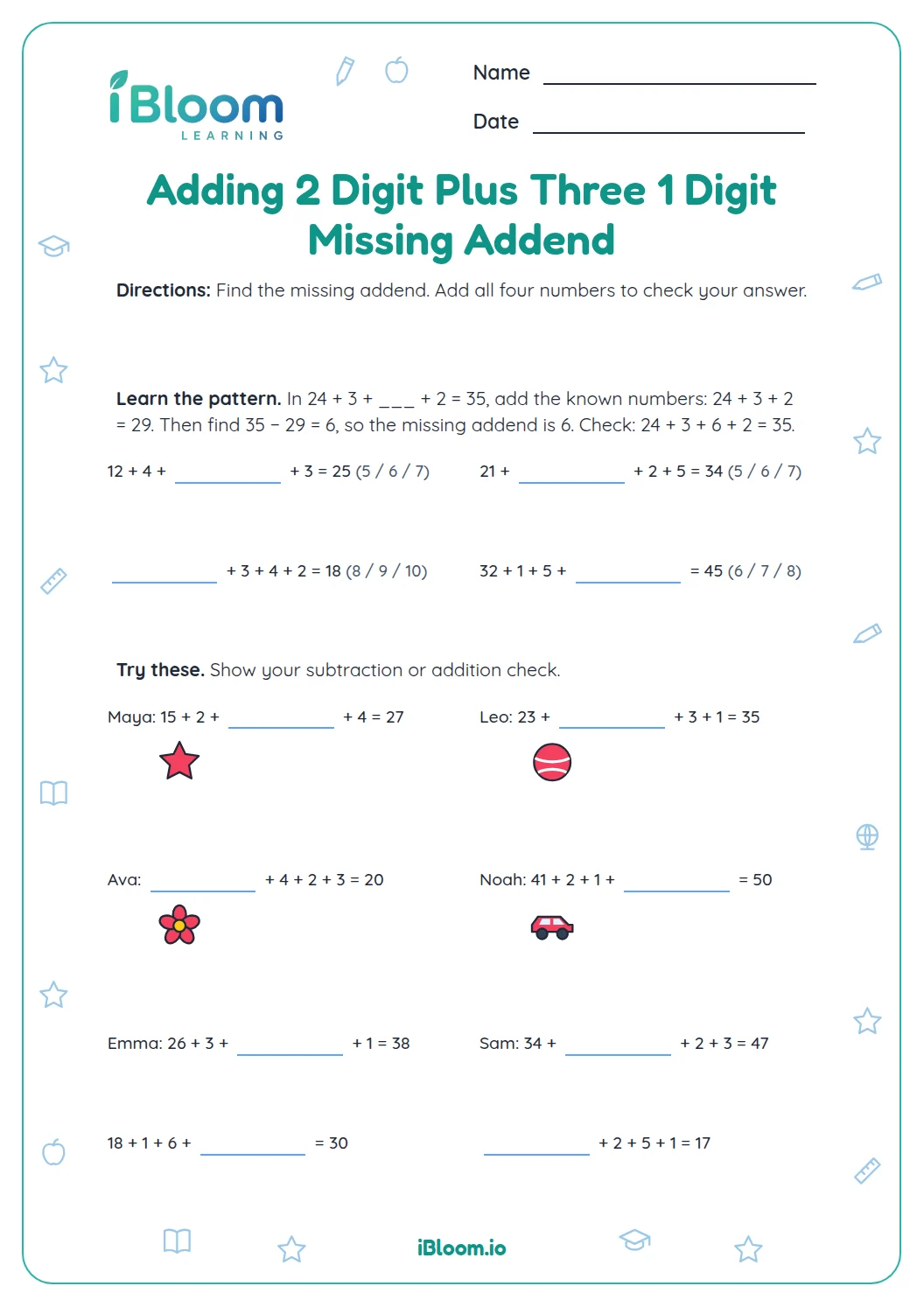
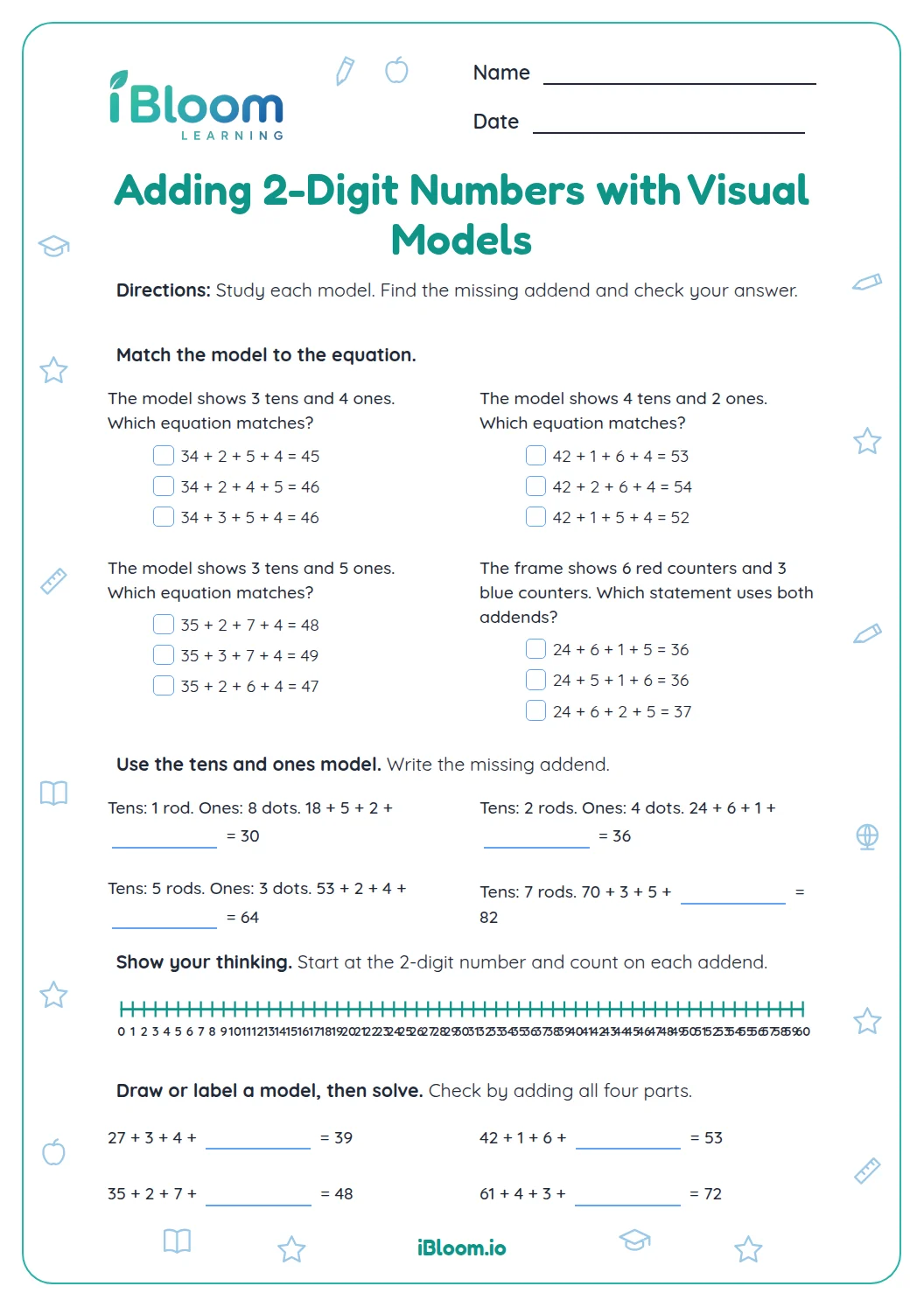
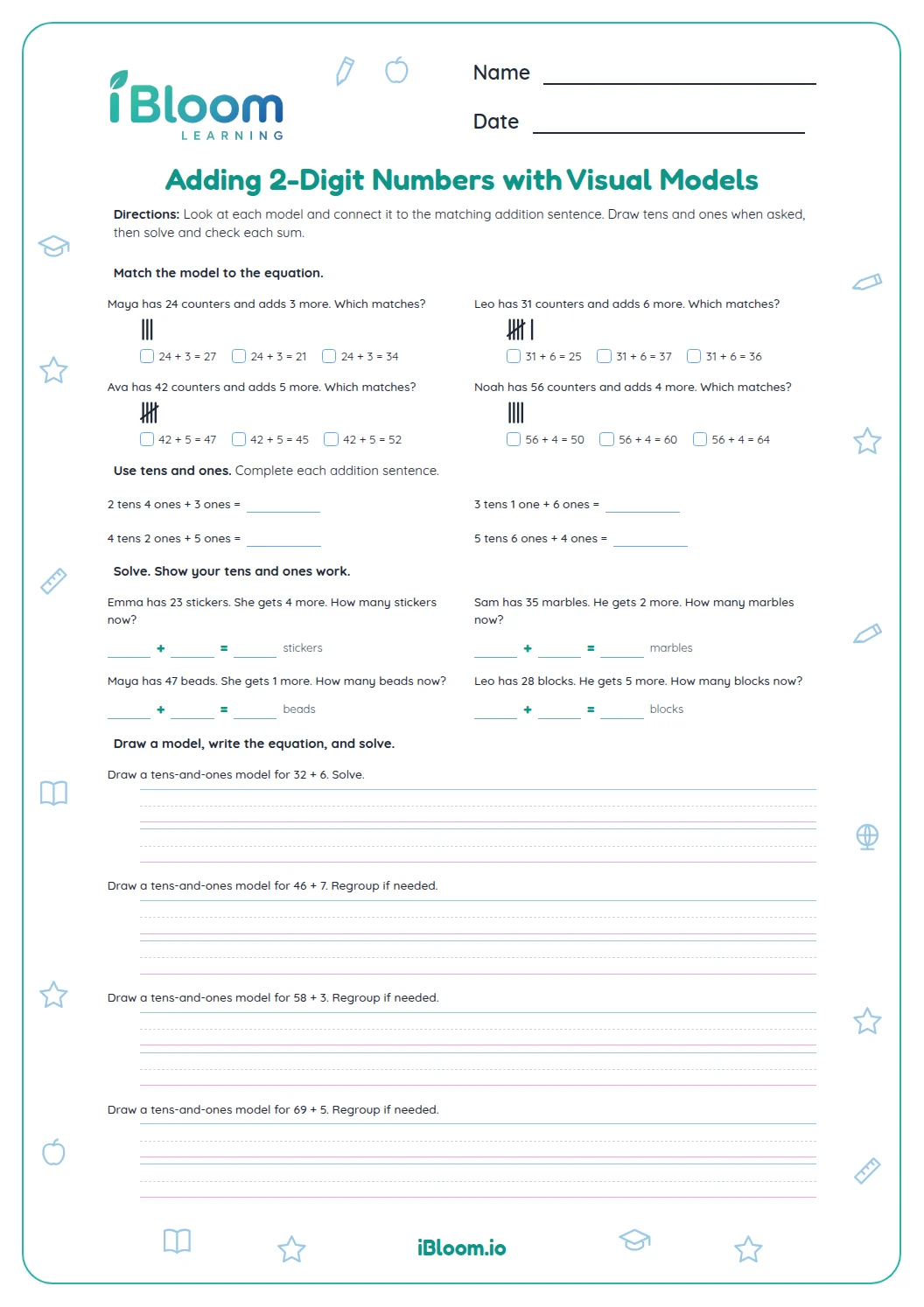
This Grade 2 addition worksheet focuses on adding a two-digit number and three one-digit addends. Sixteen equations move from combining ones to regrouping when needed, and selected questions include base-ten blocks to connect the ones total to place value. Students write the total in each equation, and the answer key lists all sums. The practice supports Common Core 2.NBT.B.5, using place-value strategies to add within 100.
Aligned to 2.NBT.B.5
How do you combine the one-digit addends?
Add the three one-digit numbers first. If their total is ten or more, regroup ten ones as one ten, then combine the new ten with the two-digit addend.
- 124 + 3 + 2 + 1
- 23 + 2 + 1 = 6; 24 + 6 = 30.
When do you need to regroup?
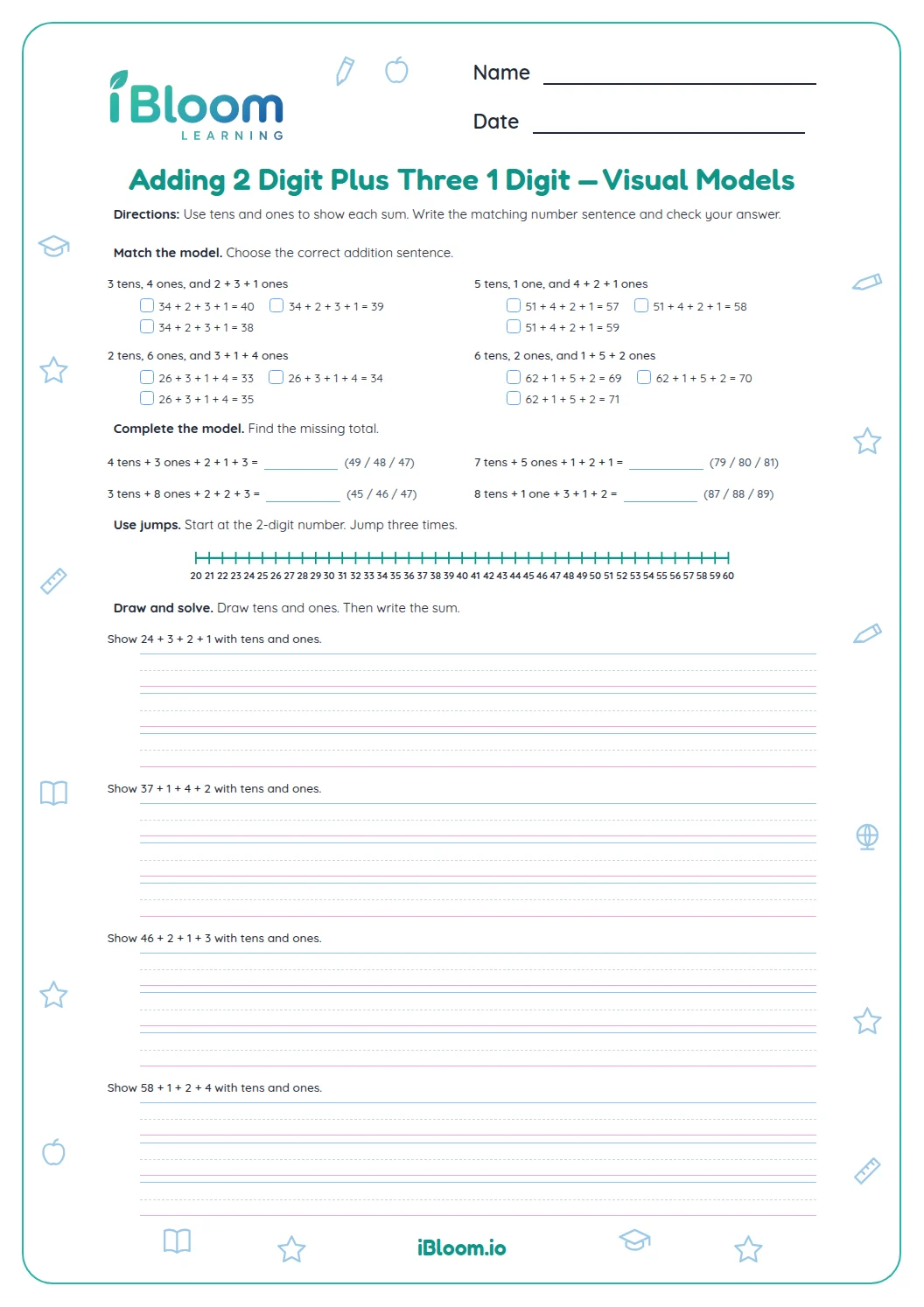
Regroup when the ones add to at least ten. The answer choices include close totals so students can check whether they combined every addend. The base-ten drawings in selected questions show the starting two-digit number.
How can you check the total?
Add the three small numbers again in a different order, then combine them with the two-digit number. Check that every addend appears once and that the sum is reasonable.
How to use this worksheet
- 1Look at the two-digit number’s tens and ones.
- 2Add the three one-digit addends together.
- 3Combine that total with the ones digit.
- 4If there are ten or more ones, regroup ten ones as one ten.
- 5Add the tens and check the total.
Common mistakes and quick fixes
The mistake
Adding only the first two addends
The fix
Include all three one-digit numbers before finding the total.
The mistake
Forgetting to regroup when the ones total is 10 or more
The fix
Trade ten ones for one ten, then add the remaining ones.
The mistake
Adding the tens digit to the ones
The fix
Keep tens and ones in their place-value groups.
Common Core alignment
This page gives students practice with the stated skill and the standard below.
Fluently add and subtract within 100 using place-value strategies.
On this sheet: Students add three one-digit addends to a two-digit number and regroup when the ones make a new ten.
Show the official wordingHide the official wording
Fluently add and subtract within 100 using strategies based on place value, properties of operations, and/or the relationship between addition and subtraction.
What to practice next
Make more practice
Further reading
Questions parents and teachers ask
What kind of addition does this page practice?
Each of the 16 equations combines one two-digit number with three one-digit addends. Some ones totals require regrouping, so students practice combining ones and tens by place value. The blocks show the starting tens and ones, not the final sum. Children still need to combine every one-digit addend and decide whether a new ten is formed.
What do the base-ten blocks represent?
They show the tens and ones in the two-digit number in selected questions. Students then add the three one-digit numbers to the ones and regroup if the ones make a new ten. Check the ones total before writing the answer. If it reaches ten, regroup one ten; then combine that ten with the tens already in the two-digit number.
When should a student regroup?
Regroup when the ones total is 10 or more. Ten ones can be exchanged for one ten, which is added to the tens already in the number. Each equation contains exactly three one-digit addends. Read them carefully so no addend is skipped when combining the ones.
Are all answers less than 100?
Yes. The problems are chosen so the total stays within 100. The answer key lists each sum for a quick check. The answer key is useful for checking arithmetic after a student has shown the place-value steps. Ask the child to explain any regrouping that changed the tens.
What should students practice next?
A useful next step is adding a two-digit and a one-digit number in columns, then adding two two-digit numbers with regrouping. Related Grade 2 pages are linked below. Try a related equation with the same strategy after finishing, changing one addend and predicting whether regrouping will still be needed.