
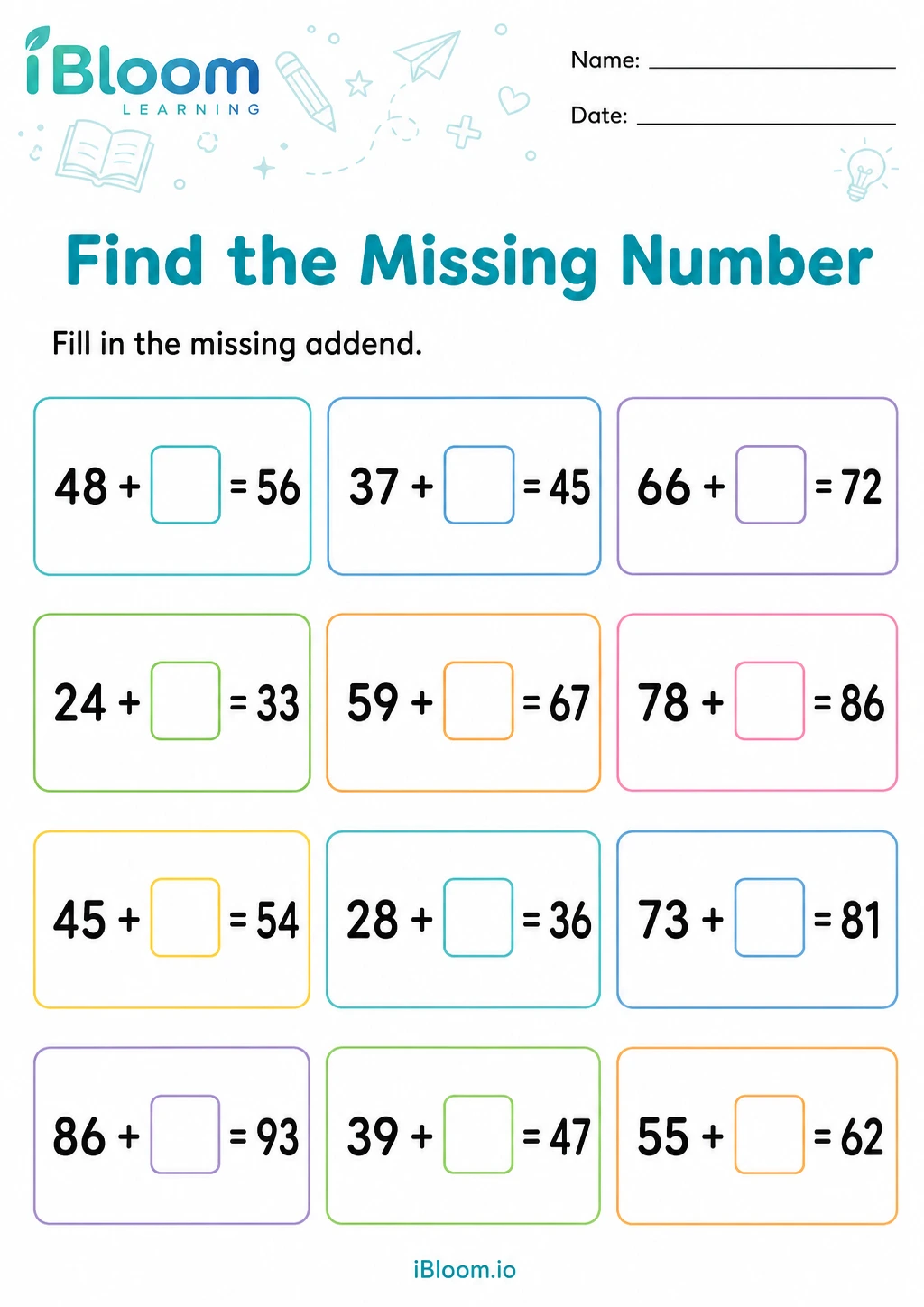
About this worksheet
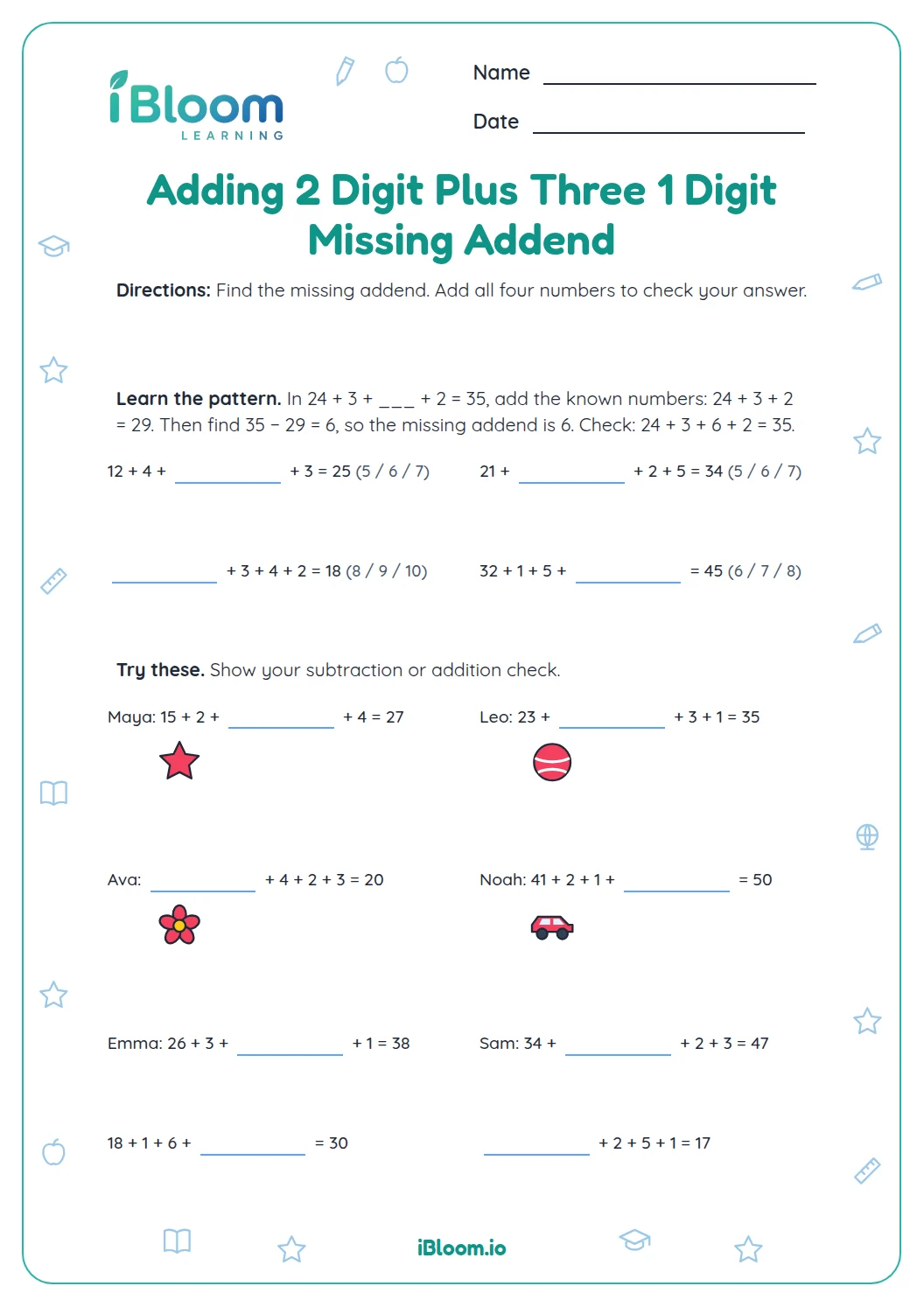
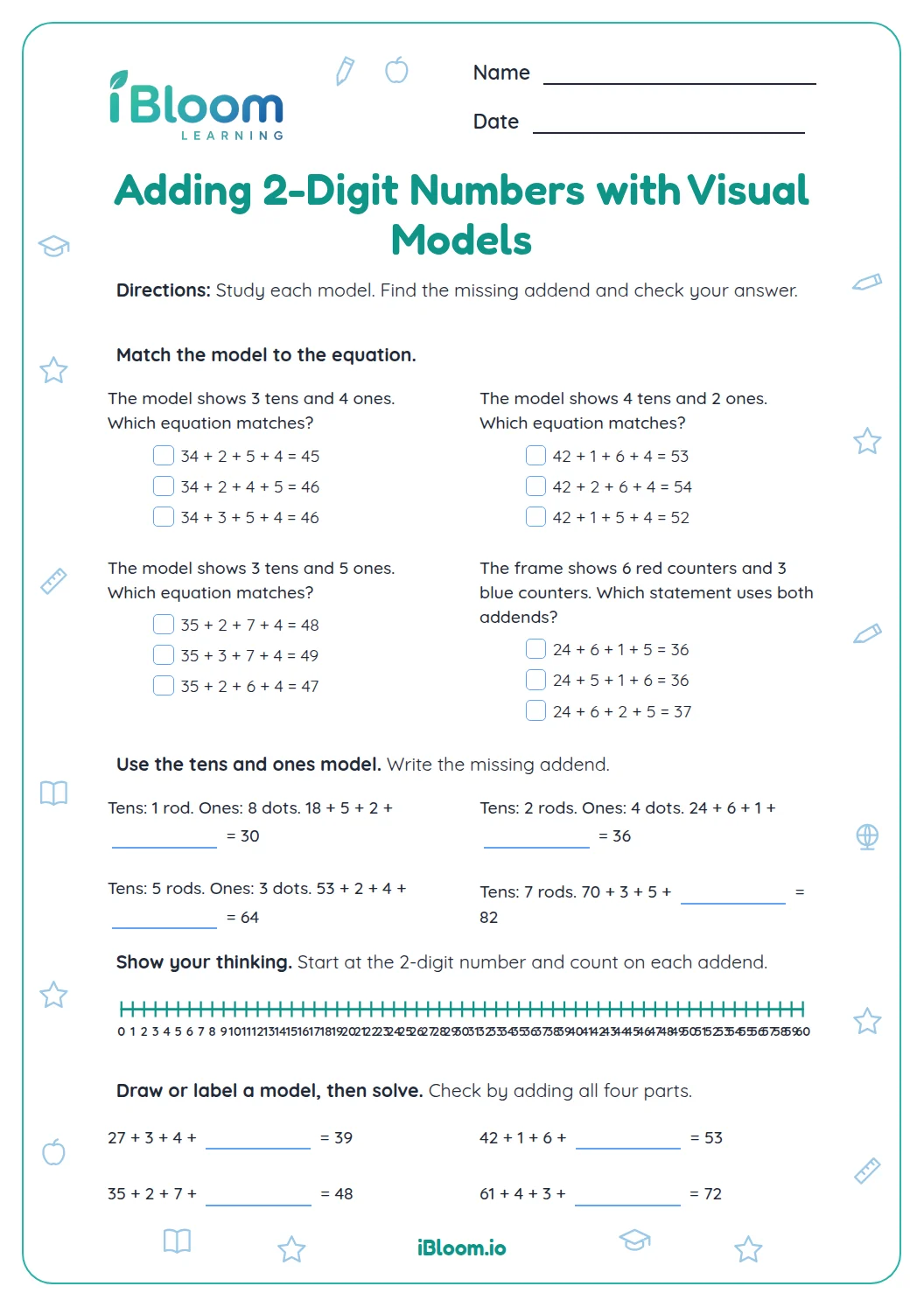
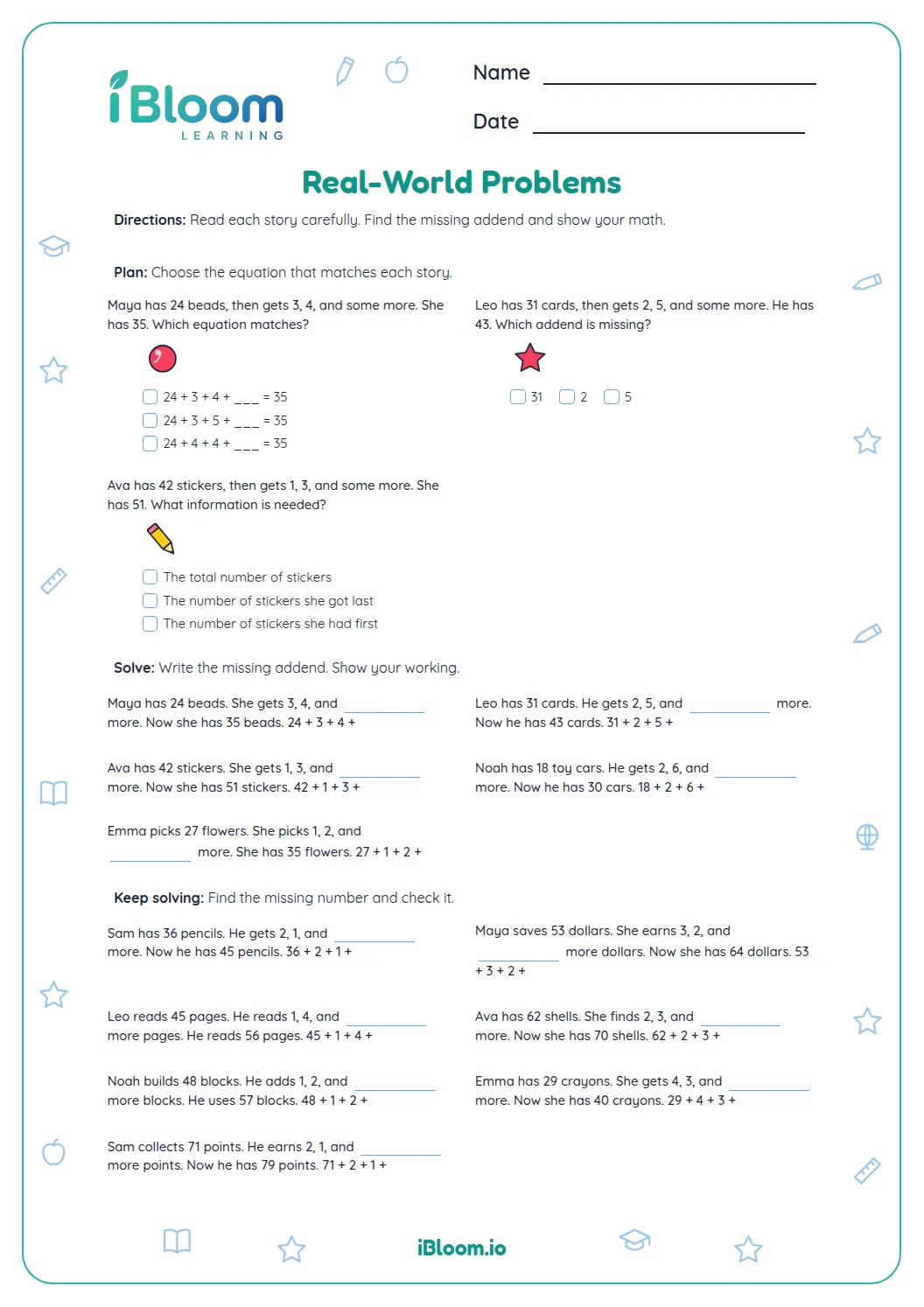
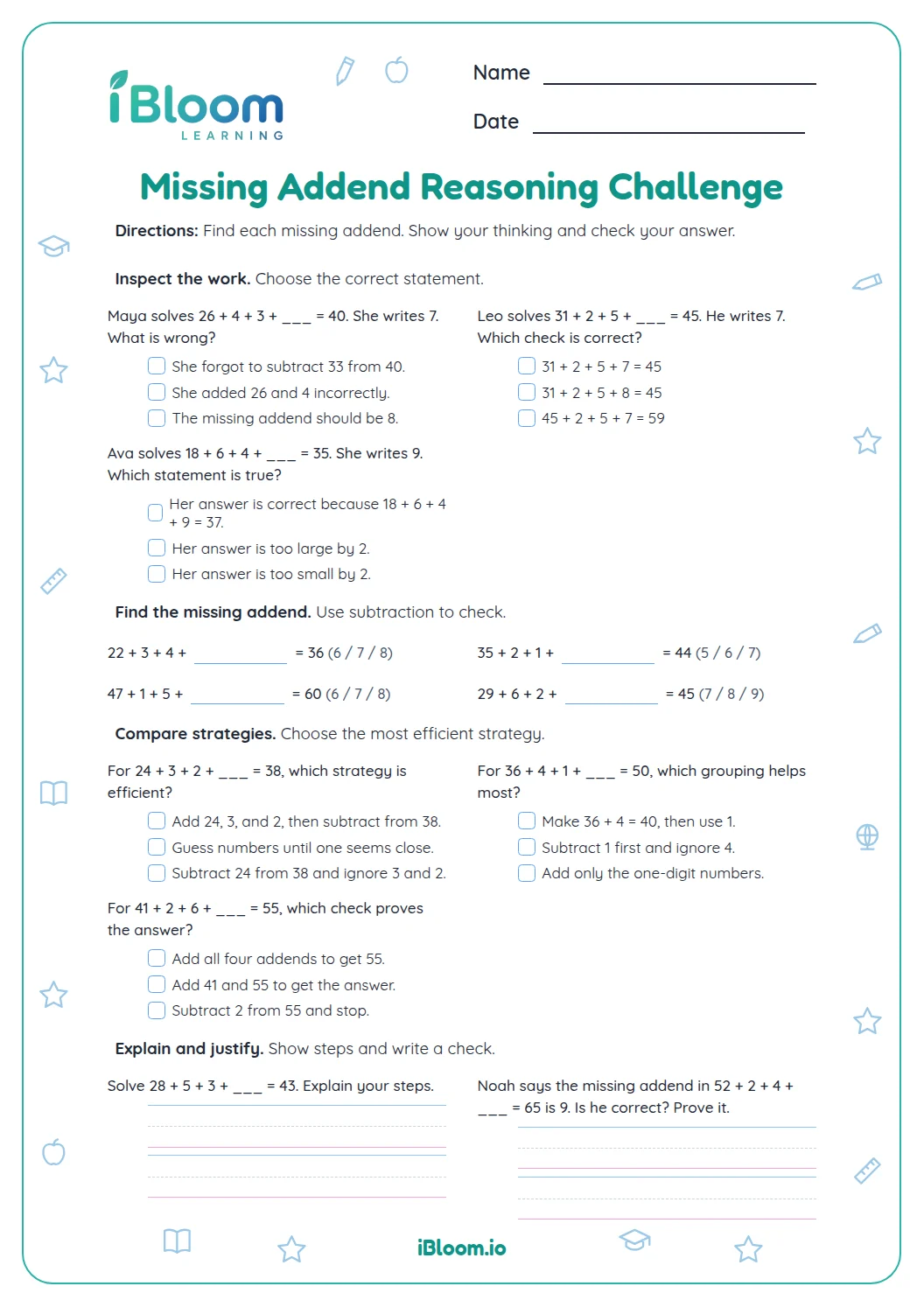
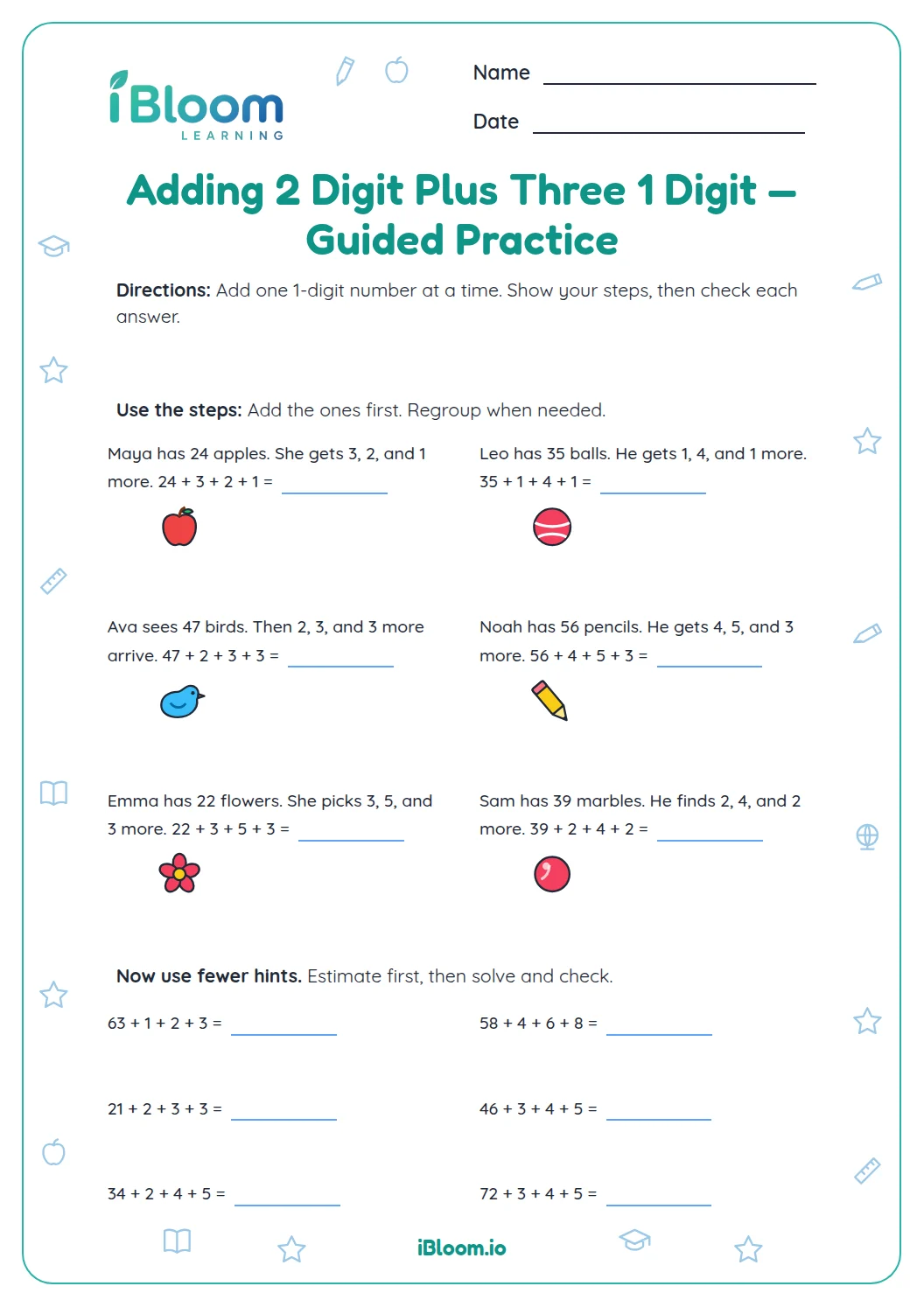
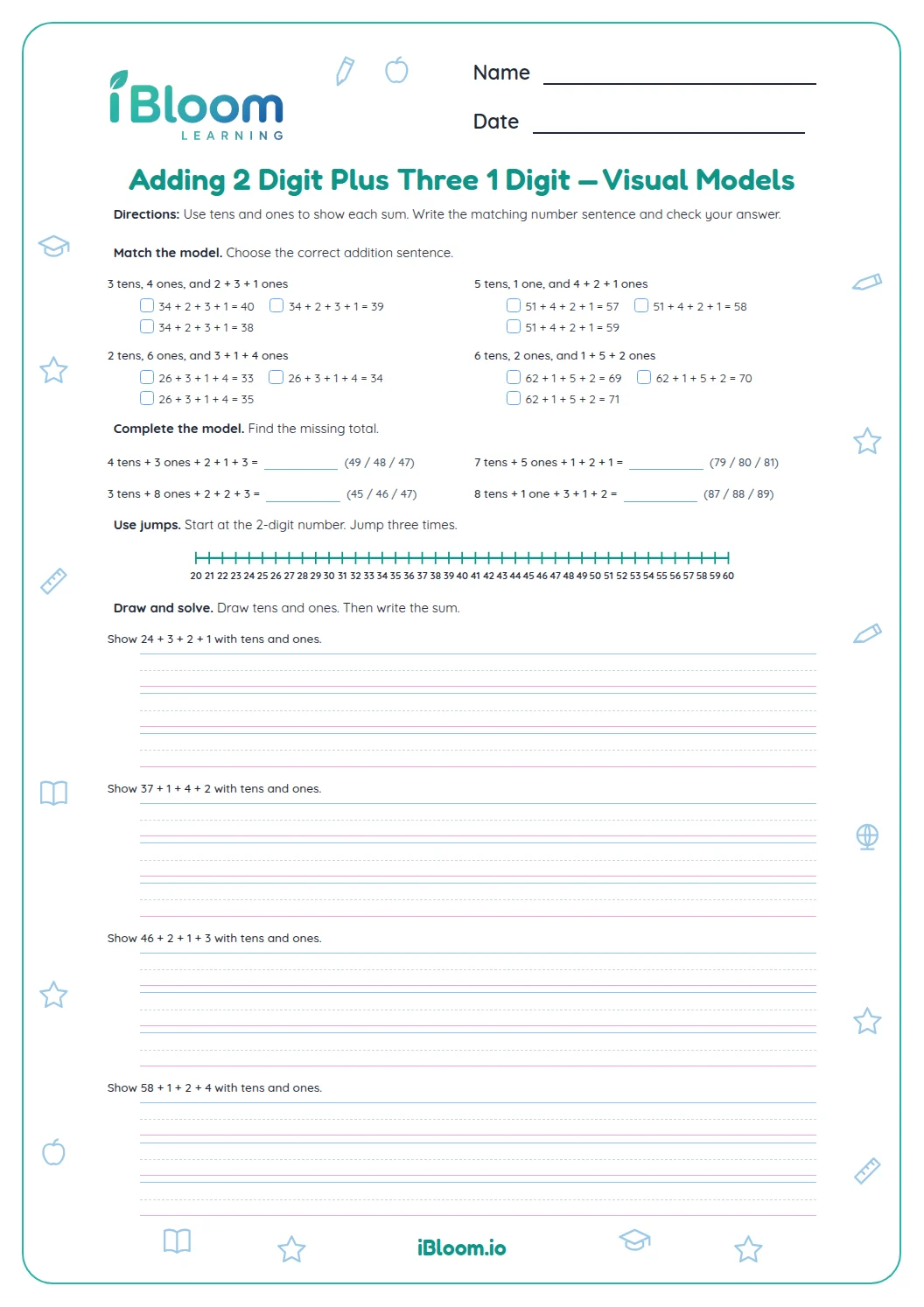
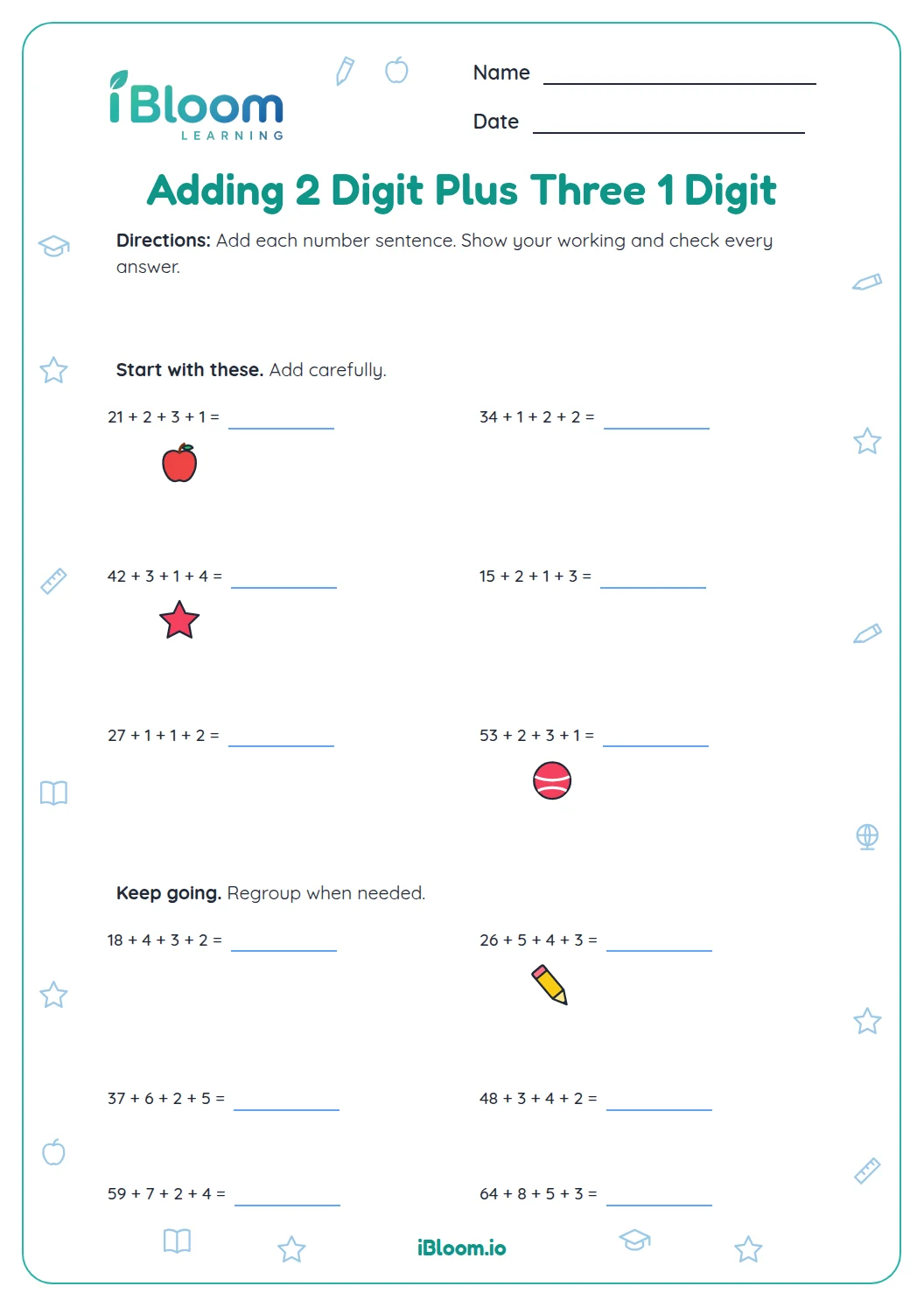
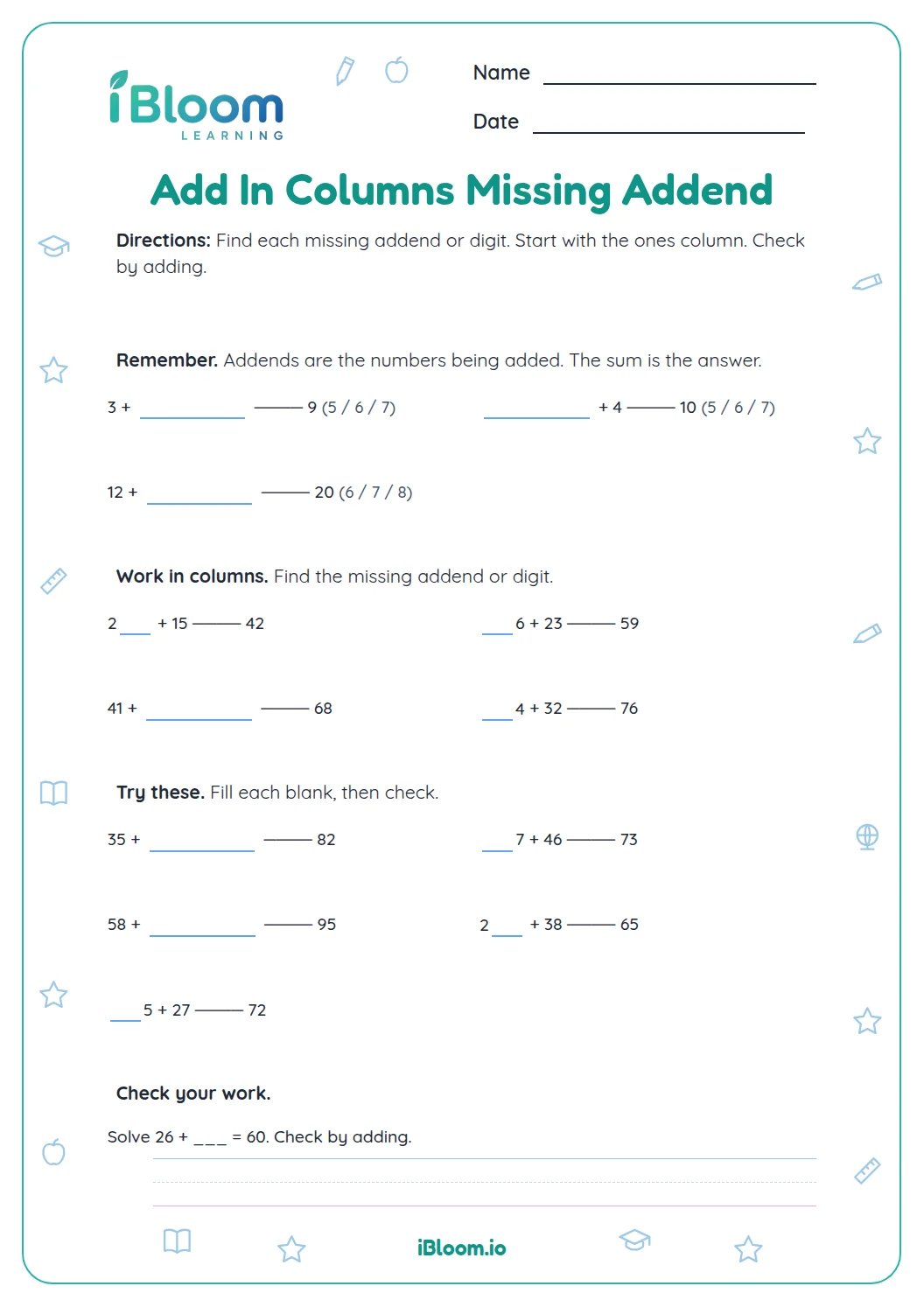
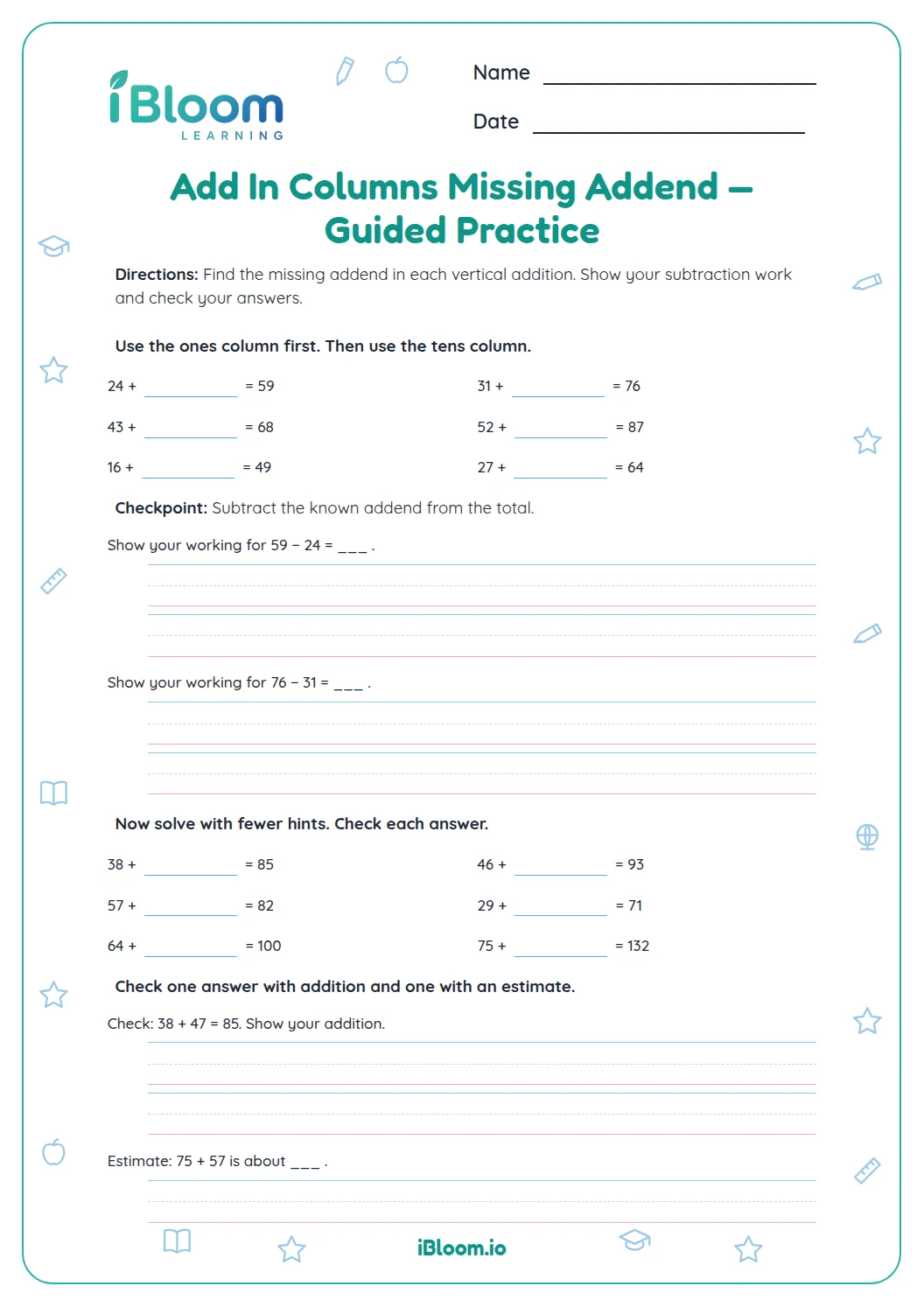
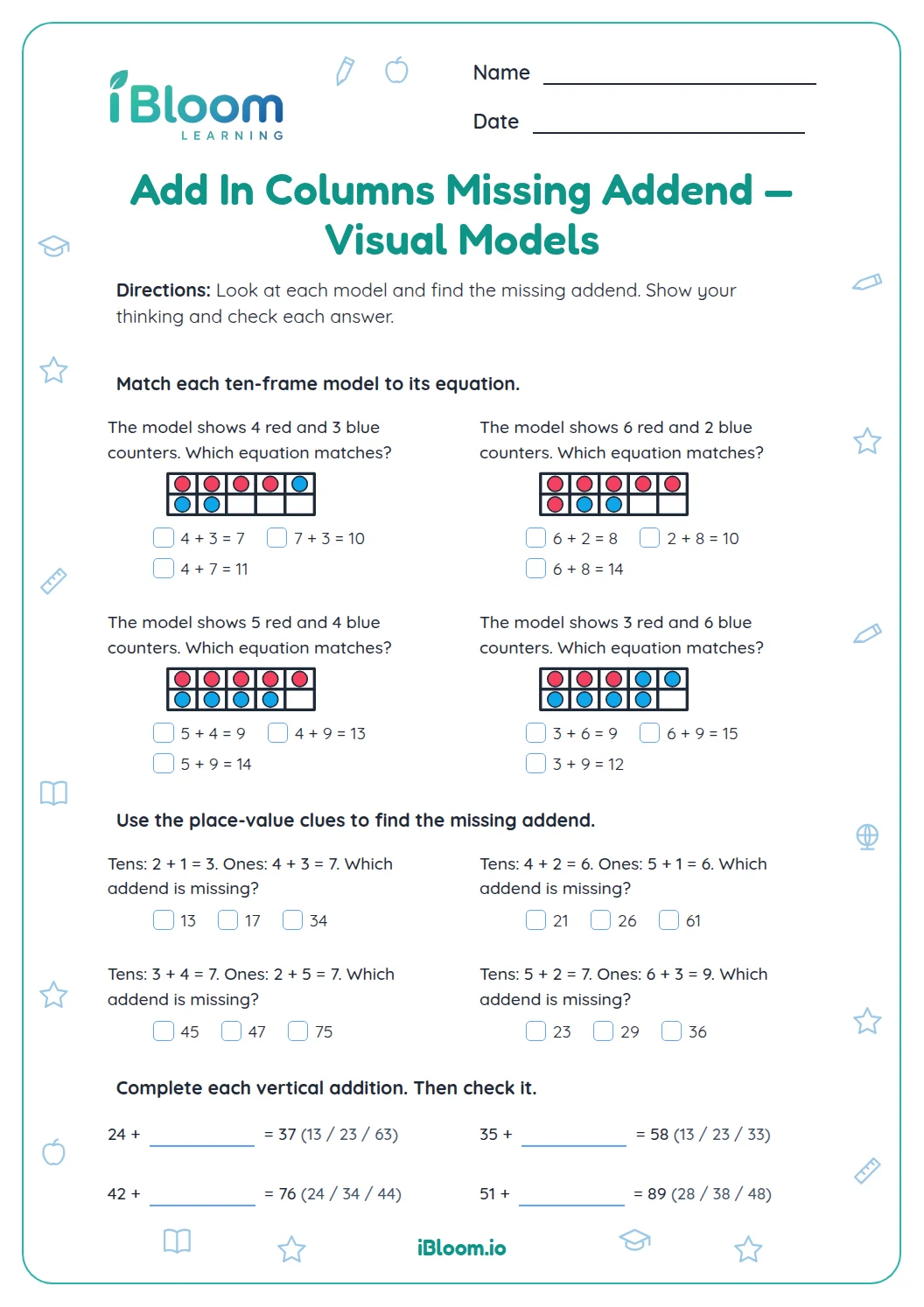
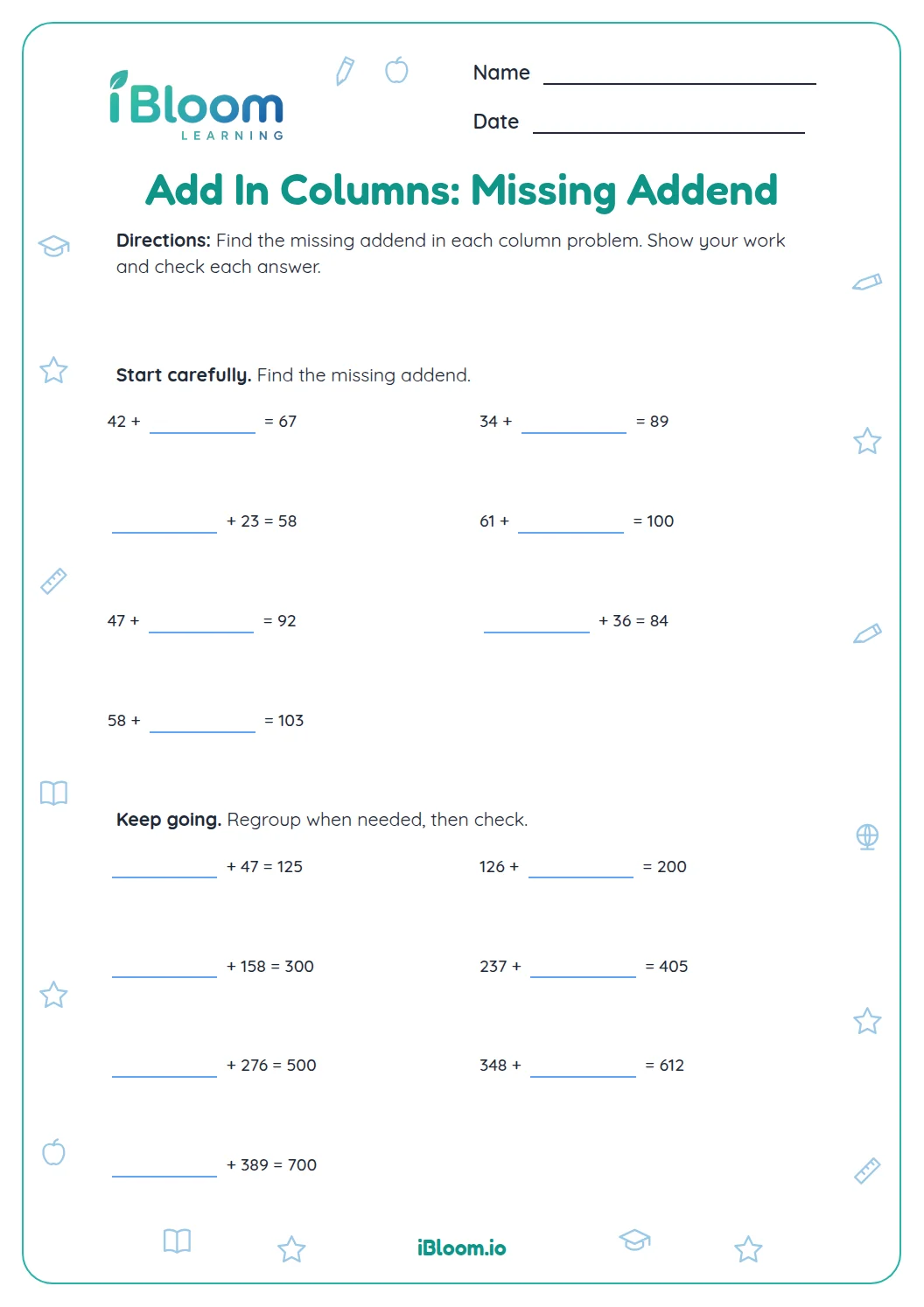
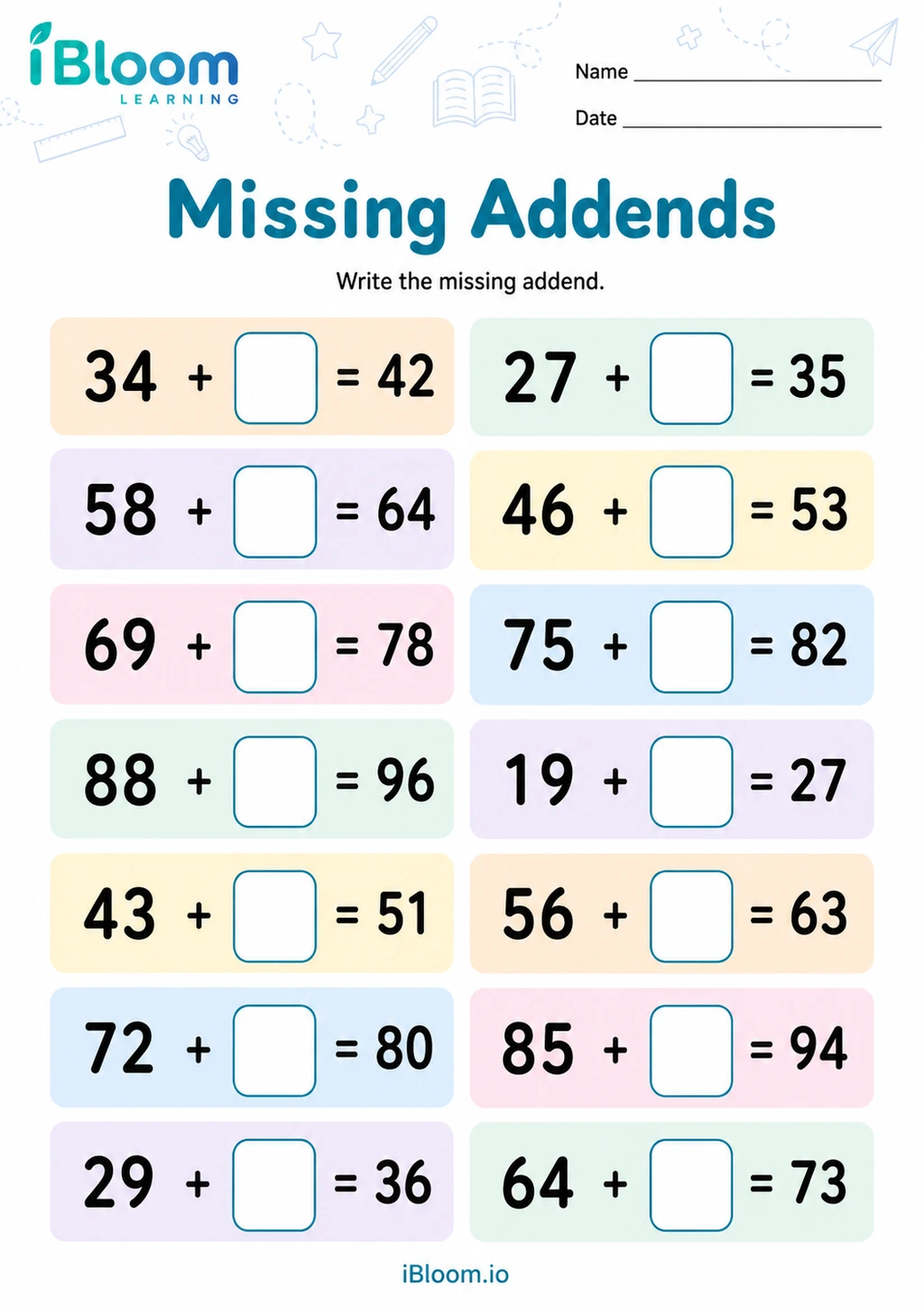
This free Grade 2 printable gives learners 16 guided problems with one two-digit addend and three one-digit addends. They find a missing one-digit number in an addition equation, then apply the same reasoning to four short stories. The separate answer key lists each missing addend. The work uses addition and subtraction strategies within 100, connecting to CCSS 2.NBT.B.5.
Aligned to 2.NBT.B.5
What does a missing addend represent?
An addend is a number being added. When one addend is missing, the other addends and the total provide enough information to find it. Learners can add the known numbers first, then determine how much more is needed.
Each equation has one two-digit addend and three one-digit addends, with a one-digit amount missing.
How can you find the missing number?
Group the known addends in a way that is easy to add, then compare their total with the full sum. Counting on or subtracting the known total from the sum are both useful ways to check.
- 124 + 3 + ___ + 6 = 40
- 2Add the known addends: 24 + 3 + 6 = 33.
- 3Find what 33 needs to reach 40: 40 − 33 = 7.
- 4Answer: 7.
How does the same idea work in a story?
Part A practices the number sentences directly. Part B describes collections and changes in short situations, then asks for one missing one-digit addend. Turning the story into an addition sentence helps keep the known amounts and total in the right places.
How to use this worksheet
- 1Add the known addends, including the two-digit number.
- 2Keep track of regrouping when the ones add to ten or more.
- 3Subtract the known total from the full sum, or count up to it.
- 4For each story, write the addition sentence before solving.
- 5Put the missing number back into the equation to check the total.
- 6Use the separate answer key to review each result.
Common mistakes and quick fixes
The mistake
Subtracting just one known addend from the total.
The fix
First combine all three known addends, then compare with the total.
The mistake
Forgetting a regrouped ten.
The fix
When the ones make ten or more, rename ten ones as one ten.
The mistake
Putting the missing number in the wrong place in a story.
The fix
List each amount in the order it is added and mark the unknown amount.
Common Core alignment
This practice connects the named skill to a Common Core goal.
Use addition and subtraction within 100 to find a missing addend.
On this sheet: Learners combine four addends with totals under 100 and use the relationship between addition and subtraction to find the missing one-digit amount.
Show the official wordingHide the official wording
Fluently add and subtract within 100 using strategies based on place value, properties of operations, and/or the relationship between addition and subtraction.
What to practice next
Make more practice
Further reading
Questions parents and teachers ask
What is a missing addend?
An addend is a number in an addition problem. A missing addend is the number needed to make the known addends reach the total. In 24 + 3 + ___ + 6 = 40, the known amounts total 33, so 7 is missing.
What is the answer to question 1?
The missing addend is 7. Add 24, 3, and 6 to get 33. Then find the difference between 40 and 33. Check by adding all four numbers: 24 + 3 + 7 + 6 = 40, the total named in the equation.
Should learners add first or subtract?
Either strategy can work. Learners can add the known addends and subtract that total from the sum, or count up from the known total. This worksheet uses sums under 100 and keeps the unknown amount to one digit. This works for every equation here.
How should I help with the story problems?
Ask the learner to name the total and the three amounts that are already known. Write them in one addition sentence with a blank for the unknown amount. Once the equation is clear, use the same method practiced in Part A.
How many problems are included?
There are 16 questions across two worksheet pages. Part A contains 12 addition equations, and Part B contains four short word problems. The answer key appears on its own page and lists the number or amount needed in each blank.